Industrial Energy Efficiency: Metrics That Matter




Industrial energy efficiency is no longer judged by utility bills alone; technical evaluators need metrics that reveal how compressors, cooling systems, vacuum processes, and heat exchangers truly convert energy into production value. From specific power and heat recovery rates to load profiles, leakage losses, and lifecycle carbon intensity, the right indicators expose hidden waste and guide smarter investment decisions. This article examines the metrics that matter most for benchmarking, optimization, and long-term competitiveness in modern industrial thermal and compression systems.
Why Industrial Energy Efficiency Metrics Must Move Beyond Monthly Bills
A lower electricity bill may reflect reduced output, milder weather, or temporary shutdowns. It does not automatically prove better industrial energy efficiency.
Technical evaluators need normalized metrics that connect energy input with compressed air delivery, cooling duty, vacuum stability, heat recovery, and product quality.
In mixed industrial sites, one metric rarely tells the full story. A compressor may be efficient at full load but waste energy during partial demand.
A chiller may show acceptable kW/ton while pumping losses, fouled heat exchangers, or poor controls reduce total plant performance.
What technical evaluators should ask first
- Is energy consumption normalized against production volume, operating hours, ambient temperature, and required pressure or temperature levels?
- Are measurements taken at equipment level, system level, and process level rather than only from main incoming power meters?
- Do the metrics expose avoidable losses, including air leakage, pressure drops, thermal fouling, idling time, and bypass operation?
- Can the indicators support investment comparison, payback analysis, carbon reporting, and supplier performance verification?
GTC-Matrix approaches industrial energy efficiency through the combined lens of thermodynamics, pneumatic power, and industrial economics.
Which Metrics Matter Most in Compression, Cooling, Vacuum, and Heat Exchange?
The strongest industrial energy efficiency programs use a small group of decision-grade metrics, not a large dashboard of disconnected numbers.
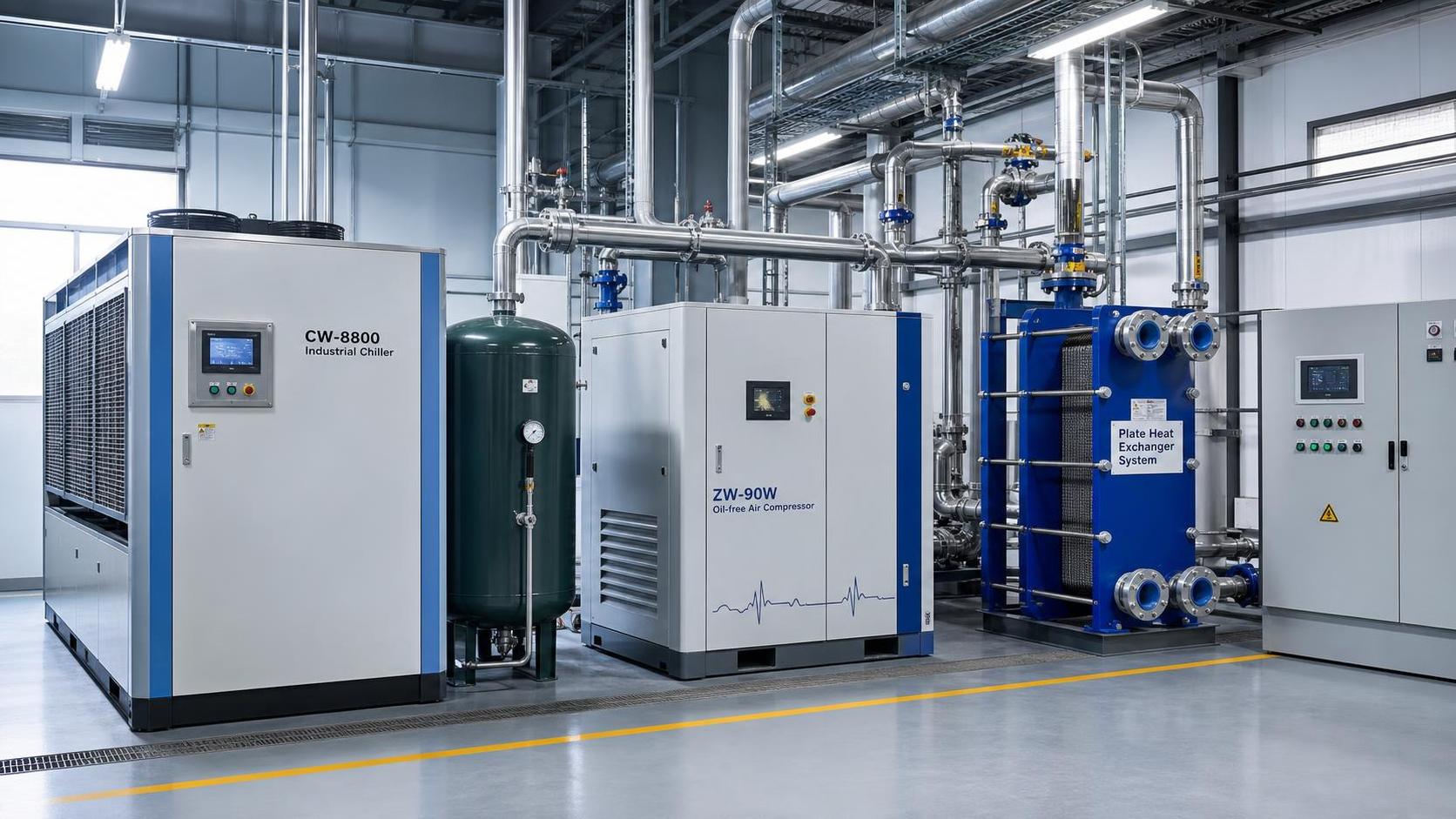
The table below summarizes practical indicators for technical evaluation across the power heart and thermal center of industrial facilities.
These indicators convert industrial energy efficiency from a vague target into measurable engineering evidence for procurement, retrofit planning, and supplier negotiation.
They also help separate genuine system improvement from isolated component claims that may not survive real operating conditions.
How to Benchmark Industrial Energy Efficiency Across Real Operating Scenarios
Benchmarking fails when evaluators compare nameplate data with field data. Industrial energy efficiency must be judged under representative load profiles.
A pharmaceutical cleanroom, semiconductor tool line, food freezing tunnel, and metal fabrication plant impose very different thermal and pneumatic demands.
Scenario variables that change the result
- Load variability determines whether fixed-speed equipment, variable-speed drives, sequencing controls, or storage volume create better outcomes.
- Required purity, dryness, temperature stability, and vacuum level can justify higher component energy use for lower process risk.
- Ambient temperature and cooling water quality affect chiller lift, condenser performance, scaling risk, and heat exchanger approach temperature.
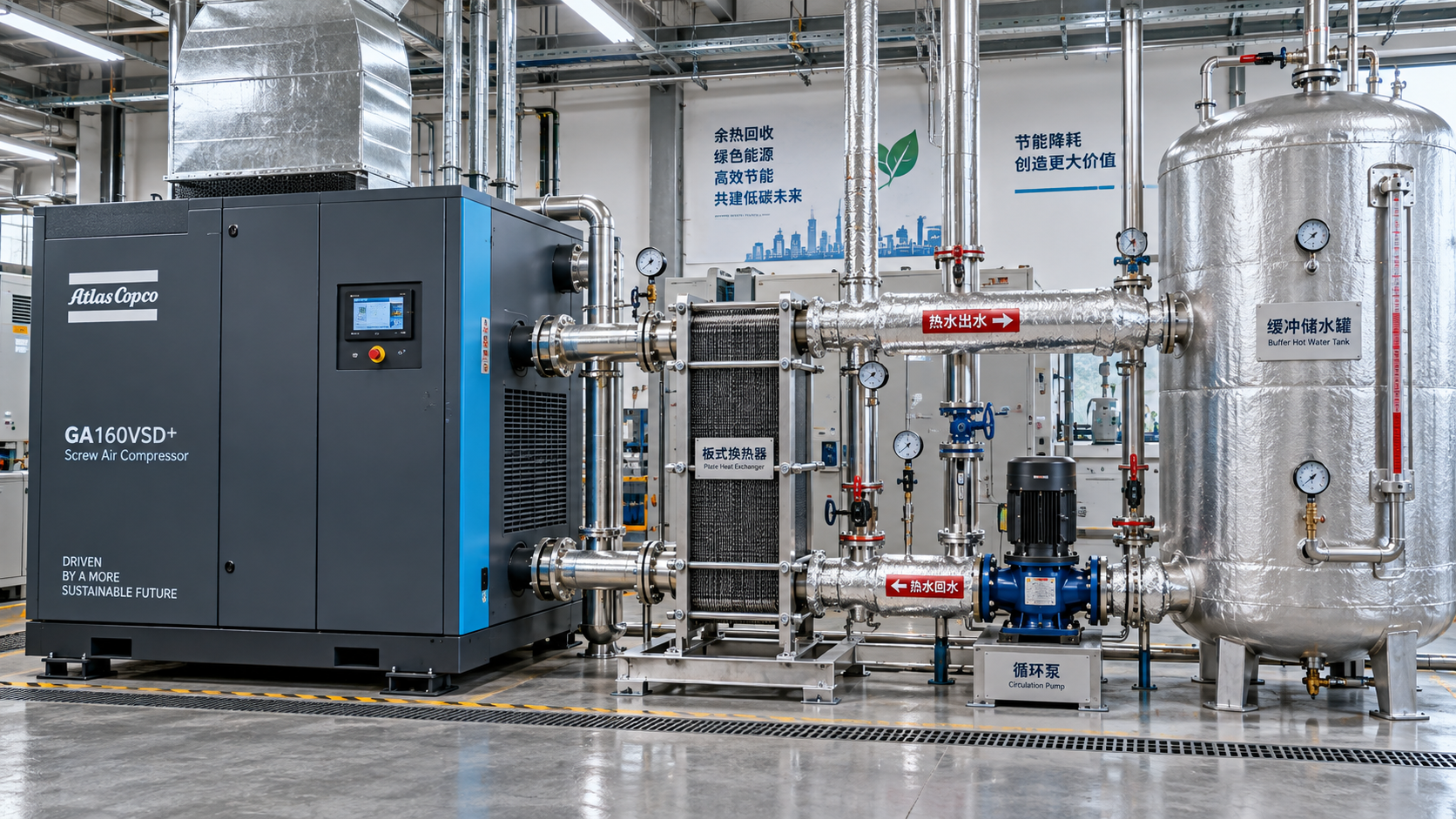
- Production scheduling influences whether heat recovery is valuable, because recovered heat must match a real-time thermal sink.
For example, reducing compressed air pressure by 1 bar can often lower energy demand, but only if end-use tools remain stable.
Similarly, raising chilled water temperature improves chiller efficiency, but it may be unacceptable for precision temperature control in critical processes.
Procurement Evaluation: What Should Technical Buyers Compare?
Procurement teams often receive proposals with different assumptions. Technical evaluators must standardize the basis before comparing industrial energy efficiency.
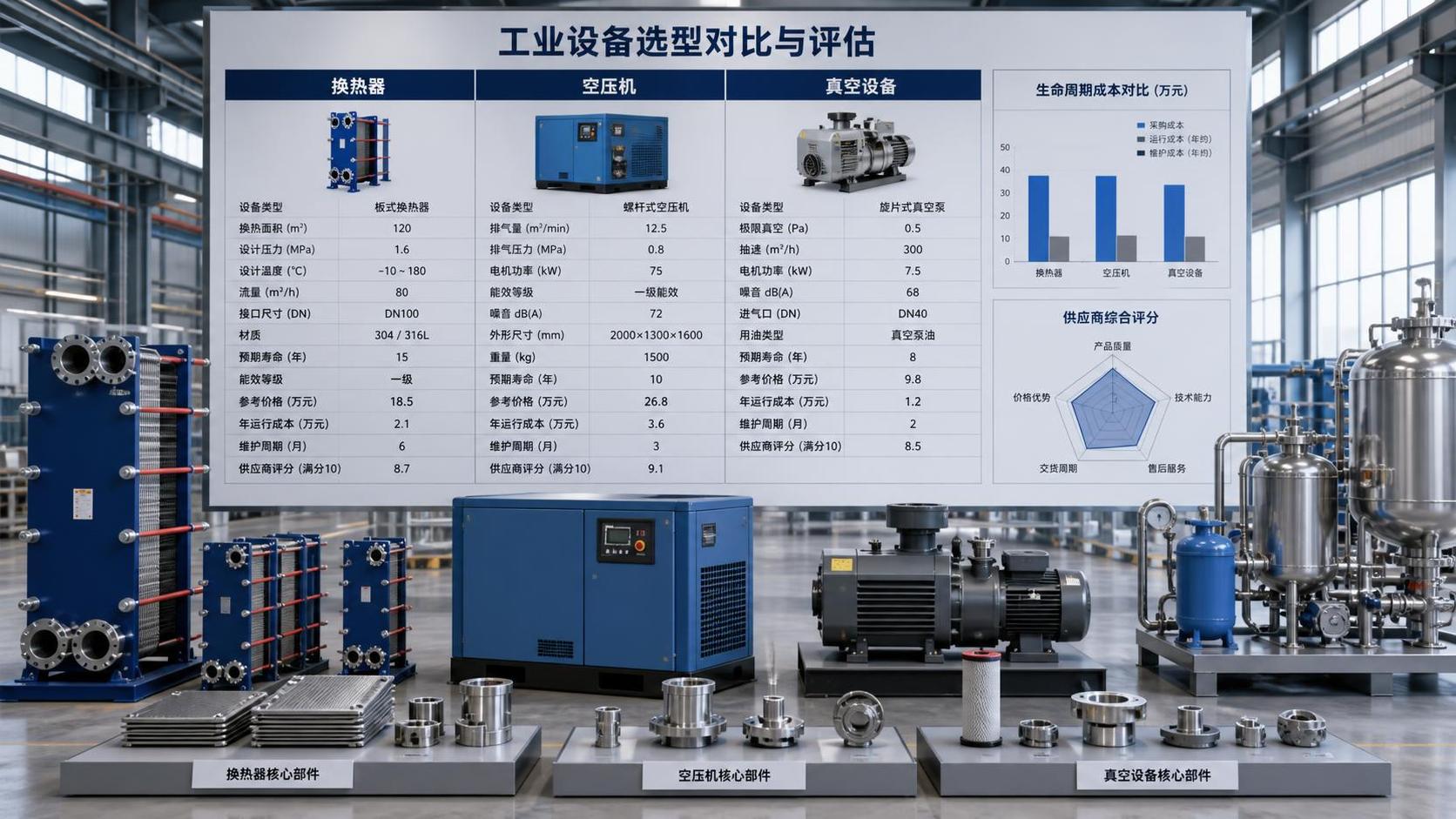
The following matrix helps compare equipment or retrofit options without relying on purchase price alone.
This procurement structure protects evaluators from attractive but incomplete offers. It also supports clearer dialogue with suppliers and finance teams.
For industrial energy efficiency investments, the best choice is usually the option with verifiable system performance, not the lowest quoted equipment price.
Cost and Alternative Analysis: When Is Retrofit Better Than Replacement?
Not every plant needs new equipment. Many industrial energy efficiency gains come from control optimization, leakage reduction, cleaning, or heat recovery.
Replacement becomes more compelling when equipment operates far outside its efficient range, fails compliance requirements, or limits production reliability.
Typical decision path for constrained budgets
- Measure baseline demand, pressure, temperature, flow, humidity, and operating hours before committing capital to a major project.
- Eliminate no-value losses such as compressed air leakage, open bypass valves, condenser fouling, and uncontrolled idling.
- Optimize controls and sequencing so installed assets run closer to their efficient operating envelope.
- Evaluate replacement only after confirming that the remaining losses are structural rather than maintenance-related.
A retrofit may deliver faster payback, but it can also lock a site into outdated architecture if future capacity demand is rising.
GTC-Matrix intelligence helps evaluators connect energy price trends, refrigerant policy shifts, and technology evolution with asset lifecycle timing.
Compliance, Standards, and Measurement Discipline
Industrial energy efficiency claims require credible measurement. Without consistent boundaries, suppliers and internal teams may report incompatible results.
Useful frameworks include ISO 50001 for energy management, ISO 11011 for compressed air assessment, and ISO 8573 for compressed air quality.
For pressure equipment, heat exchangers, electrical safety, and refrigeration systems, regional codes and documentation requirements must be checked early.
Measurement practices that reduce dispute
- Define baseline periods that reflect normal production rather than maintenance shutdowns or exceptional seasonal conditions.
- Use calibrated instruments for power, flow, pressure, temperature, dew point, and cooling duty measurements.
- Separate equipment-level savings from system-level savings to avoid double counting and unrealistic payback claims.
- Record operating constraints, including air purity, refrigerant choice, process tolerance, and redundancy requirements.
Good measurement does more than satisfy audits. It turns industrial energy efficiency into a repeatable management process.
Common Misconceptions That Distort Industrial Energy Efficiency Decisions
Several assumptions frequently mislead technical evaluators, especially when schedules are tight and budget approval depends on simplified numbers.
Misconception 1: Higher rated efficiency always means lower cost
Rated efficiency is valuable, but real savings depend on load profile, controls, installation quality, maintenance discipline, and process stability.
Misconception 2: Pressure and temperature safety margins are harmless
Excess pressure and overcooling often create permanent energy waste. Margins should be justified by process need, not inherited habits.
Misconception 3: Heat recovery is always economical
Recovered heat has value only when temperature level, timing, distance, and demand match the plant’s actual thermal profile.
FAQ for Technical Evaluators
How should industrial energy efficiency be measured in a compressed air system?
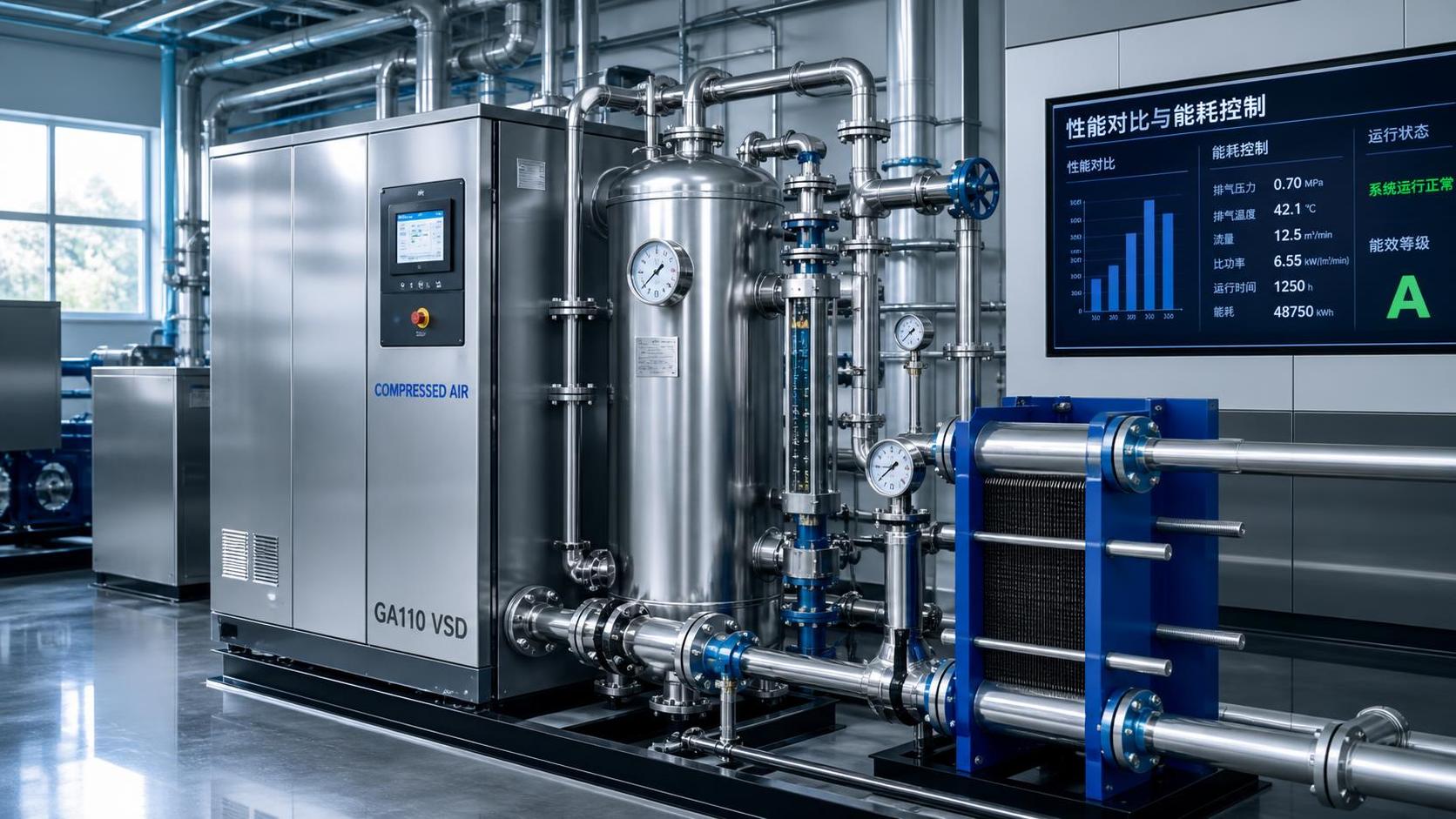
Start with specific power, leakage rate, pressure profile, dryer energy, and storage behavior. Measure during production and non-production periods.
A reliable assessment includes compressors, dryers, filters, receivers, distribution piping, and end-use demand instead of the compressor package alone.
Which metric is most important for industrial cooling systems?
COP or kW/ton is important, but evaluators should also check part-load performance, pump energy, fan energy, condenser approach, and fouling risk.
For high-precision processes, temperature stability and downtime risk may outweigh a small efficiency difference between competing systems.
When should lifecycle carbon intensity be included in procurement?
Include it when customers, regulators, investors, or internal carbon targets influence project approval. It is especially relevant for continuous-duty assets.
Lifecycle carbon assessment should clarify boundaries, operating hours, grid emission factors, refrigerant impact, and expected service life.
What is the biggest risk in comparing supplier efficiency claims?
The biggest risk is comparing data under different assumptions. Equalize pressure, temperature, flow, ambient conditions, operating schedule, and included auxiliaries.
Why Choose GTC-Matrix for Industrial Energy Efficiency Intelligence?
GTC-Matrix helps technical evaluators interpret industrial energy efficiency through integrated intelligence across cooling, compression, vacuum, and heat exchange technologies.
Our Strategic Intelligence Center connects thermodynamic analysis, pneumatic engineering insight, market signals, and industrial economics for more defensible decisions.
Technical teams can consult GTC-Matrix for metric selection, parameter confirmation, benchmarking logic, product comparison, retrofit evaluation, and lifecycle cost framing.
We can also support discussions around delivery constraints, certification expectations, refrigerant policy trends, sample data review, and quotation evaluation criteria.
If your next project involves compressors, chillers, vacuum equipment, heat exchangers, or integrated thermal systems, align the decision around measurable value.
Contact GTC-Matrix to clarify the metrics that matter, reduce procurement uncertainty, and build an industrial energy efficiency roadmap grounded in operational reality.
Ready when you are. Send us a message to get started.
Related News
- How to select industrial equipment for automation with existing PLCsAuthor :

- How electricity prices shape industrial compressed air price trendsAuthor :

- Choosing air filtration systems for heavy dust in the Middle EastAuthor :

- How much does a fully installed compressed air monitoring system cost?Author :

- What documentation supports CE marking for industrial equipment?Author :

- How local support affects vacuum system costs in Southeast AsiaAuthor :

- How worldwide industry category guides help compare market opportunitiesAuthor :

- What drives sustainable thermal systems cost over their operating life?Author :

- Which industrial solution comparison criteria prevent project delays?Author :

- How Ambient Temperature and Load Profile Affect Industrial Compressor SizingAuthor :

- What to evaluate before choosing a thermal process engineering supplierAuthor :

- How industrial utility systems affect energy costs in process plantsAuthor :

- What Data Is Needed to Assess Heat Recovery Decarbonization?Author :

- Can Waste Heat Recovery Support Carbon Neutrality Targets?Author :

- Is Compressor Heat Recovery Worth the Installation Cost?Author :

- What to verify before choosing a process separation technology supplierAuthor :

- When does process utilities engineering reduce project rework?Author :

- Where thermal efficiency optimization delivers the fastest savings in EuropeAuthor :

- What should you verify before selecting a heat transfer supplier?Author :

- What drives compressed air systems price for industrial projects?Author :

- How an industrial product knowledge comparison guide reduces sourcing riskAuthor :

- When does a procurement specification planning process reduce bid risk?Author :

- When does thermal system optimization for electronics reduce failure risk?Author :

- When high temperature process heating systems justify the higher energy costAuthor :

- How to compare sludge dewatering equipment by cake drynessAuthor :

- What to Check Before Sourcing a Gas Turbine for Distributed Power ProjectsAuthor :

- What drives industrial thermal systems price in large facility projectsAuthor :

- How to build an industrial product comparison chart that speeds up vendor selectionAuthor :

- Vacuum Technology Application Guide for Selecting the Right SystemAuthor :

- What Drives Vacuum Drying Cost in Industrial Procurement?Author :

- What Drives Compressed Air Pricing in Industrial Systems?Author :

- How Procurement Specification Planning Shapes Total Project CostAuthor :

- Compression Technology Guide: How to Compare Efficiency, Pressure Range, and Maintenance NeedsAuthor :

- How to Compare Industrial Separators by Throughput, Purity, and Maintenance LoadAuthor :

- How to Size a Compressed Air Equipment Receiver Tank for Stable PressureAuthor :

- Industrial Equipment Selection Guide: How to Compare Capacity, Duty Cycle, and Operating CostAuthor :