How to Assess a Compressed Air Technology Exporter Beyond Price and Lead Time




Why is price only the starting point when reviewing a compressed air technology exporter?
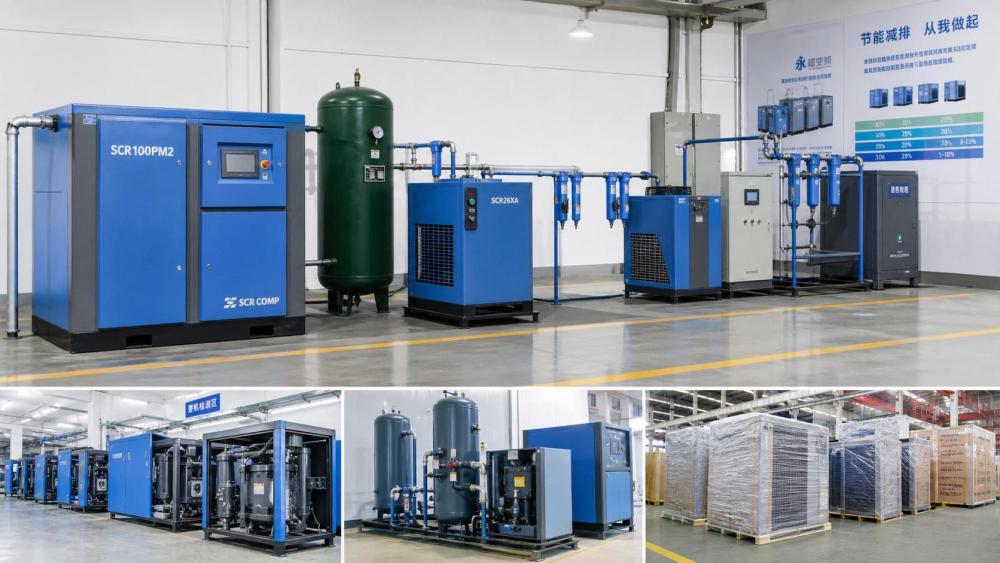
A low quotation can look attractive until the system reaches commissioning, validation, or long-term energy operation.
That is where a compressed air technology exporter reveals its real value, or its hidden cost.
In practical terms, the decision is rarely about buying a machine alone.
It is about securing pressure stability, air quality, compliance records, spare parts continuity, and service response across borders.
Many imported compressed air projects fail quietly.
They meet the shipping date, yet miss purity targets, overload utilities, or create maintenance dependence.
A stronger evaluation starts with system thinking.
That means checking how the exporter handles compressors, dryers, filters, controls, heat recovery, and downstream application requirements together.
This broader view matters even more in sectors where clean air and thermal efficiency shape production quality.
GTC-Matrix often tracks this intersection.
Its industrial intelligence work connects compressed air performance with cooling, vacuum, and heat exchange realities, which is useful when evaluating exporters beyond surface metrics.
What proves that a compressed air technology exporter is technically reliable?
Technical reliability is not a slogan.
It should appear in documents, references, engineering logic, and operating data.
A dependable compressed air technology exporter can usually explain why a configuration was chosen, not just what was quoted.
Look first at application fit.
An exporter serving electronics, pharmaceutical, food, or precision manufacturing should understand dew point, oil carryover, pressure fluctuation, and contamination control.
That knowledge should show up in P&ID drawings, component selections, and acceptance criteria.
Then review engineering depth.
- Can the exporter size the system using demand profiles instead of nameplate assumptions?
- Can it explain part-load efficiency and control strategy?
- Can it define filtration stages, pressure losses, and condensate treatment clearly?
- Can it show testing standards before shipment and after installation?
If answers remain vague, the risk rises.
The stronger exporters also provide failure mode awareness.
They discuss ambient temperature limits, local voltage adaptation, corrosion exposure, and maintenance intervals without waiting to be asked.
That level of transparency usually signals real project experience.
How should compliance, documentation, and export readiness be checked?
This is where many evaluations stay too shallow.
A compressed air technology exporter may offer good hardware but still create customs, certification, or legal problems.
The basic question is simple.
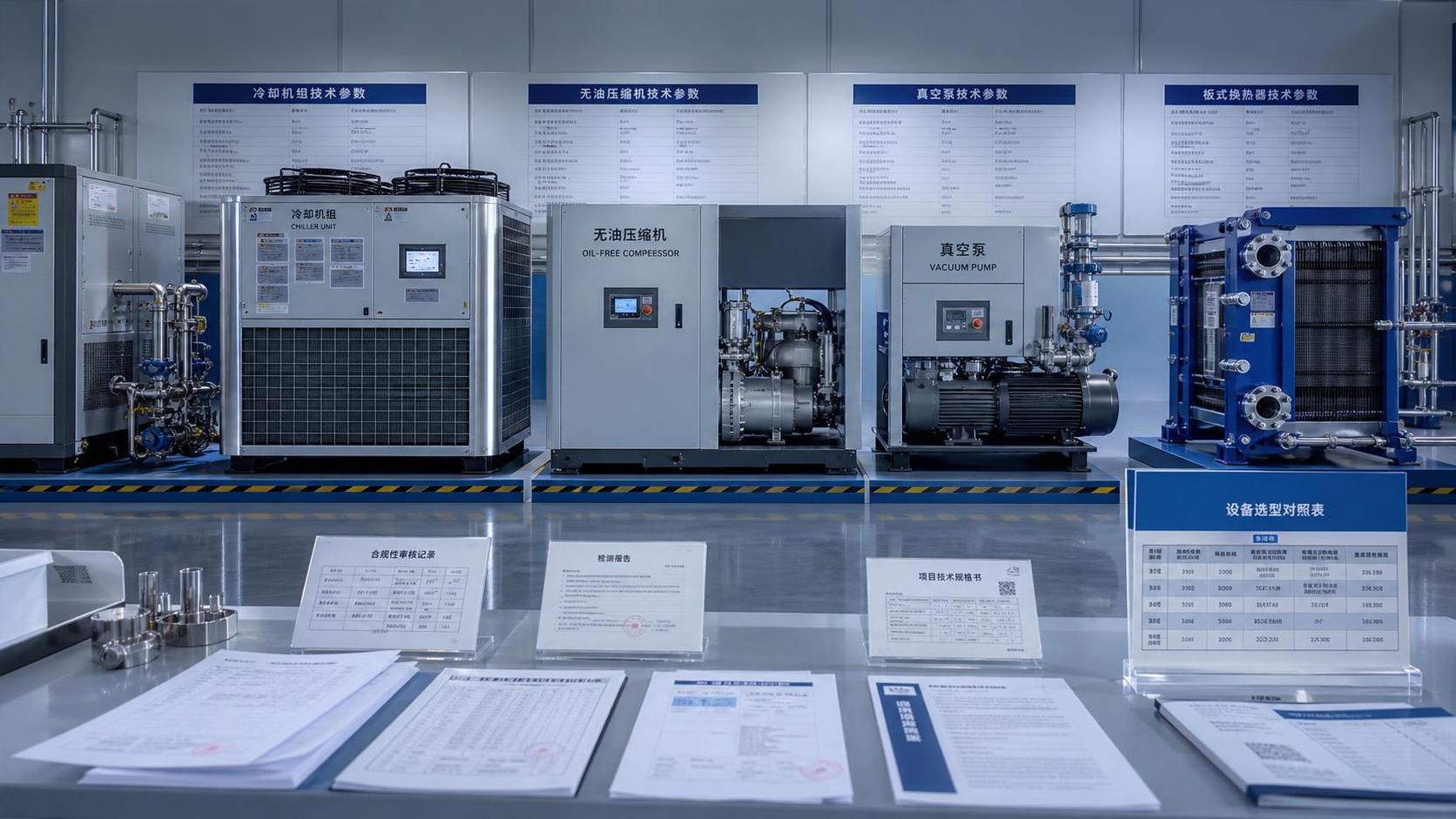
Can the supplier support the destination market with complete, usable, and auditable documentation?
Useful checks include the following:
Documentation quality often predicts service quality.
If files are inconsistent before shipment, support after startup is usually weaker.
It is also worth checking whether the exporter follows changing energy and environmental rules.
That includes refrigerant-linked utility interfaces, efficiency reporting, and decarbonization expectations in target regions.
This is one reason intelligence platforms such as GTC-Matrix matter.
They track policy shifts and technology evolution that can affect exporter suitability long before a tender is finalized.
Does the exporter understand energy efficiency, or just compressor output?
A compressed air technology exporter should be judged on total operating logic, not only on rated flow and pressure.
Compressed air is expensive utility power.
Small design choices can reshape lifecycle cost for years.
Start with specific energy performance.
Ask for kW per delivered air volume at actual operating conditions, not at ideal test points alone.
Then ask how the system behaves under partial load.
Many sites spend more time in variable demand than at full output.
A capable exporter should also discuss:
- Variable speed versus fixed speed tradeoffs
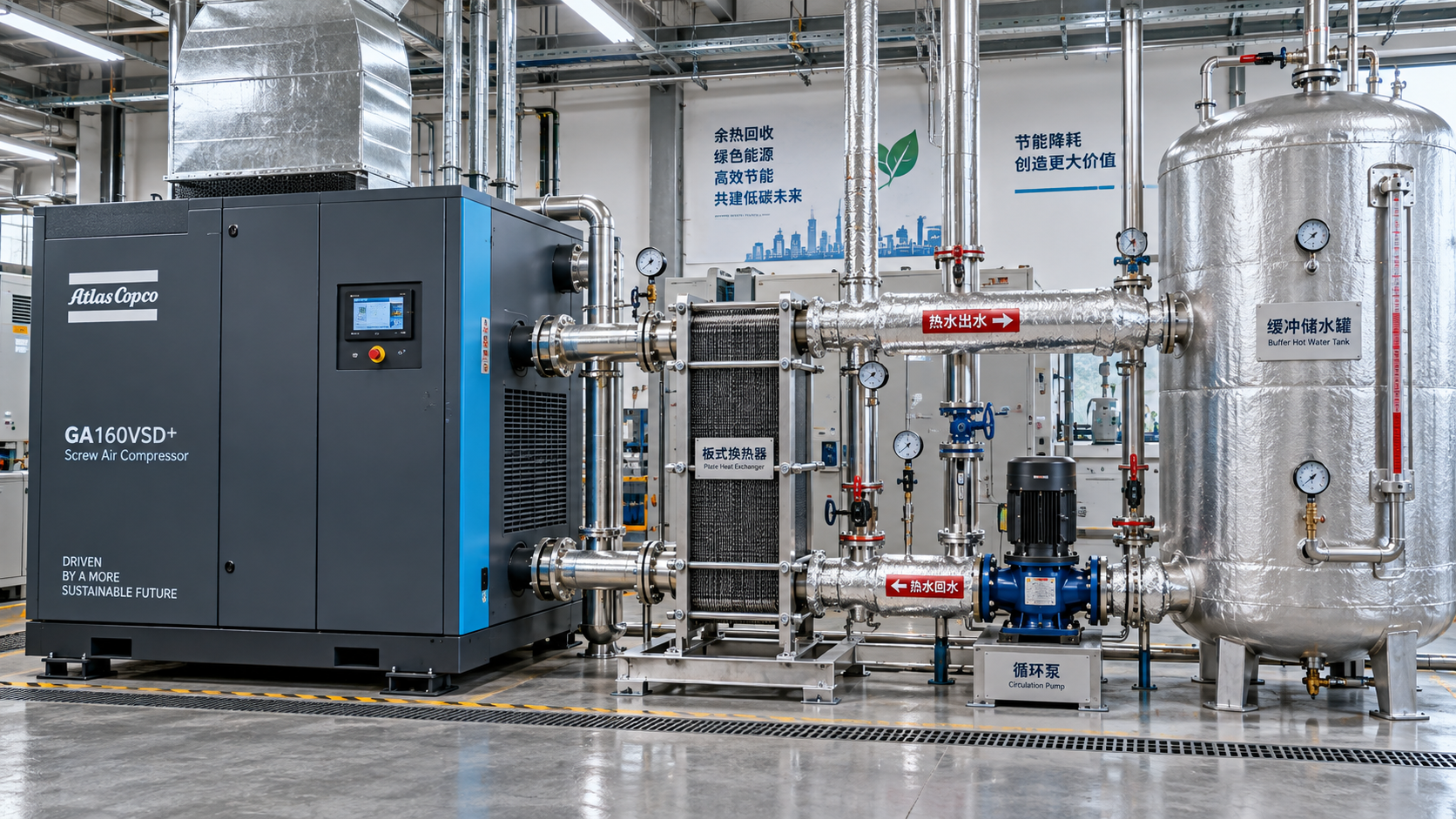
- Heat recovery options for water or space heating
- Dryer selection based on dew point and climate
- Pressure drop management across filters and piping
- Leakage monitoring and control integration
This is where exporter comparisons become more meaningful.
One quotation may be cheaper to buy, yet much more expensive to run.
Another may cost more upfront but fit carbon and efficiency targets better.
In sectors with strict thermal control and pure utility demand, that distinction is not minor.
It affects yield, uptime, and environmental reporting.
What are the most common warning signs during exporter comparison?
Some warning signs appear early, but they are easy to ignore when pricing pressure is high.
A compressed air technology exporter deserves closer scrutiny when the proposal looks complete but the details stay elusive.
Common red flags include:
- Performance claims without test conditions
- No clear boundary between included and excluded scope
- Generic manuals reused across different models
- Limited visibility on critical component brands
- Warranty terms that exclude normal process risks
- No local partner, remote diagnostics plan, or spare stock strategy
- Very short lead times that conflict with fabrication complexity
More subtle issues appear in conversation.
If the exporter avoids discussing lifecycle service, installation interfaces, or user training, the offer may be transaction driven rather than project driven.
A reliable exporter usually asks questions back.
That is often a good sign.
It suggests the supplier is testing assumptions before promising performance.
How can you compare long-term support, risk, and total cost with more confidence?
A fair comparison needs a broader scorecard.
Not every risk appears on the quotation sheet.
Some emerge only after installation, especially in export projects with distance, language, and service coordination barriers.
A practical review model can include five weighted areas:
- Technical suitability and system design accuracy
- Compliance, documentation, and traceability
- Energy efficiency and operating cost
- Service network, spare parts, and response time
- Commercial clarity, warranty strength, and delivery realism
This approach makes tradeoffs visible.
For example, a compressed air technology exporter with a slightly higher price may score much better on uptime risk and energy exposure.
That can protect budget more effectively over three to five years.
It also helps to request scenario-based answers.
Ask what happens if ambient conditions rise, demand shifts, or a core component fails during the warranty period.
The quality of those answers often separates experienced exporters from simple traders.
Before making a final decision, build a short comparison file.
List required air quality, expected load profile, destination standards, service expectations, and target energy assumptions.
Then test each compressed air technology exporter against the same decision frame.
That usually leads to a more defensible outcome than comparing unit price alone.
A sound exporter review should leave you with fewer unknowns, not just a cheaper number.
The next step is straightforward: define the application precisely, check technical and compliance evidence, and score service and energy risk with the same discipline as cost.
That is usually how stronger industrial partnerships are identified and weaker ones screened out early.
Related News
- What to evaluate before choosing a thermal process engineering supplierAuthor :

- How industrial utility systems affect energy costs in process plantsAuthor :

- What Data Is Needed to Assess Heat Recovery Decarbonization?Author :

- Can Waste Heat Recovery Support Carbon Neutrality Targets?Author :

- Is Compressor Heat Recovery Worth the Installation Cost?Author :

- What to verify before choosing a process separation technology supplierAuthor :

- When does process utilities engineering reduce project rework?Author :

- Where thermal efficiency optimization delivers the fastest savings in EuropeAuthor :

- What should you verify before selecting a heat transfer supplier?Author :

- What drives compressed air systems price for industrial projects?Author :

- How an industrial product knowledge comparison guide reduces sourcing riskAuthor :

- When does a procurement specification planning process reduce bid risk?Author :

- When does thermal system optimization for electronics reduce failure risk?Author :

- When high temperature process heating systems justify the higher energy costAuthor :

- How to compare sludge dewatering equipment by cake drynessAuthor :

- What to Check Before Sourcing a Gas Turbine for Distributed Power ProjectsAuthor :

- What drives industrial thermal systems price in large facility projectsAuthor :

- How to build an industrial product comparison chart that speeds up vendor selectionAuthor :

- Vacuum Technology Application Guide for Selecting the Right SystemAuthor :

- What Drives Vacuum Drying Cost in Industrial Procurement?Author :

- What Drives Compressed Air Pricing in Industrial Systems?Author :

- How Procurement Specification Planning Shapes Total Project CostAuthor :

- Compression Technology Guide: How to Compare Efficiency, Pressure Range, and Maintenance NeedsAuthor :

- How to Compare Industrial Separators by Throughput, Purity, and Maintenance LoadAuthor :

- How to Size a Compressed Air Equipment Receiver Tank for Stable PressureAuthor :

- Industrial Equipment Selection Guide: How to Compare Capacity, Duty Cycle, and Operating CostAuthor :

- How to Evaluate an Intellectualization Supplier for Industrial UpgradesAuthor :

- High-Efficiency Manufacturing: Cost Savings vs. Upgrade RiskAuthor :

- Thermal System Optimization Cost: What Drives ROI?Author :

- How to Plan Process Utilities for a Cleanroom Without Costly ReworkAuthor :

- How to Compare Process Heating Suppliers in MexicoAuthor :

- Food Processing Utilities: Common Sizing Mistakes That Raise Energy and Water UseAuthor :

- How to Build Procurement Specification Planning for Industrial EquipmentAuthor :

- OEM Cooperation for Industrial Equipment: Risks, Terms, and Cost PrioritiesAuthor :

- Specification-Oriented Product Resources That Speed Technical ReviewAuthor :

- Industrial Equipment Selection Guide: A Practical Buyer ChecklistAuthor :