OEM Cooperation for Industrial Equipment: Risks, Terms, and Cost Priorities




Why does OEM cooperation for industrial equipment attract so much attention now?
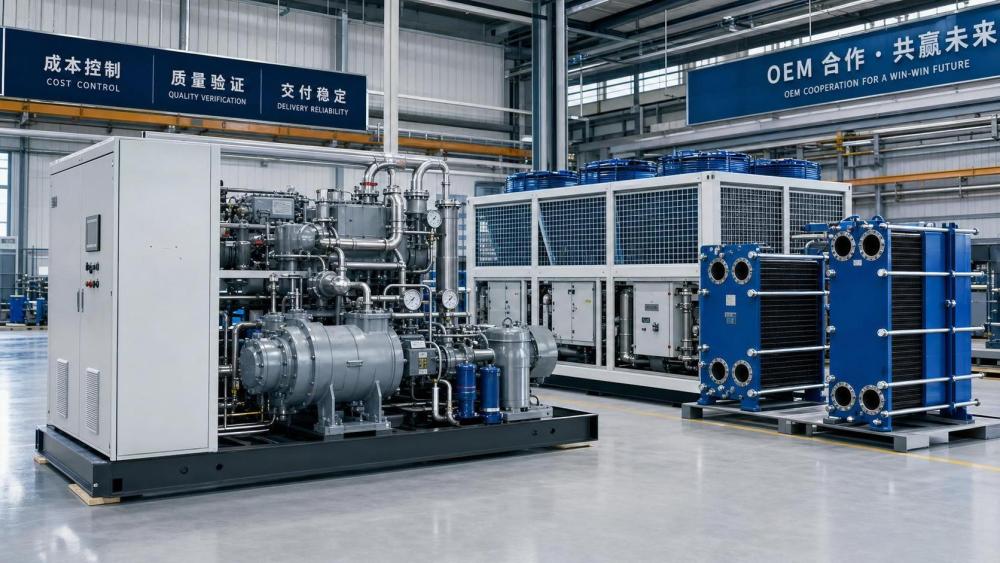
OEM cooperation for industrial equipment is no longer a simple sourcing shortcut. It has become a strategic choice tied to cost pressure, market timing, and technical specialization.
In sectors linked to cooling, compressed air, vacuum systems, and heat exchange, buyers often face a difficult balance. They need performance certainty, but they also need competitive landed cost.
That tension explains the growing interest in OEM cooperation for industrial equipment across broad industrial applications, from food processing lines to semiconductor utility systems.
The practical appeal is clear. OEM partnerships can reduce fixed investment, shorten launch cycles, and improve supply chain flexibility when demand shifts across regions.
Yet the downside is often underestimated. A weak OEM structure can create hidden exposure in tolerances, testing scope, spare parts continuity, and warranty responsibility.
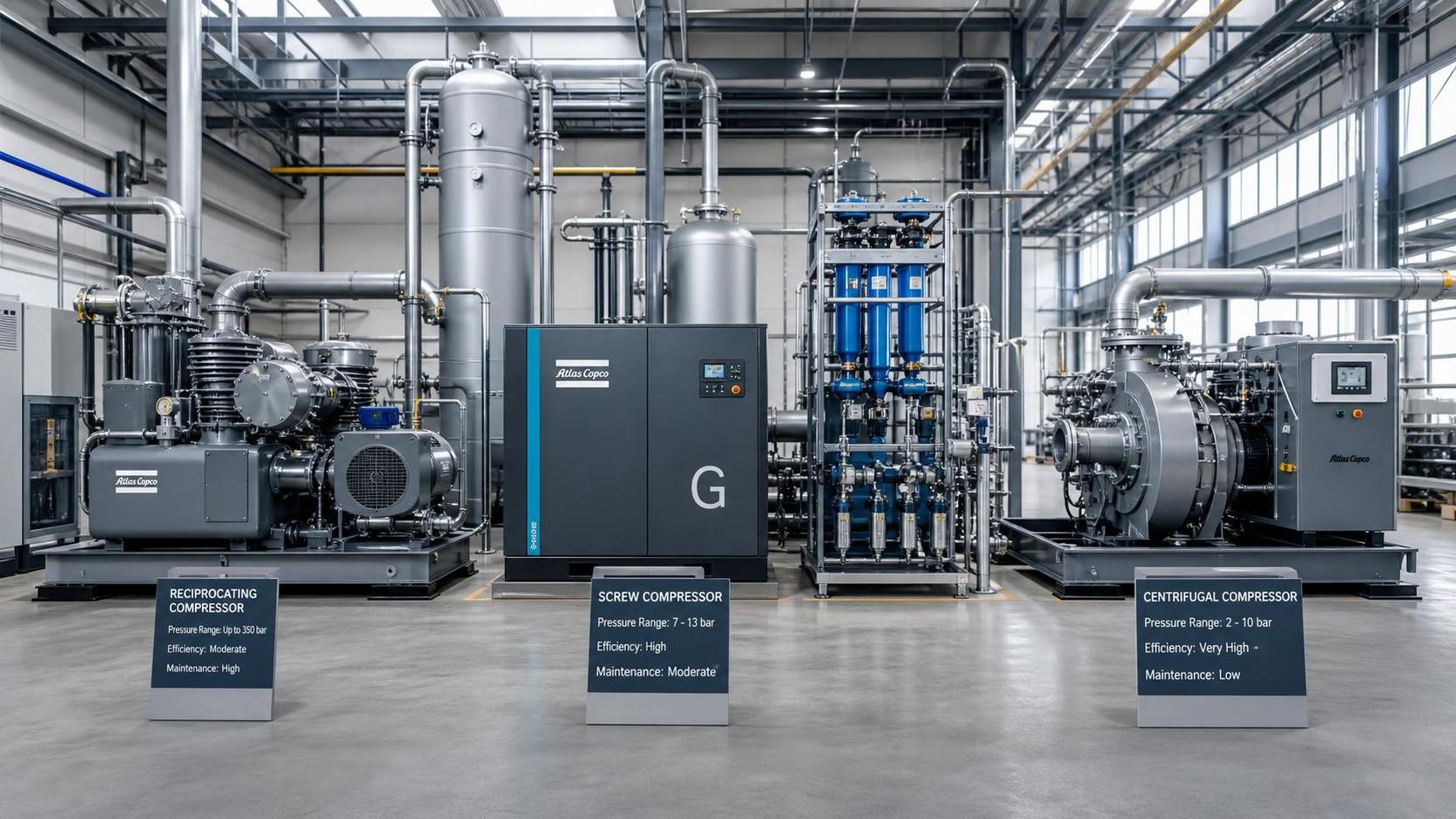
This matters even more in energy-sensitive systems. A compressor, chiller, vacuum skid, or heat exchanger may look competitive at purchase, but poor lifecycle performance can erase any unit-price advantage.
That is why market intelligence platforms such as GTC-Matrix matter in the background. They connect thermodynamic trends, energy pricing signals, and manufacturing economics into a usable decision context.
The real question is not whether OEM cooperation for industrial equipment is good or bad. The real question is whether the partnership terms match the technical and commercial reality of the application.
When is OEM cooperation the right move, and when does it become risky?
A useful starting point is to separate standardizable equipment from process-critical equipment. The same OEM model rarely fits both.
OEM cooperation for industrial equipment usually works well when the design is mature, the bill of materials is stable, and validation methods are already defined.
Examples include packaged air systems, repeatable cooling modules, standard vacuum assemblies, and auxiliary heat exchange units with clear operating windows.
Risk increases when the equipment sits close to process quality, environmental compliance, or energy efficiency targets that are difficult to verify after delivery.
In those cases, a low headline quote can hide expensive follow-on work. Requalification, retrofits, field troubleshooting, and excess energy use often become the real cost center.
A practical way to judge fit is to ask whether the OEM is building to a print, to a performance target, or to a partially defined concept.
- Build-to-print reduces design ambiguity, but still requires process control and traceability.
- Build-to-spec needs stronger acceptance criteria and change management.
- Concept-based OEM work carries the highest technical and contractual uncertainty.
In actual evaluations, the best candidates are often not the cheapest factories. They are the partners with stable engineering communication and evidence of process discipline.
Which contract terms deserve the closest review before signing?
Many OEM disputes start long before production. They begin with unclear language around specifications, ownership, and responsibility boundaries.
For OEM cooperation for industrial equipment, commercial terms and technical terms should be read together. A strong price clause cannot compensate for a weak quality clause.
The table below highlights the terms that usually affect cost, delivery, and post-sale exposure most directly.
One clause deserves special attention: engineering change notification. In thermal and compression equipment, a small part substitution can change efficiency, noise, durability, or compliance.
Another frequent blind spot is test language. Factory acceptance should specify load condition, ambient condition, instrument class, and pass or fail thresholds.
Without that detail, OEM cooperation for industrial equipment becomes vulnerable to interpretation after the equipment is already built.
Is the lowest quote ever the real saving? Cost priorities say otherwise
For many projects, the first comparison is still unit price. That is understandable, but it is rarely enough for industrial equipment sourcing.
A more reliable view separates acquisition cost from operating cost, risk cost, and continuity cost. This is where OEM cooperation for industrial equipment should be evaluated more carefully.
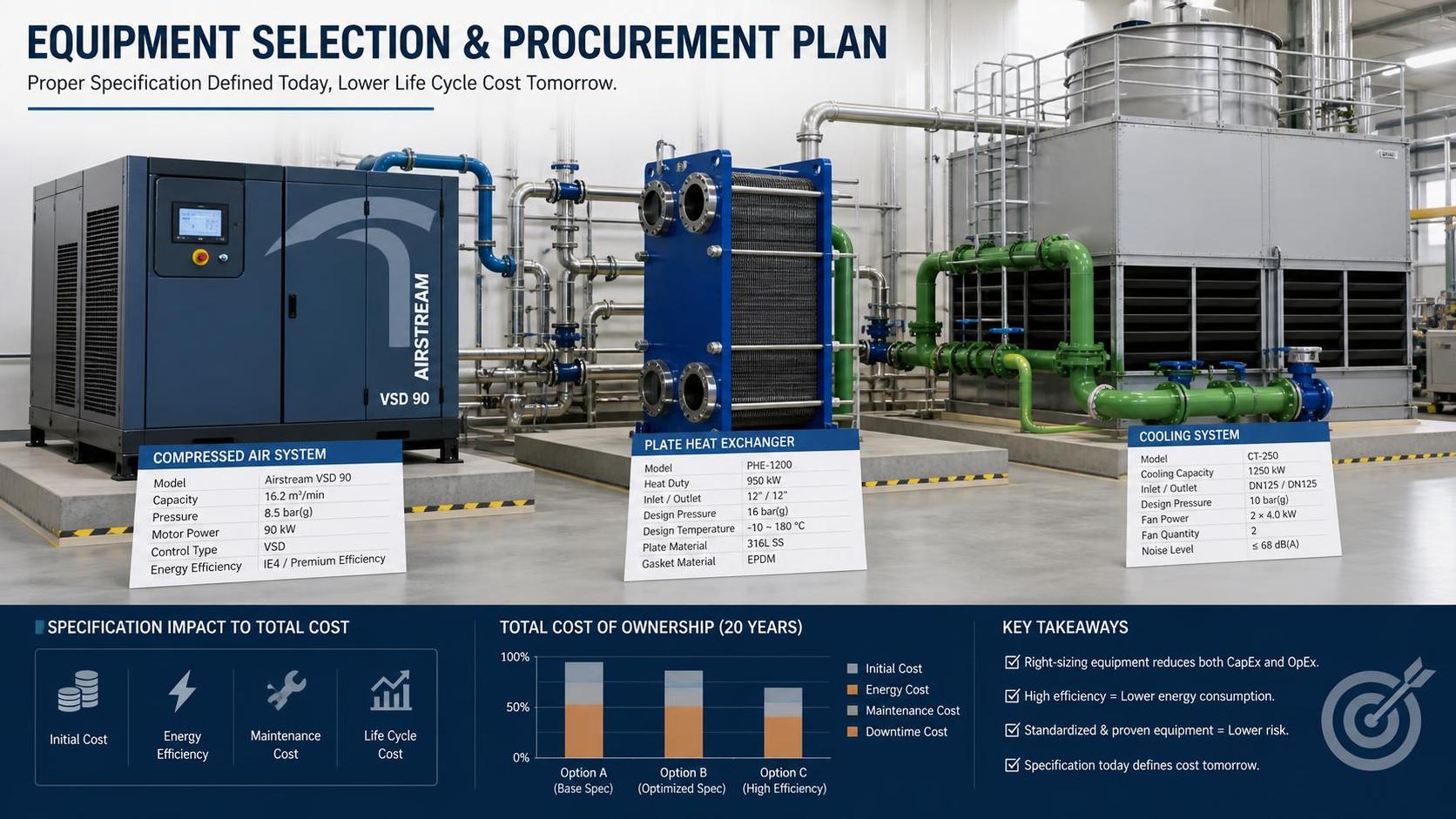
In cooling and compressed air systems, energy consumption often dominates the total cost profile. Even a modest efficiency gap can outweigh the original purchase difference.
GTC-Matrix often frames these decisions through energy conversion efficiency and sector demand signals. That perspective is useful because price volatility and refrigerant policy can quickly shift total ownership economics.
A practical cost review should include more than the quoted build price:
- Commissioning and validation effort at site
- Energy use under real operating load
- Spare parts availability over the planned lifecycle
- Downtime cost if a critical unit fails
- Compliance updates for refrigerants, emissions, or safety
- Engineering hours needed for ongoing changes
More often than expected, the winning OEM bid is the one with the lowest adjusted cost, not the lowest initial invoice.
That adjusted view becomes essential when equipment serves pharmaceuticals, food production, or electronics environments, where process drift is expensive and requalification can delay revenue.
What are the hidden risks that usually appear after the PO is placed?
Some risks are visible before contract signature. Others appear only after drawings are frozen, materials are ordered, or field installation begins.
The most common issue is not dramatic failure. It is gradual mismatch between expected and delivered performance.
For OEM cooperation for industrial equipment, these hidden risks deserve early screening:
- Uncontrolled second-source components that alter efficiency or durability
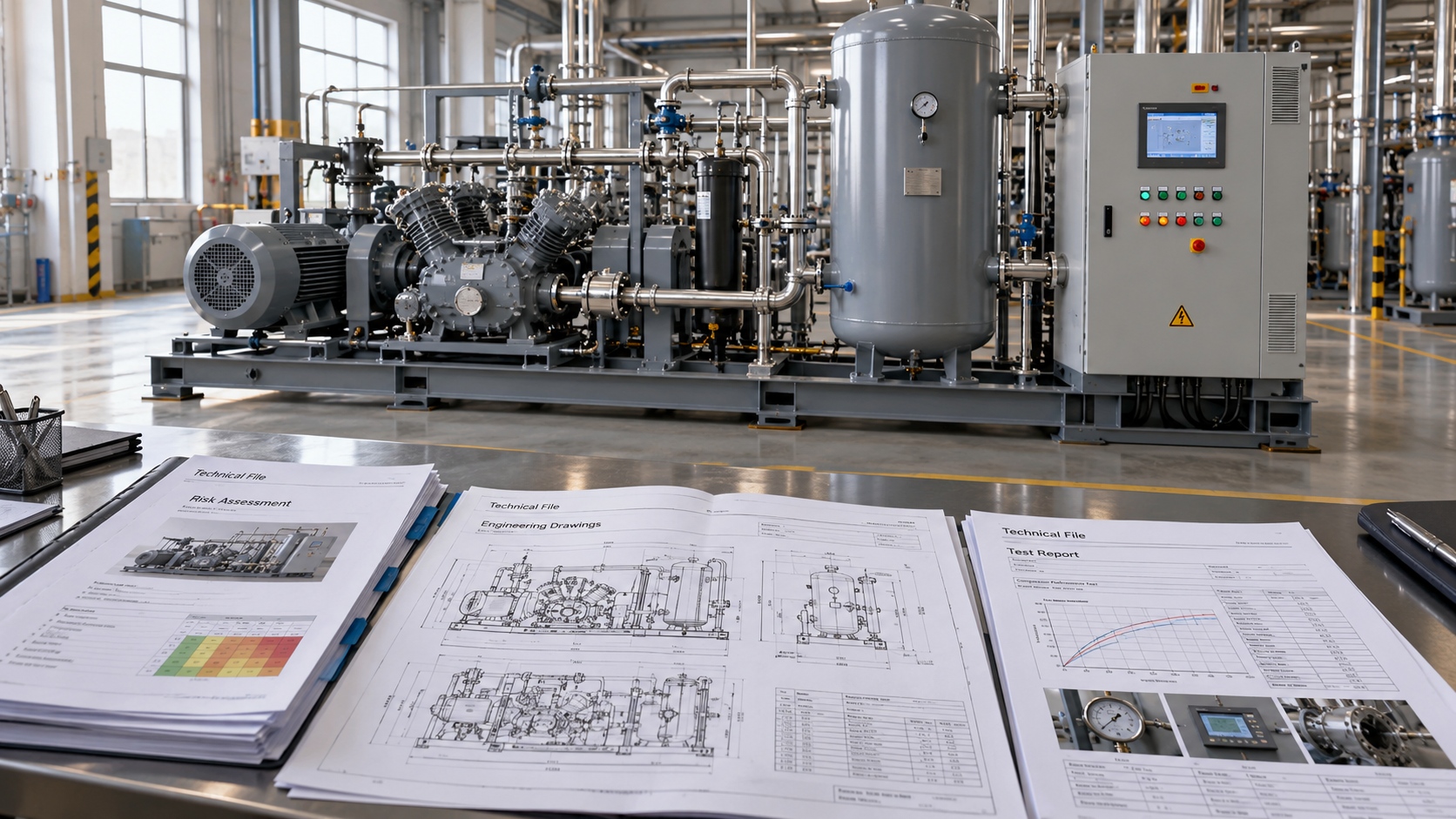
- Incomplete documentation for pressure vessels, controls, or material certificates
- Lead time drift caused by subcontractor dependence
- Firmware or PLC logic ownership remaining with the OEM
- Weak spare parts forecasting for long-life installations
- Testing that proves operation, but not required performance stability
Intellectual property exposure is also broader than drawings. In practice, parameter sets, control logic, tooling knowledge, and process recipes may be more valuable than the mechanical file package.
Another overlooked risk is organizational. If communication depends on one engineer or one sales contact, problem resolution slows down during scale-up or field failure analysis.
That is why capability review should cover both factory process and management depth. A technically sound supplier can still become a weak partner if governance is thin.
How can you evaluate an OEM partner without turning the process into overkill?
A disciplined review does not need to be heavy. It needs to be focused on failure points that truly affect cost, quality, and continuity.
A practical screening path for OEM cooperation for industrial equipment usually starts with three questions. Can the partner build consistently, document reliably, and support changes without loss of control?
If the answer is uncertain, move deeper before awarding volume. If the answer is clear, pilot production and staged ramp-up often work better than full immediate transfer.
A compact decision checklist
Where possible, link this review to external market signals. Energy costs, refrigerant transitions, and demand changes in regulated industries can reshape the value of a partnership faster than expected.
That broader view is exactly where industry intelligence becomes useful. It helps turn OEM cooperation for industrial equipment from a sourcing exercise into a better-informed business decision.
What should happen next before committing to OEM cooperation?
The next step is not to chase the shortest quote list. It is to tighten the decision frame.
Start by defining the application boundary clearly. Separate must-have performance, acceptable variation, and non-negotiable compliance points.
Then compare OEM cooperation for industrial equipment across total ownership logic, not purchase price alone. This usually reveals which offer is genuinely robust.
It also helps to map the relationship over time. Ask how design changes, field failures, spare parts, and future upgrades will be handled after the first shipment.
For thermal and compression-related equipment, market context should stay in view. Energy cost trends, component innovation, and environmental policy can all affect the economics of the deal.
A strong OEM choice is usually the one that stays reliable when conditions change, not only when assumptions remain perfect.
In simple terms, better OEM cooperation for industrial equipment comes from sharper specifications, firmer terms, and more realistic cost priorities.
That gives the decision a stronger base, especially when performance, energy efficiency, and long lifecycle stability matter as much as the initial order value.
Ready when you are. Send us a message to get started.
Related News
- How to select industrial equipment for automation with existing PLCsAuthor :

- How electricity prices shape industrial compressed air price trendsAuthor :

- Choosing air filtration systems for heavy dust in the Middle EastAuthor :

- How much does a fully installed compressed air monitoring system cost?Author :

- What documentation supports CE marking for industrial equipment?Author :

- How local support affects vacuum system costs in Southeast AsiaAuthor :

- How worldwide industry category guides help compare market opportunitiesAuthor :

- What drives sustainable thermal systems cost over their operating life?Author :

- Which industrial solution comparison criteria prevent project delays?Author :

- How Ambient Temperature and Load Profile Affect Industrial Compressor SizingAuthor :

- What to evaluate before choosing a thermal process engineering supplierAuthor :

- How industrial utility systems affect energy costs in process plantsAuthor :

- What Data Is Needed to Assess Heat Recovery Decarbonization?Author :

- Can Waste Heat Recovery Support Carbon Neutrality Targets?Author :

- Is Compressor Heat Recovery Worth the Installation Cost?Author :

- What to verify before choosing a process separation technology supplierAuthor :

- When does process utilities engineering reduce project rework?Author :

- Where thermal efficiency optimization delivers the fastest savings in EuropeAuthor :

- What should you verify before selecting a heat transfer supplier?Author :

- What drives compressed air systems price for industrial projects?Author :

- How an industrial product knowledge comparison guide reduces sourcing riskAuthor :

- When does a procurement specification planning process reduce bid risk?Author :

- When does thermal system optimization for electronics reduce failure risk?Author :

- When high temperature process heating systems justify the higher energy costAuthor :

- How to compare sludge dewatering equipment by cake drynessAuthor :

- What to Check Before Sourcing a Gas Turbine for Distributed Power ProjectsAuthor :

- What drives industrial thermal systems price in large facility projectsAuthor :

- How to build an industrial product comparison chart that speeds up vendor selectionAuthor :

- Vacuum Technology Application Guide for Selecting the Right SystemAuthor :

- What Drives Vacuum Drying Cost in Industrial Procurement?Author :

- What Drives Compressed Air Pricing in Industrial Systems?Author :

- How Procurement Specification Planning Shapes Total Project CostAuthor :

- Compression Technology Guide: How to Compare Efficiency, Pressure Range, and Maintenance NeedsAuthor :

- How to Compare Industrial Separators by Throughput, Purity, and Maintenance LoadAuthor :

- How to Size a Compressed Air Equipment Receiver Tank for Stable PressureAuthor :

- Industrial Equipment Selection Guide: How to Compare Capacity, Duty Cycle, and Operating CostAuthor :