Food Processing Utilities: Common Sizing Mistakes That Raise Energy and Water Use




Why do food processing utilities become expensive even when the equipment looks adequate?
Food processing utilities often look sufficient on paper, yet operating costs keep rising after commissioning.
The reason is usually not one failed machine. It is a sizing decision that quietly shifts energy, water, and control performance in the wrong direction.
In practical terms, oversized cooling, compressed air, hot water, or heat recovery systems rarely run at their best point.
Undersized systems create a different problem. They force frequent starts, unstable temperatures, pressure drops, and emergency water use.
That is why food processing utilities deserve early attention during layout, process definition, and utility balance reviews.
A strong engineering habit is to size for real load bands, not for a single peak assumption copied across the whole plant.
This matters even more in food plants, where sanitation cycles, batch timing, product changeovers, and seasonal ambient conditions keep shifting utility demand.
GTC-Matrix often frames this as a thermodynamic matching problem. The best system is not the biggest one. It is the one aligned with actual duty profiles.
Where do sizing mistakes usually happen first?
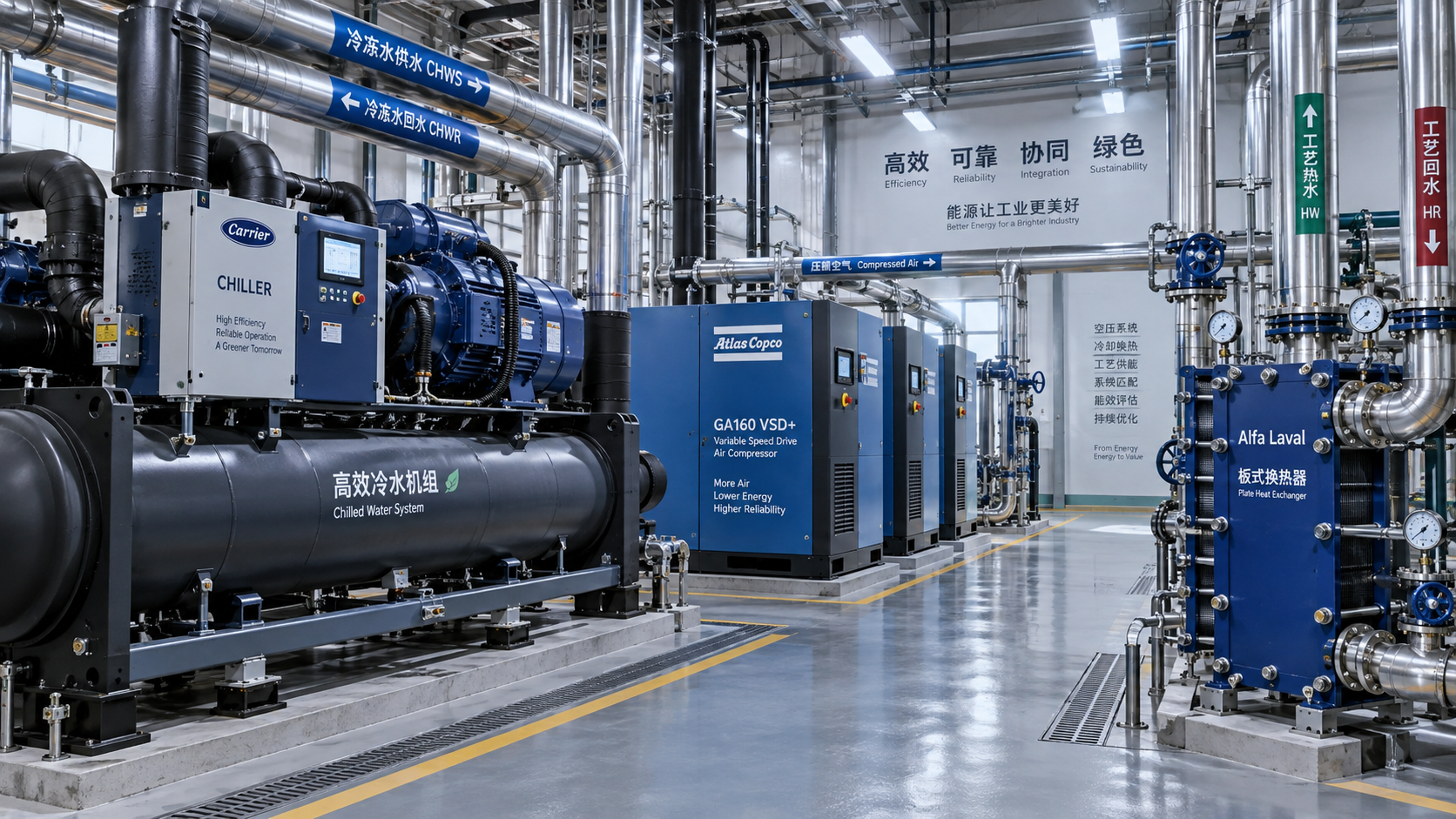
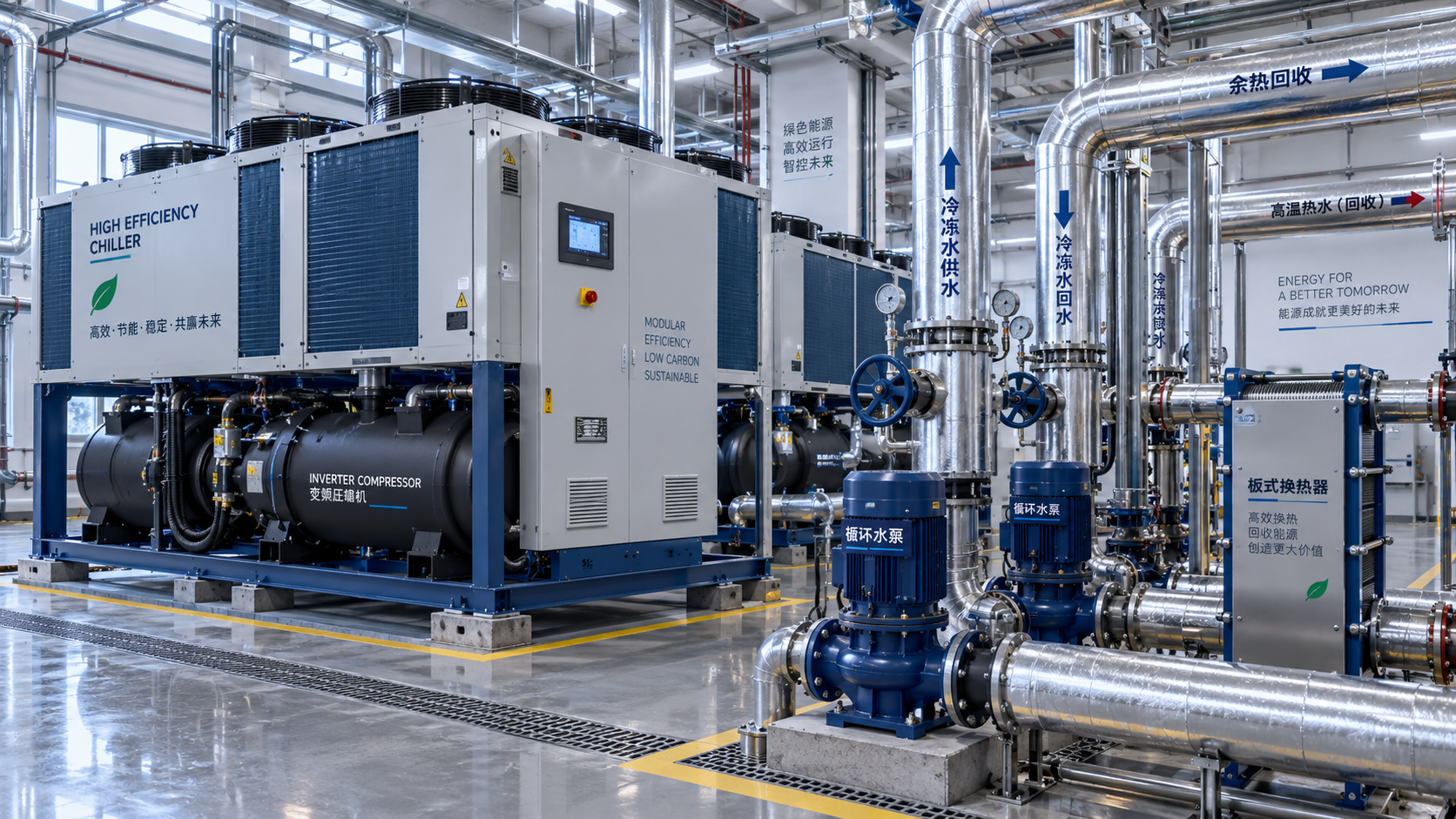
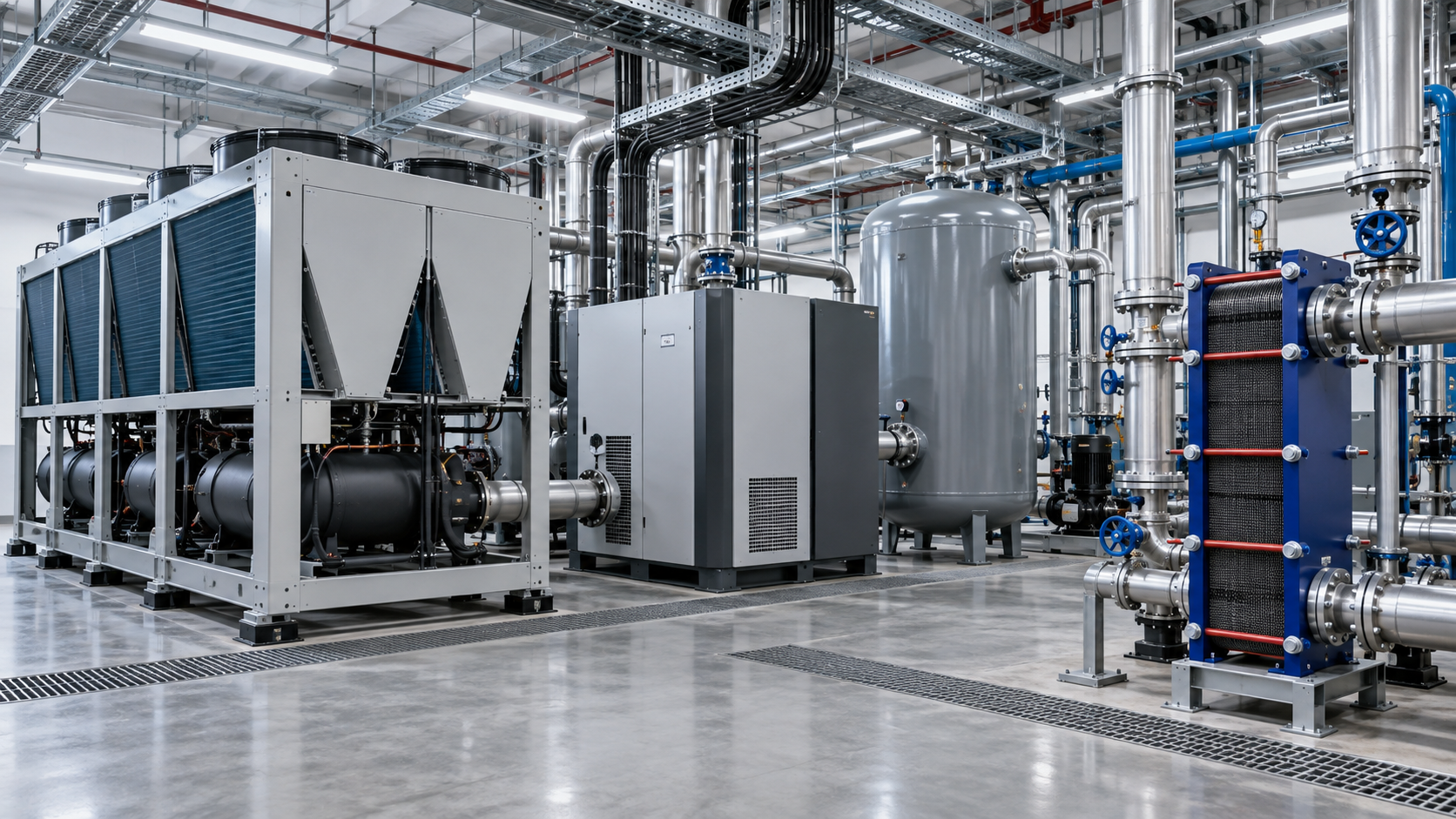
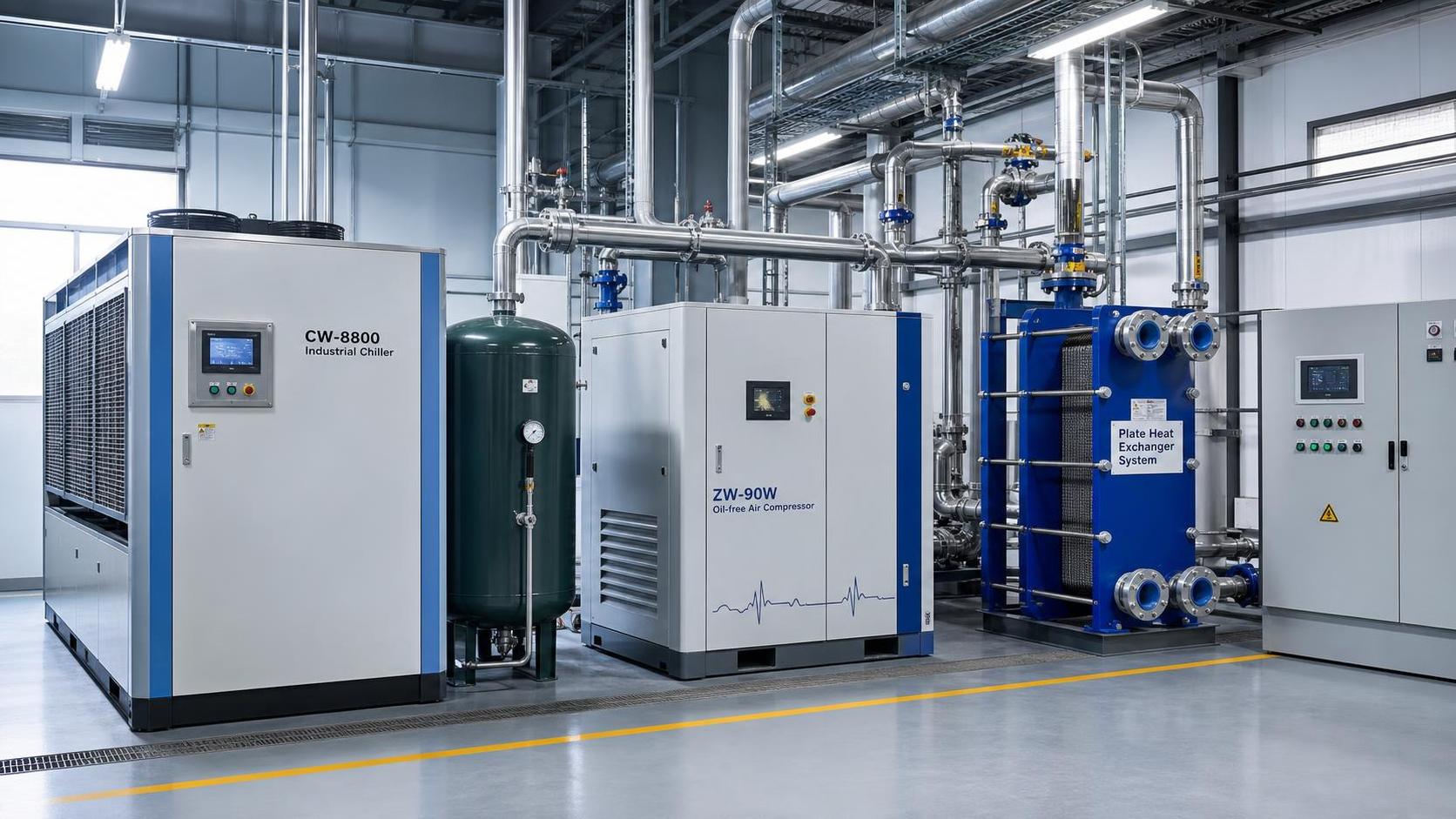
Most mistakes appear in four places: refrigeration, compressed air, heat exchange, and process water circulation.
These systems interact. A wrong choice in one area can force hidden penalties in another.
For example, an oversized refrigeration plant may short cycle at part load. That increases compressor wear and weakens humidity or temperature stability.
An undersized chilled water loop can push pumps harder, extend pull-down times, and raise product risk during peak production windows.
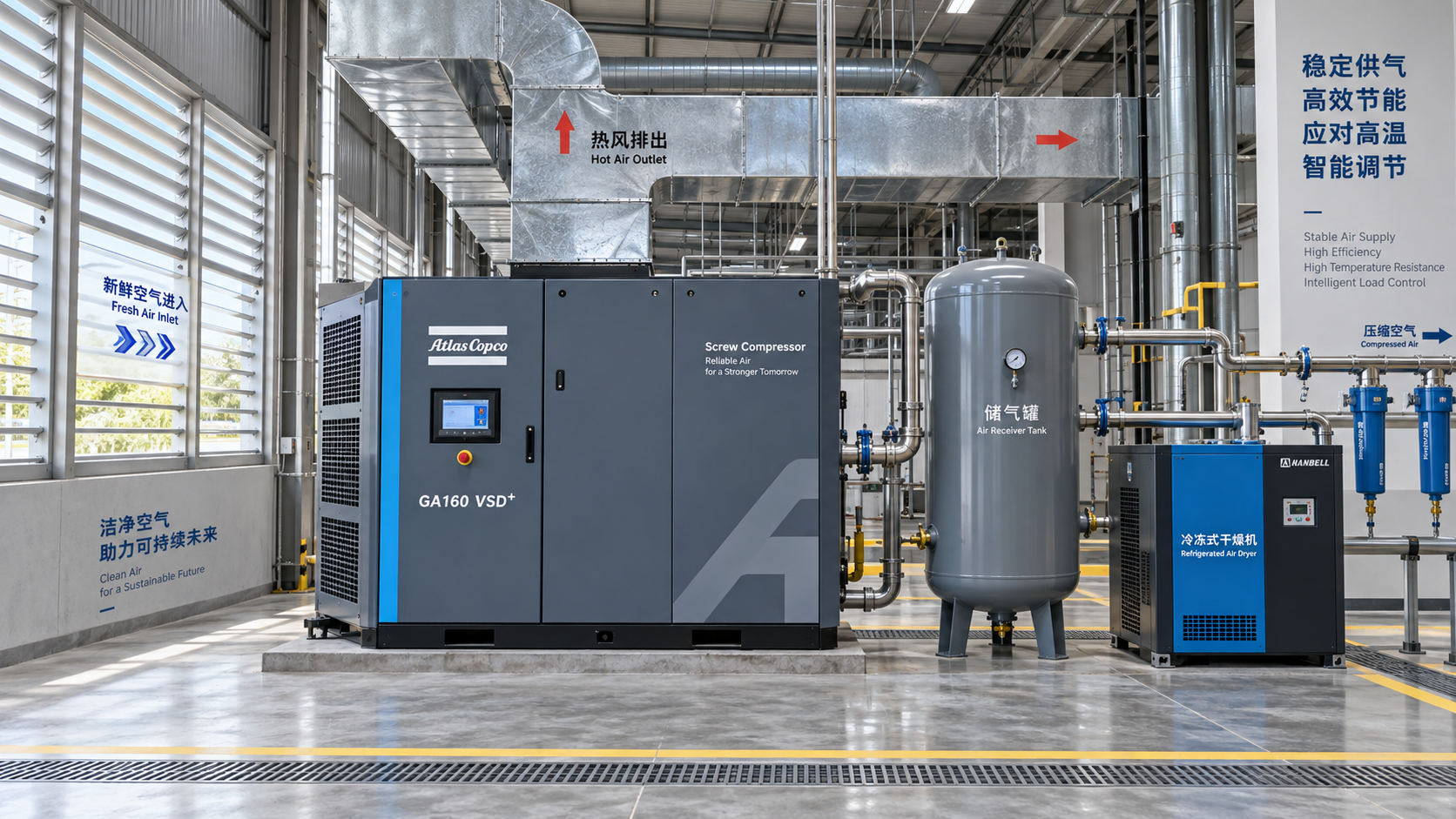
Compressed air is another common issue. Many plants size to a nameplate total instead of measured simultaneous demand.
The result is a larger compressor station, more unloaded running hours, and higher drying and filtration losses.
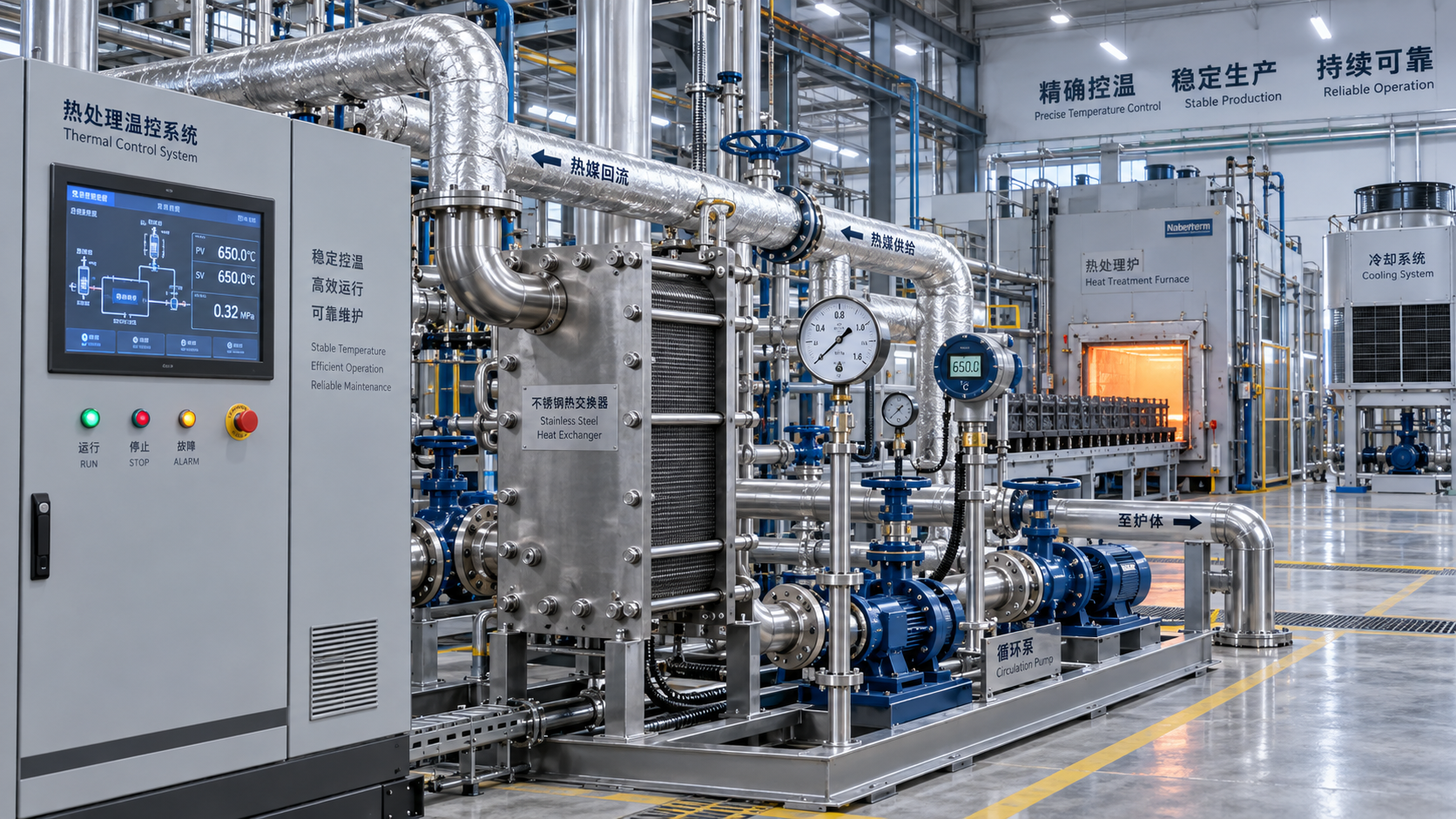
Heat exchangers are often selected with excessive safety factors. That sounds conservative, but it can increase fouling risk, pump energy, and cleaning frequency.
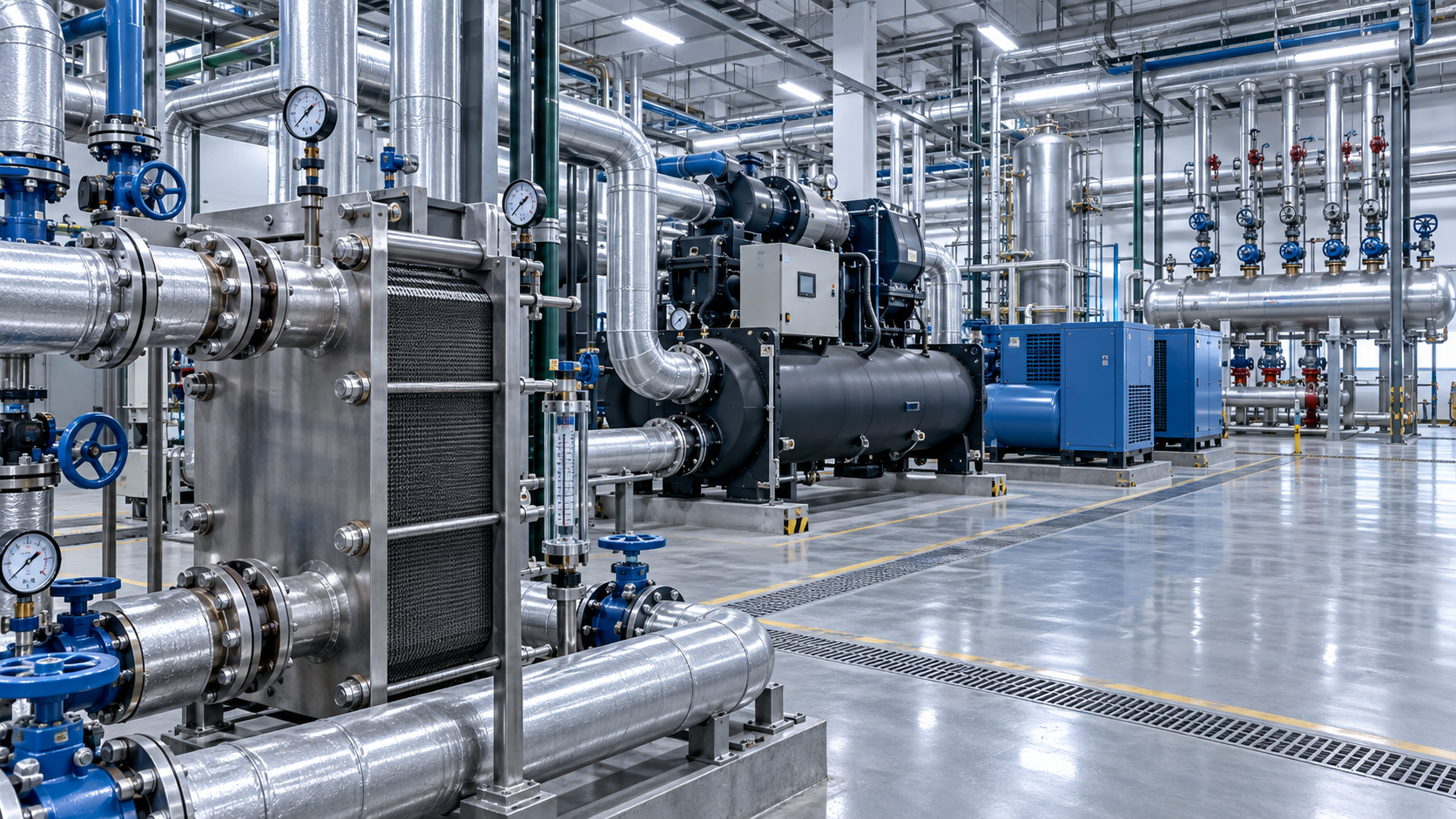
Water systems also suffer when pipe diameters, storage volumes, or recirculation rates are based on rough allowances instead of cleaning and process schedules.
A quick way to spot the weak point
If one utility keeps running while production is idle, or if it swings sharply between low and high load, sizing deserves another look.
The table below summarizes the patterns seen most often in food processing utilities.
Is oversizing safer, or does it usually create new operating problems?
Oversizing feels safe during project review because it reduces fear of future shortages.
In reality, oversized food processing utilities often shift risk from capacity to efficiency and control.
A larger compressor may spend too much time unloaded. A larger cooling system may hunt around the setpoint instead of holding stable conditions.
Storage tanks can also be oversized. When turnover slows, sanitation discipline becomes more important, and thermal losses rise.
This does not mean reserve margin is wrong. It means reserve margin should be deliberate, staged, and measurable.
A better approach is modularity. Two or three smaller units usually handle variable demand better than one oversized central asset.
That approach also supports maintenance planning. One unit can be isolated while production continues at reduced but acceptable load.
In food processing utilities, resilience comes from controllability and redundancy logic, not from gross oversizing alone.
What reserve margin is reasonable?
There is no universal number. The right margin depends on batch sensitivity, sanitation timing, product shelf-life risk, and maintenance strategy.
What should be avoided is stacking margins at every step: process load, exchanger selection, pump sizing, and utility plant sizing.
That multiplication of safety factors is one of the quietest ways food processing utilities become expensive.
How can you tell whether undersizing is already affecting production?
Undersizing usually reveals itself through instability before it shows up as a full shutdown.
Cooling may recover slowly after washdown. Air pressure may drop at the far end of the line. Hot water may arrive late during overlapping cleaning events.
Operators often compensate without calling it a utility issue. They extend cycle time, open bypasses, raise setpoints, or schedule around the weakness.
That creates hidden cost because the plant appears to cope while overall efficiency keeps declining.
A useful diagnostic review should compare design assumptions against live operating behavior in three windows: normal load, sanitation overlap, and peak ambient conditions.
- Check pressure or temperature at the worst location, not only at the utility room.
- Track start-stop frequency for major utility assets.
- Compare actual flow against valve position and pump speed trends.
- Review water makeup, blowdown, and cleaning cycle losses together.
If those data points are missing, the first corrective step is metering, not equipment replacement.
That is where intelligence platforms such as GTC-Matrix add value. They connect equipment behavior with broader technology and energy efficiency benchmarks.
Which design assumptions deserve the hardest challenge before a project is frozen?
Some assumptions travel from concept design into procurement without enough resistance. Those are usually the expensive ones.
The first is simultaneous demand. In food processing utilities, not every user operates at full draw at the same time.
The second is future expansion. Expansion matters, but it should be translated into staged infrastructure, not automatic oversizing everywhere.
The third is fouling allowance. It should reflect the actual fluid condition, cleaning method, and run length, not a generic conservative number.
The fourth is utility quality. Oil-free air, tighter temperature bands, or cleaner process water can change equipment choice and sizing logic.
A fifth assumption is climate stability. Seasonal heat, humidity, and water temperature shifts can change load shape more than many teams expect.
GTC-Matrix regularly highlights why refrigerant policy, efficient compression, and heat transfer design trends matter here. Utility sizing is no longer an isolated calculation.
It sits inside a changing framework of energy cost, emissions pressure, and reliability expectations.
Questions worth asking before release
- What load is continuous, and what load is occasional?
- Which utility users are most sensitive to short disturbances?
- Can one modular asset cover turndown better than one large unit?
- Which margin was already added upstream in the process estimate?
- Where will actual performance be measured after startup?
What is the most practical way to improve food processing utilities without restarting the whole project?
The workable path is usually a focused utility reassessment, not a full redesign.
Start by building a simple demand map across production hours, cleaning windows, and ambient extremes.
Then review the biggest energy and water users against that map. The aim is to find mismatch, not just low efficiency.
In many plants, the fastest gains come from control logic, sequencing, storage turnover, and pressure or temperature reset strategies.
Hardware changes can follow once the demand picture is clear.
For food processing utilities, these actions usually give the clearest return:
- Install or validate meters on major cooling, air, and water branches.
- Separate base load from peak load and assign equipment accordingly.
- Review CIP overlap to reduce simultaneous hot water and pump demand.
- Check exchanger approach temperatures before increasing plant capacity.
- Audit compressed air leaks before authorizing larger compressors.
The broader lesson is straightforward. Food processing utilities should be sized for how the plant truly runs, not for a worst-case spreadsheet alone.
When utility sizing reflects operating reality, energy use drops, water losses shrink, and production becomes easier to stabilize.
The next sensible step is to review real load data, challenge stacked safety factors, and define measurable utility performance targets before the next expansion or retrofit.
Ready when you are. Send us a message to get started.
Related News
- How to select industrial equipment for automation with existing PLCsAuthor :

- How electricity prices shape industrial compressed air price trendsAuthor :

- Choosing air filtration systems for heavy dust in the Middle EastAuthor :

- How much does a fully installed compressed air monitoring system cost?Author :

- What documentation supports CE marking for industrial equipment?Author :

- How local support affects vacuum system costs in Southeast AsiaAuthor :

- How worldwide industry category guides help compare market opportunitiesAuthor :

- What drives sustainable thermal systems cost over their operating life?Author :

- Which industrial solution comparison criteria prevent project delays?Author :

- How Ambient Temperature and Load Profile Affect Industrial Compressor SizingAuthor :

- What to evaluate before choosing a thermal process engineering supplierAuthor :

- How industrial utility systems affect energy costs in process plantsAuthor :

- What Data Is Needed to Assess Heat Recovery Decarbonization?Author :

- Can Waste Heat Recovery Support Carbon Neutrality Targets?Author :

- Is Compressor Heat Recovery Worth the Installation Cost?Author :

- What to verify before choosing a process separation technology supplierAuthor :

- When does process utilities engineering reduce project rework?Author :

- Where thermal efficiency optimization delivers the fastest savings in EuropeAuthor :

- What should you verify before selecting a heat transfer supplier?Author :

- What drives compressed air systems price for industrial projects?Author :

- How an industrial product knowledge comparison guide reduces sourcing riskAuthor :

- When does a procurement specification planning process reduce bid risk?Author :

- When does thermal system optimization for electronics reduce failure risk?Author :

- When high temperature process heating systems justify the higher energy costAuthor :

- How to compare sludge dewatering equipment by cake drynessAuthor :

- What to Check Before Sourcing a Gas Turbine for Distributed Power ProjectsAuthor :

- What drives industrial thermal systems price in large facility projectsAuthor :

- How to build an industrial product comparison chart that speeds up vendor selectionAuthor :

- Vacuum Technology Application Guide for Selecting the Right SystemAuthor :

- What Drives Vacuum Drying Cost in Industrial Procurement?Author :

- What Drives Compressed Air Pricing in Industrial Systems?Author :

- How Procurement Specification Planning Shapes Total Project CostAuthor :

- Compression Technology Guide: How to Compare Efficiency, Pressure Range, and Maintenance NeedsAuthor :

- How to Compare Industrial Separators by Throughput, Purity, and Maintenance LoadAuthor :

- How to Size a Compressed Air Equipment Receiver Tank for Stable PressureAuthor :

- Industrial Equipment Selection Guide: How to Compare Capacity, Duty Cycle, and Operating CostAuthor :