



Compressed Air Equipment: Key Cost Factors Before Purchase




Compressed Air Equipment: Key Cost Factors Before Purchase
Before investing in compressed air equipment, the sticker price is only the starting point.
The bigger question is how that system behaves over ten or fifteen years.
Energy use, maintenance, installation, downtime risk, and future expansion often outweigh the initial invoice.
That is why compressed air equipment should be evaluated as a long-term operating asset, not a one-time purchase.
A structured cost review helps control capital spending, reduce surprises, and improve lifecycle return.
Why Total Cost Matters More Than Purchase Price
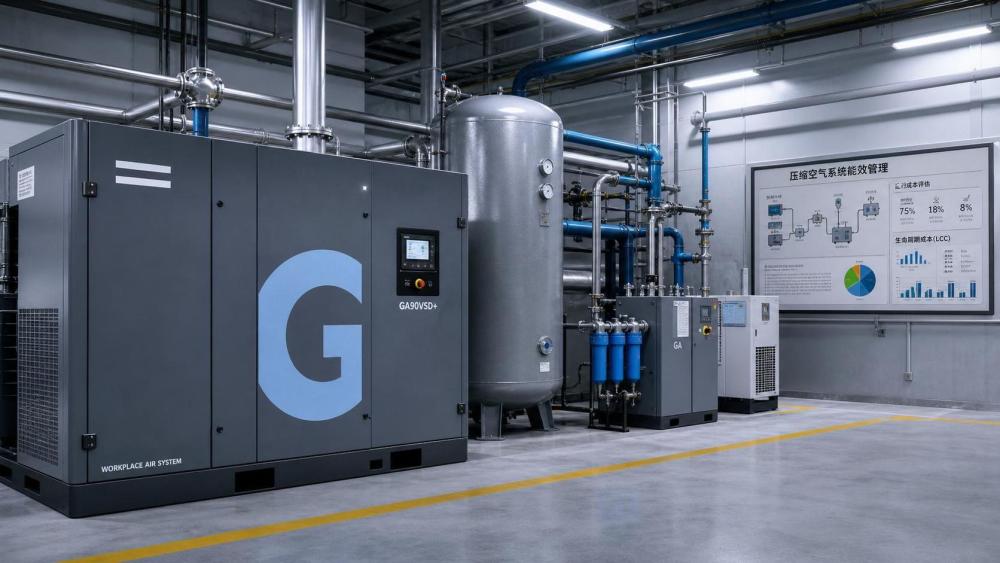
Most compressed air equipment spends far more on electricity than on acquisition.
In many plants, energy can represent 70% of lifetime cost.
That changes the approval logic immediately.
A lower-priced compressor may look attractive today, yet become expensive through poor efficiency, frequent service, or unstable output.
On the other hand, a higher-efficiency package may protect margins for years.
This is especially relevant when power tariffs are volatile.
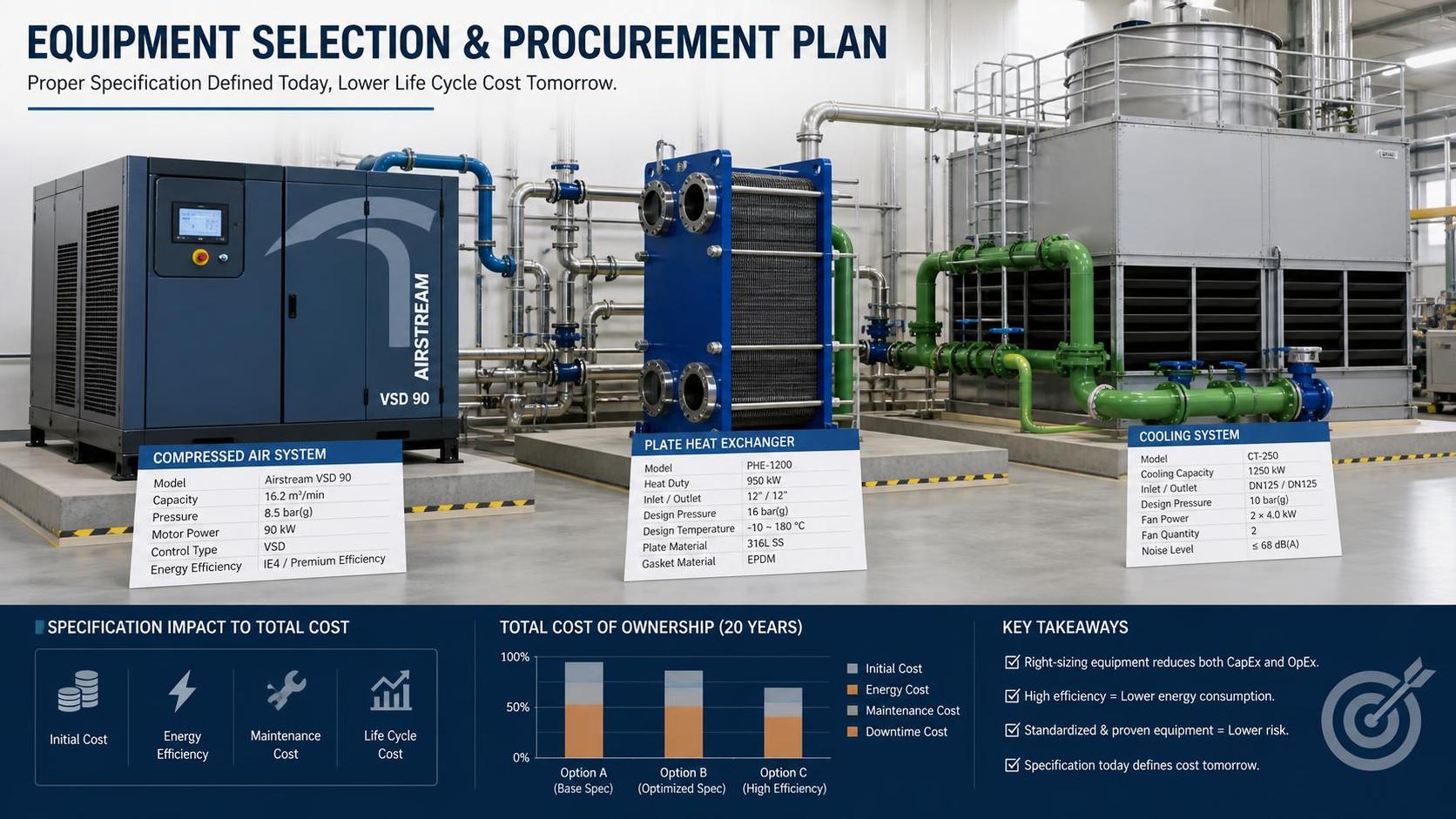
From a capital planning view, compressed air equipment should be reviewed through total cost of ownership.
That includes direct cost, hidden cost, and risk-adjusted cost.
- Direct cost includes purchase, freight, installation, and commissioning.
- Hidden cost includes leaks, oversized operation, poor controls, and premature maintenance.
- Risk-adjusted cost includes downtime, product loss, and compliance issues.
Energy Consumption Is Usually the Biggest Cost Driver
For most compressed air equipment, electricity is the dominant line item.
Even small efficiency gaps become large budget differences over time.
A system running thousands of hours each year magnifies every wasted kilowatt.
This also means nameplate power alone is not enough for comparison.
A better review looks at specific energy performance under actual load conditions.
What to check during evaluation
- Operating hours per year.
- Average and peak airflow demand.
- Part-load efficiency, not only full-load rating.
- Power tariff patterns, including peak-hour pricing.
- Heat recovery potential from compressed air equipment.
Variable speed technology can cut waste in plants with fluctuating demand.
Still, it is not always the automatic answer.
If the load profile is stable, a fixed-speed setup may deliver better economics.
The right compressed air equipment depends on the actual duty cycle, not generic sales claims.
System Sizing Errors Create Long-Term Financial Waste
Oversizing is one of the most common and costly mistakes.
Many buyers choose larger compressed air equipment for safety.
In practice, that buffer often becomes a permanent source of inefficiency.
Oversized compressors cycle poorly, consume more power, and wear components faster.
Undersizing is also risky because pressure drops can affect quality and throughput.
A demand study is usually cheaper than years of avoidable operating cost.
Useful sizing questions
- What is the actual base load?
- How often do short peaks occur?
- Can storage handle temporary demand spikes?
- Will future expansion need modular capacity?
Modular compressed air equipment often lowers risk because capacity can be added in stages instead of overbuying on day one.
Installation, Infrastructure, and Site Conditions Affect Real Budget
The quoted machine price rarely includes the full installed cost.
This is where budget gaps often appear.
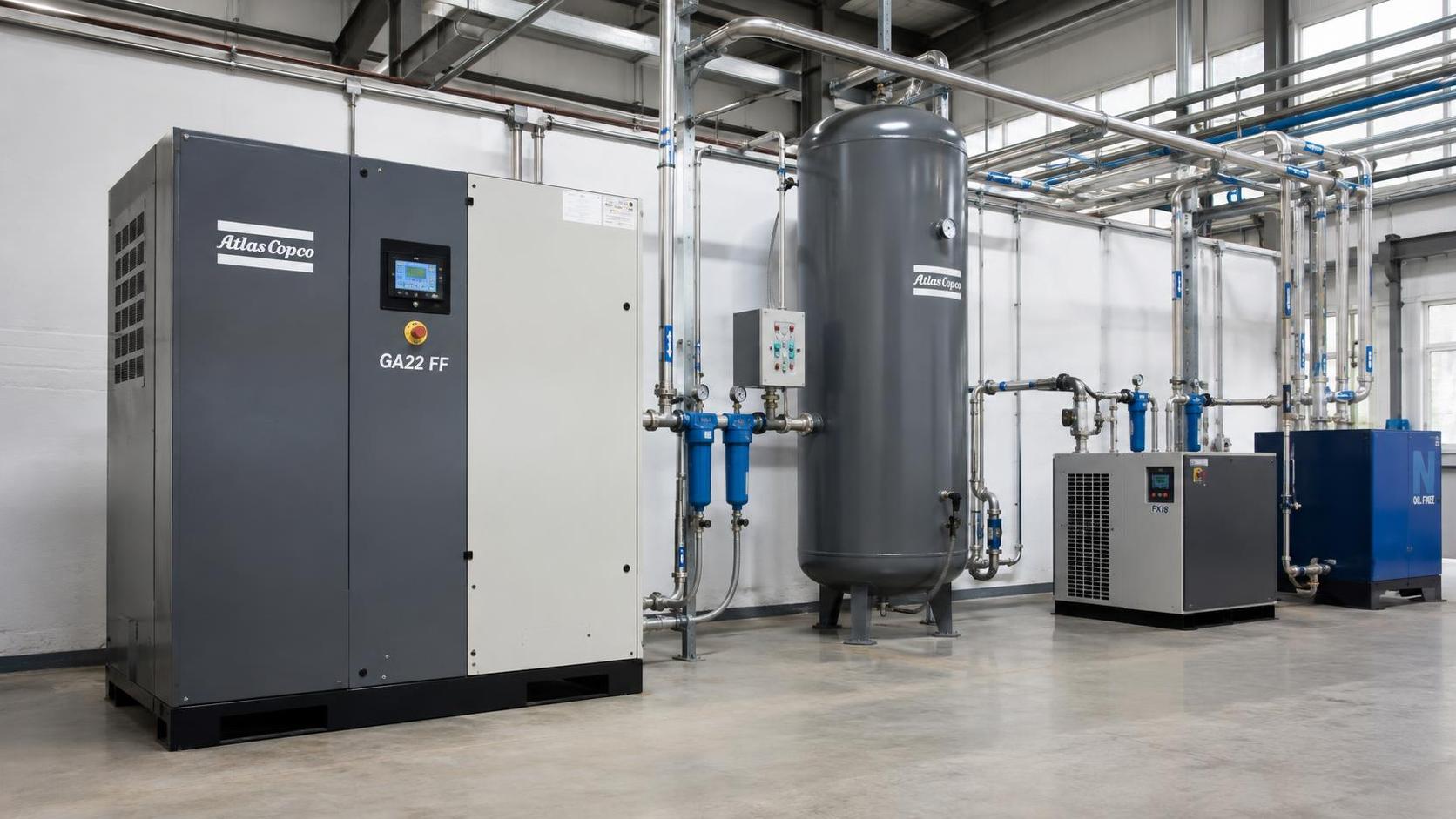
Compressed air equipment may require electrical upgrades, ventilation changes, foundations, piping revisions, dryers, filters, and noise control.
In older facilities, hidden infrastructure limits can drive major extra spending.
Location also matters.
Hot ambient temperatures, dusty production areas, and long distribution runs all affect system design and efficiency.
Common budget items beyond the compressor
- Power supply, cabling, and protection devices.
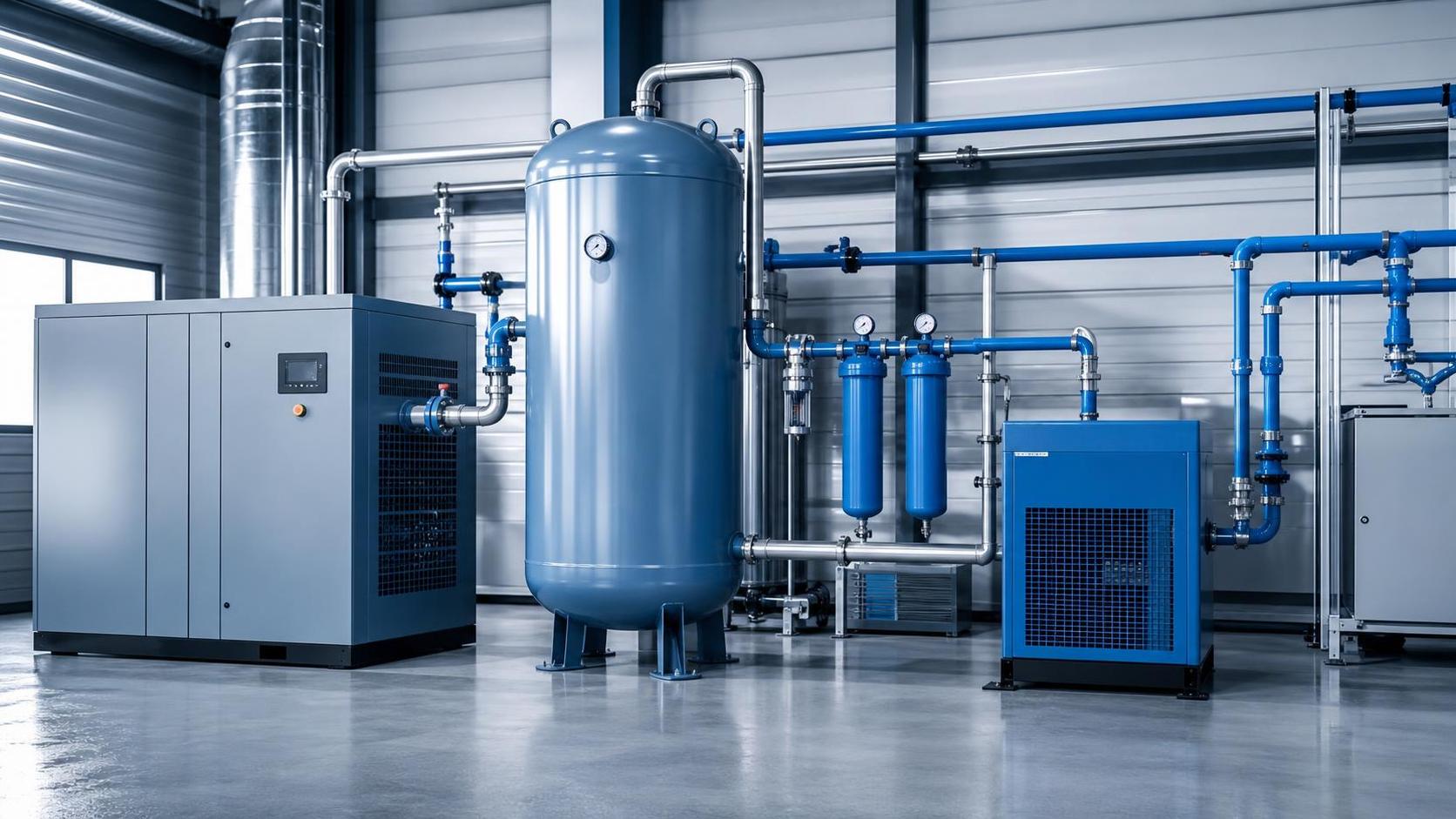
- Air treatment such as dryers and filtration.
- Receiver tanks and condensate management.
- Piping layout optimization and leak reduction work.
- Commissioning, training, and startup support.
A realistic installed-cost model makes compressed air equipment approval more accurate and reduces change-order pressure later.
Maintenance, Serviceability, and Downtime Risk Need Early Review
Maintenance cost is not only about spare parts.
It also includes labor access, service intervals, technician availability, and production interruption.
Some compressed air equipment is efficient on paper but difficult to maintain in real operating conditions.
That creates a hidden cost curve over time.
Downtime deserves even more attention.
If compressed air equipment supports packaging, clean processes, automation, or precision production, failure may stop the line entirely.
Review these service factors
- Recommended maintenance frequency.
- Availability and price stability of consumables.
- Local service network response time.
- Remote monitoring and predictive maintenance options.
- Redundancy strategy for critical operations.
In practical terms, reliable compressed air equipment often protects revenue more effectively than the cheapest unit protects cash flow.
Air Quality Requirements Can Change the Cost Structure
Not every application needs the same air quality.
That sounds obvious, but it strongly affects compressed air equipment selection.
Food, pharmaceutical, electronics, and precision manufacturing may require stricter dryness, oil control, and particle standards.
Higher purity usually means more treatment stages and more operating cost.
At the same time, over-specifying air quality can waste capital.
The smartest approach is matching compressed air equipment to actual process risk.
When quality requirements are clear from the start, compressed air equipment decisions become easier to defend financially.
Supplier Strength and Lifecycle Support Influence ROI
A good machine with weak support can become an expensive asset.
That is why supplier evaluation should go beyond quotation price.
Look at application knowledge, parts availability, technical documentation, and post-installation service performance.
This is where market intelligence also becomes useful.
Platforms such as GTC-Matrix track technology shifts, energy cost pressure, and industrial demand patterns across compressed air equipment markets.
That broader view can support stronger purchase timing and supplier benchmarking.
Questions worth asking suppliers
- What lifecycle cost model supports this proposal?
- What performance guarantees are documented?
- Which spare parts are critical and how fast are they delivered?
- What monitoring data can be shared after startup?
The stronger the support framework, the lower the operational uncertainty around compressed air equipment.
A Practical Decision Framework Before Approval
A solid decision process does not need to be complicated.
It simply needs to compare compressed air equipment on the right variables.
- Define actual airflow, pressure, and air quality needs.
- Estimate annual energy cost using real operating hours.
- Include installation, treatment, controls, and piping costs.
- Model maintenance, downtime risk, and service support.
- Compare lifecycle cost, not just purchase price.
- Check scalability for future production changes.
This framework turns compressed air equipment buying into a disciplined investment decision.
It also makes internal approval conversations more straightforward.
When assumptions are visible, trade-offs become easier to explain and defend.
In the end, the best compressed air equipment is not the cheapest package.
It is the option that balances efficiency, reliability, fit, and long-term cost control.
A careful review now can prevent years of avoidable expense later.
Use that lens before approving any compressed air equipment purchase, and the numbers usually become much clearer.
Related News
- How industrial utility systems affect energy costs in process plantsAuthor :

- What to verify before choosing a process separation technology supplierAuthor :

- When does process utilities engineering reduce project rework?Author :

- Where thermal efficiency optimization delivers the fastest savings in EuropeAuthor :

- What should you verify before selecting a heat transfer supplier?Author :

- What drives compressed air systems price for industrial projects?Author :

- How an industrial product knowledge comparison guide reduces sourcing riskAuthor :

- When does a procurement specification planning process reduce bid risk?Author :

- When does thermal system optimization for electronics reduce failure risk?Author :

- When high temperature process heating systems justify the higher energy costAuthor :

- How to compare sludge dewatering equipment by cake drynessAuthor :

- What to Check Before Sourcing a Gas Turbine for Distributed Power ProjectsAuthor :

- What drives industrial thermal systems price in large facility projectsAuthor :

- How to build an industrial product comparison chart that speeds up vendor selectionAuthor :

- Vacuum Technology Application Guide for Selecting the Right SystemAuthor :

- What Drives Vacuum Drying Cost in Industrial Procurement?Author :

- What Drives Compressed Air Pricing in Industrial Systems?Author :

- How Procurement Specification Planning Shapes Total Project CostAuthor :

- Compression Technology Guide: How to Compare Efficiency, Pressure Range, and Maintenance NeedsAuthor :

- How to Compare Industrial Separators by Throughput, Purity, and Maintenance LoadAuthor :

- How to Size a Compressed Air Equipment Receiver Tank for Stable PressureAuthor :

- Industrial Equipment Selection Guide: How to Compare Capacity, Duty Cycle, and Operating CostAuthor :

- How to Evaluate an Intellectualization Supplier for Industrial UpgradesAuthor :

- High-Efficiency Manufacturing: Cost Savings vs. Upgrade RiskAuthor :

- Thermal System Optimization Cost: What Drives ROI?Author :

- How to Plan Process Utilities for a Cleanroom Without Costly ReworkAuthor :

- How to Compare Process Heating Suppliers in MexicoAuthor :

- Food Processing Utilities: Common Sizing Mistakes That Raise Energy and Water UseAuthor :

- How to Build Procurement Specification Planning for Industrial EquipmentAuthor :

- OEM Cooperation for Industrial Equipment: Risks, Terms, and Cost PrioritiesAuthor :

- Specification-Oriented Product Resources That Speed Technical ReviewAuthor :

- Industrial Equipment Selection Guide: A Practical Buyer ChecklistAuthor :

- How to Compare Industrial Energy Management Systems by ROIAuthor :

- How to Evaluate a Deaerators Supplier for Long-Term Plant ReliabilityAuthor :
![]()
- How to Evaluate a Vacuum Technology Manufacturer in 2026Author :

- Thermal Efficiency Optimization Software: When the ROI Justifies DeploymentAuthor :