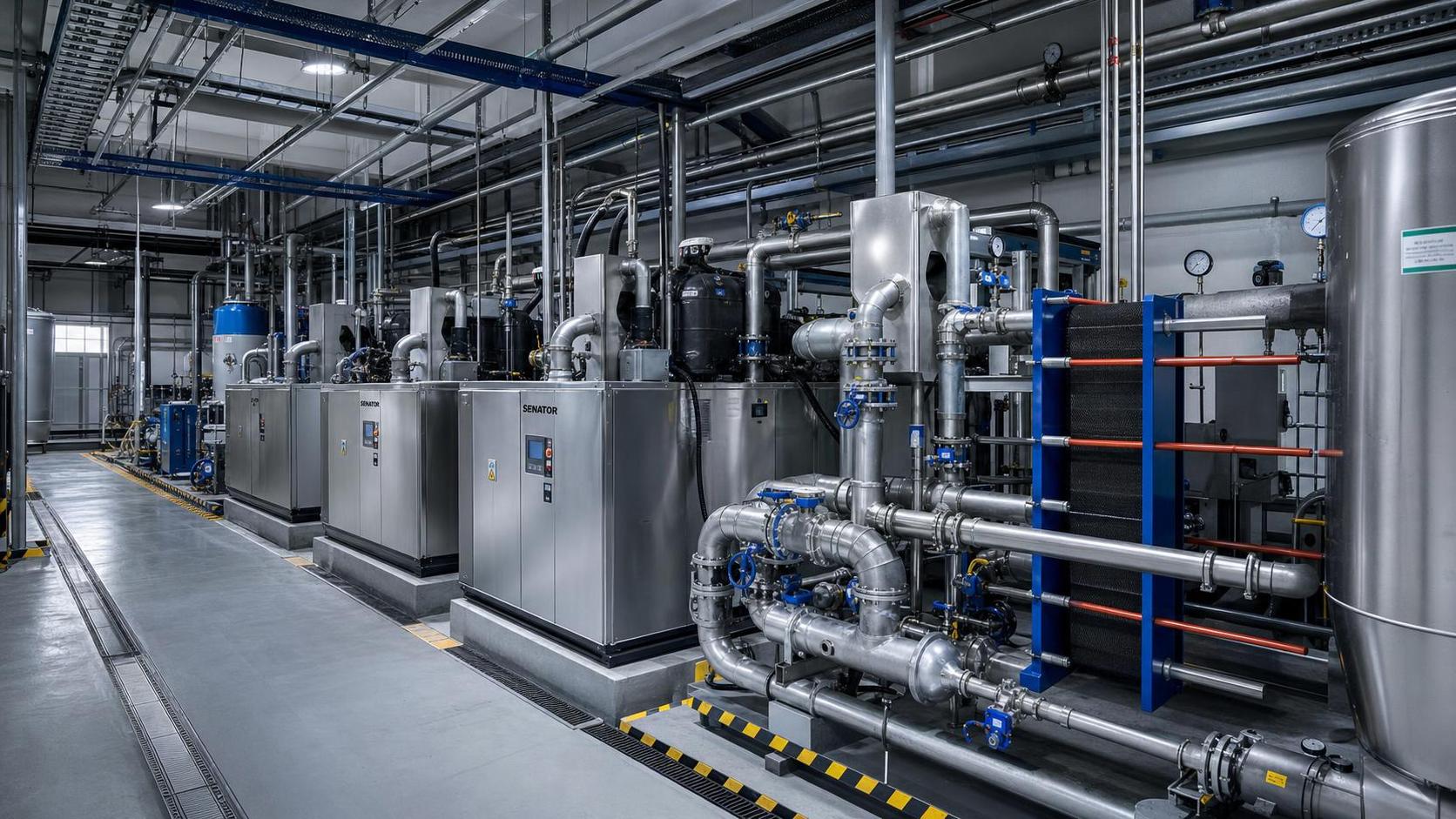
Industrial Equipment Selection Guide: A Practical Buyer Checklist




Industrial Equipment Selection Guide: A Practical Buyer Checklist
Choosing the right machinery can affect efficiency, compliance, and long-term operating costs. This industrial equipment selection guide buyer checklist is built for real purchasing decisions, not just vendor comparisons.
In many projects, the lowest quote becomes the most expensive option later. Downtime, energy waste, weak service coverage, and poor fit usually create the real cost.
A practical industrial equipment selection guide buyer checklist helps turn a complex evaluation into a structured process. It also reduces risk when timelines are tight and technical inputs are incomplete.
Start With the Operating Context
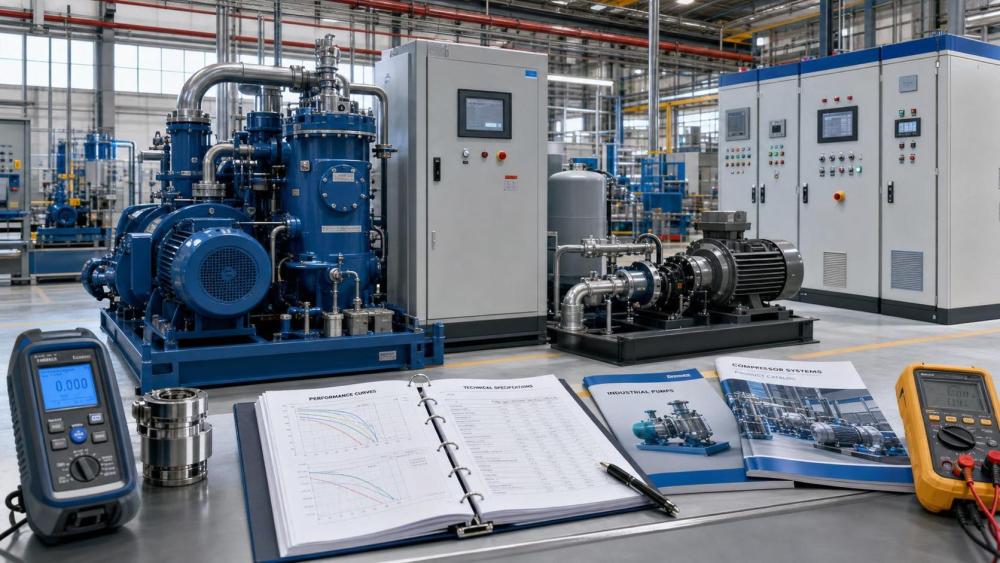
Before comparing brands, define the job the equipment must actually perform. This is the first step in any serious industrial equipment selection guide buyer checklist.
Look at load profile, production rhythm, ambient conditions, utilities, and operator skill level. These factors shape equipment suitability more than brochure claims.
In thermal systems, site temperature and cooling water quality matter. In compressed air or vacuum systems, pressure stability and contamination risk can be equally critical.
A short internal brief should answer a few practical questions:
- What output is required per hour, shift, or batch?
- Will the equipment run continuously or intermittently?
- What process quality level must be maintained?
- Which environmental or safety constraints apply?
- What expansion is expected within three to five years?
This early discipline prevents overbuying, under-sizing, and avoidable redesign. It also gives suppliers a cleaner basis for quotation and technical response.
Build the Buyer Checklist Around Total Value
A good industrial equipment selection guide buyer checklist should never stop at purchase price. Capital cost is visible, but operating cost often decides project success.
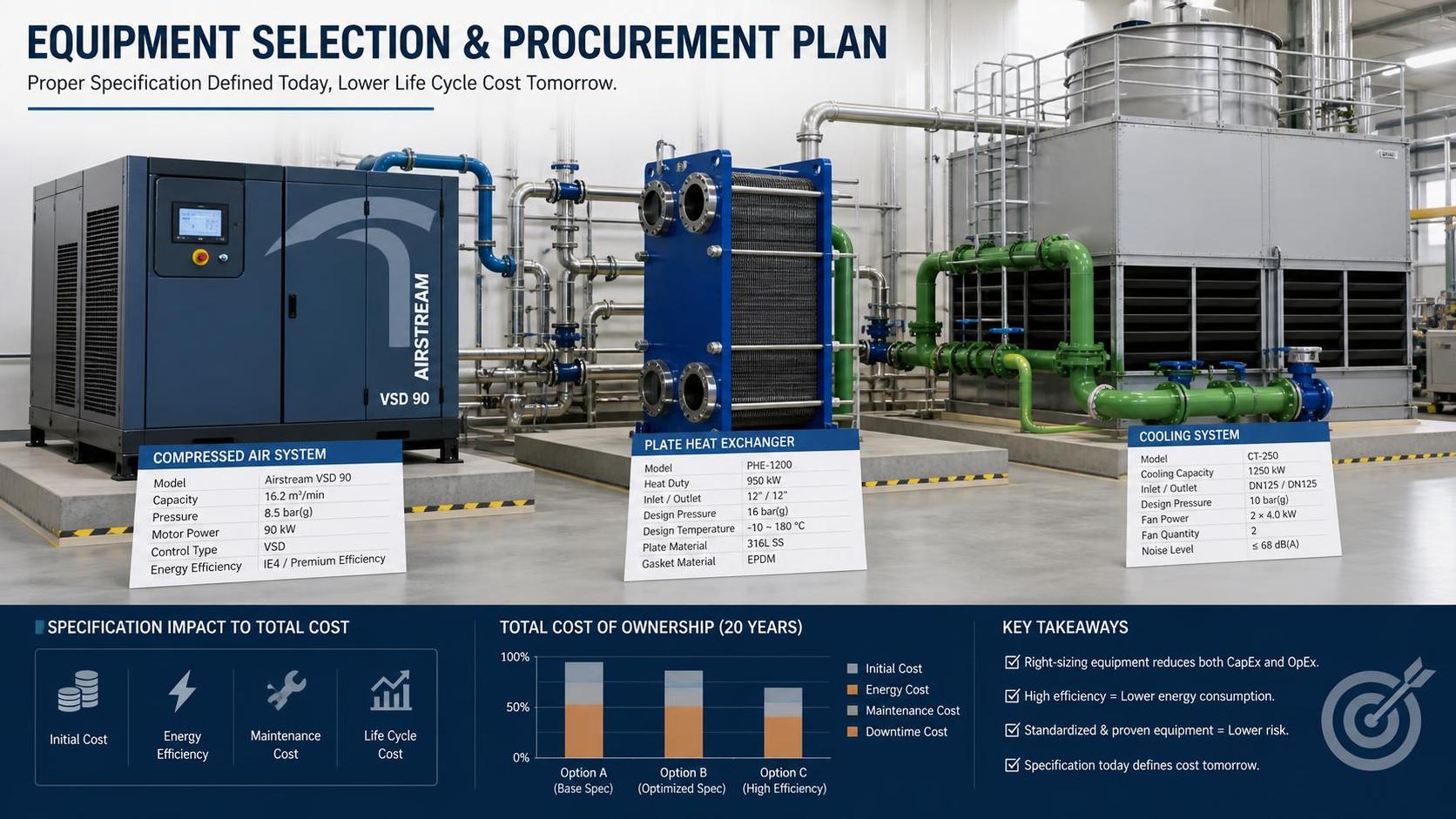
For high-energy assets, lifecycle value is usually the sharper decision lens. Energy, maintenance, spare parts, controls integration, and service response all affect ownership economics.
Core Evaluation Areas
- Performance: output, stability, turndown range, and process consistency.
- Efficiency: energy use at full load and part load.
- Reliability: expected uptime, component quality, and service interval.
- Compliance: local codes, emissions, refrigerants, hygiene, or industry standards.
- Integration: controls, footprint, installation needs, and utility compatibility.
- Support: commissioning, training, spare parts access, and technical response.
From recent market shifts, energy volatility has made efficiency claims more important. The clearer signal is that part-load efficiency now deserves as much attention as nameplate performance.
That matters because many facilities do not run at ideal load conditions. A machine that looks strong on paper may perform poorly in daily production reality.
Ask Better Supplier Questions
An effective industrial equipment selection guide buyer checklist should test supplier depth, not just product features. The goal is to see how the vendor performs under pressure.
In practice, the best supplier is often the one that clarifies constraints early, challenges weak assumptions, and documents performance boundaries clearly.
Questions Worth Asking
- What operating assumptions are behind the quoted performance?
- Which components are standard, and which are optional?
- What failures occur most often in similar installations?
- What is the guaranteed service response time in this region?
- Which spare parts should be stocked locally?
- Can the system scale without replacing major equipment?
These questions reveal whether a supplier is selling a package or solving an operating need. That distinction becomes important once installation begins.
It also helps to request reference cases in similar duty conditions. Similar process demands matter more than a long list of unrelated brand-name clients.
Compare Equipment Using a Weighted Matrix
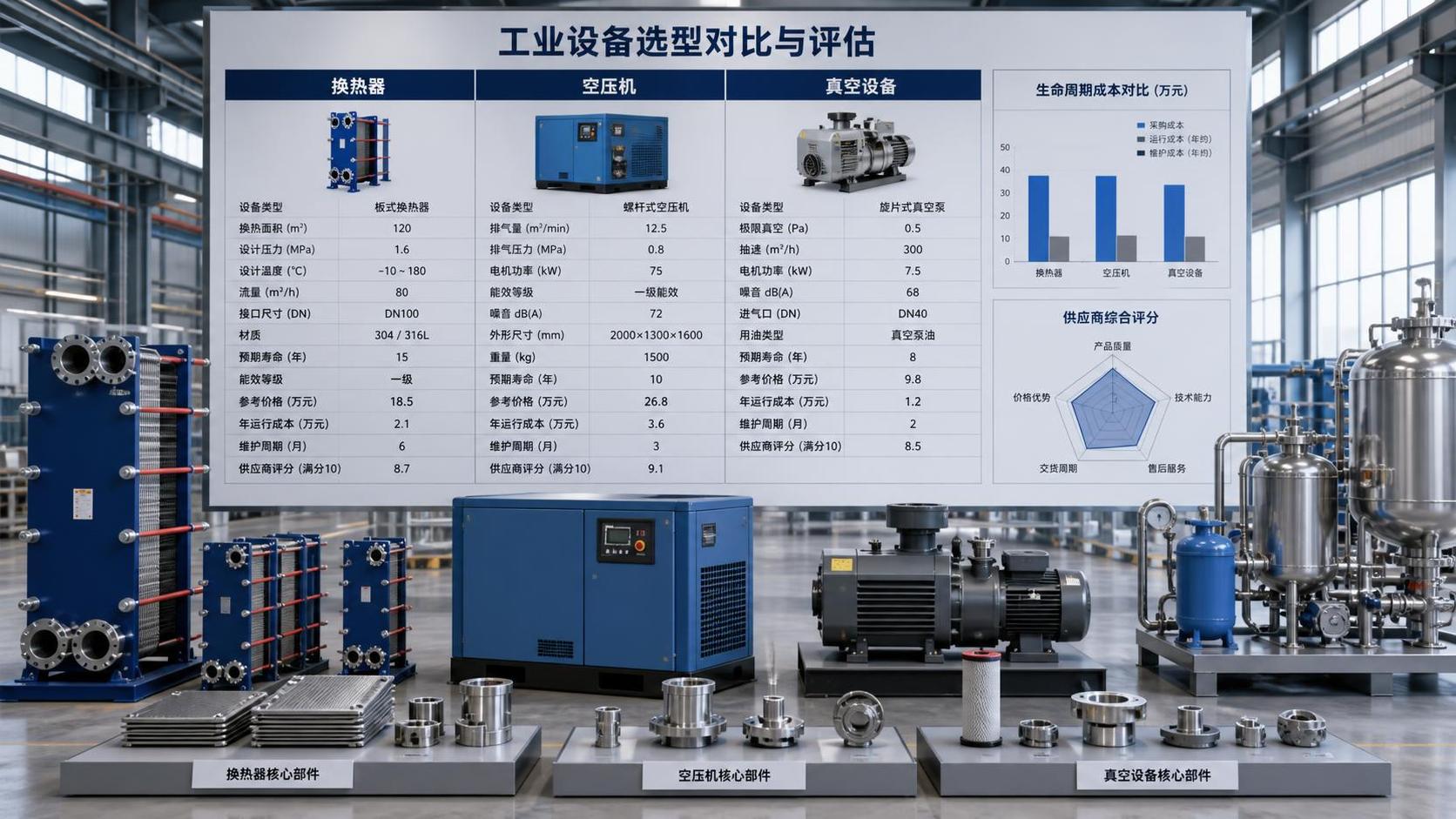
A structured matrix keeps decisions grounded. This is where an industrial equipment selection guide buyer checklist becomes especially useful for cross-functional alignment.
Assign weights based on business impact. For some projects, compliance is dominant. For others, uptime or energy intensity drives the final choice.
This method creates a record of why one option wins. It also makes internal approval easier when finance, operations, and engineering priorities are different.
Watch the Hidden Risks
Every industrial equipment selection guide buyer checklist should include risk checks. Problems usually come from gaps between specification, installation, and actual operating behavior.
Common warning signs appear early. A quote may be technically attractive but vague on exclusions, controls scope, commissioning, or guaranteed performance conditions.
Typical Risk Points
- Capacity based on unrealistic ambient conditions.
- Energy claims without test standards or duty profile context.
- Limited local inventory for critical spare parts.
- No clear boundary between supplier and installer responsibility.
- Weak documentation for controls integration and operator training.
More buyers now ask for scenario-based evaluation. That means checking best case, expected case, and stressed case performance before final award.
This approach is especially useful for cooling, vacuum, heat exchange, and compressed air systems, where utility variation can strongly affect output and efficiency.
Turn the Checklist Into a Decision Process
The strongest industrial equipment selection guide buyer checklist is not just a document. It is a repeatable workflow that supports faster, better decisions over time.
A practical sequence usually works best:
- Define process needs and operating constraints.
- Screen suppliers for technical relevance and service capability.
- Request comparable quotations with the same data basis.
- Score options using the weighted matrix.
- Validate risks, references, and lifecycle assumptions.
- Finalize award terms, acceptance criteria, and support scope.
This also improves knowledge retention. Future teams can review past decisions, compare vendor outcomes, and refine the buyer checklist using actual operating data.
For organizations dealing with energy-intensive systems, this discipline has another benefit. It aligns equipment purchasing with broader efficiency, compliance, and decarbonization goals.
At that point, the industrial equipment selection guide buyer checklist becomes more than a sourcing tool. It becomes a practical framework for stronger technical and commercial decisions.
Ready when you are. Send us a message to get started.
Related News
- How to select industrial equipment for automation with existing PLCsAuthor :

- How electricity prices shape industrial compressed air price trendsAuthor :

- Choosing air filtration systems for heavy dust in the Middle EastAuthor :

- How much does a fully installed compressed air monitoring system cost?Author :

- What documentation supports CE marking for industrial equipment?Author :

- How local support affects vacuum system costs in Southeast AsiaAuthor :

- How worldwide industry category guides help compare market opportunitiesAuthor :

- What drives sustainable thermal systems cost over their operating life?Author :

- Which industrial solution comparison criteria prevent project delays?Author :

- How Ambient Temperature and Load Profile Affect Industrial Compressor SizingAuthor :

- What to evaluate before choosing a thermal process engineering supplierAuthor :

- How industrial utility systems affect energy costs in process plantsAuthor :

- What Data Is Needed to Assess Heat Recovery Decarbonization?Author :

- Can Waste Heat Recovery Support Carbon Neutrality Targets?Author :

- Is Compressor Heat Recovery Worth the Installation Cost?Author :

- What to verify before choosing a process separation technology supplierAuthor :

- When does process utilities engineering reduce project rework?Author :

- Where thermal efficiency optimization delivers the fastest savings in EuropeAuthor :

- What should you verify before selecting a heat transfer supplier?Author :

- What drives compressed air systems price for industrial projects?Author :

- How an industrial product knowledge comparison guide reduces sourcing riskAuthor :

- When does a procurement specification planning process reduce bid risk?Author :

- When does thermal system optimization for electronics reduce failure risk?Author :

- When high temperature process heating systems justify the higher energy costAuthor :

- How to compare sludge dewatering equipment by cake drynessAuthor :

- What to Check Before Sourcing a Gas Turbine for Distributed Power ProjectsAuthor :

- What drives industrial thermal systems price in large facility projectsAuthor :

- How to build an industrial product comparison chart that speeds up vendor selectionAuthor :

- Vacuum Technology Application Guide for Selecting the Right SystemAuthor :

- What Drives Vacuum Drying Cost in Industrial Procurement?Author :

- What Drives Compressed Air Pricing in Industrial Systems?Author :

- How Procurement Specification Planning Shapes Total Project CostAuthor :

- Compression Technology Guide: How to Compare Efficiency, Pressure Range, and Maintenance NeedsAuthor :

- How to Compare Industrial Separators by Throughput, Purity, and Maintenance LoadAuthor :

- How to Size a Compressed Air Equipment Receiver Tank for Stable PressureAuthor :

- Industrial Equipment Selection Guide: How to Compare Capacity, Duty Cycle, and Operating CostAuthor :