How to Compare Industrial Energy Management Systems by ROI




How to Compare Industrial Energy Management Systems by ROI
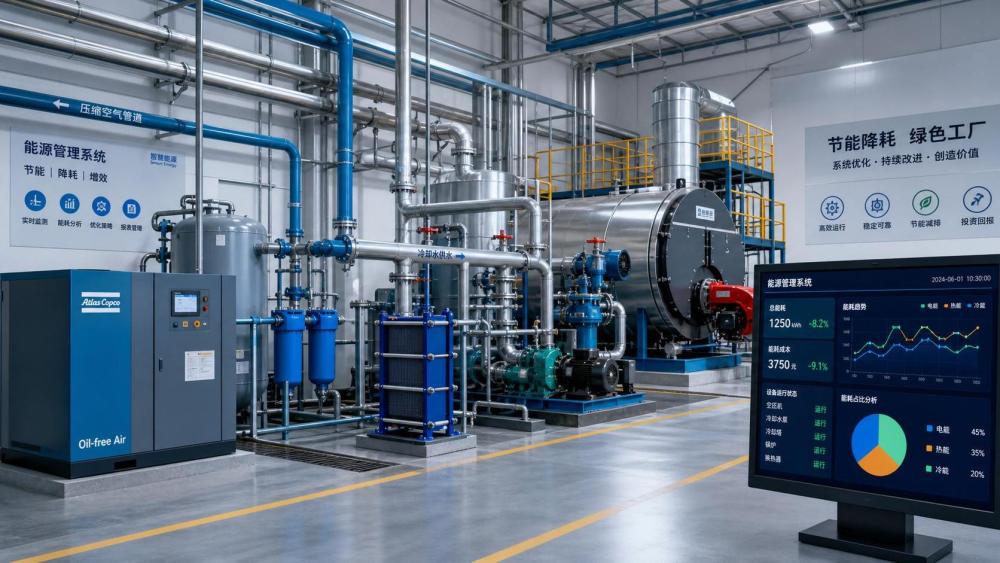
Choosing an energy management system industrial platform by features alone is risky.
The better question is simple: which system returns the most value, fastest, with the least execution risk?
That shift matters because energy costs now affect margins, uptime, compliance, and customer commitments at the same time.
In practice, an industrial energy management decision sits between operations strategy and capital planning.
A strong system should reduce waste, reveal hidden losses, and improve decisions across production, utilities, and maintenance.
That includes compressed air, cooling, vacuum processes, boilers, heat exchange, and plant-wide power use.
From recent market shifts, the clearer signal is that buyers want measurable outcomes, not dashboards that nobody acts on.
This is where ROI becomes the most useful comparison framework.
At GTC-Matrix, industrial intelligence often shows the same pattern.
Plants gain more when thermodynamic performance data connects directly with cost, load, and process stability.
So, when comparing any energy management system industrial option, ROI should lead the shortlist.
Start With the ROI Equation, Not the Vendor Pitch
A useful ROI model combines direct savings, avoided losses, and implementation cost.
That sounds obvious, but many comparisons stop at projected energy savings.
A better industrial energy management review should include five cost buckets.
- Software, sensors, gateways, and integration fees
- Internal labor for commissioning and change management
- Annual subscription, support, and cybersecurity costs
- Expected savings from energy reduction
- Operational gains from uptime, quality, and compliance
This broader view prevents the most common mistake: underestimating the cost of using the system effectively.
In real operations, the best platform is rarely the one with the most screens.
It is usually the one that identifies high-value actions early and fits plant workflows quickly.
That is the first filter for any energy management system industrial investment.
Identify Where ROI Actually Comes From
Not every plant earns returns from the same use case.
For some sites, compressed air leaks drive the business case.
For others, unstable chilled water loads or poor heat recovery create the largest savings gap.
A credible energy management system industrial comparison should map ROI by asset group.
High-Impact Value Pools
- Compressed air optimization through leak tracking and pressure control
- Cooling efficiency through load balancing and real-time performance baselines
- Boiler and steam efficiency through combustion tuning and demand visibility
- Heat exchanger performance through fouling alerts and thermal drift detection
- Peak demand management through production-aware load scheduling
This matters because savings quality varies.
Leak repair savings can arrive quickly.
Heat integration savings may be larger, but slower to capture.
That also means payback periods should be compared by use case, not only by system total.
A practical buyer asks which modules create savings in 90 days, 12 months, and 24 months.
Compare Data Depth Before Comparing Dashboards
Many systems look similar in demos.
The real difference is data quality, context, and action logic.
An energy management system industrial platform should answer operational questions, not just visualize consumption.
Key Comparison Points
- Can it normalize energy data by output, shift, product mix, or ambient conditions?
- Can it detect waste at equipment level, not only building level?
- Can it connect thermal, pneumatic, and electrical performance into one decision view?
- Can it trigger actionable alerts with ownership and response tracking?
- Can it support M&V for internal approval and external reporting?
These details have direct ROI implications.
If the platform cannot isolate root causes, teams waste time debating the numbers.
If it cannot normalize by production, false savings claims become common.
That weakens trust and delays action, which is expensive.
Test the System Against Real Industrial Constraints
Industrial environments are messy.
Legacy controls, fragmented utilities, shifting loads, and uneven operator habits all affect returns.
So the ROI of an energy management system industrial project depends on deployment friction.
Questions That Expose Hidden Risk
- How much new instrumentation is required?
- Which protocols and control systems are already supported?
- How long does it take to reach a stable baseline?
- What training is needed for operations and maintenance teams?
- How are data gaps, sensor drift, and network failures handled?
This is where buyers often miss the bigger issue.
A lower-cost platform can become more expensive if integration takes months and site teams stop using it.
By contrast, a stronger industrial energy management platform can win on speed, reliability, and user adoption.
That usually produces a better ROI, even at a higher purchase price.
Use a Weighted ROI Scorecard
A scorecard keeps the comparison grounded.
It also helps align finance, operations, engineering, and sustainability teams.
Below is a practical scoring model for any energy management system industrial review.
You can adjust the weights by sector.
For pharmaceuticals, compliance and environmental stability may deserve more weight.
For metals or heavy manufacturing, utility intensity and load management may dominate.
The point is consistency, not theoretical perfection.
Look Beyond Savings to Strategic Return
The strongest industrial energy management business cases go beyond kilowatt-hours.
A modern energy management system industrial platform can strengthen broader business priorities.
Strategic Benefits Often Missed in Early Reviews
- Lower downtime through earlier anomaly detection
- Better capex timing through asset performance visibility
- Stronger customer and investor reporting on carbon intensity
- Improved resilience against volatile energy tariffs
- Better coordination between production planning and utility demand
These gains may not appear in a narrow energy audit.
Still, they matter when procurement decisions support long-term competitiveness.
This is especially true in sectors with strict thermal control, compressed air purity, or process continuity demands.
That wider lens often changes which industrial energy management option looks best.
A Practical Shortlist Process
To keep the process focused, move through four stages.
- Define the top three energy cost drivers at site and process level.
- Ask each vendor to model ROI using your real operating data.
- Score each energy management system industrial option with the same weighted matrix.
- Run a pilot with clear success metrics, response workflows, and baseline rules.
A pilot should not be a vague software trial.
It should test whether the platform can create verified actions that save money.
That includes who receives alerts, who acts, how savings are verified, and when expansion is approved.
In other words, compare systems in the context of execution, not presentation.
When this discipline is applied, the best energy management system industrial choice becomes easier to defend internally.
It also creates a stronger foundation for scale across plants, utilities, and decarbonization programs.
The final decision should balance fast payback with durable operational value.
That is how industrial buyers move from vendor claims to measurable business return.
And that is the most reliable way to compare industrial energy management systems by ROI.
Ready when you are. Send us a message to get started.
Related News
- How to select industrial equipment for automation with existing PLCsAuthor :

- How electricity prices shape industrial compressed air price trendsAuthor :

- Choosing air filtration systems for heavy dust in the Middle EastAuthor :

- How much does a fully installed compressed air monitoring system cost?Author :

- What documentation supports CE marking for industrial equipment?Author :

- How local support affects vacuum system costs in Southeast AsiaAuthor :

- How worldwide industry category guides help compare market opportunitiesAuthor :

- What drives sustainable thermal systems cost over their operating life?Author :

- Which industrial solution comparison criteria prevent project delays?Author :

- How Ambient Temperature and Load Profile Affect Industrial Compressor SizingAuthor :

- What to evaluate before choosing a thermal process engineering supplierAuthor :

- How industrial utility systems affect energy costs in process plantsAuthor :

- What Data Is Needed to Assess Heat Recovery Decarbonization?Author :

- Can Waste Heat Recovery Support Carbon Neutrality Targets?Author :

- Is Compressor Heat Recovery Worth the Installation Cost?Author :

- What to verify before choosing a process separation technology supplierAuthor :

- When does process utilities engineering reduce project rework?Author :

- Where thermal efficiency optimization delivers the fastest savings in EuropeAuthor :

- What should you verify before selecting a heat transfer supplier?Author :

- What drives compressed air systems price for industrial projects?Author :

- How an industrial product knowledge comparison guide reduces sourcing riskAuthor :

- When does a procurement specification planning process reduce bid risk?Author :

- When does thermal system optimization for electronics reduce failure risk?Author :

- When high temperature process heating systems justify the higher energy costAuthor :

- How to compare sludge dewatering equipment by cake drynessAuthor :

- What to Check Before Sourcing a Gas Turbine for Distributed Power ProjectsAuthor :

- What drives industrial thermal systems price in large facility projectsAuthor :

- How to build an industrial product comparison chart that speeds up vendor selectionAuthor :

- Vacuum Technology Application Guide for Selecting the Right SystemAuthor :

- What Drives Vacuum Drying Cost in Industrial Procurement?Author :

- What Drives Compressed Air Pricing in Industrial Systems?Author :

- How Procurement Specification Planning Shapes Total Project CostAuthor :

- Compression Technology Guide: How to Compare Efficiency, Pressure Range, and Maintenance NeedsAuthor :

- How to Compare Industrial Separators by Throughput, Purity, and Maintenance LoadAuthor :

- How to Size a Compressed Air Equipment Receiver Tank for Stable PressureAuthor :

- Industrial Equipment Selection Guide: How to Compare Capacity, Duty Cycle, and Operating CostAuthor :