How to Build Procurement Specification Planning for Industrial Equipment




In complex capital projects, procurement specification planning for industrial equipment is the foundation for cost control, technical alignment, and long-term operational reliability. For project managers and engineering leaders, a clear specification framework reduces supplier risk, shortens evaluation cycles, and supports smarter decisions across thermal, compression, and process systems. This guide outlines how to build practical, performance-driven specifications that strengthen project outcomes from bidding to commissioning.
Why procurement specification planning for industrial equipment often determines project success
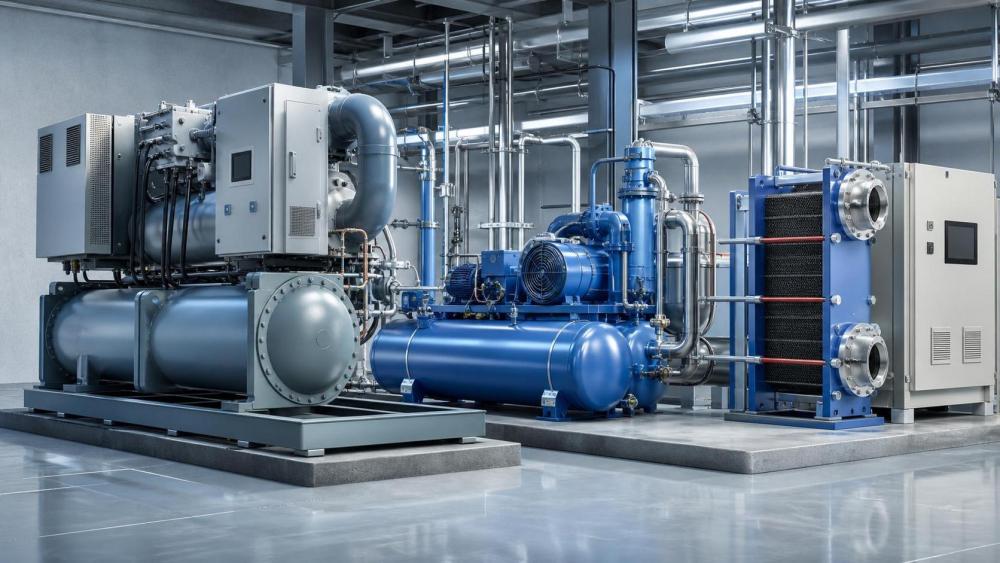
Many equipment packages fail long before startup. The root cause is not always poor manufacturing. More often, the procurement specification is incomplete, ambiguous, or disconnected from the process duty, site conditions, maintenance strategy, and utility constraints.
For project managers, procurement specification planning for industrial equipment is not just a technical document. It is a commercial control tool. It shapes bid comparability, limits scope gaps, reduces change orders, and creates a common language for engineering, procurement, quality, and operations teams.
This is especially important in industrial cooling, compressed air, vacuum, and heat exchange systems, where performance depends on operating load profile, ambient conditions, energy costs, contamination risk, and future expansion needs.
- A weak specification invites wide supplier interpretation, making bid evaluation slow and misleading.
- A generic specification may ignore lifecycle energy cost, which is often larger than initial purchase price.
- An isolated specification can miss utility interaction, such as cooling water quality, compressed air dew point, or heat recovery integration.
What should a complete specification include from the start?
A practical specification should balance technical precision with procurement usability. It must be detailed enough to prevent hidden deviations, but structured enough for suppliers to respond clearly and consistently.
Core sections that should never be omitted
- Process duty definition, including design capacity, normal operating point, turndown range, inlet and outlet conditions, fluid properties, and operating schedule.
- Site and environmental data, such as altitude, ambient temperature range, humidity, dust level, corrosive exposure, and installation space limits.
- Utility boundaries, including voltage, frequency, cooling medium conditions, water chemistry, steam availability, and control system interface requirements.
- Performance guarantees, with measurable values for efficiency, noise, vibration, pressure drop, purity, temperature stability, and emissions where relevant.
- Mechanical and material requirements, including metallurgy, sealing, insulation, coatings, cleanliness, and maintainability expectations.
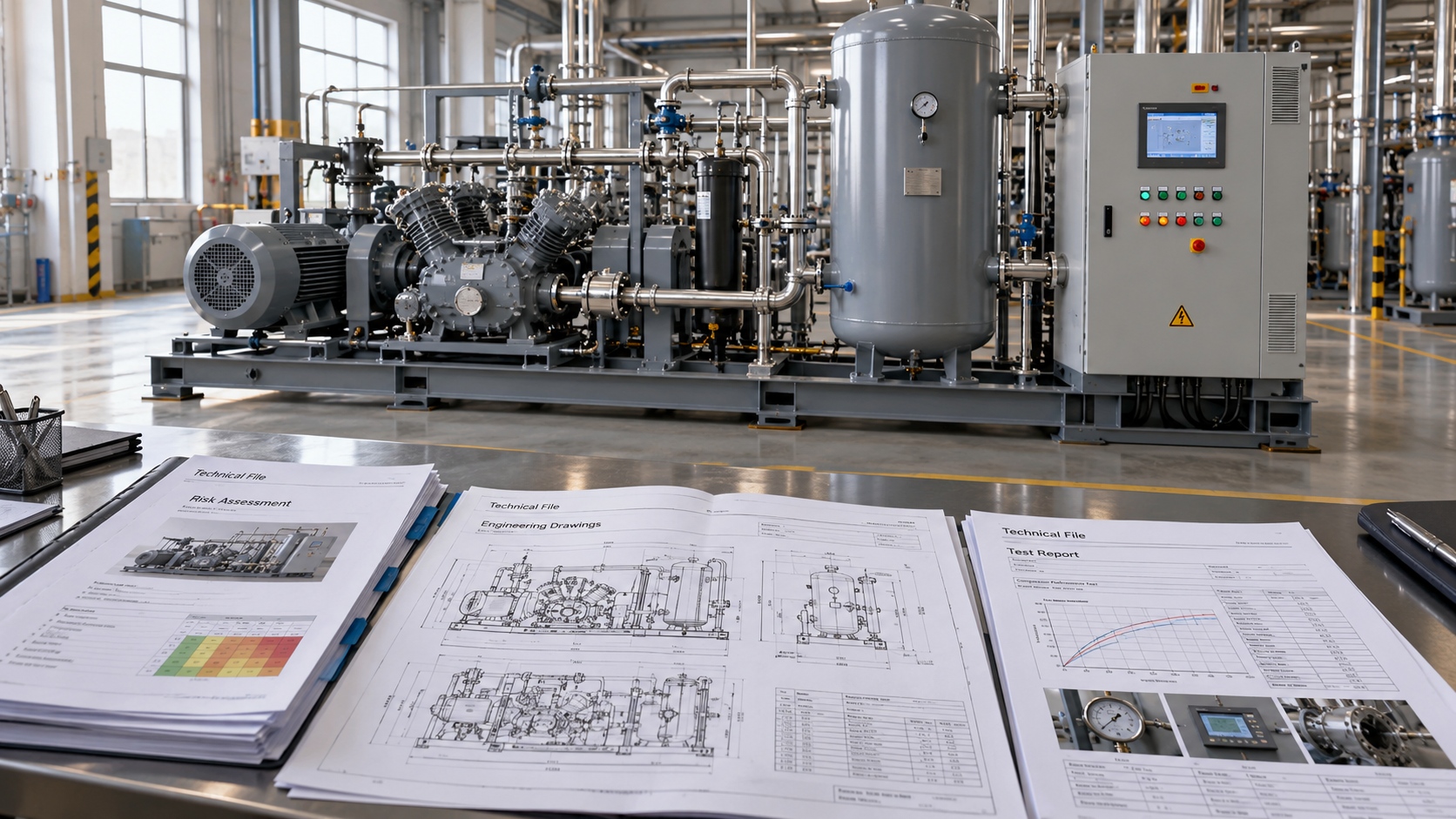
- Documentation and testing scope, such as drawings, datasheets, inspection plans, factory acceptance testing, and commissioning support.
When procurement specification planning for industrial equipment includes these sections early, suppliers can quote against the same technical baseline. That improves bid transparency and protects the project schedule.
A quick planning table for project teams
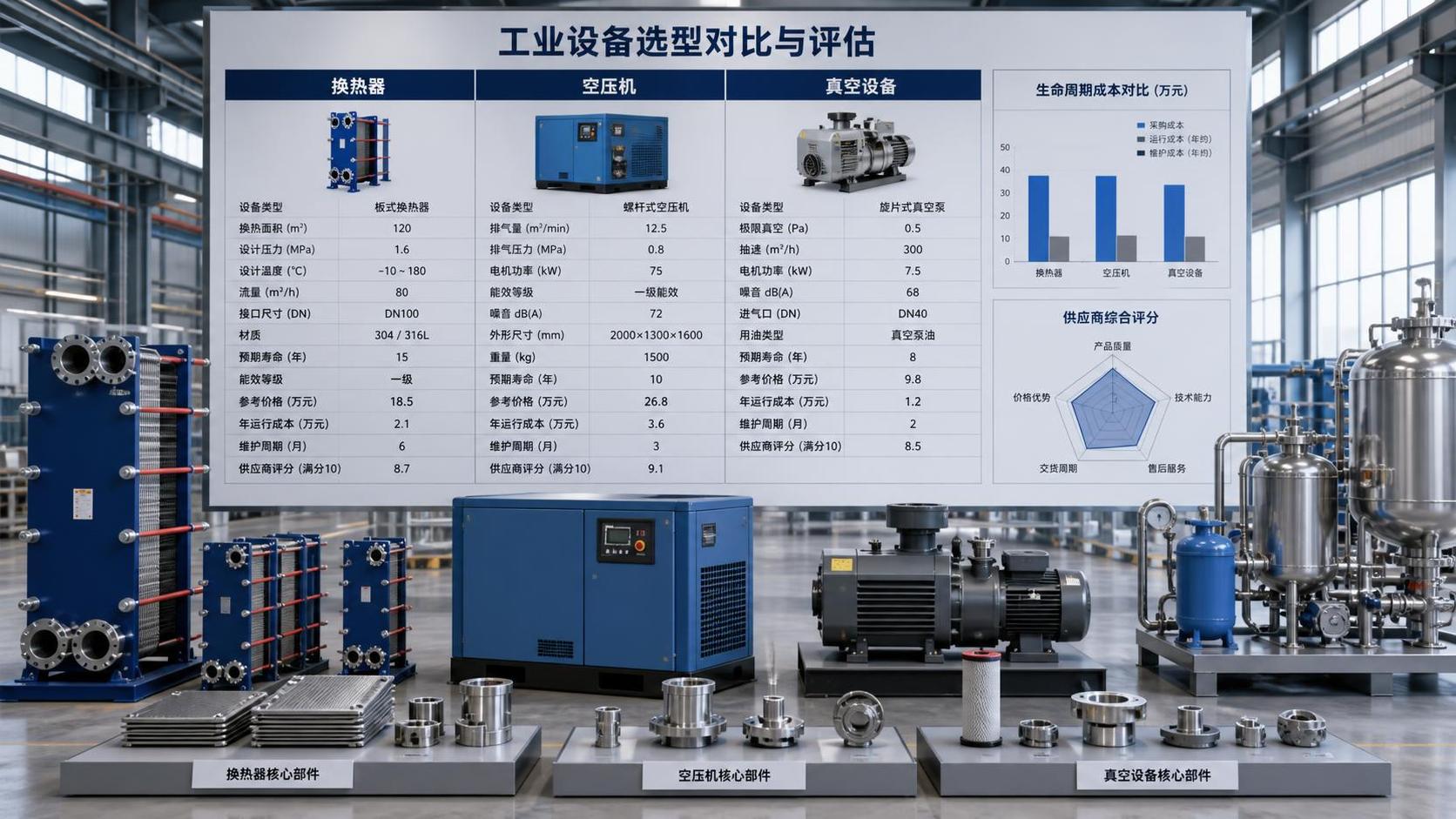
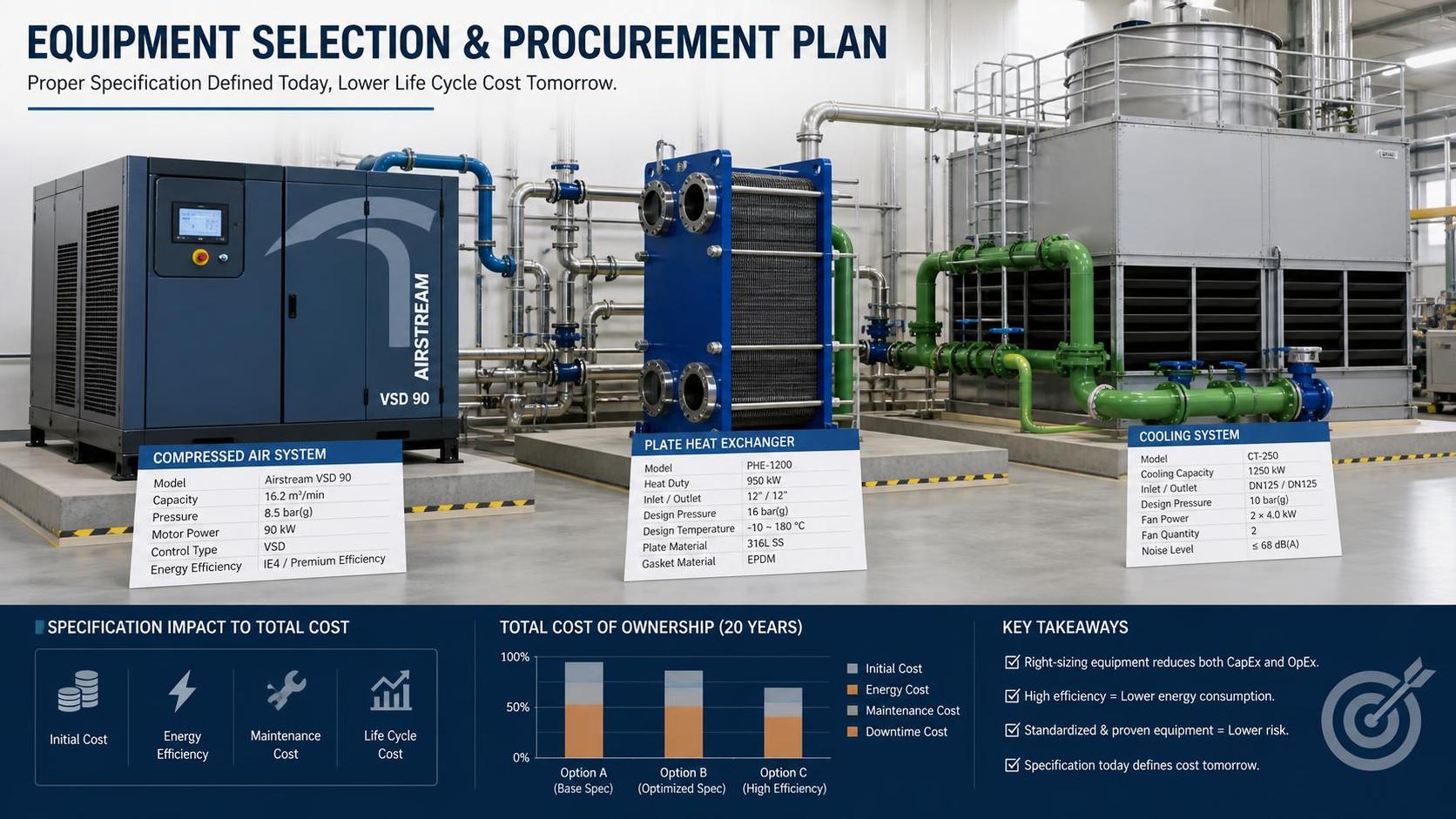
The table below helps structure procurement specification planning for industrial equipment across the most common decision areas faced by engineering and procurement teams.
A strong table-based checklist makes internal reviews faster. It also helps procurement teams compare supplier comments, exceptions, and deviations without losing engineering intent.
How to align technical performance with real operating conditions
Industrial equipment should never be specified only around nameplate capacity. Project leaders need to specify performance at the actual operating envelope. This is critical for chillers, air compressors, vacuum pumps, heat exchangers, and thermal utility packages.
Performance variables that deserve explicit treatment
- Load profile: peak, normal, minimum stable load, and seasonal variation.
- Energy profile: local electricity price, compressed air cost, steam cost, and recovery opportunities.
- Process sensitivity: temperature tolerance, pressure stability, contamination control, and uptime requirements.
- Maintenance reality: skill level on site, spare strategy, shutdown window, and remote diagnostics needs.
GTC-Matrix brings value here by connecting thermal and compression intelligence with purchasing decisions. In sectors such as pharmaceuticals, semiconductors, and food processing, small specification gaps can create large operational penalties. Monitoring refrigerant policy, oil-free technology evolution, microchannel heat exchanger trends, and efficiency shifts helps teams avoid outdated assumptions.
Example of a parameter-focused evaluation structure
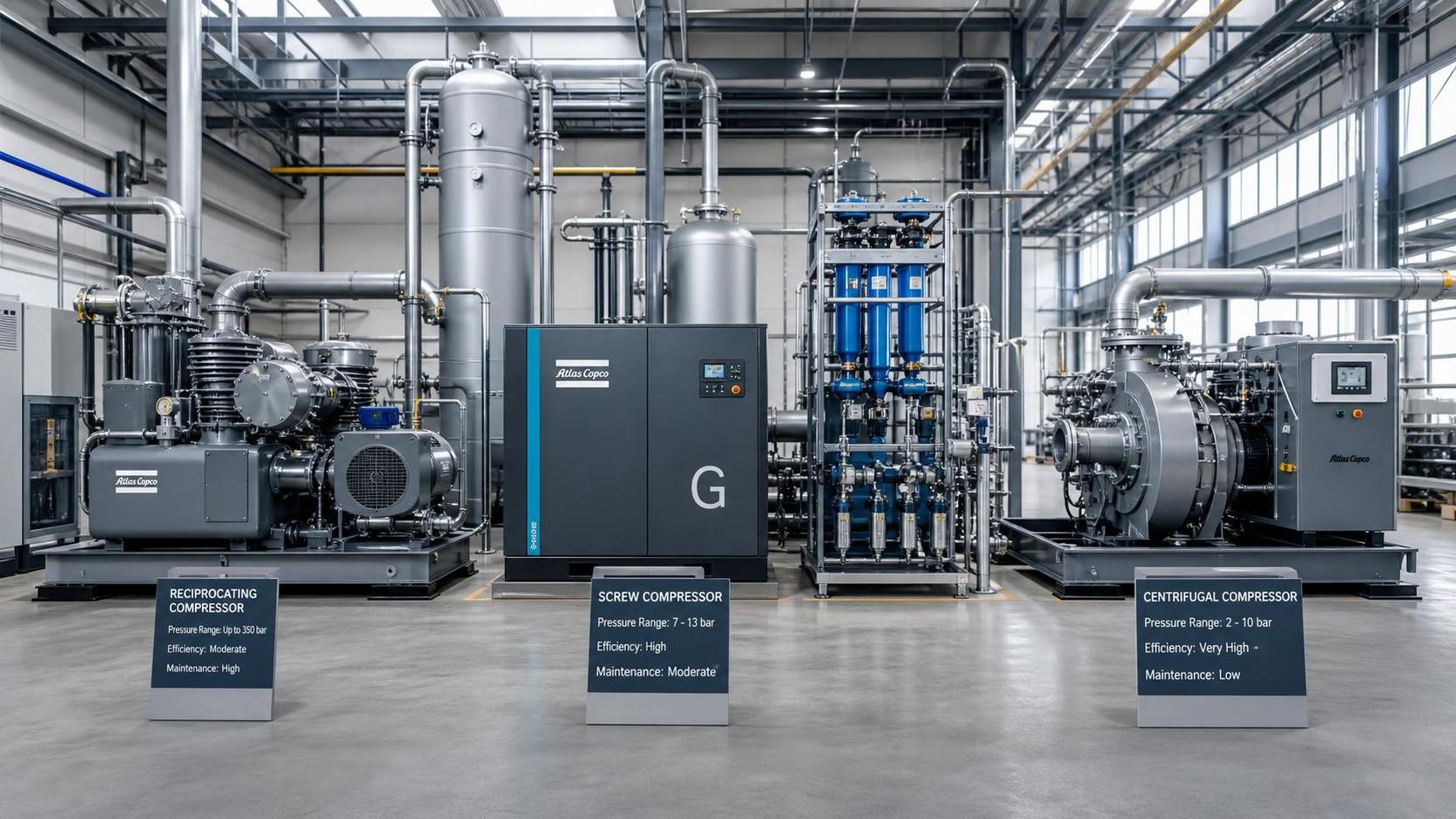
When procurement specification planning for industrial equipment involves parameter tradeoffs, the following comparison structure is useful during technical clarification and bid normalization.
This approach forces a shift from headline capacity to usable plant performance. It also helps project teams ask better supplier questions during clarification rounds.
Which mistakes create the most procurement risk?
In cross-functional projects, errors often happen at the interface between engineering and purchasing. Technical teams assume commercial teams understand process intent. Procurement teams assume datasheets are complete. Suppliers then fill the gaps with their own assumptions.
Common mistakes in procurement specification planning for industrial equipment
- Using old specifications without checking whether energy policy, refrigerant rules, or operating conditions have changed.
- Specifying only design maximum values and ignoring part-load or standby operation.
- Failing to define supplier scope boundaries for controls, piping accessories, insulation, commissioning, and training.
- Comparing bids by purchase price alone instead of total installed and operating cost.
- Leaving compliance language too vague, which creates confusion around testing, certificates, and acceptance documents.
For thermal and compression systems, these mistakes usually show up later as energy overruns, interface disputes, performance claims, or delayed startup. A disciplined planning stage is less expensive than post-award correction.
How should project managers compare suppliers beyond price?
The best procurement specification planning for industrial equipment creates a bid structure where commercial evaluation and technical evaluation reinforce each other. If the specification is clear, supplier comparison becomes evidence-based instead of opinion-driven.
Recommended supplier comparison dimensions
- Compliance score: how closely the offer matches the required duty, materials, controls, and documentation.
- Deviation transparency: whether exceptions are clearly stated or hidden in assumptions.
- Lifecycle economics: estimated energy use, maintenance frequency, spare consumption, and expected service complexity.
- Delivery realism: engineering release dates, manufacturing duration, inspection windows, logistics constraints, and startup support.
- Adaptability: ability to support future expansion, digital monitoring, retrofit compatibility, or environmental transition requirements.
This is where intelligence from GTC-Matrix supports better decisions. Understanding technology evolution and market signals helps project teams judge whether a lower initial quotation masks higher future cost, regulatory risk, or reduced process resilience.
What standards, compliance, and documentation should be addressed?
Compliance language should be practical and relevant. It is not necessary to overload a specification with every possible code, but key design, testing, safety, and documentation requirements should be named clearly according to project geography and process risk.
Typical compliance topics to clarify
- Pressure equipment code expectations where pressure vessels, air receivers, or heat exchangers are involved.
- Electrical and control panel conformity for the project region and plant safety philosophy.
- Material traceability and documentation depth for hygienic, clean process, or regulated production environments.
- Inspection and testing requirements, including witness points, FAT scope, calibration records, and final data books.
For engineering leaders, the goal is simple: define what must be demonstrated, who approves it, and when it must be delivered. This prevents late-stage arguments over what “standard supply” actually means.
How can teams build a practical implementation workflow?
A specification is useful only when it fits the project workflow. Procurement specification planning for industrial equipment should be embedded into stage-gate reviews, not treated as a one-time writing exercise.
Suggested workflow from concept to commissioning
- Define process intent and operating envelope with process, utility, and operations stakeholders.
- Translate process needs into measurable specification items and bid data sheets.
- Run an internal risk review covering installation, controls, energy, maintenance, and compliance gaps.
- Issue inquiry documents with a clear deviation schedule and document submission matrix.
- Normalize bids using weighted technical and commercial criteria.
- Lock approved deviations before purchase order release and connect them to inspection and commissioning plans.
This workflow reduces rework and helps align procurement timing with engineering maturity. It is also more effective for equipment packages with strong interaction between thermodynamic performance and plant utility systems.
FAQ: procurement specification planning for industrial equipment
How detailed should a specification be before sending RFQs?
It should be detailed enough to define duty, boundaries, required performance, utilities, controls, materials, testing, and documentation. If suppliers must guess major items, the RFQ is too early. If every minor fabrication preference is fixed before process duty is confirmed, the RFQ may be too rigid.
What is the biggest cost mistake in equipment specification planning?
The most common mistake is buying on capital price without evaluating energy and maintenance over the service life. In thermal and compression systems, part-load efficiency, pressure losses, and service intervals can materially change total cost of ownership.
How do I make bids easier to compare?
Use a structured specification, mandatory deviation list, standard datasheet format, and commercial response template. Require suppliers to state exclusions, guarantee points, utility consumption, and documentation scope in a uniform way.
Which projects need the most rigorous procurement specification planning for industrial equipment?
Projects with strict temperature control, clean utilities, variable load, high energy consumption, or heavy compliance oversight need the strongest planning discipline. That often includes pharmaceutical production, semiconductor facilities, food processing, and energy-intensive manufacturing lines.
Why choose us for specification intelligence and project support?
GTC-Matrix supports project managers and engineering leaders who need more than generic procurement advice. Our focus on industrial cooling, compressed air, vacuum processes, and heat exchange technologies helps teams connect equipment specifications with energy trends, process risk, and technology evolution.
If your team is preparing procurement specification planning for industrial equipment, we can help you review performance parameters, compare solution paths, assess likely supplier deviations, and identify specification blind spots related to efficiency, environmental transition, and operational resilience.
- Parameter confirmation for cooling, compression, vacuum, and heat transfer duties.
- Selection support for process-sensitive or energy-intensive equipment packages.
- Delivery cycle discussion based on package complexity and documentation scope.
- Customized specification review for compliance expectations and operating reality.
- Quotation communication support that improves bid clarity before commitment.
When specifications are clearer, procurement becomes faster, supplier comparison becomes fairer, and project outcomes become more predictable. For teams managing thermal and power-critical systems, that difference is strategic, not administrative.
Ready when you are. Send us a message to get started.
Related News
- How to select industrial equipment for automation with existing PLCsAuthor :

- How electricity prices shape industrial compressed air price trendsAuthor :

- Choosing air filtration systems for heavy dust in the Middle EastAuthor :

- How much does a fully installed compressed air monitoring system cost?Author :

- What documentation supports CE marking for industrial equipment?Author :

- How local support affects vacuum system costs in Southeast AsiaAuthor :

- How worldwide industry category guides help compare market opportunitiesAuthor :

- What drives sustainable thermal systems cost over their operating life?Author :

- Which industrial solution comparison criteria prevent project delays?Author :

- How Ambient Temperature and Load Profile Affect Industrial Compressor SizingAuthor :

- What to evaluate before choosing a thermal process engineering supplierAuthor :

- How industrial utility systems affect energy costs in process plantsAuthor :

- What Data Is Needed to Assess Heat Recovery Decarbonization?Author :

- Can Waste Heat Recovery Support Carbon Neutrality Targets?Author :

- Is Compressor Heat Recovery Worth the Installation Cost?Author :

- What to verify before choosing a process separation technology supplierAuthor :

- When does process utilities engineering reduce project rework?Author :

- Where thermal efficiency optimization delivers the fastest savings in EuropeAuthor :

- What should you verify before selecting a heat transfer supplier?Author :

- What drives compressed air systems price for industrial projects?Author :

- How an industrial product knowledge comparison guide reduces sourcing riskAuthor :

- When does a procurement specification planning process reduce bid risk?Author :

- When does thermal system optimization for electronics reduce failure risk?Author :

- When high temperature process heating systems justify the higher energy costAuthor :

- How to compare sludge dewatering equipment by cake drynessAuthor :

- What to Check Before Sourcing a Gas Turbine for Distributed Power ProjectsAuthor :

- What drives industrial thermal systems price in large facility projectsAuthor :

- How to build an industrial product comparison chart that speeds up vendor selectionAuthor :

- Vacuum Technology Application Guide for Selecting the Right SystemAuthor :

- What Drives Vacuum Drying Cost in Industrial Procurement?Author :

- What Drives Compressed Air Pricing in Industrial Systems?Author :

- How Procurement Specification Planning Shapes Total Project CostAuthor :

- Compression Technology Guide: How to Compare Efficiency, Pressure Range, and Maintenance NeedsAuthor :

- How to Compare Industrial Separators by Throughput, Purity, and Maintenance LoadAuthor :

- How to Size a Compressed Air Equipment Receiver Tank for Stable PressureAuthor :

- Industrial Equipment Selection Guide: How to Compare Capacity, Duty Cycle, and Operating CostAuthor :