Supplier Comparison for Industrial Equipment: A Practical Checklist




Why does supplier comparison for industrial equipment deserve more time upfront?
A rushed purchase rarely stays cheap for long.
In industrial operations, the wrong supplier can increase downtime, energy waste, spare-part delays, and compliance exposure.
That is why supplier comparison for industrial equipment should go beyond price sheets and short-term discounts.
A better comparison looks at technical fit, lifecycle cost, service continuity, and the supplier’s ability to support future efficiency goals.
This matters even more in systems tied to cooling, compressed air, vacuum, and heat exchange performance.
Those categories influence production stability and energy conversion efficiency across many sectors.
In practice, a sound supplier comparison for industrial equipment also reflects market context.
Energy price shifts, refrigerant policy changes, and evolving efficiency standards can quickly change the value of one option over another.
This is where industry intelligence becomes useful.
Platforms such as GTC-Matrix track thermodynamic technologies, compression systems, and commercial demand signals that influence sourcing decisions.
Simple comparison is not enough anymore; informed comparison is the safer route.
What should be compared first when several suppliers look similar?
Start with application fit, not branding.
Many suppliers appear comparable until operating conditions are examined in detail.
A system for food processing, semiconductor cooling, or pharmaceutical air purity will not be judged by the same priorities.
More useful questions include the following.
- Can the equipment hold performance under real load variation, not only at rated conditions?
- Does the supplier understand site-specific utilities, ambient conditions, and maintenance constraints?
- Are efficiency claims backed by test data, reference installations, or recognized standards?
- Will controls, monitoring, and integration match existing plant systems?
A practical supplier comparison for industrial equipment often fails when buyers compare brochures instead of operating realities.
Need attention around process interfaces is especially common in thermal and compression equipment.
Oil-free compression, microchannel heat exchangers, and low-NOx heating solutions may look strong on paper.
Yet the real question is whether they match the plant’s quality targets, emissions limits, and uptime expectations.
A supplier that asks better technical questions early is often a safer long-term choice.
How can total value be judged without getting trapped by the lowest bid?
The lowest quotation can hide the highest operating burden.
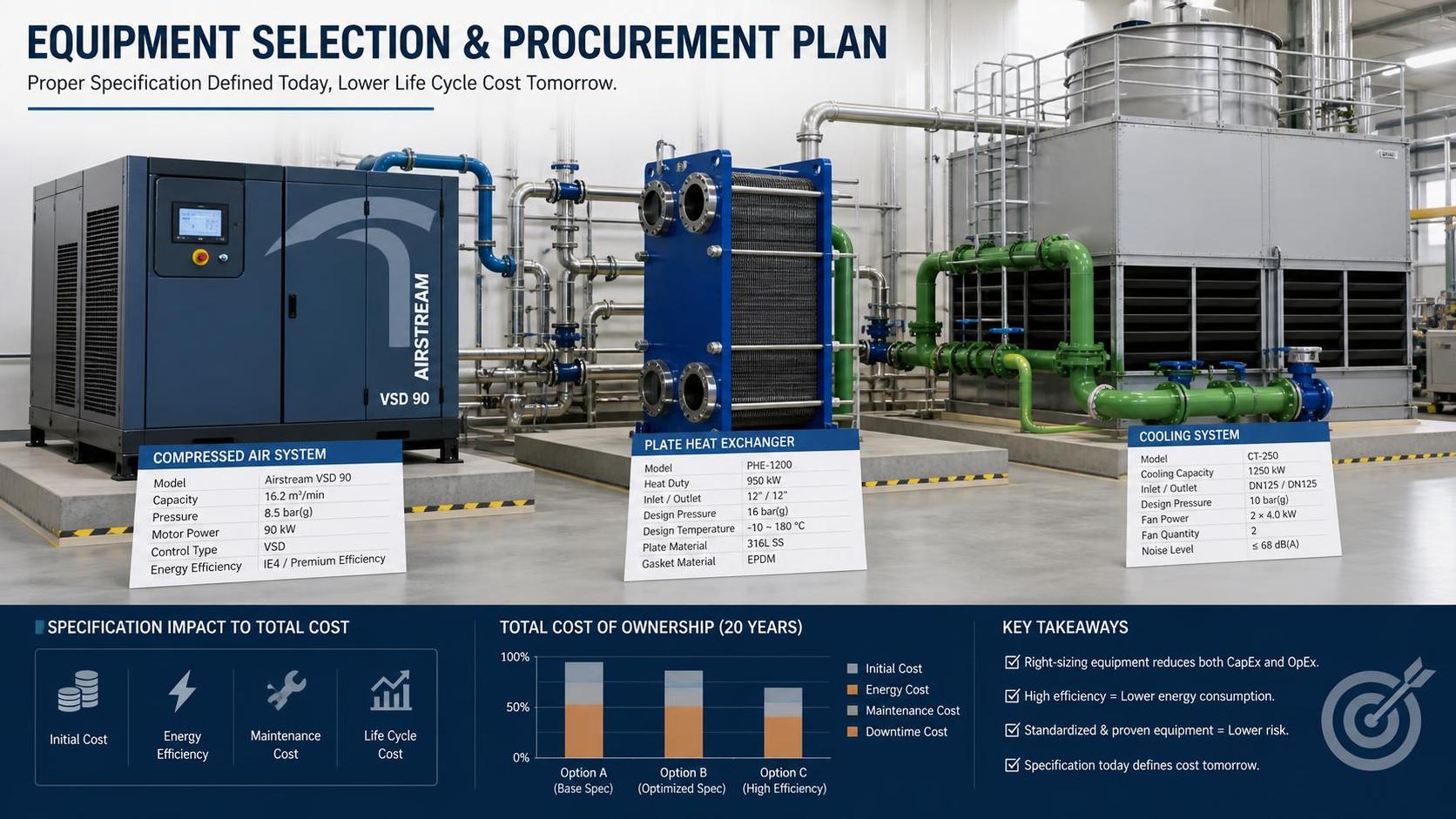
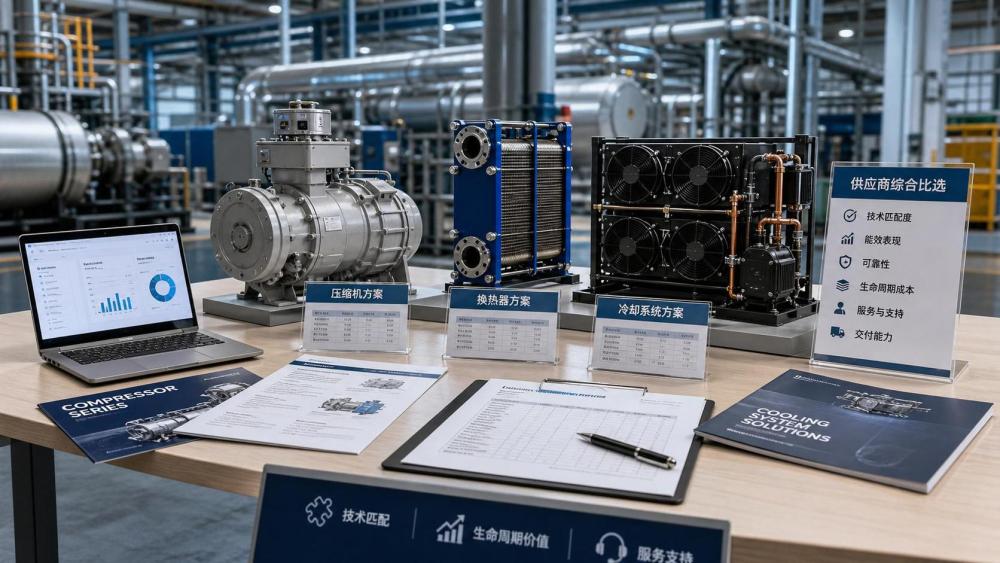
For that reason, supplier comparison for industrial equipment should include a total value review.
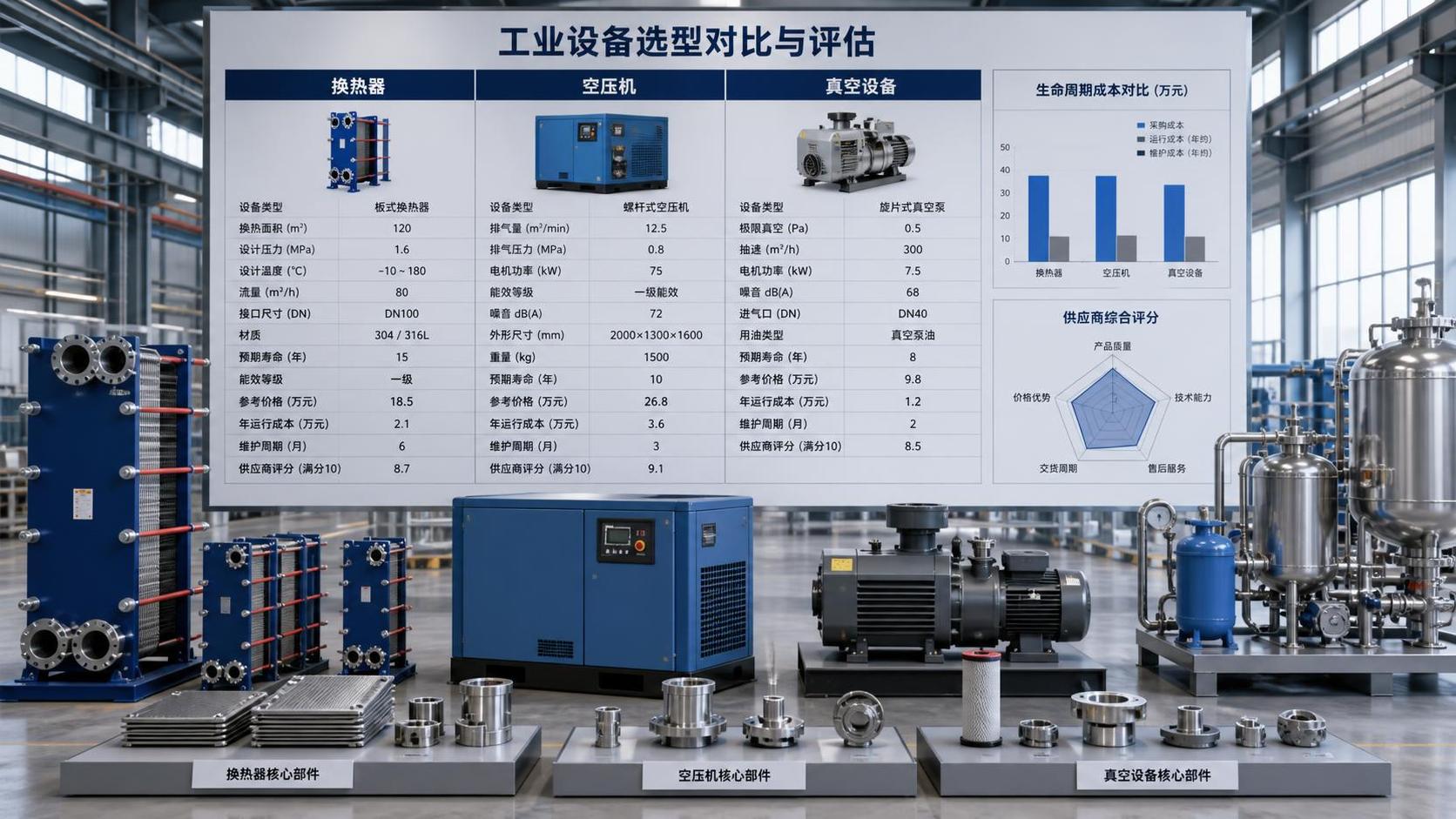
The table below helps turn abstract claims into decision points.
This kind of comparison creates distance from headline price.
It also helps compare established suppliers with newer entrants more fairly.
In energy-sensitive categories, intelligence from GTC-Matrix can sharpen this review.
Tracking trends in oil-free systems, green manufacturing demands, and thermal efficiency standards adds context that a quotation alone cannot provide.
Where do supplier evaluations usually go wrong?
The most common mistake is comparing promises instead of evidence.
Another is giving too much weight to delivery time while ignoring service resilience after installation.
In actual projects, several blind spots appear repeatedly.
- Assuming nameplate performance will match plant conditions without verification.
- Ignoring consumables, spare parts, and maintenance labor in lifecycle cost.
- Treating all warranties as equal without checking exclusions and response obligations.
- Missing policy risk, especially in refrigerant, emissions, or efficiency-linked technologies.
- Overlooking how supplier stability affects long-term support and upgrade availability.
These issues matter across general industry, not only in highly regulated sectors.
A packaging line, a cold storage facility, or a metal processing plant can all face hidden losses from weak supplier selection.
A more disciplined supplier comparison for industrial equipment asks for proof points.
Site references, energy data, commissioning scope, parts availability, and escalation contacts are all worth documenting before award.
How do timing, risk, and market signals affect the final choice?
Not every good supplier is the right supplier at the same moment.
Timing can change value dramatically.
For example, a highly efficient option may justify a premium when energy costs are rising.
A compliant refrigerant platform may become the safer choice when quota policy is tightening.
A modular system may be preferable when production growth is likely but not fixed.
This is one reason supplier comparison for industrial equipment should include external signals, not only internal requirements.
GTC-Matrix is particularly relevant here because its intelligence focus connects technical evolution with commercial implications.
Its Strategic Intelligence Center follows energy cost movements, refrigerant policy, decarbonization pressure, and demand shifts in precision industries.
That kind of visibility helps decision-makers judge whether a supplier is aligned with future operating conditions.
A practical checklist for final review can include:
- Confirm operating data assumptions line by line.
- Stress-test service commitments against the actual site footprint.
- Review compliance exposure over the expected equipment life.
- Estimate energy and maintenance costs under more than one market scenario.
- Check whether the supplier can support future decarbonization or digital monitoring goals.
So what is a practical way to move from comparison to decision?
A useful decision is usually built in stages.
Begin with the process need, then narrow suppliers by technical fit, then test total value and execution risk.
That sequence keeps supplier comparison for industrial equipment grounded in outcomes, not presentation quality.
If two suppliers remain close, the tie is often broken by service credibility and future readiness.
In other words, choose the option that can perform today and still make sense under tomorrow’s energy, policy, and production pressures.
A good next step is to build a short scoring sheet from the criteria above.
Include technical evidence, lifecycle economics, compliance fit, support depth, and adaptability.
Then validate assumptions with current market intelligence rather than relying only on vendor narratives.
That approach makes supplier comparison for industrial equipment more disciplined, more transparent, and far less vulnerable to hidden cost.
When procurement decisions affect uptime, efficiency, and competitiveness, careful comparison is not extra work.
It is part of protecting performance.
Related News
- How industrial utility systems affect energy costs in process plantsAuthor :

- Is Compressor Heat Recovery Worth the Installation Cost?Author :

- What to verify before choosing a process separation technology supplierAuthor :

- When does process utilities engineering reduce project rework?Author :

- Where thermal efficiency optimization delivers the fastest savings in EuropeAuthor :

- What should you verify before selecting a heat transfer supplier?Author :

- What drives compressed air systems price for industrial projects?Author :

- How an industrial product knowledge comparison guide reduces sourcing riskAuthor :

- When does a procurement specification planning process reduce bid risk?Author :

- When does thermal system optimization for electronics reduce failure risk?Author :

- When high temperature process heating systems justify the higher energy costAuthor :

- How to compare sludge dewatering equipment by cake drynessAuthor :

- What to Check Before Sourcing a Gas Turbine for Distributed Power ProjectsAuthor :

- What drives industrial thermal systems price in large facility projectsAuthor :

- How to build an industrial product comparison chart that speeds up vendor selectionAuthor :

- Vacuum Technology Application Guide for Selecting the Right SystemAuthor :

- What Drives Vacuum Drying Cost in Industrial Procurement?Author :

- What Drives Compressed Air Pricing in Industrial Systems?Author :

- How Procurement Specification Planning Shapes Total Project CostAuthor :

- Compression Technology Guide: How to Compare Efficiency, Pressure Range, and Maintenance NeedsAuthor :

- How to Compare Industrial Separators by Throughput, Purity, and Maintenance LoadAuthor :

- How to Size a Compressed Air Equipment Receiver Tank for Stable PressureAuthor :

- Industrial Equipment Selection Guide: How to Compare Capacity, Duty Cycle, and Operating CostAuthor :

- How to Evaluate an Intellectualization Supplier for Industrial UpgradesAuthor :

- High-Efficiency Manufacturing: Cost Savings vs. Upgrade RiskAuthor :

- Thermal System Optimization Cost: What Drives ROI?Author :

- How to Plan Process Utilities for a Cleanroom Without Costly ReworkAuthor :

- How to Compare Process Heating Suppliers in MexicoAuthor :

- Food Processing Utilities: Common Sizing Mistakes That Raise Energy and Water UseAuthor :

- How to Build Procurement Specification Planning for Industrial EquipmentAuthor :

- OEM Cooperation for Industrial Equipment: Risks, Terms, and Cost PrioritiesAuthor :

- Specification-Oriented Product Resources That Speed Technical ReviewAuthor :

- Industrial Equipment Selection Guide: A Practical Buyer ChecklistAuthor :

- How to Compare Industrial Energy Management Systems by ROIAuthor :

- How to Evaluate a Deaerators Supplier for Long-Term Plant ReliabilityAuthor :
![]()
- How to Evaluate a Vacuum Technology Manufacturer in 2026Author :