Technical Solution Evaluation for Semiconductor Projects: Key Risks Before Approval




Technical Solution Evaluation for Semiconductor Projects: Key Risks Before Approval
Before money is locked in, technical solution evaluation for semiconductor projects should happen with more depth than a standard design review.
In semiconductor facilities, small technical gaps often turn into large operational losses.
A utility mismatch, unstable temperature band, or weak redundancy plan can delay qualification and raise lifecycle cost.
That is why technical solution evaluation for semiconductor projects must test performance, operability, maintainability, and expansion logic together.
In practice, approval decisions improve when teams compare process needs against real plant conditions instead of vendor assumptions.
For GTC-Matrix, this is where industrial cooling, compressed air, vacuum support, and heat exchange intelligence become decision tools.
The goal is not to reject innovation.
The goal is to approve a solution that can actually run, scale, and stay efficient under clean manufacturing pressure.
Why Early Technical Solution Evaluation Matters More in Semiconductor Projects
Semiconductor production depends on tightly controlled thermal, pressure, purity, and airflow conditions.
Because of that, technical solution evaluation for semiconductor projects must go beyond equipment nameplate capacity.
The review should ask whether the full system can protect yield over time.
A chilled water design may look efficient on paper, yet fail during partial load swings.
A compressed air package may meet flow demand, yet create contamination or pressure instability at critical tools.
More importantly, late-stage corrections usually cost far more than deeper pre-approval analysis.
Rework can affect procurement, building interfaces, commissioning logic, and customer qualification windows.
From a decision standpoint, technical solution evaluation for semiconductor projects is really a risk filter for capex protection.
The Main Risks to Check Before Approval
A useful review starts by identifying where failure would affect production readiness fastest.
1. Utility Capacity That Looks Enough but Is Not Stable
Many proposals pass on peak capacity alone.
That is a weak basis for technical solution evaluation for semiconductor projects.
Semiconductor loads change by tool type, process recipe, seasonal conditions, and ramp-up stage.
The review should confirm stable delivery at minimum, normal, and upset conditions.
2. Thermal Control Gaps Across Interconnected Systems
Cooling performance is rarely isolated.
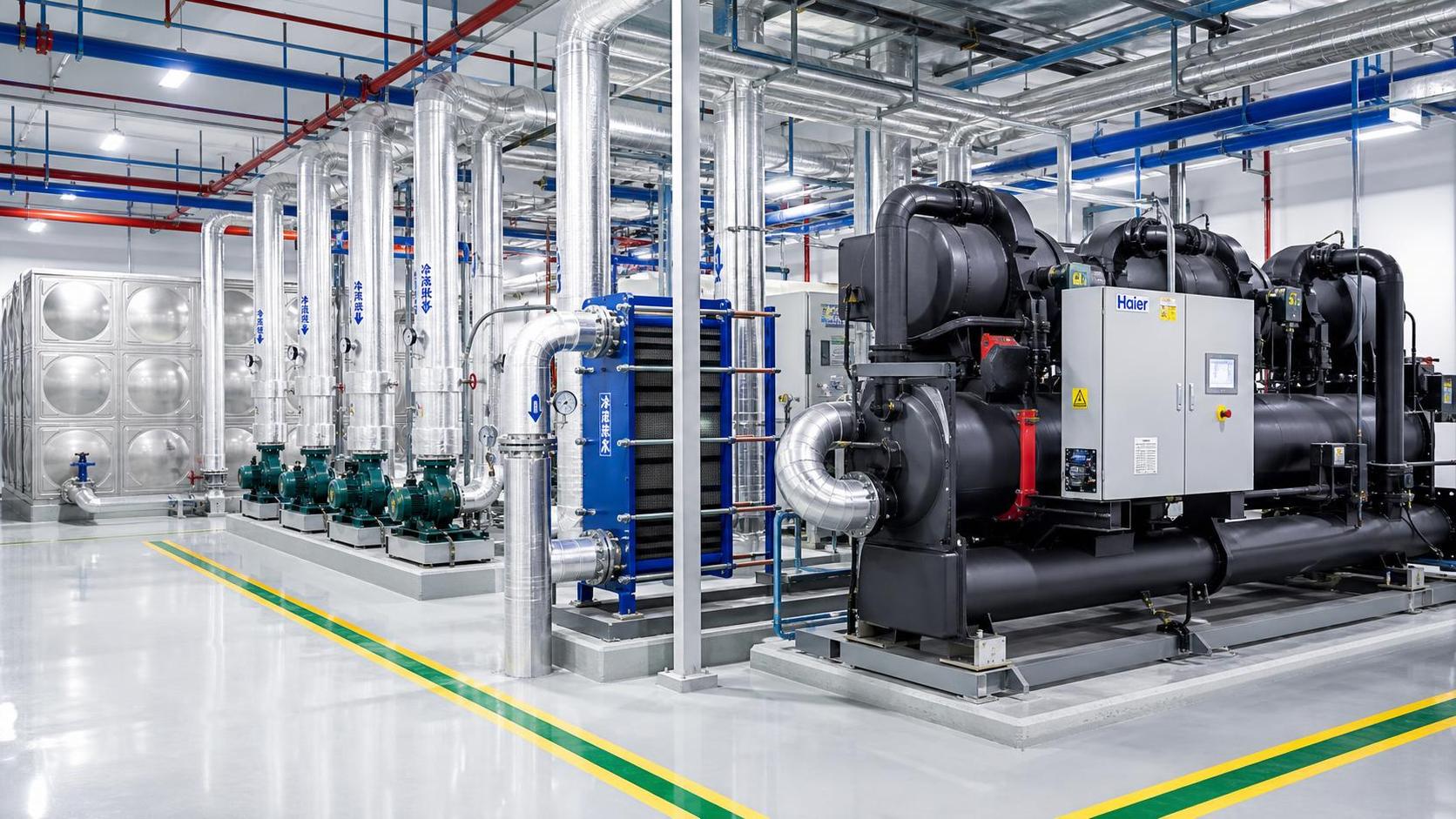
Chillers, heat exchangers, pumps, make-up systems, controls, and cleanroom conditions all influence process stability.
If one interface is underspecified, the full thermal balance becomes unreliable.
3. Cleanroom and Purity Compatibility Problems
Technical solution evaluation for semiconductor projects must test contamination risk as seriously as capacity risk.
Materials, seals, lubricants, filtration levels, condensate management, and maintenance access all matter.
A technically strong system can still be wrong if it compromises cleanliness standards.
4. Weak Redundancy and Recovery Planning
Backup philosophy often looks acceptable until a single-point failure map is drawn.
Reviewers should verify equipment redundancy, control redundancy, isolation paths, and recovery time after interruption.
5. Expansion Assumptions That Do Not Match the Business Plan
A common mistake is approving a design optimized only for day-one demand.
In real fabs, process tools, line balancing, and product mix can shift quickly.
Technical solution evaluation for semiconductor projects should check whether future expansion can happen without major shutdowns.
A Practical Evaluation Framework for Approval Decisions
A structured framework helps teams move from opinions to evidence.
The following checkpoints make technical solution evaluation for semiconductor projects more consistent and more useful.
- Define process-critical parameters first, including temperature range, pressure stability, purity class, vibration tolerance, and response time.
- Map every utility interface to actual tool demand, not only to average load calculations.
- Validate performance at partial load, startup, shutdown, and emergency transition conditions.
- Review maintainability, spare strategy, and technician access before layout approval.
- Check energy efficiency across the full operating curve, not just at the rated point.
- Confirm control logic, alarms, and data visibility for commissioning and long-term optimization.
- Test scalability against realistic production expansion scenarios.
This framework works especially well when engineering, operations, procurement, and facility teams review the same evidence together.
That shared review reduces blind spots between design intent and operating reality.
What to Compare in Competing Technical Solutions
Approval teams often receive multiple technically acceptable proposals.
The problem is that acceptable does not always mean equivalent.
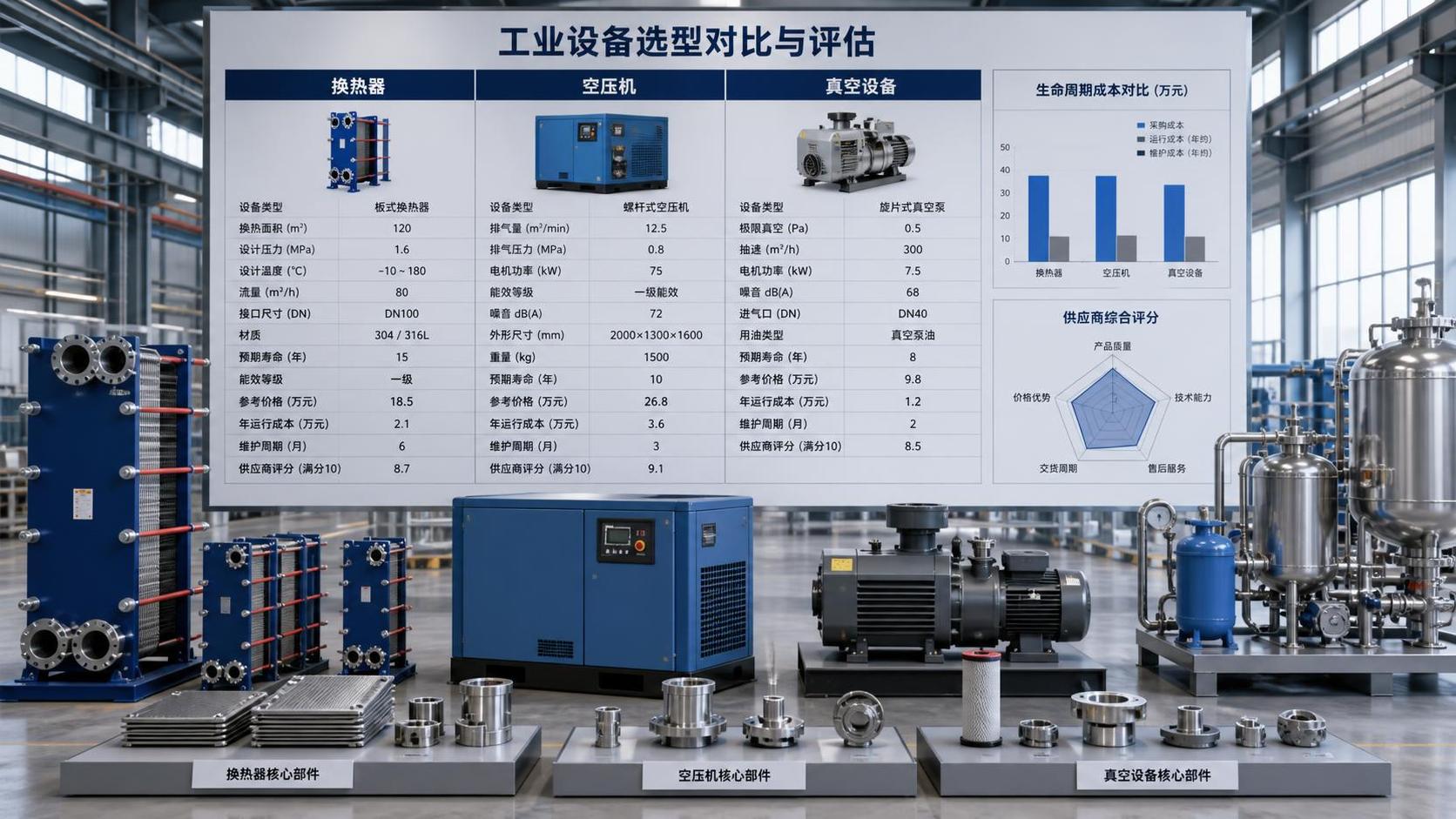
A comparison table can make technical solution evaluation for semiconductor projects clearer and faster.
This approach keeps technical solution evaluation for semiconductor projects focused on business outcomes, not presentation quality.
Common Approval Mistakes That Create Late Surprises
Several patterns appear again and again in project reviews.
- Approving based on vendor guarantees without checking site-specific operating windows.
- Using average utility loads while ignoring ramp peaks and process upset conditions.
- Treating energy efficiency as a secondary issue during early approval.
- Separating cleanroom considerations from mechanical utility decisions.
- Ignoring maintenance access until installation layout is already frozen.
- Assuming future expansion can be solved later without design consequences.
Each of these weakens technical solution evaluation for semiconductor projects by hiding real operating constraints.
The result is usually rework, unstable commissioning, or avoidable energy waste.
How Better Intelligence Improves Technical Solution Evaluation for Semiconductor Projects
Recent market shifts make early evaluation even more important.
Energy price volatility, refrigerant policy changes, and stricter efficiency expectations all affect solution choice.
That also means technical solution evaluation for semiconductor projects should use current industrial intelligence, not outdated reference cases.
GTC-Matrix supports this decision layer by connecting thermodynamic analysis with equipment evolution and sector demand signals.
For example, oil-free compression trends, microchannel heat exchanger development, and high-precision cooling demand can reshape evaluation criteria.
When teams use that intelligence early, approval choices become more resilient and easier to defend.
Final Decision Checklist Before Sign-Off
Before approval, pause and confirm the basics one more time.
- Does the solution match process-critical utility quality, not just quantity?
- Has thermal behavior been checked across real operating conditions?
- Are contamination and cleanroom compatibility fully addressed?
- Is redundancy sufficient for production continuity targets?
- Can the plant expand without major redesign or prolonged shutdown?
- Do lifecycle cost and energy performance still hold under partial load?
Strong technical solution evaluation for semiconductor projects is ultimately about approving certainty, not just equipment.
When the review is disciplined, project teams reduce surprises, protect yield, and build better long-term operating economics.
That is the point where technical approval starts to support real manufacturing performance.
Related News
- What to evaluate before choosing a thermal process engineering supplierAuthor :

- How industrial utility systems affect energy costs in process plantsAuthor :

- What Data Is Needed to Assess Heat Recovery Decarbonization?Author :

- Can Waste Heat Recovery Support Carbon Neutrality Targets?Author :

- Is Compressor Heat Recovery Worth the Installation Cost?Author :

- What to verify before choosing a process separation technology supplierAuthor :

- When does process utilities engineering reduce project rework?Author :

- Where thermal efficiency optimization delivers the fastest savings in EuropeAuthor :

- What should you verify before selecting a heat transfer supplier?Author :

- What drives compressed air systems price for industrial projects?Author :

- How an industrial product knowledge comparison guide reduces sourcing riskAuthor :

- When does a procurement specification planning process reduce bid risk?Author :

- When does thermal system optimization for electronics reduce failure risk?Author :

- When high temperature process heating systems justify the higher energy costAuthor :

- How to compare sludge dewatering equipment by cake drynessAuthor :

- What to Check Before Sourcing a Gas Turbine for Distributed Power ProjectsAuthor :

- What drives industrial thermal systems price in large facility projectsAuthor :

- How to build an industrial product comparison chart that speeds up vendor selectionAuthor :

- Vacuum Technology Application Guide for Selecting the Right SystemAuthor :

- What Drives Vacuum Drying Cost in Industrial Procurement?Author :

- What Drives Compressed Air Pricing in Industrial Systems?Author :

- How Procurement Specification Planning Shapes Total Project CostAuthor :

- Compression Technology Guide: How to Compare Efficiency, Pressure Range, and Maintenance NeedsAuthor :

- How to Compare Industrial Separators by Throughput, Purity, and Maintenance LoadAuthor :

- How to Size a Compressed Air Equipment Receiver Tank for Stable PressureAuthor :

- Industrial Equipment Selection Guide: How to Compare Capacity, Duty Cycle, and Operating CostAuthor :

- How to Evaluate an Intellectualization Supplier for Industrial UpgradesAuthor :

- High-Efficiency Manufacturing: Cost Savings vs. Upgrade RiskAuthor :

- Thermal System Optimization Cost: What Drives ROI?Author :

- How to Plan Process Utilities for a Cleanroom Without Costly ReworkAuthor :

- How to Compare Process Heating Suppliers in MexicoAuthor :

- Food Processing Utilities: Common Sizing Mistakes That Raise Energy and Water UseAuthor :

- How to Build Procurement Specification Planning for Industrial EquipmentAuthor :

- OEM Cooperation for Industrial Equipment: Risks, Terms, and Cost PrioritiesAuthor :

- Specification-Oriented Product Resources That Speed Technical ReviewAuthor :

- Industrial Equipment Selection Guide: A Practical Buyer ChecklistAuthor :