



Is Compressor Heat Recovery Worth the Installation Cost?




Compressor heat recovery is worth the installation cost when recovered heat has a dependable use during the same hours that the compressor runs. A compressed-air system converts most of its electrical input into heat. If that heat displaces purchased fuel, electric resistance heating, or another paid heat source, the project can produce a strong return. If the heat demand is seasonal, too low in temperature, or located far from the compressor room, the equipment may operate reliably yet deliver disappointing savings.
The investment should therefore be judged as a heat-use project, not simply as a compressor accessory. Start with the compressor operating profile, identify a stable thermal load, establish the temperature required at that load, and then compare the installed system cost with the avoided energy cost. The size of the compressor alone does not answer the question.
Where the recoverable heat comes from
Heat leaves a compressor through several paths: the lubricant or cooling circuit, the compressed air after compression, motor cooling, and radiation from hot surfaces. The most practical source depends on compressor type and the intended use.
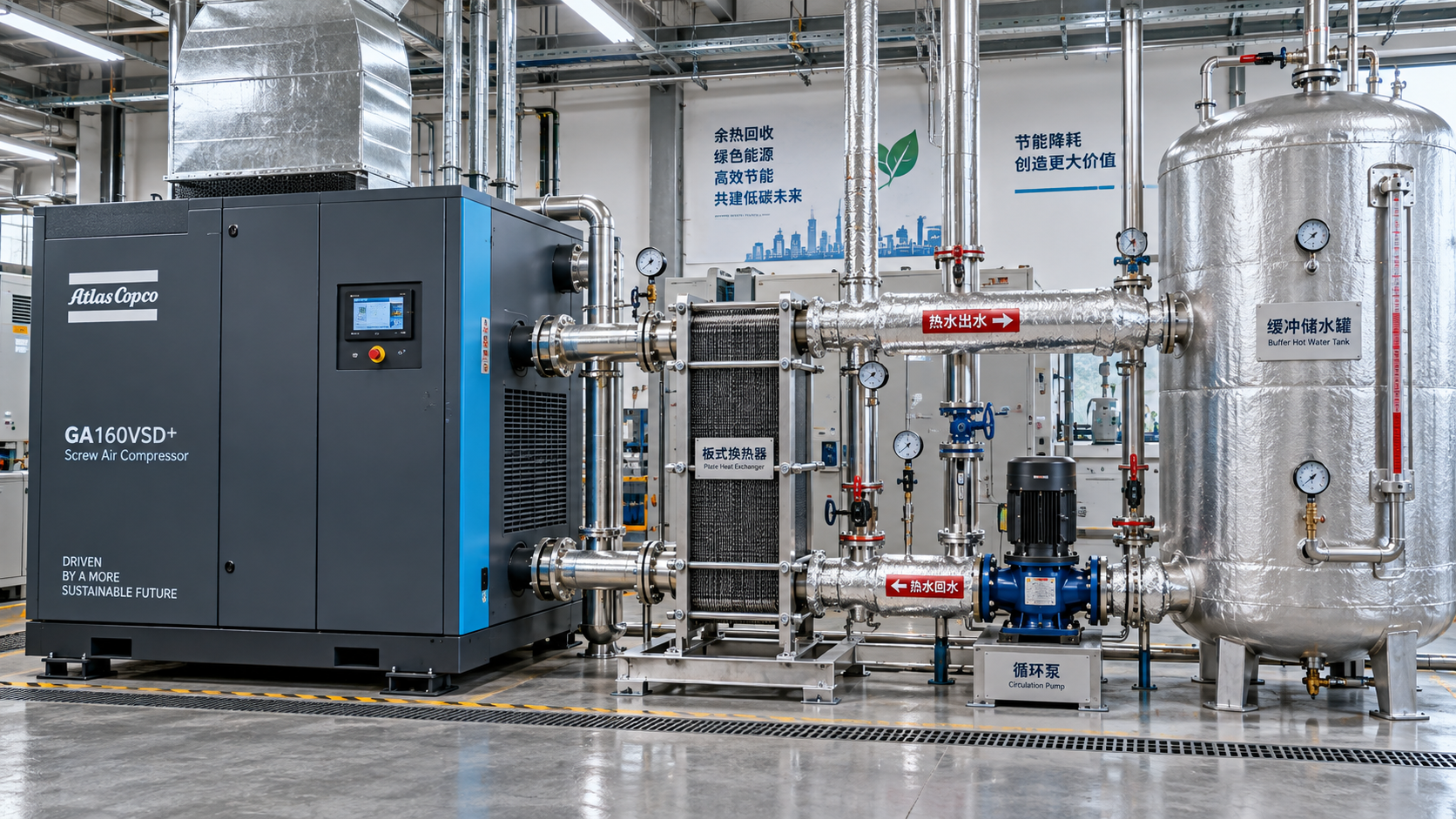
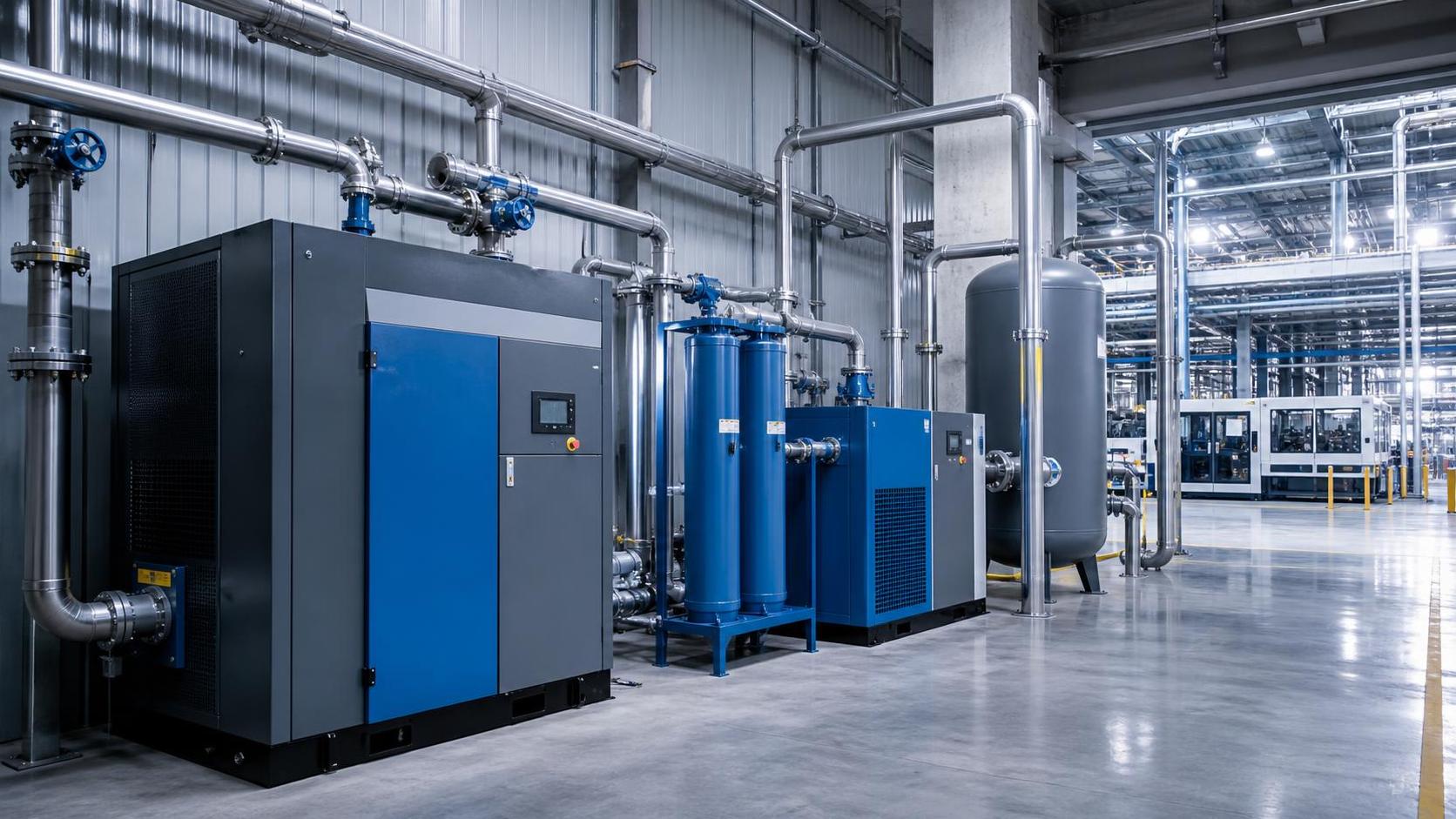
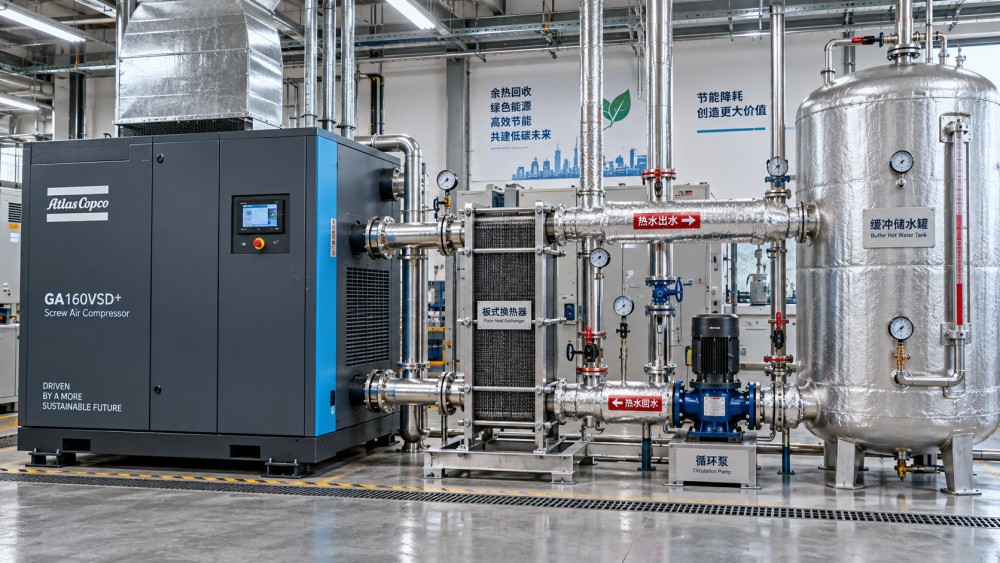
Oil-injected rotary screw compressors are commonly paired with oil-to-water heat exchangers. Their lubricant circuit carries concentrated heat at a useful temperature, making it suitable for preheating process water, wash water, boiler feedwater, or hydronic loops. The compressed air must still be cooled for downstream treatment, so an air-side recovery arrangement may also be possible. Water-cooled compressors can offer another recovery point through the cooling-water circuit, although the available delivery temperature is shaped by the existing cooling design.
Air-cooled units often release heat into the compressor room. Ducting that warm air to a nearby warehouse, production area, loading zone, or make-up air system can be relatively straightforward. That arrangement is effective for space heating during cold weather, but its value falls sharply when the building does not need heat. Exhausting hot air outdoors in summer also means the recovery system must avoid creating excess room temperature, recirculation, or ventilation problems.
Oil-free compressors require particular attention to their cooling arrangement and discharge-air conditions. The absence of lubricant does not automatically mean every heat source is suitable for direct process use. Heat exchanger materials, water quality, isolation requirements, pressure boundaries, and the process's cleanliness rules still determine the acceptable connection.
The temperature mismatch that changes the economics
A common mistake is to calculate recoverable kilowatts and treat all of them as equally valuable. Heat quantity and heat quality are different. A large amount of low-temperature heat cannot replace a smaller high-temperature steam or thermal-oil duty without additional equipment. Raising water temperature with a heat pump, mixing loop, or auxiliary heater may still be sensible, but those added capital and operating costs belong in the calculation.
For example, a facility may have substantial demand for water at a moderate temperature for cleaning, rinsing, or feedwater preheat. Compressor recovery can fit that duty well when the recovered-water temperature approaches the required supply temperature. By contrast, a process that needs a high and tightly controlled temperature may receive only partial preheat value. The remaining temperature lift must come from the existing boiler or heater.
Return temperature matters as much as supply temperature. A recovery loop with a cool, consistent return accepts heat effectively. A loop that returns hot water quickly reduces the heat exchanger driving force, causing the recovery package to bypass heat or cycle its control valve. Tank stratification, mixing-valve placement, and flow rate can therefore affect annual recovery more than a nameplate heat-recovery capacity.
Build the calculation around coincident hours
The useful heat is the recoverable heat that overlaps with a real demand. A continuous compressor feeding a process with a continuous warm-water load has a favorable operating pattern. A compressor operating two shifts while heat is needed only for brief morning cleaning cycles has a weaker match, even if both systems have similar annual energy use.
Use logged data where possible. At minimum, collect compressor power, loaded and unloaded hours, variable-speed operating range, discharge conditions, ambient temperature, and any planned production changes. For the heat sink, collect hourly or shift-level flow, supply and return temperatures, fuel or electricity used by the displaced heating source, and periods when the load is unavailable. Monthly utility bills are useful for cost context but are too coarse to reveal whether heat and demand occur together.
The basic energy balance is simple:
Useful recovered heat = recoverable compressor heat × recovery system availability × coincidence with usable demand.
Each term needs defensible assumptions. Recoverable compressor heat is influenced by compressor loading and cooling design. Availability includes maintenance shutdowns, controls, fouling, bypass operation, and periods when the system cannot accept heat. Coincidence excludes heat that arrives when the storage tank is full, the process is stopped, or building heating is not required.
The avoided energy cost must reflect the heater being displaced. Replacing natural-gas boiler input is not equivalent to avoiding direct electric heating. Boiler combustion efficiency, distribution losses, fuel price, demand charges where relevant, and the value of water treatment or steam generation should be considered. Avoided cost should be based on the marginal heating source that would otherwise operate, rather than an average site energy price.
Installation cost is usually governed by integration
The heat exchanger package itself is only part of the project. Cost can rise when the proposed heat sink is remote, inaccessible, intermittently available, or incompatible with the compressor's existing control arrangement. Short pipe runs to a nearby buffer tank or process loop are usually simpler than routing insulated pipe through active production areas, across fire compartments, or outdoors in freezing conditions.
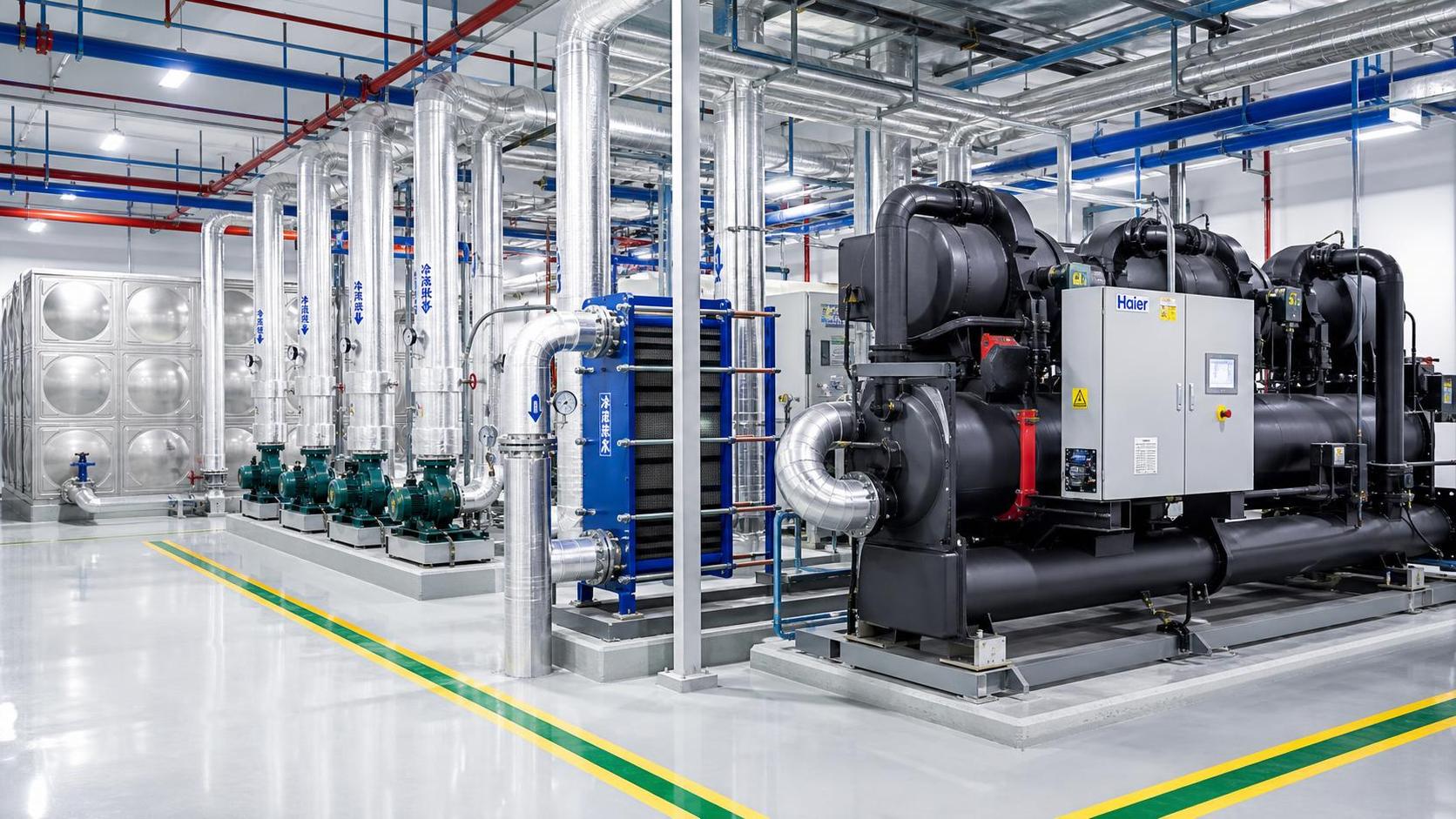
Scope often includes isolation valves, strainers, temperature and pressure instruments, flow control, piping supports, insulation, electrical work, controls integration, commissioning, and modifications to the existing cooling circuit. Water systems may need expansion capacity, relief protection, air separation, glycol protection, or water treatment. On the air side, ductwork needs adequate support, balancing dampers, backdraft prevention, and a path for summer heat rejection.
Do not overlook downtime. Connecting to an existing compressor cooling circuit can require a planned shutdown and a clear temporary-air arrangement. If production cannot tolerate lost air supply, the installation sequence may require rental equipment, a redundant compressor, or out-of-hours work. These items belong in the total installed cost even when they do not appear on the heat-recovery equipment quotation.
Controls determine whether heat is actually captured
A well-designed system protects compressor operation first. Recovery controls should never cause high oil temperature, inadequate aftercooling, unstable discharge pressure, or excessive compressor-room temperature. A bypass route is normally required so the compressor can reject heat when the receiving loop cannot accept it. The control logic must respond predictably when storage is hot, a process valve closes, a pump trips, or ambient conditions change.
Variable-speed compressors deserve separate treatment. Their heat output changes with shaft power, while many thermal loads vary for unrelated reasons. A fixed-flow recovery loop may work at one operating point and perform poorly at another. Flow control, buffer storage, and sensor placement should be selected around the expected range, not just full-load operation.
Metering is valuable because it distinguishes a successful thermal project from an assumed one. Electrical power to the compressor, recovered-water flow, and supply and return temperatures allow recovered energy to be calculated over time. Heat meters can reveal a stuck bypass valve, pump failure, heat exchanger fouling, or a process schedule change before these issues become embedded in annual savings estimates.
When recovery tends to justify the expense
Projects become more compelling when compressor run hours are high, the thermal load is close by, and the recovered heat replaces a costly source. Year-round uses are especially attractive: process-water preheat, washdown water, low-temperature drying, make-up water warming, boiler feedwater preheat, and some hydronic heating loads. Buffer storage can improve the match between compressor operation and short-duration hot-water demand, provided storage losses and available floor space are reasonable.
There is also value in reducing cooling-system burden. Removing heat through a recovery loop may reduce the load on a cooling tower, dry cooler, ventilation fan, or air-conditioning system. That benefit should be counted only after confirming how the existing cooling equipment will actually respond. A condenser fan that continues to run at the same speed, for example, may provide little avoided electrical use even though the recovery loop is carrying heat.
A project is less attractive when the only heat use is seasonal space heating and the compressor room is already managed by a ventilation system that cannot readily be redirected. It is also weak when the site has abundant low-cost waste heat from another source, when a high-temperature process requires nearly all of its heat from a separate system anyway, or when compressed-air demand is expected to decline after leak repair, equipment replacement, or process redesign.
Separate compressor efficiency from heat-recovery value
Heat recovery should not be used to justify an inefficient compressed-air system. Air leaks, inappropriate pressure settings, artificial demand, excessive pressure drop, poor sequencing, and unnecessary unloaded running raise electrical consumption. Recovering heat from that waste does not make the air system efficient; it merely recovers part of the resulting loss.
Address obvious compressed-air inefficiencies before finalizing recovery capacity. Otherwise, a later optimization project may reduce compressor loading and leave an oversized heat exchanger, pump, tank, or pipework network. A recovery system can coexist with air-system improvements, but the design basis should use the expected future operating profile rather than the most wasteful current profile.
Likewise, avoid assigning full heat-recovery credit to heat that would have been useful without the project. In a compressor room that already warms an adjacent space through uncontrolled air movement, installing ductwork may improve control and capture, but the incremental heating benefit may be smaller than the gross recovered heat suggests.
A practical evaluation sequence
- Map the compressed-air system first. Record compressor types, cooling methods, operating modes, power draw, annual hours, redundancy arrangements, and planned changes to demand.
- Identify heat sinks by temperature, flow, schedule, and distance. A stable moderate-temperature water load is often more valuable than a large but occasional heat requirement.
- Develop a preliminary thermal balance using coincident operating periods. Include losses in piping and storage, expected bypass periods, and the actual efficiency of the displaced heating source.
- Define the integration scope before comparing project costs. Include controls, shutdown requirements, pipe routing, insulation, electrical work, safety devices, water treatment, structural supports, and commissioning.
- Review maintainability. Heat exchangers need isolation and cleaning access; sensors need calibration access; pumps and strainers need service clearance; control points need a documented operating sequence.
- Commission against measured temperatures and flow, then compare recorded recovered energy with the design expectation through different production and weather conditions.
Details that prevent expensive rework
Heat exchanger selection should match both fluids and the maintenance environment. Water quality, suspended solids, hardness, chlorides, glycol concentration, and cleaning chemicals affect material choice and fouling risk. A compact exchanger can perform well but may require better filtration or more deliberate cleaning access than a larger design. On lubricant-side recovery systems, verify that pressure drop and temperature control remain within compressor manufacturer limits.
Pipe routing requires more than thermal insulation. Long runs increase heat loss, pump energy, expansion movement, and installation labor. Outdoor sections need freeze protection. Penetrations through walls or fire-rated barriers need early coordination. In congested plants, the least expensive theoretical route may interfere with maintenance aisles, overhead lifting, cable trays, or future equipment access.
For air-to-air recovery, confirm whether the receiving area can tolerate the airflow, noise, and dust conditions. A ducted supply may need filtration, dampers, and a means to prevent reverse airflow when the compressor is stopped. Drawing excessive air from the compressor room can also alter cooling conditions, so the room ventilation design must remain adequate in every operating mode.
The installation cost is justified when it creates measured, usable heat without compromising compressed-air reliability or creating a maintenance burden that erodes savings. The strongest proposals are built from operating data, a realistic heat-sink profile, and a complete integration scope rather than from a percentage of compressor input power alone.
Related News
- How industrial utility systems affect energy costs in process plantsAuthor :

- Is Compressor Heat Recovery Worth the Installation Cost?Author :

- What to verify before choosing a process separation technology supplierAuthor :

- When does process utilities engineering reduce project rework?Author :

- Where thermal efficiency optimization delivers the fastest savings in EuropeAuthor :

- What should you verify before selecting a heat transfer supplier?Author :

- What drives compressed air systems price for industrial projects?Author :

- How an industrial product knowledge comparison guide reduces sourcing riskAuthor :

- When does a procurement specification planning process reduce bid risk?Author :

- When does thermal system optimization for electronics reduce failure risk?Author :

- When high temperature process heating systems justify the higher energy costAuthor :

- How to compare sludge dewatering equipment by cake drynessAuthor :

- What to Check Before Sourcing a Gas Turbine for Distributed Power ProjectsAuthor :

- What drives industrial thermal systems price in large facility projectsAuthor :

- How to build an industrial product comparison chart that speeds up vendor selectionAuthor :

- Vacuum Technology Application Guide for Selecting the Right SystemAuthor :

- What Drives Vacuum Drying Cost in Industrial Procurement?Author :

- What Drives Compressed Air Pricing in Industrial Systems?Author :

- How Procurement Specification Planning Shapes Total Project CostAuthor :

- Compression Technology Guide: How to Compare Efficiency, Pressure Range, and Maintenance NeedsAuthor :

- How to Compare Industrial Separators by Throughput, Purity, and Maintenance LoadAuthor :

- How to Size a Compressed Air Equipment Receiver Tank for Stable PressureAuthor :

- Industrial Equipment Selection Guide: How to Compare Capacity, Duty Cycle, and Operating CostAuthor :

- How to Evaluate an Intellectualization Supplier for Industrial UpgradesAuthor :

- High-Efficiency Manufacturing: Cost Savings vs. Upgrade RiskAuthor :

- Thermal System Optimization Cost: What Drives ROI?Author :

- How to Plan Process Utilities for a Cleanroom Without Costly ReworkAuthor :

- How to Compare Process Heating Suppliers in MexicoAuthor :

- Food Processing Utilities: Common Sizing Mistakes That Raise Energy and Water UseAuthor :

- How to Build Procurement Specification Planning for Industrial EquipmentAuthor :

- OEM Cooperation for Industrial Equipment: Risks, Terms, and Cost PrioritiesAuthor :

- Specification-Oriented Product Resources That Speed Technical ReviewAuthor :

- Industrial Equipment Selection Guide: A Practical Buyer ChecklistAuthor :

- How to Compare Industrial Energy Management Systems by ROIAuthor :

- How to Evaluate a Deaerators Supplier for Long-Term Plant ReliabilityAuthor :
![]()
- How to Evaluate a Vacuum Technology Manufacturer in 2026Author :