



How to compare sludge dewatering equipment by cake dryness




How to Compare Sludge Dewatering Equipment by Cake Dryness
When people compare sludge dewatering equipment, they often start with throughput, footprint, or purchase price. In practice, cake dryness usually ends up driving the harder economics. A few points of solids content can change hauling frequency, disposal fees, storage needs, and even whether downstream handling stays simple or becomes a daily operating problem.
That is why cake dryness is a useful technical lens for equipment selection. It is concrete, measurable, and tied to operating cost. But it is also easy to misuse. A dryness figure taken from a brochure, without sludge type, polymer condition, feed variability, or test method, does not tell you much. Technical evaluation works better when dryness is treated as one decision variable inside a broader process picture.
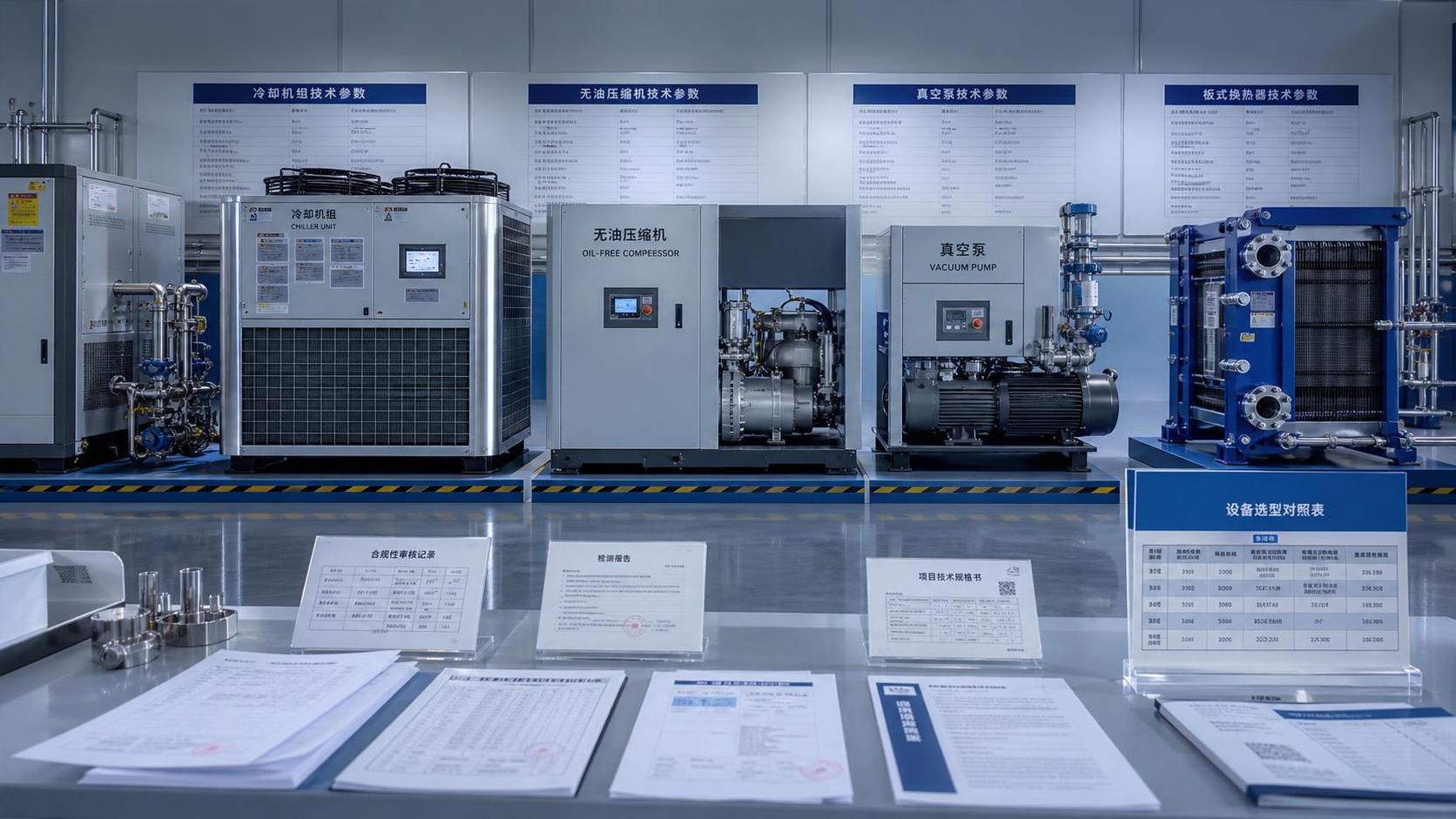
For industrial decision-making, this kind of comparison also fits the broader logic followed by platforms such as GTC-Matrix, which looks at thermal systems, compressed air, vacuum, and heat exchange through the lens of real operating efficiency rather than isolated nameplate claims. Sludge dewatering may sit outside classic thermodynamic equipment categories, yet the same discipline applies: compare technologies under actual process conditions, understand where energy and material costs move, and test the assumptions behind performance claims.
Cake dryness is a decision metric, not a marketing number
Cake dryness refers to the solids concentration in the dewatered sludge cake after mechanical separation. Higher dryness generally means less water is being transported or disposed of with the solids. That sounds straightforward, but the comparison only makes sense if the feed sludge basis is comparable. Waste activated sludge, digested sludge, primary sludge, mixed sludge, industrial biological sludge, and oily or fibrous sludges do not dewater the same way.
A press that produces a relatively dry cake on primary sludge may perform quite differently on low-density biological sludge. The same machine may also drift in performance when feed concentration changes, polymer quality shifts, or seasonal process conditions affect floc formation. So the right question is not “Which sludge dewatering equipment gives the highest cake dryness?” It is “Which equipment can consistently achieve an acceptable dryness on our sludge, at our flow pattern, with acceptable operating cost and stability?”
The first comparison should be sludge characteristics, not machine type
Before comparing screw presses, belt filter presses, centrifuges, plate and frame presses, or recessed chamber presses, define the sludge itself. This step is often rushed, and then the equipment comparison becomes noisy.
At minimum, technical assessors usually need to review feed solids range, sludge origin, particle size behavior, oil or grease content, fiber content, biological versus mineral fraction, and whether the sludge is digested or fresh. If polymer conditioning is required, the achievable cake dryness is partly a chemistry question, not only a mechanical one. Even small upstream changes, such as aeration control, coagulant carryover, or pH adjustment, can affect dewatering response.
This is why pilot testing or representative bench testing matters. In many projects, the technically safer choice is not the machine with the highest claimed dryness, but the machine with the most predictable response across the expected sludge variability.
How different equipment types should be judged on dryness
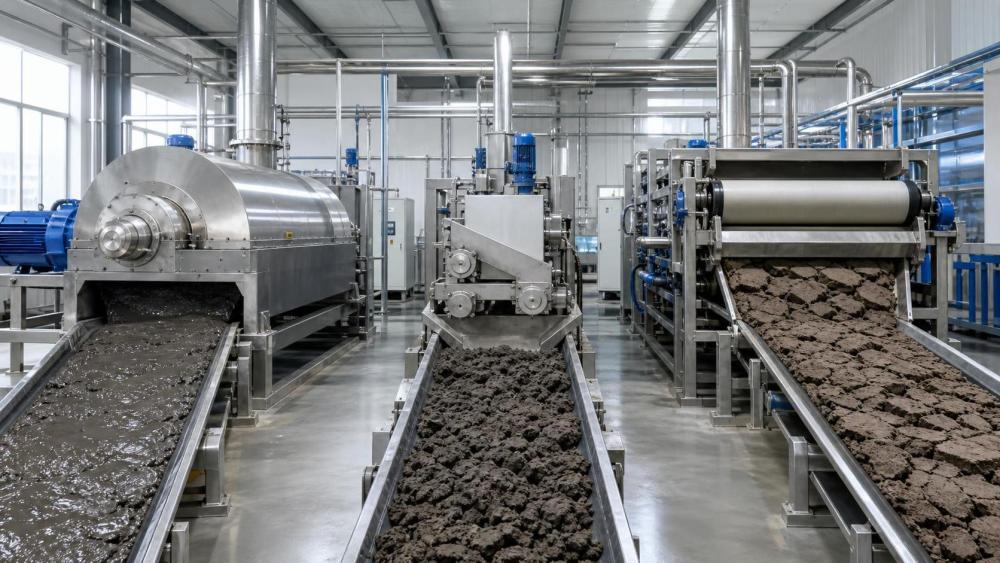
Different technologies create dryness in different ways, and that affects how you compare them.
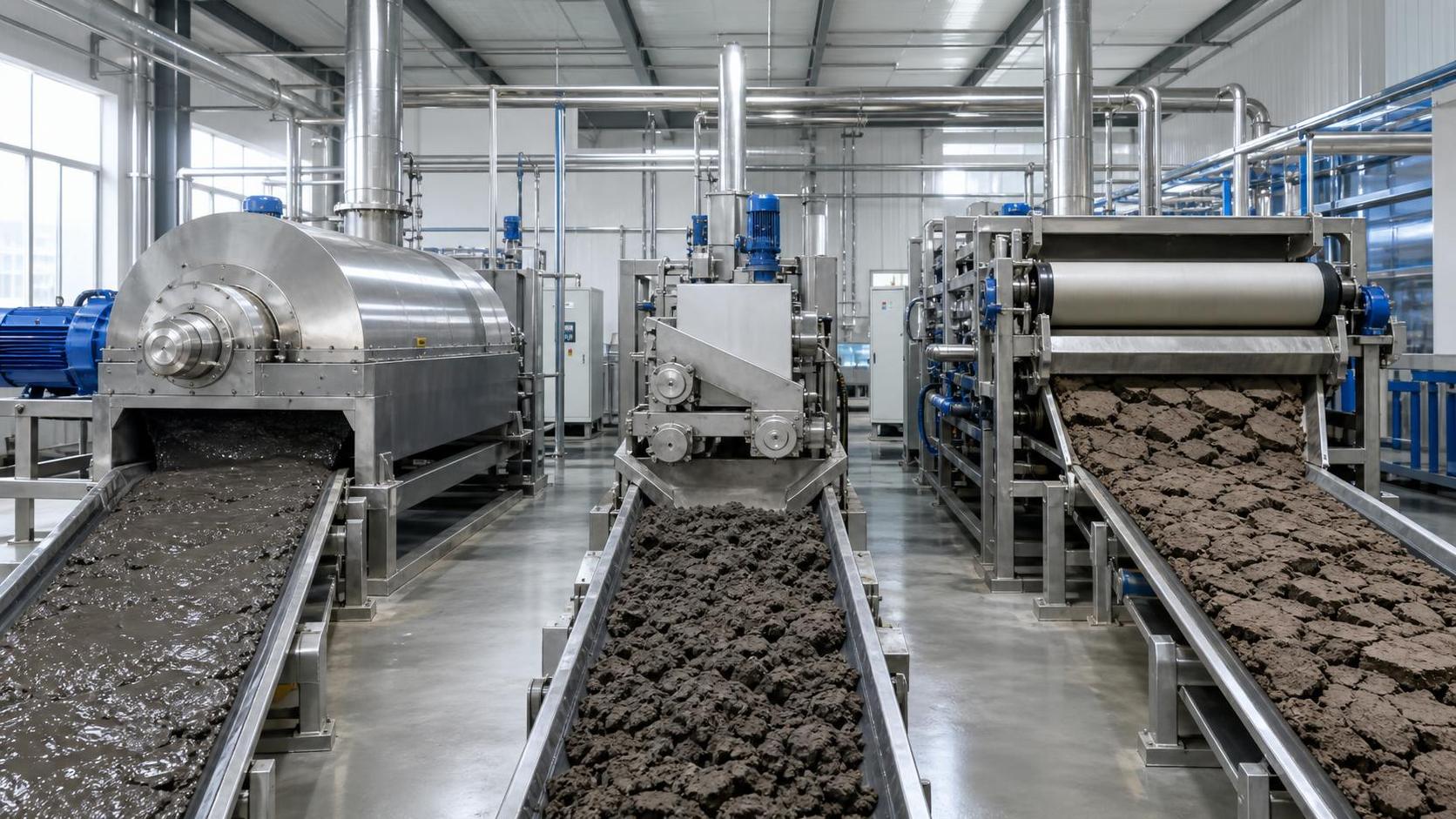
Centrifuges rely on high g-force separation and are often attractive where automation, enclosed operation, and continuous processing matter. Their actual cake dryness depends heavily on sludge properties and polymer tuning. They can be very effective, but they are also sensitive to feed fluctuations and operating settings.
Belt filter presses are familiar in municipal and industrial applications and can be competitive where large volumes need continuous treatment. Dryness performance depends on gravity drainage, wedge pressure, belt tension, and conditioning quality. They may be easier to understand operationally, but they also require attention to wash water, belt condition, and housekeeping.
Screw press systems are often selected for simpler operation, lower wash water demand in some designs, and decent tolerance to flow variation. Their cake dryness may or may not match other technologies depending on the sludge. The right comparison is not generic; it depends on whether the target is “good enough dryness with stable low-touch operation” or “maximum dryness regardless of complexity.”
Plate and frame or chamber filter presses can achieve high cake solids in some applications, especially where batch operation is acceptable and the sludge is suitable for pressure filtration. But those gains may come with longer cycles, more operator involvement, more complex cake discharge, or larger buffer storage needs upstream.
Do not compare dryness alone
A machine that pushes cake dryness slightly higher can still be a weaker choice if it does so with excessive polymer use, lower solids capture, unstable cake discharge, or heavy maintenance demand. This is a common evaluation trap.
The more useful comparison set usually includes:
- Achieved cake dryness under repeatable test conditions
- Solids recovery or capture rate
- Polymer consumption and conditioning sensitivity
- Energy demand and utility needs
- Wash water requirement, if relevant
- Wear parts, cleaning frequency, and operator attention
- Tolerance to feed variation and upset conditions
- Odor control, enclosure needs, and site constraints
That multi-factor view is especially important where sludge handling links to other systems. If the dewatering line affects dryer load, thermal oxidation duty, storage residence time, or truck logistics, then one extra point of dryness can be quite valuable. If disposal cost is low and labor simplicity matters more, the same one point may not justify a more demanding technology.
What a fair dryness comparison looks like
A fair comparison has to control the test basis. Otherwise, the equipment is not really being compared; the sludge and polymer program are.
For decision work, it is usually worth checking whether the following points are aligned across vendors or technologies:
- Same sludge source and similar sampling period
- Comparable feed solids concentration
- Clear statement of polymer type and dosage basis
- Same or equivalent measurement method for cake solids
- Continuous average performance rather than isolated peak readings
- Record of filtrate or centrate quality, not only cake result
- Performance after stabilization, not only startup behavior
If a vendor provides a dryness number without explaining the sludge basis, the polymer condition, or the mass balance around the test, treat it as directional only. Technical assessors usually need more than a headline figure to defend a recommendation internally.
The hidden cost of chasing the driest cake
It is tempting to rank all options by maximum dryness and stop there. In real plants, the driest cake is not automatically the best operating point. Some systems can be pushed harder, but at the cost of lower throughput, higher polymer demand, more wear, or unstable cake release. Others may achieve a slightly wetter cake yet provide smoother operation, fewer interruptions, and lower total cost per dry solids ton handled.
This is where cross-disciplinary evaluation becomes useful. GTC-Matrix often frames industrial equipment decisions around the interaction between process reliability, energy logic, and resource efficiency. The same mindset helps here. Dewatering equipment is not an island. If its operating window is narrow, it can create hidden burdens on utilities, maintenance crews, transport scheduling, or downstream thermal systems.
Questions worth asking before final selection
A technical review becomes sharper when it moves from generic comparisons to project-specific questions:
- What minimum cake dryness is actually needed for disposal or downstream handling?
- How much does each additional dryness point save in transport or treatment cost?
- Will sludge characteristics change with season, production mix, or upstream process changes?
- Is the plant staffed for a batch process, or is unattended continuous operation preferred?
- How sensitive is the site to odor, wash water use, noise, or spills?
- What is the acceptable maintenance rhythm, and how available are local service and parts?
These questions often narrow the field faster than abstract technology debates.
A practical way to make the decision
If you are comparing sludge dewatering equipment by cake dryness, start with sludge characterization, then verify performance through test work, then normalize the economics around dry solids handled rather than wet tons moved. After that, check whether the preferred option still looks strong when operator workload, maintenance exposure, polymer stability, and site utilities are included.
That approach is less dramatic than chasing the highest single dryness number, but it usually leads to better decisions. In many facilities, the winning solution is the one that delivers reliable, defensible dryness day after day, not the one that produced the best isolated test result.
If the project sits near thermal drying, energy recovery, or broader plant efficiency upgrades, it also makes sense to assess dewatering in the context of the whole resource chain. That systems view is increasingly valuable as operators face tighter cost control, decarbonization pressure, and less tolerance for unstable unit operations.
In the end, cake dryness is one of the best ways to compare dewatering options, but only when it is anchored to the right sludge, the right test basis, and the right operating reality. That is the point where comparison becomes decision-making rather than specification reading.
Related News
- Which industrial solution comparison criteria prevent project delays?Author :

- What to evaluate before choosing a thermal process engineering supplierAuthor :

- How industrial utility systems affect energy costs in process plantsAuthor :

- What Data Is Needed to Assess Heat Recovery Decarbonization?Author :

- Can Waste Heat Recovery Support Carbon Neutrality Targets?Author :

- Is Compressor Heat Recovery Worth the Installation Cost?Author :

- What to verify before choosing a process separation technology supplierAuthor :

- When does process utilities engineering reduce project rework?Author :

- Where thermal efficiency optimization delivers the fastest savings in EuropeAuthor :

- What should you verify before selecting a heat transfer supplier?Author :

- What drives compressed air systems price for industrial projects?Author :

- How an industrial product knowledge comparison guide reduces sourcing riskAuthor :

- When does a procurement specification planning process reduce bid risk?Author :

- When does thermal system optimization for electronics reduce failure risk?Author :

- When high temperature process heating systems justify the higher energy costAuthor :

- How to compare sludge dewatering equipment by cake drynessAuthor :

- What to Check Before Sourcing a Gas Turbine for Distributed Power ProjectsAuthor :

- What drives industrial thermal systems price in large facility projectsAuthor :

- How to build an industrial product comparison chart that speeds up vendor selectionAuthor :

- Vacuum Technology Application Guide for Selecting the Right SystemAuthor :

- What Drives Vacuum Drying Cost in Industrial Procurement?Author :

- What Drives Compressed Air Pricing in Industrial Systems?Author :

- How Procurement Specification Planning Shapes Total Project CostAuthor :

- Compression Technology Guide: How to Compare Efficiency, Pressure Range, and Maintenance NeedsAuthor :

- How to Compare Industrial Separators by Throughput, Purity, and Maintenance LoadAuthor :

- How to Size a Compressed Air Equipment Receiver Tank for Stable PressureAuthor :

- Industrial Equipment Selection Guide: How to Compare Capacity, Duty Cycle, and Operating CostAuthor :

- How to Evaluate an Intellectualization Supplier for Industrial UpgradesAuthor :

- High-Efficiency Manufacturing: Cost Savings vs. Upgrade RiskAuthor :

- Thermal System Optimization Cost: What Drives ROI?Author :

- How to Plan Process Utilities for a Cleanroom Without Costly ReworkAuthor :

- How to Compare Process Heating Suppliers in MexicoAuthor :

- Food Processing Utilities: Common Sizing Mistakes That Raise Energy and Water UseAuthor :

- How to Build Procurement Specification Planning for Industrial EquipmentAuthor :

- OEM Cooperation for Industrial Equipment: Risks, Terms, and Cost PrioritiesAuthor :

- Specification-Oriented Product Resources That Speed Technical ReviewAuthor :