What should you verify before selecting a heat transfer supplier?




Selecting a heat transfer supplier is a risk-management decision as much as a purchasing decision. A unit can meet the requested duty on a quotation and still create problems through excessive pressure drop, premature fouling, difficult cleaning, material incompatibility, weak documentation, or an unavailable replacement part during a shutdown.
For procurement teams, the practical question is not whether a supplier can manufacture a heat exchanger. Many can. The question is whether that supplier can demonstrate that its design, materials, fabrication controls, and support model fit the operating conditions your plant will actually face. The best starting point is a disciplined verification process built around the process duty, the consequences of failure, and the information the supplier is willing to put in writing.
Start with the operating envelope, not the equipment label
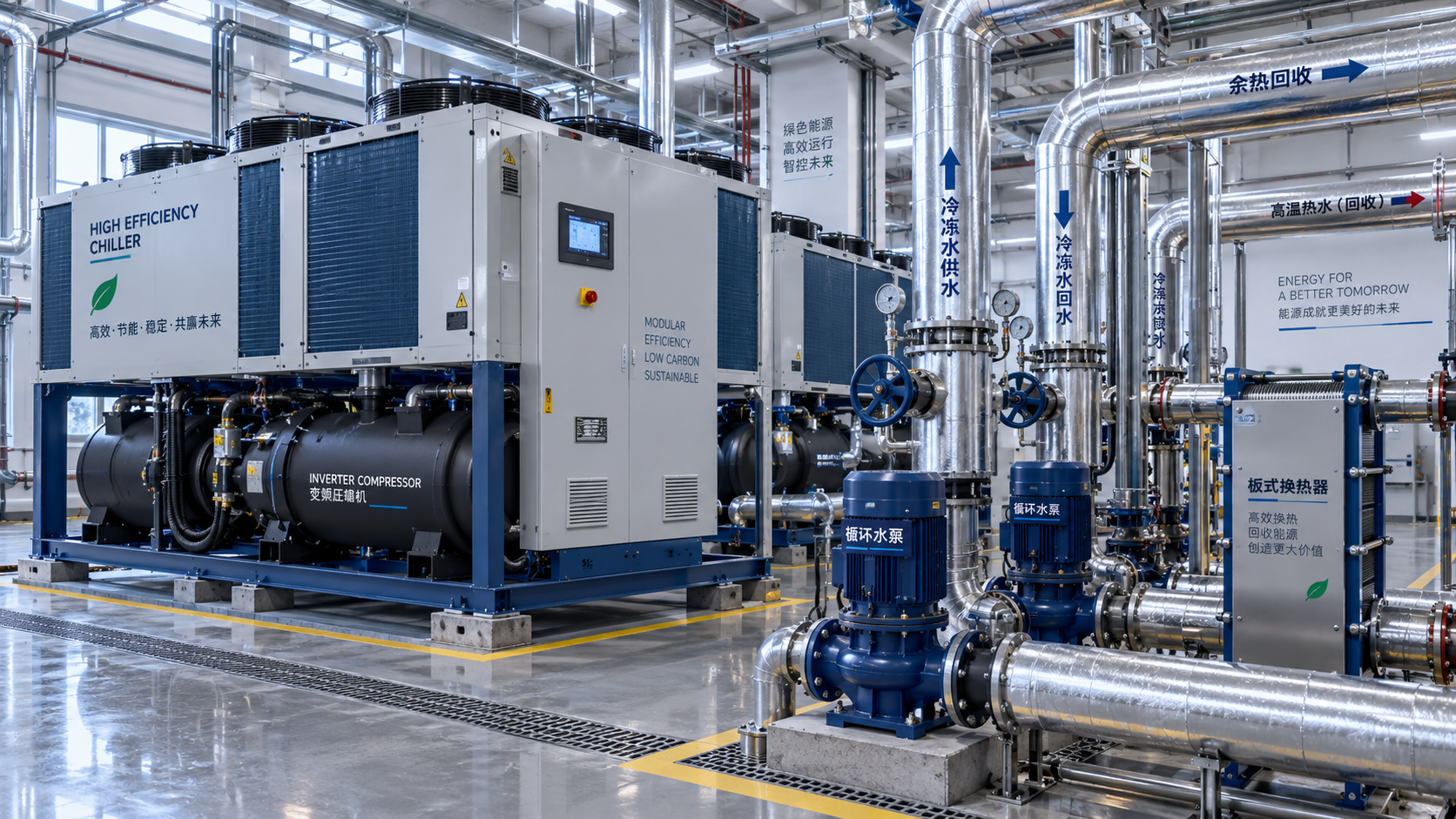
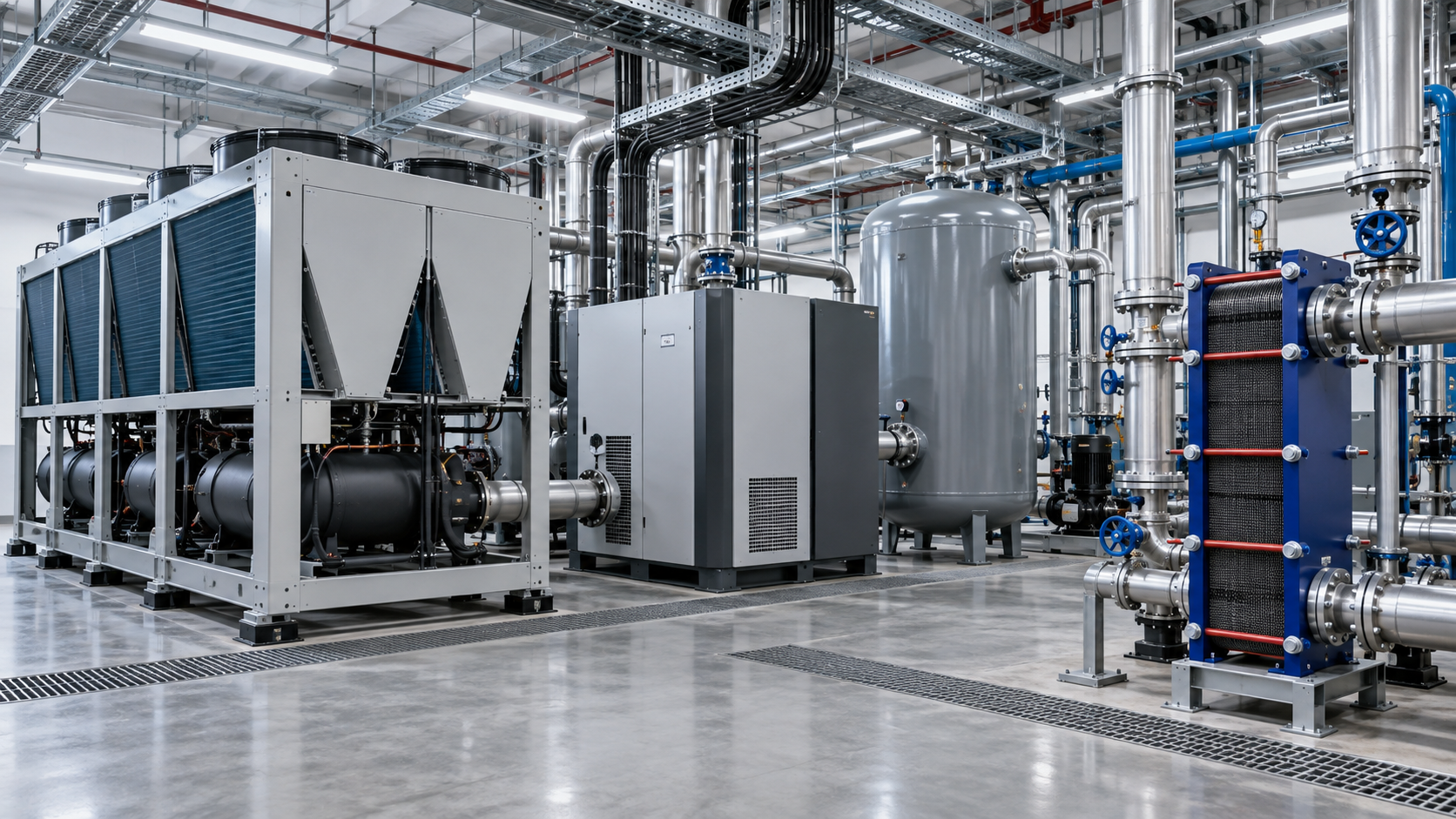
“Heat exchanger” is too broad a description for a sourcing decision. Shell-and-tube, plate-and-frame, brazed plate, welded plate, air-cooled, finned-tube, double-pipe, and compact exchanger designs solve different problems and carry different maintenance, pressure, temperature, and contamination tradeoffs.
Before comparing suppliers, procurement should make sure the internal requirement defines the conditions that control design selection. A thermal duty alone is insufficient. The supplier needs a usable design basis, including normal operation and the conditions expected during start-up, shutdown, cleaning, upset operation, and seasonal changes.
- Hot- and cold-side fluid composition, including solids, oils, chlorides, acids, cleaning chemicals, and potential phase change.
- Required inlet and outlet temperatures, allowable approach temperature, and expected variation in flow rate.
- Operating and design pressure and temperature for both sides of the exchanger.
- Permitted pressure drop, especially where pump capacity, compressor performance, or process stability is constrained.
- Fouling expectations and the intended cleaning method: chemical cleaning, mechanical cleaning, backflushing, or replacement.
- Required operating life, inspection access, available footprint, lifting limits, connection standards, and installation orientation.
- Consequences of internal leakage, cross-contamination, loss of cooling, or unplanned downtime.
A supplier that asks detailed questions at this stage is not necessarily making the purchase harder. It may be exposing missing information that would otherwise reappear as a performance dispute after commissioning. Conversely, a quick quotation based on only flow, temperature, and nominal heat load can be acceptable for a simple utility application, but it should be treated cautiously for contaminated media, high-pressure service, hygienic production, corrosive fluids, or production-critical cooling.
Verify the thermal calculation and the assumptions behind it
The supplier’s thermal rating should be reviewable, not merely asserted. Procurement teams do not need to reproduce the entire calculation, but they should be able to identify the assumptions that make the quoted performance possible.
Ask for a duty sheet or calculation summary that identifies design flow rates, inlet and outlet temperatures, heat load, heat-transfer area, overall heat-transfer coefficient, pressure drop, and fouling allowance. It should also distinguish between process conditions and mechanical design limits. A unit designed for a stated operating pressure is not automatically suitable for the full pressure, temperature, vacuum, or transient conditions that may occur in the system.
Pay close attention to close-temperature approaches. When the required temperature difference is small, small errors in flow, fouling, fluid properties, or control behavior can materially affect delivered duty. A proposal that technically meets the target with almost no performance margin may be economically attractive on paper, yet leave little room for normal degradation. The appropriate margin depends on the service: a clean, controlled closed loop can justify a tighter design than cooling duty involving untreated water, viscous product, particulate-laden fluid, or variable process loads.
Pressure drop deserves the same level of scrutiny as heat duty. Reducing exchanger size or increasing fluid velocity can improve thermal performance, but it may also increase pumping energy, erode sensitive surfaces, create vibration concerns, or reduce controllability. Where the system already operates near pump or compressor limits, a low-cost exchanger can transfer its cost into higher energy consumption or inadequate flow.
Request clarification when different suppliers present duty figures that appear comparable but are based on different fouling factors, water temperatures, fluid properties, or allowable pressure losses. Comparing headline capacity without aligning these inputs is one of the most common ways to select an apparently larger or cheaper unit that is not truly equivalent.
Assess construction quality through evidence, not brochure language
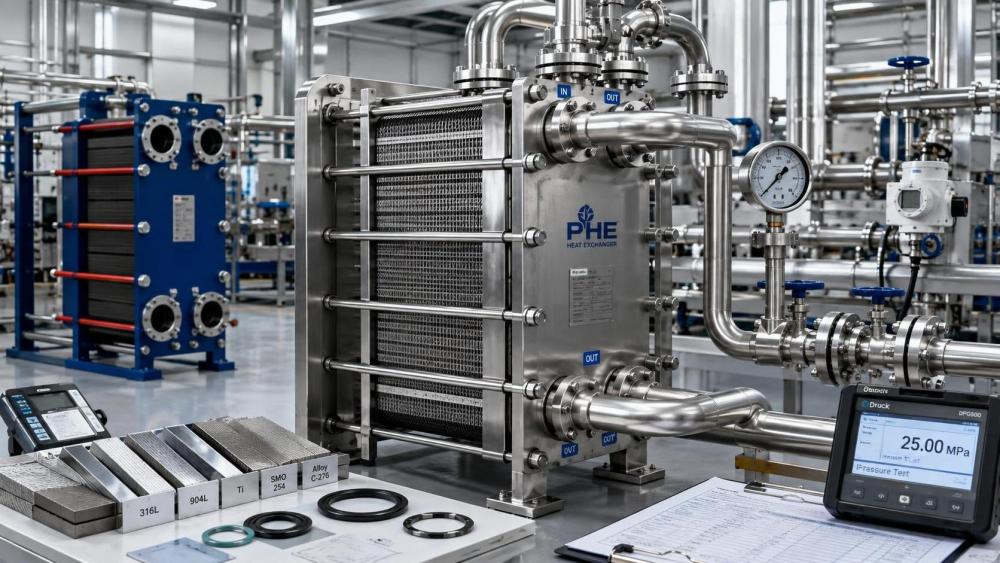
Material selection and fabrication quality often determine lifecycle performance more than the nominal exchanger type. The correct material depends on the actual fluid chemistry, temperature, concentration changes, oxygen exposure, and cleaning regime. A material that performs well with clean water may be unsuitable where chlorides, aggressive condensate, process residues, or incompatible cleaning agents are present.
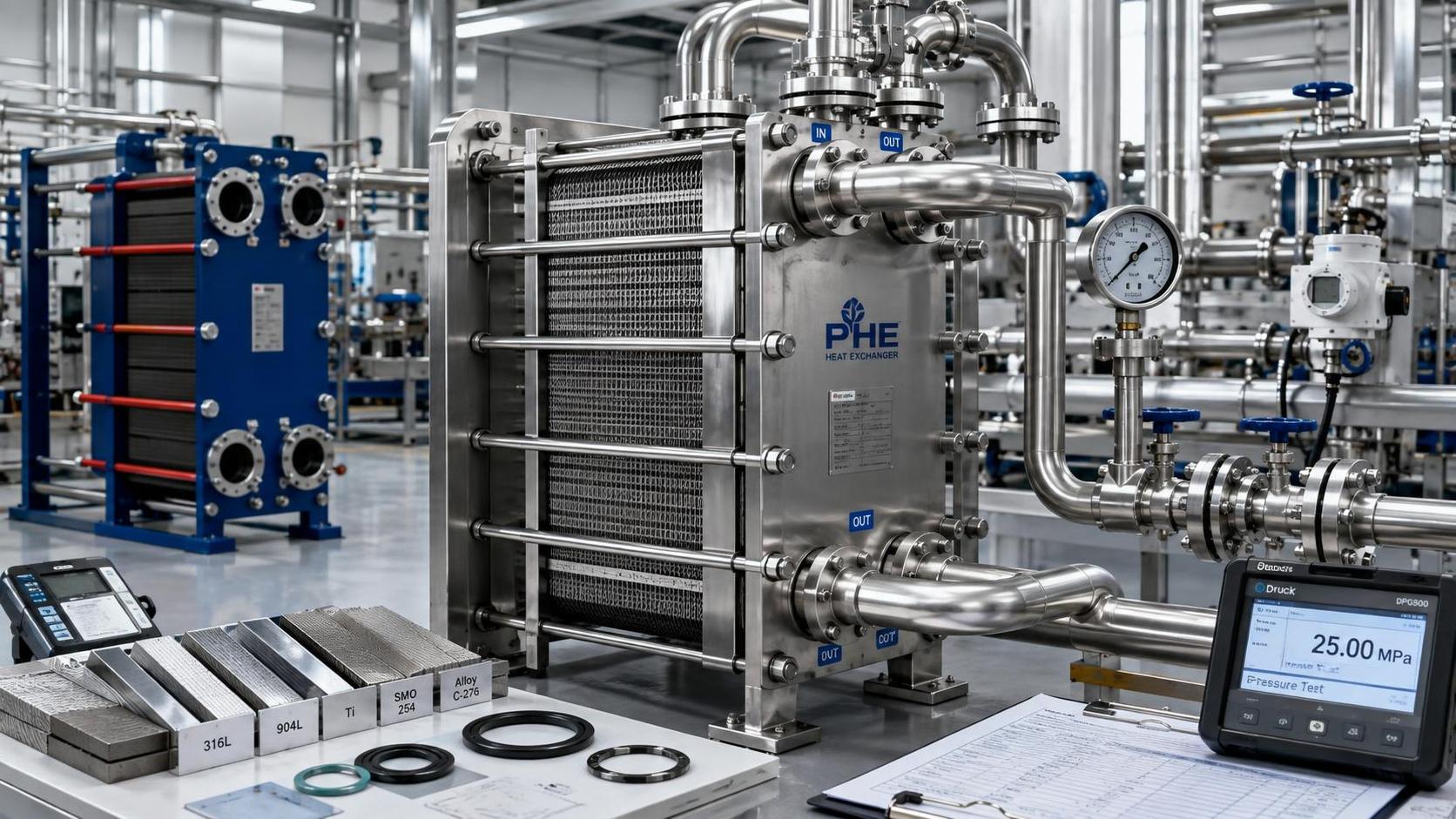
A credible heat transfer supplier should be able to identify the wetted materials, gasket or braze material where applicable, weld construction, corrosion allowance if used, and any stated compatibility limits. For removable plate exchangers, gasket choice and plate geometry deserve particular attention because they affect chemical compatibility, temperature limits, cleanability, and future service availability. For welded construction, the supplier should explain how weld quality is controlled and what inspection records can be supplied. For shell-and-tube units, tube-to-tubesheet joint design, tube material, baffle arrangement, and provision for thermal expansion may all matter.
Procurement should also verify what quality documentation is standard and what must be specified separately. The answer may include material certificates, pressure-test records, weld documentation, non-destructive examination records, dimensional checks, traceability, and final inspection reports. The required depth of documentation should reflect the application. A utility cooler in a non-critical support system does not carry the same documentation burden as equipment used in regulated production, high-pressure service, or a process where leakage could contaminate product.
Be careful with broad statements such as “industrial grade,” “corrosion resistant,” or “high efficiency.” These terms do not establish suitability. Ask the supplier to connect the claim to a material grade, fluid limitation, design pressure, test method, or rated condition. The more specific the service risk, the more specific the evidence should be.
Check whether the supplier can support the full equipment lifecycle
Heat transfer equipment is often selected for a long installed life, but the original purchase order is only the first transaction. A supplier’s value becomes clearer when the unit needs cleaning, retubing, regasketing, performance troubleshooting, modification for a changed process, or replacement under outage pressure.
Review the supplier’s service model in practical terms. Does it maintain local or regional technical support? Can it identify the installed unit from a serial number and provide drawings, spare-parts information, and maintenance instructions years later? Are replacement plates, gaskets, tubes, fans, seals, or other critical parts available under a defined lead-time arrangement? Can the supplier inspect a deteriorated unit and determine whether cleaning, repair, rerating, or replacement is appropriate?
For plate-and-frame designs, future plate and gasket availability can be more important than a small difference in initial price. For air-cooled equipment, serviceability of fans, motors, fin bundles, controls, and access platforms affects outage planning. For shell-and-tube exchangers, tube cleaning access and repair capability should be considered before a bundle is installed in a congested location.
Support capability should also be matched to the operating model. A site with experienced maintenance staff may only need documentation and dependable spares. A remote installation or a facility with limited thermal-equipment expertise may need commissioning assistance, operator training, defined response channels, or a service agreement. These should be discussed before the purchase order, because after-sales expectations that are not included in the commercial scope are difficult to enforce later.
Examine delivery reliability as a technical and commercial issue
Lead time is not simply the number shown on the quotation. It depends on engineering completion, approved drawings, material availability, fabrication capacity, testing, documentation, packing, transport, and any third-party inspection requirements. Custom units and non-standard metallurgy can introduce dependencies that are not visible in a standard lead-time statement.
Ask the supplier to identify the delivery milestones that matter to your project: data-sheet approval, general arrangement drawing, nozzle orientation confirmation, manufacturing release, inspection hold points, factory acceptance activities where required, and final documentation. This creates a more useful delivery commitment than a single estimated shipment date.
Where downtime exposure is high, procurement may need to ask a different question: what happens if the specified unit cannot be delivered on time? A supplier may be able to offer an alternative design, phased delivery, a temporary rental arrangement, or a stocked standard model only if those possibilities are evaluated early. The lowest-priced supplier can become the highest-cost option when an unplanned shutdown extends because no viable contingency exists.
Commercial terms also need to reflect technical uncertainty. Define the performance acceptance basis, who approves drawings, what counts as a design change, how deviations are communicated, and what remedies apply if the equipment fails to meet the agreed duty under the stated conditions. Avoid acceptance language that is so vague that neither side can determine whether a shortfall is caused by equipment design, installation, upstream process changes, or an incorrect original data sheet.
Confirm compliance requirements before they become a late-stage obstacle
Compliance should be treated as a design input, particularly when equipment crosses borders, operates under pressure, serves food or pharmaceutical production, or is installed in a hazardous area. Requirements can affect material selection, nameplate content, pressure testing, documentation, welding procedures, electrical components, and inspection arrangements.
The procurement specification should state the applicable project, customer, site, and jurisdictional requirements. It should not rely on a generic request for “all necessary certificates,” because that leaves room for different interpretations. The supplier should identify which requirements are included in the offer, which require additional scope, and which depend on final installation details.
Regulated or hygienic duties require an additional layer of review. Surface finish, drainability, clean-in-place compatibility, dead-leg avoidance, product-contact materials, elastomer selection, and traceability may affect the exchanger configuration. In critical separation duties, the design may also need safeguards against cross-contamination beyond the standard single-wall arrangement. These questions should be resolved by process engineering, quality, maintenance, and procurement together; no single function has enough information to judge all of them alone.
Use supplier comparison to expose risk, not just rank prices
A useful bid comparison separates commercial price from technical fit. Procurement can create a short comparison table that records each supplier’s stated duty, design conditions, pressure drop, materials, fouling basis, included documentation, delivery milestones, warranty conditions, spare-parts position, exclusions, and deviations. The purpose is to make differences visible before negotiations compress them into a single number.
Price remains important, particularly for repeat purchases and standardized utility service. Yet a lower price should be interpreted in context. It may reflect a different fouling allowance, thinner construction, lower documentation scope, excluded accessories, longer spares lead times, or assumptions that shift work back to the buyer. Those differences may be acceptable, but they should be accepted deliberately rather than discovered after delivery.
Before award, hold a final technical-commercial clarification with the preferred supplier. Resolve deviations line by line, confirm the approved operating basis, and ensure that the purchase order incorporates the agreed data sheet, drawings, documentation list, testing requirements, and delivery obligations. That final alignment is often more valuable than another round of price negotiation, because it turns a promising quotation into equipment that can be installed, operated, maintained, and defended within the plant’s own reliability standards.
Ready when you are. Send us a message to get started.
Related News
- How to select industrial equipment for automation with existing PLCsAuthor :

- How electricity prices shape industrial compressed air price trendsAuthor :

- Choosing air filtration systems for heavy dust in the Middle EastAuthor :

- How much does a fully installed compressed air monitoring system cost?Author :

- What documentation supports CE marking for industrial equipment?Author :

- How local support affects vacuum system costs in Southeast AsiaAuthor :

- How worldwide industry category guides help compare market opportunitiesAuthor :

- What drives sustainable thermal systems cost over their operating life?Author :

- Which industrial solution comparison criteria prevent project delays?Author :

- How Ambient Temperature and Load Profile Affect Industrial Compressor SizingAuthor :

- What to evaluate before choosing a thermal process engineering supplierAuthor :

- How industrial utility systems affect energy costs in process plantsAuthor :

- What Data Is Needed to Assess Heat Recovery Decarbonization?Author :

- Can Waste Heat Recovery Support Carbon Neutrality Targets?Author :

- Is Compressor Heat Recovery Worth the Installation Cost?Author :

- What to verify before choosing a process separation technology supplierAuthor :

- When does process utilities engineering reduce project rework?Author :

- Where thermal efficiency optimization delivers the fastest savings in EuropeAuthor :

- What should you verify before selecting a heat transfer supplier?Author :

- What drives compressed air systems price for industrial projects?Author :

- How an industrial product knowledge comparison guide reduces sourcing riskAuthor :

- When does a procurement specification planning process reduce bid risk?Author :

- When does thermal system optimization for electronics reduce failure risk?Author :

- When high temperature process heating systems justify the higher energy costAuthor :

- How to compare sludge dewatering equipment by cake drynessAuthor :

- What to Check Before Sourcing a Gas Turbine for Distributed Power ProjectsAuthor :

- What drives industrial thermal systems price in large facility projectsAuthor :

- How to build an industrial product comparison chart that speeds up vendor selectionAuthor :

- Vacuum Technology Application Guide for Selecting the Right SystemAuthor :

- What Drives Vacuum Drying Cost in Industrial Procurement?Author :

- What Drives Compressed Air Pricing in Industrial Systems?Author :

- How Procurement Specification Planning Shapes Total Project CostAuthor :

- Compression Technology Guide: How to Compare Efficiency, Pressure Range, and Maintenance NeedsAuthor :

- How to Compare Industrial Separators by Throughput, Purity, and Maintenance LoadAuthor :

- How to Size a Compressed Air Equipment Receiver Tank for Stable PressureAuthor :

- Industrial Equipment Selection Guide: How to Compare Capacity, Duty Cycle, and Operating CostAuthor :