



How Ambient Temperature and Load Profile Affect Industrial Compressor Sizing




A compressor that appears adequate on a datasheet can become undersized once it is installed in a hot enclosure, at elevation, or on a production line with irregular demand. The sizing error is often not the nominal pressure rating; it is the assumption that rated free air delivery remains available under the project’s actual ambient conditions and operating pattern.
For project managers and engineering leads, this matters because compressed air capacity affects more than a single machine. A shortfall can delay commissioning, create pressure instability at end uses, increase nuisance trips, and force operators to run a standby unit continuously. Oversizing carries its own penalty: excessive unloaded running, poor part-load efficiency, added heat rejection requirements, and capital tied up in capacity that the process does not need.
Ambient temperature and load profile should therefore be evaluated together. High temperature reduces cooling margin and may reduce usable output, while an intermittent or sharply varying demand pattern can push a compressor through repeated starts, stops, unload periods, or high-temperature recovery cycles. The correct question is not simply, “What compressor capacity is required?” It is, “What capacity and control range are required at the site’s worst credible operating condition?”
Ambient temperature changes the real operating envelope
Compressor capacity is commonly expressed as free air delivery (FAD), usually referenced to defined inlet conditions. Those reference conditions are important. A compressor ingesting hotter air receives less dense air per unit volume than it would at a cooler inlet temperature. If the machine continues to draw the same inlet volume, the mass of air entering the compression element may be lower. Since industrial demand is usually driven by mass flow at the required pressure, this can reduce the useful output available to the plant.
The magnitude of the effect depends on inlet temperature, altitude, humidity, compressor design, and the manufacturer’s rating basis. It should not be estimated from a nameplate alone. ISO 1217 provides a recognized framework for acceptance testing and for stating compressor performance under defined conditions, which is why procurement documents should ask suppliers to identify the reference conditions behind quoted FAD and specific power figures (Source: ISO 1217:2009, Displacement compressors—Acceptance tests).
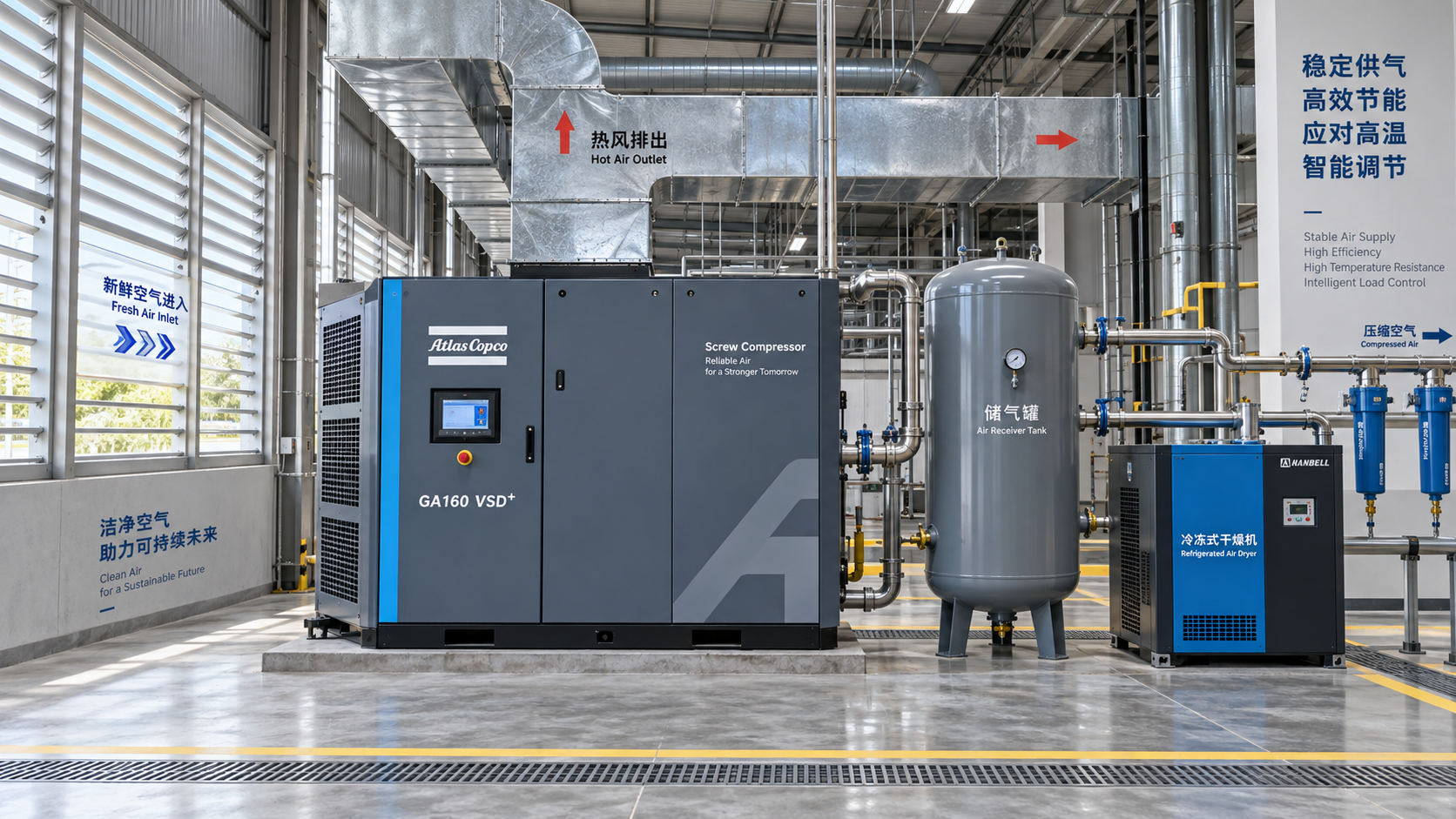
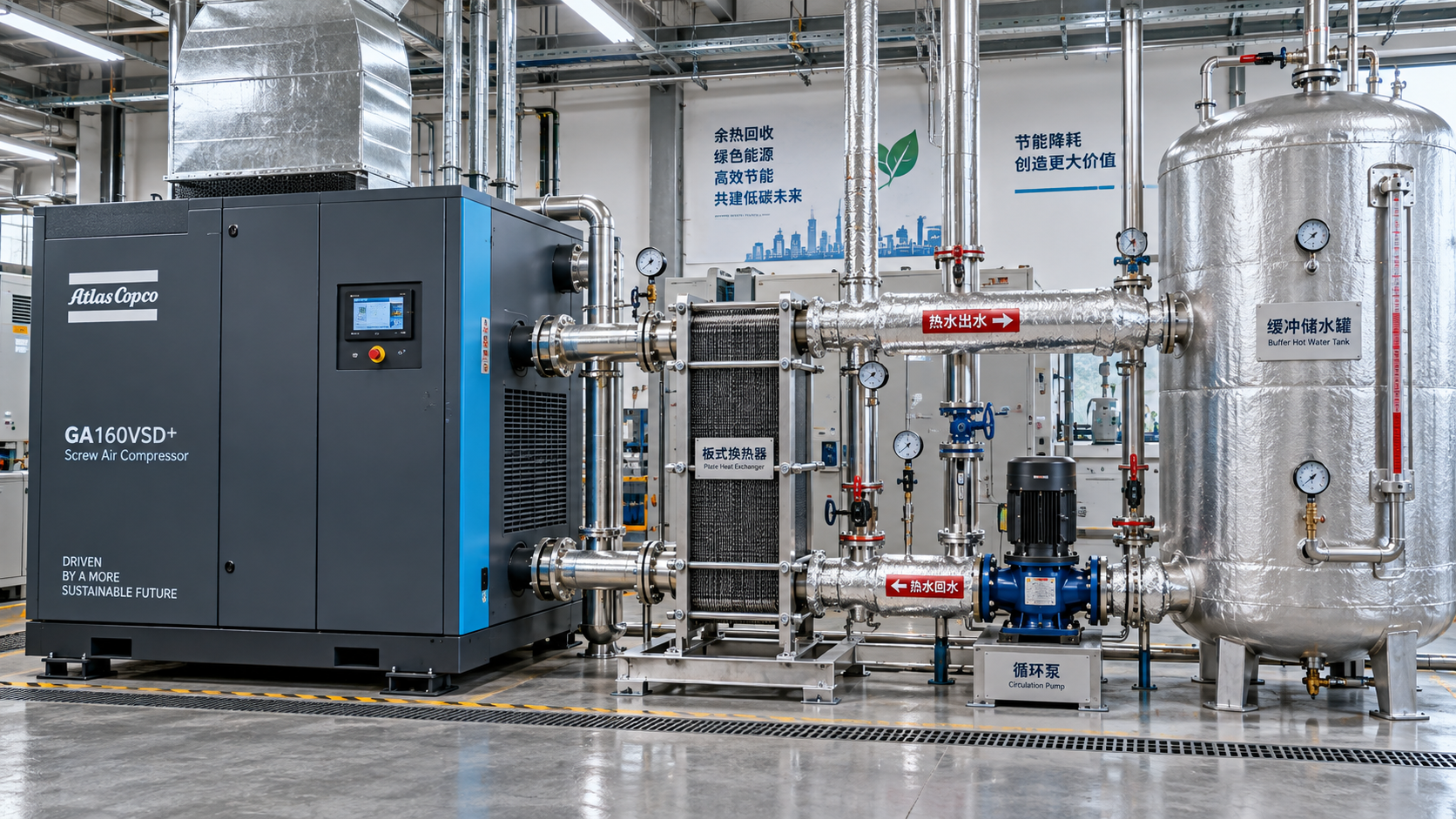
Heat also affects the machine after air enters the inlet. Compression generates heat, and an air-cooled package must reject it through an aftercooler, oil cooler where applicable, fan system, and surrounding ventilation path. If a compressor room is already hot, the temperature difference available for cooling becomes smaller. Recirculation of discharge air, blocked louvers, dirty heat exchangers, or an undersized extraction fan can then push internal temperatures toward protective shutdown limits. The practical result may be reduced availability rather than a simple reduction in output.
Projects should distinguish between the general outdoor climate and the compressor’s actual inlet condition. A compressor placed in a metal utility room beside boilers, process ovens, or a poorly ducted dryer may see substantially hotter inlet air than the site weather record suggests. Conversely, a properly ducted outdoor-air intake may reduce inlet temperature, but it introduces other checks: rain ingress, dust loading, corrosion exposure, freezing risk, and intake pressure drop.
Altitude and ventilation can compound a temperature problem
At higher elevation, lower atmospheric pressure reduces inlet air density. A hot, elevated site can therefore impose two capacity-related corrections at the same time. The project specification should state site elevation, expected maximum inlet temperature, minimum and maximum ambient temperatures, and any enclosure constraints. Leaving these details until supplier clarification often produces quotations that are difficult to compare because each bidder may assume different conditions.
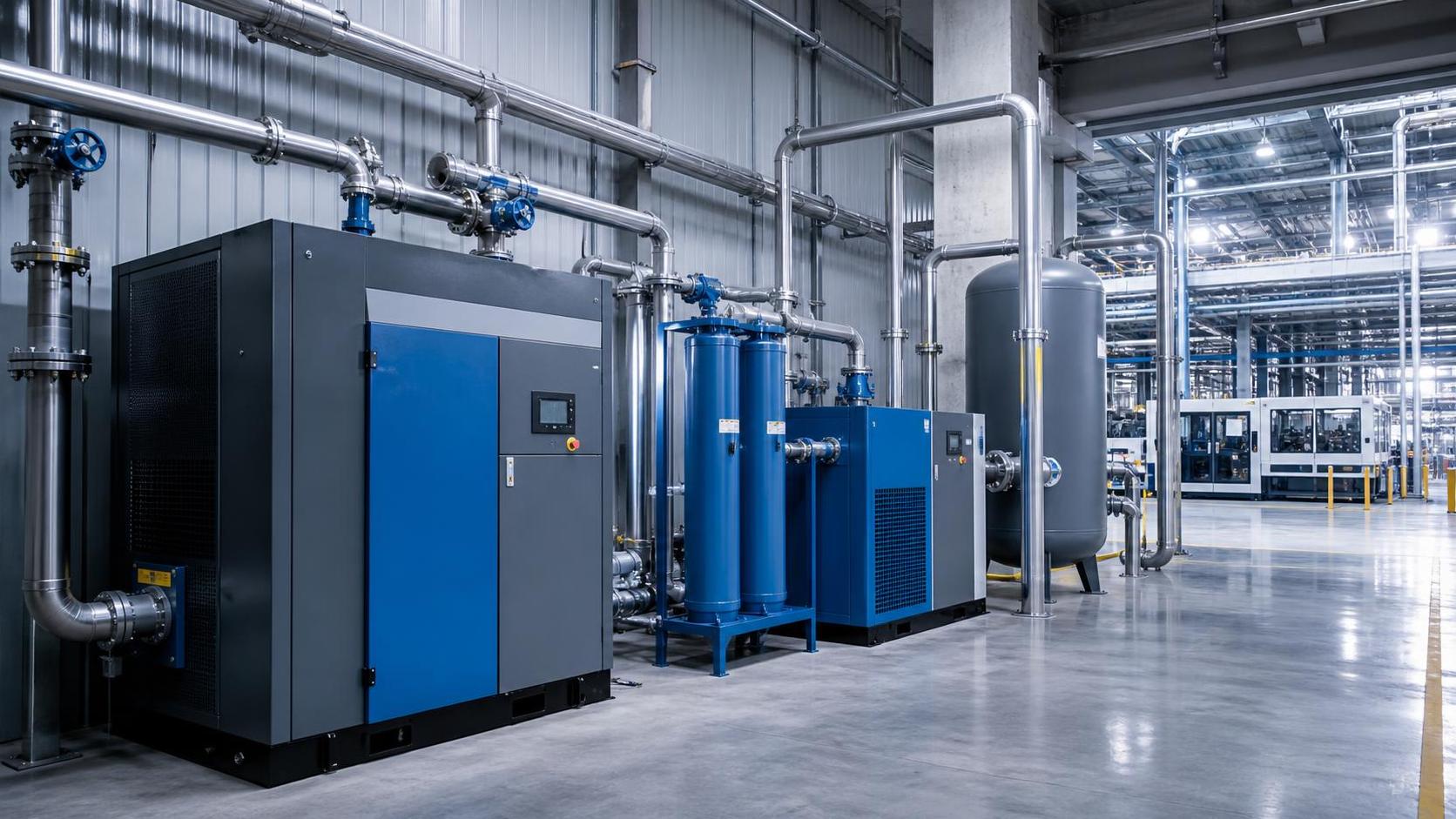
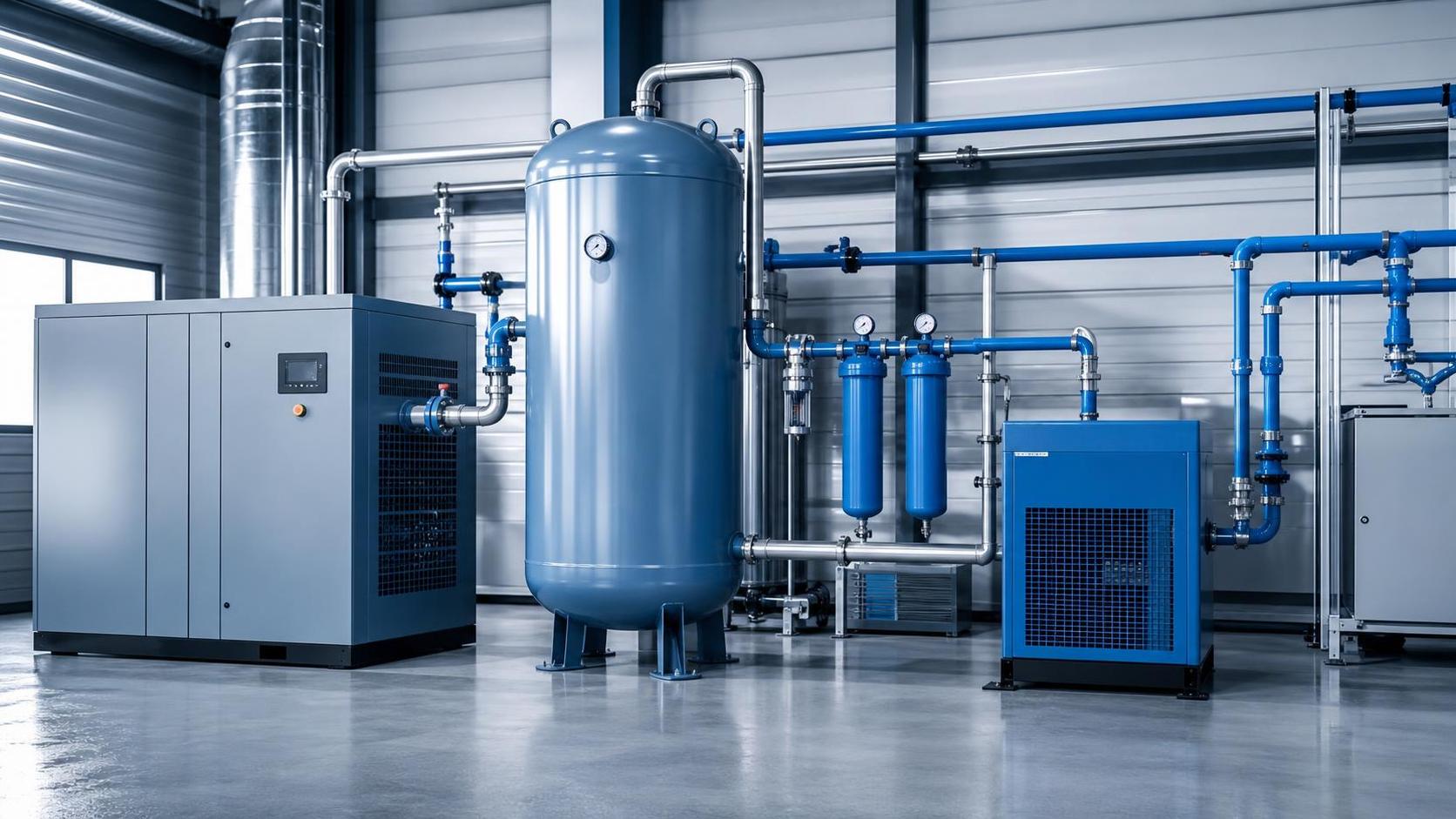
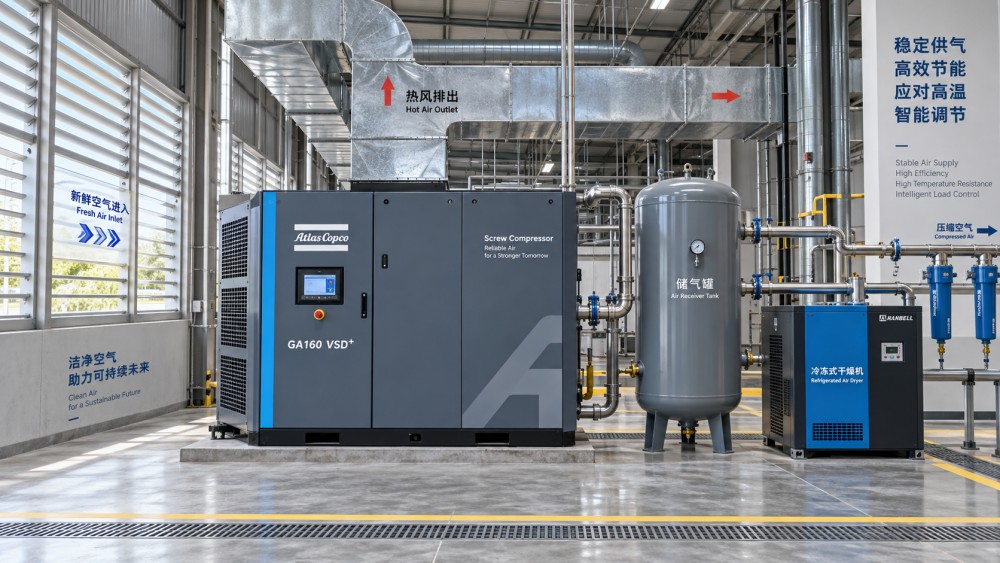
Ventilation must be sized as part of the package, not treated as a building-services detail to resolve after installation. The compressor, dryer, receiver, filters, and nearby equipment all add heat to the room. An air-cooled compressor that exhausts into a confined space can draw part of that hot exhaust back through its own cooler. This recirculation loop is a common route to compressor overheating, especially during summer operation or when a standby unit is brought online and doubles the room heat load.
Where high ambient conditions are unavoidable, buyers may evaluate whether air cooling remains appropriate, whether ducted discharge air is practical, or whether a water-cooled arrangement fits the site’s water quality, treatment, and maintenance capabilities. There is no universal preference. Water cooling can move heat outside a difficult room, but it creates dependency on water flow, water temperature, scaling control, and leak management.
Load profile determines whether nominal capacity is usable capacity
Average air consumption is a poor basis for sizing by itself. A plant may average a modest demand while experiencing short, repeated peaks from blow-off operations, pneumatic conveying, packaging equipment, valve actuation, tool use, or cleaning cycles. If these peaks are not buffered by suitable storage or coordinated controls, the compressor must repeatedly chase them. Pressure falls, the machine loads, temperature rises, and the system may remain loaded longer than the average-demand calculation suggests.
A useful load profile records flow demand and pressure over time at a resolution capable of capturing production cycles. For some facilities, a one-minute interval is enough to identify shift changes and broad fluctuations. For fast cyclic machinery, shorter intervals may be needed to reveal the peak duration and repetition rate. Logging should cover representative production, cleaning, maintenance, and startup periods rather than only a quiet operating shift.
Project teams should separate at least four demand conditions:
- Base demand: the sustained air requirement during normal production.
- Recurring peak demand: a predictable, repeated increase linked to a process cycle or production stage.
- Infrequent peak demand: occasional demand during line startup, maintenance, cleaning, or simultaneous equipment use.
- Future demand: loads that are approved, probable, or merely speculative and should not be treated identically.
This distinction prevents two common mistakes. One is sizing the entire compressor fleet for a very brief, avoidable peak that could be managed with local storage or sequencing. The other is assuming that a large receiver will solve every shortfall. Storage can smooth a short-duration event, but it must be sized against the permissible pressure drop, the peak flow deficit, and the event duration. It cannot correct a continuous deficit between generated air and process consumption.
Screw and piston compressors need different duty-cycle checks
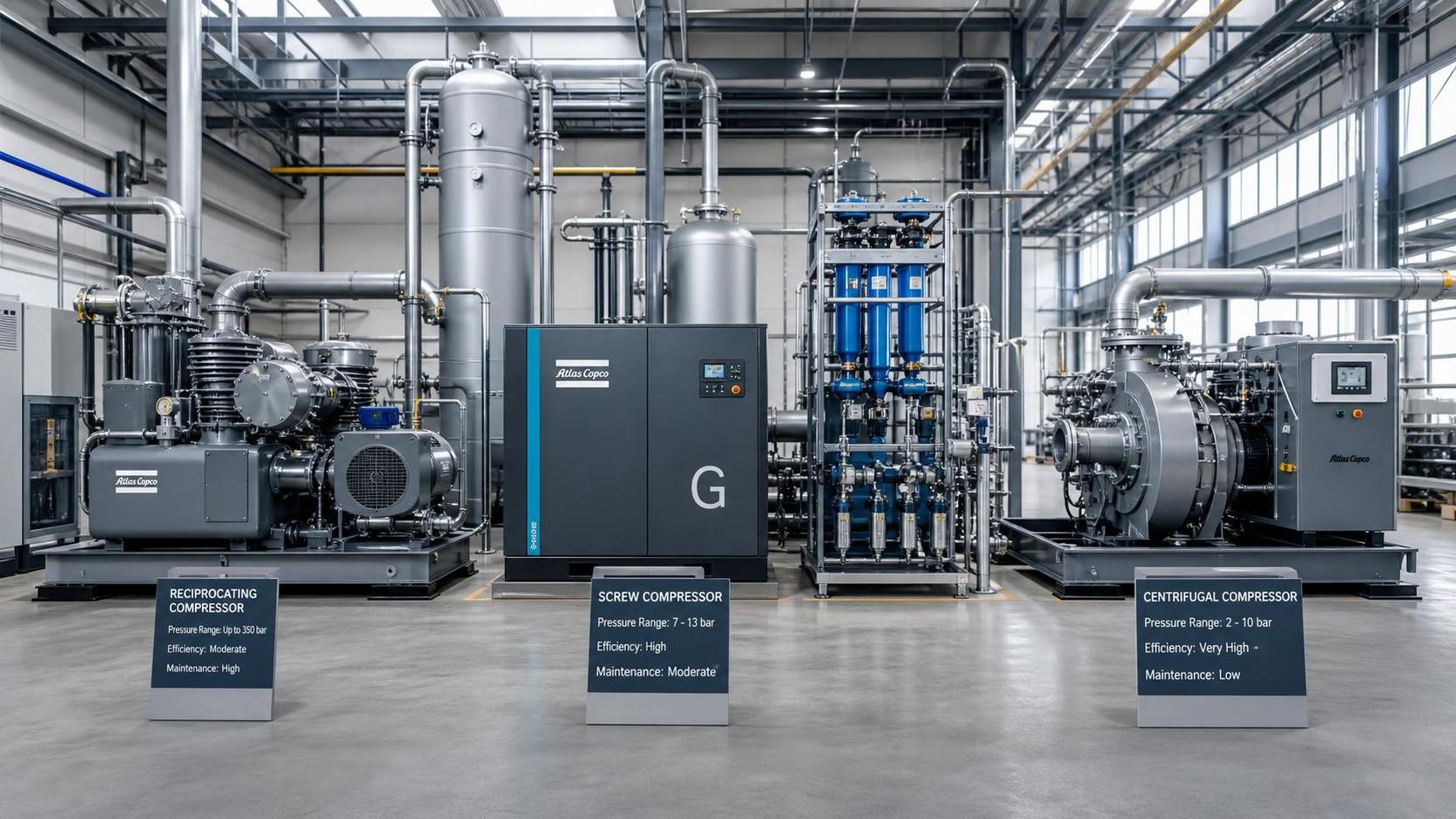
Screw and piston compressors can both serve industrial applications, but their thermal behavior, control characteristics, maintenance pattern, and preferred duty cycle may differ. Buyers should avoid treating one technology as an interchangeable substitute for the other solely because both meet a stated pressure and flow figure.
Rotary screw compressors are commonly considered for continuous or long-duration demand because they can provide steady output and are often supplied with control options intended to match changing plant consumption. Their actual efficiency at part load depends on the compressor configuration and control method. A fixed-speed unit operating through load/unload control may consume significant energy while producing little useful air during unloaded periods. Variable-speed control can improve matching in some fluctuating-demand applications, but it does not eliminate the need to define minimum flow, maximum flow, required pressure stability, and cooling conditions.
Piston compressors can be appropriate where demand is intermittent, capacity is moderate, or high pressure is required. Their allowable duty cycle is particularly important. A reciprocating unit that is repeatedly asked to run beyond the manufacturer’s intended duty cycle can accumulate heat in cylinders, valves, discharge piping, and the surrounding enclosure. Frequent starts may also place additional stress on motor starters, belts, and mechanical components. The term “intermittent” in a buyer’s specification should never be accepted as a sufficient duty description; it needs a defined run time, rest time, starts per hour, and expected ambient condition.
A defensible industrial compressor selection process compares compressor technologies against the measured load profile, the required pressure band, site temperature, maintenance access, and the consequences of a trip. This comparison should include the control system and storage arrangement, rather than comparing bare compressor flow ratings alone.
Related News
- What drives sustainable thermal systems cost over their operating life?Author :

- Which industrial solution comparison criteria prevent project delays?Author :

- How Ambient Temperature and Load Profile Affect Industrial Compressor SizingAuthor :

- What to evaluate before choosing a thermal process engineering supplierAuthor :

- How industrial utility systems affect energy costs in process plantsAuthor :

- What Data Is Needed to Assess Heat Recovery Decarbonization?Author :

- Can Waste Heat Recovery Support Carbon Neutrality Targets?Author :

- Is Compressor Heat Recovery Worth the Installation Cost?Author :

- What to verify before choosing a process separation technology supplierAuthor :

- When does process utilities engineering reduce project rework?Author :

- Where thermal efficiency optimization delivers the fastest savings in EuropeAuthor :

- What should you verify before selecting a heat transfer supplier?Author :

- What drives compressed air systems price for industrial projects?Author :

- How an industrial product knowledge comparison guide reduces sourcing riskAuthor :

- When does a procurement specification planning process reduce bid risk?Author :

- When does thermal system optimization for electronics reduce failure risk?Author :

- When high temperature process heating systems justify the higher energy costAuthor :

- How to compare sludge dewatering equipment by cake drynessAuthor :

- What to Check Before Sourcing a Gas Turbine for Distributed Power ProjectsAuthor :

- What drives industrial thermal systems price in large facility projectsAuthor :

- How to build an industrial product comparison chart that speeds up vendor selectionAuthor :

- Vacuum Technology Application Guide for Selecting the Right SystemAuthor :

- What Drives Vacuum Drying Cost in Industrial Procurement?Author :

- What Drives Compressed Air Pricing in Industrial Systems?Author :

- How Procurement Specification Planning Shapes Total Project CostAuthor :

- Compression Technology Guide: How to Compare Efficiency, Pressure Range, and Maintenance NeedsAuthor :

- How to Compare Industrial Separators by Throughput, Purity, and Maintenance LoadAuthor :

- How to Size a Compressed Air Equipment Receiver Tank for Stable PressureAuthor :

- Industrial Equipment Selection Guide: How to Compare Capacity, Duty Cycle, and Operating CostAuthor :

- How to Evaluate an Intellectualization Supplier for Industrial UpgradesAuthor :

- High-Efficiency Manufacturing: Cost Savings vs. Upgrade RiskAuthor :

- Thermal System Optimization Cost: What Drives ROI?Author :

- How to Plan Process Utilities for a Cleanroom Without Costly ReworkAuthor :

- How to Compare Process Heating Suppliers in MexicoAuthor :

- Food Processing Utilities: Common Sizing Mistakes That Raise Energy and Water UseAuthor :

- How to Build Procurement Specification Planning for Industrial EquipmentAuthor :