What drives compressed air systems price for industrial projects?




What Drives Compressed Air Systems Price for Industrial Projects?
Compressed air systems price is rarely determined by the compressor nameplate alone. A quotation that appears lower at the outset may exclude air treatment, controls, piping, electrical works, commissioning, spare parts, or performance verification. Another proposal may look expensive because it includes the equipment and engineering required to deliver usable air at the point of use—not merely compressed air at the compressor outlet.
For industrial procurement teams, the practical question is not simply, “What does a compressor cost?” It is: “What will it take to provide the required air quality, pressure, flow stability, uptime, and energy performance over the operating life of this project?” The answer changes substantially between a general manufacturing workshop, a food packaging line, a pharmaceutical utility system, and a semiconductor-related process environment.
This distinction matters because compressed air is often treated as a utility until a production interruption, contamination event, or electricity-cost increase exposes weaknesses in the original specification. A sound price comparison begins by defining the duty rather than comparing compressor purchase prices in isolation.
The project boundary sets the real price
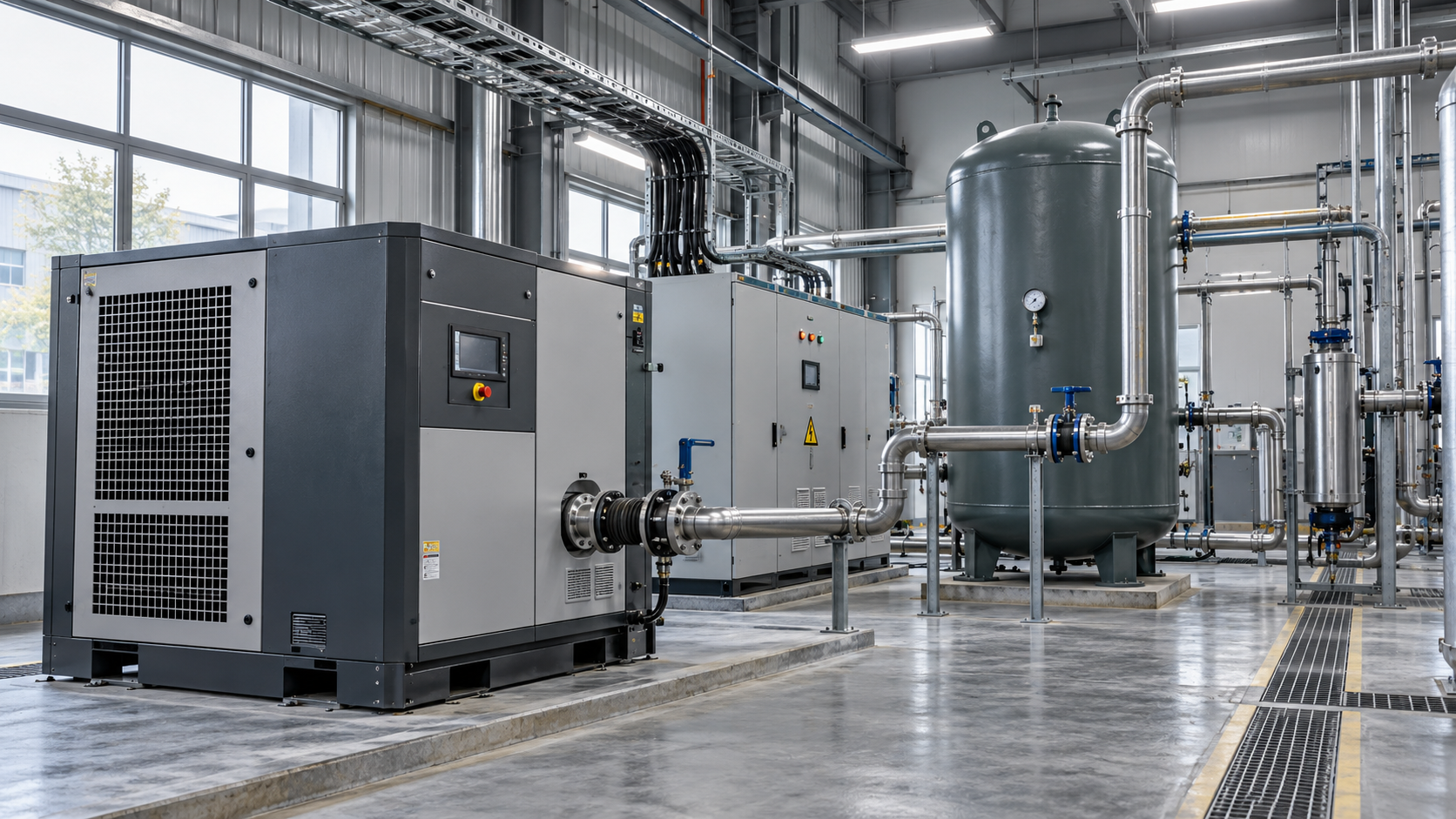
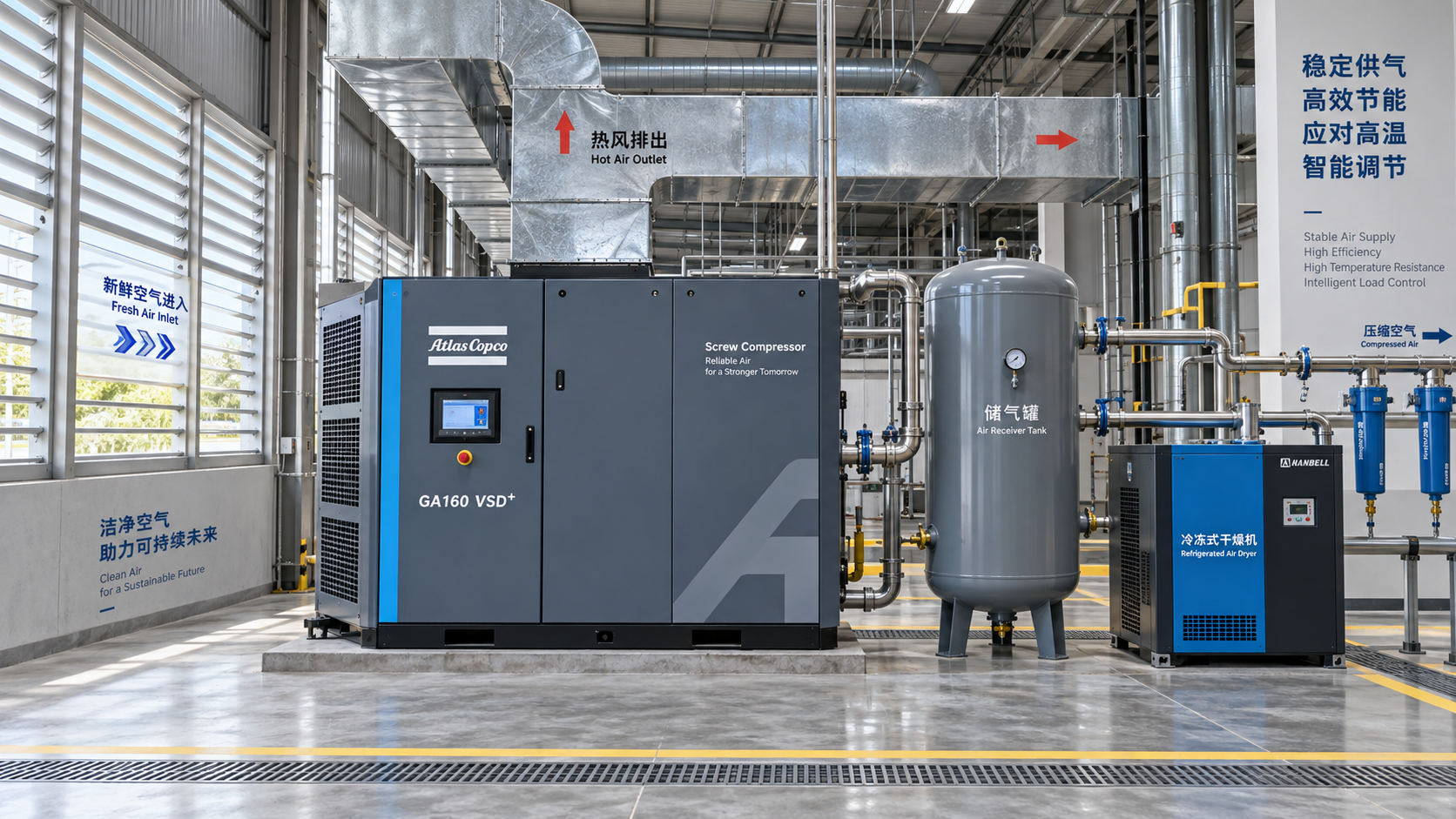
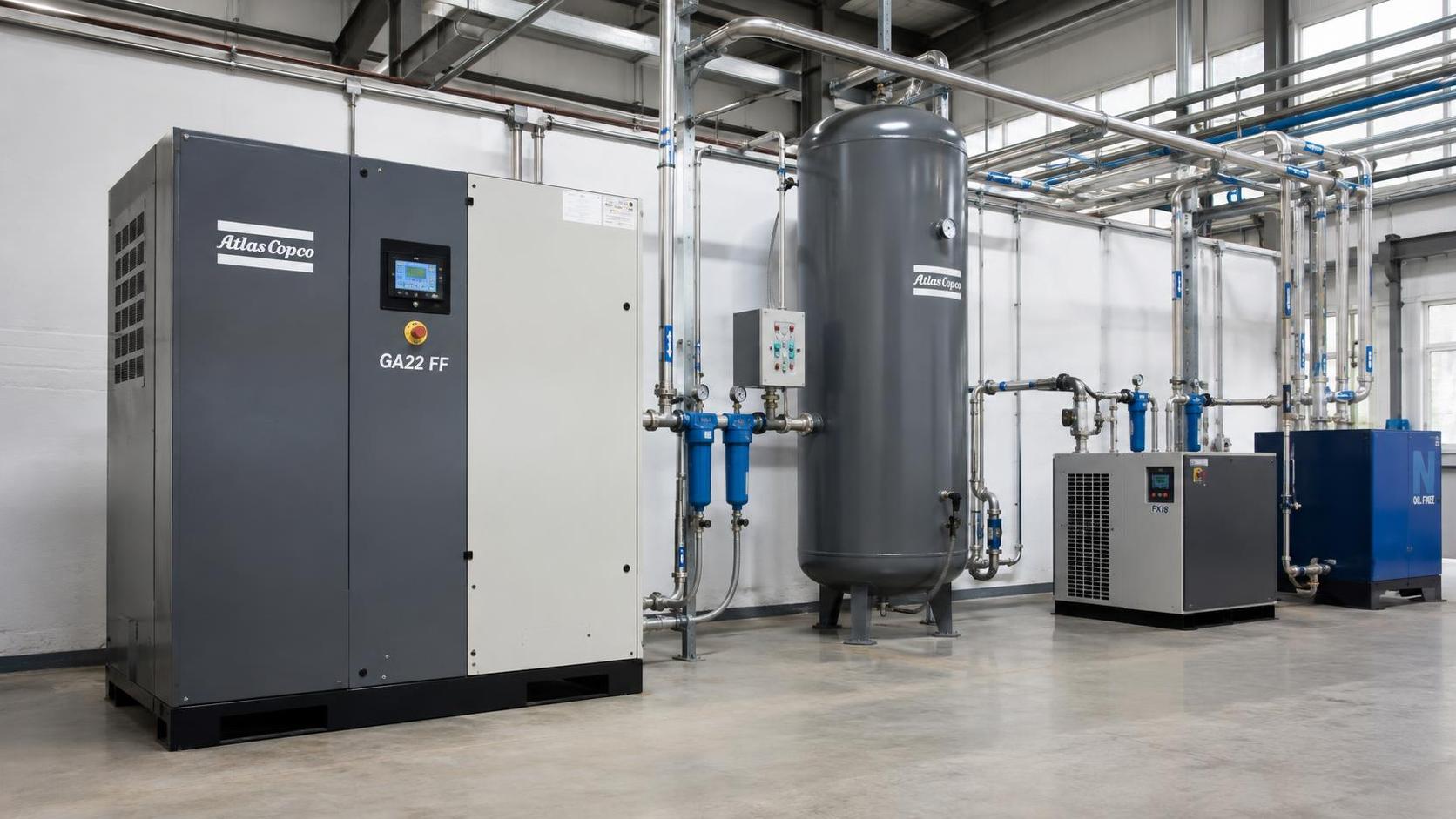
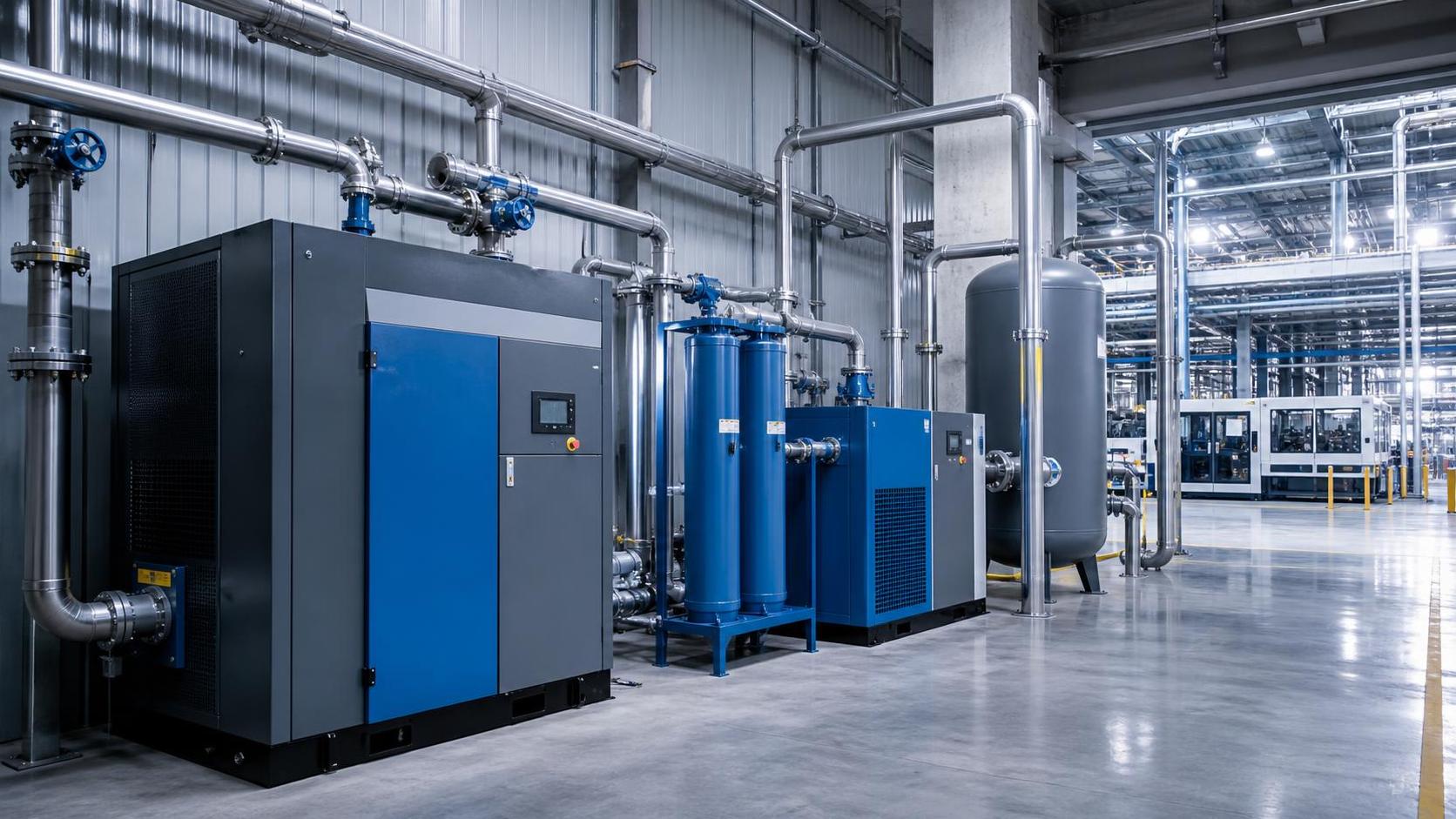
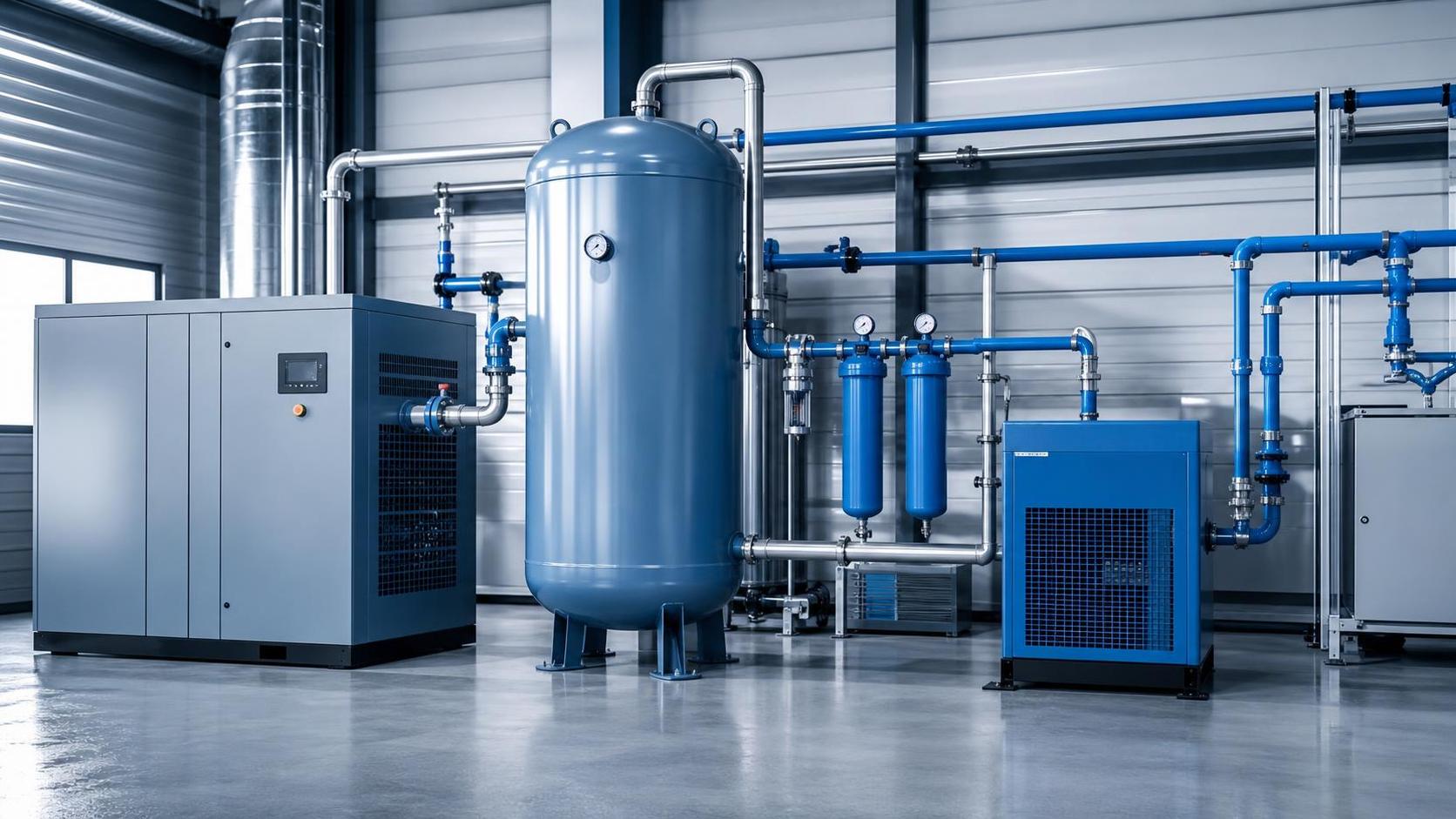
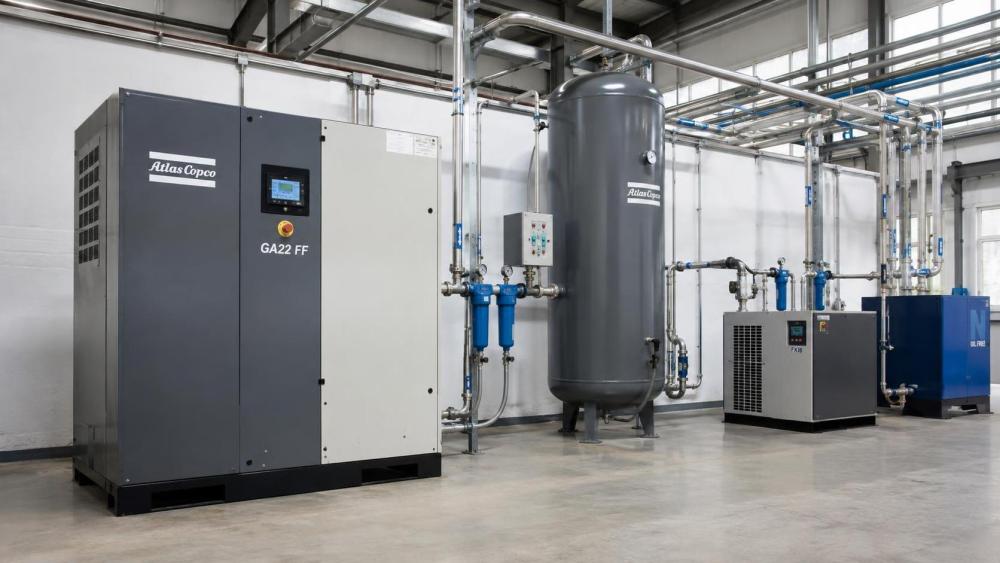
Two suppliers can quote systems with similar stated capacity and still be pricing very different scopes. One may offer a bare compressor package. The other may include an aftercooler, wet receiver, dryers, filters, condensate management, a dry receiver, central controls, installation materials, and startup support. Neither approach is automatically wrong, but procurement should not treat them as equivalent.
Before requesting final bids, establish where the supplier’s responsibility starts and ends. Is the quoted flow measured as free air delivery under defined reference conditions? Does the scope end at the compressor discharge flange, after air treatment, or at specified user connection points? Are foundations, ventilation openings, cooling-water connections, cable routing, lifting access, and local compliance activities included? Small wording differences can produce major budget gaps during execution.
A useful procurement document separates the project into four layers: compression generation, air treatment and storage, distribution infrastructure, and site integration. This structure makes omissions visible early. It also prevents the common situation in which a low equipment quote is followed by a large installation variation order.
Compressor technology affects both capital cost and operating exposure
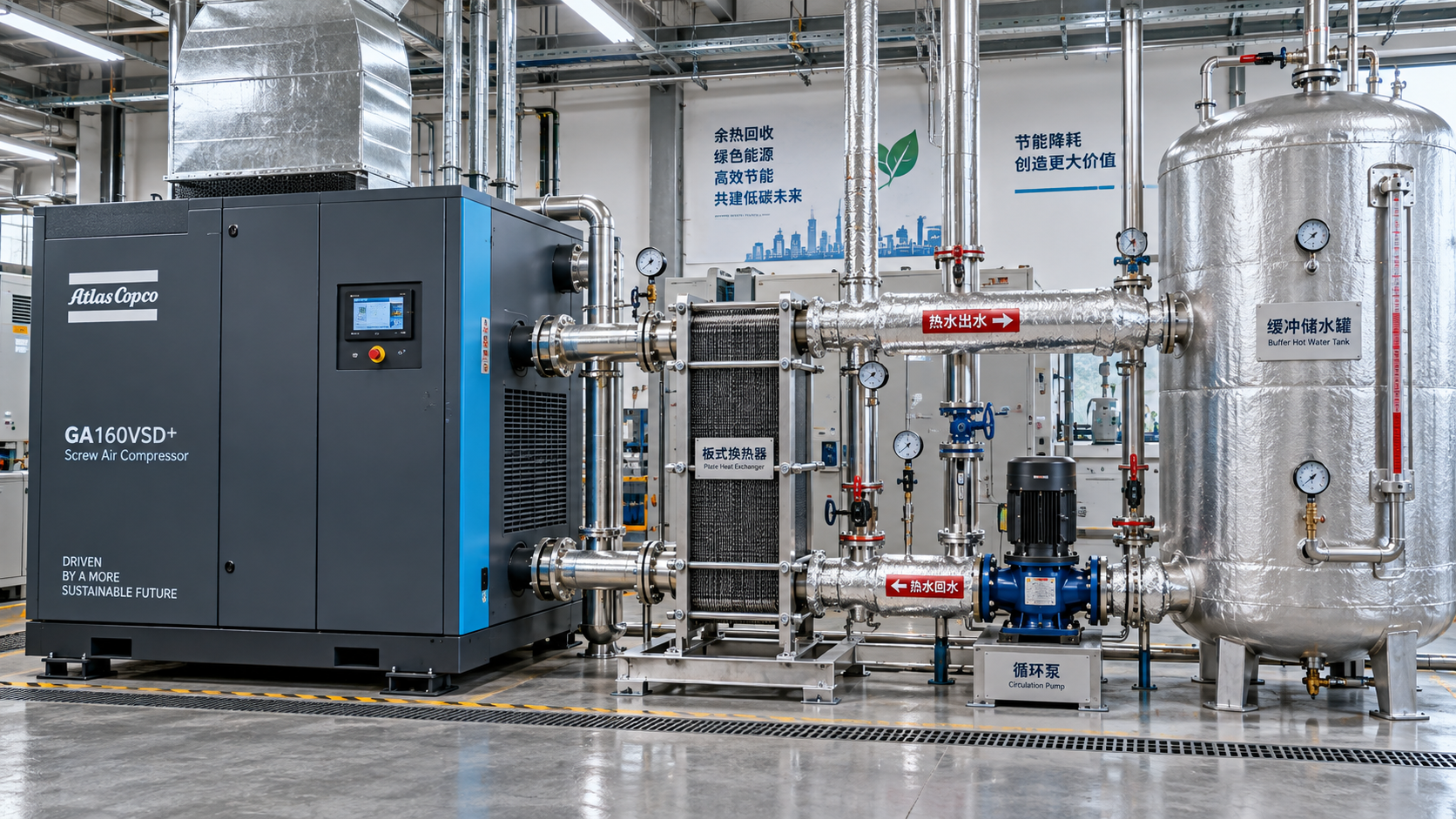
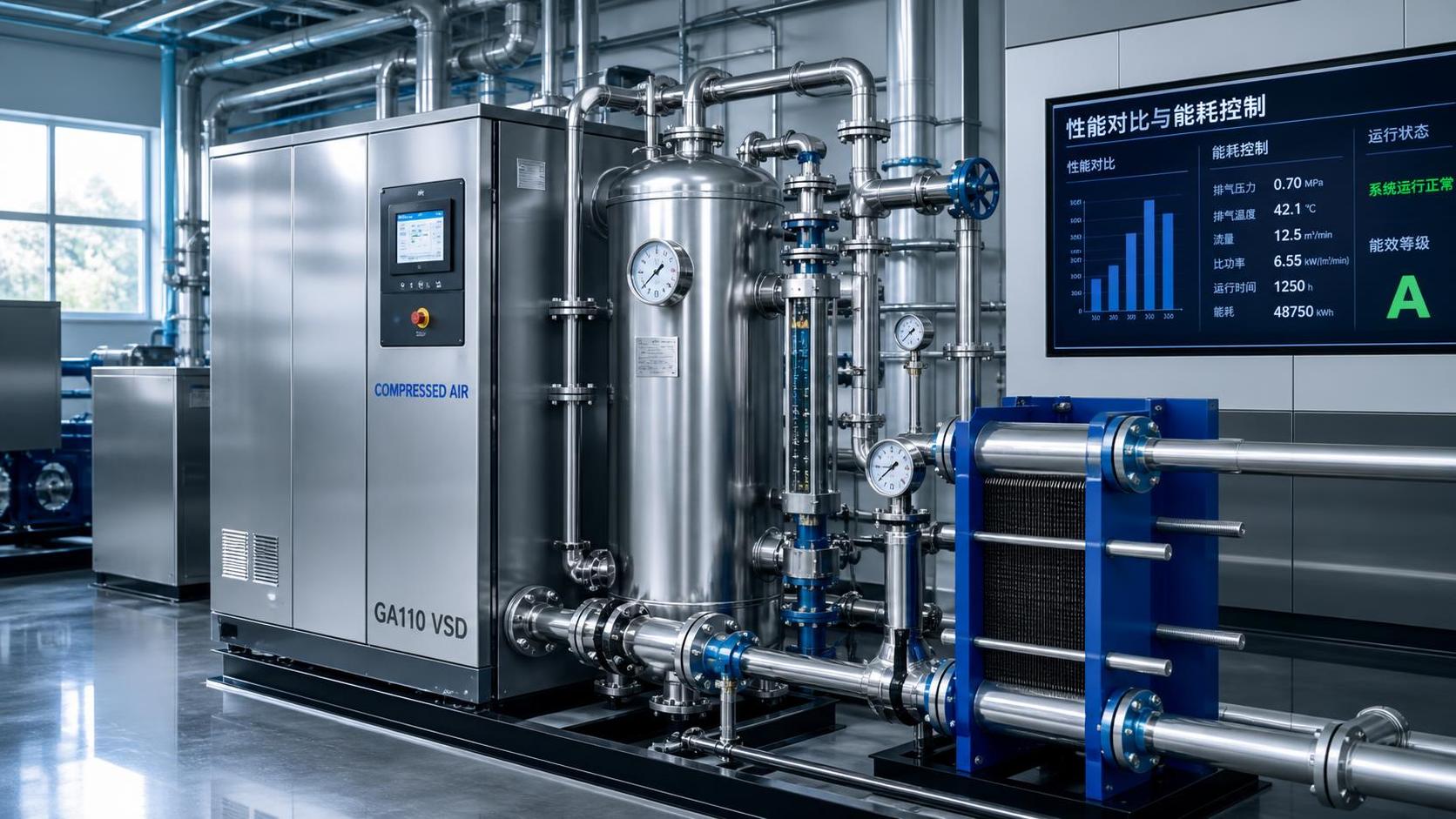
The selected compressor type is one of the clearest drivers of compressed air systems price. Fixed-speed rotary screw machines are often considered for relatively stable demand. Variable-speed-drive units can be appropriate where demand fluctuates, but their value depends on the actual load profile, control range, and interaction with other compressors. Buying a variable-speed machine without reviewing the plant’s demand pattern can add capital cost without delivering the expected reduction in energy use.
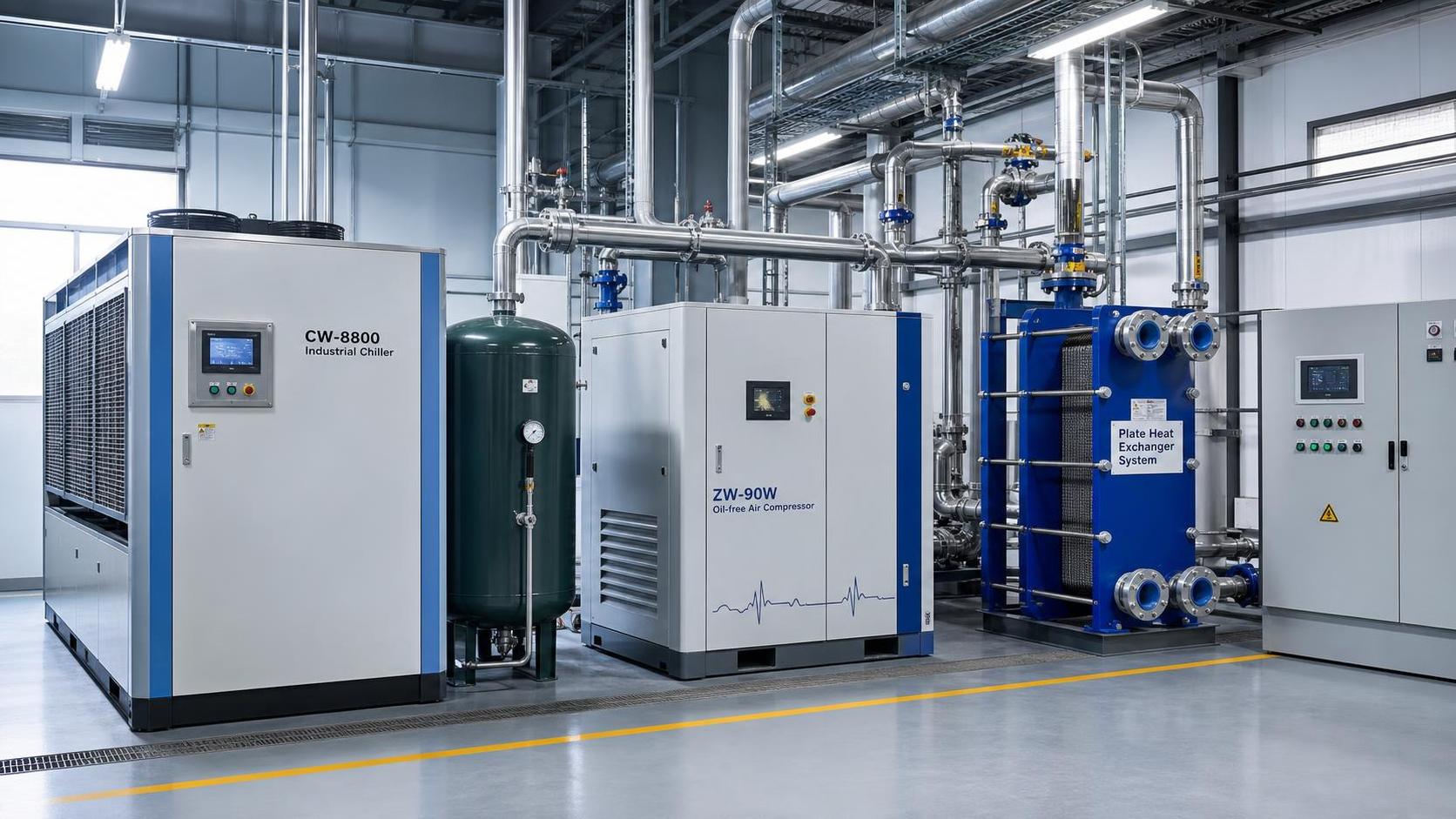
Oil-injected and oil-free compression also lead to different investment profiles. Oil-injected systems can serve many industrial duties effectively when downstream treatment is correctly designed and maintained. Oil-free compression may be required or strongly preferred where product-contact risk, process purity, or internal quality policies are particularly demanding. Yet “oil-free” should not end the discussion. Buyers still need to define permitted particles, water content, microorganisms where relevant, and any point-of-use filtration needs. Air quality is a system outcome, not a single equipment label.
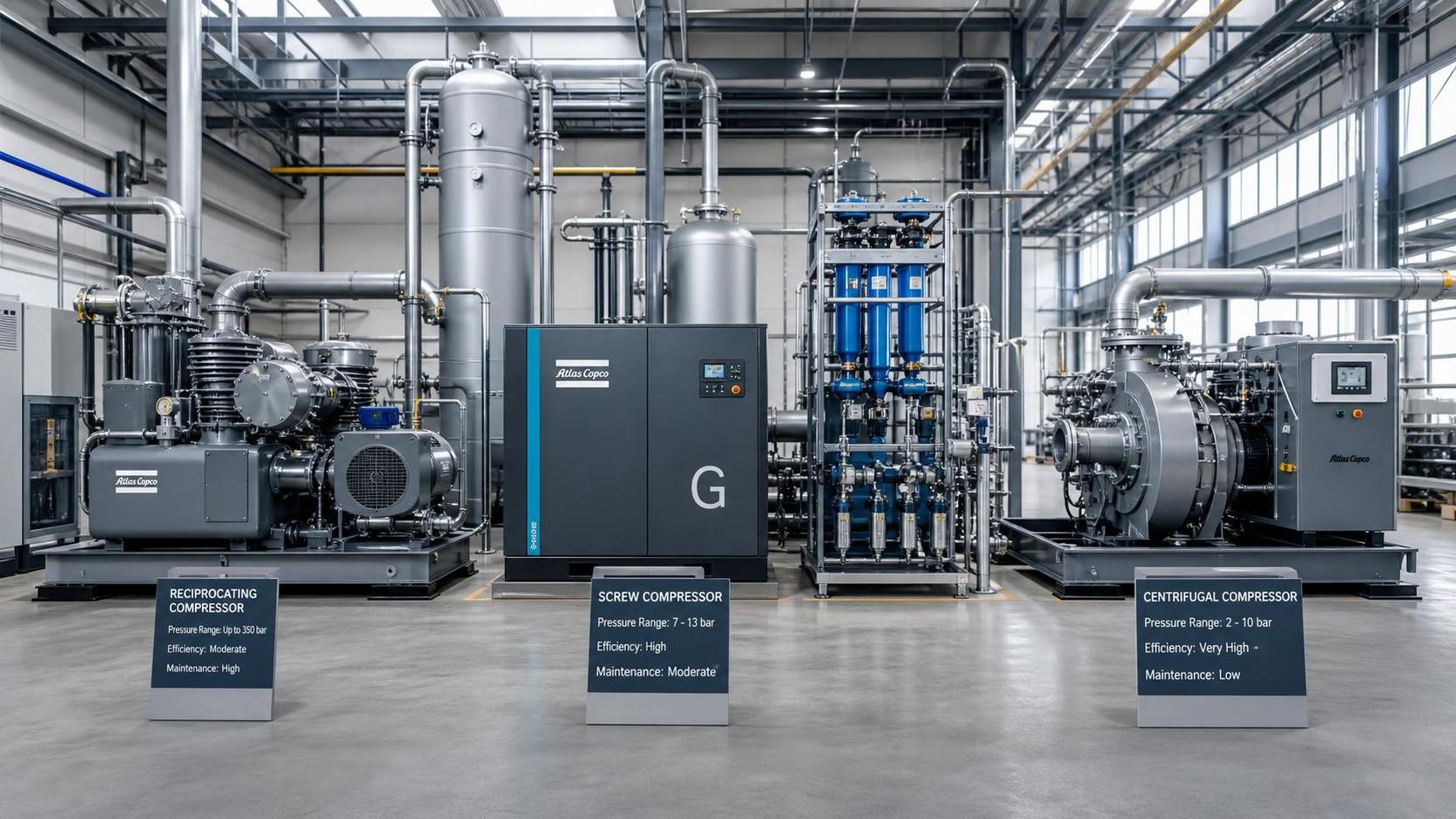
Centrifugal compressors may enter consideration for large, steady baseloads, while reciprocating machines remain relevant in selected high-pressure or intermittent-duty applications. The correct technology is driven by flow, pressure, operating hours, turndown needs, redundancy philosophy, maintenance capability, and site conditions. A technology comparison that ignores these variables is mostly a comparison of brochure prices.
Air quality requirements can change the budget faster than capacity
In many projects, treatment equipment—not compression capacity—is the reason a system price rises. The required quality class should be specified with reference to the applicable standard or internal process requirement, rather than described only as “clean” or “dry” air. Those descriptions leave too much room for differing assumptions.
Refrigerated dryers are commonly used where moderate pressure dew point performance is suitable. Desiccant dryers generally require greater investment and operating attention when lower moisture levels are necessary. Heatless, heated, blower-purge, and heat-of-compression desiccant designs have different implications for power consumption, purge losses, controls, and maintenance. There is no universally economical dryer; the best selection depends on the required dew point, ambient conditions, compressor arrangement, and operating schedule.
Filtration also deserves more scrutiny than it often receives. Coalescing filters, particulate filters, activated carbon stages, sterile filters, drains, and monitoring devices each affect both the initial package and ongoing pressure drop or service requirements. If a quote lists filters without defined performance duty, element replacement intervals, or differential-pressure considerations, the lifecycle cost remains unclear. In high-purity applications, the distribution system and point-of-use components may need the same level of attention as the central plant.
Pressure, flow profile, and redundancy determine how much equipment is actually needed
A system designed around peak demand alone can be oversized. One designed around average demand can fail during simultaneous production events. The procurement challenge is to establish a credible demand profile: normal flow, minimum stable flow, short-duration peaks, future expansion, required delivery pressure, and the consequences of a pressure dip.
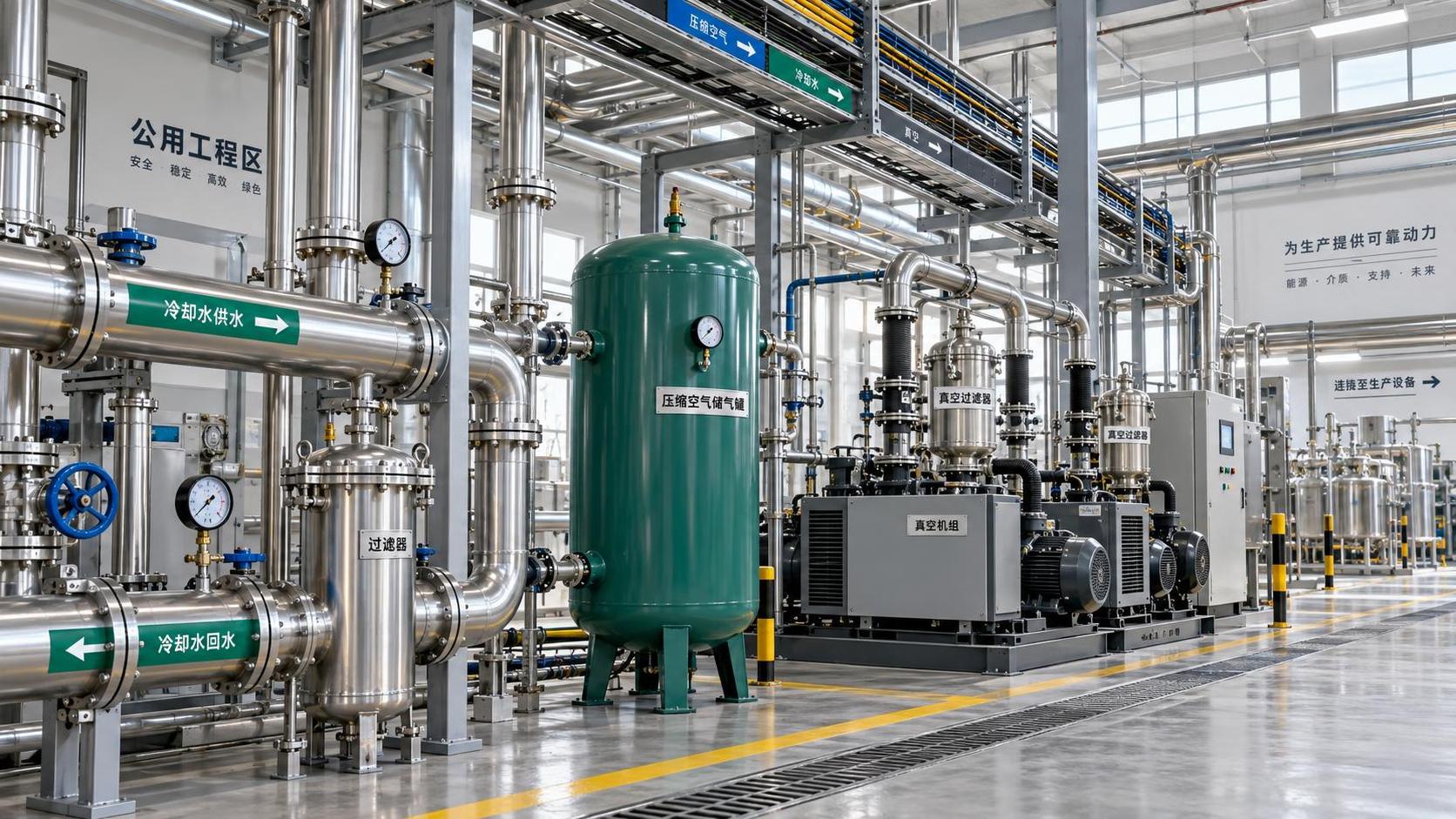
Storage receivers can help manage intermittent peaks and reduce unnecessary compressor cycling, but only when their sizing and location match the process behavior. A central receiver may not solve a fast local demand event at a remote production line. Conversely, oversized central equipment may be an expensive substitute for targeted point-of-use storage or better demand management.
Redundancy is another material price variable. A facility that can tolerate a planned shutdown may choose a different arrangement from one where air loss stops a critical process, creates scrap, or affects validated operations. “N+1” is frequently used in project discussions, but its meaning should be made explicit: redundancy of compressors only, or redundancy including dryers, filters, controls, power supply, and distribution paths? An apparently resilient compressor room can still have a single point of failure in a dryer, drain system, or undersized header.
Installation conditions are often underestimated in early budgets
The physical site can move a project from a straightforward equipment purchase to a complex engineering package. Indoor compressor rooms need adequate ventilation, heat rejection planning, service access, drainage, and noise control. Water-cooled systems introduce cooling-water quality, treatment, pumping, and heat-rejection considerations. Air-cooled systems may require ducting or room modifications to avoid recirculating hot discharge air back into the equipment.
Distribution piping is equally consequential. Long runs, undersized headers, corrosion-prone materials, excessive fittings, and poorly planned branch connections all increase pressure drop. The usual response—raising compressor discharge pressure—may seem operationally simple, but it can increase energy use and mask a distribution problem. Buyers should ask for the assumed pressure-drop allowance across treatment equipment and piping, along with the required pressure at the most demanding point of use.
International projects add another layer: local electrical characteristics, import documentation, language requirements for manuals, approved component lists, inspection expectations, and the availability of qualified field technicians. These factors do not always appear in a preliminary price, but they affect delivery certainty and the cost of making a system operational.
Energy cost is not an optional line in the comparison
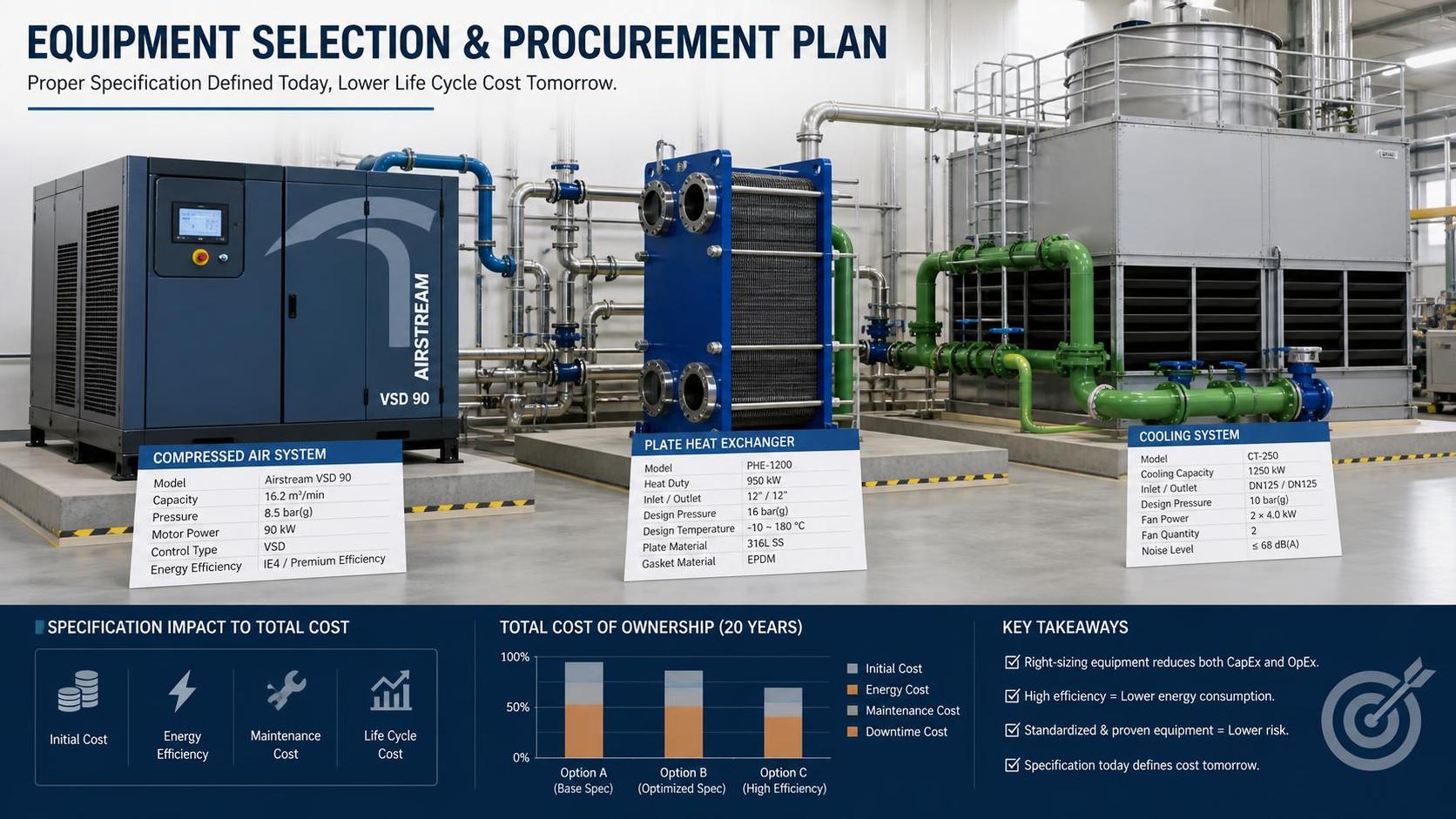
The initial compressed air systems price matters, but it is only one part of the decision. In a continuously operating plant, electricity consumption can dominate the economic picture over time. That does not justify assuming every premium-efficiency option will pay back quickly; it does mean energy should be evaluated using the site’s expected annual operating hours, electricity tariff structure, demand profile, and projected maintenance approach.
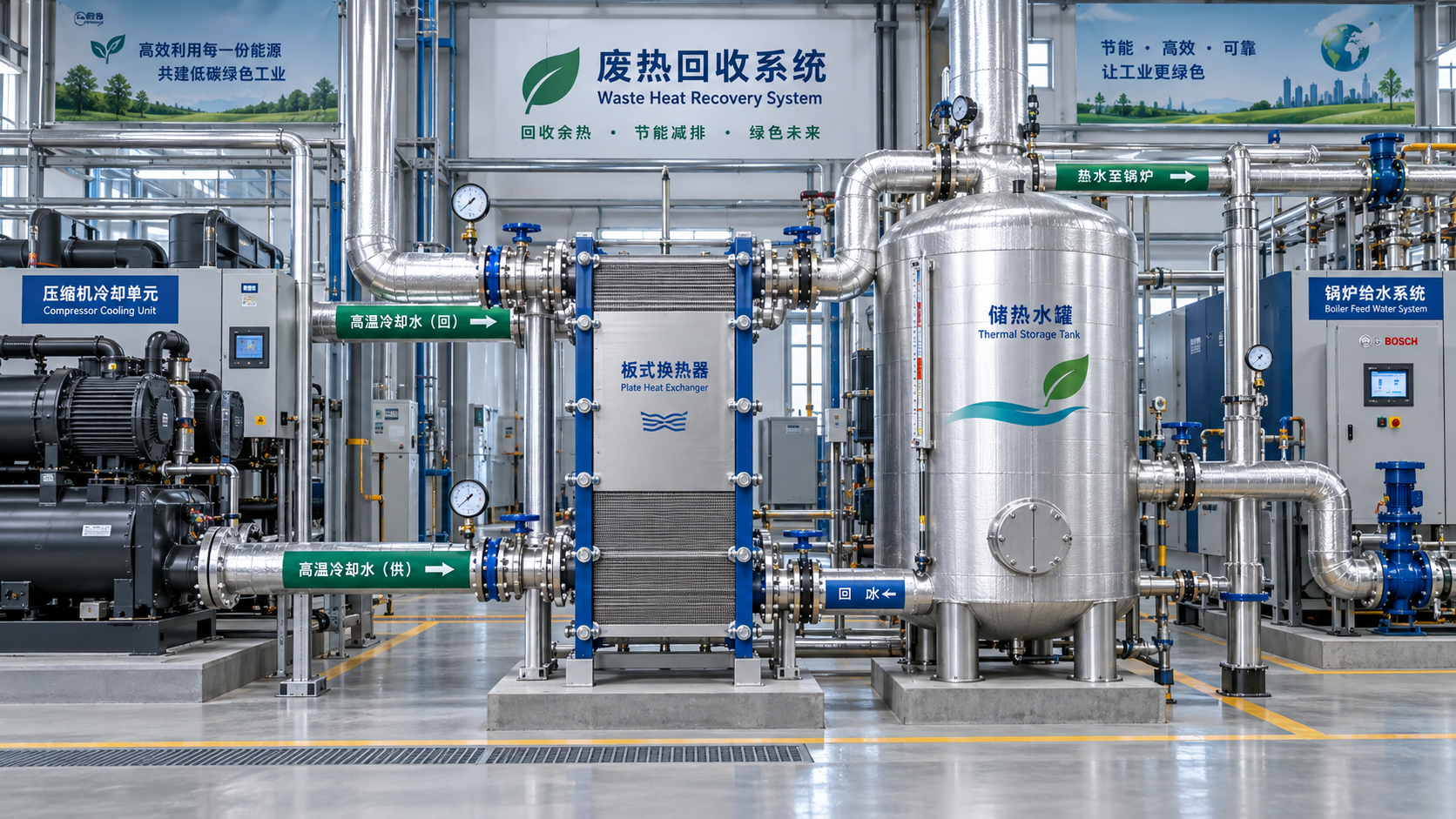
For a meaningful comparison, request power data at relevant load points rather than relying only on a single full-load figure. Ask how the proposed controls sequence multiple compressors, what happens at low demand, whether dryers consume purge air or regeneration energy, and how much pressure loss is expected through treatment. If heat recovery is proposed, check whether there is a real and sufficiently consistent thermal load nearby. Recoverable heat has value only when it can be used.
Leaks deserve a place in the financial model as well. A new compressor does not correct waste embedded in old pipework, open blow-offs, inappropriate uses of compressed air, or poorly maintained couplings. In some retrofit projects, demand-side investigation should precede final capacity selection. Otherwise, the buyer may fund capacity to support losses that should have been eliminated.
How to make supplier quotations comparable
A disciplined bid comparison does not require a complicated scoring model, but it does require identical assumptions. Suppliers should respond to the same duty statement, quality requirement, ambient design condition, electrical supply, installation boundary, and warranty expectations. If those inputs change from bidder to bidder, the resulting price spread may say more about scope interpretation than about competitiveness.
- Delivered flow and pressure, including the stated reference conditions and allowable pressure variation.
- Air quality target at the defined delivery point, not only at the treatment skid outlet.
- Included equipment, auxiliaries, piping, controls, electrical works, testing, and commissioning.
- Power consumption and control assumptions at realistic operating points.
- Maintenance scope, consumables, recommended spare parts, response arrangements, and warranty exclusions.
- Lead time assumptions, packaging, shipment terms, site readiness requirements, and acceptance procedure.
The goal is not to force every supplier into the same design. It is to understand why a design differs and whether that difference is valuable for the operating environment. A lower price may be entirely appropriate if the system has a narrower scope or the plant has strong in-house maintenance resources. It becomes risky when exclusions are hidden behind an incomplete requirement.
A better buying decision starts with the utility, not the machine
Compressed air sits at the intersection of power, process reliability, thermal management, and maintenance planning. That is why it benefits from cross-functional review by production, engineering, quality, energy, and procurement teams. The Global Thermal & Compression Matrix (GTC-Matrix) follows this wider context through its Strategic Intelligence Center, where thermodynamics analysts, pneumatic power engineers, and industrial economists examine the links between compression technology, energy conditions, air purity requirements, and changing industrial demand.
For buyers, the practical lesson is straightforward: do not accept a compressed air quote until its operating assumptions are visible. Confirm the real demand profile, define air quality at the required point, identify installation boundaries, examine service access, and compare energy and maintenance exposure alongside capital expenditure. That process may not produce the lowest initial number. It is far more likely to produce a system whose price remains defensible after it reaches the factory floor.
Ready when you are. Send us a message to get started.
Related News
- How to select industrial equipment for automation with existing PLCsAuthor :

- How electricity prices shape industrial compressed air price trendsAuthor :

- Choosing air filtration systems for heavy dust in the Middle EastAuthor :

- How much does a fully installed compressed air monitoring system cost?Author :

- What documentation supports CE marking for industrial equipment?Author :

- How local support affects vacuum system costs in Southeast AsiaAuthor :

- How worldwide industry category guides help compare market opportunitiesAuthor :

- What drives sustainable thermal systems cost over their operating life?Author :

- Which industrial solution comparison criteria prevent project delays?Author :

- How Ambient Temperature and Load Profile Affect Industrial Compressor SizingAuthor :

- What to evaluate before choosing a thermal process engineering supplierAuthor :

- How industrial utility systems affect energy costs in process plantsAuthor :

- What Data Is Needed to Assess Heat Recovery Decarbonization?Author :

- Can Waste Heat Recovery Support Carbon Neutrality Targets?Author :

- Is Compressor Heat Recovery Worth the Installation Cost?Author :

- What to verify before choosing a process separation technology supplierAuthor :

- When does process utilities engineering reduce project rework?Author :

- Where thermal efficiency optimization delivers the fastest savings in EuropeAuthor :

- What should you verify before selecting a heat transfer supplier?Author :

- What drives compressed air systems price for industrial projects?Author :

- How an industrial product knowledge comparison guide reduces sourcing riskAuthor :

- When does a procurement specification planning process reduce bid risk?Author :

- When does thermal system optimization for electronics reduce failure risk?Author :

- When high temperature process heating systems justify the higher energy costAuthor :

- How to compare sludge dewatering equipment by cake drynessAuthor :

- What to Check Before Sourcing a Gas Turbine for Distributed Power ProjectsAuthor :

- What drives industrial thermal systems price in large facility projectsAuthor :

- How to build an industrial product comparison chart that speeds up vendor selectionAuthor :

- Vacuum Technology Application Guide for Selecting the Right SystemAuthor :

- What Drives Vacuum Drying Cost in Industrial Procurement?Author :

- What Drives Compressed Air Pricing in Industrial Systems?Author :

- How Procurement Specification Planning Shapes Total Project CostAuthor :

- Compression Technology Guide: How to Compare Efficiency, Pressure Range, and Maintenance NeedsAuthor :

- How to Compare Industrial Separators by Throughput, Purity, and Maintenance LoadAuthor :

- How to Size a Compressed Air Equipment Receiver Tank for Stable PressureAuthor :

- Industrial Equipment Selection Guide: How to Compare Capacity, Duty Cycle, and Operating CostAuthor :