



Industrial Equipment Selection Guide: How to Compare Capacity, Duty Cycle, and Operating Cost




Capacity, duty cycle, and cost are linked more tightly than most selection sheets suggest
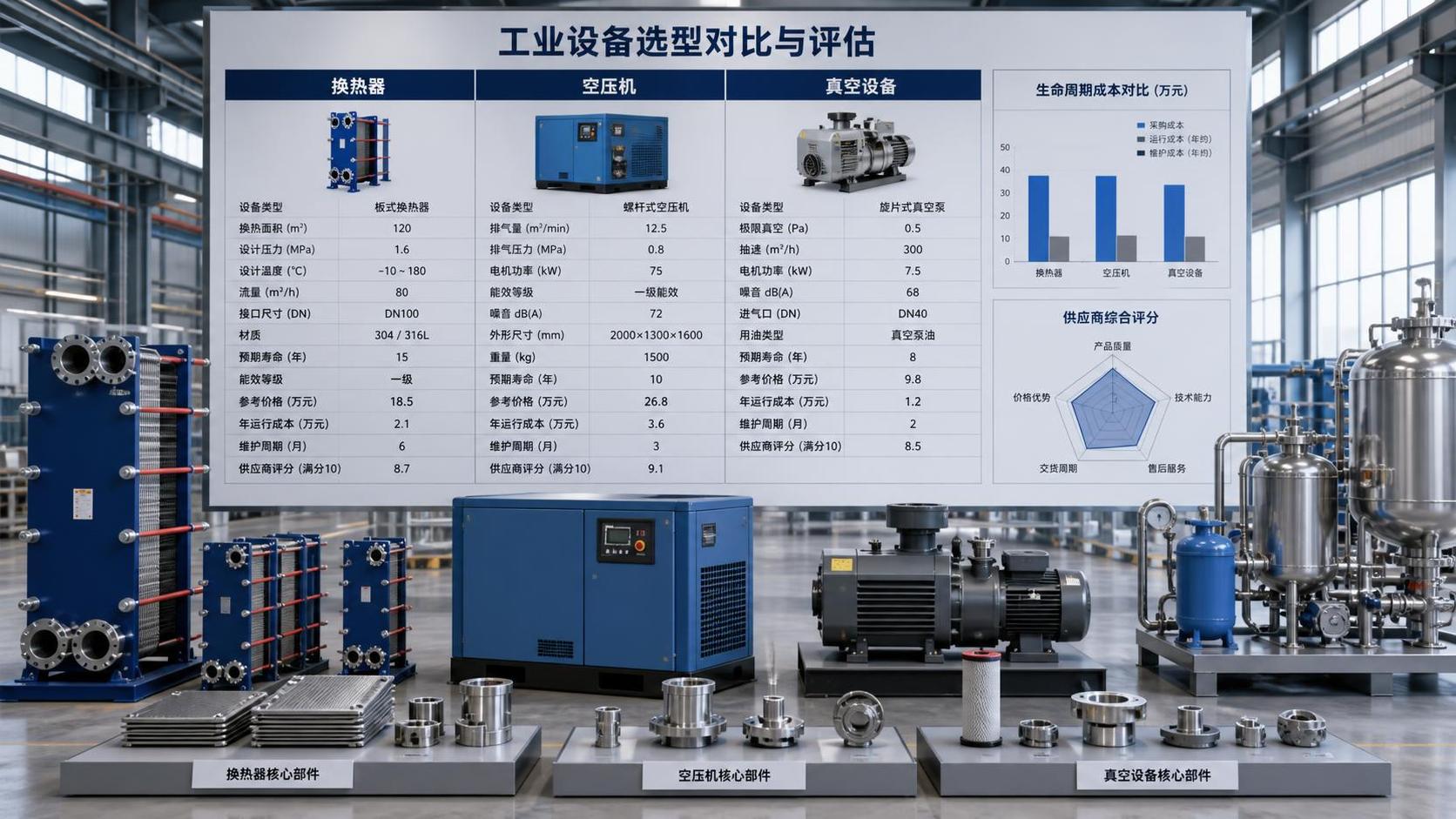
An industrial equipment selection guide becomes useful only when it clears up a common mistake: treating capacity, duty cycle, and operating cost as separate boxes on a comparison form. In practice, they are one system. A chiller, air compressor, vacuum pump, or heat exchanger may look adequate when judged by nameplate output alone, yet still become the wrong choice once the real load profile, run hours, turndown behavior, and utility pricing are brought into view.
This is why experienced evaluators rarely begin with the biggest published number. They start with the shape of demand. Is the process steady or cyclical? Does the plant run one shift or continuously? Are summer ambient conditions materially different from winter? Does the equipment spend most of its life near full load, or is it oversized and idling? Those questions matter because a machine that performs well at rated conditions can become expensive, unstable, or maintenance-heavy in the operating window where it actually lives.
For sectors that depend on thermal control and compressed utilities, including pharmaceuticals, semiconductors, food processing, and other precision manufacturing environments, the selection decision is not just about buying capacity. It is about buying usable capacity under the right duty pattern at an acceptable lifecycle cost.
Capacity is not a single number
Published capacity is often treated as a clean basis for comparison, but it usually hides important conditions. Cooling equipment depends on entering and leaving temperatures, ambient temperature, fouling margin, and fluid characteristics. Compressors depend on inlet conditions, discharge pressure, pressure drop, control method, and air quality requirements. Vacuum equipment depends on the target pressure range and gas composition. A machine rated at one point may deliver meaningfully different output at another.
That is why “Do these two units have the same capacity?” is often the wrong question. The better question is: “Do they deliver the same useful capacity at my actual design and off-design conditions?” If one vendor states compressor flow as free air delivery and another emphasizes motor size, the comparison is already distorted. If one chiller is rated at a favorable water temperature and another at a more conservative rating point, the apparent gap may not reflect field performance at all.
In technical evaluations, capacity should usually be checked at three levels: design point, normal operating point, and expected upset or peak point. That approach exposes whether a unit is genuinely right-sized or simply looks safe because excess capacity has been purchased as a hedge against uncertainty.
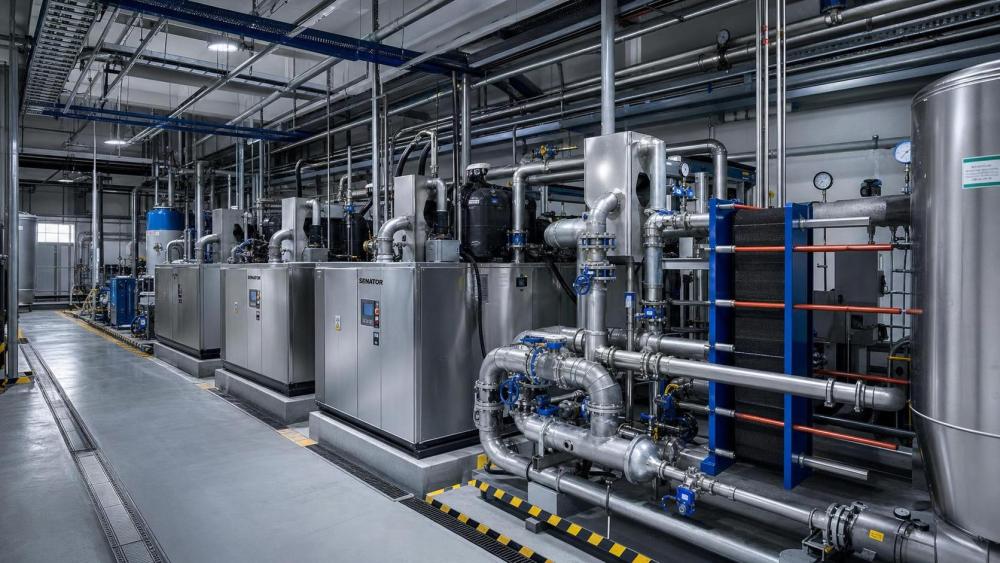
Oversizing is especially misunderstood. Many teams assume it protects reliability. Sometimes it does provide margin for expansion or hot-weather resilience. Just as often, it creates poor part-load efficiency, frequent cycling, unstable control, or unnecessary capital tied up in equipment that rarely approaches its intended operating range. In compressed air and thermal systems, excess size is not a neutral choice. It changes how the system behaves every hour it runs.
Duty cycle tells you whether the equipment and the process actually fit each other
Duty cycle is one of the most revealing and most neglected selection variables. It describes how long equipment runs, at what load, and with what frequency of start-stop or modulation events. Two machines with the same nominal capacity may have very different economics and reliability depending on whether they operate 2,000 hours per year, 6,000 hours per year, or essentially non-stop.
In a lightly used application, a simpler fixed-speed machine may be defensible even if its efficiency is not best-in-class. In a base-load application, that same choice can lock in avoidable energy spend for years. The reverse can also happen: a highly optimized variable-capacity system may look attractive on paper, but if the site runs at a narrow steady load with little variation, its extra complexity may not pay back the way the proposal suggests.
This is where many purchasing errors begin. Teams compare a process duty profile to a brochure, not to a control strategy. Yet control method is inseparable from duty cycle. Load-unload control, inlet modulation, variable-speed drive behavior, thermal storage integration, staging logic, and standby rotation all affect how efficiently a unit handles the real pattern of demand. A poor control match can erase the advantage of a technically strong core machine.
For evaluators, a simple but effective discipline is to map the expected annual operating profile into load bands. If the equipment will spend most of its time between 40% and 70% load, that band deserves more attention than the rated full-load point. In many plants, full load is a design event; part load is daily reality.
Operating cost is broader than energy, but energy still dominates long-run decisions
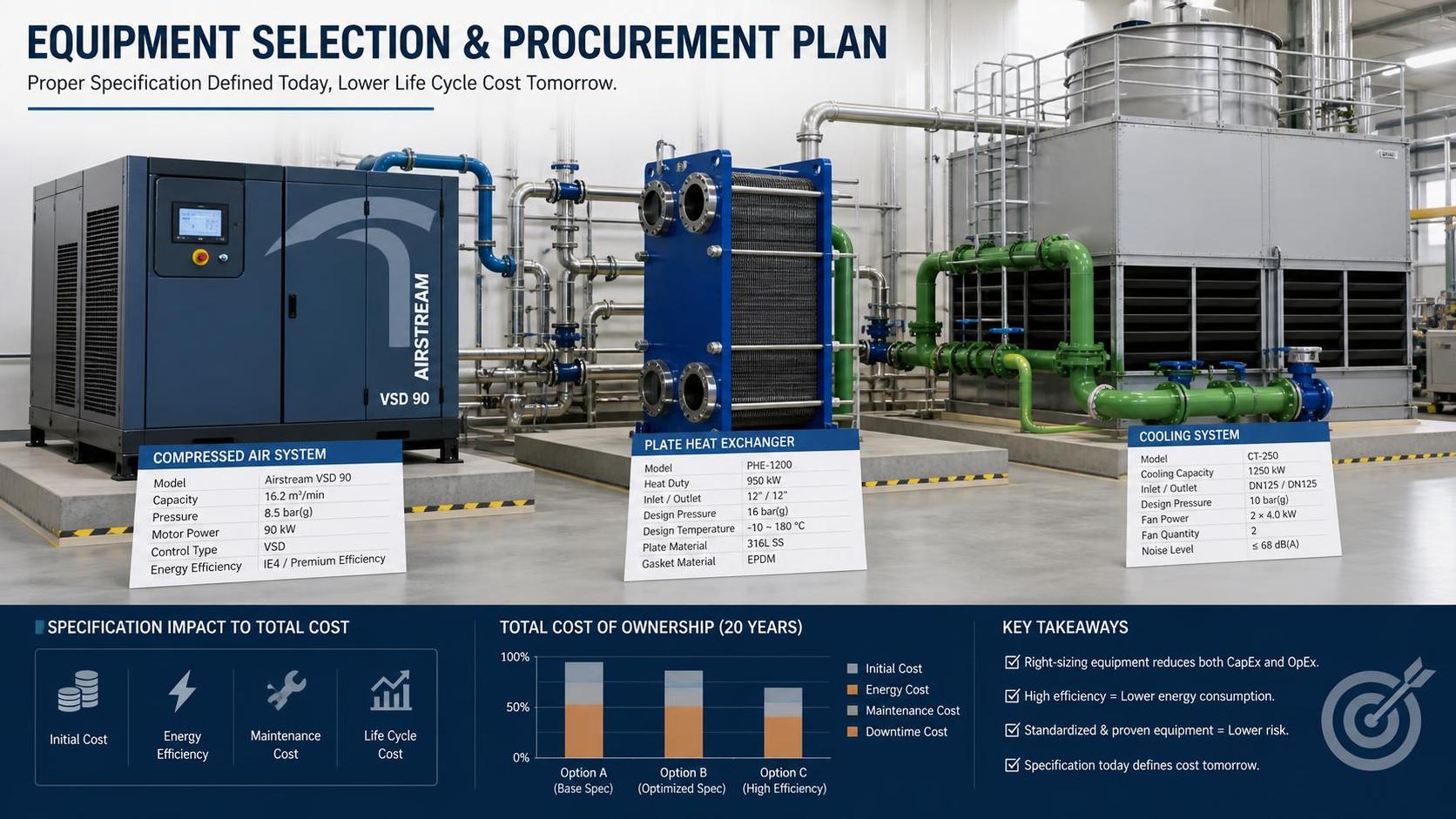
When people say operating cost, they often mean power consumption. That is reasonable, because in continuously used thermal and compression equipment, electricity or fuel frequently becomes the largest lifecycle cost element. Still, a sound comparison should include more than utility use. Maintenance interval, consumables, water treatment, filters, lubricant requirements, spare parts, downtime sensitivity, and operator intervention all belong in the picture.
The practical issue is not whether one unit is “efficient” in a generic sense. It is whether its specific energy performance remains acceptable across the plant’s real duty range. A compressor that is excellent at full load but weak at partial load may disappoint in a facility with fluctuating air demand. A heat rejection system that depends heavily on ambient conditions may produce very different annual cost outcomes across regions. A vacuum system designed for deep vacuum may be wasteful if the process only needs a moderate pressure range.
Utility structure also matters. Time-of-use tariffs, demand charges, water constraints, and waste heat recovery opportunities can shift the economics. In some cases, a technically smaller efficiency gain becomes financially more meaningful than a larger one because of how the site is billed. Selection teams that ignore the tariff side often overvalue peak efficiency and undervalue load management.
A useful comparison framework
When building an evaluation matrix, it helps to keep the criteria tight and operational rather than decorative. A short framework usually reveals more than a long spreadsheet filled with unweighted claims.
This kind of matrix is especially relevant for intelligence-led evaluation work, where the goal is not simply to compare machines but to understand how thermal and power systems behave within a larger energy conversion chain. For platforms such as GTC-Matrix, which track industrial cooling, compressed air, vacuum processes, and heat exchange technologies, the value lies in connecting equipment data to operating context. That is where decisions become more defensible.
Where technical evaluators tend to misread the offer
One recurring problem is comparing capital cost too early. A lower purchase price can be rational in intermittent service, pilot lines, or low-utilization assets. But once duty hours increase, the cost center shifts quickly toward energy and maintenance. Another problem is assuming a premium design is automatically superior. Oil-free compression, advanced heat exchanger geometry, or variable-speed architectures may be exactly right in some regulated or high-purity applications, yet not every plant captures equal value from them. The application boundary matters.
There is also a habit of treating redundancy as if it were the same as spare capacity. It is not. Redundancy is about continuity strategy and failure tolerance; spare capacity is a sizing condition. Confusing the two can produce bloated systems that are expensive to run and still awkward to maintain.
Standards and compliance requirements can further narrow the options. In food, pharma, electronics, or export-oriented manufacturing, material compatibility, cleanability, refrigerant constraints, emissions considerations, and documentation quality may influence selection as much as raw performance. Those factors should not be left for procurement cleanup after the technical shortlist is made.
What a stronger decision process looks like
A robust industrial equipment selection guide does not promise a universal winner. It sharpens the questions so that weak comparisons drop out early. Start with the process requirement in operating terms, not catalog terms. Normalize capacity to the same conditions. Examine the annual load profile, not just the design maximum. Compare control behavior where the equipment will spend most of its time. Then model operating cost with realistic utility and maintenance assumptions.
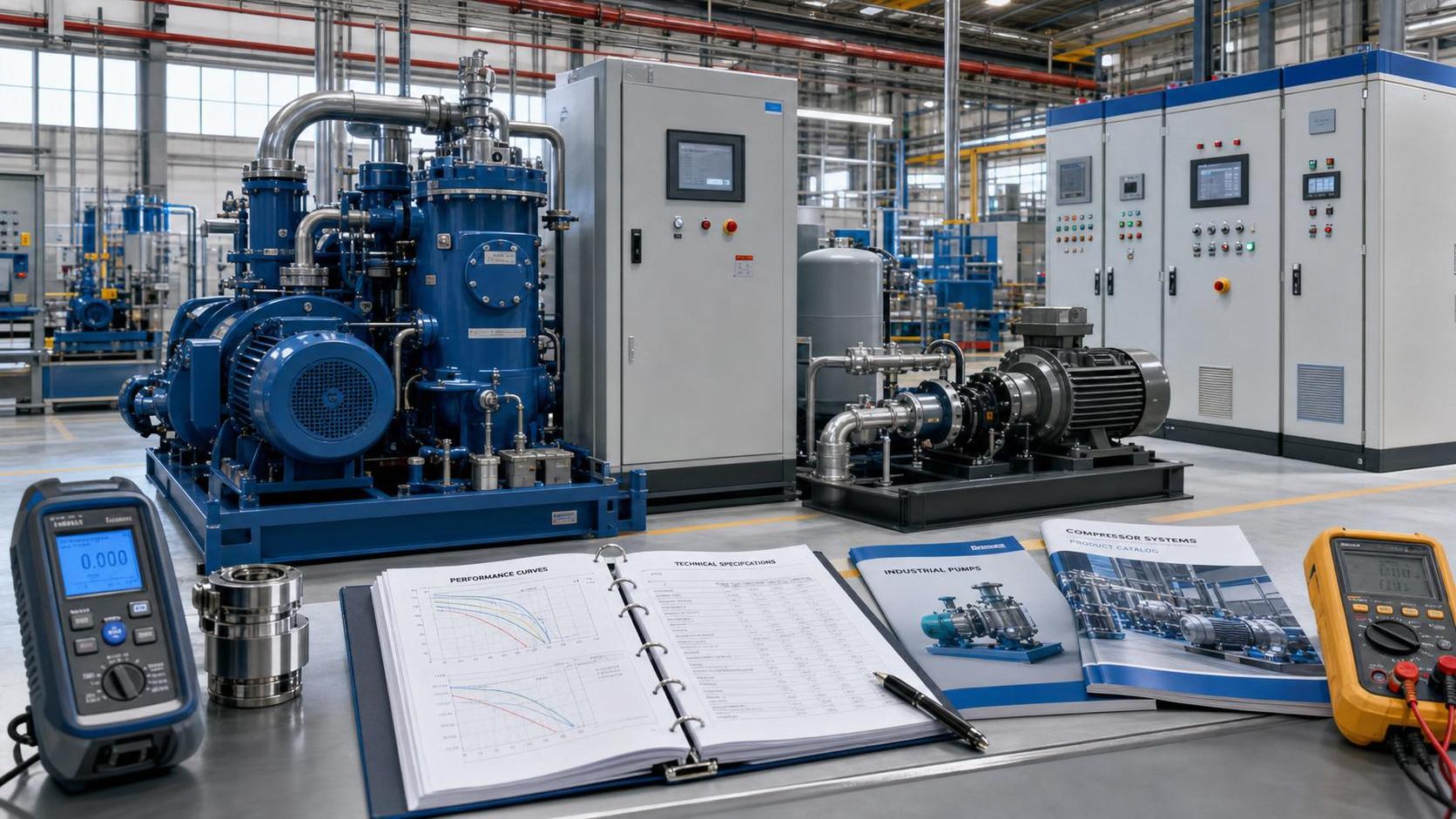
If uncertainty remains, it is usually better to ask for clarified rating bases, performance curves, and part-load behavior than to ask for another round of generic features. Most costly selection errors do not come from missing one dramatic flaw. They come from accepting several small ambiguities that all lean in the same direction.
For technical evaluators, that is the real use of an industrial equipment selection guide: not to reduce judgment to a checklist, but to make judgment more explicit. Capacity tells you what the equipment can do under stated conditions. Duty cycle tells you how it will actually live in the plant. Operating cost tells you what that choice will continue to ask from the business long after commissioning is complete.
Related News
- When does process utilities engineering reduce project rework?Author :

- Where thermal efficiency optimization delivers the fastest savings in EuropeAuthor :

- What should you verify before selecting a heat transfer supplier?Author :

- What drives compressed air systems price for industrial projects?Author :

- How an industrial product knowledge comparison guide reduces sourcing riskAuthor :

- When does a procurement specification planning process reduce bid risk?Author :

- When does thermal system optimization for electronics reduce failure risk?Author :

- When high temperature process heating systems justify the higher energy costAuthor :

- How to compare sludge dewatering equipment by cake drynessAuthor :

- What to Check Before Sourcing a Gas Turbine for Distributed Power ProjectsAuthor :

- What drives industrial thermal systems price in large facility projectsAuthor :

- How to build an industrial product comparison chart that speeds up vendor selectionAuthor :

- Vacuum Technology Application Guide for Selecting the Right SystemAuthor :

- What Drives Vacuum Drying Cost in Industrial Procurement?Author :

- What Drives Compressed Air Pricing in Industrial Systems?Author :

- How Procurement Specification Planning Shapes Total Project CostAuthor :

- Compression Technology Guide: How to Compare Efficiency, Pressure Range, and Maintenance NeedsAuthor :

- How to Compare Industrial Separators by Throughput, Purity, and Maintenance LoadAuthor :

- How to Size a Compressed Air Equipment Receiver Tank for Stable PressureAuthor :

- Industrial Equipment Selection Guide: How to Compare Capacity, Duty Cycle, and Operating CostAuthor :

- How to Evaluate an Intellectualization Supplier for Industrial UpgradesAuthor :

- High-Efficiency Manufacturing: Cost Savings vs. Upgrade RiskAuthor :

- Thermal System Optimization Cost: What Drives ROI?Author :

- How to Plan Process Utilities for a Cleanroom Without Costly ReworkAuthor :

- How to Compare Process Heating Suppliers in MexicoAuthor :

- Food Processing Utilities: Common Sizing Mistakes That Raise Energy and Water UseAuthor :

- How to Build Procurement Specification Planning for Industrial EquipmentAuthor :

- OEM Cooperation for Industrial Equipment: Risks, Terms, and Cost PrioritiesAuthor :

- Specification-Oriented Product Resources That Speed Technical ReviewAuthor :

- Industrial Equipment Selection Guide: A Practical Buyer ChecklistAuthor :

- How to Compare Industrial Energy Management Systems by ROIAuthor :

- How to Evaluate a Deaerators Supplier for Long-Term Plant ReliabilityAuthor :
![]()
- How to Evaluate a Vacuum Technology Manufacturer in 2026Author :

- Thermal Efficiency Optimization Software: When the ROI Justifies DeploymentAuthor :

- How to Evaluate Application-Specific Compression Solutions by Throughput and Energy UseAuthor :

- Smart Device Thermal Management Supplier Europe: What Matters Beyond PriceAuthor :