



Vacuum Technology Application Guide for Selecting the Right System




It usually starts with a small mismatch: a process needs a stable vacuum level, but the first system chosen was sized mainly from a pressure target on paper. On site, the result can be less tidy. The pump cycles too often, the chamber recovery feels sluggish, or contamination shows up where it is hardest to trace. If you are responsible for selecting equipment, that gap between “meets the spec” and “works in the process” is where most of the trouble begins.
A vacuum technology application guide is useful precisely because vacuum selection is rarely about one number. The right system depends on how the load changes, what enters the line, how clean the process must stay, how often maintenance can happen, and what the plant can tolerate in energy use and downtime. If those variables are checked too late, the correction usually becomes more expensive than the original choice.
Start with the process, not the pump
The first mistake in vacuum selection is treating all applications as if they only differ by target pressure. In practice, a drying line, a packaging machine, a lab setup, and a central plant system may all reach similar vacuum levels, yet demand very different behavior during startup, steady operation, and recovery after interruptions.
Before comparing technologies, define the process conditions in plain terms: Is the vacuum used continuously or in short bursts? Is the load clean, dusty, moist, or chemically active? Does the system need a fast pull-down, or is stability more important than speed? These questions often matter more than catalog performance curves.
When teams skip this step, they tend to overbuy on capacity or underbuy on resilience. Both choices create problems. Oversized equipment may short-cycle and waste energy. Undersized equipment may struggle when the process gets busy, leading to unstable operation or quality drift.
Common selection errors that look harmless at first
One common misunderstanding is assuming all vacuum applications can share the same maintenance logic. They cannot. A system handling clean, dry gas may tolerate one type of arrangement, while another process with condensable vapors or particulate carryover will need stronger protection upstream. If that difference is ignored, filters clog sooner and performance becomes harder to predict.
Another frequent issue is focusing only on ultimate vacuum and ignoring operating range. Many systems spend most of their time in a middle band, not at the lowest possible pressure. That means the useful comparison is often how efficiently a system behaves across the real working range, not the headline value in isolation.
Noise, footprint, and utility access also enter the picture earlier than people expect. A technically suitable unit can still become the wrong choice if it cannot fit the room, be serviced safely, or match available cooling and power infrastructure.
A practical way to compare system types
When the application is unclear, it helps to compare options from the process outward:
- Operating range: confirm where the system will spend most of its time, not just the minimum pressure it can reach.
- Load variation: check whether demand is steady, pulsed, or highly variable.
- Contamination control: identify whether moisture, oil mist, dust, or process vapors may enter the line.
- Energy behavior: look at part-load efficiency and how often the unit will cycle.
- Service access: consider filter changes, seal inspection, and routine cleaning.
- System integration: review how the vacuum source connects with receivers, valves, controls, and exhaust handling.
At this stage, many teams narrow the field by deciding whether they need a local point-of-use system, a distributed setup, or a central vacuum arrangement. The right answer depends less on preference and more on process layout, response time, and how many users share the demand.
Where oil-free, dry, or liquid-ring choices usually diverge
There is no universal “best” vacuum technology. Each approach has trade-offs that matter in different environments. Oil-free systems are often considered when contamination control is a priority, especially where even trace carryover is difficult to accept. Dry systems are often evaluated for cleaner maintenance behavior and lower risk of process contamination. Liquid-ring arrangements may fit situations where vapor handling is part of the job and the process is less sensitive to a wet operating environment.
The useful question is not which technology is most advanced, but which one fits the process tolerance. If the application is sensitive to contamination, the selection should lean toward cleaner separation between the working mechanism and the process stream. If the process includes moisture or vapors, the system must be checked for how it handles that load over time, not just during a short test.
This is also where the vacuum technology application guide becomes a decision aid rather than a product comparison sheet. It helps separate what the process truly needs from what seems attractive on a specification table.
Questions that reveal a weak selection quickly
When a team is uncertain, a few practical questions usually expose the weak points in a proposal:
- What happens to performance when demand changes suddenly?
- How will the system behave if moisture or fine particles enter the line?
- Is the design stable at the normal operating point, or only near peak capacity?
- Can maintenance be done without disrupting the whole line?
- Will the control method reduce unnecessary running time?
If a proposal cannot answer these questions clearly, it is worth revisiting the application assumptions. A reliable selection usually stands up to scenario testing, not just nameplate comparison.
Turning selection into a safer decision
The best way to reduce risk is to validate the selection in stages. First, document the actual process profile. Then compare system types against that profile using the criteria above. After that, review the integration points: piping length, valve behavior, filtration, cooling, and exhaust handling. This is often where the real operating picture appears.
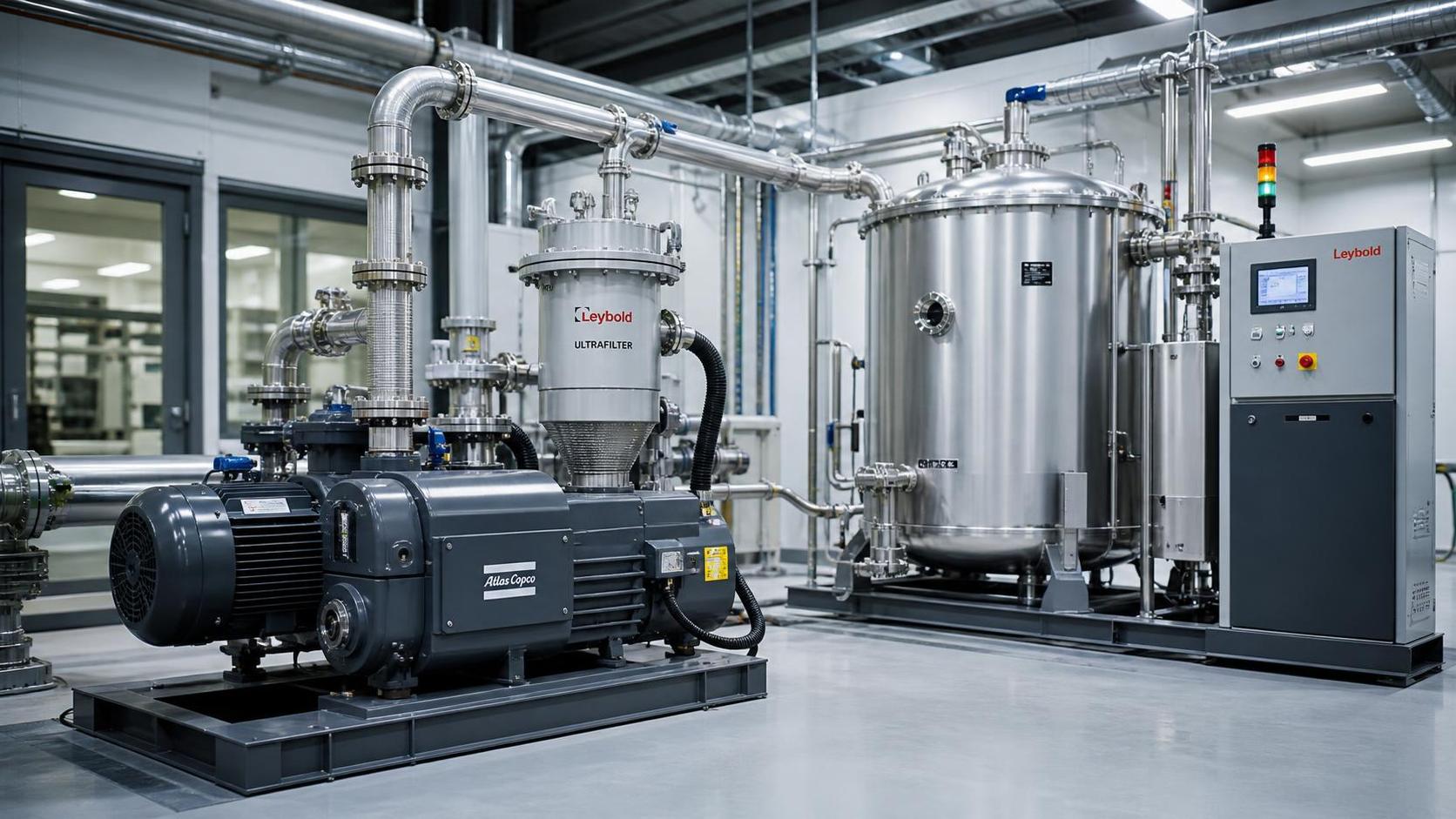
If the process is especially sensitive, bring in a technical review of the vacuum line rather than relying on a single equipment choice. In many industrial settings, the vacuum source, control logic, and protection devices work together as one system. Treating them separately can hide the reason a line performs well on paper but poorly in service.
For teams evaluating broader industrial utilities, this same method helps connect vacuum selection with energy use, compressed air support, and thermal management. That matters because vacuum systems do not operate in isolation; they sit inside a larger utility network, and their efficiency depends on how well the network is balanced.
When to pause and ask for a deeper review
If the application includes changing loads, contamination concerns, strict uptime expectations, or limited service access, it is usually worth slowing down before choosing the final system. The goal is not to find the most powerful option, but the one that stays predictable under real working conditions.
In practice, a good selection feels less like a guess and more like a controlled decision. The process is clearer, the operating range is easier to defend, and maintenance does not become a surprise. That is the real value of using a vacuum technology application guide during evaluation: it shifts the discussion from “which machine looks right” to “which system will remain right after the process starts changing.”
Related News
- What to evaluate before choosing a thermal process engineering supplierAuthor :

- How industrial utility systems affect energy costs in process plantsAuthor :

- What Data Is Needed to Assess Heat Recovery Decarbonization?Author :

- Can Waste Heat Recovery Support Carbon Neutrality Targets?Author :

- Is Compressor Heat Recovery Worth the Installation Cost?Author :

- What to verify before choosing a process separation technology supplierAuthor :

- When does process utilities engineering reduce project rework?Author :

- Where thermal efficiency optimization delivers the fastest savings in EuropeAuthor :

- What should you verify before selecting a heat transfer supplier?Author :

- What drives compressed air systems price for industrial projects?Author :

- How an industrial product knowledge comparison guide reduces sourcing riskAuthor :

- When does a procurement specification planning process reduce bid risk?Author :

- When does thermal system optimization for electronics reduce failure risk?Author :

- When high temperature process heating systems justify the higher energy costAuthor :

- How to compare sludge dewatering equipment by cake drynessAuthor :

- What to Check Before Sourcing a Gas Turbine for Distributed Power ProjectsAuthor :

- What drives industrial thermal systems price in large facility projectsAuthor :

- How to build an industrial product comparison chart that speeds up vendor selectionAuthor :

- Vacuum Technology Application Guide for Selecting the Right SystemAuthor :

- What Drives Vacuum Drying Cost in Industrial Procurement?Author :

- What Drives Compressed Air Pricing in Industrial Systems?Author :

- How Procurement Specification Planning Shapes Total Project CostAuthor :

- Compression Technology Guide: How to Compare Efficiency, Pressure Range, and Maintenance NeedsAuthor :

- How to Compare Industrial Separators by Throughput, Purity, and Maintenance LoadAuthor :

- How to Size a Compressed Air Equipment Receiver Tank for Stable PressureAuthor :

- Industrial Equipment Selection Guide: How to Compare Capacity, Duty Cycle, and Operating CostAuthor :

- How to Evaluate an Intellectualization Supplier for Industrial UpgradesAuthor :

- High-Efficiency Manufacturing: Cost Savings vs. Upgrade RiskAuthor :

- Thermal System Optimization Cost: What Drives ROI?Author :

- How to Plan Process Utilities for a Cleanroom Without Costly ReworkAuthor :

- How to Compare Process Heating Suppliers in MexicoAuthor :

- Food Processing Utilities: Common Sizing Mistakes That Raise Energy and Water UseAuthor :

- How to Build Procurement Specification Planning for Industrial EquipmentAuthor :

- OEM Cooperation for Industrial Equipment: Risks, Terms, and Cost PrioritiesAuthor :

- Specification-Oriented Product Resources That Speed Technical ReviewAuthor :

- Industrial Equipment Selection Guide: A Practical Buyer ChecklistAuthor :