Which industrial solution comparison criteria prevent project delays?




Which Industrial Solution Comparison Criteria Actually Prevent Project Delays?
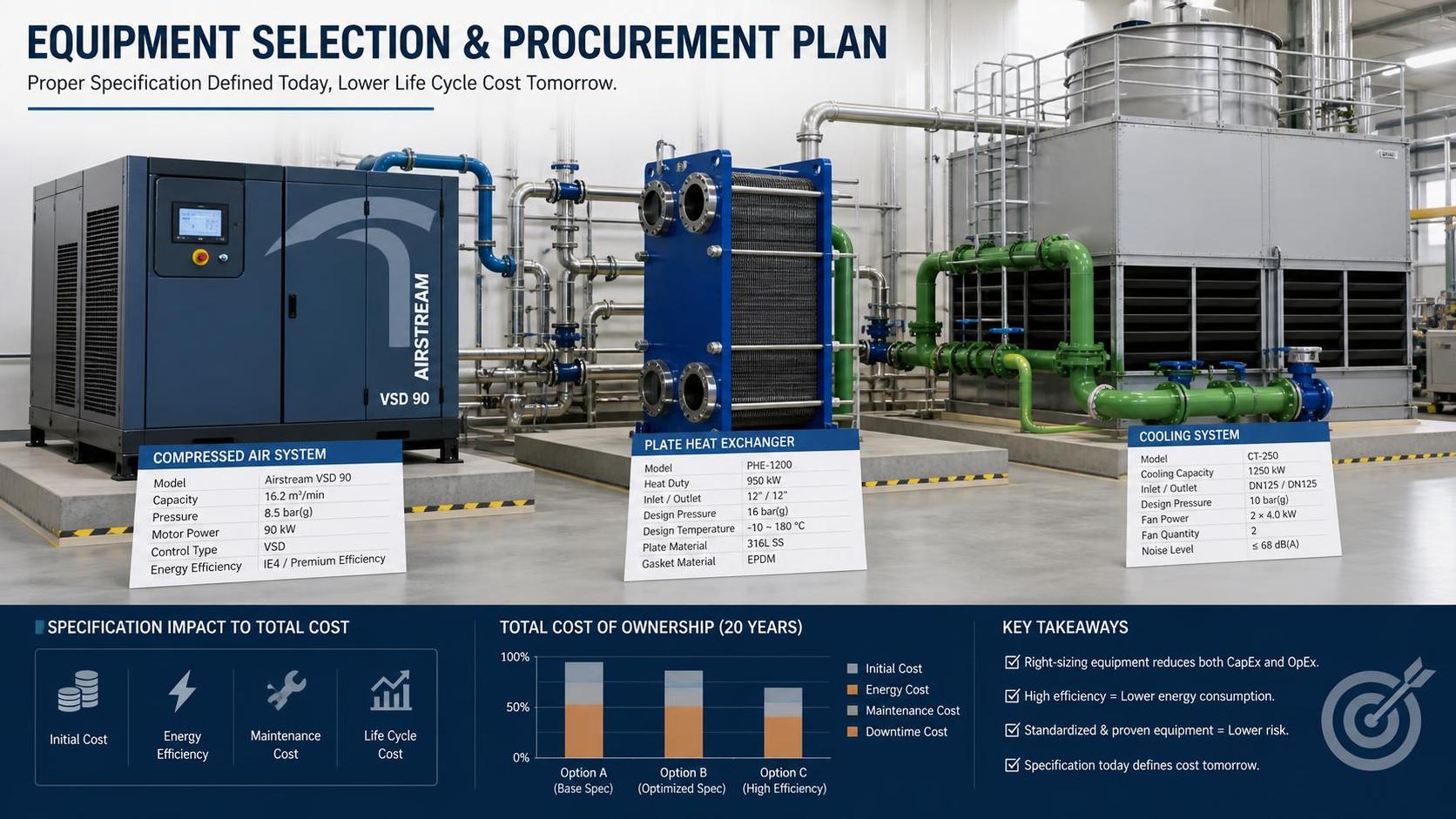
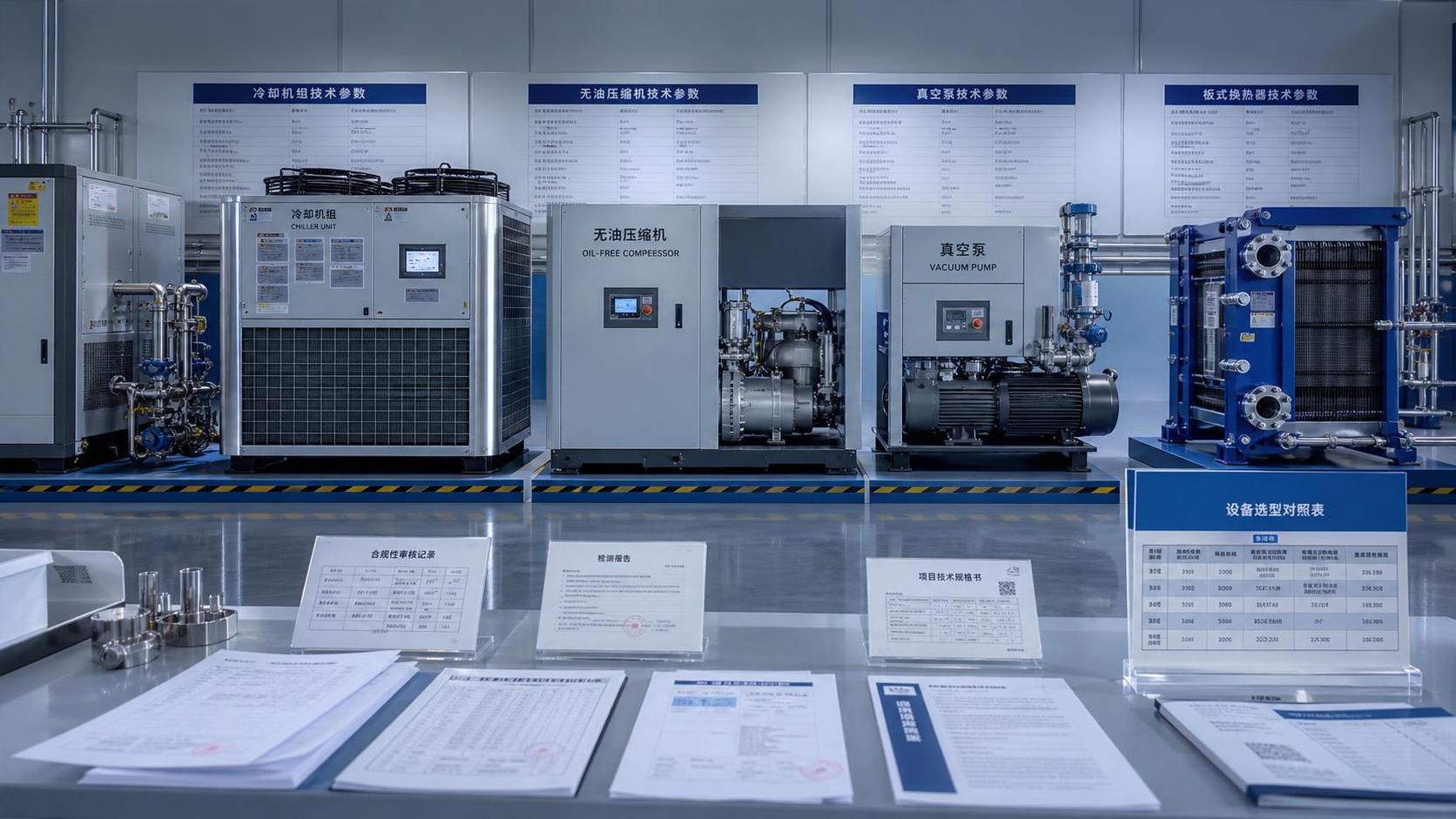
Project delays in industrial cooling, compressed air, vacuum, and heat-exchange work rarely begin when equipment arrives on site. More often, the delay was built into the comparison process months earlier: a system was selected on nameplate capacity alone, a utility requirement was assumed rather than verified, or a supplier’s scope ended precisely where the installation team expected it to begin.
A disciplined industrial solution comparison for project planning is therefore not a procurement exercise in the narrow sense. It is a schedule-control tool. The goal is not simply to identify the technically strongest compressor, chiller, vacuum package, boiler, or heat exchanger. It is to identify the option that can meet the process duty, fit the plant, clear the applicable requirements, connect to surrounding systems, and be supported through commissioning without creating a chain of late decisions.
That distinction matters. A highly efficient machine can still be the wrong project choice if it needs electrical infrastructure that is not available, cooling water quality that the site cannot maintain, controls expertise that has not been budgeted, or spare parts with an uncertain lead time. In industrial projects, the best technical answer and the best deliverable answer are not always identical.
Start With the Real Duty, Not the Brochure Rating
The most common comparison error is treating rated output as usable output. A cooling unit may be compared at one ambient condition while the plant will operate in another. A compressor may be evaluated at a nominal pressure even though the downstream process requires a higher and less forgiving pressure band. A vacuum pump may look adequate at ultimate vacuum, while the actual process depends far more on pumping speed across a specific pressure range.
Before comparing suppliers, establish a design envelope rather than a single point. For a cooling project, this normally includes process load variation, supply and return temperatures, wet-bulb or dry-bulb conditions, water quality, redundancy philosophy, and expected operating hours. For compressed air, the envelope should cover flow profile, pressure stability, air-quality requirement, peak demand, future expansion, altitude where relevant, and the likely consequences of leakage. Heat-exchange projects need the actual fluid properties, fouling tendency, allowable pressure drop, temperature approach, cleaning constraints, and transient operating conditions.
If suppliers are pricing different duty assumptions, their proposals are not comparable even when the headline capacities look similar. Ask each bidder to state its design basis in writing. It sounds elementary, but this step exposes a surprising number of hidden assumptions: a missing glycol concentration, an unconfirmed inlet air temperature, a presumed clean heat-transfer surface, or a load profile treated as flat when it is highly variable.
A useful internal question is: What happens at the operating condition that causes the most production risk, rather than the condition that makes the equipment look best? That is usually the condition worth comparing.
Capacity Stability Is More Valuable Than Peak Capacity
Projects become fragile when the selected system only works near its ideal point. Industrial processes rarely stay there. Seasonal weather changes, batch cycles, product shifts, fouling, utility fluctuations, and maintenance bypasses all move the system away from its original assumptions.
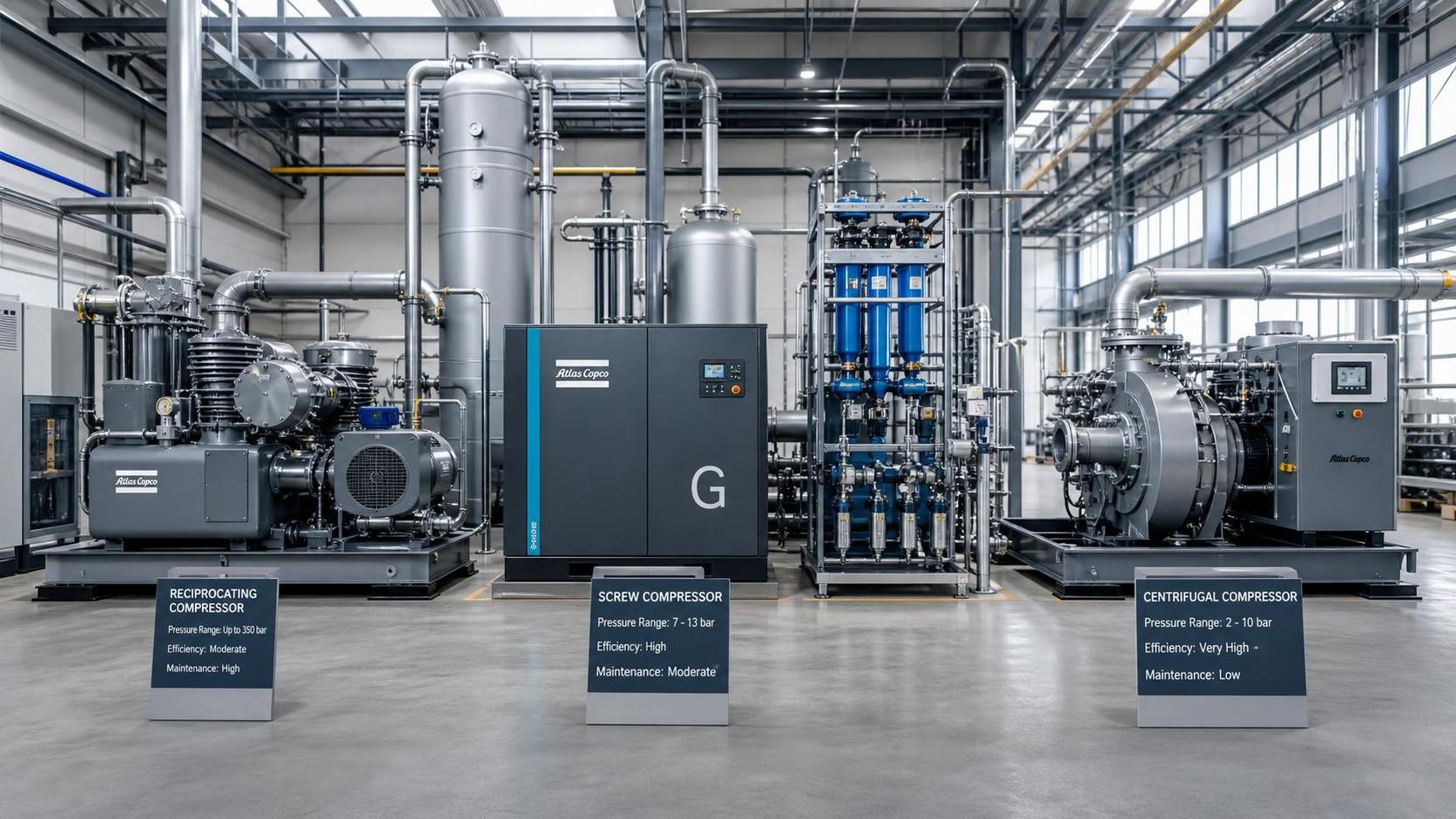
For variable-load applications, compare turndown behavior and control response, not just maximum output. A compressor arrangement with appropriate sequencing may handle a changing air demand more sensibly than one large fixed-speed unit, although the answer depends on the actual load profile and reliability requirements. In refrigeration and process cooling, part-load performance, minimum stable operating capacity, defrost or unloading behavior where applicable, and control coordination with pumps or cooling towers can affect both energy use and process stability.
Redundancy deserves the same level of scrutiny. “N+1” is often written into early project discussions as though it automatically solves availability risk. It does not. The backup unit must be capable of carrying the required duty at the relevant design condition, and the hydraulic, electrical, valve, and control arrangements must allow it to do so. A spare compressor that cannot be isolated without a prolonged shutdown, or a standby heat exchanger without accessible isolation valves, is redundancy on paper.
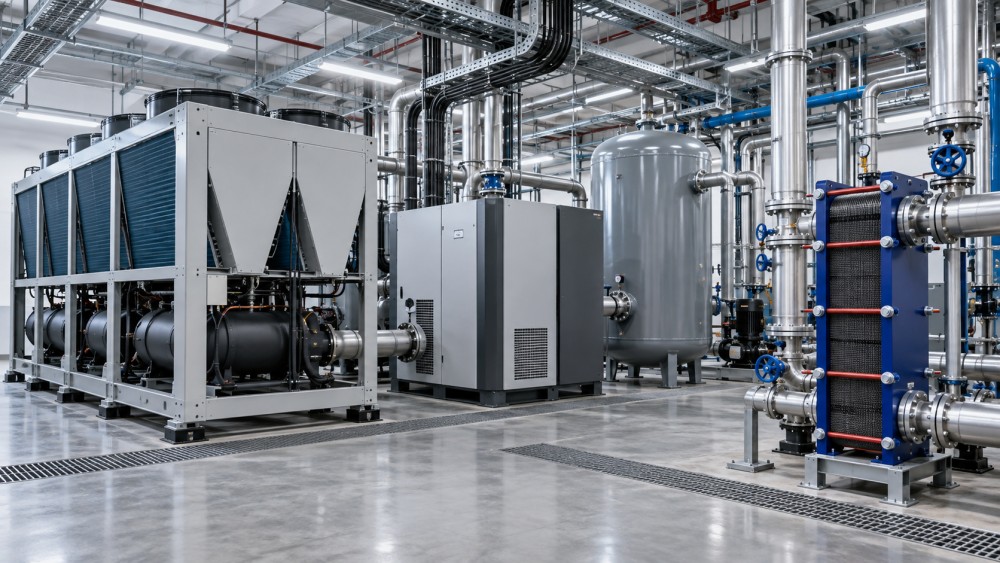
Compare proposed systems against normal load, peak load, low load, degraded performance conditions, and a credible single-failure scenario. This does not require elaborate modelling for every project, but it does require more discipline than comparing a single capacity figure.
Put Integration Risk Beside Equipment Performance
The equipment package is only one part of the installed system. Delays commonly arise at the interfaces: power supply, civil foundations, pipe routing, ventilation, drainage, water treatment, instrumentation, fire protection, control-network access, and process tie-ins. These elements may sit outside a supplier’s standard scope, yet they determine whether commissioning can begin.
A meaningful bid comparison should show the boundaries of responsibility. Who supplies field sensors? Who provides harmonic information or starting-current data for electrical design? Who is responsible for vibration isolation? Is a buffer vessel included, and if so, what is its basis of sizing? Are local control panels, variable-frequency drives, communication gateways, and supervisory-system integration included or merely possible?
Control architecture needs particular attention. Equipment may support common industrial protocols, but “supports” is not the same as “is integrated.” The project team should identify the required points list, alarms, interlocks, operating modes, remote start-stop logic, and responsibility for functional testing. A late debate over whether a vendor will provide a register map or whether the controls contractor will write the sequence can consume weeks that were never visible in the original equipment comparison.
Compare Lifecycle Exposure, Not Just Energy Claims
Energy efficiency should be part of every industrial system decision, but it should be examined in operating context. A quoted efficiency value can be useful, yet it does not automatically represent annual site performance. Loading pattern, control strategy, ambient conditions, pressure losses, heat rejection, maintenance condition, and operator practices all influence consumption.
The practical comparison is not “which option has the lowest stated power draw?” It is “which option has the most credible energy profile under our expected operating pattern, and what must be true for it to achieve that profile?” If a high-efficiency option depends on carefully managed condensing temperatures, excellent water treatment, or tightly controlled compressed-air pressure, those operating requirements belong in the decision record.
Also separate predictable cost from uncertain cost. Filters, lubricant, seals, refrigerant management, cleaning access, tube bundle servicing, calibration, and specialist labor can be more consequential than a small difference in purchase price. Oil-free compressed air systems, for example, may be essential where product contamination risk is unacceptable, but the comparison still needs to consider maintenance capability, filtration arrangement, dew-point requirements, and the process consequences of an air-quality deviation.
Environmental and regulatory exposure should be reviewed with the same caution. Refrigerant availability, local restrictions, noise limits, discharge conditions, pressure equipment obligations, and emissions requirements differ by location and application. Do not accept a generic statement that a system is “compliant.” Confirm what applies to the installation site, who owns the permitting inputs, and whether the proposed configuration creates any future service or replacement constraint.
Delivery Credibility Should Be Scored, Not Assumed
A supplier may offer a technically attractive solution but still introduce schedule risk through incomplete documentation, unclear manufacturing slots, limited local commissioning capacity, or long-lead subcomponents. The issue is not whether a supplier is “good” or “bad.” It is whether its delivery model fits the project’s critical path.
Ask for a project-specific deliverable schedule: general arrangement drawings, utility data, electrical documents, control documentation, quality records where required, factory testing information where applicable, shipping readiness, site supervision, commissioning, and training. The dates are useful, but the dependencies are more useful. If foundation drawings arrive after civil work must begin, or controls documentation appears after programming needs to start, the purchase order date will not protect the overall schedule.
Service support should be assessed before the award, not after the first alarm. Confirm the escalation path, normal spare-parts approach, availability of trained personnel, remote diagnostic capability if relevant, and the limits of supplier responsibility during start-up. A project should not rely on informal assurances when a clear support matrix can be included in the contract documents.
Use a Weighted Comparison, but Keep the Decision Visible
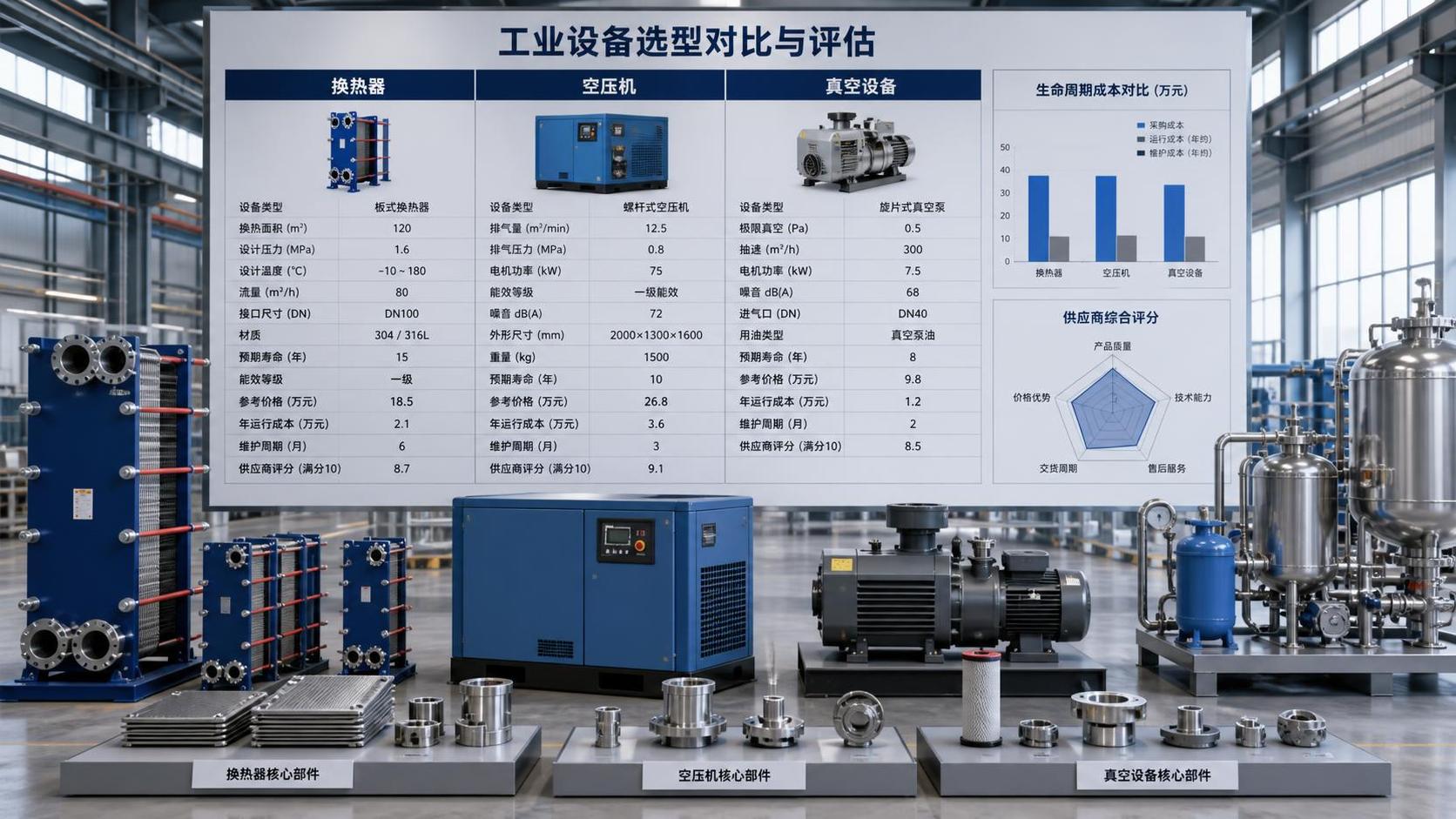
A weighted evaluation matrix is helpful when several disciplines are involved, provided it does not hide unresolved risks behind an average score. Weight technical duty, integration readiness, lifecycle exposure, schedule reliability, commercial clarity, and service capability according to the project’s actual priorities. A capacity-constrained production expansion may place more weight on delivery certainty and start-up support. A long-life utility upgrade may justify deeper attention to part-load operation and maintainability.
What should not be averaged away are disqualifying conditions. If one option cannot fit the available electrical supply, fails a required process purity condition, depends on an unapproved refrigerant strategy, or cannot meet the required installation date, mark it clearly. A low price or high technical score elsewhere does not erase a project-stopping constraint.
The strongest comparison files are readable by engineering, operations, finance, and procurement without forcing any one group to guess what another group meant. They retain the assumptions, show the scope gaps, and record what must be confirmed before release. That record becomes valuable when the project changes, as it often does.
Make Intelligence Part of the Technical Review
For thermal and compression projects, equipment selection sits at the intersection of thermodynamics, power consumption, process risk, and changing market conditions. GTC-Matrix follows this intersection through sector intelligence on industrial cooling, compressed air, vacuum processes, heat exchange, energy costs, refrigerant developments, and the evolving expectations around efficient manufacturing.
That perspective is useful because a comparison should not freeze the project in the assumptions of the first budget quotation. Changes in utility pricing, technology maturity, component availability, or environmental requirements may not reverse the decision, but they can change which questions need closer review. In practice, good project planning is less about predicting every disruption than identifying the assumptions that would matter most if they change.
Before committing capital, require every shortlisted solution to answer one final question: can this system be installed, integrated, tested, operated, and maintained under the conditions that actually exist at this site? When the answer is supported by defined duty data, interface ownership, realistic delivery evidence, and lifecycle thinking, project delays become easier to prevent long before the installation crew arrives.
Related News
- Which industrial solution comparison criteria prevent project delays?Author :

- What to evaluate before choosing a thermal process engineering supplierAuthor :

- How industrial utility systems affect energy costs in process plantsAuthor :

- What Data Is Needed to Assess Heat Recovery Decarbonization?Author :

- Can Waste Heat Recovery Support Carbon Neutrality Targets?Author :

- Is Compressor Heat Recovery Worth the Installation Cost?Author :

- What to verify before choosing a process separation technology supplierAuthor :

- When does process utilities engineering reduce project rework?Author :

- Where thermal efficiency optimization delivers the fastest savings in EuropeAuthor :

- What should you verify before selecting a heat transfer supplier?Author :

- What drives compressed air systems price for industrial projects?Author :

- How an industrial product knowledge comparison guide reduces sourcing riskAuthor :

- When does a procurement specification planning process reduce bid risk?Author :

- When does thermal system optimization for electronics reduce failure risk?Author :

- When high temperature process heating systems justify the higher energy costAuthor :

- How to compare sludge dewatering equipment by cake drynessAuthor :

- What to Check Before Sourcing a Gas Turbine for Distributed Power ProjectsAuthor :

- What drives industrial thermal systems price in large facility projectsAuthor :

- How to build an industrial product comparison chart that speeds up vendor selectionAuthor :

- Vacuum Technology Application Guide for Selecting the Right SystemAuthor :

- What Drives Vacuum Drying Cost in Industrial Procurement?Author :

- What Drives Compressed Air Pricing in Industrial Systems?Author :

- How Procurement Specification Planning Shapes Total Project CostAuthor :

- Compression Technology Guide: How to Compare Efficiency, Pressure Range, and Maintenance NeedsAuthor :

- How to Compare Industrial Separators by Throughput, Purity, and Maintenance LoadAuthor :

- How to Size a Compressed Air Equipment Receiver Tank for Stable PressureAuthor :

- Industrial Equipment Selection Guide: How to Compare Capacity, Duty Cycle, and Operating CostAuthor :

- How to Evaluate an Intellectualization Supplier for Industrial UpgradesAuthor :

- High-Efficiency Manufacturing: Cost Savings vs. Upgrade RiskAuthor :

- Thermal System Optimization Cost: What Drives ROI?Author :

- How to Plan Process Utilities for a Cleanroom Without Costly ReworkAuthor :

- How to Compare Process Heating Suppliers in MexicoAuthor :

- Food Processing Utilities: Common Sizing Mistakes That Raise Energy and Water UseAuthor :

- How to Build Procurement Specification Planning for Industrial EquipmentAuthor :

- OEM Cooperation for Industrial Equipment: Risks, Terms, and Cost PrioritiesAuthor :

- Specification-Oriented Product Resources That Speed Technical ReviewAuthor :