



What Drives Compressed Air Pricing in Industrial Systems?




Compressed air pricing is rarely about the compressor alone
In industrial purchasing, compressed air pricing can look deceptively simple at the quotation stage. One supplier offers a lower machine price, another promises better efficiency, a third pushes a full package with dryer, filters, controls, and service. On paper, all three may appear close. In operation, they can land very far apart.
That gap exists because compressed air is not a standalone product. It is a utility system shaped by thermodynamics, plant layout, duty cycle, required air quality, electricity cost, maintenance discipline, and even production volatility. Buyers who focus only on initial equipment price often end up paying through energy waste, pressure instability, poor dew point control, or avoidable downtime.
This is why the more useful question is not “What does a compressor cost?” but “What is driving the cost of delivering usable compressed air at my site?” Once procurement frames it that way, supplier comparisons become much sharper.
The biggest cost driver is usually electricity, not hardware
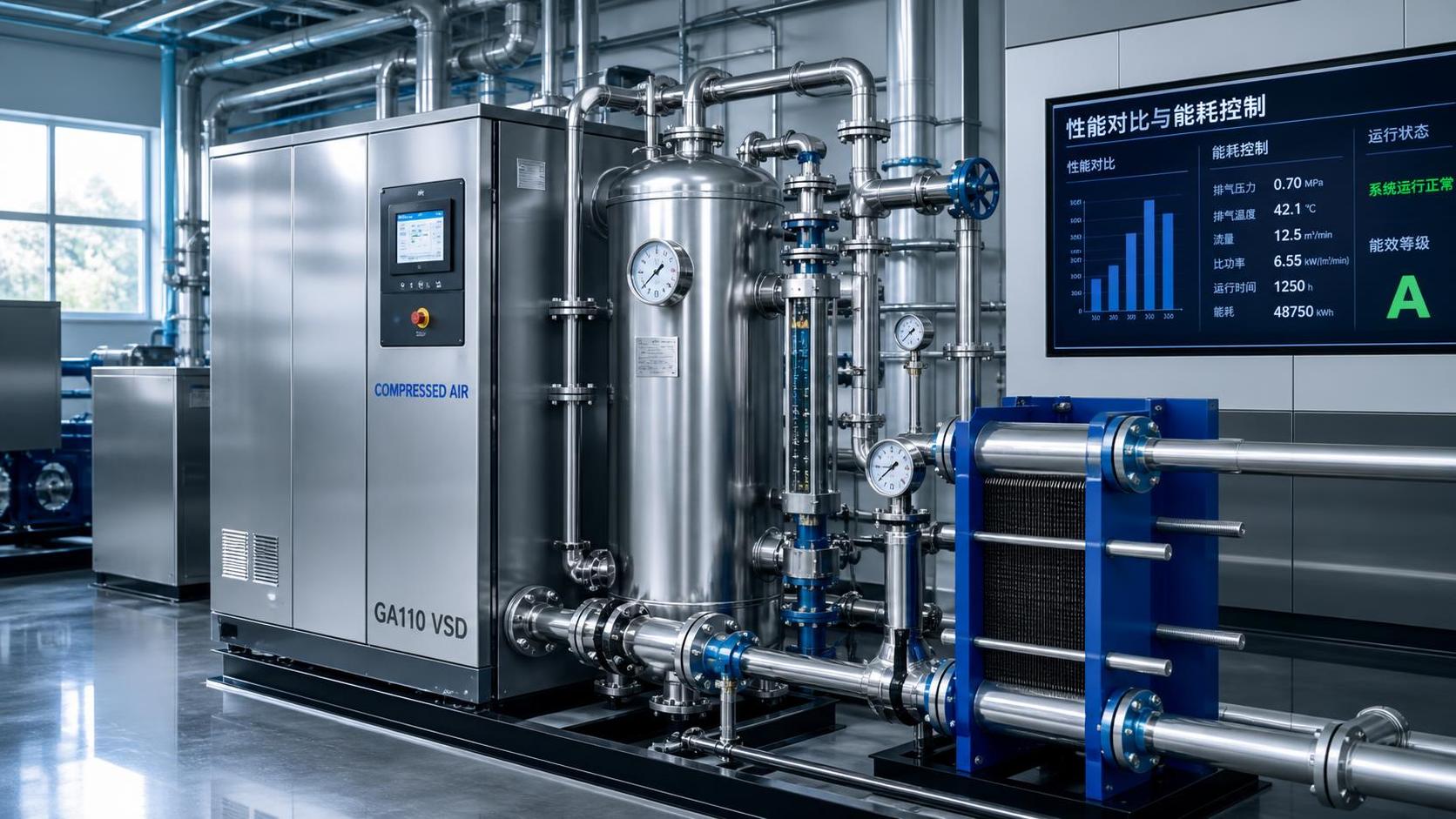
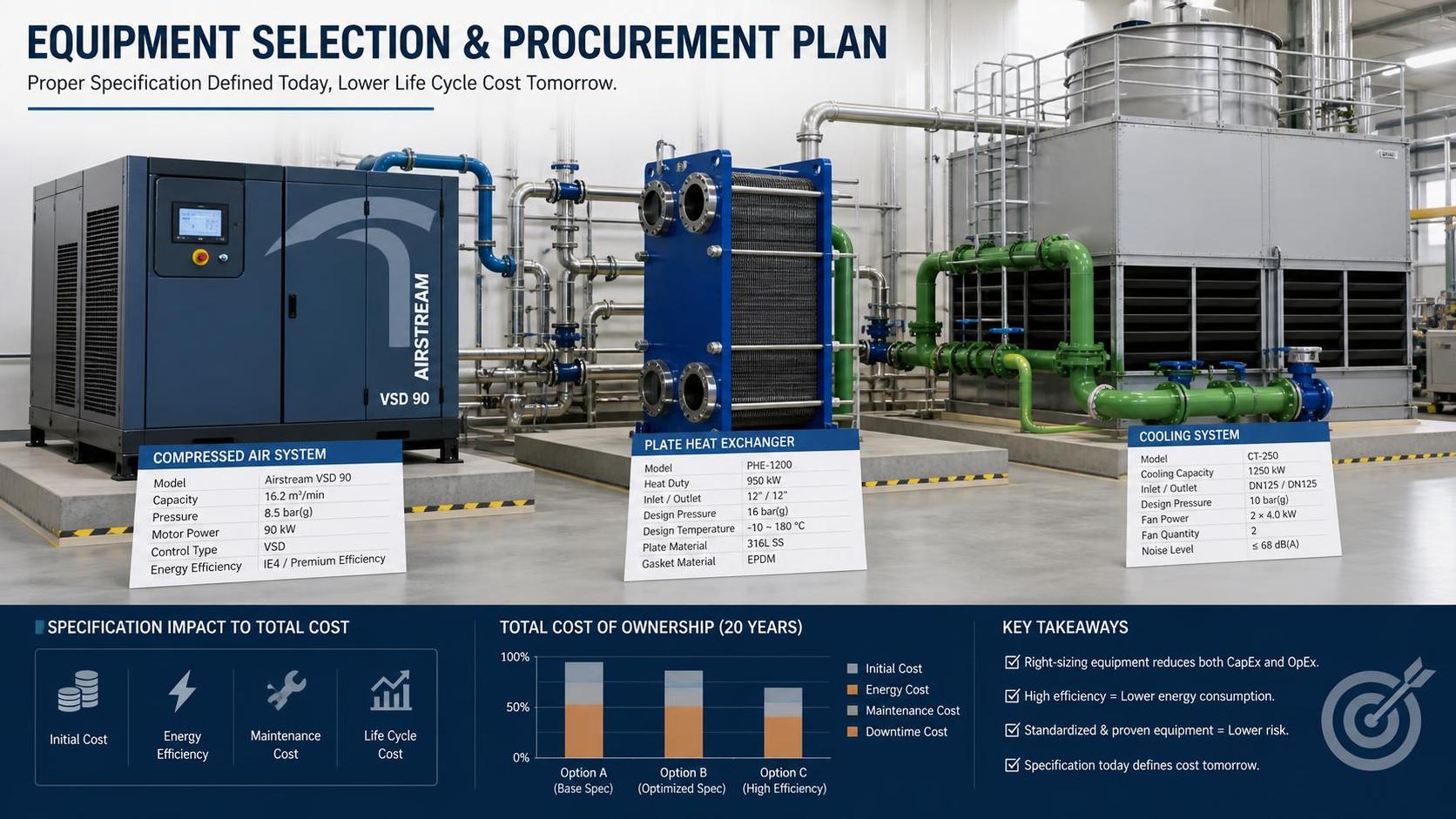
For most industrial systems, the purchase price of the compressor is only one part of the economics. Over the life of the asset, power consumption often dominates total cost. That is not a dramatic claim; it is simply how compressed air works. You are paying continuously to convert electrical energy into pressurized air, and every inefficiency in that conversion shows up month after month.
This matters in sourcing because a cheaper machine may not be cheaper air. A unit with lower package efficiency, poor turndown behavior, or oversized motor selection can cost more to operate than a higher-priced alternative. The effect gets stronger where electricity tariffs are high, where plants run multiple shifts, or where seasonal peaks force compressors into inefficient operating zones.
A practical mistake buyers make is comparing nameplate power without checking delivered flow at the actual working pressure. Another is accepting efficiency claims measured under conditions that do not match the plant. Pressure setpoint, inlet temperature, altitude, cooling conditions, and control logic all influence real performance. If the plant routinely needs higher pressure because the distribution network is poorly designed, the energy bill rises even if the compressor itself is technically sound.
System design changes the price of air more than many RFQs admit
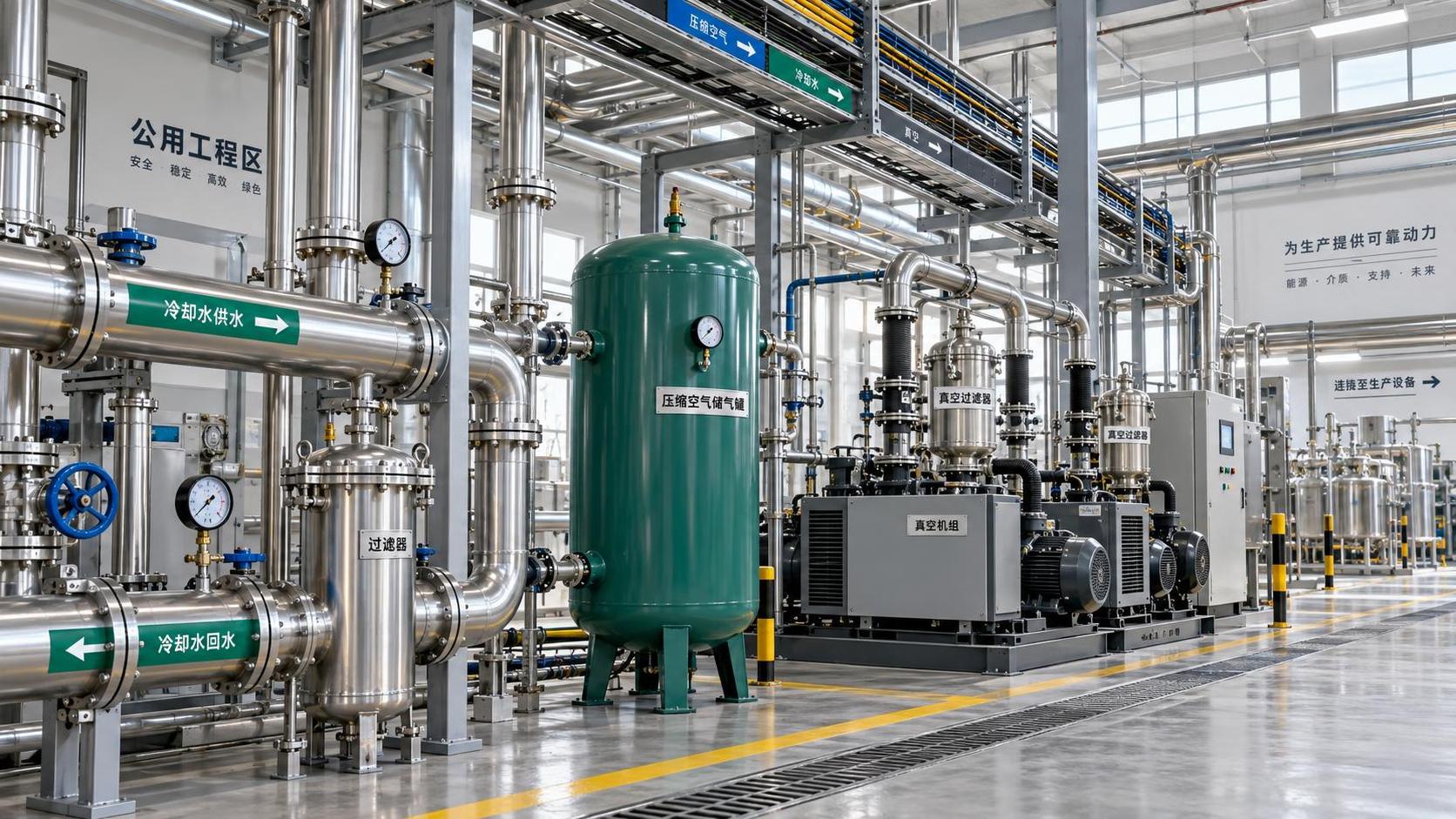
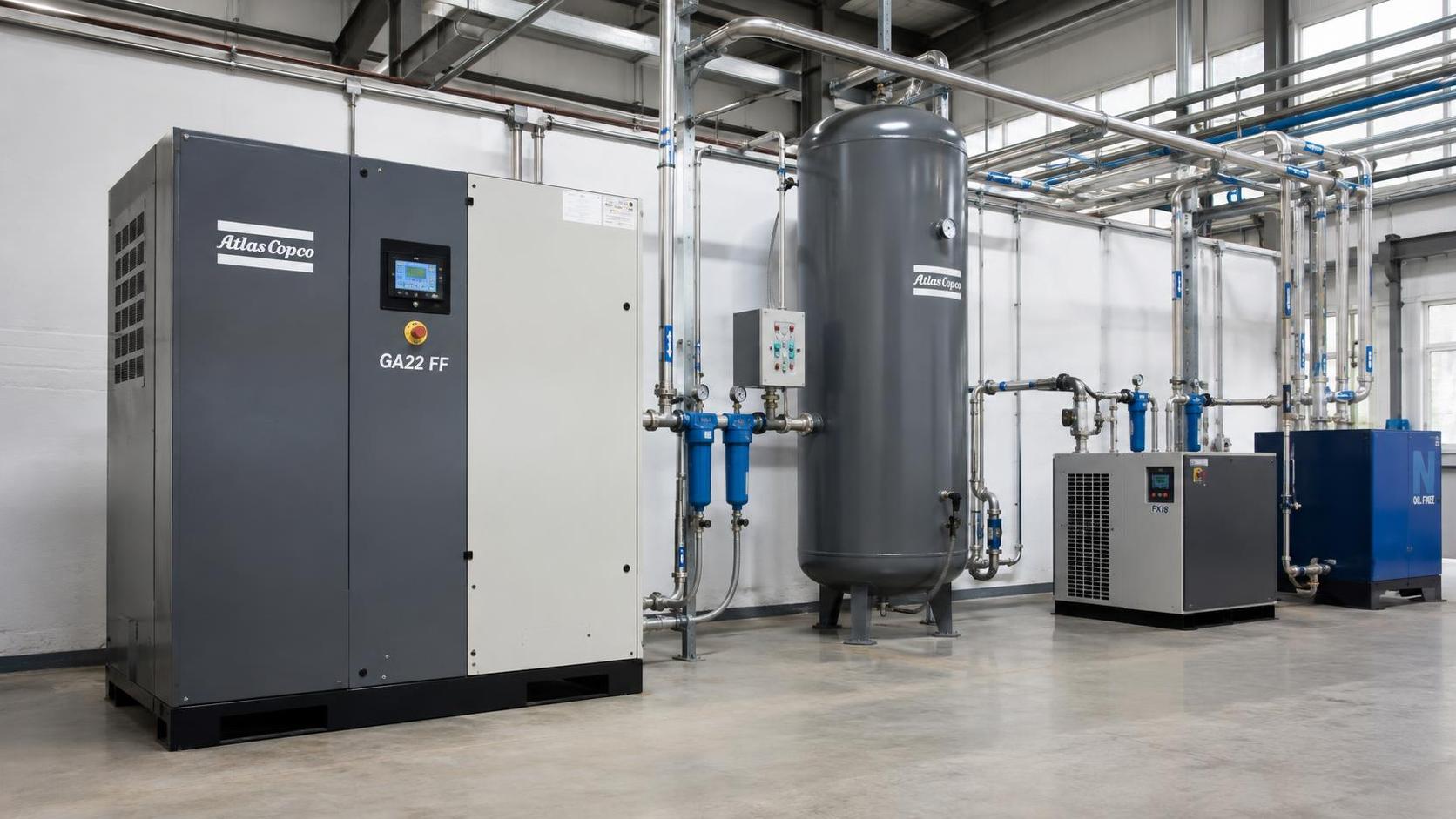
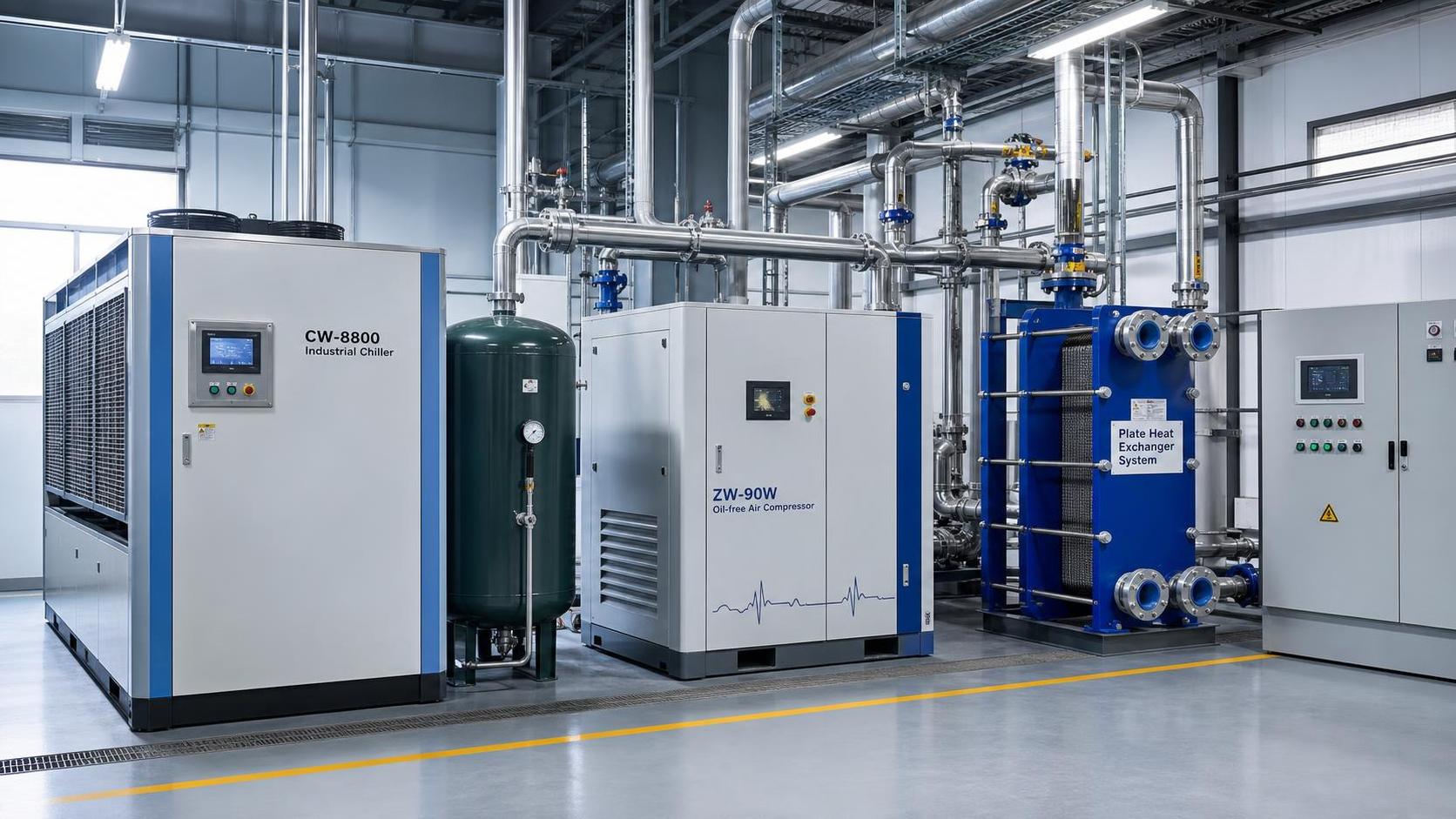
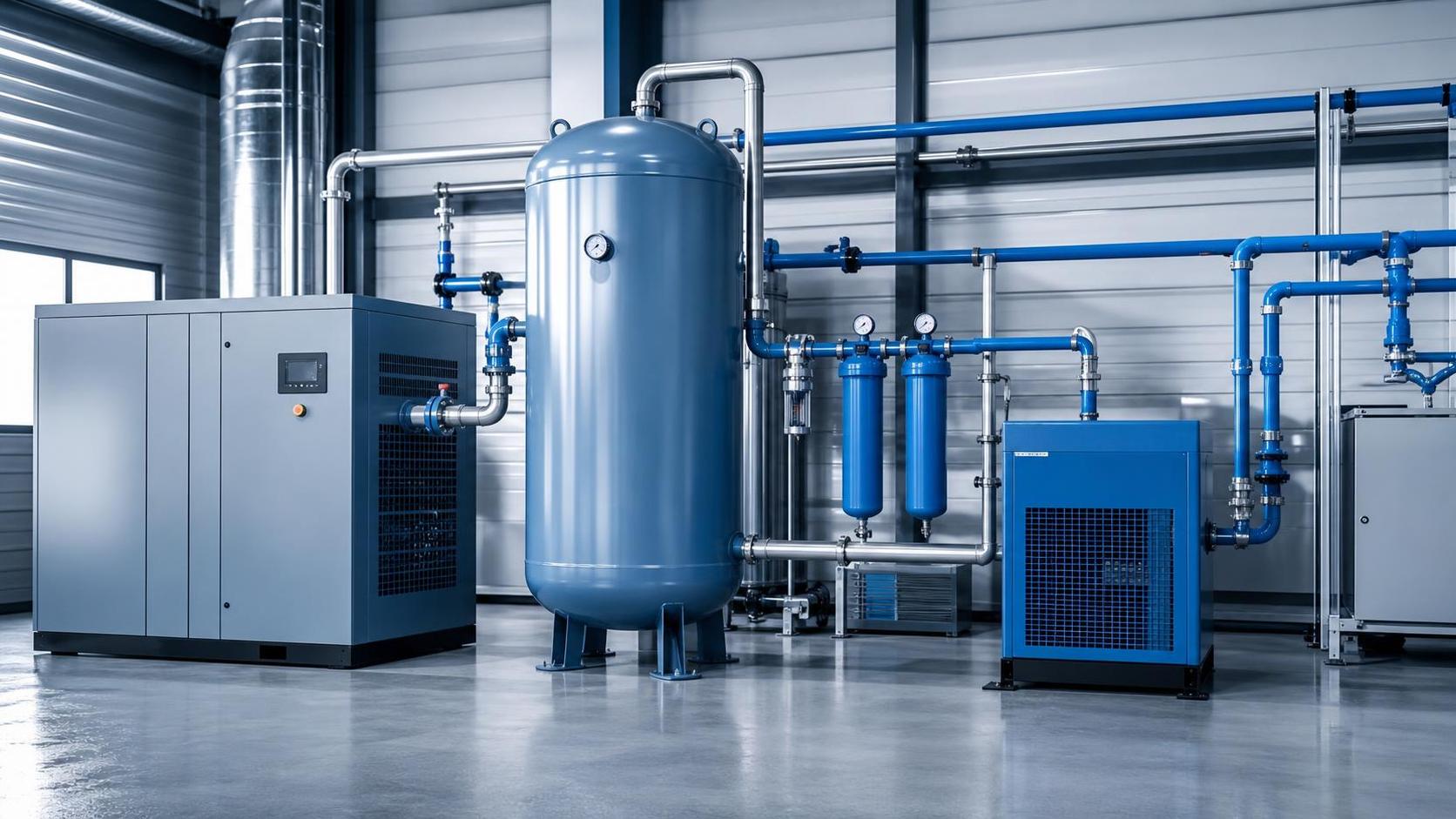
Two factories can buy similar compressors and still end up with very different compressed air pricing in practice. The reason is system design. Receiver sizing, pipe diameter, pressure drops across filters and dryers, control sequencing, and storage strategy all affect how much useful air reaches production.
This is where procurement and engineering need to stay aligned. If the RFQ only asks for compressor capacity and discharge pressure, suppliers will naturally optimize around the machine. But the site pays for the whole system. A narrow pipe header, a badly placed dryer, or a filter train with excessive differential pressure can force the compressor to work harder just to overcome avoidable losses.
In facilities with intermittent high demand, the wrong control strategy can be especially expensive. Fixed-speed units may cycle inefficiently. Variable-speed machines may be selected for flexibility but run outside their sweet spot if demand is flatter than expected. None of this is theoretical. These are common reasons why a “competitive” quote turns into a disappointing operating cost after commissioning.
Required air quality directly affects price
Not all compressed air has the same value because not all applications need the same cleanliness. A general manufacturing line, a food packaging process, and a semiconductor environment are not buying the same thing, even if the flow requirement looks similar. When air quality moves upward, pricing follows.
Oil-free compression, lower pressure dew point, tighter particulate control, and stricter monitoring all add cost. Sometimes that extra cost is justified; sometimes it is over-specified because the plant wants to “be safe.” Procurement should challenge that assumption carefully. Buying cleaner air than the process actually requires can lock the site into unnecessary capital and maintenance cost. But under-specifying air quality is worse, especially in pharma, electronics, and food operations where contamination risk is tied to product quality and compliance exposure.
The key is to define air quality at the point of use, not just at the compressor discharge. That distinction changes equipment selection, filtration stages, dryer type, and service burden. It also helps avoid broad language in tenders that lets suppliers interpret the requirement differently.
Compressor type and technology choice matter, but context matters more
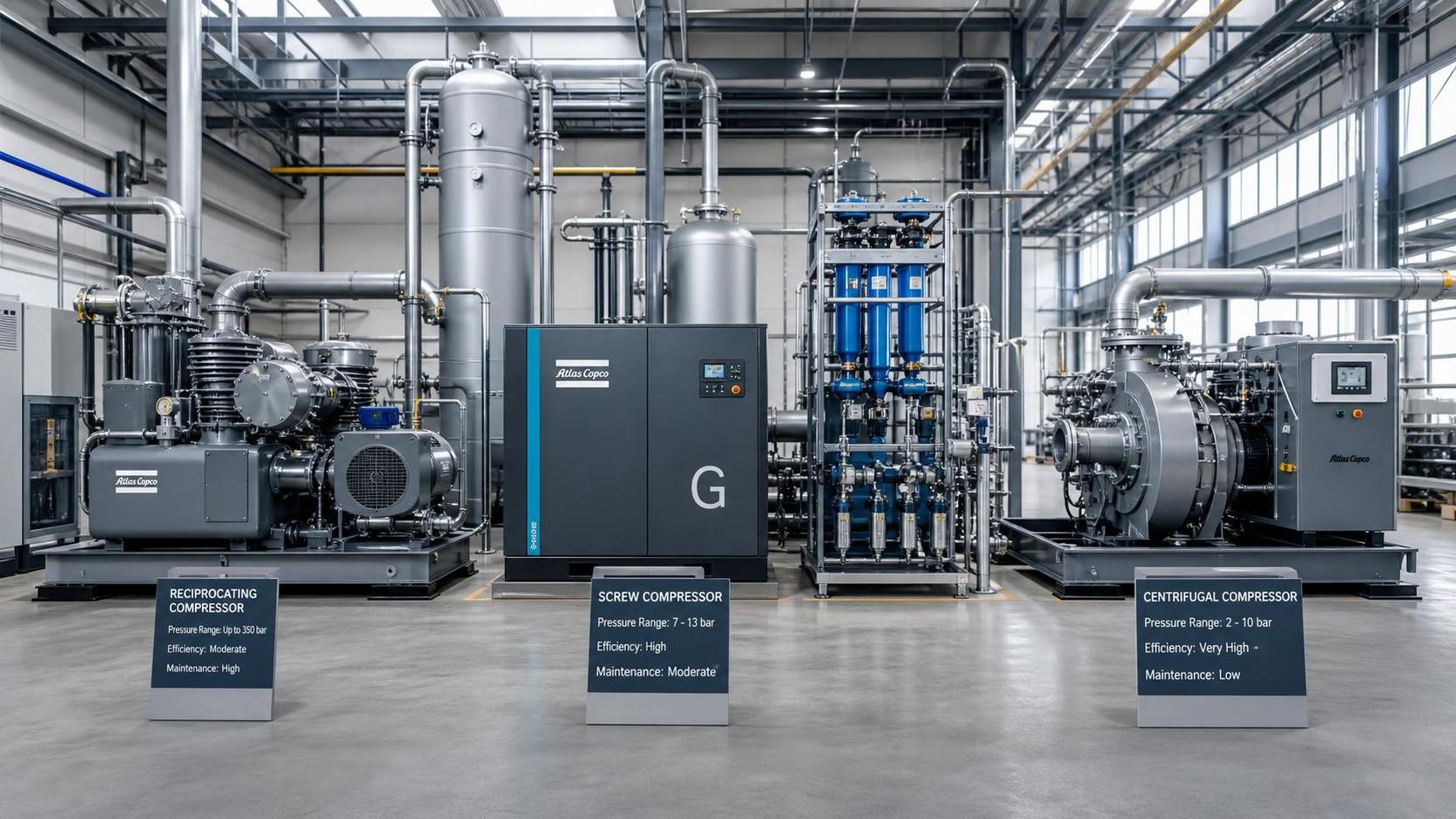
There is no universally “best value” compressor technology. Rotary screw, reciprocating, centrifugal, and oil-free variants each behave differently under different loads, pressures, and maintenance conditions. The trouble starts when selection is based on habit rather than duty profile.
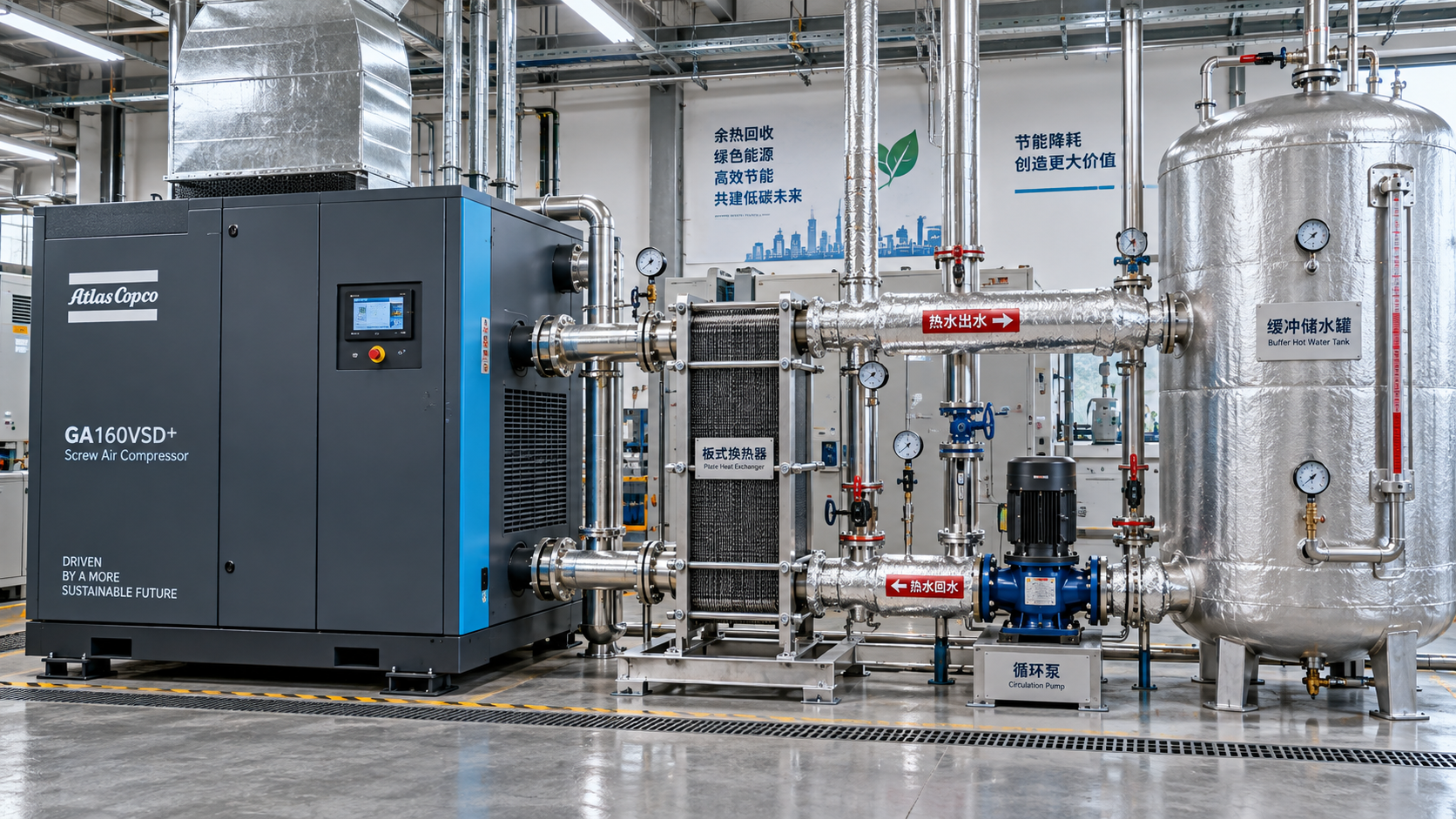
A plant with stable base load may get good economics from one configuration; a site with sharp swings, weekend idling, and expansion uncertainty may need another. Water-cooled versus air-cooled designs also shift the equation, especially where ambient conditions are harsh or cooling water quality is inconsistent. Noise limits, floor space, and heat recovery potential can further alter the value case.
This is one area where market intelligence helps more than vendor brochures. Platforms such as GTC-Matrix, which track developments across compression, cooling, vacuum, and heat exchange technologies, are useful because procurement decisions do not happen in a vacuum. The evolution of oil-free compression, changes in energy prices, and demand patterns in sectors that require pure power sources all influence which technology is actually economical over time.
Maintenance pricing is often underestimated at the buying stage
Compressed air systems rarely fail because someone misunderstood brochure language. They fail economically because maintenance assumptions were vague. Consumables, lubricant requirements, separator elements, dryer service, condensate management, controller updates, and local technician availability all shape the real cost of ownership.
A low entry price can hide expensive parts, short service intervals, or weak regional support. That does not mean the more expensive service contract is automatically better. It means buyers should ask a more disciplined set of questions: What is included? What is excluded? Are wear parts proprietary? What is the expected lead time for critical components? Can routine service be performed by in-house maintenance, or does it depend on authorized technicians?
This is also where downtime risk has to be priced honestly. In some factories, a few hours of air loss is manageable. In others, compressed air is so central to automation and process continuity that service responsiveness becomes part of the purchase decision, not an afterthought.
Location, supply chain, and compliance can move the quote more than expected
Industrial buyers have seen this in recent years: the same compressor package can be priced differently across regions due to freight, import duties, local assembly rules, voltage configuration, and after-sales coverage. Delivery time also has a cost. If a lower-priced machine adds months to the project schedule, it may not be the lower-cost option once production timing is considered.
Compliance requirements can push pricing up too. Depending on the market, documentation, electrical conformity, pressure vessel requirements, and site-specific safety expectations may add engineering work or accessory changes. These are not always visible in an early quote. Procurement should treat “subject to final specification” very seriously, especially for exported systems or multi-site standardization programs.
Energy and environmental policy can also have indirect effects. GTC-Matrix pays close attention to shifts in global energy costs and policy developments linked to thermal systems because they eventually influence equipment economics, supplier behavior, and project timing. Buyers do not need a grand policy thesis to act on that; they just need to recognize that utility pricing and regulatory direction can change the payback of one option versus another.
How to compare quotes without getting misled
A workable comparison usually starts with a tighter scope definition. Ask suppliers to quote against the same duty conditions, pressure requirement, air quality target, ambient assumptions, control philosophy, and included auxiliaries. If one package includes the dryer, filtration, receiver, installation support, and commissioning while another excludes them, the numbers are not comparable.
It also helps to separate cost into a few practical buckets:
- Initial package cost: compressor, treatment equipment, controls, and accessories
- Installation impact: piping modifications, electrical work, ventilation or cooling provisions
- Energy cost: expected operation at actual site load profile and pressure
- Service cost: planned maintenance, parts, and support availability
- Risk cost: downtime exposure, delayed delivery, or mismatch with process quality needs
That framework is not fancy, but it forces clarity. It also surfaces trade-offs early. A higher-efficiency package may justify itself quickly in a high-utilization plant. In a low-duty backup role, the same premium may not make sense.
A few buying mistakes show up again and again
One is buying extra pressure “just in case.” Every unnecessary pressure increase tends to raise operating cost, and often the real issue is pressure drop downstream, not insufficient compressor capability.
Another is oversizing. Plants often expect future growth, which is reasonable, but a system that spends most of its life underloaded can be an expensive insurance policy. Modular planning or staged capacity can be a better answer, depending on the site.
A third is treating compressed air quality as a generic checkbox. The right specification should follow process risk, not general preference. If the plant cannot clearly define the required dew point, oil content, or filtration level, that ambiguity usually returns later as cost.
What smart procurement teams look at before signing
The best buying decisions usually come from stepping back from the headline quote and asking one uncomfortable question: what will this system cost us when production is normal, not when the sales engineer is presenting? That means checking actual load behavior, site constraints, service conditions, and the quality requirement at end use.
Compressed air pricing is driven by a chain of decisions—technology choice, pressure strategy, air treatment level, controls, maintenance model, and local operating context. Miss one link and the system may still run, but it will not run economically.
For teams sourcing across multiple plants or regions, intelligence matters almost as much as equipment. Watching how energy costs, oil-free compression trends, and industrial demand patterns are shifting can improve timing and specification quality. That is where specialist industry observation, including the kind of cross-sector analysis GTC-Matrix develops around thermal and compression systems, becomes practical rather than abstract.
If a quote looks unusually cheap, the right response is not excitement. It is a better checklist.
Related News
- What to evaluate before choosing a thermal process engineering supplierAuthor :

- How industrial utility systems affect energy costs in process plantsAuthor :

- What Data Is Needed to Assess Heat Recovery Decarbonization?Author :

- Can Waste Heat Recovery Support Carbon Neutrality Targets?Author :

- Is Compressor Heat Recovery Worth the Installation Cost?Author :

- What to verify before choosing a process separation technology supplierAuthor :

- When does process utilities engineering reduce project rework?Author :

- Where thermal efficiency optimization delivers the fastest savings in EuropeAuthor :

- What should you verify before selecting a heat transfer supplier?Author :

- What drives compressed air systems price for industrial projects?Author :

- How an industrial product knowledge comparison guide reduces sourcing riskAuthor :

- When does a procurement specification planning process reduce bid risk?Author :

- When does thermal system optimization for electronics reduce failure risk?Author :

- When high temperature process heating systems justify the higher energy costAuthor :

- How to compare sludge dewatering equipment by cake drynessAuthor :

- What to Check Before Sourcing a Gas Turbine for Distributed Power ProjectsAuthor :

- What drives industrial thermal systems price in large facility projectsAuthor :

- How to build an industrial product comparison chart that speeds up vendor selectionAuthor :

- Vacuum Technology Application Guide for Selecting the Right SystemAuthor :

- What Drives Vacuum Drying Cost in Industrial Procurement?Author :

- What Drives Compressed Air Pricing in Industrial Systems?Author :

- How Procurement Specification Planning Shapes Total Project CostAuthor :

- Compression Technology Guide: How to Compare Efficiency, Pressure Range, and Maintenance NeedsAuthor :

- How to Compare Industrial Separators by Throughput, Purity, and Maintenance LoadAuthor :

- How to Size a Compressed Air Equipment Receiver Tank for Stable PressureAuthor :

- Industrial Equipment Selection Guide: How to Compare Capacity, Duty Cycle, and Operating CostAuthor :

- How to Evaluate an Intellectualization Supplier for Industrial UpgradesAuthor :

- High-Efficiency Manufacturing: Cost Savings vs. Upgrade RiskAuthor :

- Thermal System Optimization Cost: What Drives ROI?Author :

- How to Plan Process Utilities for a Cleanroom Without Costly ReworkAuthor :

- How to Compare Process Heating Suppliers in MexicoAuthor :

- Food Processing Utilities: Common Sizing Mistakes That Raise Energy and Water UseAuthor :

- How to Build Procurement Specification Planning for Industrial EquipmentAuthor :

- OEM Cooperation for Industrial Equipment: Risks, Terms, and Cost PrioritiesAuthor :

- Specification-Oriented Product Resources That Speed Technical ReviewAuthor :

- Industrial Equipment Selection Guide: A Practical Buyer ChecklistAuthor :