



What to verify before choosing a process separation technology supplier




What to Verify Before Choosing a Process Separation Technology Supplier
Choosing a process separation technology supplier is more than comparing equipment specifications or initial pricing. Procurement teams must verify technical capability, efficiency, compliance, lifecycle service, and operating performance.
The strongest purchasing decision comes from treating separation equipment as a production-risk, quality-control, and energy-management investment rather than a standalone capital purchase.
Buyers should require evidence that a supplier understands their feed conditions, purity targets, utility constraints, maintenance capacity, regulatory exposure, and future production plans.
This guide helps procurement professionals evaluate process separation technology suppliers with a practical, evidence-based framework that supports reliable long-term value and defensible sourcing decisions.
Start With Process Fit, Not the Equipment Brochure
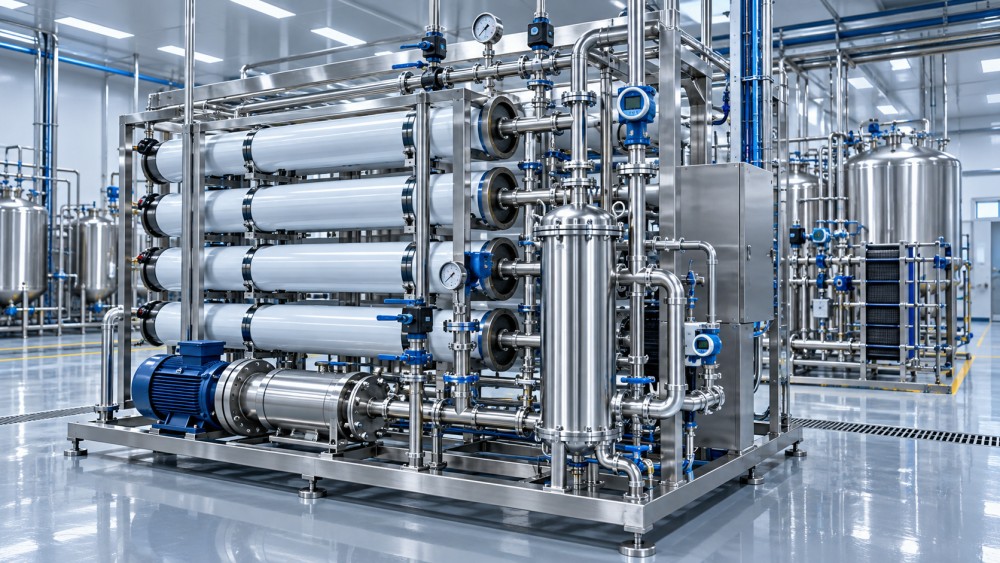
The first verification is whether the supplier can solve the actual separation duty, including variable feed composition, contamination risks, operating temperatures, pressures, and required product recovery.
Process separation technologies include filtration, centrifugation, membrane systems, adsorption, distillation, evaporation, crystallization, extraction, and drying. Each technology carries different technical and commercial risks.
A capable supplier should ask detailed questions before proposing equipment. Generic recommendations made without feed data, mass balances, or operating constraints should be treated cautiously.
Ask the supplier to explain why its proposed technology is preferable to alternatives. The answer should address selectivity, yield, energy demand, footprint, reliability, and cleaning requirements.
Verify that the design basis reflects both normal and upset conditions. A system sized only for ideal operating parameters may fail during feed variation or peak production periods.
For continuous processes, confirm required turndown capability. Plants rarely operate permanently at nameplate capacity, and poor performance at lower throughput can reduce quality and increase waste.
Procurement teams should obtain a documented process guarantee covering throughput, separation efficiency, product purity, recovery rate, pressure drop, and utility consumption where applicable.
When guarantees depend on feed quality, ensure the acceptance limits are clearly defined. Broad exclusions can weaken supplier accountability and create disputes during commissioning.
Verify Engineering Depth and Application Experience
Experience in a broad equipment category is not enough. Buyers should verify that the process separation technology supplier has delivered comparable systems for similar materials and operating conditions.
Request references that match the project’s industry, scale, product sensitivity, contamination requirements, and geographic regulatory environment. Recent installations are more useful than legacy showcase projects.
Ask how many comparable units are operating today, not merely sold. Installed equipment may have been modified, bypassed, replaced, or operated below the supplier’s claimed performance range.
Reference discussions should cover commissioning quality, achieved performance, uptime, spare-parts availability, response speed, and whether operating costs matched the original proposal assumptions.
Review the supplier’s internal engineering resources. Strong projects typically involve process engineers, mechanical specialists, automation personnel, materials experts, and field-service teams from early design stages.
Determine whether critical engineering work is performed in-house or outsourced. External specialists are not inherently problematic, but responsibilities and technical ownership must remain unambiguous.
For complex applications, require laboratory tests, pilot trials, or computational process modeling. Suppliers should translate test results into transparent scale-up assumptions and documented design margins.
Pay particular attention to scale-up risk when material behavior is non-linear. Fouling, viscosity changes, emulsion stability, crystal formation, and membrane polarization can alter performance dramatically.
Examine Materials, Hygienic Design, and Contamination Control
Material selection directly affects equipment life, product quality, safety, and maintenance expense. Verify compatibility with feed chemicals, cleaning agents, operating temperatures, and expected corrosion mechanisms.
Stainless steel grades should not be accepted as a generic statement. Request specifications for wetted surfaces, seals, gaskets, coatings, weld treatments, and instrumentation connections.
Where corrosive, abrasive, sterile, or high-purity media are involved, evaluate the supplier’s documented experience with appropriate alloys, polymers, surface finishes, and sealing technologies.
Food, beverage, pharmaceutical, biotechnology, and semiconductor buyers should inspect hygienic design details. Dead legs, poor drainability, inaccessible seals, and rough surfaces can create serious quality risks.
Confirm whether the system supports clean-in-place, sterilize-in-place, or validated manual cleaning procedures. Cleaning performance must be demonstrated for the specific product and fouling profile.
For powder, dust, or combustible materials, ask about containment, grounding, explosion protection, and dust-handling provisions. These requirements should be integrated into the equipment design.
Validate documentation for material traceability, weld records, pressure testing, passivation, surface roughness, and non-destructive testing when those records are relevant to the application.
Consider product cross-contamination during changeovers. A lower-cost system may become expensive if it requires lengthy cleaning, excessive product flushes, or frequent replacement of consumable components.
Calculate Energy Use Across the Full Operating Life
Initial equipment price often represents only a fraction of lifecycle cost. Separation systems can consume substantial electricity, steam, chilled water, compressed air, vacuum power, and cleaning utilities.
Ask suppliers to provide a transparent utility model at normal throughput, minimum throughput, maximum throughput, and expected annual operating hours. Avoid relying on a single design-point figure.
For thermal separation processes, verify heat integration opportunities. Recovering waste heat, optimizing condensate return, or using heat pumps may materially change project economics.
For vacuum, compressed air, and membrane systems, evaluate how pressure losses and leakage affect energy demand. Small inefficiencies can generate significant annual operating costs.
Compare suppliers using annualized cost rather than purchase price alone. The calculation should include energy, consumables, labor, maintenance, downtime, cleaning chemicals, and disposal costs.
Request assumptions behind every economic claim, including energy tariffs, utility temperatures, equipment availability, product yield, and anticipated replacement intervals for filters, membranes, or adsorbents.
Suppliers should quantify expected performance degradation over time. Membrane fouling, heat-transfer losses, media exhaustion, and mechanical wear may alter operating costs after initial startup.
Energy efficiency claims should be connected to measurable site conditions. A promising benchmark from another plant may not translate when utilities, climate, feed quality, or production schedules differ.
Check Compliance, Safety, and Documentation Before Award
Compliance gaps can delay installation, prevent acceptance, and create costly redesigns. Confirm applicable pressure-equipment, electrical, machinery, environmental, and workplace-safety requirements before final supplier selection.
The required certification pathway may vary by project location and end-use market. Buyers should identify responsibilities for CE marking, ASME compliance, ATEX, UL, PED, and local approvals.
For regulated production environments, verify the supplier’s documentation package early. Missing drawings, certificates, validation support, and quality records can create schedule problems during qualification.
Ask whether the supplier has experience supporting factory acceptance tests, site acceptance tests, IQ, OQ, PQ, or customer-specific validation protocols where these are required.
Environmental compliance also deserves review. Assess expected emissions, wastewater streams, refrigerant use, solvent recovery performance, noise levels, and disposal requirements for spent process media.
Safety reviews should cover pressure relief, emergency shutdown, hazardous-area classification, interlocks, guarding, access platforms, lifting points, and safe isolation for maintenance activities.
Do not assume packaged equipment includes every necessary safety component. Review the battery limits carefully, especially where the system interfaces with utilities, controls, tanks, and downstream equipment.
A reliable supplier will identify compliance uncertainties rather than hiding them. Early transparency is valuable because it enables the buyer to manage approvals and budget contingencies realistically.
Assess Automation, Data Visibility, and Integration Capability
Separation performance depends increasingly on controls, sensors, and operating data. Verify that the supplier can integrate equipment with the plant’s automation architecture and cybersecurity requirements.
Request a preliminary control philosophy that defines start-up, shutdown, cleaning, alarms, permissives, recipe management, emergency responses, and handling of off-specification product conditions.
Instrumentation selection should support both process control and maintenance decisions. Critical measurements may include differential pressure, conductivity, turbidity, flow, temperature, vibration, and product composition.
Confirm communication protocols, control-panel standards, remote-access policies, historian requirements, and ownership of operating data. These details are often overlooked until late project stages.
Where remote monitoring is offered, evaluate its practical support value. Useful services provide actionable diagnostics, trend analysis, and defined response procedures rather than dashboards alone.
Buyers should understand how the equipment behaves when an instrument fails. Fail-safe modes, manual operation options, redundant sensors, and alarm priorities affect both safety and plant availability.
For high-value production lines, ask whether predictive maintenance analytics have been proven on comparable equipment. Marketing claims should be supported by documented failure-detection outcomes.
Automation scope must align with staffing reality. An advanced system that requires specialist interpretation can undermine expected benefits if site personnel lack appropriate training and support.
Test Service Capacity and Spare-Parts Resilience
A process separation technology supplier should be evaluated as a long-term service partner. Equipment availability after commissioning matters more than a smooth sales process before purchase order placement.
Verify local or regional service coverage, including field-engineer availability, response-time commitments, language capability, and access to qualified subcontractors for specialist maintenance tasks.
Ask for recommended preventive-maintenance plans with labor estimates, intervals, required tools, critical consumables, and expected replacement parts over at least five years.
Review the critical spare-parts list carefully. Identify long-lead items, proprietary components, single-source dependencies, and items that should be held at the plant to protect uptime.
Suppliers should explain their inventory strategy and lead-time performance. A technically excellent machine becomes a production liability if essential seals, drives, membranes, or controls are unavailable.
Clarify warranty terms beyond their headline duration. Important details include performance conditions, exclusions for feed changes, labor coverage, travel costs, and responsibilities for corrective modifications.
Training should cover operators, maintenance technicians, process engineers, and safety personnel. Confirm the format, duration, language, manuals, practical exercises, and refresher-training options.
Ask how the supplier manages obsolescence. Controls hardware, sensors, software, and proprietary consumables may require upgrades during the equipment’s service life.
Use Commercial Evaluation to Expose Hidden Project Risk
A strong commercial comparison separates scope, assumptions, exclusions, and risk allocation. A low bid can conceal missing auxiliaries, weak guarantees, narrow commissioning support, or unrealistic delivery commitments.
Build a weighted evaluation matrix that includes process performance, lifecycle cost, compliance, delivery confidence, service readiness, reference quality, technical transparency, and contractual strength.
Weight the criteria according to production risk. For a high-purity pharmaceutical process, validation and contamination control may deserve more weight than minor capital-cost differences.
For energy-intensive industrial systems, utility consumption and reliability may dominate the decision. Procurement should involve operations, engineering, maintenance, quality, and finance before final scoring.
Require suppliers to identify all customer-supplied items. Utility connections, foundations, structural steel, cranes, insulation, drainage, controls integration, and commissioning consumables can materially affect total cost.
Review delivery schedules against actual manufacturing capacity and component supply conditions. Ask which critical parts are fabricated internally, sourced externally, and subject to current lead-time volatility.
Commercial terms should include clear milestone payments tied to meaningful deliverables. Avoid payment structures that leave limited leverage before factory testing, delivery, or demonstrated performance.
Contract language should define remedies when guaranteed results are missed. Practical remedies may include retesting, modifications, liquidated damages, extended support, or equipment replacement under stated conditions.
Make the Final Selection With Evidence, Not Assumptions
The best process separation technology supplier is not necessarily the supplier with the lowest quotation or the most impressive presentation. It is the supplier that reduces operational uncertainty.
Procurement teams should select partners that demonstrate process understanding, measurable performance, transparent lifecycle economics, strong compliance discipline, practical service capacity, and clear contractual accountability.
Before award, confirm that every major claim is supported by data, references, test results, specifications, or enforceable guarantees. Evidence-based verification protects quality, uptime, and investment returns.
A disciplined supplier evaluation process gives buyers a clearer view of long-term value, helping industrial facilities improve separation performance while controlling energy, maintenance, compliance, and production risks.
Related News
- What to verify before choosing a process separation technology supplierAuthor :

- When does process utilities engineering reduce project rework?Author :

- Where thermal efficiency optimization delivers the fastest savings in EuropeAuthor :

- What should you verify before selecting a heat transfer supplier?Author :

- What drives compressed air systems price for industrial projects?Author :

- How an industrial product knowledge comparison guide reduces sourcing riskAuthor :

- When does a procurement specification planning process reduce bid risk?Author :

- When does thermal system optimization for electronics reduce failure risk?Author :

- When high temperature process heating systems justify the higher energy costAuthor :

- How to compare sludge dewatering equipment by cake drynessAuthor :

- What to Check Before Sourcing a Gas Turbine for Distributed Power ProjectsAuthor :

- What drives industrial thermal systems price in large facility projectsAuthor :

- How to build an industrial product comparison chart that speeds up vendor selectionAuthor :

- Vacuum Technology Application Guide for Selecting the Right SystemAuthor :

- What Drives Vacuum Drying Cost in Industrial Procurement?Author :

- What Drives Compressed Air Pricing in Industrial Systems?Author :

- How Procurement Specification Planning Shapes Total Project CostAuthor :

- Compression Technology Guide: How to Compare Efficiency, Pressure Range, and Maintenance NeedsAuthor :

- How to Compare Industrial Separators by Throughput, Purity, and Maintenance LoadAuthor :

- How to Size a Compressed Air Equipment Receiver Tank for Stable PressureAuthor :

- Industrial Equipment Selection Guide: How to Compare Capacity, Duty Cycle, and Operating CostAuthor :

- How to Evaluate an Intellectualization Supplier for Industrial UpgradesAuthor :

- High-Efficiency Manufacturing: Cost Savings vs. Upgrade RiskAuthor :

- Thermal System Optimization Cost: What Drives ROI?Author :

- How to Plan Process Utilities for a Cleanroom Without Costly ReworkAuthor :

- How to Compare Process Heating Suppliers in MexicoAuthor :

- Food Processing Utilities: Common Sizing Mistakes That Raise Energy and Water UseAuthor :

- How to Build Procurement Specification Planning for Industrial EquipmentAuthor :

- OEM Cooperation for Industrial Equipment: Risks, Terms, and Cost PrioritiesAuthor :

- Specification-Oriented Product Resources That Speed Technical ReviewAuthor :

- Industrial Equipment Selection Guide: A Practical Buyer ChecklistAuthor :

- How to Compare Industrial Energy Management Systems by ROIAuthor :

- How to Evaluate a Deaerators Supplier for Long-Term Plant ReliabilityAuthor :
![]()
- How to Evaluate a Vacuum Technology Manufacturer in 2026Author :

- Thermal Efficiency Optimization Software: When the ROI Justifies DeploymentAuthor :

- How to Evaluate Application-Specific Compression Solutions by Throughput and Energy UseAuthor :