Compression Technology Guide: How to Compare Efficiency, Pressure Range, and Maintenance Needs




This compression technology guide helps technical evaluators compare system efficiency, pressure range, and maintenance demands with greater clarity. In industries where energy cost, reliability, and process stability directly affect competitiveness, choosing the right compression solution requires more than basic specifications. This article outlines the key factors, trade-offs, and evaluation logic needed to support informed, performance-driven decisions.
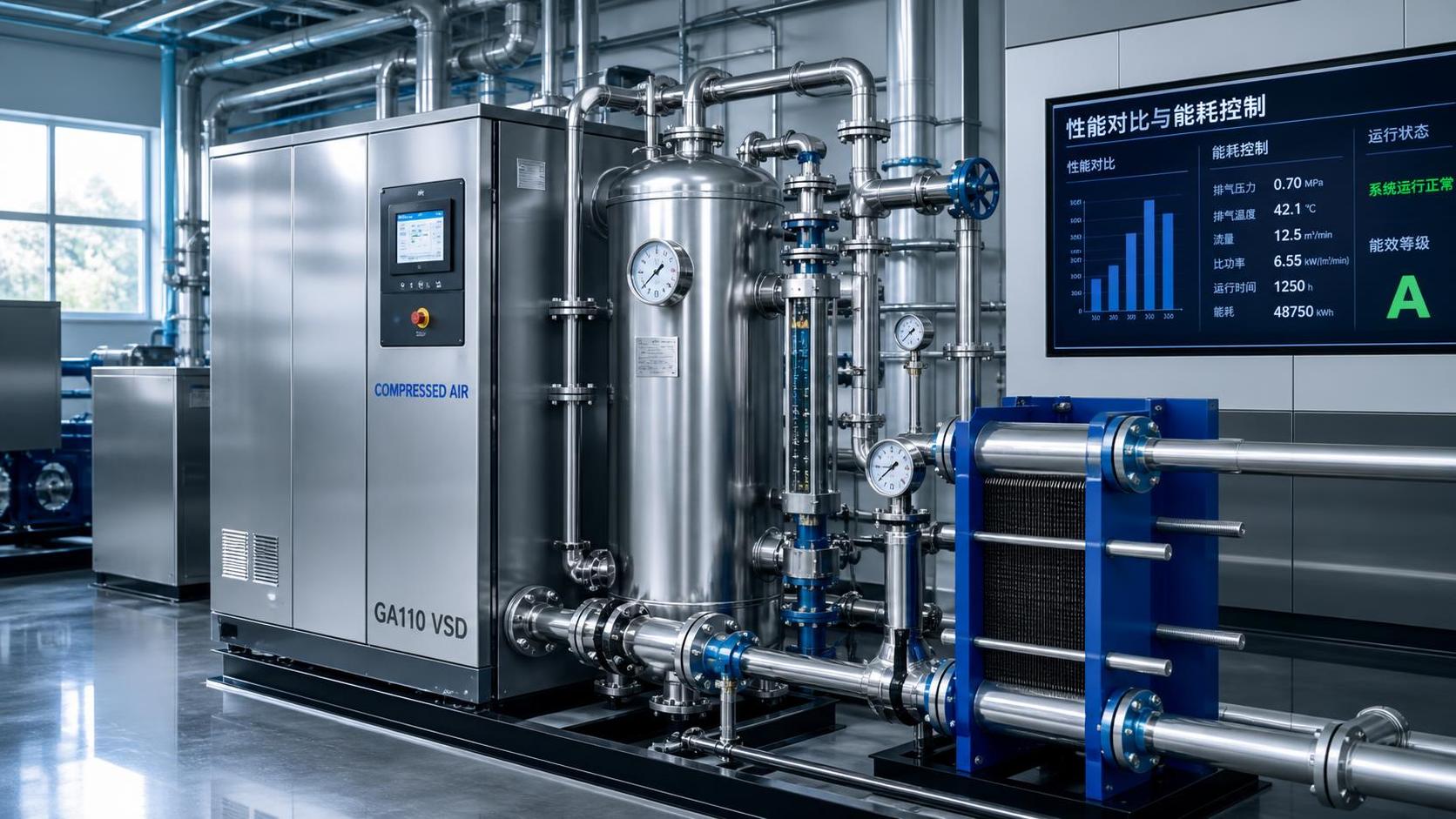
Compression equipment is often assessed through three headline parameters: efficiency, discharge pressure, and service interval. In practice, those numbers are only useful when read in context. A compressor that looks efficient at full load may perform poorly under variable demand. A machine that reaches the required pressure may do so with unacceptable heat load, oil carryover risk, or downstream drying requirements. A low-maintenance design on paper may become maintenance-intensive once dust, ambient temperature, start-stop frequency, or gas purity requirements are considered.
For technical evaluators, the real task is not to identify the “best” compressor in general, but to determine which compression approach fits the duty profile, utility economics, process sensitivity, and maintenance reality of the site.
Why headline efficiency figures are often misleading
In industrial compression, efficiency is rarely a single number. Vendors may reference motor efficiency, specific power, isentropic efficiency, volumetric efficiency, or package efficiency. Each metric has value, but none should be accepted in isolation.
For plant-level comparison, specific energy consumption is usually more actionable than abstract efficiency claims. Technical teams often compare kW per unit of delivered flow at a defined pressure, temperature, and inlet condition. Even then, evaluators need to ask a more important question: under what load profile was this measured?
A compressor operating continuously near its design point behaves very differently from one serving a fluctuating process. This is where many selection errors begin. Fixed-speed systems can look attractive in a steady-duty application, yet become expensive in facilities with frequent partial-load operation. Variable-speed units can improve real operating efficiency, but only when the duty cycle justifies their control advantages and when system design prevents instability, excessive cycling, or poor turndown behavior.
Another common blind spot is auxiliary energy. Cooling fans, oil pumps, integrated dryers, condensate treatment, and control systems all affect total package consumption. In compressed air systems especially, leakage and artificial demand can erase any theoretical gain from choosing a more efficient machine. From an evaluation standpoint, system efficiency matters more than compressor-only efficiency.
That is why serious comparison should be based on a normalized operating case:
- required flow range, not only rated flow;
- actual discharge pressure at the point of use;
- ambient temperature and altitude;
- cooling method and expected seasonal variation;
- part-load operating hours versus full-load hours;
- downstream treatment requirements.
Without those conditions, efficiency claims are difficult to compare across technologies such as reciprocating, rotary screw, centrifugal, scroll, or claw compressors.
Pressure range should be matched to process behavior, not just nameplate need
Pressure range is another area where over-specification is common. Many systems are selected with generous pressure margins “for safety,” but that decision can create a permanent energy penalty. In compressed air applications, even a modest increase in system pressure can materially raise power consumption while also increasing leakage losses and stress on downstream components.
The right question is not simply “What pressure can the compressor deliver?” but “What pressure must the process actually see under worst-case conditions?” Those are different things.
Technical evaluators usually need to separate four layers of pressure requirement:
- minimum pressure needed by the end-use process;
- distribution losses across piping, filters, dryers, and separators;
- pressure stability requirement during transient demand;
- future expansion margin that is realistic rather than speculative.
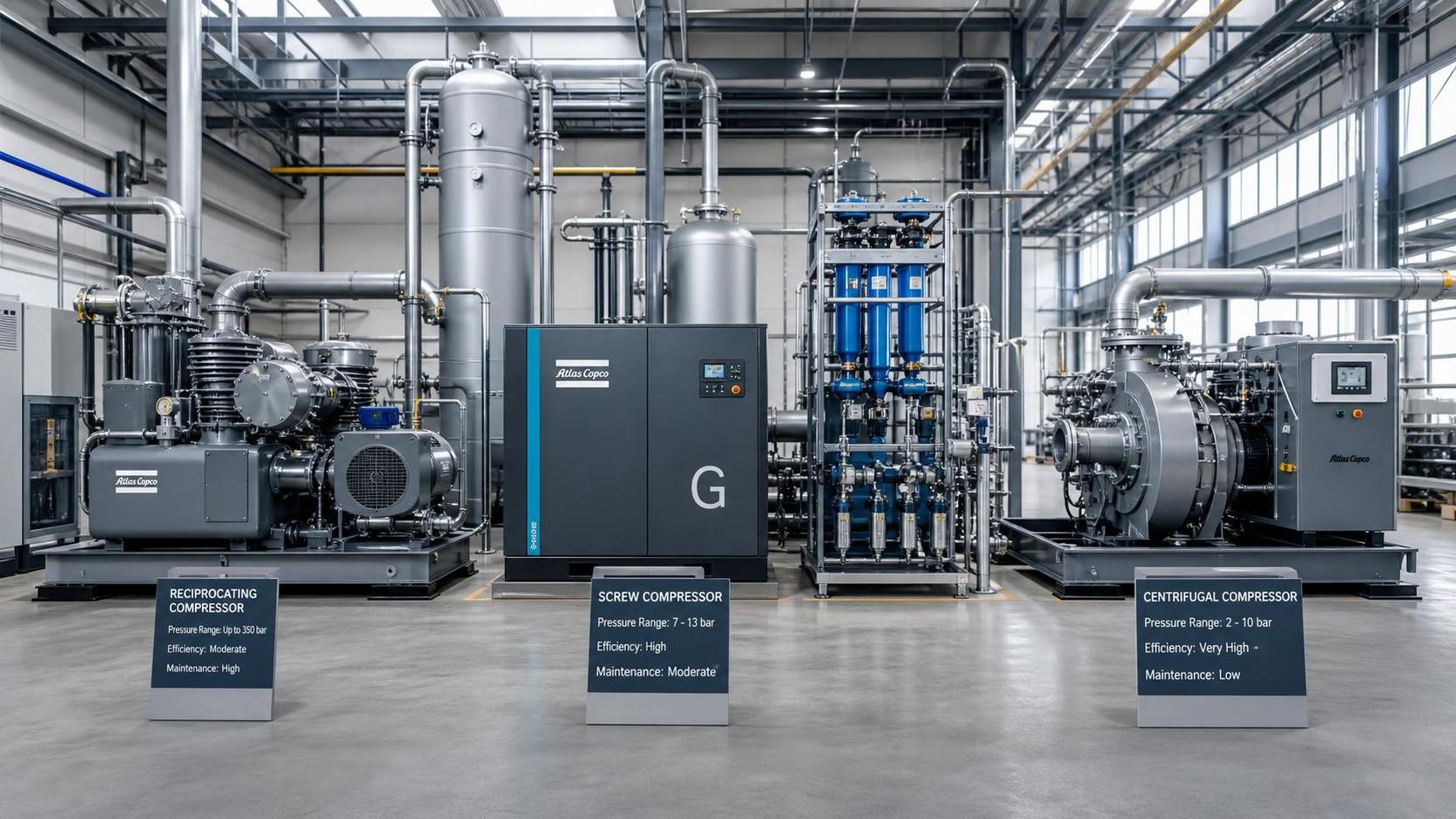
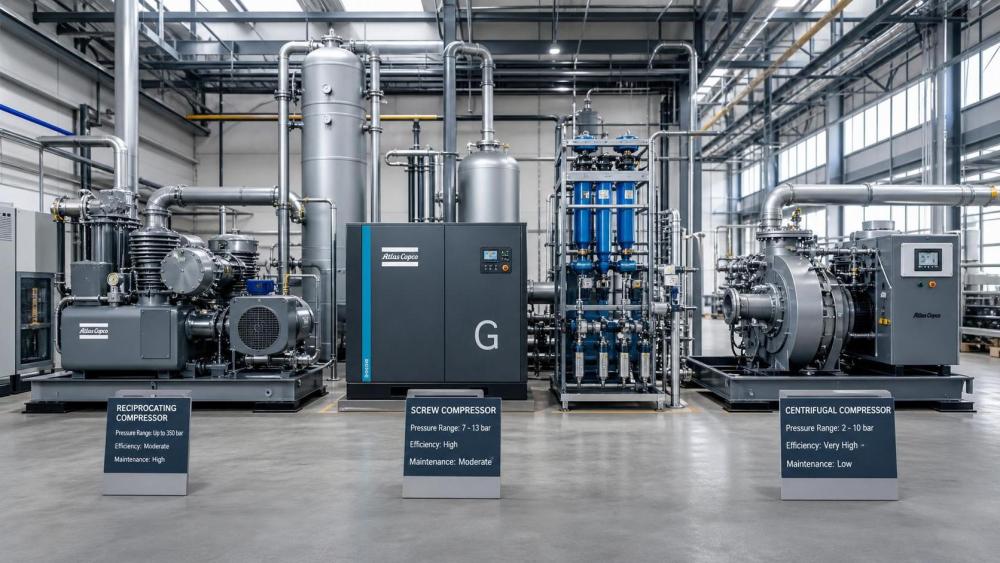
For high-pressure applications, reciprocating compression often remains a practical choice because of its ability to achieve higher discharge pressures efficiently in staged configurations. For medium-pressure continuous-duty industrial air systems, rotary screw machines are often favored for operational stability and simpler integration. Centrifugal compressors may be attractive in large-volume applications with relatively stable demand, but they are far more sensitive to operating envelope, surge control, and turndown limitations than some buyers initially assume.
Vacuum and specialty gas processes complicate the picture further. Pressure ratio, gas composition, moisture content, and contamination tolerance can completely change the preferred technology. A machine suitable for plant air may be unsuitable for nitrogen boosting, solvent vapor handling, or clean dry process gas.
Pressure selection therefore has to be tied to gas properties, control philosophy, and the consequence of pressure excursions. In semiconductor, pharmaceutical, food, and precision manufacturing environments, pressure stability and purity can matter more than maximum pressure capacity.
Maintenance demand is driven as much by operating conditions as by machine type
Maintenance comparisons often get reduced to easy labels: oil-free means cleaner, oil-lubricated means simpler, screw means lower maintenance, reciprocating means higher maintenance. Real-world performance is less neat.
Maintenance burden comes from the interaction between design and operating environment. Dusty air intake, poor ventilation, unstable power quality, high ambient temperatures, contaminated cooling water, and frequent load-unload cycling can shorten service life regardless of compressor category.
For technical evaluation, maintenance should be reviewed across at least five dimensions:
- routine consumables such as filters, separators, oil, and belts;
- major overhaul intervals for airends, valves, bearings, or stages;
- required skill level for service execution;
- availability of spare parts and field support in the target region;
- downtime consequence for the process line.
Oil-free systems deserve especially careful review. They are often selected for contamination-sensitive applications, and for good reason. But oil-free does not automatically mean low maintenance or low lifecycle cost. Some designs involve tighter tolerances, more demanding filtration, higher sensitivity to operating conditions, or more expensive major service events. The value is often justified, but only when process purity truly requires it.
Oil-injected systems, by contrast, may offer favorable reliability and operating economics in general industrial service, but they bring downstream treatment obligations and carryover risk that can become unacceptable in food contact, electronics, or instrument-quality air applications unless treatment design is robust.
Maintenance evaluation should also include control architecture. Modern compressors increasingly rely on sensors, VSDs, remote diagnostics, and controller integration. These features can improve uptime and predictive maintenance, but they also introduce dependence on software support, cybersecurity practices, and proprietary service ecosystems. For multinational operators and export-oriented plants, that support model matters almost as much as the hardware.
Technology comparison only becomes useful when duty profile is explicit
A practical compression technology guide should not rank technologies in the abstract. It should connect them to use conditions.
Reciprocating compressors are often well suited for high-pressure, intermittent, or lower-flow applications where staged compression is needed. Their strengths include pressure capability and efficiency in the right operating band. Their limitations typically include vibration, more wear components, and higher maintenance attention when running continuously under harsh cycles.
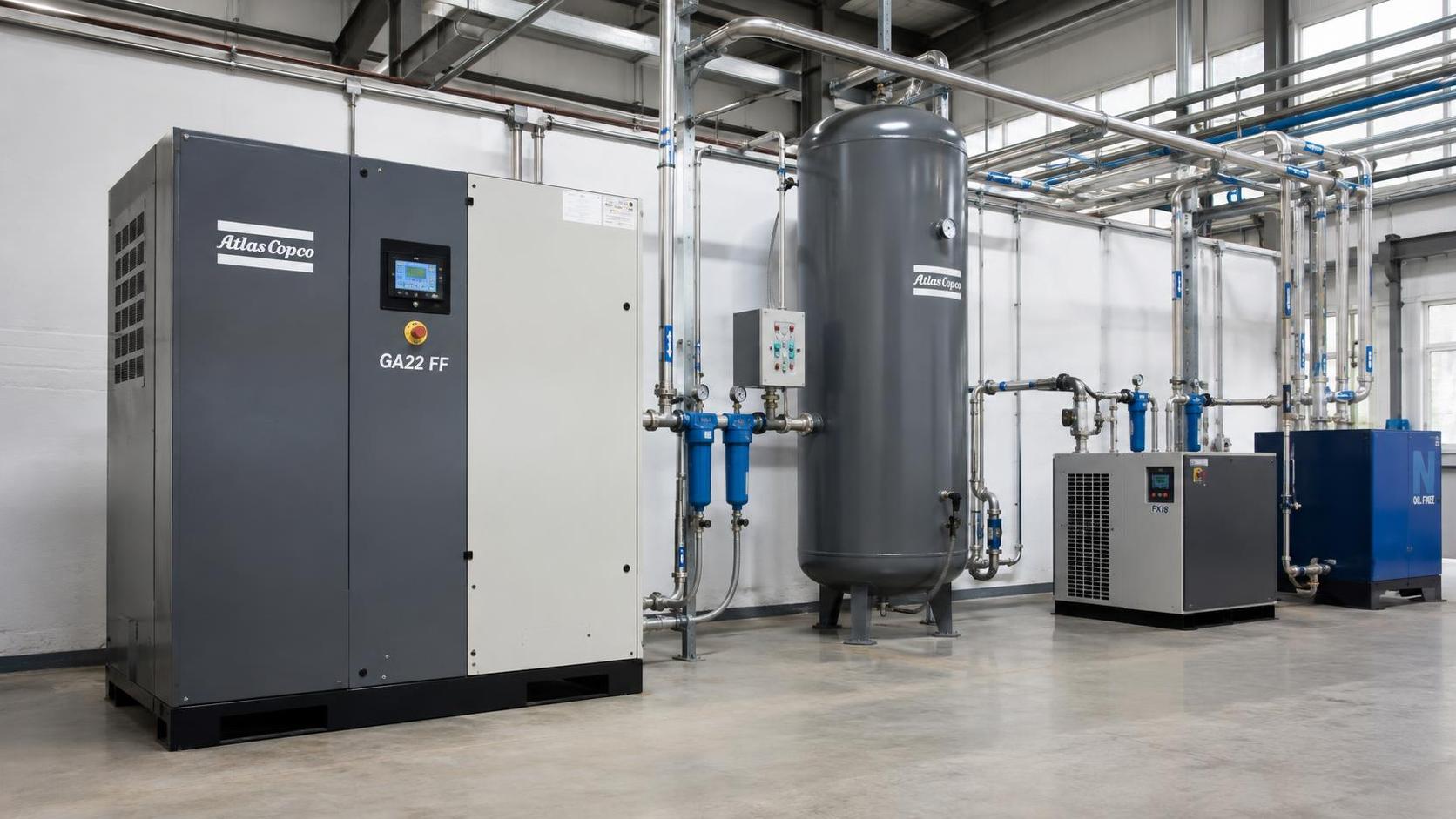
Rotary screw compressors remain the default choice in many industrial air systems because they balance continuous-duty reliability, compactness, and relatively straightforward integration. They are often effective in medium-pressure plant air service. The evaluation challenge is not whether screw technology works, but whether fixed-speed or variable-speed configuration, oil-free or oil-injected design, and package control logic fit the site’s actual load variation.
Centrifugal compressors can deliver strong efficiency in large, stable base-load applications with significant flow demand. However, they require disciplined evaluation of surge margin, part-load behavior, and installation conditions. They are not forgiving of poor system matching.
Scroll and claw compressors may be attractive in niche applications requiring low noise, compact layout, dry compression, or specific purity characteristics. Their suitability depends heavily on flow scale, pressure target, and total cost tolerance.
For many buyers, the critical mistake is comparing technologies at a single operating point. A better method is to map expected annual operating hours across different load bands, then test how each technology behaves within those bands. That approach usually reveals whether a theoretically efficient solution remains efficient under real dispatch conditions.
System integration can outweigh machine selection
Technical evaluators sometimes spend weeks comparing compressor blocks while underestimating system architecture. Yet pressure drop, air treatment, receiver sizing, cooling design, controls integration, and piping layout can determine whether the installed system performs as intended.
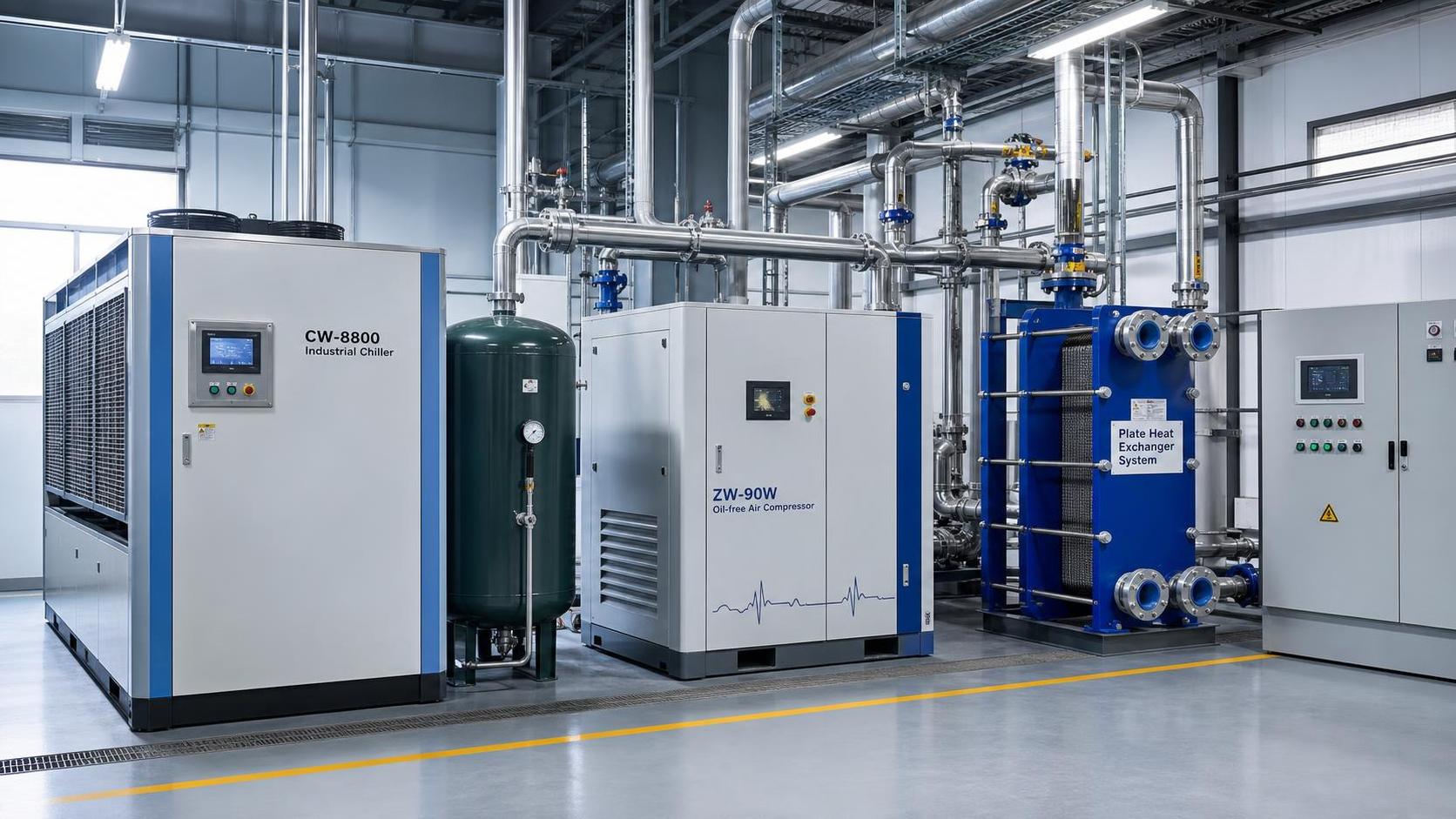
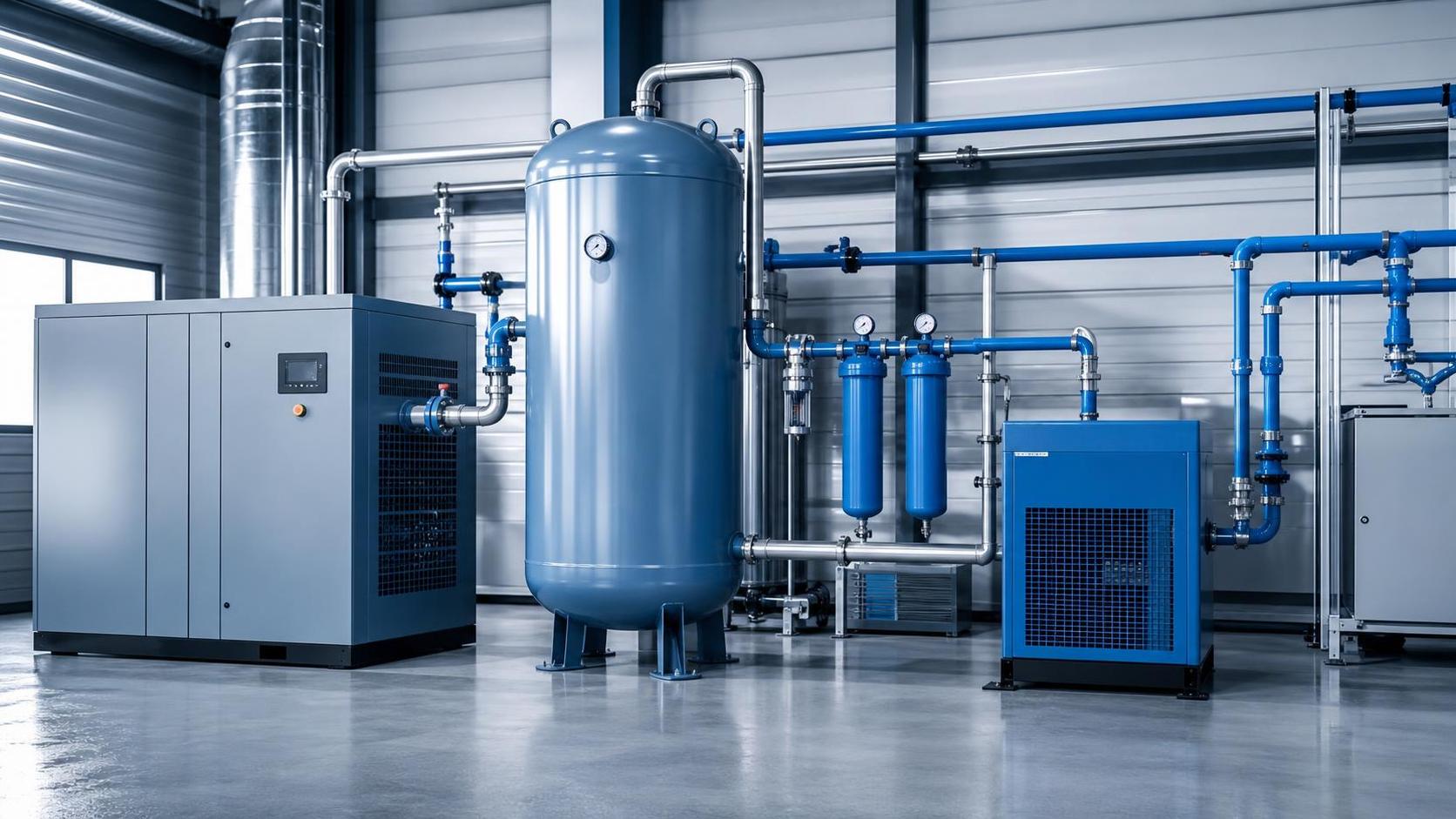
In compressed air, poor storage design can force compressors into unstable cycling. Oversized dryers or poorly maintained filters can add unnecessary pressure loss. In water-cooled systems, exchanger fouling or inconsistent water quality can degrade efficiency and reliability over time. In heat recovery-enabled installations, the business case may improve materially if waste heat is captured for process water or space heating, but only if demand for that heat is steady enough to justify the integration.
Noise, footprint, ventilation path, condensate management, and accessibility for service are also selection variables, not post-installation details. A technically strong machine can become a poor asset if maintenance access is constrained or ambient conditions push it outside its preferred operating range.
For facilities with decarbonization targets or rising power cost exposure, evaluators should also consider whether the compression system can support future optimization measures: heat recovery, advanced controls, leakage monitoring, remote performance analytics, or staged system sequencing.
Common evaluation mistakes that distort procurement decisions
Several recurring errors appear across industrial compression projects.
One is choosing on capital cost while treating energy as a secondary factor. In many duty cycles, lifetime electricity cost dominates total ownership cost. Another is accepting rated flow and pressure figures without verifying standards, test conditions, or correction factors. A third is specifying excess pressure margin to compensate for poor distribution design rather than solving the distribution problem itself.
There is also a tendency to overtrust broad claims such as “maintenance-free,” “oil-free,” or “high efficiency” without asking what failure modes are most common in comparable sites. Evaluation should include not just routine service intervals but failure consequences, restart complexity, and time-to-repair under local service conditions.
Where global sourcing is involved, support geography becomes part of technical risk. Lead times for separators, valves, controllers, VSD components, or specialized bearings may affect plant resilience more than a small theoretical efficiency advantage.
A workable decision framework for technical evaluators
Good compressor selection usually comes from narrowing the problem in the right order.
Start by defining the process requirement with discipline: gas type, purity class, required flow range, actual pressure at use point, duty cycle, ambient conditions, and allowable downtime. Then separate non-negotiables from preferences. If process contamination risk is unacceptable, oil-free may be mandatory. If demand is highly variable, control strategy becomes central. If the site lacks advanced maintenance capability, a technically elegant but service-sensitive option may be the wrong fit.
Next, compare technologies using lifecycle scenarios rather than brochure values. That means energy at expected load profile, maintenance cost over realistic intervals, auxiliary equipment burden, installation complexity, and service support risk.
Finally, validate the system, not just the compressor. Pressure drop budget, storage volume, treatment train, controls philosophy, cooling arrangement, and future expansion logic should all be visible before final selection.
In that sense, the best use of a compression technology guide is not to produce a quick ranking. It is to force the evaluation team to ask better questions. Once those questions are clear, trade-offs between efficiency, pressure range, and maintenance needs become much easier to judge—and much harder to misread.
Related News
- What to verify before choosing a process separation technology supplierAuthor :

- When does process utilities engineering reduce project rework?Author :

- Where thermal efficiency optimization delivers the fastest savings in EuropeAuthor :

- What should you verify before selecting a heat transfer supplier?Author :

- What drives compressed air systems price for industrial projects?Author :

- How an industrial product knowledge comparison guide reduces sourcing riskAuthor :

- When does a procurement specification planning process reduce bid risk?Author :

- When does thermal system optimization for electronics reduce failure risk?Author :

- When high temperature process heating systems justify the higher energy costAuthor :

- How to compare sludge dewatering equipment by cake drynessAuthor :

- What to Check Before Sourcing a Gas Turbine for Distributed Power ProjectsAuthor :

- What drives industrial thermal systems price in large facility projectsAuthor :

- How to build an industrial product comparison chart that speeds up vendor selectionAuthor :

- Vacuum Technology Application Guide for Selecting the Right SystemAuthor :

- What Drives Vacuum Drying Cost in Industrial Procurement?Author :

- What Drives Compressed Air Pricing in Industrial Systems?Author :

- How Procurement Specification Planning Shapes Total Project CostAuthor :

- Compression Technology Guide: How to Compare Efficiency, Pressure Range, and Maintenance NeedsAuthor :

- How to Compare Industrial Separators by Throughput, Purity, and Maintenance LoadAuthor :

- How to Size a Compressed Air Equipment Receiver Tank for Stable PressureAuthor :

- Industrial Equipment Selection Guide: How to Compare Capacity, Duty Cycle, and Operating CostAuthor :

- How to Evaluate an Intellectualization Supplier for Industrial UpgradesAuthor :

- High-Efficiency Manufacturing: Cost Savings vs. Upgrade RiskAuthor :

- Thermal System Optimization Cost: What Drives ROI?Author :

- How to Plan Process Utilities for a Cleanroom Without Costly ReworkAuthor :

- How to Compare Process Heating Suppliers in MexicoAuthor :

- Food Processing Utilities: Common Sizing Mistakes That Raise Energy and Water UseAuthor :

- How to Build Procurement Specification Planning for Industrial EquipmentAuthor :

- OEM Cooperation for Industrial Equipment: Risks, Terms, and Cost PrioritiesAuthor :

- Specification-Oriented Product Resources That Speed Technical ReviewAuthor :

- Industrial Equipment Selection Guide: A Practical Buyer ChecklistAuthor :

- How to Compare Industrial Energy Management Systems by ROIAuthor :

- How to Evaluate a Deaerators Supplier for Long-Term Plant ReliabilityAuthor :
![]()
- How to Evaluate a Vacuum Technology Manufacturer in 2026Author :

- Thermal Efficiency Optimization Software: When the ROI Justifies DeploymentAuthor :

- How to Evaluate Application-Specific Compression Solutions by Throughput and Energy UseAuthor :