What to Check Before Sourcing a Gas Turbine for Distributed Power Projects




Distributed power projects usually fail at the sourcing stage long before any commissioning problem appears. Procurement teams often compare price, nominal output, and delivery promises, but a gas turbine package that looks competitive on paper can become expensive once site conditions, fuel variability, maintenance access, and grid requirements are added to the picture. For buyers responsible for uptime, lifecycle cost, and contractual risk, the right question is not simply which unit can generate power, but which one can generate power reliably under the actual operating profile of the project.
That matters even more in distributed generation, where installations are commonly tied to factories, industrial parks, commercial campuses, remote facilities, or local utility support applications. These sites rarely operate under ideal laboratory conditions. Ambient temperature swings, load fluctuations, fuel quality changes, start-stop frequency, emissions constraints, and limited technical staffing all shape whether a selected turbine will perform as expected.
Match the turbine to the duty profile, not just the rated output
A common sourcing mistake is to start with nameplate capacity and work backward. In distributed power, the duty profile should come first. Procurement teams need to clarify whether the unit will run as baseload, peak shaving support, standby backup, combined heat and power, or part of a hybrid system with solar, storage, or reciprocating engines. Each of these modes places different demands on the machine.
For example, a unit that performs well in steady baseload service may be less attractive if the project requires frequent starts and stops. Thermal cycling affects hot-section life, maintenance intervals, and outage planning. If the site expects large daily load swings, part-load efficiency becomes more important than peak efficiency. When heat recovery is part of the project economics, exhaust temperature and exhaust flow may matter as much as electrical output.
Before issuing requests for quotation, buyers should document:
- Expected annual operating hours
- Typical load range and ramping behavior
- Number of starts per week or month
- Need for black start or fast restart capability
- Whether waste heat will be used for steam, hot water, or process heat
- Seasonal changes in ambient conditions and site demand
Without this operating picture, quotations are difficult to compare in a meaningful way.
Check how ambient and site conditions change real output
Rated output is usually presented under reference conditions. Actual site conditions may differ sharply. High ambient temperature, high altitude, dust, humidity, saline air, or poor ventilation can reduce power output, affect combustion stability, and increase maintenance burden. In many distributed power projects, these site effects are not a side note; they determine whether the investment can meet contracted supply obligations.
If the project site is in a hot climate, derating can be substantial during the very hours when power demand is highest. At elevation, lower air density reduces compressor mass flow and can lower available output. Coastal or chemically aggressive environments may require stronger filtration, anti-corrosion measures, and more careful enclosure design. Industrial sites with airborne particles may need upgraded inlet filtration and more frequent maintenance planning.
Procurement teams should ask suppliers to state expected performance under the project’s real ambient range rather than relying only on standard-condition brochures. If inlet air cooling, enhanced filtration, or enclosure modifications are needed, those items should be priced and evaluated early rather than added later as change orders.
Fuel flexibility deserves as much attention as turbine efficiency
Fuel assumptions often look simple during procurement and become complex during operation. A distributed power project may plan to use pipeline natural gas, associated gas, LPG, refinery off-gas, biogas blends, or other site-available fuels. Even where the primary fuel is natural gas, composition, pressure, contaminants, and seasonal quality variation may affect combustion performance and maintenance needs.
Buyers should verify what fuel envelope the machine is designed to handle, what pretreatment is required, and how fuel variation affects output, emissions, and inspection intervals. Questions that deserve clear answers include:
- Required gas pressure and pressure stability at the turbine inlet
- Permissible variation in calorific value or Wobbe index
- Tolerance for moisture, sulfur compounds, or particulates
- Additional skids needed for filtration, compression, or heating
- Impact of alternative fuels on combustion tuning and emissions compliance
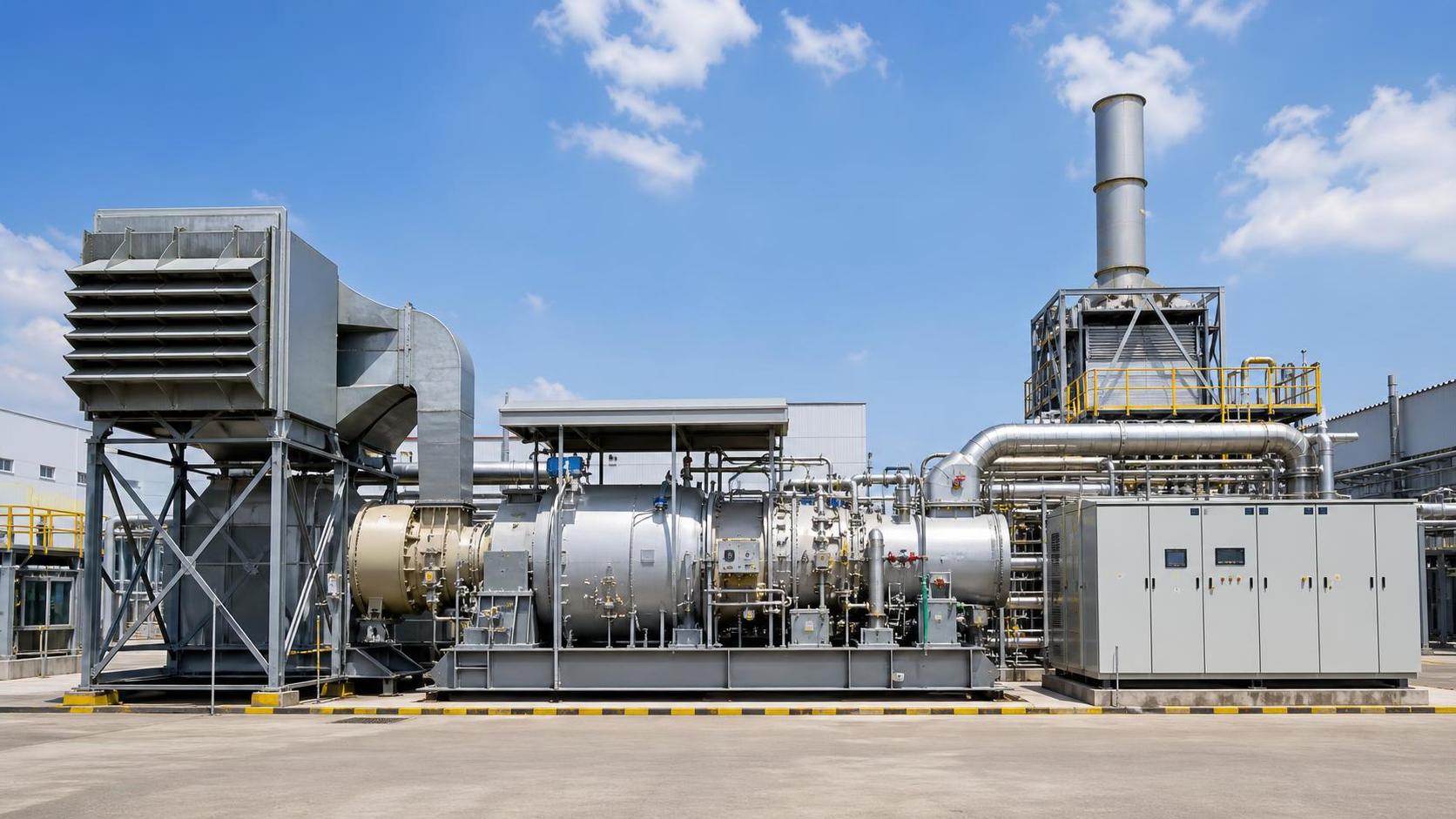
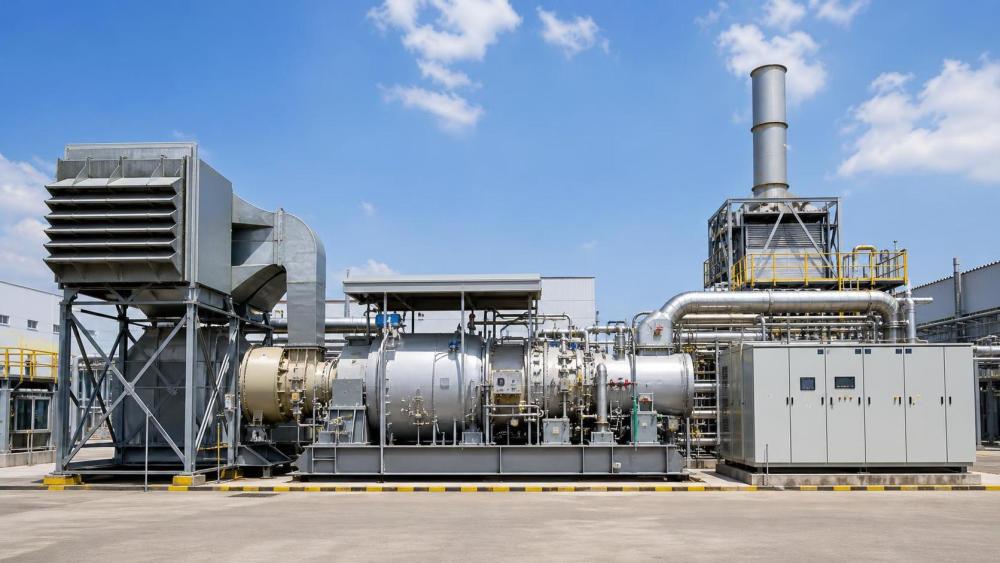
This is also where reviewing the technical scope of a Gas Turbine package can be useful, especially when comparing what is included in the core machine versus what must be added at system level. Fuel treatment equipment, controls integration, and auxiliary systems can materially change the total procurement cost even if the base turbine price looks attractive.
Look beyond efficiency and ask how performance is presented
Efficiency figures are easy to misuse in sourcing discussions. A quoted thermal efficiency may refer to ISO conditions, a narrow load point, or a specific auxiliary configuration. In real projects, buyers need to know what happens at expected operating loads and under local conditions. A unit with a slightly lower headline efficiency may still produce better project economics if it holds performance more consistently at part load, requires fewer starts, or integrates more effectively with heat recovery.
Procurement teams should compare quotations on a normalized basis. That means checking:
- Net versus gross electrical output
- Whether auxiliary power consumption is included
- Performance at site temperature and altitude
- Part-load heat rate
- Expected degradation over time and wash requirements
- Combined heat and power performance if thermal recovery is planned
It is also useful to separate guaranteed values from typical values. Suppliers may present one set of numbers in marketing materials and another in contractual documentation. Buyers should anchor decisions on the latter.
Evaluate maintainability, parts access, and outage strategy early
In distributed generation, maintenance logistics can outweigh small differences in purchase price. A technically capable turbine may still be a poor fit if the site has limited shutdown windows, restricted lifting access, or no resident specialist team. Procurement should examine maintenance intervals, hot-section inspection requirements, expected major overhaul timing, and the availability of critical spares in the target region.
Questions worth asking include how much work can be done on site, what special tools are needed, how long typical planned outages last, and whether remote diagnostics are available. Some projects can support deeper in-house maintenance capability; others depend heavily on vendor field service. That difference affects not only budget but also operational resilience.
Spare parts strategy should not be treated as an afterthought. Long-lead rotors, blades, combustion components, and control parts can create extended outages if procurement focuses only on the initial package. Buyers should request a recommended spare parts list tied to the first years of operation and clarify what parts are consumables, what parts are condition-based, and what parts have long manufacturing lead times.
Controls, grid interface, and plant integration can become hidden risk areas
Distributed power projects often operate in more complex electrical environments than central utility plants. The turbine package must work with site load management, protection schemes, utility interconnection requirements, and possibly other generating assets. A technically sound machine can still create commissioning delays if control philosophy, communication protocols, or protection coordination are not aligned early.
Procurement documents should define the expected interface with switchgear, transformers, supervisory control systems, heat recovery equipment, and any microgrid controller. If the project will run in island mode, synchronize with the grid, or switch between both states, the sourcing team should request proof that the controls architecture supports those modes. Dynamic behavior matters here, not only steady-state output.
Where the site uses mixed generation sources, the turbine’s ramping limits and minimum stable load can influence overall dispatch strategy. Those details are often omitted from high-level comparisons yet become central once the plant enters operation.
Emissions and permitting requirements should shape the shortlist
A turbine that fits the load may still fail the project if emissions performance requires additional equipment, more space, or tighter operating limits than the site can support. Permitting rules vary by jurisdiction and application, but procurement should verify expected NOx, CO, and any other regulated outputs under the planned fuel and operating regime.
Low-emission combustion systems may have fuel quality sensitivities or operating constraints that need to be understood before purchase. If selective catalytic reduction or oxidation catalysts are required, buyers should account for added footprint, temperature window requirements, reagent systems where applicable, and maintenance implications. These are not just environmental issues; they affect capital cost, layout, and uptime.
Clarify scope boundaries to avoid misleading price comparisons
Many sourcing disputes begin with an incomplete scope comparison. One quotation may cover only the turbine core and standard auxiliaries, while another includes enclosure, fuel skids, lube oil systems, starter, controls, fire protection, and commissioning support. Procurement teams need a scope matrix that identifies exactly what is included, excluded, or optional.
A practical comparison should cover more than equipment. It should also address:
- Factory testing and documentation
- Preservation for storage and transport packaging
- Supervision of installation and commissioning
- Training for operators and maintenance staff
- Performance guarantee conditions
- Warranty triggers and exclusions
If the project schedule includes a long storage period before installation, preservation requirements become especially important. Improper storage can create corrosion, seal degradation, or control system issues that later turn into warranty disputes.
Review manufacturing lead time and supply chain exposure realistically
Lead time should be broken down into engineering, manufacturing, inspection, transport, site readiness, and commissioning support. A short quoted delivery window may apply only to the bare machine, not to all auxiliaries or project documentation. It may also depend on raw material availability or outsourced component supply that the buyer never sees.
Procurement should ask which components are on the critical path, whether substitutions are possible, and what documentation will be available before shipment. For projects with strict commercial operation deadlines, liquidated damages exposure may justify more attention to supply chain transparency than to small price differences.
Inspection planning is part of this discussion. Buyers may need witness points for rotor assembly, controls testing, or package-level factory acceptance tests. Even when third-party inspection is limited, the quality dossier should be defined in advance so that material certificates, test reports, preservation records, and nonconformance handling are not left vague.
Use total cost of ownership, not acquisition price, as the final filter
The lowest purchase price may be attached to the highest operating risk. A more durable package with better serviceability, clearer guarantees, and lower auxiliary burden can deliver a stronger commercial result over the asset life, especially in applications where unplanned downtime disrupts production or local power security.
Total cost of ownership should include fuel use at expected load profile, maintenance intervals, spares, outage duration, auxiliary consumption, emissions control requirements, operator training needs, and likely derating under site conditions. For combined heat and power projects, the value of usable thermal energy should be included as well. If the project’s economics depend on heat recovery and the selected machine cannot deliver the expected exhaust conditions consistently, the financial model may be overstated from the start.
The procurement file should answer operational questions before award
Good turbine sourcing is less about collecting more brochures and more about reducing uncertainty before a contract is signed. Buyers should be able to explain why the selected unit fits the actual duty cycle, fuel reality, environmental limits, maintenance model, and interconnection requirements of the project. If those answers are incomplete, the procurement process is still in the comparison stage, even if quotations have already been received.
For distributed power projects, the best sourcing outcome is usually the one that leaves the fewest unresolved operating assumptions. That is what protects project schedules, service continuity, and long-term cost control after the equipment arrives on site.
Related News
- What drives sustainable thermal systems cost over their operating life?Author :

- Which industrial solution comparison criteria prevent project delays?Author :

- What to evaluate before choosing a thermal process engineering supplierAuthor :

- How industrial utility systems affect energy costs in process plantsAuthor :

- What Data Is Needed to Assess Heat Recovery Decarbonization?Author :

- Can Waste Heat Recovery Support Carbon Neutrality Targets?Author :

- Is Compressor Heat Recovery Worth the Installation Cost?Author :

- What to verify before choosing a process separation technology supplierAuthor :

- When does process utilities engineering reduce project rework?Author :

- Where thermal efficiency optimization delivers the fastest savings in EuropeAuthor :

- What should you verify before selecting a heat transfer supplier?Author :

- What drives compressed air systems price for industrial projects?Author :

- How an industrial product knowledge comparison guide reduces sourcing riskAuthor :

- When does a procurement specification planning process reduce bid risk?Author :

- When does thermal system optimization for electronics reduce failure risk?Author :

- When high temperature process heating systems justify the higher energy costAuthor :

- How to compare sludge dewatering equipment by cake drynessAuthor :

- What to Check Before Sourcing a Gas Turbine for Distributed Power ProjectsAuthor :

- What drives industrial thermal systems price in large facility projectsAuthor :

- How to build an industrial product comparison chart that speeds up vendor selectionAuthor :

- Vacuum Technology Application Guide for Selecting the Right SystemAuthor :

- What Drives Vacuum Drying Cost in Industrial Procurement?Author :

- What Drives Compressed Air Pricing in Industrial Systems?Author :

- How Procurement Specification Planning Shapes Total Project CostAuthor :

- Compression Technology Guide: How to Compare Efficiency, Pressure Range, and Maintenance NeedsAuthor :

- How to Compare Industrial Separators by Throughput, Purity, and Maintenance LoadAuthor :

- How to Size a Compressed Air Equipment Receiver Tank for Stable PressureAuthor :

- Industrial Equipment Selection Guide: How to Compare Capacity, Duty Cycle, and Operating CostAuthor :

- How to Evaluate an Intellectualization Supplier for Industrial UpgradesAuthor :

- High-Efficiency Manufacturing: Cost Savings vs. Upgrade RiskAuthor :

- Thermal System Optimization Cost: What Drives ROI?Author :

- How to Plan Process Utilities for a Cleanroom Without Costly ReworkAuthor :

- How to Compare Process Heating Suppliers in MexicoAuthor :

- Food Processing Utilities: Common Sizing Mistakes That Raise Energy and Water UseAuthor :

- How to Build Procurement Specification Planning for Industrial EquipmentAuthor :

- OEM Cooperation for Industrial Equipment: Risks, Terms, and Cost PrioritiesAuthor :