How Procurement Specification Planning Shapes Total Project Cost




How Procurement Specification Planning Shapes Total Project Cost
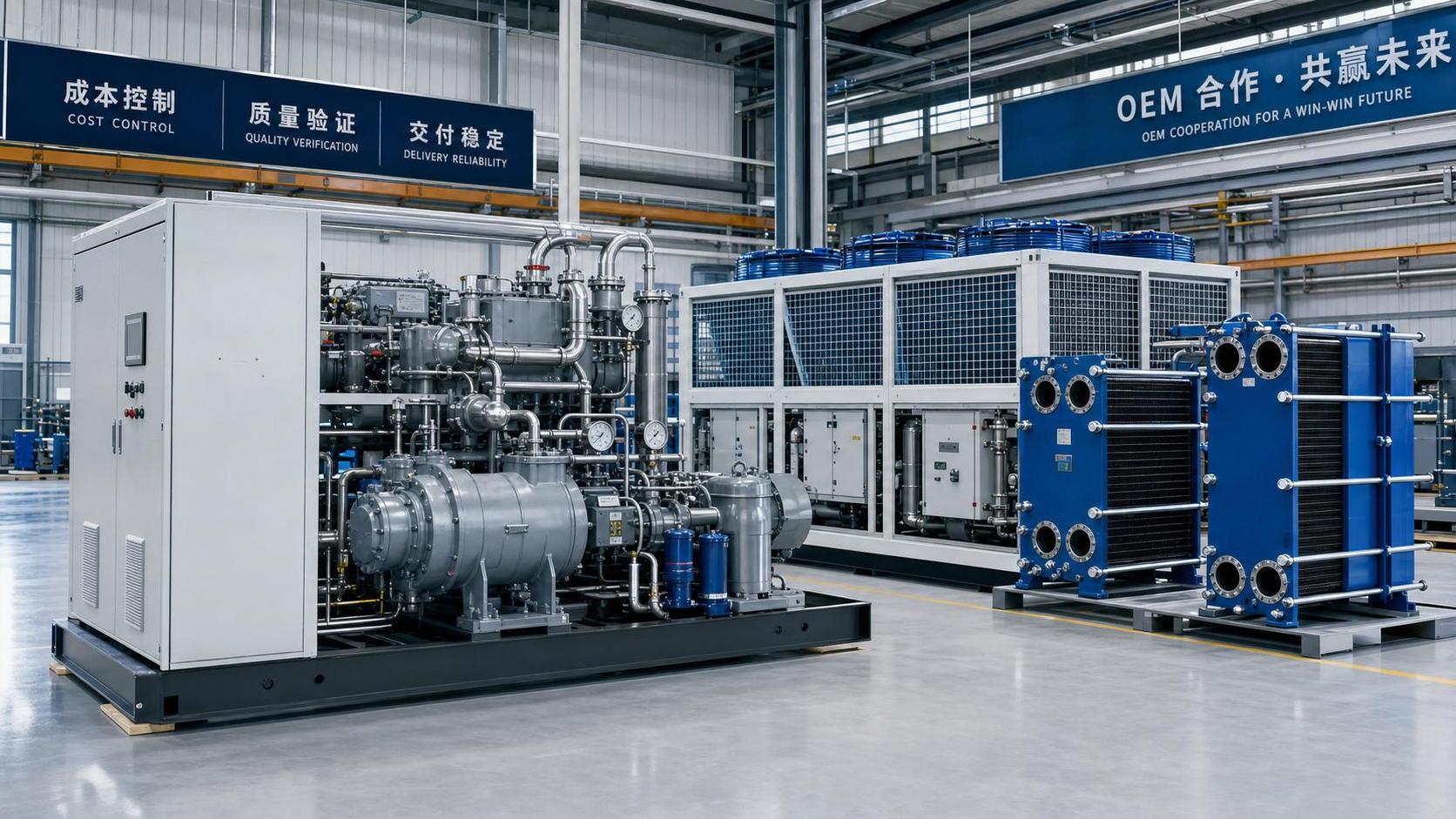
For many industrial projects, cost control is discussed too late. The team debates prices once RFQs are out, suppliers are shortlisted, and lead times are already moving the schedule. By then, most of the real cost drivers have been locked in by the specification. That is why procurement specification planning cost is not just a paperwork issue. It is where total project cost starts to take shape.
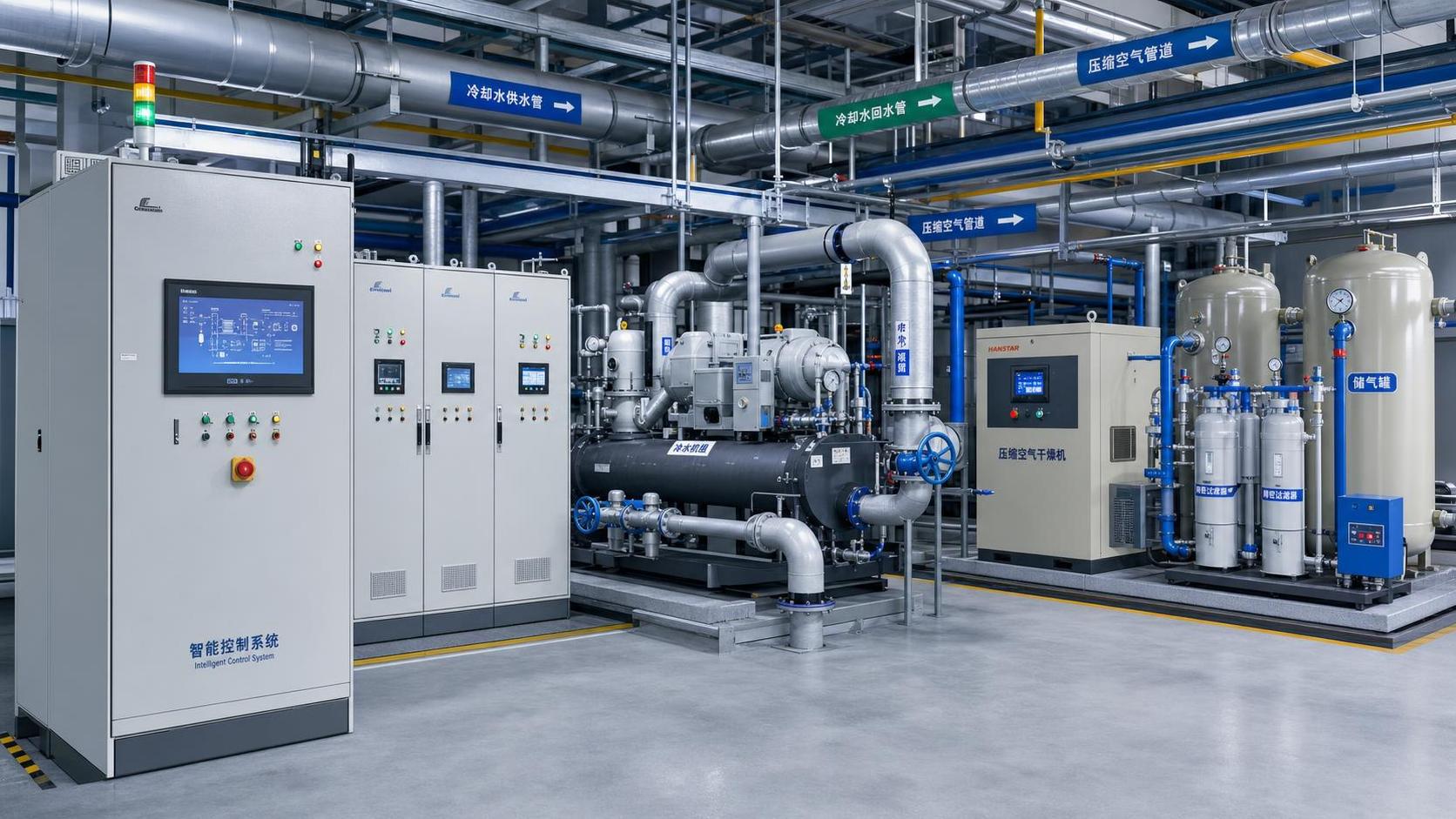
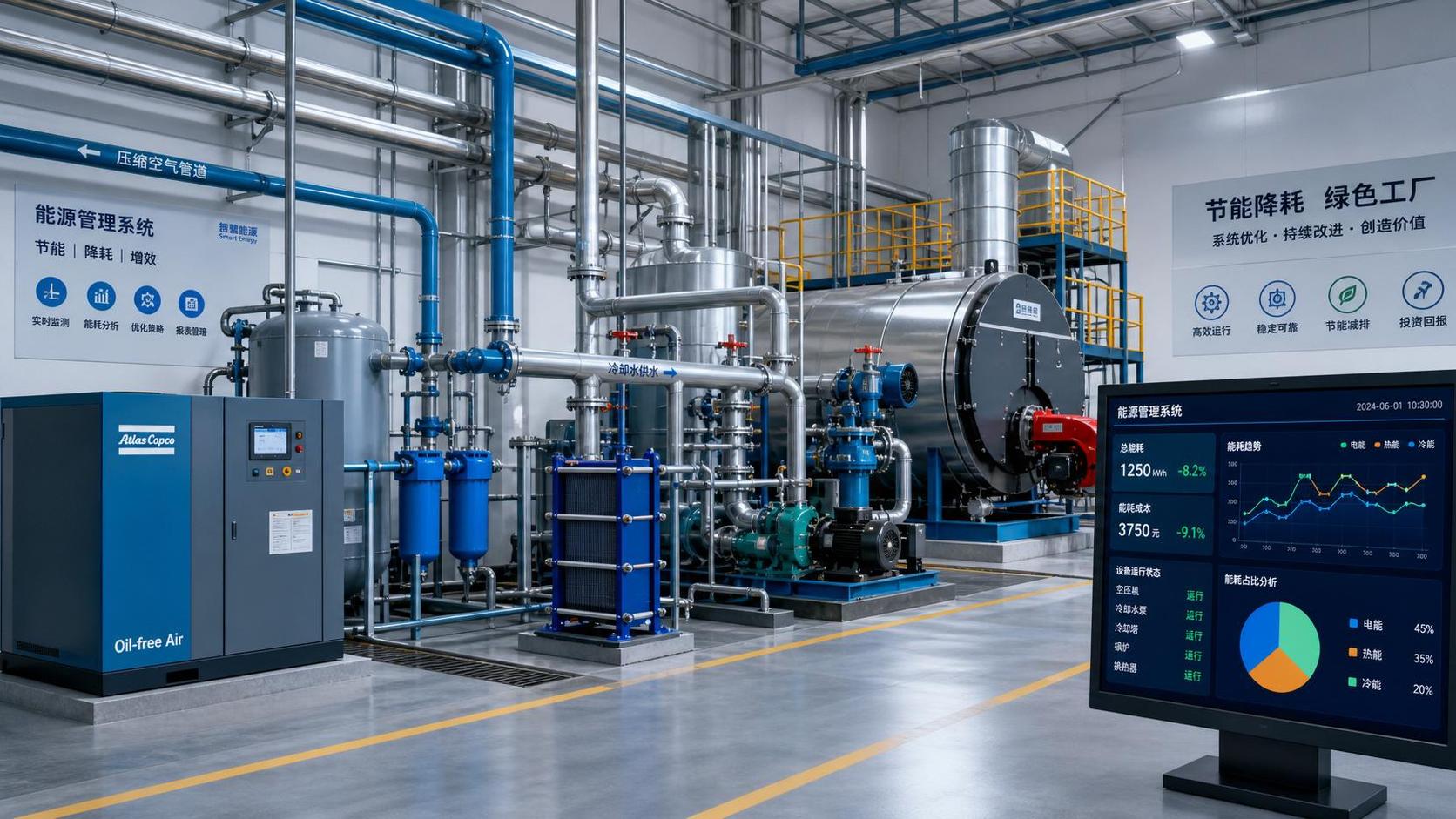
This is especially true in cooling systems, compressed air packages, vacuum processes, boilers, and heat exchange applications, where the wrong specification does not simply create a higher purchase price. It can lead to oversized equipment, unstable operation, utility waste, difficult maintenance access, spare parts fragmentation, compliance gaps, or supplier disputes during commissioning. In practice, a cheap buy can become an expensive asset very quickly.
Experienced procurement teams usually learn the same lesson: a precise, commercially usable specification is one of the few tools that can reduce both capex surprises and lifecycle cost drift. Not because it makes every bid comparable in a perfect way, but because it narrows ambiguity before ambiguity turns into claims, rework, or operational compromise.
The specification sets the cost curve earlier than most people think
When a specification is drafted, the team is deciding more than motor size, pressure class, heat duty, or material grade. It is also deciding how many suppliers can truly compete, what installation assumptions will be priced in, which performance guarantees are testable, and how much future flexibility is being purchased.
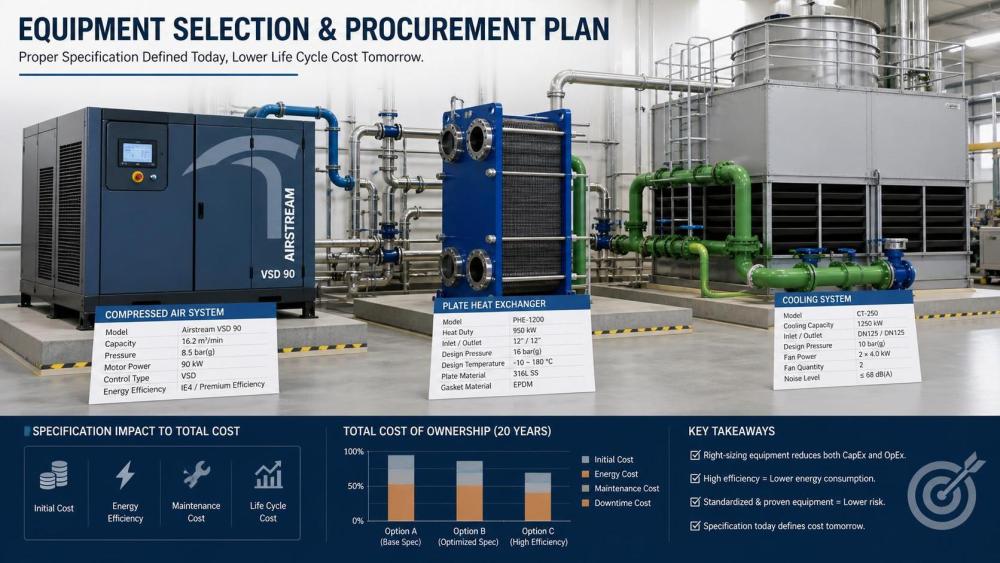
Take compressed air as a simple example. If the document asks for high purity, oil-free operation, strict dew point performance, low noise, redundancy, remote monitoring, and specific control integration, that may be entirely justified. But if the site process only requires one of those features while the others were copied from an older project, the procurement team may unintentionally push the bid toward a narrower supplier pool and a higher installed cost. The same pattern shows up in chillers, vacuum pumps, cooling towers, and heat exchangers.
The opposite problem is just as expensive. A vague specification invites optimistic assumptions. Suppliers quote to different duty points, different ambient conditions, different control scopes, or different materials of construction. Prices look attractive, but commercial comparison becomes misleading. Eventually the missing items come back as change orders, interface problems, or performance exceptions.
Where procurement cost usually goes wrong
In industrial buying, total project cost rarely gets damaged by one dramatic mistake. More often, it is a chain of small specification decisions that do not look serious in isolation.
- Duty points are defined without enough process context, so equipment is oversized “for safety.”
- Utility assumptions are not aligned with real site conditions, especially ambient temperature, cooling water quality, altitude, or power stability.
- Controls and instrumentation scope is split unclearly between OEM, EPC, and plant engineering.
- Maintenance expectations are not written down, so access, service intervals, and spare parts strategy are treated as afterthoughts.
- Regulatory or internal standards are referenced broadly, but the actual compliance deliverables are not listed.
Each of these can move project cost. Not always in the purchase order value, but in piping changes, foundation revisions, longer FAT or SAT discussions, delayed startup, or higher utility bills after handover.
In thermal and compression systems, this is where experienced market intelligence becomes useful. Teams that follow shifts in refrigerant policy, oil-free compression development, microchannel heat exchanger adoption, or low-NOx boiler requirements can write specifications that are commercially realistic rather than frozen in old assumptions. That is one reason why platforms such as GTC-Matrix matter in procurement planning: not to replace engineering judgment, but to give buyers and technical teams a cleaner view of how technology, energy pricing, and supply conditions are moving together.
Lowest purchase price and lowest project cost are rarely the same thing
This sounds obvious, but it still gets missed in live tenders. Procurement is often measured on negotiated savings, while operations will live with the consequences for years. A tighter price today can mean a weaker control package, a less efficient part-load profile, or a vendor network that is thin in the project region. None of these looks dramatic on a bid tab. All of them become very visible after startup.
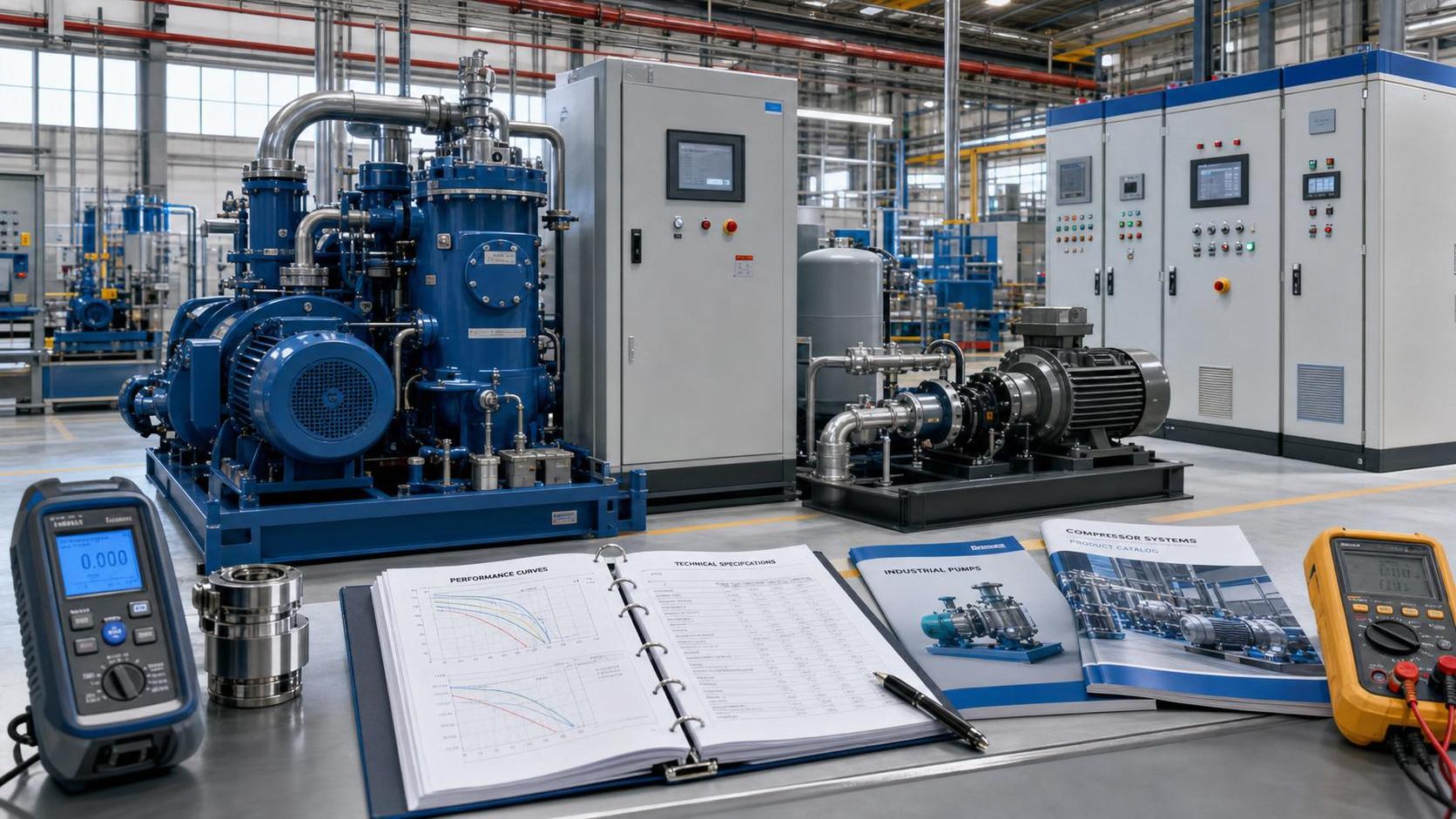
For systems with meaningful energy consumption, efficiency at actual operating conditions matters more than brochure efficiency. A compressor that performs well at nominal full load may be less attractive if the plant usually runs at partial demand. A heat exchanger selected for ideal clean conditions may lose its advantage if fouling risk is high and cleaning access is poor. Procurement specification planning cost needs to capture this operational reality early, otherwise the buyer is comparing equipment in a commercial vacuum.
There is also a supplier alignment issue. The more precise the performance envelope, testing basis, exclusions, documentation requirements, and interface responsibilities, the less room there is for hidden cost transfer. Good suppliers usually welcome that clarity, even when it makes bid preparation more demanding.
What a cost-aware specification should actually include
Not every project needs a highly engineered specification package. But if the equipment is critical to uptime, energy consumption, product quality, or environmental compliance, a few areas deserve more attention than they often get.
What matters is not turning the specification into a giant document. It is making sure the document answers the expensive questions before suppliers price the work.
The hidden value of narrowing ambiguity
Procurement teams often focus on measurable cost elements, but ambiguity has a cost too. It shows up in bid clarification cycles, legal review, technical deviations, and expediting effort. A well-structured specification does not eliminate negotiation; it simply moves negotiation toward real trade-offs instead of avoidable confusion.
For example, if two suppliers offer different heat exchanger technologies, the right discussion is not only who is cheaper on day one. It should also include cleaning method, footprint constraints, refrigerant pathway, local service familiarity, and sensitivity to the site’s water or air conditions. In sectors such as pharmaceutical, semiconductor, and food processing, where temperature control and utility purity can influence product integrity, those details are not technical decoration. They shape operating risk and therefore project cost.
This is where cross-functional procurement performs better than price-only procurement. Engineering, maintenance, EHS, and operations will not always agree, and that is healthy. Their disagreement exposes assumptions that would otherwise stay buried until commissioning.
A practical way to improve specification planning without slowing the project
The best procurement teams do not wait for a perfect specification. They build a usable one in stages. Early in the project, they separate “must be fixed now” from “can be resolved during clarification.” That alone prevents two common failures: issuing RFQs too early, or endlessly delaying them because every technical preference is treated as mandatory.
A workable approach usually includes three checks:
- Confirm the operating basis with the people who will run the asset, not only the people designing it.
- Review whether each requirement has a cost reason, a process reason, or merely historical inertia.
- Test whether the supplier market can realistically respond without excessive deviation requests.
That last point is easy to underestimate. Markets shift. Lead times tighten. Certain refrigerants, material choices, or control components become harder to source. Energy economics change the attractiveness of one design versus another. Procurement planning works better when the team stays close to sector intelligence rather than relying only on old template documents. GTC-Matrix’s coverage of thermodynamic systems, policy movement, and equipment evolution is useful in exactly this part of the process: helping buyers challenge stale specifications before those specifications become expensive commitments.
What to watch before releasing the RFQ
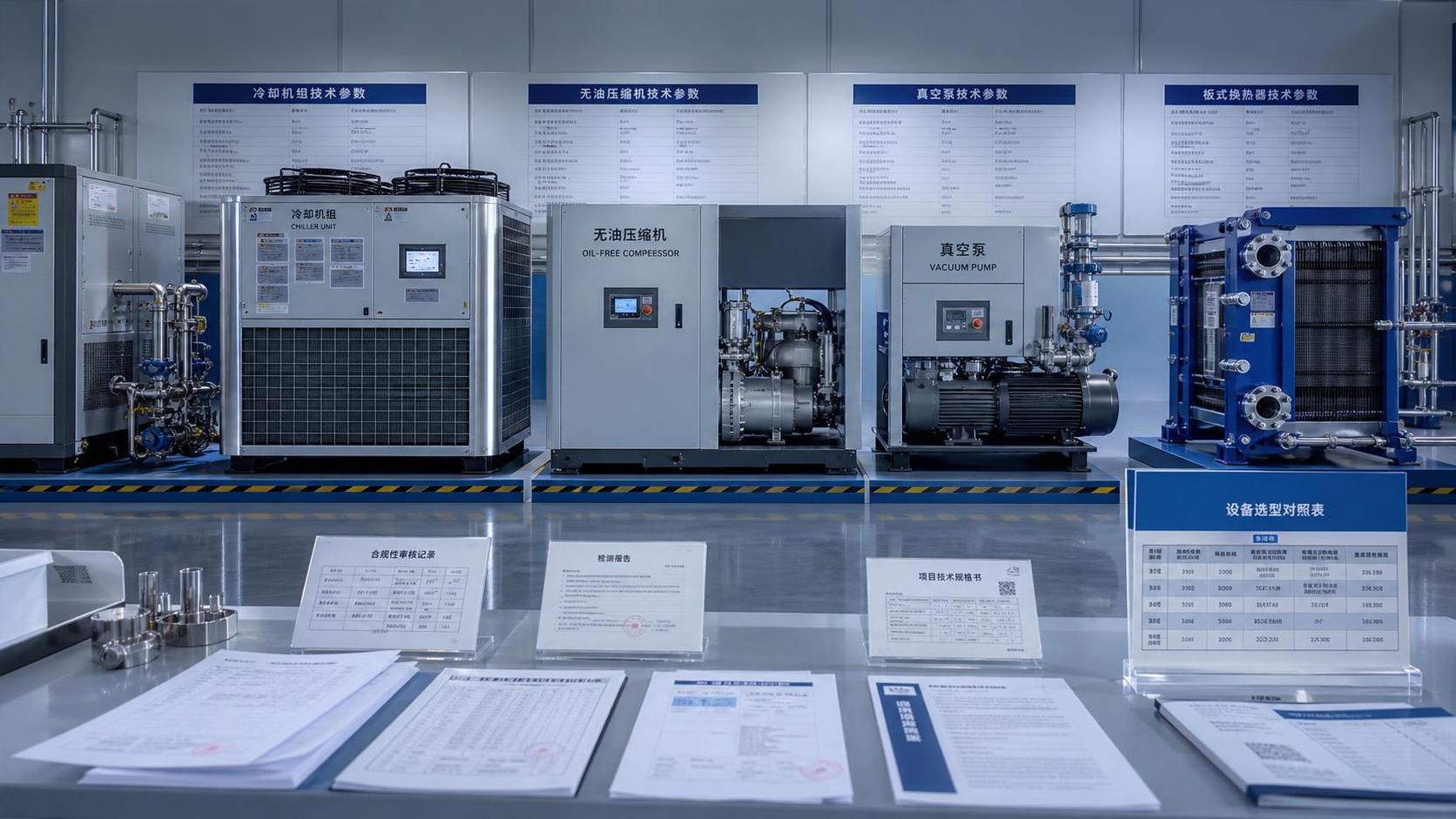
Right before tender release, there are a few questions worth asking one more time. Are all bidders pricing the same performance basis? Are exclusions clearly stated? Is there a defined line between vendor scope and site scope? Does the document ask for proof where proof matters, such as test procedures, documentation, or critical component traceability? And just as important, has the team avoided loading the package with requirements that sound prudent but do not change project outcomes?
That balance is the real work. Too little detail creates downstream cost. Too much unfiltered detail can choke competition and inflate pricing. Good specification planning sits between those extremes.
If a project involves energy-intensive thermal or compression assets, it is worth treating specification planning as an early cost-control discipline, not an administrative step. By the time procurement starts negotiating unit price, the bigger commercial story has often already been written in the specification itself.
Related News
- How industrial utility systems affect energy costs in process plantsAuthor :

- Is Compressor Heat Recovery Worth the Installation Cost?Author :

- What to verify before choosing a process separation technology supplierAuthor :

- When does process utilities engineering reduce project rework?Author :

- Where thermal efficiency optimization delivers the fastest savings in EuropeAuthor :

- What should you verify before selecting a heat transfer supplier?Author :

- What drives compressed air systems price for industrial projects?Author :

- How an industrial product knowledge comparison guide reduces sourcing riskAuthor :

- When does a procurement specification planning process reduce bid risk?Author :

- When does thermal system optimization for electronics reduce failure risk?Author :

- When high temperature process heating systems justify the higher energy costAuthor :

- How to compare sludge dewatering equipment by cake drynessAuthor :

- What to Check Before Sourcing a Gas Turbine for Distributed Power ProjectsAuthor :

- What drives industrial thermal systems price in large facility projectsAuthor :

- How to build an industrial product comparison chart that speeds up vendor selectionAuthor :

- Vacuum Technology Application Guide for Selecting the Right SystemAuthor :

- What Drives Vacuum Drying Cost in Industrial Procurement?Author :

- What Drives Compressed Air Pricing in Industrial Systems?Author :

- How Procurement Specification Planning Shapes Total Project CostAuthor :

- Compression Technology Guide: How to Compare Efficiency, Pressure Range, and Maintenance NeedsAuthor :

- How to Compare Industrial Separators by Throughput, Purity, and Maintenance LoadAuthor :

- How to Size a Compressed Air Equipment Receiver Tank for Stable PressureAuthor :

- Industrial Equipment Selection Guide: How to Compare Capacity, Duty Cycle, and Operating CostAuthor :

- How to Evaluate an Intellectualization Supplier for Industrial UpgradesAuthor :

- High-Efficiency Manufacturing: Cost Savings vs. Upgrade RiskAuthor :

- Thermal System Optimization Cost: What Drives ROI?Author :

- How to Plan Process Utilities for a Cleanroom Without Costly ReworkAuthor :

- How to Compare Process Heating Suppliers in MexicoAuthor :

- Food Processing Utilities: Common Sizing Mistakes That Raise Energy and Water UseAuthor :

- How to Build Procurement Specification Planning for Industrial EquipmentAuthor :

- OEM Cooperation for Industrial Equipment: Risks, Terms, and Cost PrioritiesAuthor :

- Specification-Oriented Product Resources That Speed Technical ReviewAuthor :

- Industrial Equipment Selection Guide: A Practical Buyer ChecklistAuthor :

- How to Compare Industrial Energy Management Systems by ROIAuthor :

- How to Evaluate a Deaerators Supplier for Long-Term Plant ReliabilityAuthor :
![]()
- How to Evaluate a Vacuum Technology Manufacturer in 2026Author :