How to Compare Industrial Decarbonization Solutions Providers in 2026




How to Compare Industrial Decarbonization Solutions Providers in 2026
Choosing an industrial decarbonization solutions provider in 2026 starts with one hard truth.
Most providers now promise lower emissions, lower energy use, and faster payback.
Very few can prove all three in real operating conditions.
That is why comparing providers has become a strategic exercise, not a procurement routine.
Energy prices remain volatile.
Carbon reporting rules are getting tighter across regions and supply chains.
Meanwhile, industrial sites still need uptime, process stability, and predictable maintenance costs.
A capable industrial decarbonization solutions provider must improve all of those conditions together.
In practice, the strongest comparisons focus on measurable efficiency, technical fit, implementation realism, and transparent performance data.
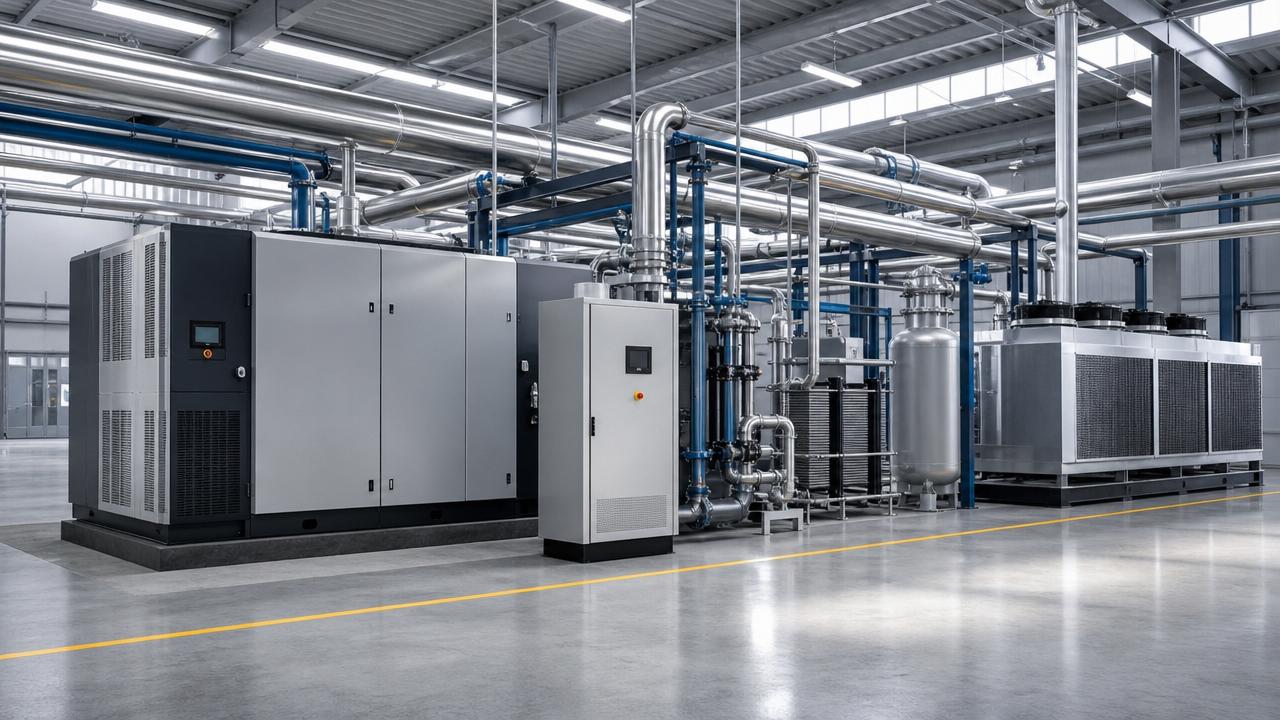
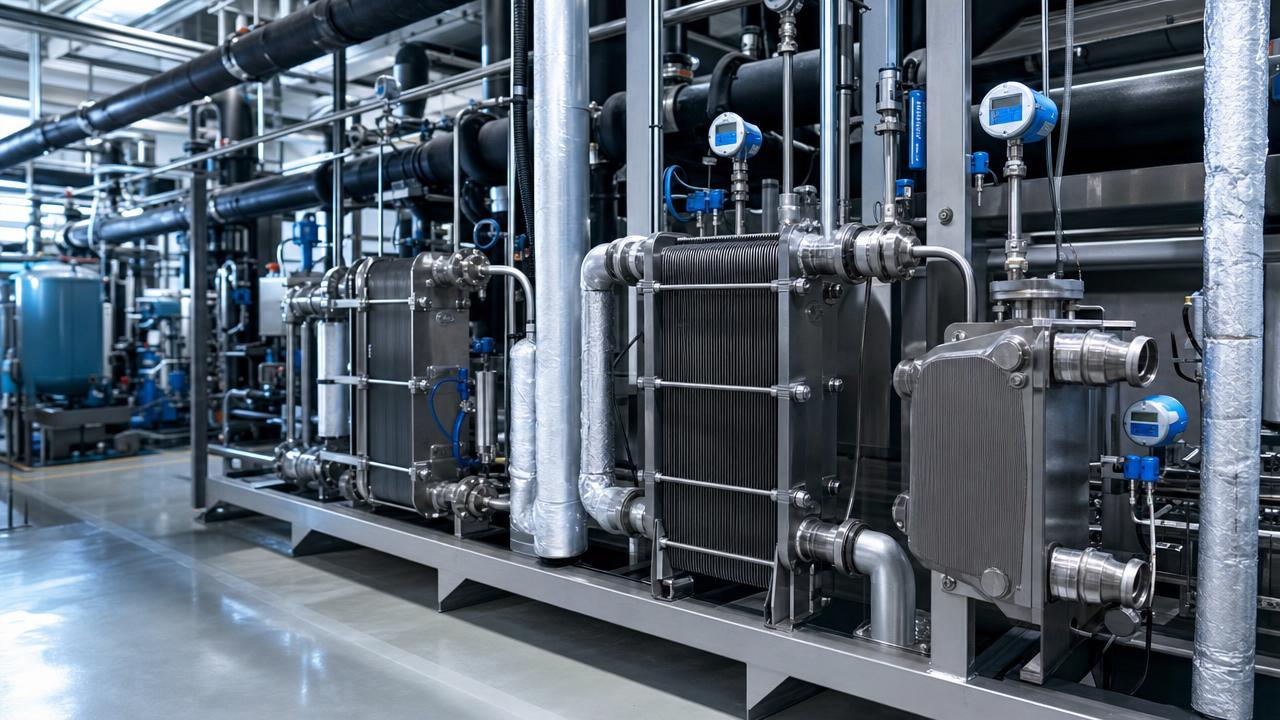
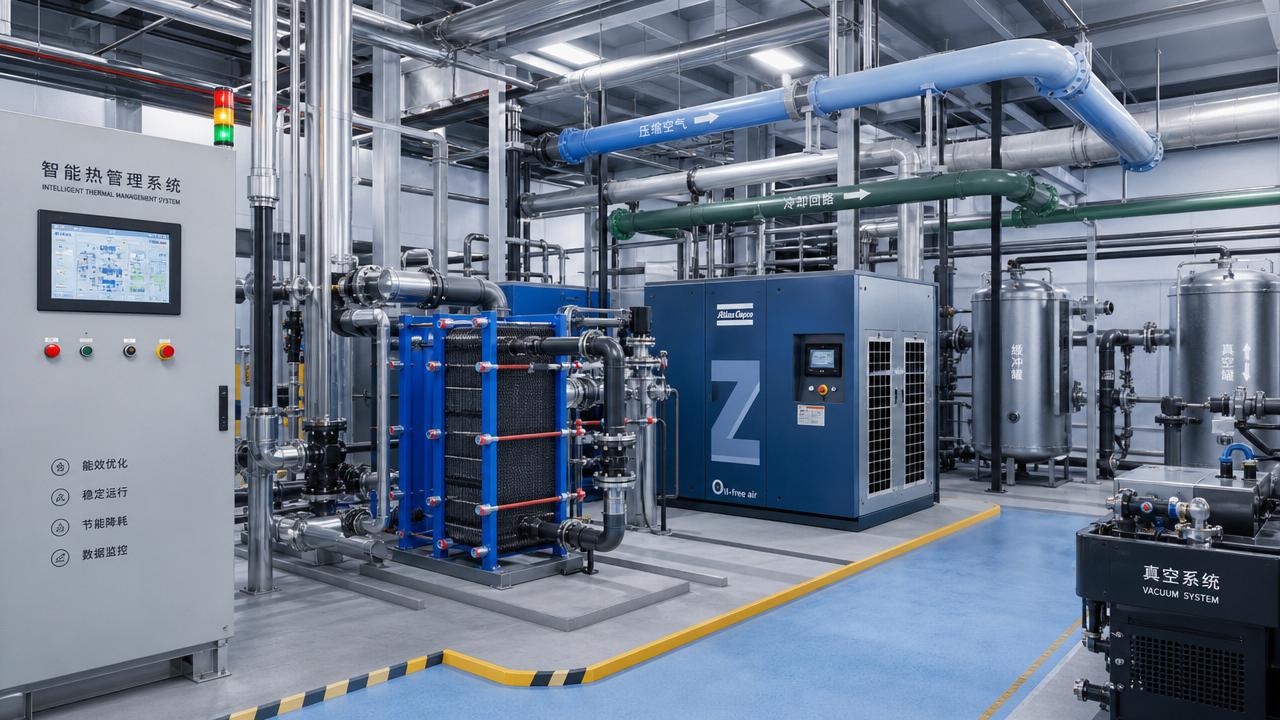
This is especially relevant in energy-intensive systems such as cooling, compressed air, vacuum, and heat exchange.
Those assets often sit at the center of industrial decarbonization, yet they are still evaluated too narrowly.
Start with the Real Decarbonization Scope
Before comparing any industrial decarbonization solutions provider, define what decarbonization actually means for the site.
For some operations, the biggest issue is thermal efficiency.
For others, it is compressed air leakage, refrigerant transition, waste heat loss, or poor controls.
A provider that leads in one area may be weak in another.
That also means a generic carbon reduction pitch is not enough.
The provider should map emissions and energy loss by process, equipment group, and production pattern.
Look for a structured baseline that covers:
- Electricity use by core utility systems
- Fuel consumption and combustion efficiency
- Load variability across shifts and seasons
- Process quality constraints and uptime needs
- Current emissions factors and reporting boundaries
If an industrial decarbonization solutions provider cannot build this baseline clearly, comparison becomes guesswork.
And in 2026, guesswork is expensive.
Compare Technology Depth, Not Product Catalog Size
One common mistake is assuming a larger equipment portfolio means a better industrial decarbonization solutions provider.
It often does not.
What matters more is technical depth in the systems that drive most energy use.
For example, in cooling and compression environments, small design differences can create major lifetime cost differences.
Ask providers how they handle part-load efficiency, control logic, heat recovery, refrigerant choices, and digital monitoring.
Also ask whether recommendations are based on standard templates or site-specific engineering models.
A strong industrial decarbonization solutions provider should explain tradeoffs without hiding behind marketing terms.
Useful comparison questions include:
- What efficiency gain is expected at full load and partial load?
- How will the solution affect process temperature, pressure, and stability?
- What assumptions drive the carbon reduction estimate?
- Which components are proprietary, and which are open for future integration?
- How does the design perform under local climate and utility conditions?
The better the answers, the easier it becomes to separate real engineering from polished positioning.
Test Industry Fit and Operating Reality
Not every industrial decarbonization solutions provider understands sector-specific risk.
That gap becomes obvious during implementation.
A food plant, semiconductor line, chemical unit, and pharmaceutical facility do not share the same tolerance for variation.
The right provider must understand process sensitivity, contamination control, validation needs, and downtime economics.
From a decision standpoint, sector experience should be tested with evidence, not case study headlines alone.
Ask for comparable applications with similar operating temperatures, load profiles, regulatory pressures, and maintenance capabilities.
In actual business settings, this is where many shortlists shrink quickly.
A provider may be technically strong, yet still be the wrong fit for the plant environment.
Use this simple screening table during evaluation:
Check Data Transparency and Measurement Discipline
By 2026, data transparency is one of the clearest ways to judge an industrial decarbonization solutions provider.
A serious provider should be able to show how savings are measured, how carbon reductions are calculated, and how uncertainty is handled.
This matters because reported gains can vary sharply depending on the baseline period and operating assumptions.
More importantly, internal teams need numbers they can defend to finance, operations, and compliance stakeholders.
The best industrial decarbonization solutions provider will define a measurement and verification method before project launch.
That method should cover baseline selection, data frequency, weather correction where relevant, and treatment of production changes.
It should also show which data remains accessible to the asset owner.
This point is often overlooked.
Some providers deliver dashboards but keep the deeper analytics opaque.
That limits future optimization and weakens long-term value.
Look Beyond CAPEX to Total Business Value
Cost comparison should never stop at equipment price.
The right industrial decarbonization solutions provider should show how the project performs across the full operating lifecycle.
That includes energy savings, maintenance cost, production risk, carbon cost exposure, and upgrade flexibility.
From recent market shifts, a stronger signal is the growing value of resilience.
Facilities now care more about stable performance under volatile tariffs, refrigerant regulation, and stricter audit expectations.
This changes how providers should be compared.
Ask each industrial decarbonization solutions provider to present a business case using the same input assumptions.
That makes proposals easier to benchmark fairly.
Key comparison factors should include:
- Net present value over the expected asset life
- Simple payback and sensitivity to energy prices
- Maintenance intensity and spare parts dependency
- Downtime risk during transition
- Future compatibility with digital and energy systems
This also helps prevent short-term savings from hiding long-term operating penalties.
Assess Execution Capacity and Post-Project Support
A credible industrial decarbonization solutions provider must be judged on delivery discipline as much as technical promise.
This is where many procurement teams tighten their scoring in 2026.
The provider should show who owns engineering, commissioning, operator training, digital integration, and performance follow-up.
If those responsibilities are fragmented, project risk rises quickly.
In thermal and compression systems, performance drift after commissioning is common.
Controls get bypassed, loads shift, and maintenance habits change.
That is why post-project support should be part of provider comparison from day one.
A reliable industrial decarbonization solutions provider should define service intervals, alarm logic, optimization reviews, and escalation paths.
Without that structure, even good projects can underperform within a year.
Build a Shortlist with a Weighted Scorecard
The most practical way to compare an industrial decarbonization solutions provider is to use a weighted scorecard.
This keeps the selection grounded in business priorities instead of presentation quality.
A simple scorecard can cover technical fit, verified savings, implementation risk, sector experience, data transparency, and service capability.
Weights should reflect actual plant priorities.
For example, a highly regulated production site may assign more weight to validation and reliability.
A utility-intensive operation may prioritize efficiency and energy flexibility.
The point is consistency.
Every industrial decarbonization solutions provider should be scored against the same questions, evidence requirements, and financial assumptions.
This also makes internal approval easier.
When the comparison is transparent, stakeholders can see why one provider is stronger than another.
For teams following thermal, cooling, compressed air, vacuum, and heat exchange markets, platforms such as GTC-Matrix can help sharpen this evaluation process.
High-authority sector intelligence often reveals where supplier claims align with real technology evolution and market direction.
That is increasingly useful when comparing complex providers across multiple regions.
In the end, the best industrial decarbonization solutions provider is not the one with the loudest carbon message.
It is the one that can connect engineering logic, operational reality, and measurable business outcomes.
That is the comparison standard worth using in 2026.
Ready when you are. Send us a message to get started.
Related News
- Why high-density thermal energy storage is gaining industry attentionAuthor :

- Smart Device Thermal Management Trends Shaping 2026 Product DesignAuthor :

- Industrial Cooling Technologies in Europe: 2026 Trends in Compliance and Energy UseAuthor :

- Industrial Electrification Trends in 2026: Where Projects Are Moving FirstAuthor :

- Industrial Solution Comparison Global: 2026 Trends Reshaping Equipment DecisionsAuthor :

- When Heat Recovery Systems Skid Mounted Designs Improve Project PaybackAuthor :

- How to Compare Industrial Decarbonization Solutions Providers in 2026Author :

- Industry Category Guides for Smart Devices: What to Track as 2026 Markets ShiftAuthor :

- Green Manufacturing Trends Reshaping Industrial InvestmentAuthor :

- 2026 Global Energy Costs: What Will Reshape Industrial PlanningAuthor :

- Industrial Decarbonization Solutions That Cut Fuel Costs in 2026Author :

- Smart Thermal Systems Trends Shaping Industrial Upgrades in 2026Author :

- Resource Circularity in Manufacturing: 5 Practical Gains Beyond ComplianceAuthor :

- Carbon Neutrality Roadmap: What Industrial Firms Need to Prioritize FirstAuthor :

- Energy Conversion Efficiency Trends Shaping Industrial UpgradesAuthor :

- Compression Technology Trends Shaping Efficient Plant UpgradesAuthor :

- Industrial Intelligence in Manufacturing: Where It Delivers Value FirstAuthor :

- How Intellectualization Improves Industrial Thermal ManagementAuthor :

- What Intellectualization Means for Smarter Plant Operations in 2026Author :

- Carbon Neutrality Goals: What Industrial Firms Should Prioritize in 2026Author :

- How Intellectualization Reduces Downtime in Modern Production LinesAuthor :

- Decarbonization Roadmap for Energy-Intensive Plants in 2026Author :

- Thermal Systems Trends in 2026: Efficiency, Control, and RiskAuthor :

- Industrial Decarbonization Priorities for Energy-Intensive FacilitiesAuthor :

- Thermal Systems in 2026: Efficiency Upgrades Shaping Industrial OperationsAuthor :

- Pure Power Sources: 5 Practical Paths to Carbon NeutralityAuthor :

- What Intellectualization Means for Industrial Equipment UpgradesAuthor :

- Thermal Optimization in 2026: Where Energy Savings Deliver the Fastest PaybackAuthor :

- Energy Efficiency Trends Reshaping Compressor Upgrades in 2026Author :

- 2026 Industrial Decarbonization Trends Reshaping Plant UpgradesAuthor :
![]()
- Heat Exchanger Technology Trends for 2026 Efficiency TargetsAuthor :

- Resource Circularity Risks in 2026 Supply ChainsAuthor :

- Smart Thermal Systems: When Upgrades Deliver Measurable SavingsAuthor :

- Carbon Neutrality: Practical Steps for Factory RoadmapsAuthor :

- 2026 Industrial Energy Efficiency Priorities for Plant UpgradesAuthor :

- Industrial Intellectualization Trends Reshaping Equipment UpgradesAuthor :