Thermal Power Systems for Industrial Heating: Common Sizing Mistakes to Avoid




Why does sizing matter so much in thermal power systems for industrial heating?
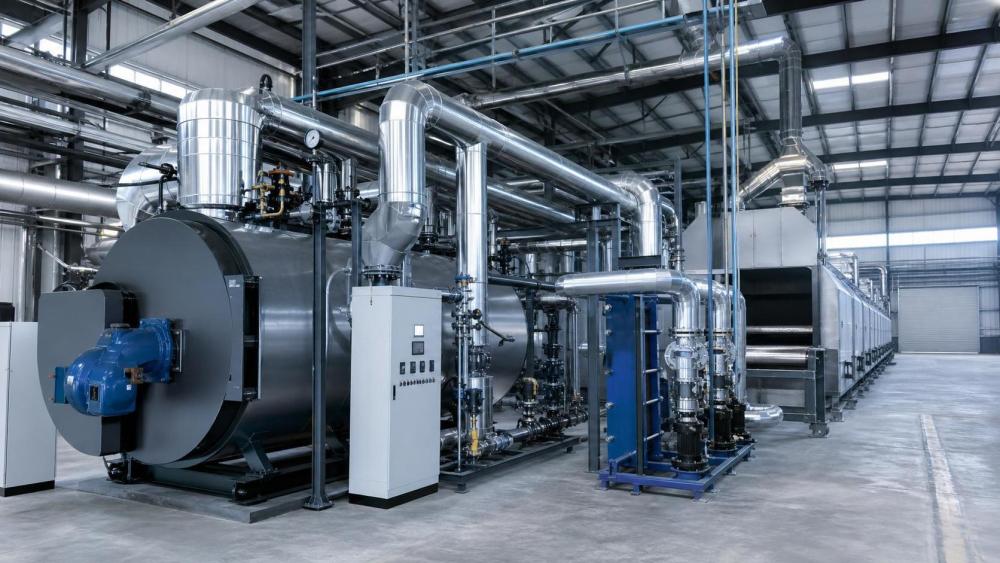
Thermal power systems for industrial heating do more than create heat. They shape process stability, product quality, fuel use, and maintenance frequency.
When sizing is wrong, the symptoms appear quickly. Burners cycle too often, temperature drifts, piping loses energy, and components age faster than expected.
In practical terms, oversizing and undersizing are both expensive. One wastes energy at part load. The other struggles to meet peak demand.
That is why thermal power systems for industrial heating should be sized around the real load profile, not just the biggest number on a design sheet.
Across food processing, chemicals, metals, textiles, and electronics, the same pattern repeats. Stable output usually starts with accurate thermal demand matching.
GTC-Matrix often tracks this issue through sector intelligence on fuel pricing, low-NOx boilers, heat exchangers, and energy efficiency benchmarks. The common lesson is simple.
A heating system is rarely inefficient because heat is unavailable. More often, it is inefficient because the delivered capacity does not match the process rhythm.
Is oversizing really safer, or does it create different problems?
Many sites still assume extra capacity is a safety margin. It feels conservative, but oversized thermal power systems for industrial heating often perform worse in daily operation.
The main issue is low-load operation. A boiler, thermal fluid heater, or heat exchanger sized far above actual demand spends too much time cycling or idling.
That creates several hidden losses:
- Higher standby losses from hot surfaces and long distribution loops.
- Reduced combustion efficiency during frequent starts and stops.
- Poor temperature control when heat input changes too aggressively.
- More wear on valves, igniters, fans, pumps, and control relays.
Oversizing also distorts equipment selection downstream. Once the heat source is too large, piping, circulation pumps, controls, and stack systems are often oversized as well.
The result is not only higher capital cost. It also locks in a less efficient operating envelope for years.
A better safety margin comes from staged capacity, turn-down capability, and solid controls. That approach protects peak demand without forcing constant overcapacity.
What does undersizing look like in real industrial heating applications?
Undersizing is usually less subtle. The system cannot recover fast enough after startup, shift changes, door openings, batch loading, or seasonal temperature swings.
A line may still run, but it runs unevenly. Operators then compensate by extending cycle time, raising setpoints, or pushing equipment beyond its efficient range.
Typical warning signs include:
- Slow warm-up after shutdowns or maintenance windows.
- Large temperature gaps between the heat source and point of use.
- Failure to hold process temperature during simultaneous demand spikes.
- Low product consistency in drying, curing, washing, or sterilization steps.
In these cases, thermal power systems for industrial heating may appear efficient on paper because installed capacity is modest. In operation, they often consume more energy per good unit produced.
That happens because the process runs longer, rework increases, and support equipment stays online for more hours than planned.
Which sizing mistakes are most common when demand seems straightforward?
The most common mistakes rarely come from calculation errors alone. They come from using incomplete assumptions about how the plant really uses heat.
A quick comparison makes this clearer.
In actual applications, the load profile matters more than a single design point. A curing oven, for example, behaves very differently during ramp-up and steady hold.
The same applies to wash lines, reactors, cleanroom reheating, and process air systems. Heat is consumed in patterns, not in perfect averages.
This is where industrial intelligence becomes useful. GTC-Matrix highlights how process demand changes by sector, especially where precision temperature control affects yield.
How should you judge the right size before choosing equipment?
The more reliable method is to size thermal power systems for industrial heating from measured or mapped duty, then check flexibility and control range.
That means looking beyond rated capacity. You need to understand how the system starts, holds, peaks, and recovers during disturbances.
A practical review usually includes these checkpoints:
- Peak heat demand versus average demand over a shift.
- Warm-up energy for equipment, rooms, tanks, or product mass.
- Distribution losses from boilers to end-use points.
- Required turn-down ratio for low-load periods.
- Future process changes that may alter the thermal duty.
- Control response time needed for quality-sensitive operations.
If data is limited, trend logs are often enough to improve the first estimate. Fuel flow, return temperature, valve position, and cycle time can reveal a lot.
Another useful test is to compare design assumptions with actual production rhythm. A system sized for continuous operation may underperform in heavy batch service.
Where processes are sensitive, modular capacity is often more forgiving than one large unit. It gives better matching, cleaner maintenance windows, and better resilience.
What can reduce risk after installation if the system is already not ideal?
A poor sizing decision does not always require full replacement. Many industrial heating systems can recover acceptable performance through operational and control adjustments.
The first step is diagnosis. Identify whether the real problem is source capacity, distribution loss, control logic, or heat transfer bottlenecks at the load.
Then focus on the changes with the fastest operational impact:
- Retune burner, pump, and valve controls for smoother part-load behavior.
- Repair insulation, steam traps, seals, and leaking fittings.
- Add staged capacity or buffer storage where demand is cyclical.
- Separate critical thermal loads from noncritical loads if response speed differs.
- Verify heat exchanger fouling, flow balance, and return conditions.
When energy prices move sharply, these corrections become even more valuable. GTC-Matrix regularly shows how operating cost changes can reshape heating economics within one planning cycle.
That matters because the best sizing decision is never only about installed kilowatts. It is also about controllability, energy exposure, emissions targets, and uptime risk.
So what is the smartest next step when sizing thermal power systems for industrial heating?
Start with a load map, not an equipment catalog. That one change prevents many of the sizing mistakes that later become expensive operating habits.
Review steady demand, startup demand, heat losses, and control range together. If one of those pieces is missing, the selected system may look right but behave poorly.
For thermal power systems for industrial heating, the right size is rarely the largest available margin. It is the capacity that meets peaks while staying efficient through normal hours.
A practical path is to compare current operating data, future production plans, and equipment flexibility in one review. That gives a clearer basis for retrofit or replacement decisions.
If the process is energy-sensitive, it also helps to follow sector intelligence on combustion, heat exchange, refrigerant policy, and industrial efficiency trends. That wider view often sharpens local sizing choices.
Done well, sizing is not just a design task. It becomes a control point for reliability, energy cost, and long-term thermal performance.
Related News
- Low-NOx Boilers Cost Breakdown: Upfront Price, Fuel Savings, and PaybackAuthor :Thermal Energy Strategist

- Boiler Combustion Systems: Common Causes of Unstable Fuel PerformanceAuthor :Thermal Energy Strategist

- Hot Water Industrial Boilers: When Efficiency Gains Justify ReplacementAuthor :Thermal Energy Strategist

- What Boiler Efficiency Really Means in Daily Operation and Energy BillsAuthor :Thermal Energy Strategist

- Boiler Efficiency Testing Methods That Expose Heat Loss and Fuel WasteAuthor :Thermal Energy Strategist

- Industrial Burner Systems: Key Factors for Safe Heat OutputAuthor :Thermal Energy Strategist

- Gas-Fired Boiler Combustion Technology: Key Efficiency and Emissions Trade-OffsAuthor :Thermal Energy Strategist

- Unfired Heat Recovery Steam Generators: When Do They Pay Off?Author :Thermal Energy Strategist

- How to Evaluate Steam Generation Systems Electric for Process Heat ProjectsAuthor :Thermal Energy Strategist

- Thermal Power Systems for Industrial Heating: Common Sizing Mistakes to AvoidAuthor :Thermal Energy Strategist

- Low-NOx Condensing Boilers: How to Compare Efficiency and EmissionsAuthor :Thermal Energy Strategist
![]()
- Low Emissions Boilers for Food Processing: Key Compliance and Fuel Cost FactorsAuthor :Thermal Energy Strategist

- Steam System Efficiency Calculation: Key Inputs That Change the ResultAuthor :Thermal Energy Strategist

- How to Evaluate a Steam Boiler Components Exporter Before OrderingAuthor :Thermal Energy Strategist

- Burner Systems Troubleshooting: Common Efficiency Loss CausesAuthor :Thermal Energy Strategist

- EU PED Q2 Rules Require Digital Compliance TagsAuthor :Thermal Energy Strategist

- Thermal Power Systems: Key Efficiency Risks in Daily OperationAuthor :Thermal Energy Strategist

- Low-NOx Combustion Boilers: Key Efficiency and Compliance ChecksAuthor :Thermal Energy Strategist

- Low-NOx Combustion Boilers: Key Specs That Affect Emissions and Fuel UseAuthor :Thermal Energy Strategist

- Low-NOx Combustion Boilers: Key Compliance RisksAuthor :Thermal Energy Strategist

- Thermodynamics Analysis for Boiler Heat-Loss ReductionAuthor :Thermal Energy Strategist

- Industrial Thermal Systems: Common Operating RisksAuthor :Thermal Energy Strategist

- Low-NOx Combustion Boilers: Key Spec Checks Before PurchaseAuthor :Thermal Energy Strategist

- How Industrial Heat Recovery Cuts Boiler Fuel Costs in 2026Author :Thermal Energy Strategist

- Thermodynamics Analysis: 5 Heat Loss Clues in Steam BoilersAuthor :Thermal Energy Strategist

- Low-NOx Combustion Boilers: What Affects Real Emissions PerformanceAuthor :Thermal Energy Strategist

- Thermodynamics Analysis: Finding Heat Loss in Steam BoilersAuthor :Thermal Energy Strategist

- 2026 Steam Boiler Upgrades for Lower NOx and Fuel CostsAuthor :Thermal Energy Strategist

- EU to Expand CBAM to Steam Boilers; Exporters Must Prepare Carbon DataAuthor :Thermal Energy Strategist

- Industrial Heat Recovery: When Payback Beats New Boiler CapacityAuthor :Thermal Energy Strategist

- Carbon Neutrality Targets and the New Boiler Retrofit PaybackAuthor :Thermal Energy Strategist

- Low-NOx Combustion Boilers: Fuel Savings vs Emission LimitsAuthor :Thermal Energy Strategist

- Industrial Energy Efficiency Benchmarks for Steam Boiler Upgrades in 2026Author :Thermal Energy Strategist

- Low-NOx Combustion Boilers: Efficiency vs Emissions in 2026Author :Thermal Energy Strategist

- Industrial Heat Recovery Options for Steam Boiler SavingsAuthor :Thermal Energy Strategist

- Low-NOx Combustion Boilers and 2026 Compliance PressureAuthor :Thermal Energy Strategist