Thermodynamics Analysis: Finding Heat Loss in Steam Boilers




Thermodynamics analysis is one of the most practical ways to uncover hidden heat loss in steam boilers and separate apparent efficiency from actual performance. For technical evaluators, the goal is not only to calculate losses, but to identify which losses are material, measurable, and economically worth correcting. In most industrial steam systems, the largest avoidable losses usually come from stack gases, excess air, blowdown, fouled heat-transfer surfaces, poor condensate recovery, and degraded insulation rather than from one single dramatic failure.
A sound evaluation therefore starts with search intent in mind: the reader wants a reliable method for finding where boiler energy is going, how to quantify each loss mechanism, and how to turn thermodynamics analysis into upgrade priorities. This article focuses on exactly that. It explains the dominant heat loss paths, the logic behind direct and indirect efficiency methods, the field data needed for credible assessment, and the practical criteria technical assessment teams can use when comparing retrofit options or validating vendor claims.
What Technical Evaluators Usually Need to Know First
When someone searches for thermodynamics analysis in relation to steam boiler heat loss, the core intent is rarely academic. It is usually operational and economic. The evaluator wants to know whether the boiler is losing heat in expected proportions, whether current performance aligns with design or benchmark conditions, and which corrective actions will produce measurable savings without compromising steam quality, safety, or production continuity.
For technical assessment personnel, the most urgent questions tend to be practical. How much heat is leaving through the flue? Is excess oxygen too high? Is blowdown being controlled rationally? Are shell losses significant enough to justify insulation work? Is feedwater temperature lower than it should be because condensate return is poor? And, importantly, are observed losses symptoms of maintenance issues, combustion tuning errors, process mismatch, or limits inherent to the existing boiler configuration?
Because of that, the most useful article structure is not a broad primer on thermodynamics theory. What helps most is a decision-oriented framework: identify major heat loss channels, understand how to calculate them, determine which field measurements matter, and connect the findings to efficiency, fuel cost, emissions, and reliability. Generic definitions of enthalpy and entropy matter only insofar as they support those decisions.
Where Heat Loss Actually Occurs in a Steam Boiler System
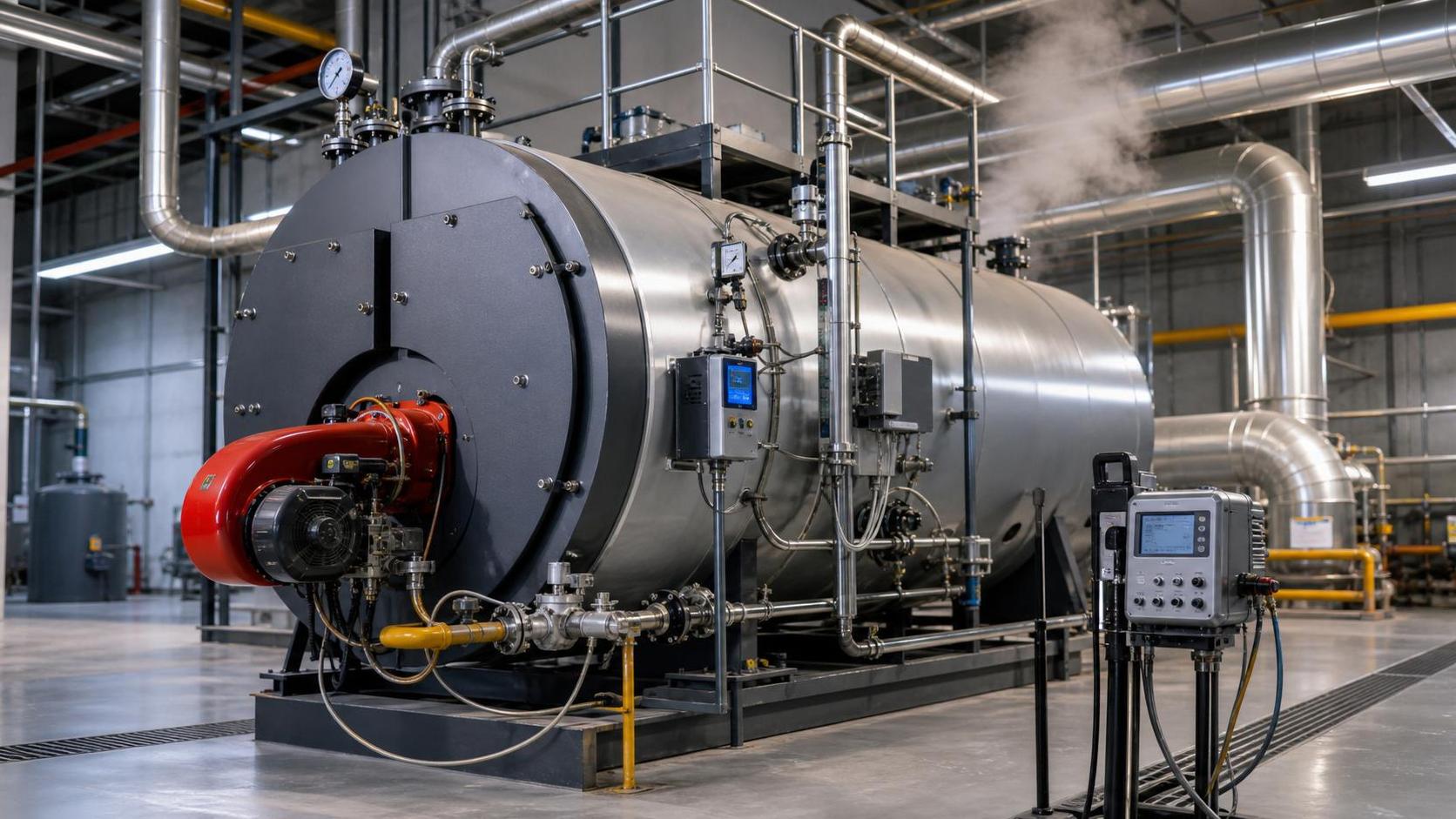
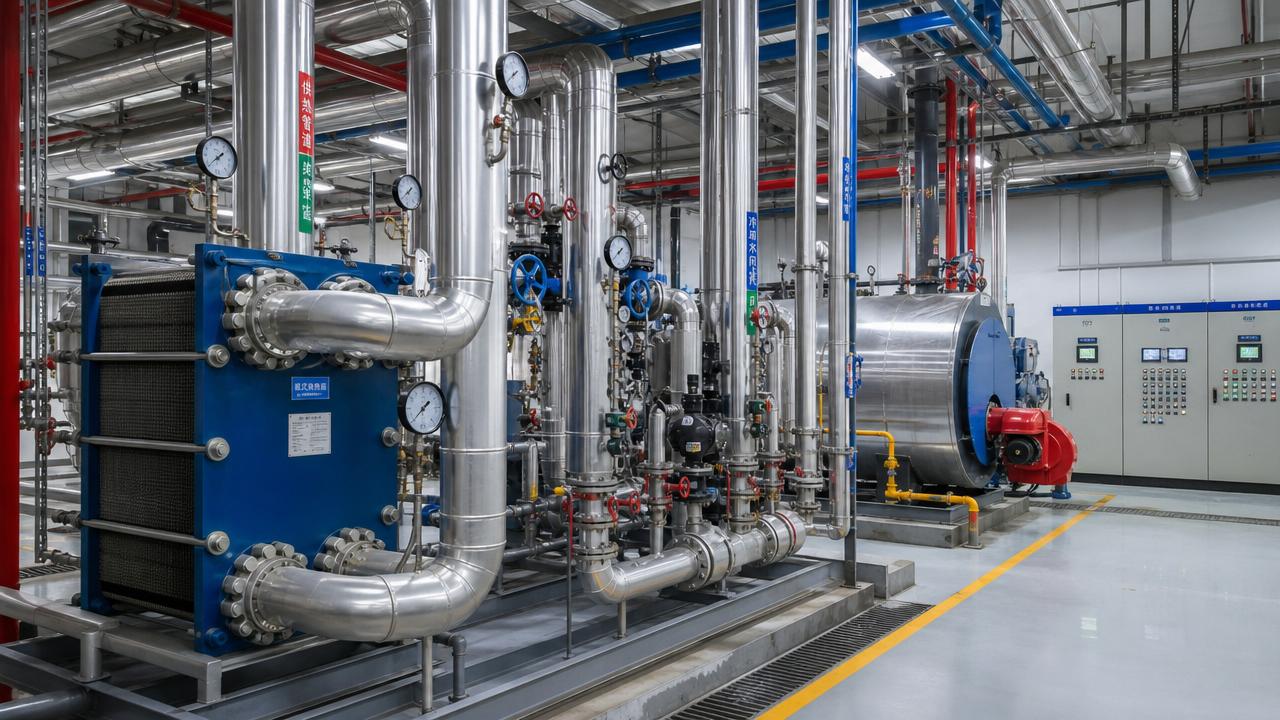
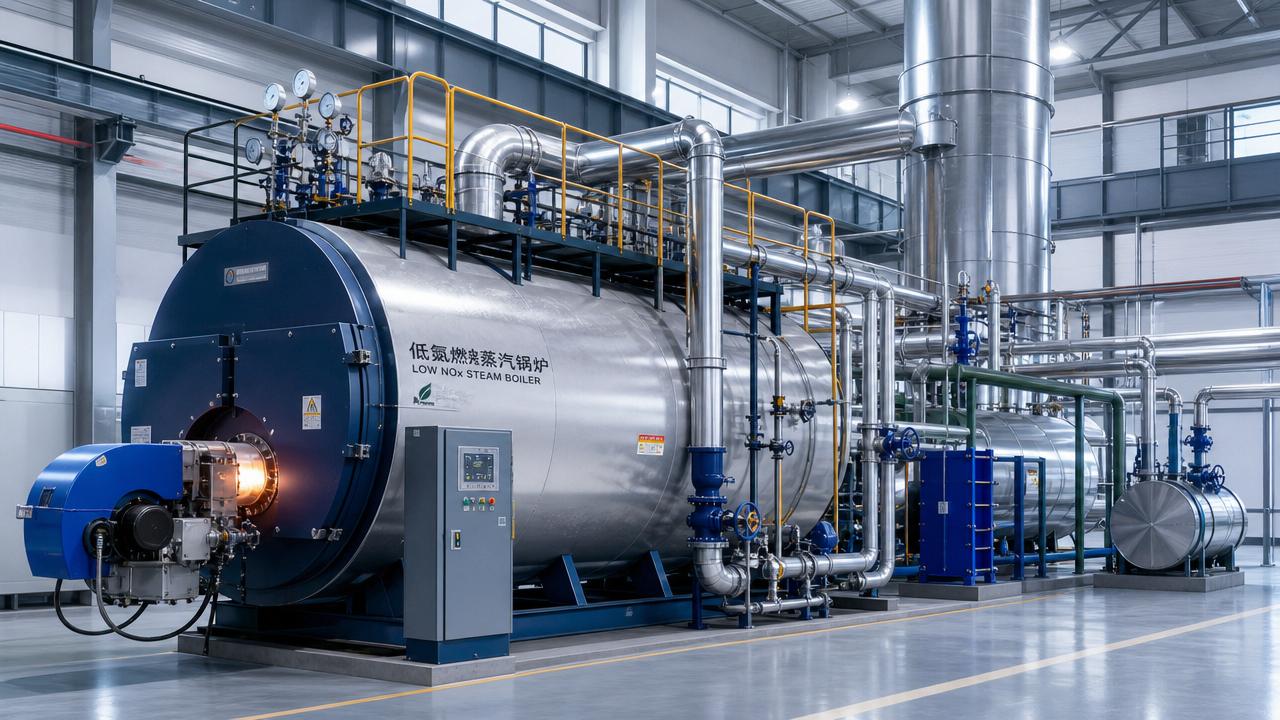
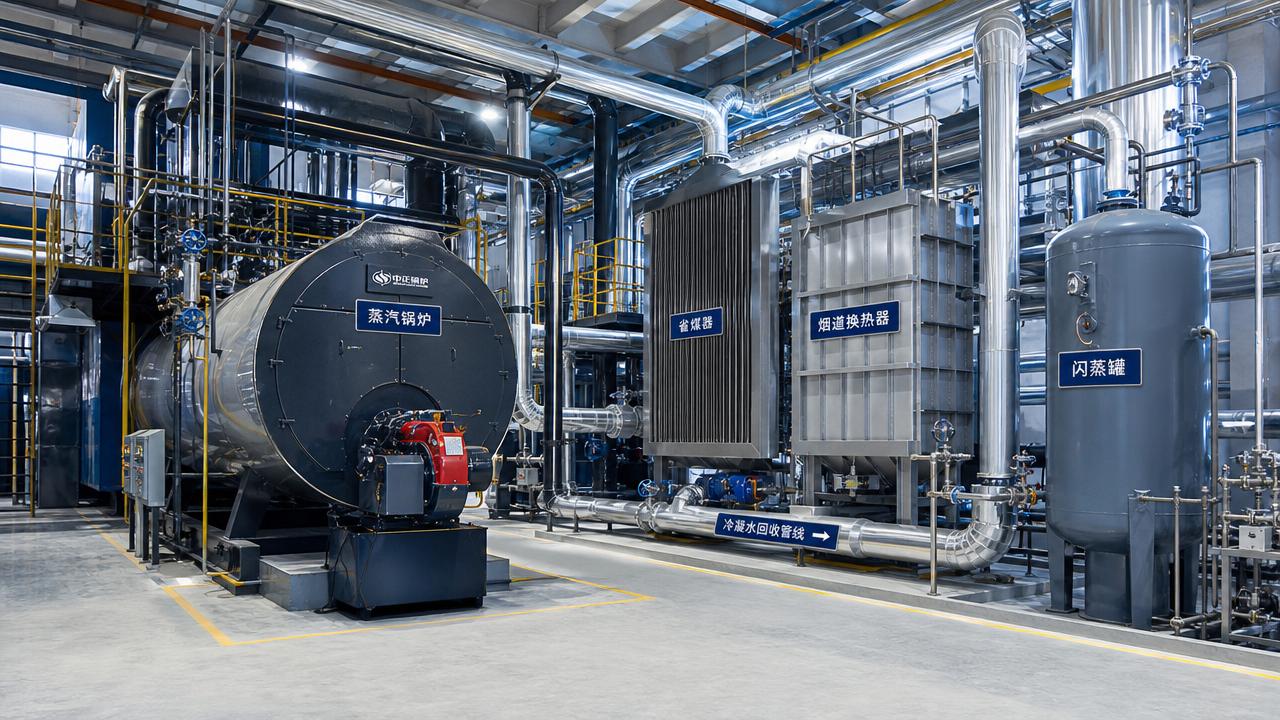
In a real steam plant, boiler heat loss is distributed across several mechanisms. Some are inherent and relatively small, while others are highly variable and often reducible. Thermodynamics analysis helps distinguish between the two. The main loss categories typically include dry flue gas loss, latent heat loss from water vapor in exhaust, unburned fuel loss, radiation and convection from the boiler surface, blowdown loss, and downstream losses tied to condensate return and steam distribution conditions.
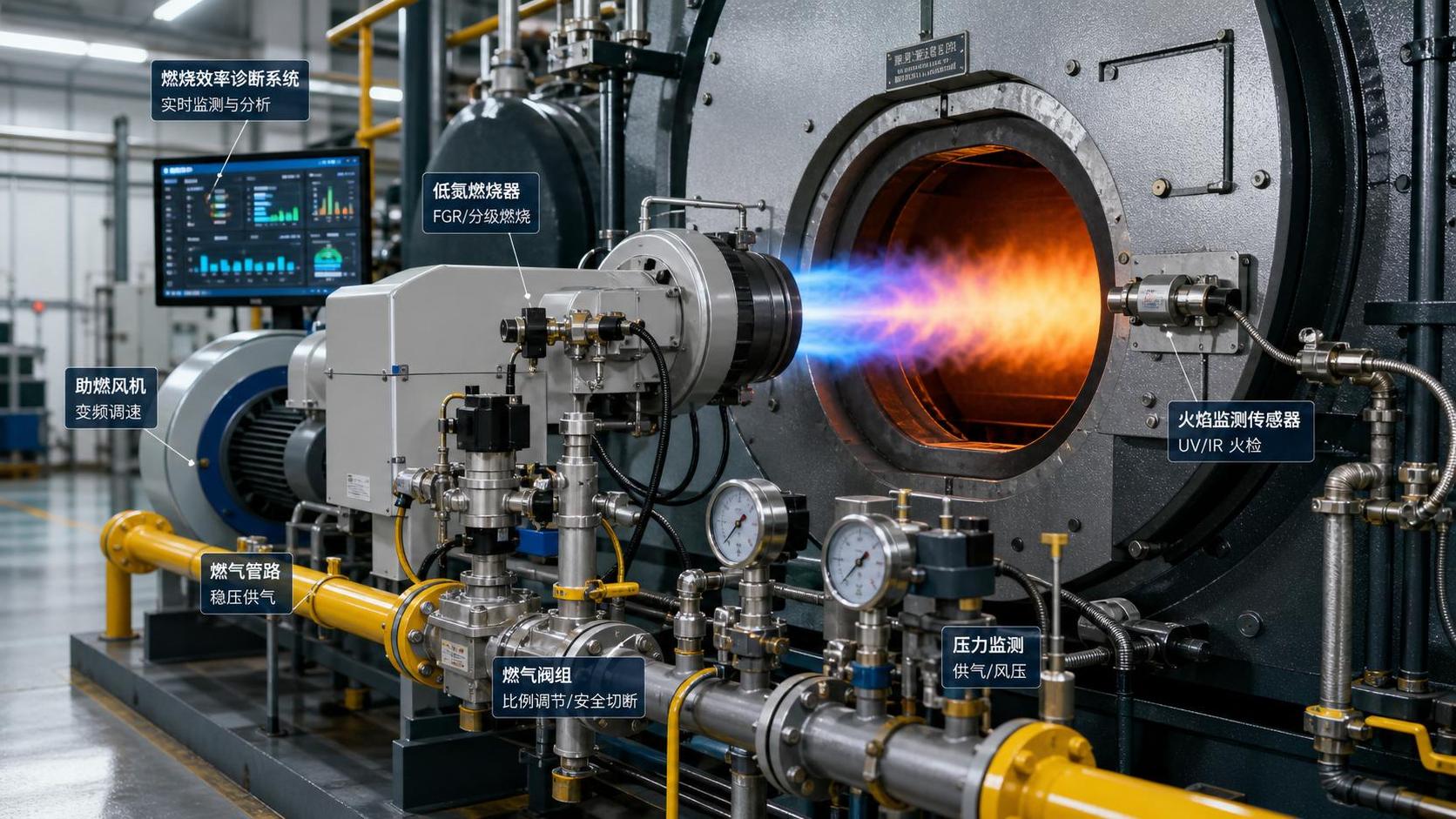
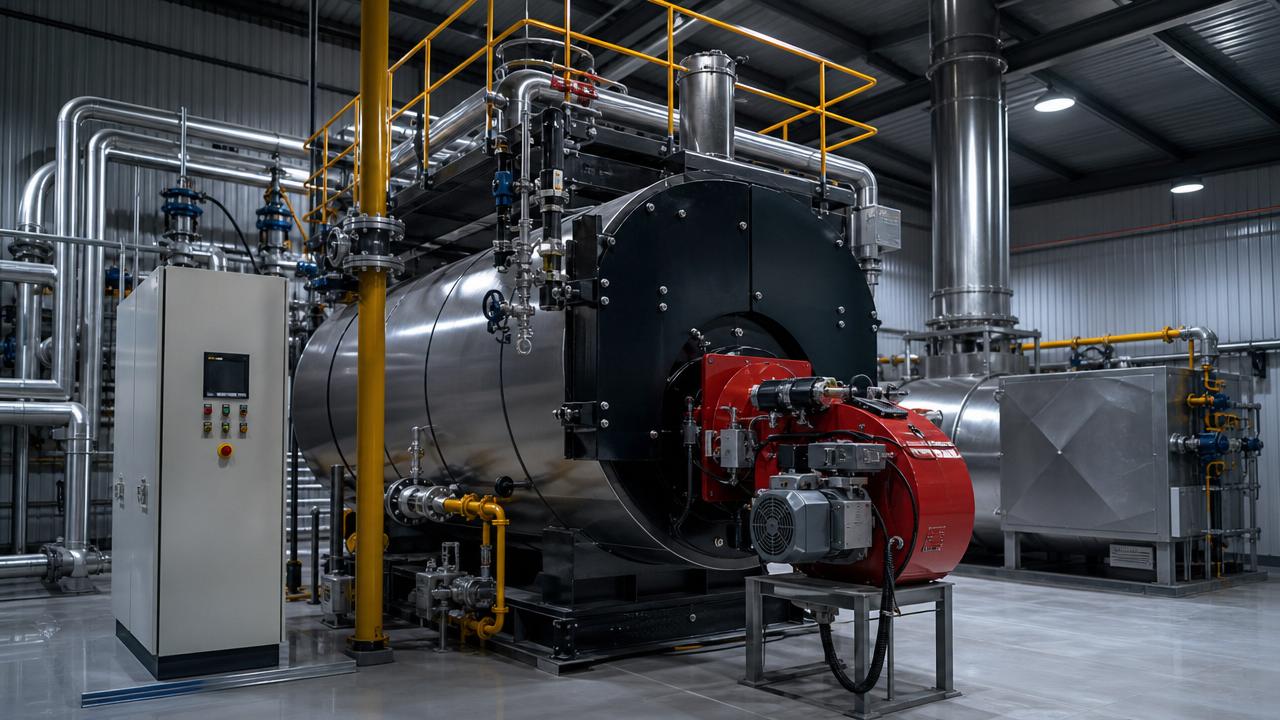
Flue gas loss is usually the largest component. When combustion products leave the stack at high temperature, they carry sensible heat that was generated from fuel but not transferred to the water and steam side. The higher the stack temperature and the greater the excess air, the greater this loss becomes. A boiler can appear stable in operation while still wasting large amounts of recoverable heat through poor heat transfer or untuned combustion.
Latent heat loss is linked to moisture in the exhaust stream. Hydrogen in the fuel forms water during combustion, and any moisture in the combustion air or fuel adds to the vapor load. In conventional non-condensing boilers, this water vapor exits through the stack, carrying latent heat that is not recovered. This is one reason why fuel type and flue gas dew point matter in comparative efficiency evaluations.
Blowdown is another significant but often underestimated source. Boilers require blowdown to control dissolved solids and maintain water chemistry, but excessive blowdown means hot water is discharged before its thermal value is fully utilized. If blowdown rates are set conservatively without conductivity control or heat recovery, the system can lose a meaningful share of input energy while also increasing makeup water and treatment requirements.
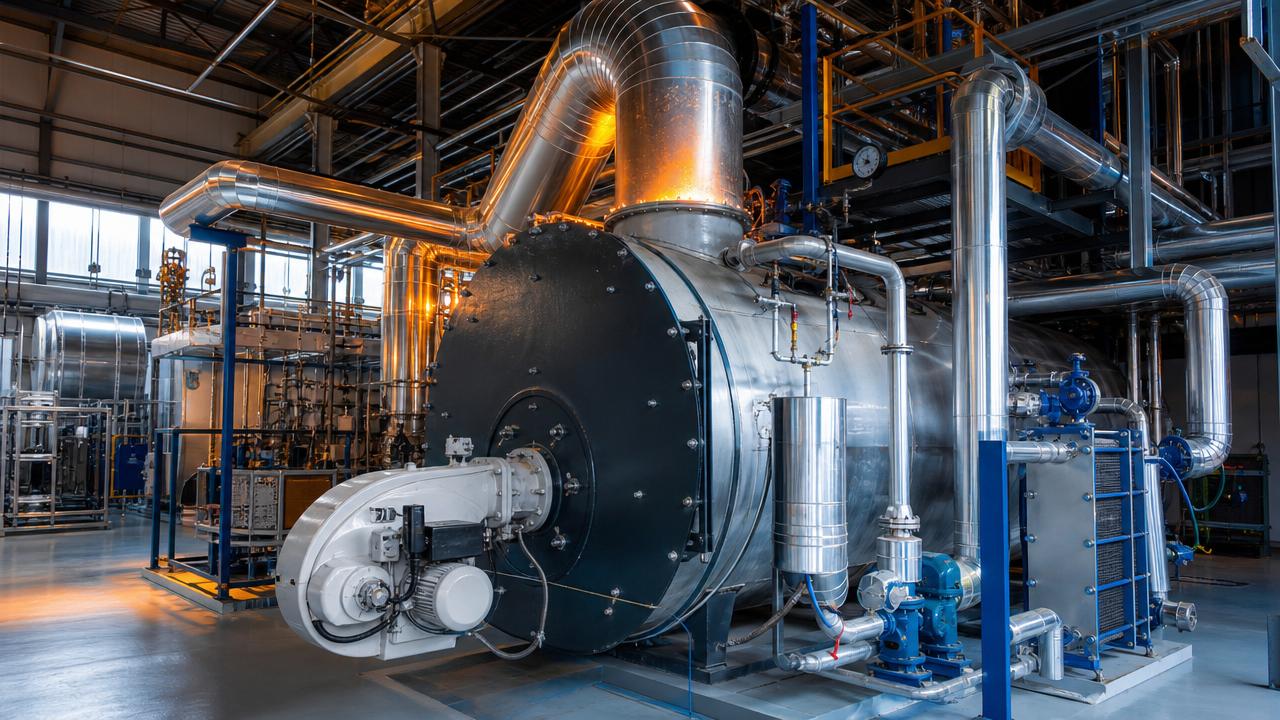
Radiation and convection losses from the boiler shell are smaller in percentage terms, but they become relevant during low-load operation, in older units with degraded insulation, or in facilities where surface maintenance has been neglected. Distribution-related losses, while technically beyond the combustion chamber, must also be considered when the evaluation objective is overall steam generation effectiveness rather than burner-only efficiency.
How Thermodynamics Analysis Quantifies Boiler Heat Loss
There are two common approaches to boiler efficiency evaluation: the direct method and the indirect method. The direct method compares useful steam energy output to fuel energy input. It is simple and useful for overall tracking, but it does not identify where the losses originate. The indirect method, by contrast, estimates individual heat losses and subtracts them from total input. For technical evaluators trying to diagnose causes, the indirect method is usually more informative.
In practical thermodynamics analysis, steam-side useful output is calculated from steam mass flow multiplied by the enthalpy rise between feedwater and produced steam. This requires accurate data for steam pressure, temperature or dryness fraction, feedwater temperature, and mass flow. On the fuel side, input is based on fuel flow and lower or higher heating value, depending on the efficiency convention used. Inconsistent fuel basis is a common reason why reported efficiency figures become misleading.
For stack loss estimation, evaluators use flue gas temperature, ambient air temperature, fuel composition, and oxygen or carbon dioxide concentration in the exhaust. Oxygen measurements indicate excess air. Excess air above what is needed for complete combustion dilutes the flue gas with additional nitrogen and oxygen, increasing the mass of hot gases leaving the stack. That means even moderate stack temperatures can correspond to substantial energy loss if excess air is high.
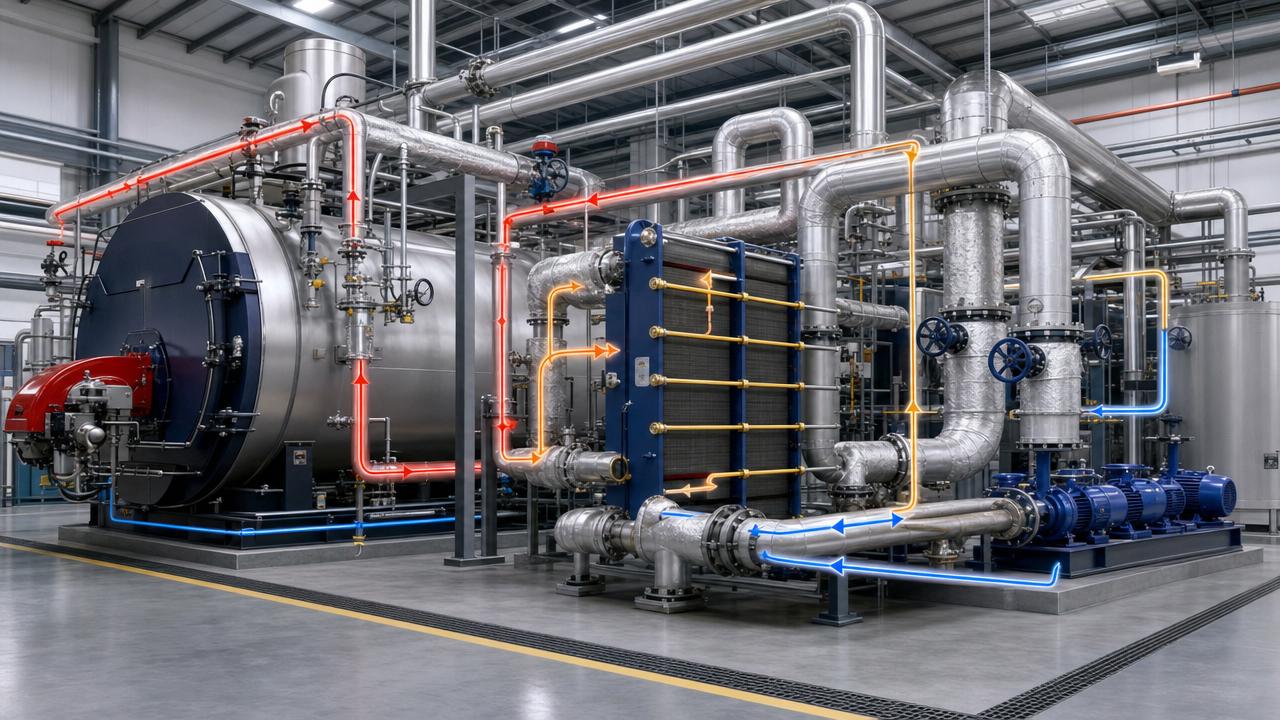
The logic is straightforward. A boiler burns fuel to produce hot combustion gases. Part of that heat transfers through the heat exchange surfaces to the water and steam circuit. Whatever remains in the exhaust represents unrecovered energy. If soot, scale, or poor burner tuning reduces effective heat transfer, stack temperature rises. If air leakage into the furnace or economizer path increases oxygen levels, flue mass rises. Both conditions increase loss, but they imply different corrective actions.
Blowdown loss is estimated from blowdown mass flow and the enthalpy difference between discharged boiler water and incoming makeup or recovered water. This can be surprisingly large in systems with high pressure, high cycles uncertainty, or poorly controlled manual blowdown practices. Radiation and convection losses are commonly estimated from standards, boiler size, or surface temperature measurements rather than from exact first-principles modeling, but the estimates are still useful for decision-making.
What Data Should Be Collected for a Credible Assessment
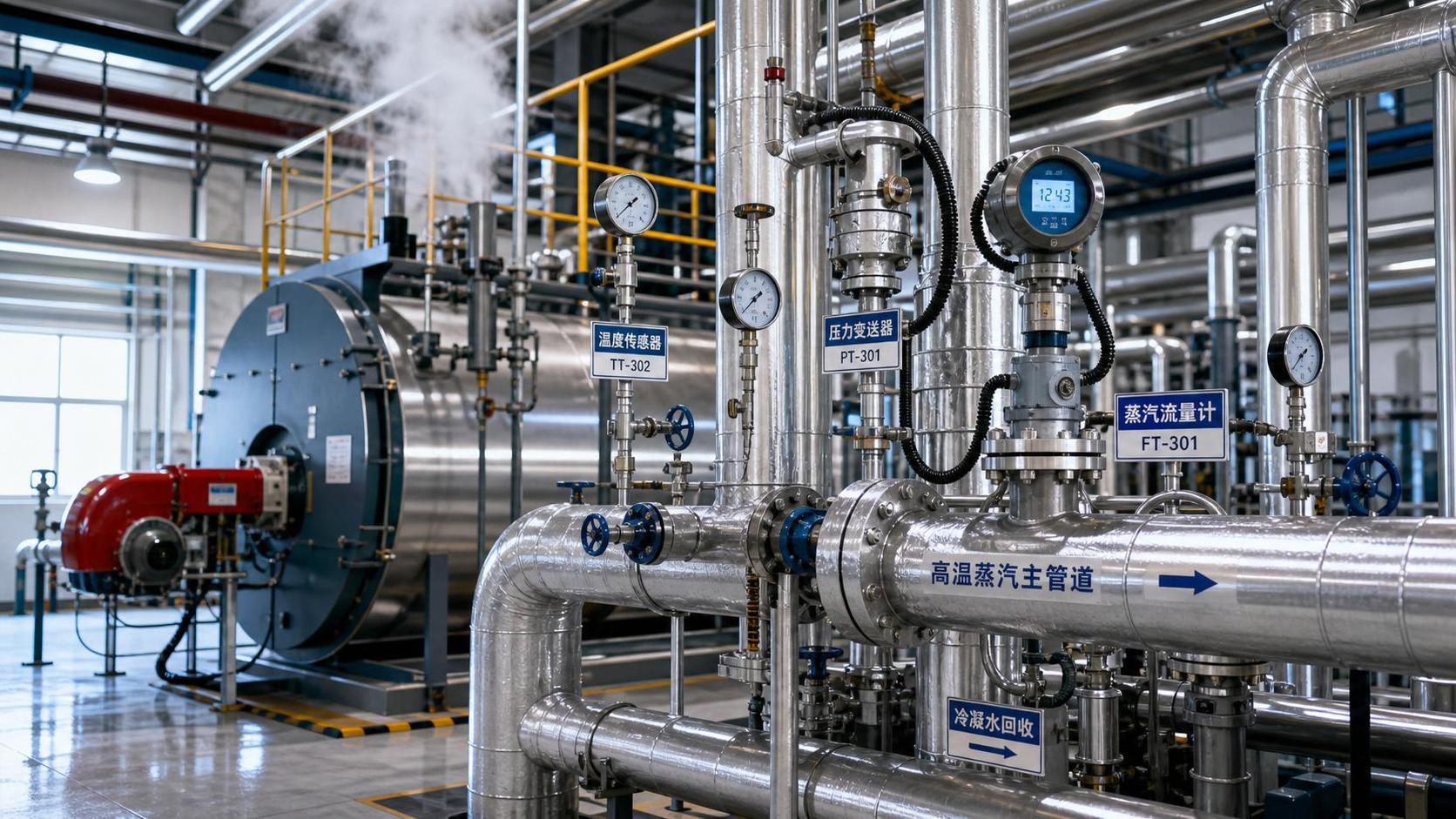
A boiler heat loss evaluation is only as strong as the field data behind it. Technical evaluators should prioritize measurements that directly support the largest uncertainty drivers. At minimum, this includes fuel flow, steam production rate, steam pressure and temperature, feedwater temperature, stack temperature, ambient temperature, and flue gas oxygen or carbon dioxide. If these values are unstable or inferred from poor instrumentation, the resulting thermodynamics analysis will have limited credibility.
It is also important to understand operating context. Measurements taken at one load point may not represent annual behavior. Many boilers perform differently at 40 percent load than at 80 percent load, especially if burner turndown, air-fuel control, or blowdown strategy changes with demand. Therefore, evaluators should capture data across representative operating conditions rather than treating a short steady-state test as the whole truth.
Water chemistry records, blowdown schedules, condensate return ratio, economizer condition, burner maintenance history, and insulation inspection findings all add interpretive value. They help explain why the numbers look the way they do. For example, elevated stack temperature combined with normal oxygen may indicate fouled heat-transfer surfaces. Elevated oxygen with normal stack temperature may indicate excess air or leakage. High makeup water demand may point to condensate system losses rather than a boiler-side combustion issue.
Calibration matters as much as coverage. Portable flue gas analyzers should be validated, steam flow metering assumptions should be checked, and fuel quality should be based on current supplier data when possible. In many sites, data scatter is not caused by boiler instability but by instrumentation drift or mismatched measurement intervals. A clean assessment methodology should document all assumptions and convert every major value onto a consistent energy basis.
How to Interpret the Results and Prioritize Improvements
Finding heat loss is only the first step. The real value of thermodynamics analysis lies in distinguishing between losses that are normal, losses that are reducible through tuning or maintenance, and losses that require capital upgrades. Technical evaluators should rank findings by energy impact, implementation complexity, interaction with production risk, and expected payback rather than by percentage loss alone.
Stack loss findings often lead the list because they can reveal several improvement paths. If oxygen is too high, burner tuning, combustion control optimization, or leakage correction may be enough. If stack temperature is elevated despite reasonable oxygen levels, the likely focus shifts toward soot removal, waterside descaling, economizer performance, or heat recovery enhancement. If the boiler is non-condensing and exhaust conditions are favorable, downstream condensing recovery may also be worth evaluating where corrosion control is feasible.
Blowdown-related losses should be interpreted with chemistry requirements in mind. Reducing blowdown blindly can create reliability and scaling problems, so the right question is not whether blowdown exists, but whether it is optimized. Automatic conductivity control, blowdown heat recovery, and improved makeup quality can sometimes reduce both energy loss and water treatment cost with relatively low implementation risk.
Condensate return has large system-level implications. A boiler may show acceptable combustion efficiency while the site still wastes energy because hot condensate is not recovered. Returning hotter water reduces fuel required to reach steam conditions and can also cut chemical consumption. For evaluators comparing projects, condensate improvements often deserve to be assessed alongside boiler tuning because the combined savings effect is frequently larger than expected.
Insulation and shell losses are usually not the biggest savings source, but they are visible, measurable, and often low-risk. Surface temperature surveys can quickly identify damaged insulation, leaking valves, or bare fittings that create continuous heat loss. In facilities with many steam accessories, these smaller losses accumulate and can justify targeted maintenance campaigns.
Common Evaluation Mistakes That Distort Boiler Loss Analysis
One common mistake is relying on nameplate efficiency or a historical acceptance test as if it represented current performance. Boilers drift over time. Fuel quality changes, heat-transfer surfaces foul, controls age, and operating profiles shift. A present-day thermodynamics analysis should be based on current measured conditions, not inherited assumptions.
Another mistake is confusing combustion efficiency with total boiler system effectiveness. A unit may have acceptable flue gas readings while still wasting large amounts of thermal energy through excessive blowdown, poor condensate return, steam leaks, or cycling losses. Technical evaluators should define the assessment boundary clearly: burner efficiency, boiler efficiency, or site steam system efficiency.
Short test windows also create bias. If data is collected only when the boiler is at a stable high load, losses associated with low-load cycling, standby periods, and fluctuating steam demand may be missed. Annualized savings estimates should reflect real operating hours and load distribution, not just best-case snapshots.
Finally, some evaluations overstate savings by stacking incompatible improvement assumptions. For instance, the benefit of reducing excess air and the benefit of lowering stack temperature may overlap. If each measure is calculated independently from the same baseline and then summed without adjustment, the projected savings can become unrealistic. Good technical assessment practice requires interaction-aware modeling.
Why This Matters for Upgrade Decisions and Performance Benchmarking
For technical evaluators, the purpose of boiler heat loss analysis is often larger than maintenance diagnosis. It supports capital screening, vendor comparison, decarbonization planning, and internal energy benchmarking. A boiler project should not be justified only by a generic efficiency promise. It should be supported by quantified baseline losses, expected corrected losses, assumptions about operating profile, and sensitivity to fuel cost and steam demand changes.
That is where a disciplined thermodynamics analysis becomes especially valuable. It translates boiler behavior into a language that engineering, operations, and finance teams can all use. Heat loss percentages become fuel savings. Stack temperature improvements become reduced annual emissions. Condensate recovery becomes lower makeup demand and improved thermal resilience. The analysis creates a common basis for decision-making instead of leaving the conversation at the level of vendor claims or rough rules of thumb.
For organizations benchmarking multiple sites, a standardized loss framework is also essential. Comparing boiler performance only by total reported efficiency can be misleading if fuel basis, steam conditions, blowdown treatment, and measurement quality differ from site to site. Breaking losses into comparable thermodynamic categories makes cross-site benchmarking far more actionable.
Conclusion
Thermodynamics analysis is not just a theoretical exercise for steam boilers. It is one of the clearest ways to find where energy is escaping, determine whether the loss is controllable, and decide which improvement actions deserve priority. For most technical evaluators, the highest-value insights come from carefully quantifying stack losses, excess air, blowdown, feedwater condition, condensate return, and surface losses under representative operating conditions.
The strongest evaluations combine sound measurement, consistent energy balances, and realistic interpretation of operating context. Done well, this approach reveals whether poor boiler performance is driven by combustion tuning, heat-transfer degradation, water-side practice, or broader steam system inefficiency. That clarity is what enables better retrofit choices, more defensible performance assessments, and more reliable boiler optimization strategies.
Related News
- Low-NOx Boilers Cost Breakdown: Upfront Price, Fuel Savings, and PaybackAuthor :Thermal Energy Strategist

- Boiler Combustion Systems: Common Causes of Unstable Fuel PerformanceAuthor :Thermal Energy Strategist

- Hot Water Industrial Boilers: When Efficiency Gains Justify ReplacementAuthor :Thermal Energy Strategist

- What Boiler Efficiency Really Means in Daily Operation and Energy BillsAuthor :Thermal Energy Strategist

- Boiler Efficiency Testing Methods That Expose Heat Loss and Fuel WasteAuthor :Thermal Energy Strategist

- Industrial Burner Systems: Key Factors for Safe Heat OutputAuthor :Thermal Energy Strategist

- Gas-Fired Boiler Combustion Technology: Key Efficiency and Emissions Trade-OffsAuthor :Thermal Energy Strategist

- Unfired Heat Recovery Steam Generators: When Do They Pay Off?Author :Thermal Energy Strategist

- How to Evaluate Steam Generation Systems Electric for Process Heat ProjectsAuthor :Thermal Energy Strategist

- Thermal Power Systems for Industrial Heating: Common Sizing Mistakes to AvoidAuthor :Thermal Energy Strategist

- Low-NOx Condensing Boilers: How to Compare Efficiency and EmissionsAuthor :Thermal Energy Strategist
![]()
- Low Emissions Boilers for Food Processing: Key Compliance and Fuel Cost FactorsAuthor :Thermal Energy Strategist

- Steam System Efficiency Calculation: Key Inputs That Change the ResultAuthor :Thermal Energy Strategist

- How to Evaluate a Steam Boiler Components Exporter Before OrderingAuthor :Thermal Energy Strategist

- Burner Systems Troubleshooting: Common Efficiency Loss CausesAuthor :Thermal Energy Strategist

- EU PED Q2 Rules Require Digital Compliance TagsAuthor :Thermal Energy Strategist

- Thermal Power Systems: Key Efficiency Risks in Daily OperationAuthor :Thermal Energy Strategist

- Low-NOx Combustion Boilers: Key Efficiency and Compliance ChecksAuthor :Thermal Energy Strategist

- Low-NOx Combustion Boilers: Key Specs That Affect Emissions and Fuel UseAuthor :Thermal Energy Strategist

- Low-NOx Combustion Boilers: Key Compliance RisksAuthor :Thermal Energy Strategist

- Thermodynamics Analysis for Boiler Heat-Loss ReductionAuthor :Thermal Energy Strategist

- Industrial Thermal Systems: Common Operating RisksAuthor :Thermal Energy Strategist

- Low-NOx Combustion Boilers: Key Spec Checks Before PurchaseAuthor :Thermal Energy Strategist

- How Industrial Heat Recovery Cuts Boiler Fuel Costs in 2026Author :Thermal Energy Strategist

- Thermodynamics Analysis: 5 Heat Loss Clues in Steam BoilersAuthor :Thermal Energy Strategist

- Low-NOx Combustion Boilers: What Affects Real Emissions PerformanceAuthor :Thermal Energy Strategist

- Thermodynamics Analysis: Finding Heat Loss in Steam BoilersAuthor :Thermal Energy Strategist

- 2026 Steam Boiler Upgrades for Lower NOx and Fuel CostsAuthor :Thermal Energy Strategist

- EU to Expand CBAM to Steam Boilers; Exporters Must Prepare Carbon DataAuthor :Thermal Energy Strategist

- Industrial Heat Recovery: When Payback Beats New Boiler CapacityAuthor :Thermal Energy Strategist

- Carbon Neutrality Targets and the New Boiler Retrofit PaybackAuthor :Thermal Energy Strategist

- Low-NOx Combustion Boilers: Fuel Savings vs Emission LimitsAuthor :Thermal Energy Strategist

- Industrial Energy Efficiency Benchmarks for Steam Boiler Upgrades in 2026Author :Thermal Energy Strategist

- Low-NOx Combustion Boilers: Efficiency vs Emissions in 2026Author :Thermal Energy Strategist

- Industrial Heat Recovery Options for Steam Boiler SavingsAuthor :Thermal Energy Strategist

- Low-NOx Combustion Boilers and 2026 Compliance PressureAuthor :Thermal Energy Strategist