Vacuum Processes: Common Efficiency Losses and Fixes




In industrial vacuum processes, small efficiency losses often hide in plain sight—leaking seals, fouled filters, poor pump sizing, or unstable cooling can quietly raise energy use and reduce system reliability.
For after-sales maintenance teams, identifying these issues early protects uptime, lowers service costs, and extends equipment life across demanding industrial applications.
This guide highlights common causes of vacuum efficiency decline and practical fixes that restore stable performance in daily vacuum processes.
Why Vacuum Processes Need a Checklist Approach
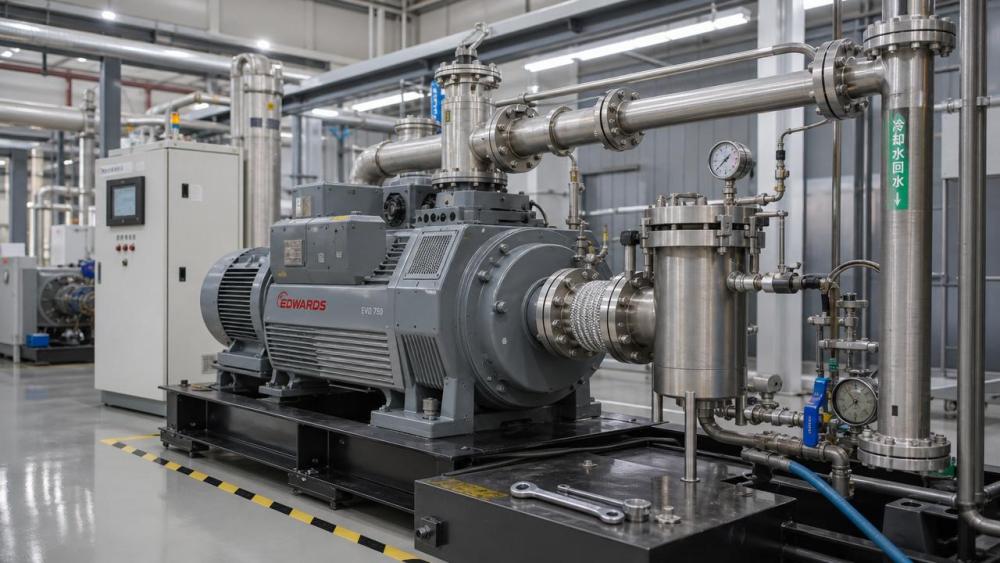
Vacuum systems rarely fail from one dramatic fault. Most losses develop through small deviations that compound over weeks of production.
A checklist helps separate symptoms from root causes. It also supports consistent decisions across pumps, piping, cooling loops, controls, and connected equipment.
In mixed industrial sites, vacuum processes support packaging, drying, degassing, coating, lifting, forming, and material handling. Each duty creates different efficiency risks.
Without structured checks, maintenance often focuses on the pump only. Yet many losses begin in valves, filters, heat exchangers, process chambers, or operating habits.
Core Checklist for Efficient Vacuum Processes
Use this checklist during commissioning, planned service, troubleshooting, and energy audits. Record baseline values before changing components or control settings.
- Check ultimate pressure, pump-down time, and steady operating pressure against the original process specification, not only against yesterday’s readings.
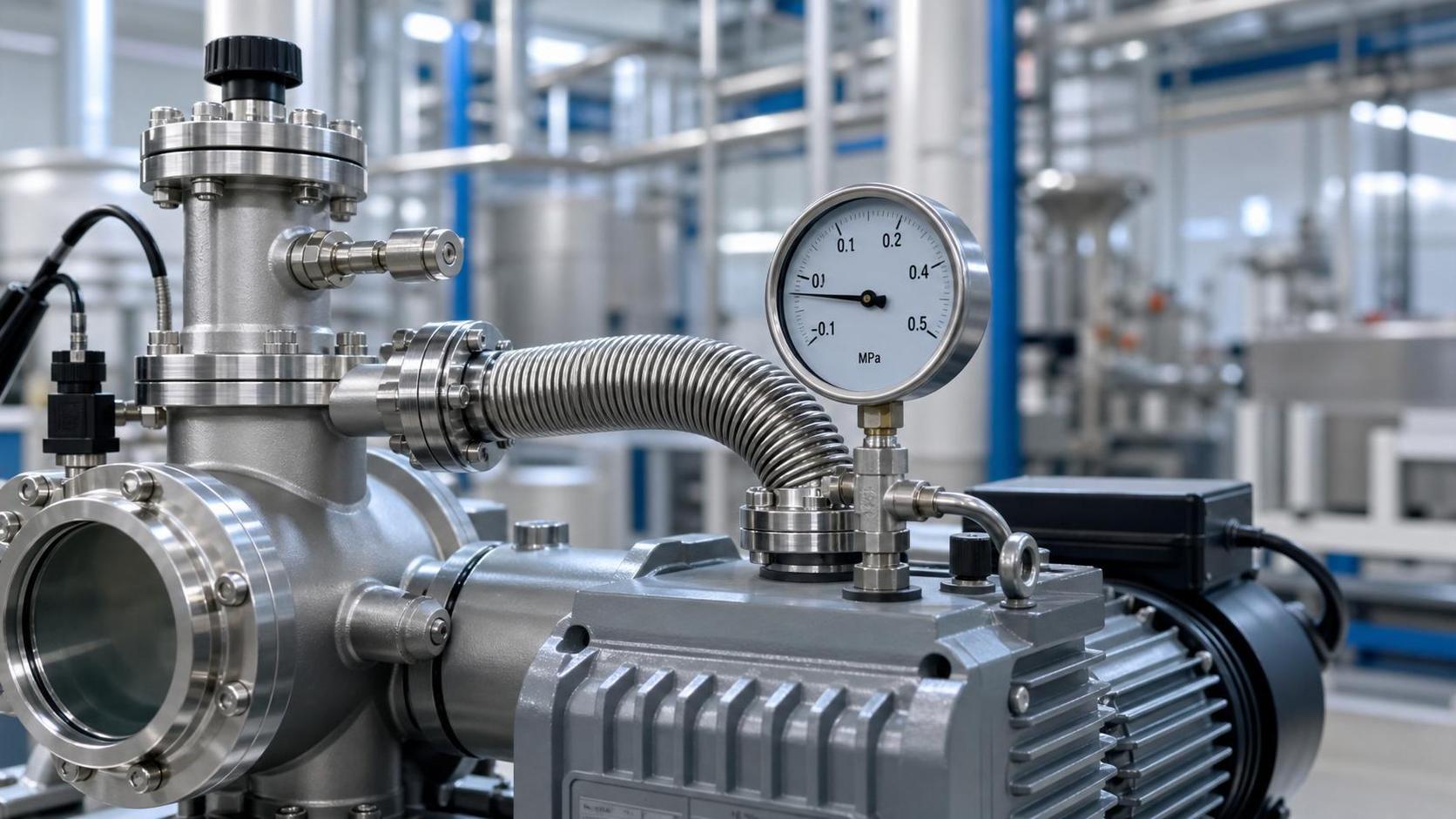
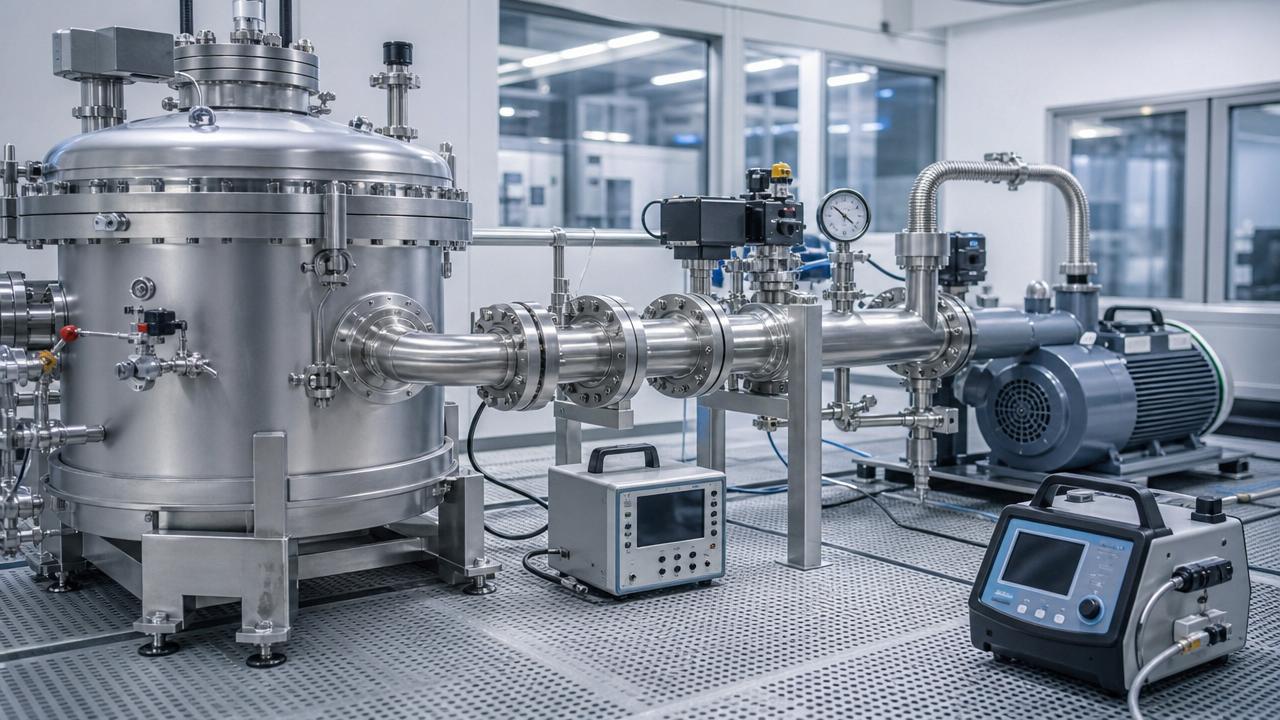
- Inspect all seals, flanges, gaskets, and flexible hoses with leak detection tools before assuming the pump has lost capacity.
- Replace clogged inlet filters, exhaust filters, and separator elements when differential pressure rises beyond the recommended service threshold.
- Verify pump oil condition, lubricant level, and oil change history, especially where vapor load or process contamination is high.
- Measure cooling water temperature, flow rate, and heat exchanger fouling before interpreting high pump temperature as mechanical failure.
- Confirm valve sequencing, non-return valve condition, and isolation valve closure to prevent backflow and unnecessary evacuation cycles.
- Review pump sizing against actual gas load, chamber volume, target pressure, duty cycle, and future process expansion plans.
- Trend motor current, vibration, discharge temperature, and pressure stability to detect gradual decline before production quality changes.
- Clean condensers, traps, and knock-out pots so condensable vapors do not overload pumps or contaminate downstream equipment.
- Align control setpoints with process needs instead of running deeper vacuum levels than required for product quality.
These checks create a practical baseline for vacuum processes. They also help separate energy waste from unavoidable process demand.
Efficiency Loss 1: Air Leaks and Poor Sealing
Air leakage is one of the most common hidden losses in vacuum processes. Even minor leaks force pumps to handle unnecessary gas load.
Typical leak points include shaft seals, door gaskets, sight glasses, threaded fittings, valve stems, hose connections, and instrument ports.
Fix leaks through a documented leak test route. Start near the chamber, then move outward toward headers, manifolds, and pump inlets.
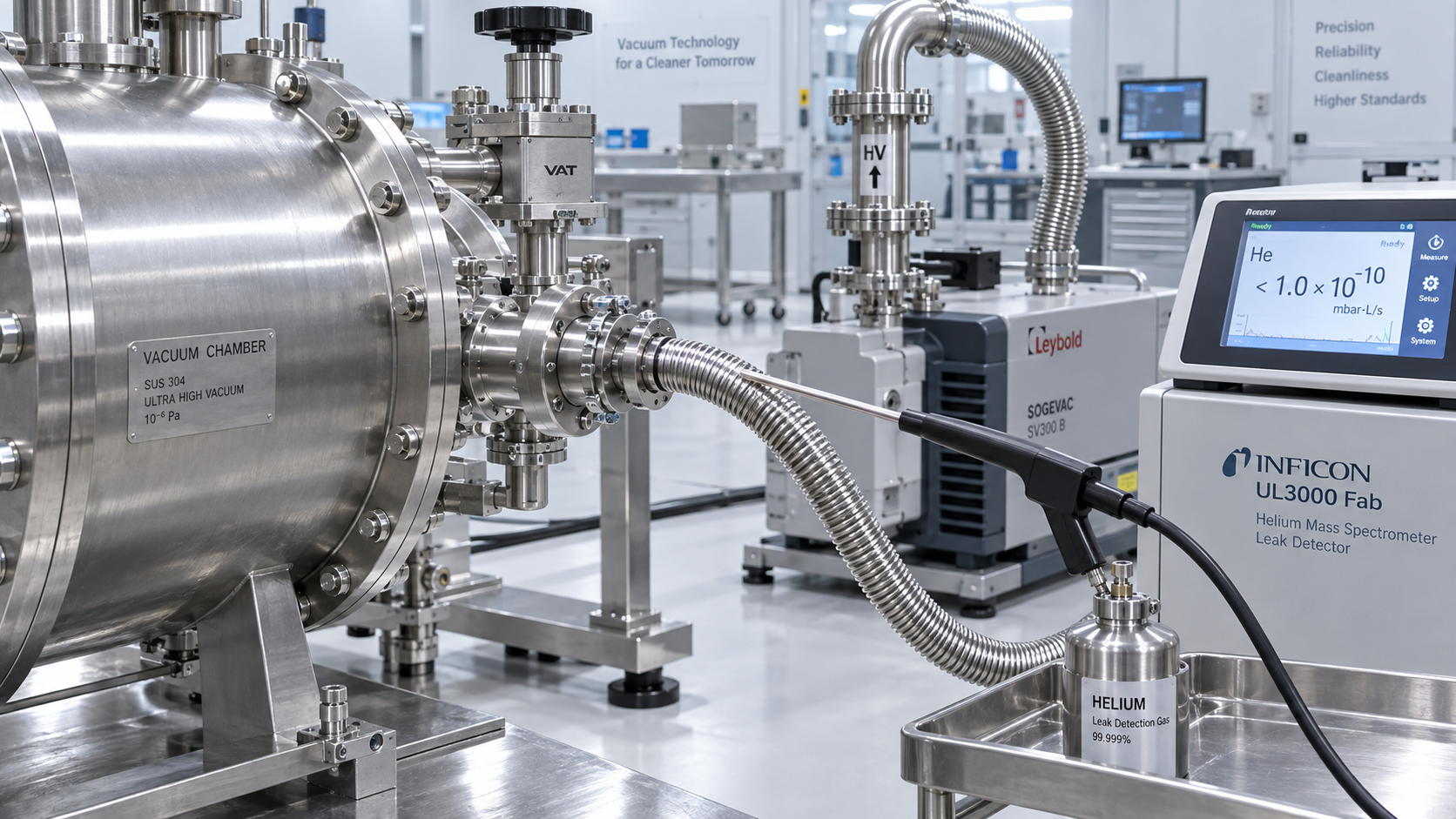
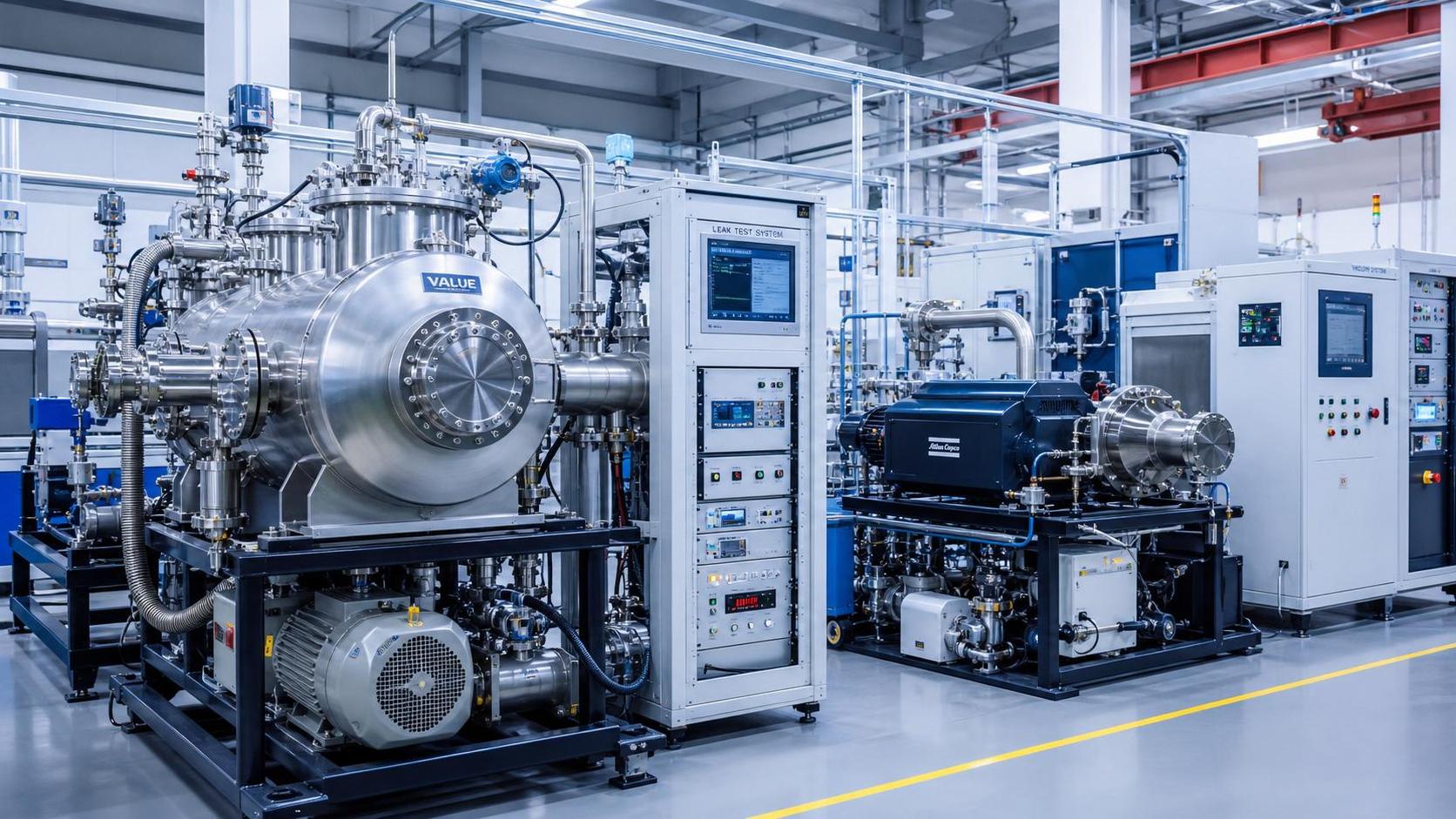
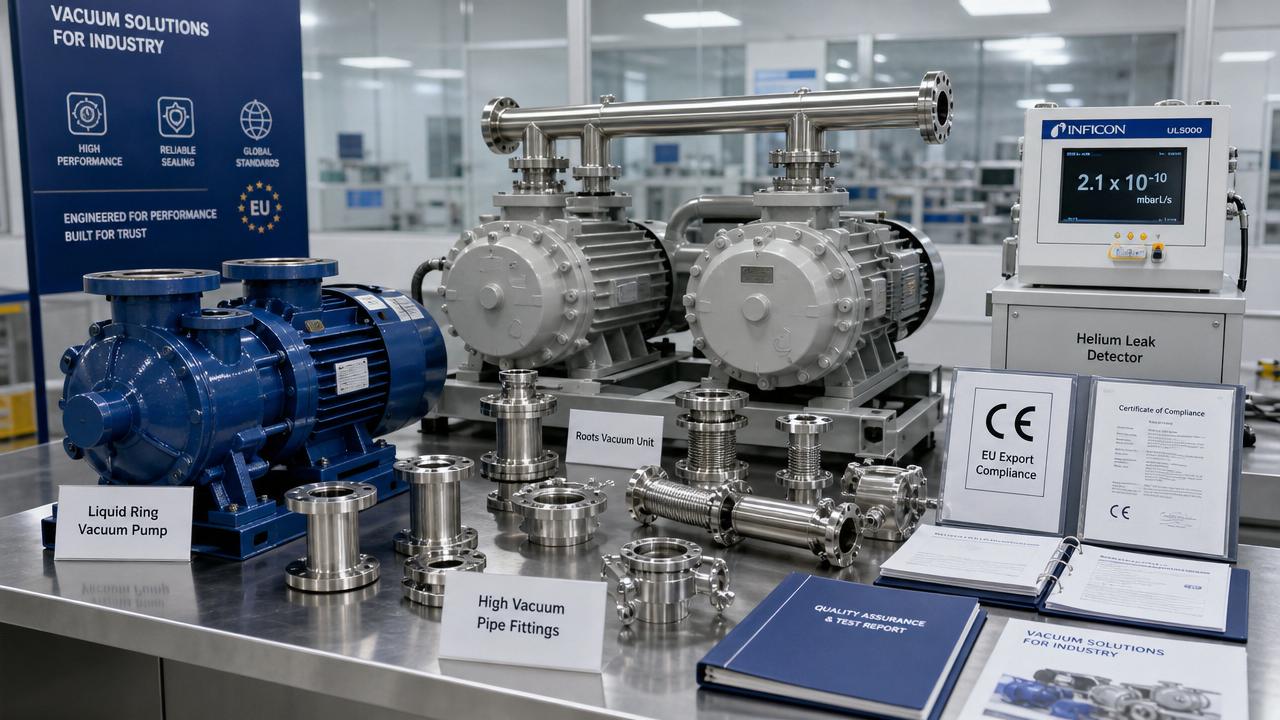
Use helium leak detection, pressure rise testing, ultrasonic tools, or soap solution where suitable. Match the method to pressure level and cleanliness requirements.
Practical Fixes
- Replace aged elastomers with materials compatible with temperature, chemicals, cleaning agents, and operating vacuum level.
- Tighten flanges using proper torque sequence to avoid distorted gaskets and uneven compression.
- Remove temporary fittings after maintenance, because quick repairs often become permanent leak paths.
Efficiency Loss 2: Fouled Filters, Traps, and Condensers
Filters protect pumps, but overloaded filters restrict flow. This increases pump-down time and reduces effective pumping speed.
In many vacuum processes, powders, oil mist, resin vapors, water vapor, and cleaning residues collect inside filters and traps.
A clean pump cannot perform well if the inlet path is restricted. Pressure measurement should include readings before and after critical elements.
Practical Fixes
- Set replacement intervals by measured differential pressure, not only calendar time or visual inspection.
- Install pre-separators where powder, droplets, or condensable vapors repeatedly shorten filter life.
- Clean condenser surfaces and verify drain function so liquids do not return toward the pump inlet.
Efficiency Loss 3: Incorrect Pump Sizing
Pump sizing errors cause lasting inefficiency in vacuum processes. Oversized pumps waste energy, while undersized pumps run hot and unstable.
Sizing should reflect gas load, vapor load, target pressure, chamber volume, leak rate, cycle time, and allowable recovery time.
A pump selected only by nominal capacity may disappoint once piping losses, contamination, temperature, and duty cycle are included.
Practical Fixes
- Recalculate real pumping demand after process changes, line extensions, product upgrades, or added chambers.
- Use variable speed control where demand fluctuates and stable pressure control improves energy performance.
- Avoid using one central vacuum level for every user when different processes need different pressures.
Efficiency Loss 4: Heat and Cooling Instability
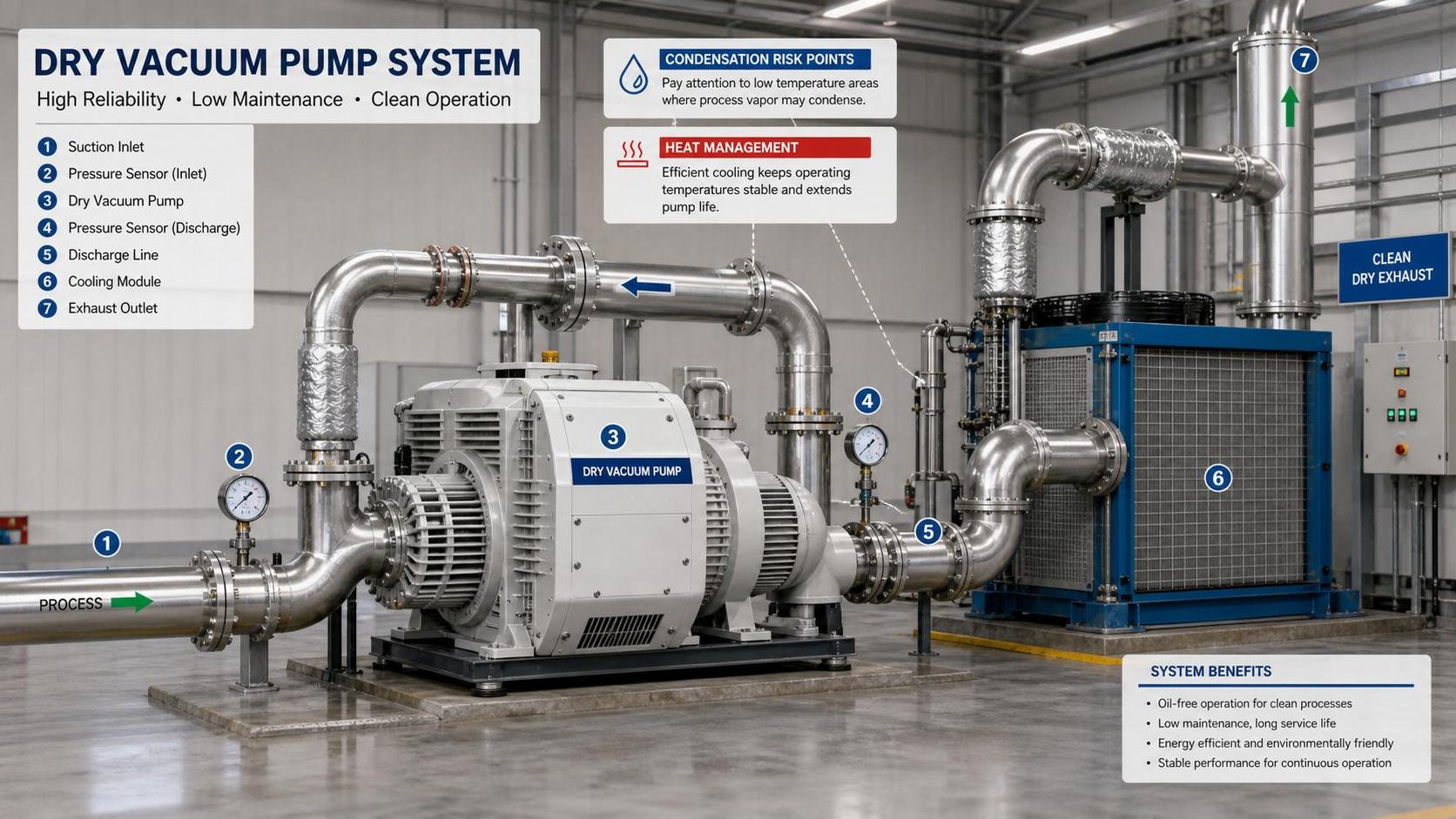
Temperature strongly affects vacuum processes. Excess heat changes oil viscosity, vapor handling, clearances, seals, and overall pump reliability.
Cooling problems are often mistaken for pump wear. Restricted water flow, scale, poor ventilation, or dirty heat exchangers can cause similar symptoms.
Unstable cooling also increases maintenance frequency. Hot pumps oxidize oil faster and may create deposits inside critical passages.
Practical Fixes
- Measure inlet and outlet cooling temperatures during real production, not only during unloaded test runs.
- Descale water circuits and maintain strainers where cooling water quality varies seasonally.
- Keep ventilation paths clear around dry pumps, blowers, and oil-sealed units in enclosed service rooms.
Efficiency Loss 5: Poor Controls and Setpoint Drift
Control strategy can determine whether vacuum processes run efficiently or waste power through constant over-evacuation.
Setpoints may drift after product changes, control upgrades, emergency repairs, or operator workarounds. These changes often remain undocumented.
Running deeper vacuum than needed rarely improves quality. It usually increases energy use, cycle time, heat load, and mechanical stress.
Practical Fixes
- Validate every vacuum setpoint against product quality, process speed, safety margin, and energy consumption.
- Calibrate vacuum gauges and transmitters before adjusting pumps, valves, or control logic.
- Use standby modes, staged pumps, and automatic isolation to prevent idle equipment from drawing avoidable power.
Application Notes for Different Vacuum Processes
Packaging and Food Handling
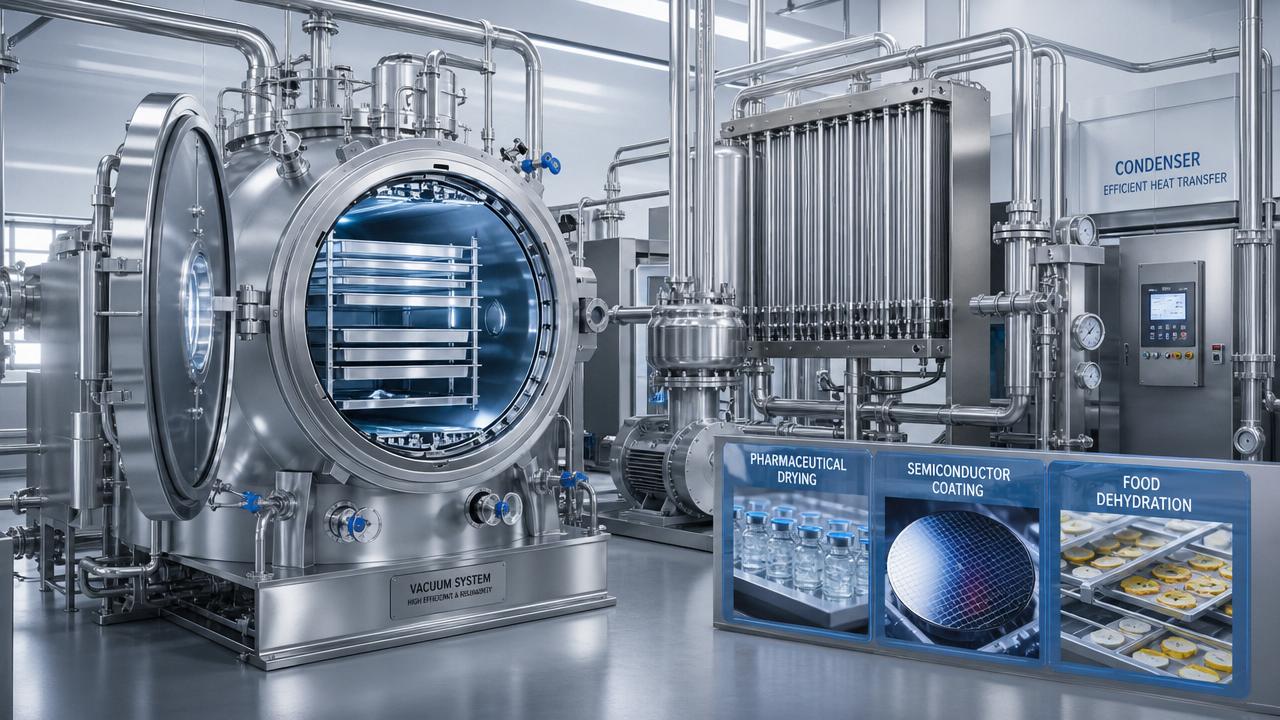
Packaging vacuum processes often face moisture, product particles, washdown conditions, and frequent cycling. Hygienic design must align with pump protection.
Focus on moisture separation, drain reliability, filter access, and stable cycle pressure. Small leaks can reduce seal quality and increase reject rates.
Chemical, Pharmaceutical, and Laboratory Duty
These vacuum processes may involve solvents, acids, powders, or sensitive products. Material compatibility and contamination control are central concerns.
Use condensers, cold traps, scrubbers, or dry technologies where process vapors can damage oil, seals, exhaust systems, or downstream equipment.
Metallurgy, Coating, and Heat Treatment
High-temperature vacuum processes depend on stable pressure, clean chambers, and reliable roughing and backing systems.
Monitor pump-down curves after each maintenance event. A slower curve can reveal chamber contamination, leaks, valve faults, or reduced pumping speed.
Plastics, Drying, and Degassing
Drying and degassing vacuum processes handle vapors that change with feedstock moisture, temperature, and production rate.
Stabilize upstream heating and vapor removal. Variable vapor load can overload pumps even when mechanical condition is acceptable.
Commonly Ignored Risks in Vacuum Processes
Ignoring piping loss: Long headers, undersized lines, sharp bends, and unnecessary fittings reduce effective pumping speed at the chamber.
Trusting uncalibrated gauges: A faulty transmitter can lead to incorrect setpoints, unnecessary service calls, and poor process decisions.
Skipping oil analysis: Oil condition reveals water ingress, chemical attack, overheating, and contamination before visible pump damage appears.
Overlooking exhaust restrictions: Blocked exhaust filters or silencers raise backpressure, increasing temperature and reducing pump efficiency.
Normalizing slow recovery: Gradual pump-down delays are often accepted as normal until production capacity or product quality suffers.
Practical Execution Plan
Start with measurement. Efficient vacuum processes require verified data before replacing pumps, changing controls, or redesigning piping.
- Create a baseline sheet for pressure, pump-down time, temperature, current, vibration, cooling flow, and filter differential pressure.
- Rank faults by energy impact, production risk, safety concern, and ease of correction.
- Fix leaks, clogged filters, cooling restrictions, and calibration errors before considering major equipment replacement.
- Review historical alarms and maintenance notes to identify repeated symptoms across similar vacuum processes.
- Confirm improvements with before-and-after data, including pressure stability, cycle time, power demand, and product acceptance.
This sequence prevents unnecessary spending. It also creates a repeatable method for diagnosing vacuum processes across different departments or sites.
Maintenance Metrics Worth Tracking
Reliable vacuum processes need simple indicators that reveal deterioration early. The best metrics connect performance, energy, and service condition.
- Track pump-down time for a known chamber volume under repeatable loading conditions.
- Record steady-state pressure variation during stable production, not only final pressure.
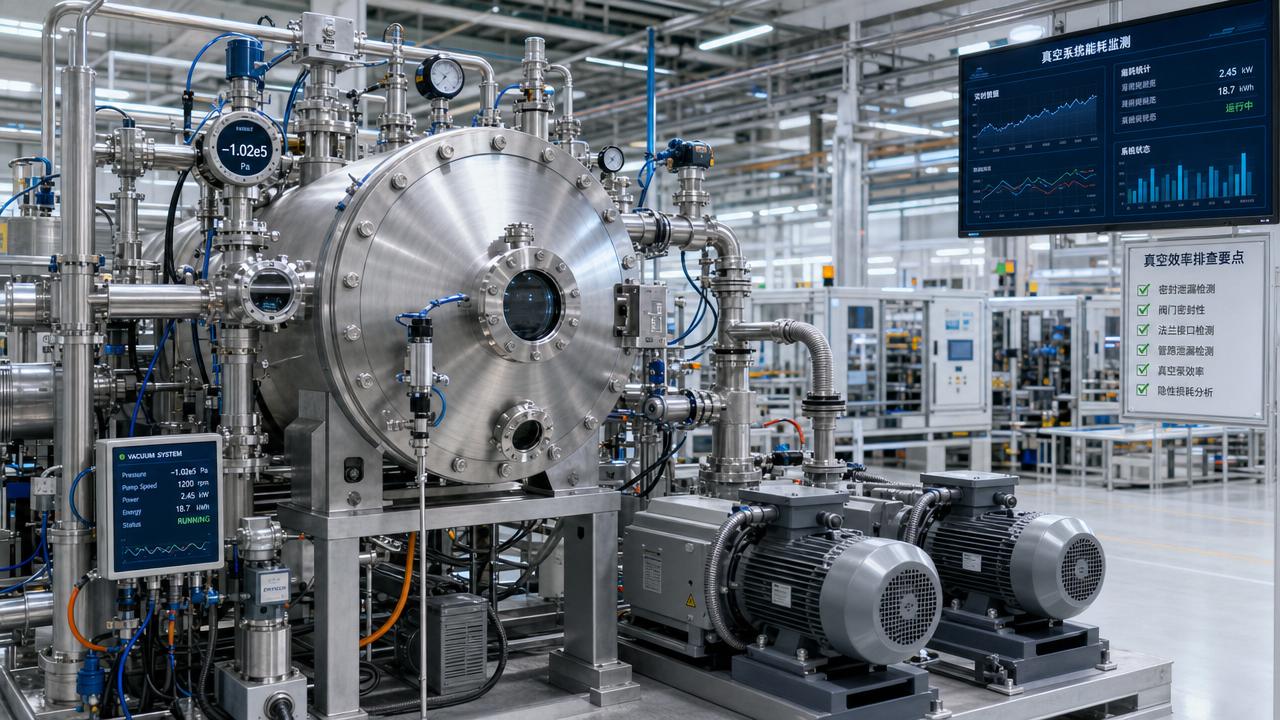
- Monitor specific energy use where power meters are available for major vacuum groups.
- Log cooling inlet temperature, outlet temperature, and flow changes during high-load periods.
- Compare filter differential pressure against product type, operating hours, and cleaning schedule.
When these indicators are trended together, vacuum processes become easier to optimize and less dependent on emergency troubleshooting.
Summary and Next Actions
Efficiency losses in vacuum processes usually start small. Leaks, fouled filters, unstable cooling, poor sizing, and setpoint drift are frequent causes.
The most effective fix is not guesswork. It is disciplined inspection, verified measurement, and targeted correction based on process conditions.
Begin with a baseline audit of critical vacuum processes. Then prioritize low-cost corrections before major upgrades or pump replacement.
For deeper performance improvement, combine maintenance records, energy data, and process requirements into one operating review.
GTC-Matrix focuses on the intelligence connecting thermal systems, compression power, and vacuum processes, supporting more efficient industrial energy conversion.
Ready when you are. Send us a message to get started.
Related News
- How does base pressure affect film purity in vacuum deposition?Author :Vacuum Process Fellow

- How to size vacuum process equipment for the required pump-down timeAuthor :Vacuum Process Fellow

- Which vacuum specification best protects semiconductor process yield?Author :Vacuum Process Fellow

- How Can Contamination Be Prevented in a Semiconductor Vacuum Chamber?Author :Vacuum Process Fellow

- Which Vacuum Pump Specifications Matter Most for Semiconductor Processes?Author :Vacuum Process Fellow

- How to find leaks in vacuum pump systems before pump performance dropsAuthor :Vacuum Process Fellow

- How to size a Roots blower for vacuum process equipmentAuthor :Vacuum Process Fellow

- How vacuum level affects vacuum process efficiencyAuthor :Vacuum Process Fellow

- China Imposes Temporary Helium Export BanAuthor :Vacuum Process Fellow

- Semiconductor Vacuum Systems Factory Checklist for Process Stability and Cleanroom UseAuthor :Vacuum Process Fellow

- Vacuum Process Optimization Services: Signs Your Line Needs a Performance ReviewAuthor :Vacuum Process Fellow

- Vacuum Chambers for Cleanroom Use: Key Design Points That Prevent ContaminationAuthor :Vacuum Process Fellow

- Vacuum Distillation Systems: Key Performance Metrics That Affect Product PurityAuthor :Vacuum Process Fellow

- Vietnam Halts High Vacuum Pump Import Licenses for 30 DaysAuthor :Vacuum Process Fellow

- Vacuum Technology Database: What to Check Before Using Technical DataAuthor :Vacuum Process Fellow

- Dry Pump Vacuum System Design Mistakes That Raise DowntimeAuthor :Vacuum Process Fellow

- When Vacuum Systems Lose Performance: Common Causes and FixesAuthor :Vacuum Process Fellow
![]()
- EU Tightens EN 13445-3 Weld Testing for Vacuum VesselsAuthor :Vacuum Process Fellow
![]()
- EPA Cuts R-1234ze(E) Quota 35%, Tightening Vacuum Cooling SupplyAuthor :Vacuum Process Fellow
 Quota 35%, Tightening Vacuum Cooling Supply")
- ICA Warns of Tight Copper Alloy Supply for Vacuum PumpsAuthor :Vacuum Process Fellow

- Vacuum System Leak Detection: Signs, Tests, and FixesAuthor :Vacuum Process Fellow

- How to Compare Vacuum Systems Factory Capabilities for Stable Process UptimeAuthor :Vacuum Process Fellow

- Vacuum Pump Lead Times Extend to 26 WeeksAuthor :Vacuum Process Fellow

- Semiconductor Vacuum Systems Explained for Stable Process YieldAuthor :Vacuum Process Fellow

- Vacuum Process Efficiency: 7 Hidden Causes of Energy LossAuthor :Vacuum Process Fellow

- Vacuum Technology Solutions for Stable Low-Pressure ProductionAuthor :Vacuum Process Fellow

- Vacuum Processes: Common Efficiency Losses and FixesAuthor :Vacuum Process Fellow

- Common Vacuum Processes Problems and How to Prevent DowntimeAuthor :Vacuum Process Fellow

- Tantalum Spike Extends Vacuum Crucible Lead TimesAuthor :Vacuum Process Fellow

- Vacuum Process Efficiency: 5 Hidden Losses to Check FirstAuthor :Vacuum Process Fellow

- How Heat Transfer Design Impacts Vacuum Process EfficiencyAuthor :Vacuum Process Fellow

- EN 13445-4:2026 Takes Effect for High-Vacuum ComponentsAuthor :Vacuum Process Fellow

- EU Vacuum Components Face New EN 13445-4:2026 Leak Test RuleAuthor :Vacuum Process Fellow

- UBS: Fed Cut View May Ease Vacuum Pump Lead TimesAuthor :Vacuum Process Fellow

- Vacuum Processes: Common Causes of Unstable PerformanceAuthor :Vacuum Process Fellow
![]()
- SiC Certification Signals New Entry Path for Vacuum and Compressor DrivesAuthor :Vacuum Process Fellow
![]()