Vacuum Process Efficiency: Common Loss Points




Vacuum process efficiency often declines in small, overlooked ways: minor leaks, poor pump matching, clogged filters, incorrect setpoints, or inconsistent routines.
These loss points quietly increase energy use, slow production, and reduce process stability across packaging, electronics, chemicals, metals, food, and pharmaceutical operations.
As energy prices, carbon targets, and uptime expectations tighten, vacuum process efficiency is becoming a measurable competitiveness factor, not only a maintenance concern.
Vacuum Process Efficiency Is Becoming a Visible Operating Metric
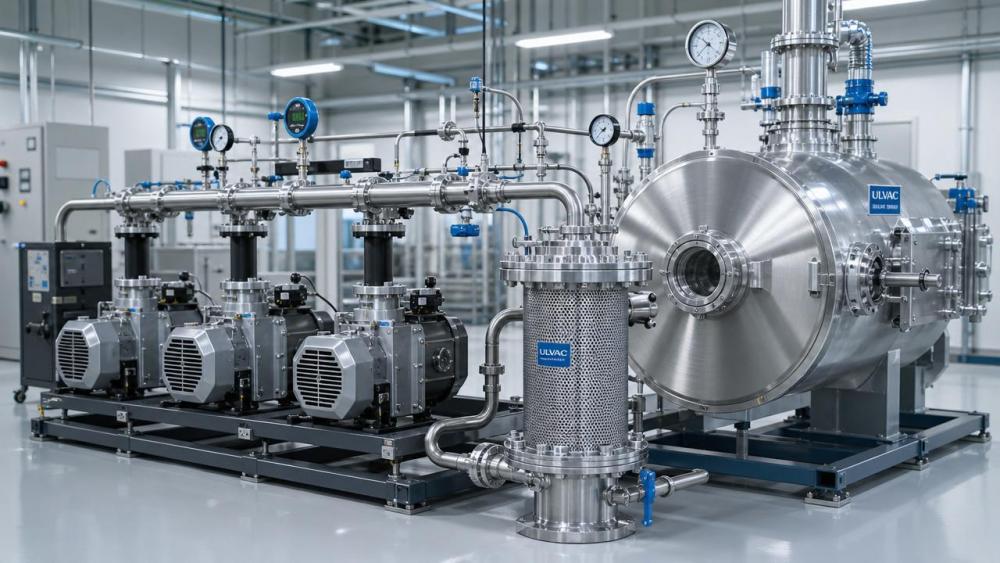
Many vacuum systems were once judged mainly by whether they reached pressure. That view is changing quickly.
Industrial teams now track how fast vacuum is achieved, how much energy is consumed, and how stable the process remains.
This shift makes vacuum process efficiency a practical indicator of production discipline, equipment health, and thermal-compression system maturity.
The trend is strongest where vacuum supports drying, degassing, coating, conveying, packaging, impregnation, filtration, or leak testing.
In these applications, a small pressure instability may create longer cycle times, inconsistent quality, or unnecessary pump loading.
Current Signals Show Where Efficiency Loss Is Hiding
The most important signal is not always a sudden failure. It is often a slow drift from normal performance.
A system may still “work,” yet vacuum process efficiency may already be falling because pumps run longer than necessary.
Common warning signs include longer pump-down time, rising motor current, warmer pump discharge, frequent alarms, and unstable pressure curves.
Another sign is process compensation. Operators may extend cycle time or lower setpoints to mask unstable vacuum behavior.
That compensation protects output temporarily, but it damages vacuum process efficiency and hides the real cause.
Loss Points Typically Start Small
- A worn gasket creates a leak that increases pump load every cycle.
- A clogged inlet filter reduces effective pumping speed.
- A poorly placed sensor gives misleading pressure feedback.
- A pump sized for old production conditions wastes energy today.
- Manual valve habits create repeatability gaps between shifts.
Each issue may appear minor, yet combined losses can reduce vacuum process efficiency by a meaningful margin.
Why These Losses Are Becoming More Expensive
Several forces are pushing vacuum process efficiency higher on operational agendas.
The result is a new expectation: vacuum process efficiency must be managed continuously, not inspected only during breakdowns.
This expectation aligns with broader industrial attention to compression power, thermal balance, and energy conversion performance.
Leaks Remain the Most Common Efficiency Drain
Leaks are the classic enemy of vacuum process efficiency because they force pumps to remove unnecessary gas continuously.
Even a small leak can extend evacuation time, overload pumps, and reduce the stability of sensitive processes.
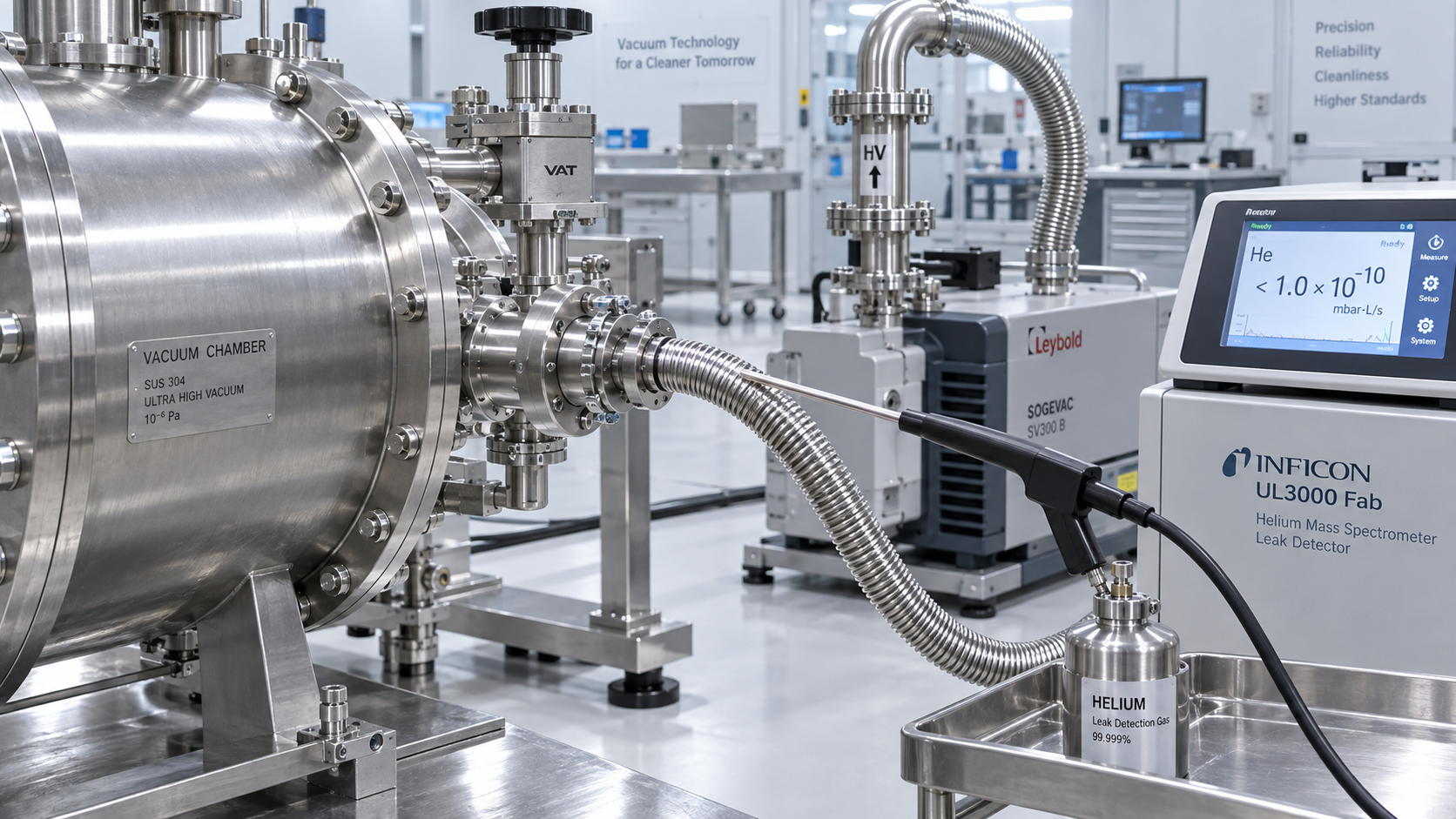
Leak sources often include door seals, flexible hoses, rotary feedthroughs, valve stems, sight glasses, and quick connections.
In dust, vapor, or chemical environments, seal aging may accelerate, making regular checks essential for vacuum process efficiency.
Practical Leak Indicators
- The system reaches target pressure slower than historical baseline.
- Pressure rises quickly after isolation from the pump.
- Pump temperature increases under unchanged production conditions.
- A backup pump starts more often than expected.
A simple pressure rise test can reveal whether vacuum process efficiency is being lost through leakage.
Pump Matching Is Now a Strategic Efficiency Question
A vacuum pump should match process pressure, gas load, vapor content, duty cycle, and required recovery speed.
Oversized pumps may waste energy. Undersized pumps may run continuously and still fail to stabilize pressure.
Both cases reduce vacuum process efficiency and create avoidable mechanical stress.
Common mismatch appears after production changes, new materials, higher batch volumes, or additional vacuum chambers.
A pump selected for yesterday’s load may no longer support today’s vacuum process efficiency target.
What to Review Before Replacing Equipment
- Confirm real operating pressure, not only nameplate expectation.
- Measure actual pump-down time during representative production.
- Identify vapor, dust, condensable gases, or solvent load.
- Check pipe diameter, bends, and valve restrictions.
- Compare energy use against production output.
This review often improves vacuum process efficiency before any major capital decision is required.
Filters, Oil, and Condensate Shape Daily Performance
Maintenance quality has a direct effect on vacuum process efficiency, especially in dusty or vapor-rich processes.
Clogged filters increase pressure drop and reduce effective pumping speed at the chamber.
Contaminated oil can reduce sealing, cooling, and lubrication performance in oil-sealed vacuum pumps.
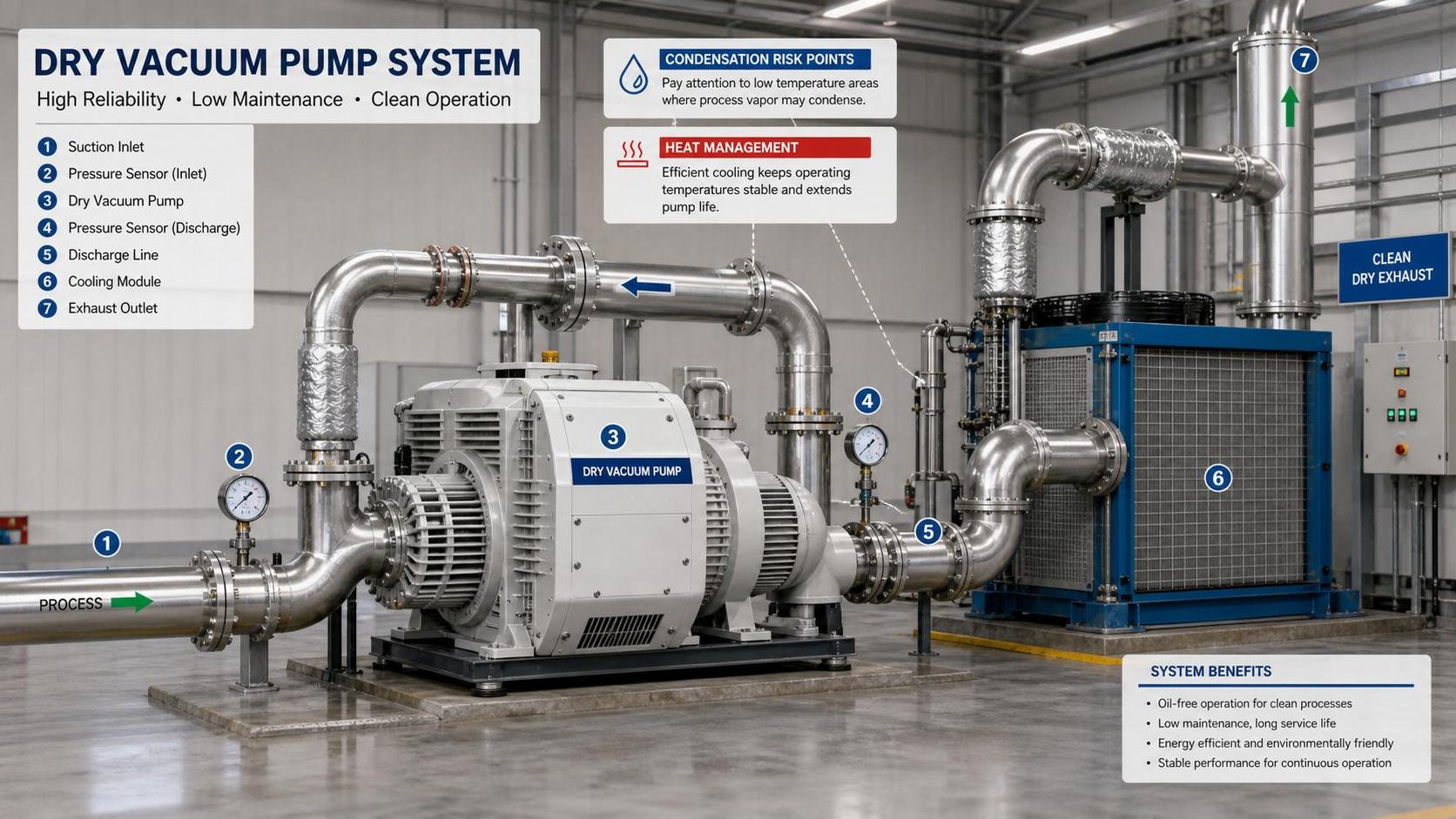
Condensate accumulation can create corrosion, unstable operation, and reduced vacuum process efficiency.
In dry pumps, dust loading and poor purge settings may increase internal resistance and maintenance frequency.
Useful Maintenance Signals
- Track differential pressure across inlet filters.
- Record oil condition, color, odor, and change intervals.
- Inspect exhaust mist, unusual noise, and vibration changes.
- Drain separators and traps according to real vapor load.
These checks protect vacuum process efficiency while reducing unplanned downtime.
Setpoints and Controls Can Create Hidden Waste
Incorrect setpoints are a subtle but common cause of poor vacuum process efficiency.
Some systems operate deeper vacuum than the process actually requires.
That deeper setpoint may consume more energy without improving quality or speed.
Other systems use wide control bands, causing repeated pump cycling and unstable pressure.
Good control strategy supports vacuum process efficiency by matching pressure to real process need.
Control tuning is often one of the fastest ways to recover vacuum process efficiency.
Piping and Layout Influence Real Pumping Speed
A strong pump cannot deliver full value if the piping layout restricts gas flow.
Undersized lines, long pipe runs, sharp bends, and unnecessary valves reduce conductance.
This means vacuum process efficiency at the chamber may be worse than pump specifications suggest.
Centralized systems are especially vulnerable when multiple users create competing demand through shared headers.
Pressure measurement at both pump inlet and chamber helps identify where losses occur.
Layout Questions Worth Asking
- Is the chamber pressure much higher than pump inlet pressure?
- Are isolation valves fully opening during operation?
- Do shared lines cause pressure dips during peak demand?
- Are flexible hoses collapsing under vacuum?
Better conductance improves vacuum process efficiency without changing the core process recipe.
Operator Routines Affect Repeatability More Than Expected
Human routines can either protect or weaken vacuum process efficiency.
Different startup sequences, manual valve timing, cleaning habits, and alarm responses create inconsistent operating conditions.
Inconsistent routines may appear as equipment problems, but the root cause may be procedural variation.
Standard work instructions, simple checklists, and visible operating limits support stable vacuum process efficiency.
Training should focus on what pressure behavior means, not only which buttons to press.
Impact Spreads Across Energy, Quality, and Capacity
Poor vacuum process efficiency affects more than utility cost.
In drying, it may leave residual moisture. In packaging, it may weaken sealing consistency.
In coating or impregnation, pressure instability can affect penetration, film uniformity, or material reliability.
In compressed-air and thermal systems, inefficient vacuum operation also adds heat load and maintenance burden.
For multi-site operations, vacuum process efficiency becomes a benchmarking tool for standardization and investment planning.
Priority Areas to Watch During Daily Operation
Daily observation should focus on repeatable data, not only subjective impressions.
- Record pump-down time for key recipes and compare weekly trends.
- Track final pressure, holding pressure, and pressure rise after isolation.
- Monitor motor current, temperature, vibration, and unusual exhaust behavior.
- Check filters, separators, traps, oil, and purge settings routinely.
- Review whether setpoints still match real process requirements.
- Document operator actions during alarms or unstable cycles.
These habits make vacuum process efficiency visible before losses become production problems.
A Practical Response Framework for Better Decisions
Improvement should begin with measurement, then diagnosis, then controlled adjustment.
This framework prevents unnecessary replacement while supporting long-term vacuum process efficiency improvement.
What the Next Stage of Vacuum Optimization Will Emphasize
The next stage will link vacuum data with energy management, predictive maintenance, and production quality systems.
Pressure curves, pump current, and cycle timing will become stronger indicators of process health.
Smart monitoring will not replace field inspection, but it will help prioritize where attention is needed.
For industrial cooling, compressed air, vacuum processes, and heat exchange networks, integrated intelligence will matter more.
Vacuum process efficiency will increasingly connect to carbon reduction, asset reliability, and high-efficiency manufacturing strategies.
Action Guidance for Immediate Improvement
Start with one critical vacuum application and collect one week of operating data.
Compare pump-down time, holding pressure, energy use, and production output against expected performance.
Then inspect the simplest loss points first: leaks, filters, oil, condensate, setpoints, and operator routines.
If problems remain, review pump matching, piping conductance, and control logic before planning major equipment changes.
GTC-Matrix observes these shifts across the power heart and thermal center of modern industry.
By treating vacuum process efficiency as a managed performance metric, industrial systems can reduce waste and strengthen process stability.
The most valuable next step is simple: make the hidden losses measurable, then act before they become normal.
Ready when you are. Send us a message to get started.
Related News
- How does base pressure affect film purity in vacuum deposition?Author :Vacuum Process Fellow

- How to size vacuum process equipment for the required pump-down timeAuthor :Vacuum Process Fellow

- Which vacuum specification best protects semiconductor process yield?Author :Vacuum Process Fellow

- How Can Contamination Be Prevented in a Semiconductor Vacuum Chamber?Author :Vacuum Process Fellow

- Which Vacuum Pump Specifications Matter Most for Semiconductor Processes?Author :Vacuum Process Fellow

- How to find leaks in vacuum pump systems before pump performance dropsAuthor :Vacuum Process Fellow

- How to size a Roots blower for vacuum process equipmentAuthor :Vacuum Process Fellow

- How vacuum level affects vacuum process efficiencyAuthor :Vacuum Process Fellow

- China Imposes Temporary Helium Export BanAuthor :Vacuum Process Fellow

- Semiconductor Vacuum Systems Factory Checklist for Process Stability and Cleanroom UseAuthor :Vacuum Process Fellow

- Vacuum Process Optimization Services: Signs Your Line Needs a Performance ReviewAuthor :Vacuum Process Fellow

- Vacuum Chambers for Cleanroom Use: Key Design Points That Prevent ContaminationAuthor :Vacuum Process Fellow

- Vacuum Distillation Systems: Key Performance Metrics That Affect Product PurityAuthor :Vacuum Process Fellow

- Vietnam Halts High Vacuum Pump Import Licenses for 30 DaysAuthor :Vacuum Process Fellow

- Vacuum Technology Database: What to Check Before Using Technical DataAuthor :Vacuum Process Fellow

- Dry Pump Vacuum System Design Mistakes That Raise DowntimeAuthor :Vacuum Process Fellow

- When Vacuum Systems Lose Performance: Common Causes and FixesAuthor :Vacuum Process Fellow
![]()
- EU Tightens EN 13445-3 Weld Testing for Vacuum VesselsAuthor :Vacuum Process Fellow
![]()
- EPA Cuts R-1234ze(E) Quota 35%, Tightening Vacuum Cooling SupplyAuthor :Vacuum Process Fellow
 Quota 35%, Tightening Vacuum Cooling Supply")
- ICA Warns of Tight Copper Alloy Supply for Vacuum PumpsAuthor :Vacuum Process Fellow

- Vacuum System Leak Detection: Signs, Tests, and FixesAuthor :Vacuum Process Fellow

- How to Compare Vacuum Systems Factory Capabilities for Stable Process UptimeAuthor :Vacuum Process Fellow

- Vacuum Pump Lead Times Extend to 26 WeeksAuthor :Vacuum Process Fellow

- Semiconductor Vacuum Systems Explained for Stable Process YieldAuthor :Vacuum Process Fellow

- Vacuum Process Efficiency: 7 Hidden Causes of Energy LossAuthor :Vacuum Process Fellow

- Vacuum Technology Solutions for Stable Low-Pressure ProductionAuthor :Vacuum Process Fellow

- Vacuum Processes: Common Efficiency Losses and FixesAuthor :Vacuum Process Fellow

- Common Vacuum Processes Problems and How to Prevent DowntimeAuthor :Vacuum Process Fellow

- Tantalum Spike Extends Vacuum Crucible Lead TimesAuthor :Vacuum Process Fellow

- Vacuum Process Efficiency: 5 Hidden Losses to Check FirstAuthor :Vacuum Process Fellow

- How Heat Transfer Design Impacts Vacuum Process EfficiencyAuthor :Vacuum Process Fellow

- EN 13445-4:2026 Takes Effect for High-Vacuum ComponentsAuthor :Vacuum Process Fellow

- EU Vacuum Components Face New EN 13445-4:2026 Leak Test RuleAuthor :Vacuum Process Fellow

- UBS: Fed Cut View May Ease Vacuum Pump Lead TimesAuthor :Vacuum Process Fellow

- Vacuum Processes: Common Causes of Unstable PerformanceAuthor :Vacuum Process Fellow
![]()
- SiC Certification Signals New Entry Path for Vacuum and Compressor DrivesAuthor :Vacuum Process Fellow
![]()