Vacuum Process Efficiency: Key Metrics to Track




Vacuum process efficiency is no longer a secondary operational metric—it is a decisive indicator of energy performance, product consistency, and equipment reliability across modern industrial systems.
For technical evaluators, tracking the right metrics can reveal hidden losses in pump operation, leak management, pressure stability, and thermal integration.
This article outlines the key performance indicators that help assess vacuum system effectiveness, compare technologies, and support data-driven decisions for higher uptime, lower energy consumption, and stronger process control.
What Does Vacuum Process Efficiency Really Mean?
Vacuum process efficiency describes how effectively a vacuum system creates, maintains, and uses low-pressure conditions for a defined industrial task.
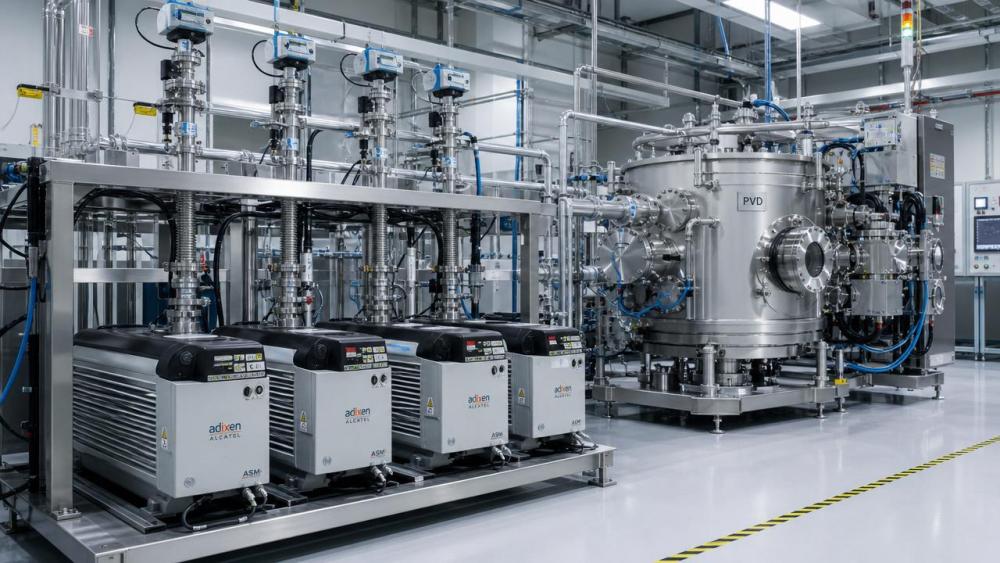
It is not only about reaching the lowest possible pressure. It is about achieving the required pressure with minimum wasted energy and minimum instability.
A high-performing system balances pumping speed, leakage control, process load, vapor handling, cooling, controls, and maintenance discipline.
In many facilities, vacuum process efficiency declines gradually. Operators notice longer cycle times, higher motor load, or unstable product quality before alarms appear.
The most useful definition connects performance with business outcomes. These include energy cost, throughput, contamination control, uptime, and repeatable production quality.
Why Is a Single Pressure Reading Not Enough?
Pressure is essential, but it only shows one condition at one location. It does not explain how much energy was consumed to maintain it.
A system may reach setpoint, yet still operate inefficiently because of oversized pumps, fouled filters, high backpressure, or unnecessary continuous operation.
Vacuum process efficiency should therefore be measured through a connected set of indicators rather than one isolated gauge value.
Which Energy Metrics Best Reveal Vacuum Process Efficiency?
Energy metrics are often the fastest way to identify poor vacuum process efficiency, especially in plants with multiple pumps or continuous production.
The core metric is specific energy consumption. It compares electrical input with useful vacuum output, production volume, or completed process cycles.
Common formats include kWh per batch, kWh per operating hour, kWh per kilogram processed, or kWh per standard cubic meter evacuated.
A stable trend confirms efficient operation. A rising trend usually indicates leakage, contamination, pump wear, poor sequencing, or process drift.
- Motor power demand during steady operation.
- Energy consumed during pump-down periods.
- Energy per production cycle or batch.
- Idle running hours and standby consumption.
- Cooling water or auxiliary energy demand.
Variable-speed control can improve vacuum process efficiency when demand fluctuates. However, poor setpoint strategy can cancel those gains.
Energy tracking should separate productive vacuum generation from idle operation. This distinction often exposes savings without changing the main process equipment.
How Should Energy Data Be Normalized?
Raw kWh data can mislead when production volume changes. Normalization links energy use to output, duty cycle, pressure level, and process load.
For batch systems, track energy per completed cycle. For continuous lines, track energy per production unit or per operating hour at comparable load.
This makes vacuum process efficiency comparable across shifts, sites, technologies, and seasonal operating conditions.
How Do Pressure Stability and Pump-Down Time Affect Performance?
Pressure stability is a direct indicator of process control. It shows whether the system can maintain the required vacuum without excessive correction.
Frequent pressure oscillation may indicate valve hunting, unstable vapor load, poor controller tuning, or insufficient buffer volume.
In drying, coating, packaging, metallurgy, and pharmaceutical processes, unstable vacuum conditions can affect moisture removal, layer uniformity, degassing, and contamination risk.
Pump-down time is equally important. It measures how long the system needs to move from atmospheric pressure to the target process pressure.
Longer pump-down time can reduce throughput and hide declining vacuum process efficiency. It may also increase thermal stress or delay downstream operations.
- Track average pump-down time by recipe or product.
- Compare best-cycle performance with current-cycle performance.
- Monitor pressure overshoot and recovery time.
- Record deviation from pressure setpoint during steady state.
Good vacuum process efficiency means reaching the needed vacuum quickly, then maintaining it with limited energy and minimal control disturbance.
What Pressure Metrics Are Most Practical?
Useful pressure metrics include ultimate pressure, working pressure, pressure rise rate, setpoint deviation, and time spent outside acceptable limits.
Pressure rise rate is especially valuable after isolation. It helps distinguish real leaks from gas release, evaporation, or product outgassing.
A practical dashboard should show trends, not only alarms. Slow degradation is often more important than rare failure events.
Why Are Leak Rate and Gas Load Critical to Vacuum Process Efficiency?
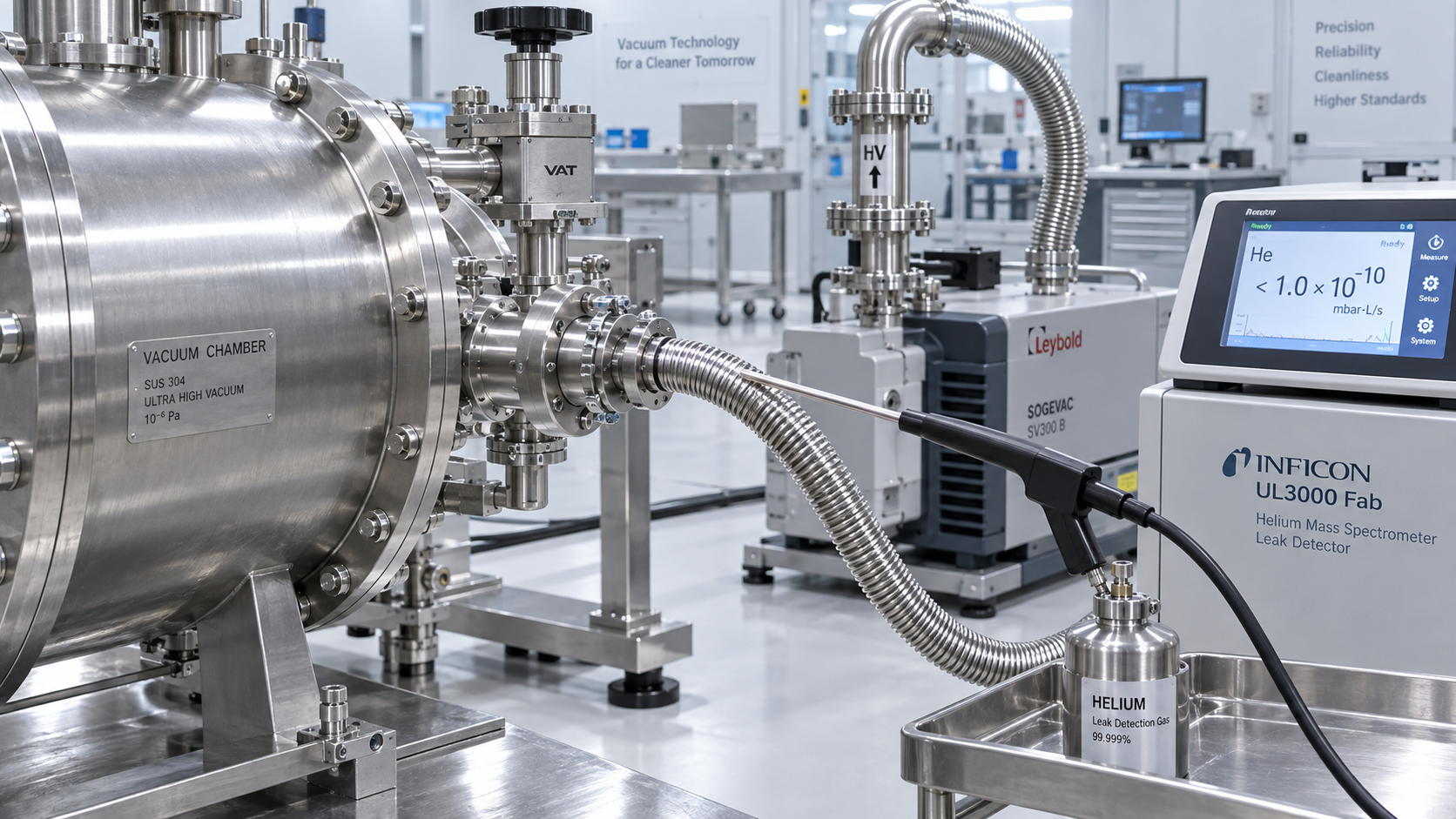
Leak rate is one of the most important indicators behind vacuum process efficiency. Even small leaks force pumps to work continuously.
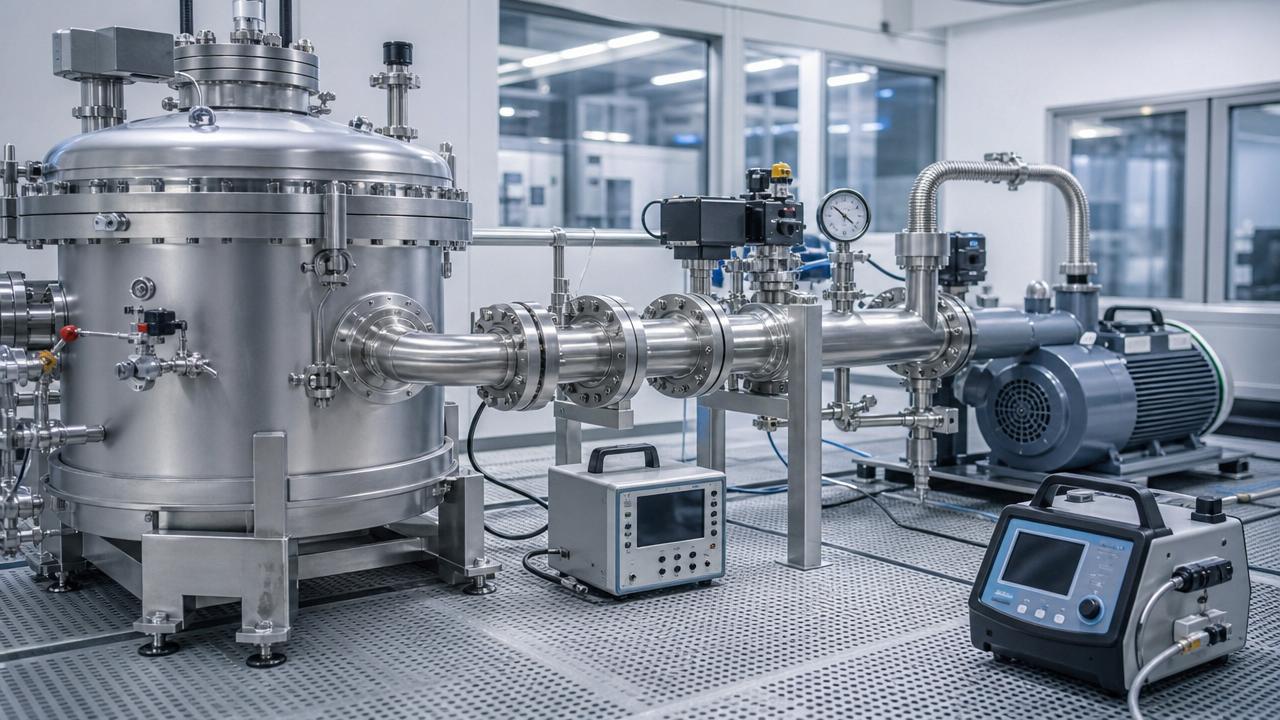
Leaks may come from seals, flanges, valves, instrumentation ports, flexible hoses, door gaskets, or worn mechanical interfaces.
A leak does not always stop production immediately. Instead, it increases energy use, extends cycle time, and reduces pressure stability.
Gas load is broader than leakage. It includes process vapors, released moisture, solvent evaporation, purge gas, and outgassing from materials.
When gas load rises, vacuum process efficiency falls unless pump capacity, condensation, filtration, and control logic are properly matched.
Leak testing should be scheduled, documented, and linked with energy reporting. This makes vacuum process efficiency visible to operations and maintenance teams.
How Should Pump Health, Maintenance, and Uptime Be Evaluated?
Vacuum process efficiency depends strongly on pump condition. A pump may still run while delivering reduced capacity at higher energy cost.
Important pump health indicators include vibration, temperature, oil condition, seal wear, exhaust pressure, filter differential pressure, and motor current.
Oil-sealed pumps require attention to oil degradation and contamination. Dry pumps require monitoring of temperature, clearances, deposits, and purge management.
Maintenance metrics should connect asset condition with process impact. Downtime hours alone do not show declining vacuum process efficiency before failure.
- Mean time between failures for each pump train.
- Maintenance cost per operating hour.
- Unplanned shutdowns related to vacuum loss.
- Filter replacement frequency and pressure drop.
- Pump performance after overhaul or cleaning.
Condition monitoring is valuable when it provides actionable thresholds. Excessive data without decision rules can create noise rather than improvement.
When Is Replacement Better Than Repair?
Replacement becomes reasonable when repair restores mechanical function but not vacuum process efficiency, energy performance, or process stability.
Compare lifecycle cost, not purchase price alone. Include energy, cooling, oil, spare parts, downtime risk, and expected process availability.
Technology comparison should consider wet versus dry operation, vapor tolerance, contamination sensitivity, turndown capability, and integration with existing controls.
What Role Do Heat, Cooling, and System Integration Play?
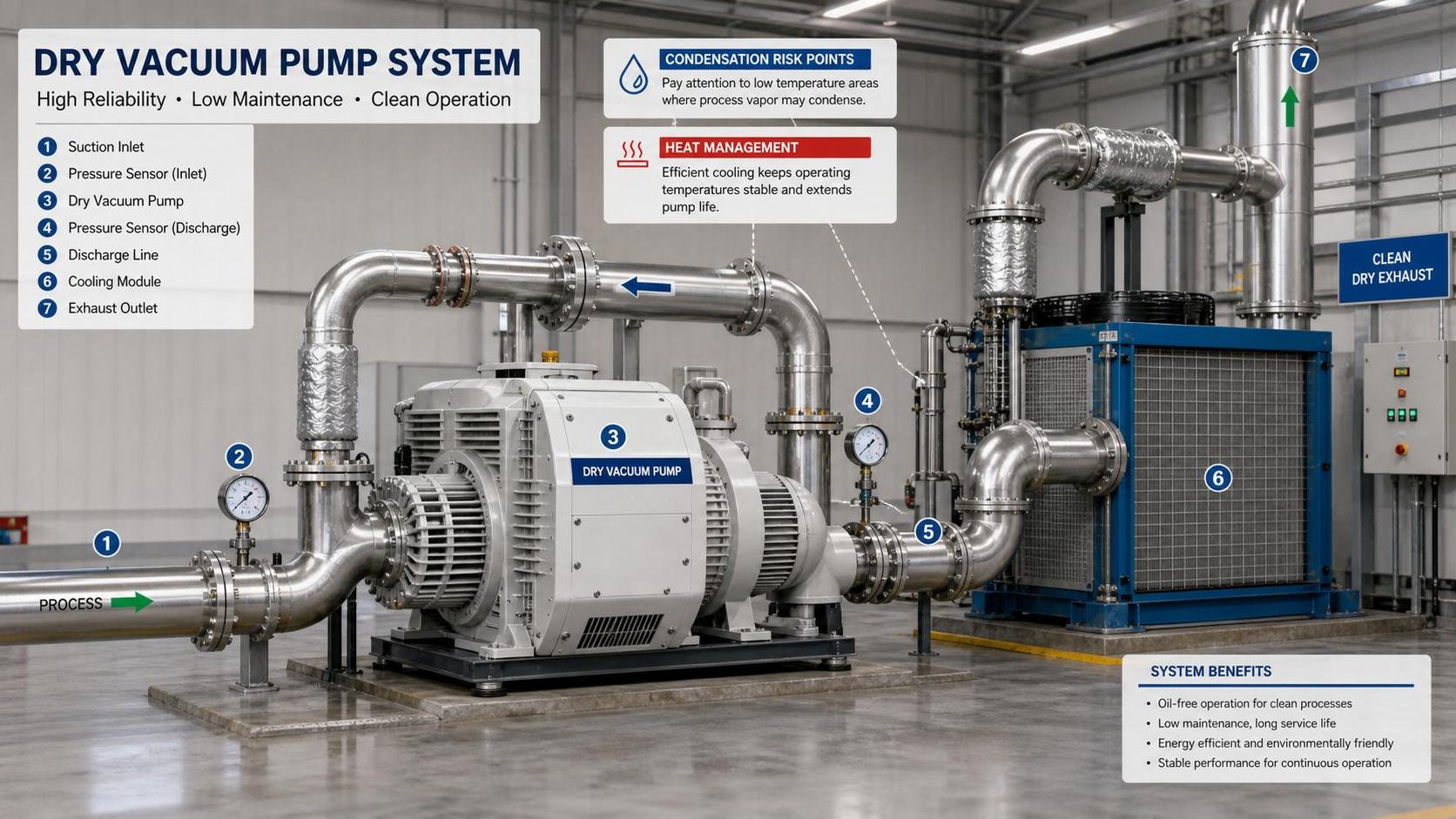
Vacuum systems are part of a thermodynamic network. Heat rejection, vapor condensation, and cooling quality directly influence vacuum process efficiency.
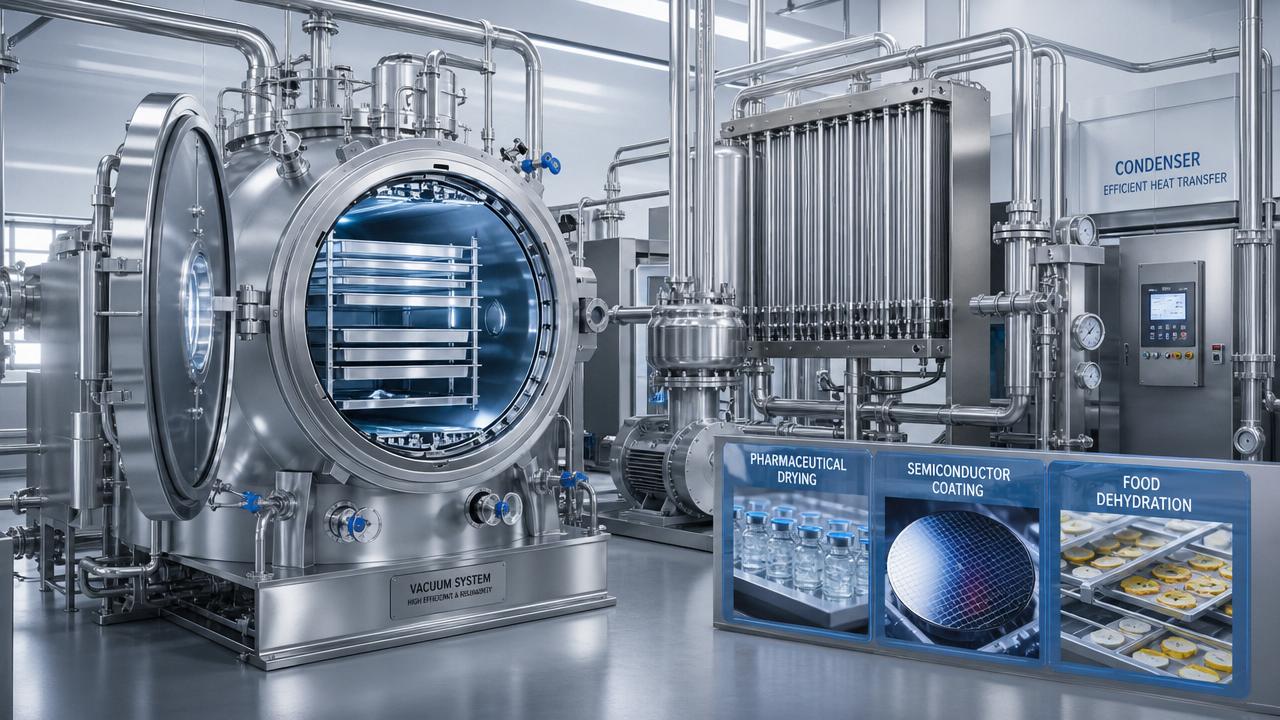
High inlet vapor load may overwhelm pumps unless condensers, knock-out vessels, or cold traps are correctly sized and maintained.
Cooling water temperature affects compression temperature, oil life, seal performance, and achievable vacuum level in many systems.
Poor thermal integration can create repeated instability. A pump may be blamed, while the root cause is condenser fouling or insufficient cooling flow.
For stronger vacuum process efficiency, track temperature at pump inlet, discharge, cooling inlet, cooling outlet, condenser outlet, and process chamber.
Thermal recovery can also matter. Waste heat from compression may support preheating, cleaning, or facility heating where conditions allow.
Which Integration Mistakes Reduce Efficiency?
Common mistakes include undersized piping, unnecessary bends, long suction lines, poorly located valves, and mismatched pumps operating against each other.
Instrumentation location is another issue. A sensor far from the chamber may show acceptable pressure while the process zone remains unstable.
A system view prevents local optimization. Vacuum process efficiency improves when pumps, controls, piping, cooling, and process timing are evaluated together.
How Can a Practical KPI Framework Be Built?
A useful framework starts with the process requirement. Define required pressure, allowable deviation, cycle time, product sensitivity, and uptime expectation.
Then select a limited number of metrics that directly explain vacuum process efficiency and operational risk.
Baseline each metric under known good conditions. Without a baseline, changes are difficult to classify as normal variation or real deterioration.
Digital dashboards can support trend analysis, but the most important step is disciplined interpretation and clear responsibility for corrective action.
A balanced KPI framework turns vacuum process efficiency from a vague concept into a measurable operating standard.
What Are the Main Risks and Misunderstandings?
One common misunderstanding is assuming a larger pump always improves performance. Oversizing can waste energy and cause unstable control.
Another mistake is judging vacuum process efficiency only during commissioning. Real efficiency changes with contamination, wear, recipes, ambient conditions, and maintenance quality.
Ignoring auxiliary systems is also risky. Cooling, filtration, condensate handling, and exhaust treatment can all limit effective vacuum performance.
Finally, some facilities track too many indicators without linking them to decisions. Metrics should trigger inspection, tuning, maintenance, or investment review.
- Do not optimize pressure below the true process need.
- Do not ignore small leaks because production still runs.
- Do not compare pumps without equal duty conditions.
- Do not separate energy analysis from uptime analysis.
Sustainable vacuum process efficiency comes from measurement, diagnosis, and continuous refinement, not from equipment selection alone.
Conclusion: Turning Metrics Into Better Vacuum Decisions
Vacuum process efficiency should be managed as a core industrial performance indicator across energy, quality, reliability, and thermal integration.
The strongest starting point is a focused KPI set covering specific energy, pump-down time, pressure stability, leak rate, pump health, and downtime.
From there, compare trends against a verified baseline and investigate deviations before they become production failures.
For deeper industrial intelligence, GTC-Matrix connects thermodynamic analysis, compression expertise, and market insight to support smarter vacuum system decisions.
The next practical step is simple: map current metrics, identify missing data, and rank improvements by energy impact, reliability risk, and process value.
Ready when you are. Send us a message to get started.
Related News
- How does base pressure affect film purity in vacuum deposition?Author :Vacuum Process Fellow

- How to size vacuum process equipment for the required pump-down timeAuthor :Vacuum Process Fellow

- Which vacuum specification best protects semiconductor process yield?Author :Vacuum Process Fellow

- How Can Contamination Be Prevented in a Semiconductor Vacuum Chamber?Author :Vacuum Process Fellow

- Which Vacuum Pump Specifications Matter Most for Semiconductor Processes?Author :Vacuum Process Fellow

- How to find leaks in vacuum pump systems before pump performance dropsAuthor :Vacuum Process Fellow

- How to size a Roots blower for vacuum process equipmentAuthor :Vacuum Process Fellow

- How vacuum level affects vacuum process efficiencyAuthor :Vacuum Process Fellow

- China Imposes Temporary Helium Export BanAuthor :Vacuum Process Fellow

- Semiconductor Vacuum Systems Factory Checklist for Process Stability and Cleanroom UseAuthor :Vacuum Process Fellow

- Vacuum Process Optimization Services: Signs Your Line Needs a Performance ReviewAuthor :Vacuum Process Fellow

- Vacuum Chambers for Cleanroom Use: Key Design Points That Prevent ContaminationAuthor :Vacuum Process Fellow

- Vacuum Distillation Systems: Key Performance Metrics That Affect Product PurityAuthor :Vacuum Process Fellow

- Vietnam Halts High Vacuum Pump Import Licenses for 30 DaysAuthor :Vacuum Process Fellow

- Vacuum Technology Database: What to Check Before Using Technical DataAuthor :Vacuum Process Fellow

- Dry Pump Vacuum System Design Mistakes That Raise DowntimeAuthor :Vacuum Process Fellow

- When Vacuum Systems Lose Performance: Common Causes and FixesAuthor :Vacuum Process Fellow
![]()
- EU Tightens EN 13445-3 Weld Testing for Vacuum VesselsAuthor :Vacuum Process Fellow
![]()
- EPA Cuts R-1234ze(E) Quota 35%, Tightening Vacuum Cooling SupplyAuthor :Vacuum Process Fellow
 Quota 35%, Tightening Vacuum Cooling Supply")
- ICA Warns of Tight Copper Alloy Supply for Vacuum PumpsAuthor :Vacuum Process Fellow

- Vacuum System Leak Detection: Signs, Tests, and FixesAuthor :Vacuum Process Fellow

- How to Compare Vacuum Systems Factory Capabilities for Stable Process UptimeAuthor :Vacuum Process Fellow

- Vacuum Pump Lead Times Extend to 26 WeeksAuthor :Vacuum Process Fellow

- Semiconductor Vacuum Systems Explained for Stable Process YieldAuthor :Vacuum Process Fellow

- Vacuum Process Efficiency: 7 Hidden Causes of Energy LossAuthor :Vacuum Process Fellow

- Vacuum Technology Solutions for Stable Low-Pressure ProductionAuthor :Vacuum Process Fellow

- Vacuum Processes: Common Efficiency Losses and FixesAuthor :Vacuum Process Fellow

- Common Vacuum Processes Problems and How to Prevent DowntimeAuthor :Vacuum Process Fellow

- Tantalum Spike Extends Vacuum Crucible Lead TimesAuthor :Vacuum Process Fellow

- Vacuum Process Efficiency: 5 Hidden Losses to Check FirstAuthor :Vacuum Process Fellow

- How Heat Transfer Design Impacts Vacuum Process EfficiencyAuthor :Vacuum Process Fellow

- EN 13445-4:2026 Takes Effect for High-Vacuum ComponentsAuthor :Vacuum Process Fellow

- EU Vacuum Components Face New EN 13445-4:2026 Leak Test RuleAuthor :Vacuum Process Fellow

- UBS: Fed Cut View May Ease Vacuum Pump Lead TimesAuthor :Vacuum Process Fellow

- Vacuum Processes: Common Causes of Unstable PerformanceAuthor :Vacuum Process Fellow
![]()
- SiC Certification Signals New Entry Path for Vacuum and Compressor DrivesAuthor :Vacuum Process Fellow
![]()