Vacuum Process Efficiency: 5 Hidden Losses to Check First




Why does vacuum process efficiency decline before anyone notices?
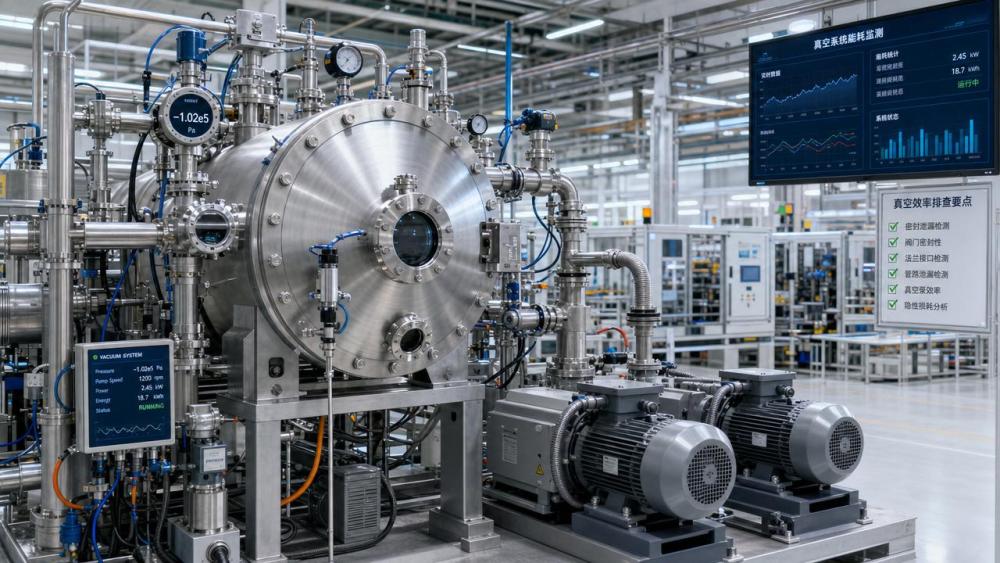
Vacuum process efficiency rarely drops because of one dramatic failure.
In most plants, losses build slowly through small leaks, unstable settings, and overlooked maintenance habits.
That is why troubleshooting often starts with symptoms, while the real causes stay hidden in daily operation.
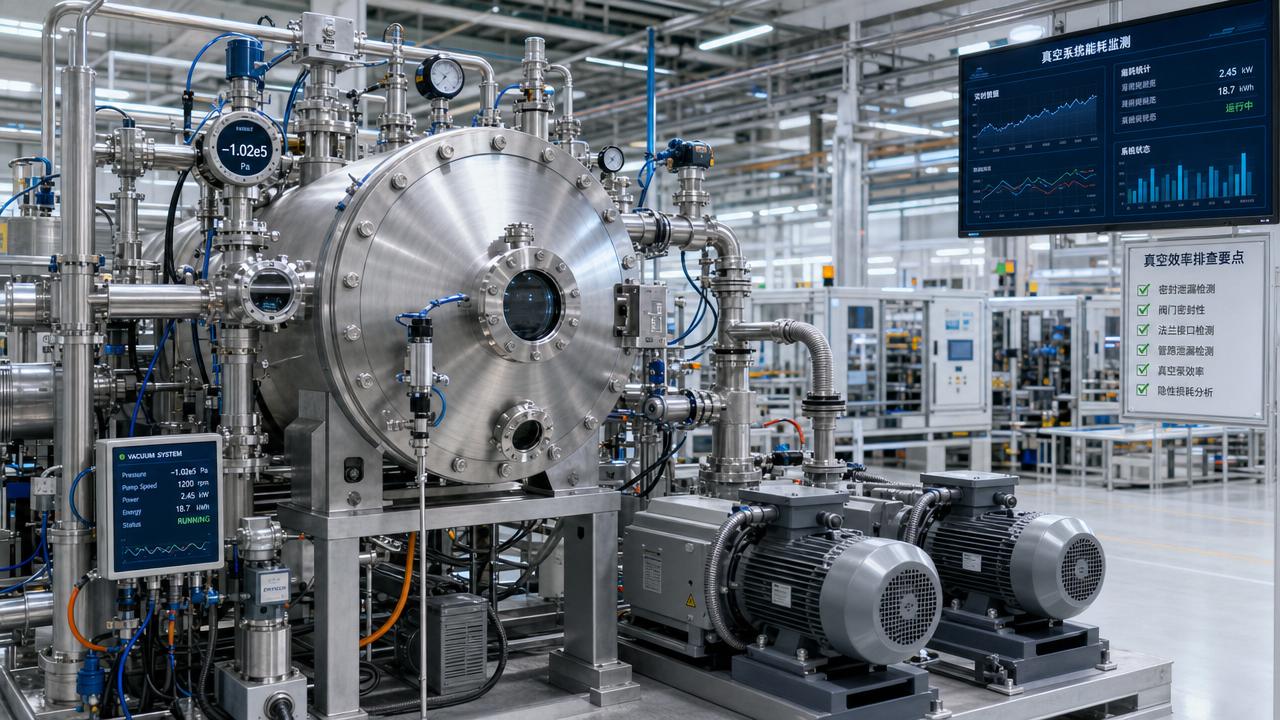
A slower pump-down time, inconsistent cycle quality, or rising energy use usually signals wasted vacuum capacity somewhere upstream.
In practical terms, vacuum process efficiency means reaching the required pressure level, holding it steadily, and doing so without avoidable time or power loss.
For sectors such as packaging, semiconductor support systems, thermal processing, food handling, and lab-scale production, that balance affects throughput and reliability together.
GTC-Matrix often tracks this topic through a wider energy lens.
Vacuum systems do not operate alone.
They interact with cooling, compressed air, heat exchange, and utility costs, so even a minor loss can expand into a broader efficiency problem.
If performance seems uneven, the fastest path is not a full redesign.
It is usually smarter to check the five hidden losses that drain vacuum process efficiency first.
Is leakage still the first place to look, even in a stable system?
Yes, because leakage remains the most common silent loss.
A system can appear stable on the gauge and still waste capacity every cycle.
The problem is that many leaks are too small to trigger alarms.
They simply force the pump to run longer, recover more often, and consume more power.
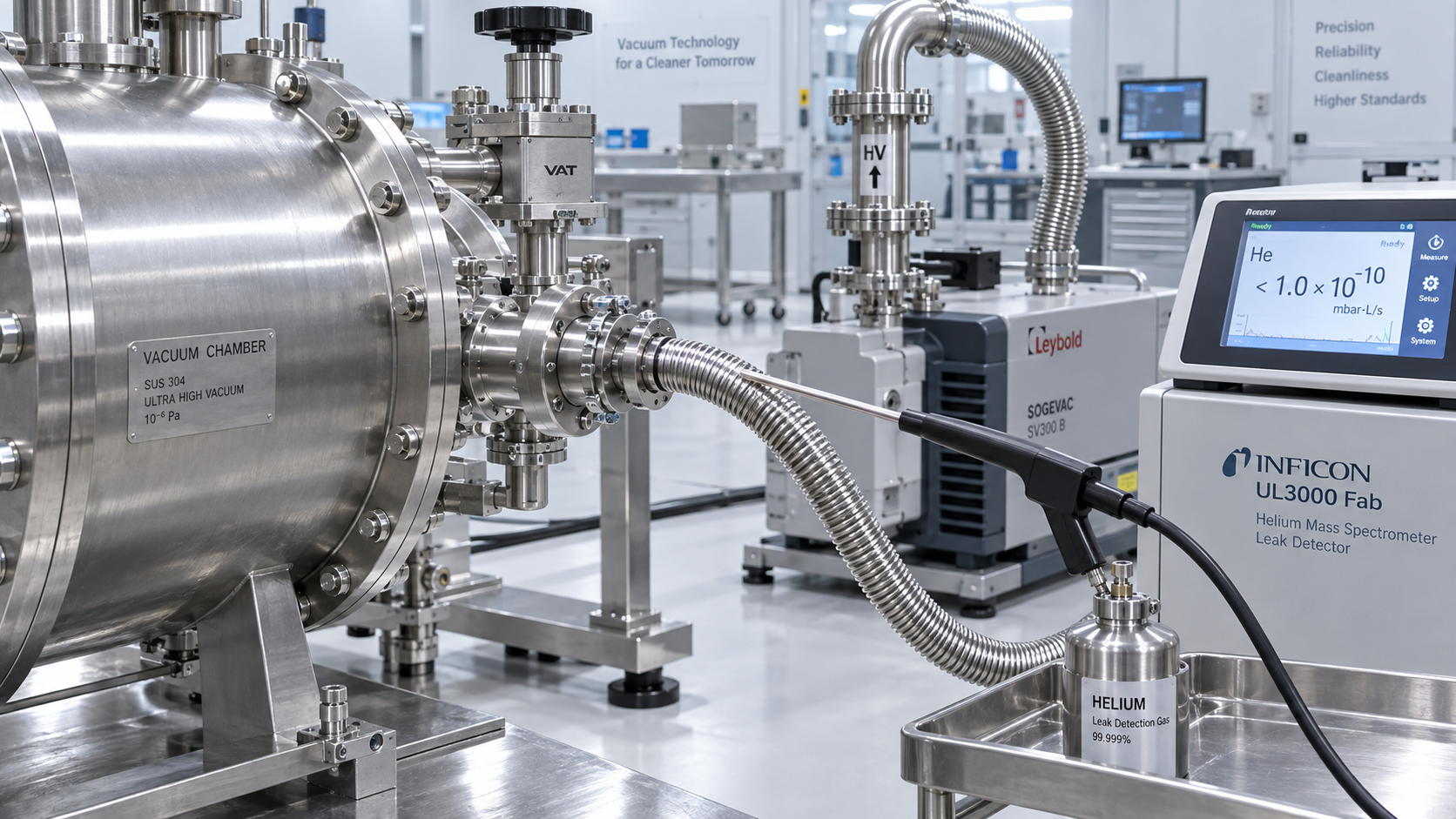
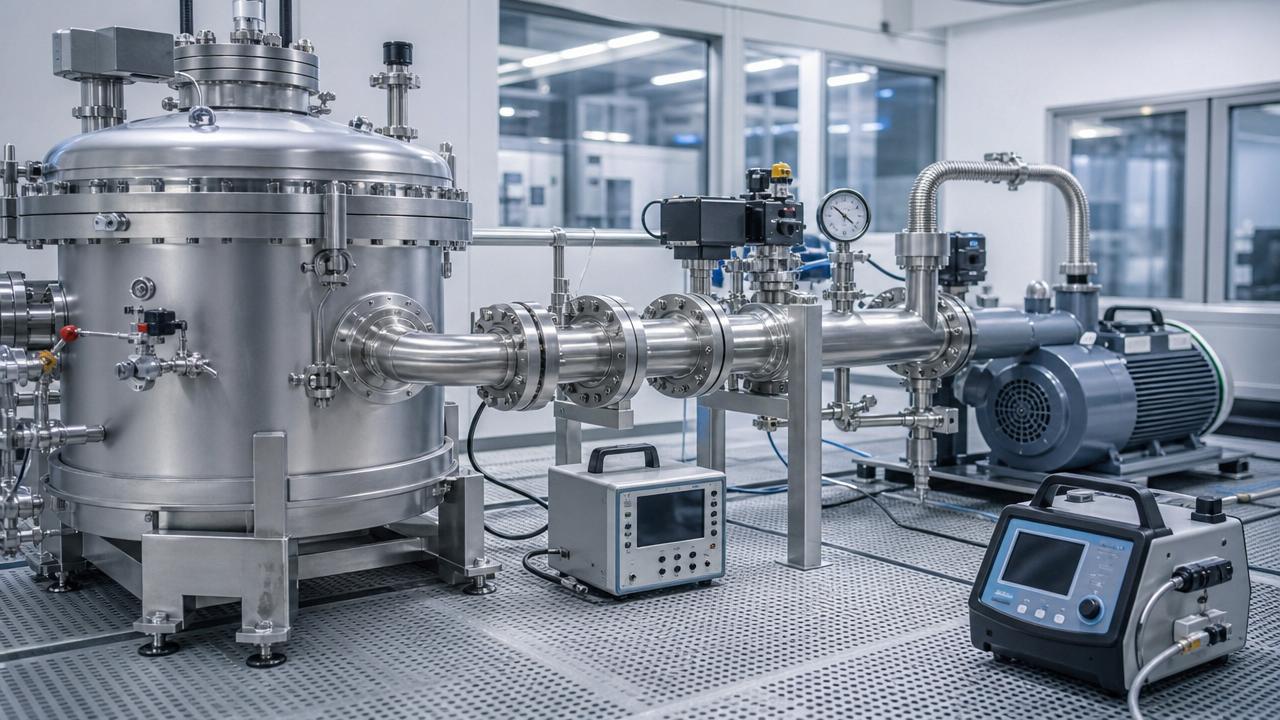
Common leak points include hose connections, valve seats, flange gaskets, chamber doors, filter housings, and instrument fittings.
In older systems, repeated thermal cycling can harden seals and create micro-gaps that are easy to miss.
A useful field check is to compare pump-down time today with a known good baseline.
If the pressure target is taking longer without any production change, leakage becomes a likely suspect.
Another clue is frequent pump restarts during hold periods.
That usually means the system is compensating for pressure drift.
- Listen for soft hissing around joints during quiet periods.
- Check seal compression after temperature swings or cleaning cycles.
- Review trend data, not just live pressure readings.
- Test sections in isolation when one large system hides local losses.
Improving vacuum process efficiency often starts here because leakage affects every downstream decision.
It can also mislead teams into replacing pumps that were never the root issue.
Could sealing and contamination be reducing vacuum process efficiency more than pump size?
More often than expected, yes.
When a system struggles, attention goes quickly to pump capacity.
Yet poor sealing surfaces and internal contamination can create the same symptoms.
A damaged O-ring, residue on a chamber edge, or process dust inside a valve can interrupt sealing just enough to lower performance.
This matters in applications where heat, vapors, moisture, or particles are present.
Over time, residue changes contact surfaces and increases outgassing, which extends pump-down and weakens pressure stability.
In that case, the system is not only leaking.
It is also carrying an internal load that the vacuum equipment must remove every cycle.
The table below helps separate these early warning signs.
This is where vacuum process efficiency becomes a system discipline, not only a mechanical one.
GTC-Matrix regularly links such issues with broader thermodynamic behavior, especially where vacuum performance interacts with cooling loads and material condition.
When controls look normal, what hidden loss should be questioned next?
Control instability is often underestimated because alarms may never appear.
A recipe can remain within limits while still forcing unnecessary correction cycles.
That affects vacuum process efficiency through over-pumping, delayed valve action, and pressure oscillation around the target band.
In real operation, this shows up as inconsistent batch timing or uneven product quality even when maintenance records look clean.
The first question is whether the sensor tells the truth fast enough.
A drifting sensor or poor sampling location can create false stability.
The second question is whether the control logic matches the actual process load.
A setpoint that worked in one product mix may no longer fit current moisture, temperature, or throughput conditions.
More subtle still is response delay.
If valves or actuators react slowly, the controller keeps compensating after the process has already shifted.
That wastes cycle time and can create repeated vacuum overshoot.
- Compare sensor values with an independent reference.
- Review trend curves for hunting, not just average readings.
- Check whether control tuning changed after process updates.
- Inspect valve timing under actual load, not only dry tests.
If vacuum process efficiency seems inconsistent rather than simply weak, controls deserve closer attention.
Are operators losing efficiency through unnecessary runtime and wrong operating habits?
Quite often, yes.
Some losses are built into routine habits rather than equipment faults.
A pump left running during idle windows, oversized hold times, or repeated manual overrides can erode vacuum process efficiency day after day.
This is common in mixed-use plants where the same system supports different tasks.
To avoid production risk, settings are sometimes kept more conservative than necessary.
The result is stable operation, but at a higher energy and cycle cost than needed.
A good review point is the gap between required vacuum level and actual operating level.
If the process only needs a moderate vacuum but runs far deeper every cycle, that extra pumping may deliver no process benefit.
Needless venting and re-evacuation also create avoidable wear.
In energy-sensitive facilities, these habits matter even more because vacuum loads interact with compressed air demand and cooling balance.
That broader utility connection is one reason industrial intelligence platforms like GTC-Matrix examine vacuum performance alongside compression and thermal systems.
How do you decide which hidden loss to fix first?
The best approach is not to chase the loudest symptom.
Prioritize the issue that combines high impact, frequent occurrence, and easy verification.
For many sites, that means checking leakage and sealing before making hardware changes.
Then move to controls, contamination, and operating patterns.
A simple decision path helps keep vacuum process efficiency work practical.
- If pump-down time increased, start with leaks, seals, and chamber condition.
- If pressure is reached but not held, inspect valves, fittings, and contamination.
- If pressure is stable but results vary, review controls and sensor behavior.
- If energy cost rises without output gains, examine runtime logic and idle operation.
The point is to restore vacuum process efficiency with evidence, not assumption.
Small corrections made in the right order usually outperform expensive interventions made too early.
If the next step is unclear, build a short review sheet.
Record baseline pressure, pump-down time, hold loss, energy use, and restart frequency for one typical week.
That gives a clearer foundation for maintenance, tuning, or retrofit decisions.
In the end, vacuum process efficiency improves fastest when hidden losses are treated as connected process signals, not isolated faults.
A focused check of leakage, sealing, contamination, controls, and runtime habits usually reveals where performance is slipping first.
From there, it becomes easier to compare options, confirm risk, and set more realistic efficiency standards for the next operating cycle.
Ready when you are. Send us a message to get started.
Related News
- How does base pressure affect film purity in vacuum deposition?Author :Vacuum Process Fellow

- How to size vacuum process equipment for the required pump-down timeAuthor :Vacuum Process Fellow

- Which vacuum specification best protects semiconductor process yield?Author :Vacuum Process Fellow

- How Can Contamination Be Prevented in a Semiconductor Vacuum Chamber?Author :Vacuum Process Fellow

- Which Vacuum Pump Specifications Matter Most for Semiconductor Processes?Author :Vacuum Process Fellow

- How to find leaks in vacuum pump systems before pump performance dropsAuthor :Vacuum Process Fellow

- How to size a Roots blower for vacuum process equipmentAuthor :Vacuum Process Fellow

- How vacuum level affects vacuum process efficiencyAuthor :Vacuum Process Fellow

- China Imposes Temporary Helium Export BanAuthor :Vacuum Process Fellow

- Semiconductor Vacuum Systems Factory Checklist for Process Stability and Cleanroom UseAuthor :Vacuum Process Fellow

- Vacuum Process Optimization Services: Signs Your Line Needs a Performance ReviewAuthor :Vacuum Process Fellow

- Vacuum Chambers for Cleanroom Use: Key Design Points That Prevent ContaminationAuthor :Vacuum Process Fellow

- Vacuum Distillation Systems: Key Performance Metrics That Affect Product PurityAuthor :Vacuum Process Fellow

- Vietnam Halts High Vacuum Pump Import Licenses for 30 DaysAuthor :Vacuum Process Fellow

- Vacuum Technology Database: What to Check Before Using Technical DataAuthor :Vacuum Process Fellow

- Dry Pump Vacuum System Design Mistakes That Raise DowntimeAuthor :Vacuum Process Fellow

- When Vacuum Systems Lose Performance: Common Causes and FixesAuthor :Vacuum Process Fellow
![]()
- EU Tightens EN 13445-3 Weld Testing for Vacuum VesselsAuthor :Vacuum Process Fellow
![]()
- EPA Cuts R-1234ze(E) Quota 35%, Tightening Vacuum Cooling SupplyAuthor :Vacuum Process Fellow
 Quota 35%, Tightening Vacuum Cooling Supply")
- ICA Warns of Tight Copper Alloy Supply for Vacuum PumpsAuthor :Vacuum Process Fellow

- Vacuum System Leak Detection: Signs, Tests, and FixesAuthor :Vacuum Process Fellow

- How to Compare Vacuum Systems Factory Capabilities for Stable Process UptimeAuthor :Vacuum Process Fellow

- Vacuum Pump Lead Times Extend to 26 WeeksAuthor :Vacuum Process Fellow

- Semiconductor Vacuum Systems Explained for Stable Process YieldAuthor :Vacuum Process Fellow

- Vacuum Process Efficiency: 7 Hidden Causes of Energy LossAuthor :Vacuum Process Fellow

- Vacuum Technology Solutions for Stable Low-Pressure ProductionAuthor :Vacuum Process Fellow

- Vacuum Processes: Common Efficiency Losses and FixesAuthor :Vacuum Process Fellow

- Common Vacuum Processes Problems and How to Prevent DowntimeAuthor :Vacuum Process Fellow

- Tantalum Spike Extends Vacuum Crucible Lead TimesAuthor :Vacuum Process Fellow

- Vacuum Process Efficiency: 5 Hidden Losses to Check FirstAuthor :Vacuum Process Fellow

- How Heat Transfer Design Impacts Vacuum Process EfficiencyAuthor :Vacuum Process Fellow

- EN 13445-4:2026 Takes Effect for High-Vacuum ComponentsAuthor :Vacuum Process Fellow

- EU Vacuum Components Face New EN 13445-4:2026 Leak Test RuleAuthor :Vacuum Process Fellow

- UBS: Fed Cut View May Ease Vacuum Pump Lead TimesAuthor :Vacuum Process Fellow

- Vacuum Processes: Common Causes of Unstable PerformanceAuthor :Vacuum Process Fellow
![]()
- SiC Certification Signals New Entry Path for Vacuum and Compressor DrivesAuthor :Vacuum Process Fellow
![]()