Vacuum Technology Database: What to Check Before Using Technical Data




A vacuum technology database can look precise on the surface, yet its value depends on how well the data matches real operating conditions. In production environments, even a small mismatch in pressure range, material compatibility, or test method can affect cleanliness, uptime, and compliance. For that reason, technical data should be treated as decision support, not as a standalone guarantee.
This matters across sectors that depend on stable vacuum performance, including pharmaceuticals, semiconductors, food processing, research, packaging, and thermal systems. As industrial equipment becomes more energy-sensitive and quality thresholds tighten, the ability to verify data quality has become part of operational risk control.
Why vacuum data deserves closer review
Vacuum processes are rarely isolated. They interact with pumps, seals, valves, gauges, cooling loops, compressed air utilities, and heat exchange equipment. A vacuum technology database often pulls these elements together, but the relationships between them need careful interpretation.
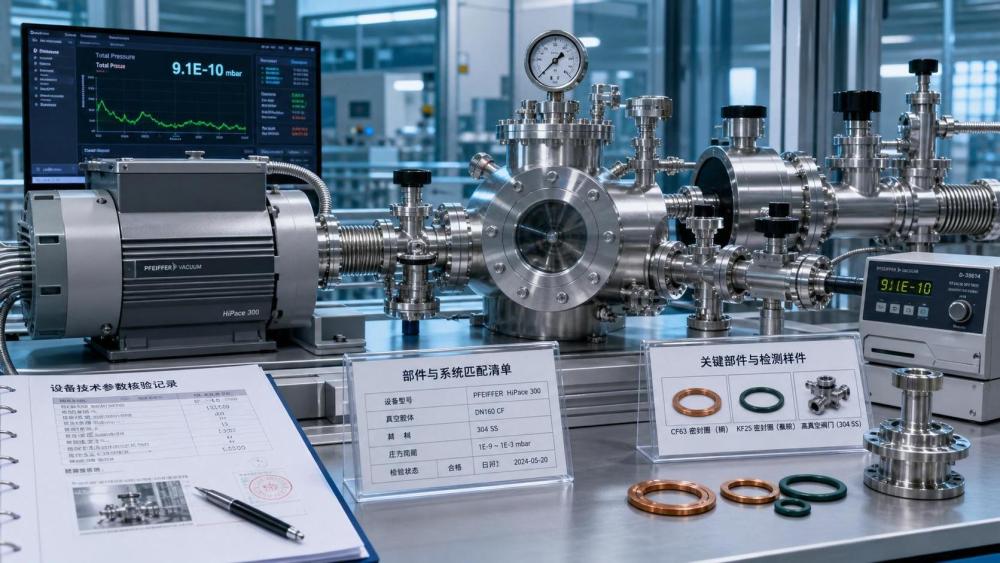
The practical issue is simple. Technical figures may be correct in a laboratory context while still being misleading in plant use. Nominal pumping speed, ultimate pressure, leak rates, and outgassing values all depend on setup details that are easy to overlook.
That is why a vacuum technology database should be checked in the same disciplined way as a test certificate or process specification. The question is not only whether the number exists, but whether the number is usable.
What a reliable vacuum technology database should contain
A useful vacuum technology database is more than a list of pump curves or materials. It should connect data to conditions, methods, revisions, and traceability. Without that structure, comparison becomes unsafe.
Core elements that support confidence
- Measurement basis, including standard, instrument type, and environmental conditions.
- Revision history showing when the data was updated and what changed.
- Source traceability to manufacturer documents, test reports, or validated field records.
- Material notes covering corrosion, contamination, permeation, and cleaning limits.
- Application context, such as clean vacuum, wet vacuum, solvent exposure, or high-temperature service.
When these elements are present, the vacuum technology database becomes easier to audit. It also becomes easier to align technical review with internal quality systems and site safety procedures.
The first checks before using technical data
Before any parameter is used in approval, maintenance planning, or process validation, a short verification routine helps prevent avoidable errors. The most important checks are usually straightforward, but they must be done consistently.
1. Check whether the data is current
Vacuum equipment evolves quietly. Seal materials change. Coatings change. Test conditions are refined. A vacuum technology database that has not been updated may still rank well in search, but it may no longer reflect current product behavior.
Date stamps, revision numbers, and change notes should be visible. If they are missing, the data should be treated cautiously.
2. Confirm source traceability
Data copied from distributor pages, legacy PDFs, or secondary articles often loses context. A trustworthy vacuum technology database should point back to a primary source or validated test origin.
If a leakage figure or base pressure value cannot be traced, it should not be used for critical release decisions.
3. Match the operating window
Pressure alone is not enough. Gas composition, inlet temperature, humidity, duty cycle, and contamination load can change system behavior significantly.
In actual use, the right question is whether the data reflects your operating window, not whether the value looks impressive.
4. Review test method and units
Different standards and unit systems can distort comparison. mbar, Pa, Torr, and microns may all appear in one dataset. Pumping speed may be shown under conditions that hide conductance losses.
A vacuum technology database should make unit conversion and method notes explicit. If not, comparison across suppliers becomes weak.
Where mistakes usually happen
Many errors come from assuming that equipment data equals system data. That assumption breaks down quickly in vacuum applications.
These gaps are common in fast-moving projects, especially when a vacuum technology database is used for screening and then quietly becomes the main reference. That shift creates risk if nobody revalidates the original assumptions.
Why this topic matters more now
Several industry trends are raising the importance of clean, comparable technical data. One is tighter performance control in regulated and high-purity production. Another is the pressure to improve energy efficiency across thermal and compression systems.
This is where broader industrial intelligence becomes relevant. Platforms such as GTC-Matrix track vacuum processes alongside cooling, compressed air, and heat exchange technologies. That wider view helps connect equipment-level data with energy costs, refrigerant policy shifts, oil-free technology trends, and process reliability concerns.
A vacuum technology database is therefore not only a component library. It is increasingly part of a larger operational picture that includes decarbonization targets, resource efficiency, and more demanding quality assurance frameworks.
How to interpret data in real operating scenarios
The same vacuum technology database can support very different decisions depending on the process. Context matters more than volume of information.
High-purity and contamination-sensitive lines
Focus on outgassing, backstreaming risk, cleaning methods, and particle behavior. Surface finish, elastomer selection, and maintenance intervals become highly relevant.
Thermal and drying processes
Pressure stability alone is not enough. Heat load, vapor content, condenser interaction, and cooling capacity can change the apparent vacuum performance.
Packaging and general manufacturing
Cycle time, utility demand, noise, service access, and tolerance to variable loads often matter more than the lowest achievable pressure.
In each case, the vacuum technology database should be read alongside maintenance history, process deviations, and site-specific validation records. Static data becomes far more useful when it is tied to observed performance.
A practical review routine
A short internal checklist can improve consistency when using a vacuum technology database for approvals, troubleshooting, or specification work.
- Record the exact source, revision date, and access date.
- Verify the unit system and test standard before comparing values.
- Check whether process gases, temperature, and contamination loads are represented.
- Separate component data from assembled system expectations.
- Flag any data point that lacks traceability or method notes.
- Cross-check critical values against internal operating history where available.
This routine does not slow decision-making. In most cases, it prevents rework, specification drift, and avoidable debate after installation or during audits.
What to do next with the data
A vacuum technology database becomes genuinely useful when it supports a repeatable judgment process. Start by identifying which values are business-critical, such as cleanliness limits, cycle stability, leak integrity, or regulatory documentation.
Then compare those priorities against the quality of the available data, not just the quantity. Where uncertainty remains, collect clarifications before data enters a specification, maintenance standard, or release workflow.
That approach turns technical information into something more dependable: a basis for safer decisions, cleaner processes, and better alignment between vacuum performance, energy use, and long-term operating control.
Ready when you are. Send us a message to get started.
Related News
- How does base pressure affect film purity in vacuum deposition?Author :Vacuum Process Fellow

- How to size vacuum process equipment for the required pump-down timeAuthor :Vacuum Process Fellow

- Which vacuum specification best protects semiconductor process yield?Author :Vacuum Process Fellow

- How Can Contamination Be Prevented in a Semiconductor Vacuum Chamber?Author :Vacuum Process Fellow

- Which Vacuum Pump Specifications Matter Most for Semiconductor Processes?Author :Vacuum Process Fellow

- How to find leaks in vacuum pump systems before pump performance dropsAuthor :Vacuum Process Fellow

- How to size a Roots blower for vacuum process equipmentAuthor :Vacuum Process Fellow

- How vacuum level affects vacuum process efficiencyAuthor :Vacuum Process Fellow

- China Imposes Temporary Helium Export BanAuthor :Vacuum Process Fellow

- Semiconductor Vacuum Systems Factory Checklist for Process Stability and Cleanroom UseAuthor :Vacuum Process Fellow

- Vacuum Process Optimization Services: Signs Your Line Needs a Performance ReviewAuthor :Vacuum Process Fellow

- Vacuum Chambers for Cleanroom Use: Key Design Points That Prevent ContaminationAuthor :Vacuum Process Fellow

- Vacuum Distillation Systems: Key Performance Metrics That Affect Product PurityAuthor :Vacuum Process Fellow

- Vietnam Halts High Vacuum Pump Import Licenses for 30 DaysAuthor :Vacuum Process Fellow

- Vacuum Technology Database: What to Check Before Using Technical DataAuthor :Vacuum Process Fellow

- Dry Pump Vacuum System Design Mistakes That Raise DowntimeAuthor :Vacuum Process Fellow

- When Vacuum Systems Lose Performance: Common Causes and FixesAuthor :Vacuum Process Fellow
![]()
- EU Tightens EN 13445-3 Weld Testing for Vacuum VesselsAuthor :Vacuum Process Fellow
![]()
- EPA Cuts R-1234ze(E) Quota 35%, Tightening Vacuum Cooling SupplyAuthor :Vacuum Process Fellow
 Quota 35%, Tightening Vacuum Cooling Supply")
- ICA Warns of Tight Copper Alloy Supply for Vacuum PumpsAuthor :Vacuum Process Fellow

- Vacuum System Leak Detection: Signs, Tests, and FixesAuthor :Vacuum Process Fellow

- How to Compare Vacuum Systems Factory Capabilities for Stable Process UptimeAuthor :Vacuum Process Fellow

- Vacuum Pump Lead Times Extend to 26 WeeksAuthor :Vacuum Process Fellow

- Semiconductor Vacuum Systems Explained for Stable Process YieldAuthor :Vacuum Process Fellow

- Vacuum Process Efficiency: 7 Hidden Causes of Energy LossAuthor :Vacuum Process Fellow

- Vacuum Technology Solutions for Stable Low-Pressure ProductionAuthor :Vacuum Process Fellow

- Vacuum Processes: Common Efficiency Losses and FixesAuthor :Vacuum Process Fellow

- Common Vacuum Processes Problems and How to Prevent DowntimeAuthor :Vacuum Process Fellow

- Tantalum Spike Extends Vacuum Crucible Lead TimesAuthor :Vacuum Process Fellow

- Vacuum Process Efficiency: 5 Hidden Losses to Check FirstAuthor :Vacuum Process Fellow

- How Heat Transfer Design Impacts Vacuum Process EfficiencyAuthor :Vacuum Process Fellow

- EN 13445-4:2026 Takes Effect for High-Vacuum ComponentsAuthor :Vacuum Process Fellow

- EU Vacuum Components Face New EN 13445-4:2026 Leak Test RuleAuthor :Vacuum Process Fellow

- UBS: Fed Cut View May Ease Vacuum Pump Lead TimesAuthor :Vacuum Process Fellow

- Vacuum Processes: Common Causes of Unstable PerformanceAuthor :Vacuum Process Fellow
![]()
- SiC Certification Signals New Entry Path for Vacuum and Compressor DrivesAuthor :Vacuum Process Fellow
![]()