Vacuum Chambers for Cleanroom Use: Key Design Points That Prevent Contamination




In contamination-sensitive production, vacuum chambers cleanroom compatibility is more than a technical checkbox. It sits at the center of yield protection, process stability, and audit readiness. When a chamber releases particles, traps residues, or allows seal degradation, the problem rarely stays inside the vessel. It can spread into surrounding workflows, disrupt qualification, and create costly uncertainty across semiconductor, pharmaceutical, food, and precision manufacturing lines.
That is why cleanroom vacuum design has become a practical risk-control issue. The chamber must support vacuum performance while behaving like a disciplined cleanroom component: low shedding, low outgassing, easy to clean, and predictable over time. For organizations tracking industrial purity and thermal system performance, including platforms such as GTC-Matrix, this intersection is increasingly important because vacuum integrity, oil-free utilities, and contamination control now influence both product quality and operational efficiency.
Why cleanroom vacuum design deserves closer attention
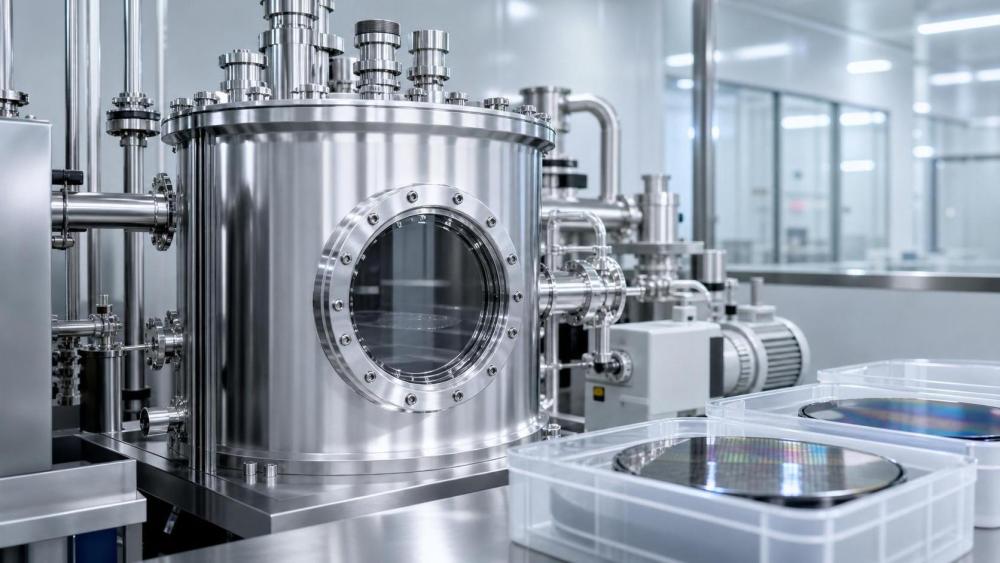
Vacuum systems are often discussed in terms of pressure range, pump-down time, and leak rate. In a cleanroom, those metrics still matter, but they are not enough. A chamber can meet vacuum targets and still become a contamination source.
The risk is wider today because many production lines handle smaller geometries, tighter tolerances, and stricter cleaning validation. Residual hydrocarbons, metal fines, elastomer fragments, and absorbed moisture can all affect downstream process consistency.
Another reason for rising attention is utility system evolution. Oil-free compression, better thermal management, and tighter environmental controls are pushing facilities toward cleaner upstream conditions. That raises the expectation that vacuum chambers cleanroom installations must match the same purity standard.
From an operating perspective, contamination events are expensive because root causes are difficult to isolate. A chamber surface treatment, an unsuitable gasket, or poor weld finishing may only reveal itself after repeated cycles, maintenance, or thermal swings.
What “cleanroom compatible” really means for a vacuum chamber
Cleanroom compatibility is not a single feature. It is a combination of design choices that reduce particle generation, chemical release, trapped contamination, and cleaning difficulty.
A useful way to judge vacuum chambers cleanroom suitability is to look at four linked behaviors:
- How much the chamber sheds or generates particles during operation.
- How much gas, vapor, or residue it releases under vacuum.
- How easily surfaces can be cleaned and verified.
- How stable those conditions remain after thermal and mechanical cycling.
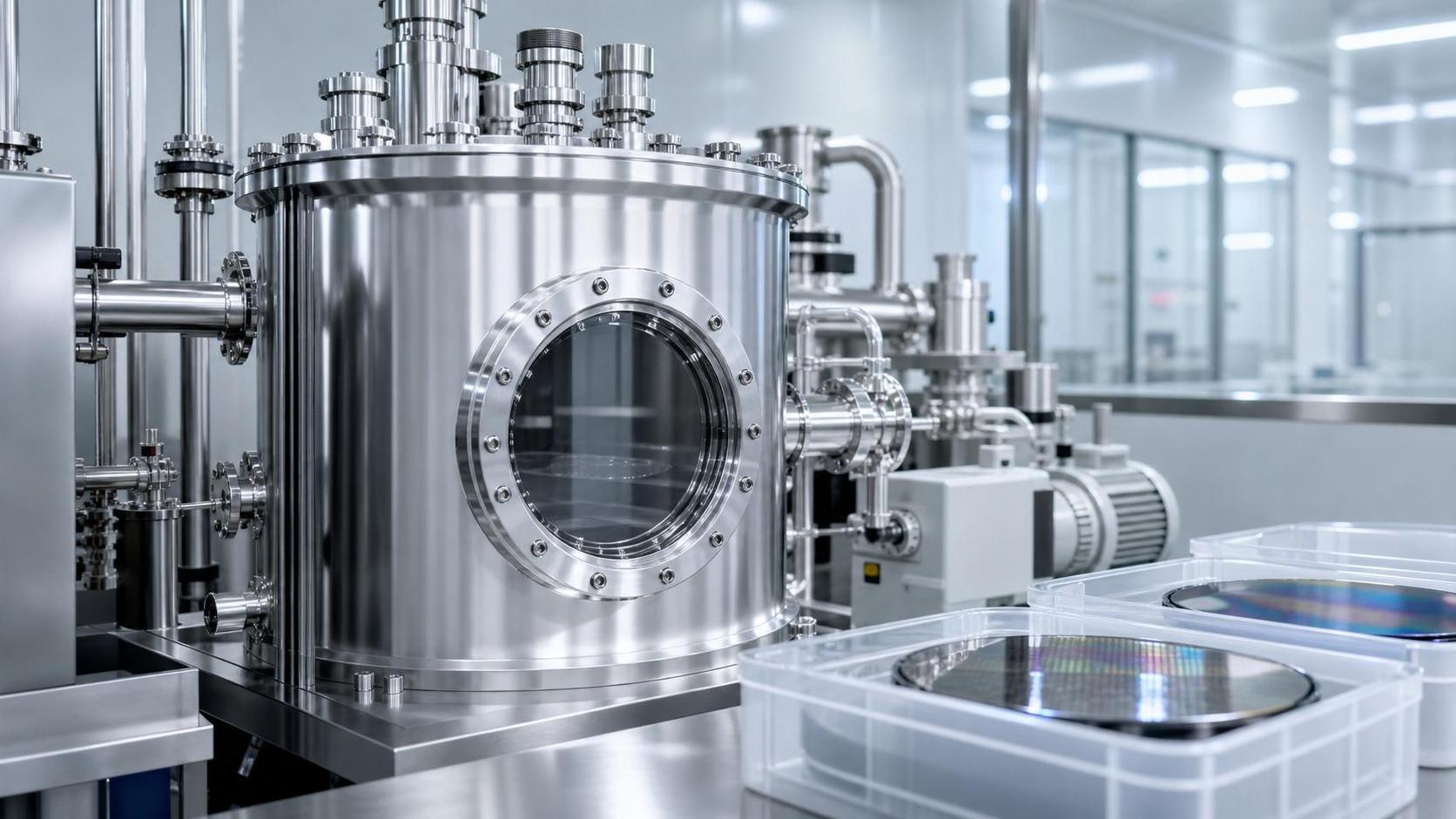
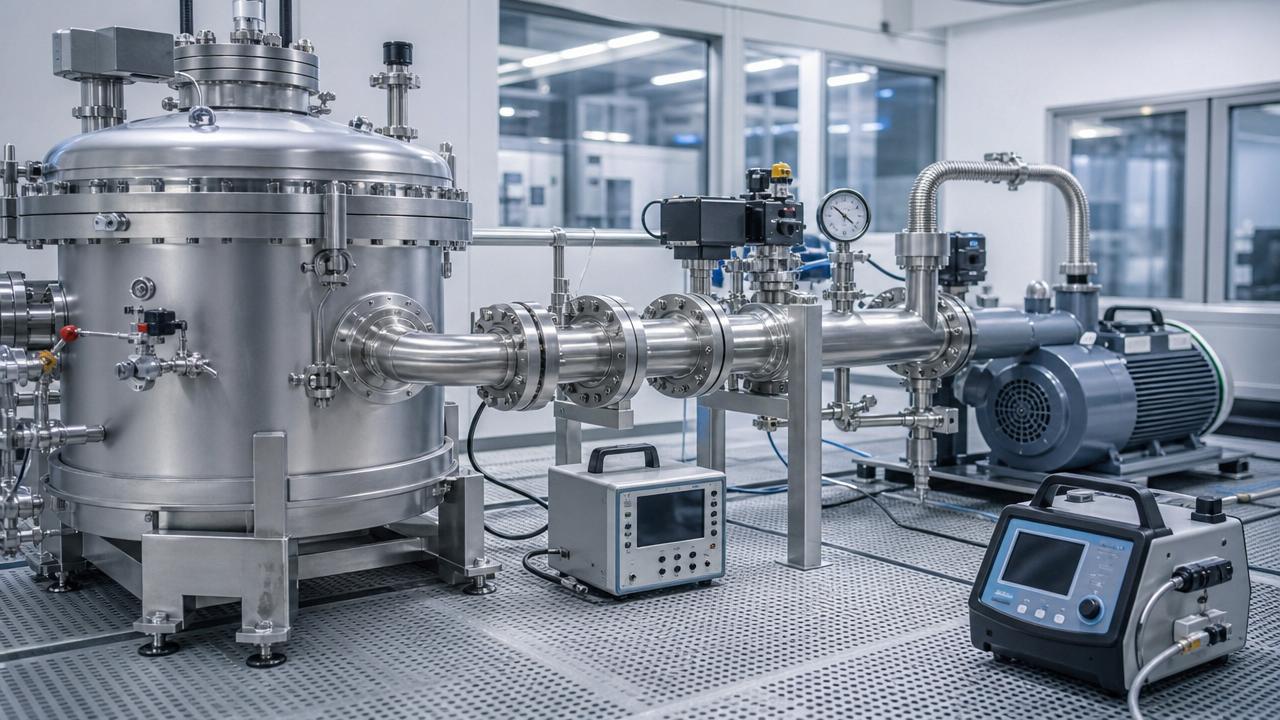
This is where design discipline matters. A chamber should not be judged only by the vessel body. Ports, viewports, fasteners, internal fixtures, valves, seals, and handling practices all contribute to contamination performance.
Material selection is the first contamination barrier
Material choice shapes both cleanliness and long-term vacuum behavior. Stainless steel, especially grades commonly used in high-purity fabrication, remains the standard for many cleanroom vacuum applications because it balances corrosion resistance, mechanical strength, and cleanability.
However, not all stainless steel assemblies behave the same. Surface inclusions, poor passivation, or rough machining marks can increase particle retention and make cleaning less reliable. Aluminum may be acceptable in some systems, but coating condition and wear behavior need careful review.
Polymers and elastomers deserve extra caution. They can outgas, absorb process chemicals, or degrade after sterilization, solvent exposure, or heat. In practice, every nonmetallic component should be treated as a contamination decision, not just a convenience item.
When comparing options, these questions usually reveal the real difference:
- Is the material compatible with the target vacuum level and process chemistry?
- Has it been finished for low particle retention and low outgassing?
- Will repeated cleaning or thermal cycling change its behavior?
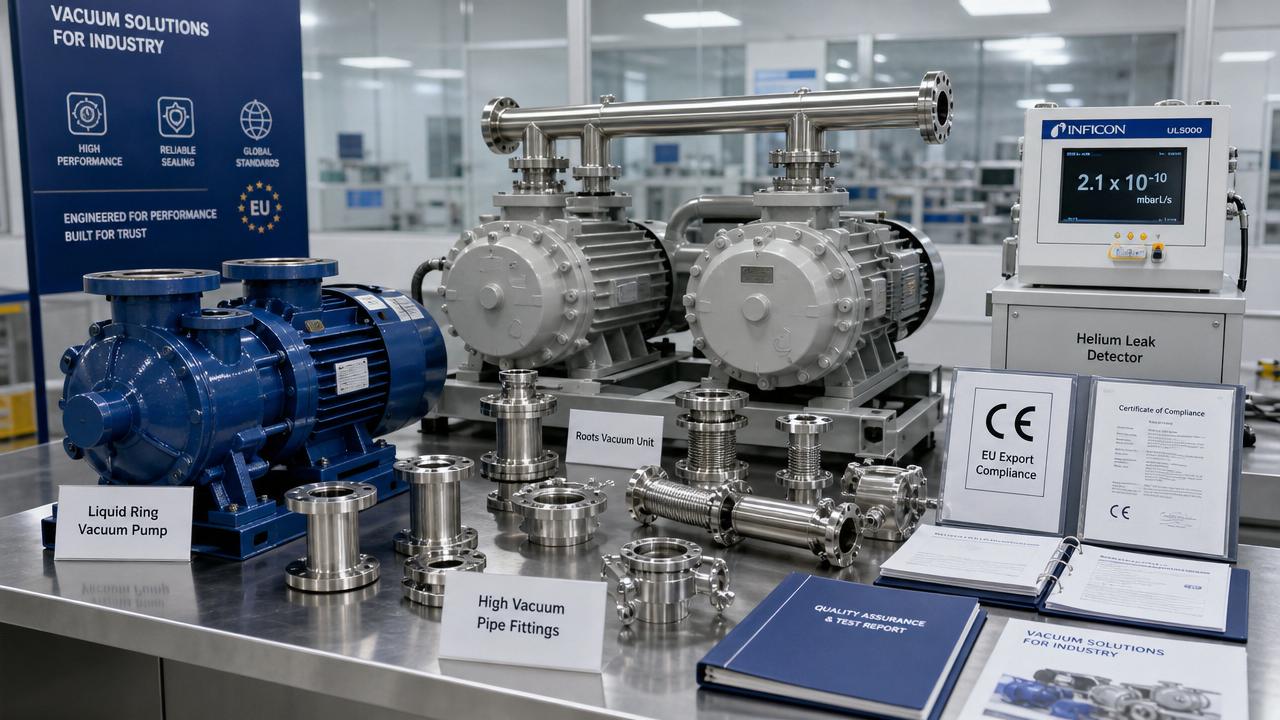
- Are certificates, traceability, and finishing records available?
Surface finish and geometry often decide real-world cleanliness
Contamination prevention depends heavily on what cannot be seen easily. Microscopic roughness, dead corners, sharp internal transitions, and incomplete weld blending create places where particles and films can remain after cleaning.
A smooth, consistent internal finish reduces retention points and improves wipe-down or validated cleaning performance. Electropolishing may be useful in some high-purity applications because it can reduce micro-asperities and improve corrosion behavior.
Geometry also matters. Blind holes, overlapping joints, threaded areas inside the vacuum boundary, and poorly placed fasteners can all increase contamination risk. Designs intended for vacuum chambers cleanroom environments should favor accessible surfaces and minimal particle traps.
Seals, outgassing, and the hidden sources of process drift
Many contamination problems begin at the seal level. Elastomer choice affects permeation, chemical resistance, extractables, and long-term stability. A seal that works mechanically may still be unsuitable for a clean process environment.
Metal seals are often favored where ultra-clean performance is required, though they bring higher cost and different maintenance demands. Elastomer seals remain common, but they need careful selection based on temperature, sterilization method, and process media.
Outgassing deserves equal attention. Under vacuum, absorbed moisture, oils, solvents, and volatile compounds can desorb from chamber walls, seals, adhesives, cable jackets, and instrumentation components. This can extend pump-down times and contaminate sensitive products or wafers.
Bake-out capability, pre-cleaning discipline, and controlled material introduction are often more valuable than adding complexity later. In many cases, stable vacuum chambers cleanroom performance comes from preventing outgassing at the design stage instead of compensating during operation.
Common hidden contamination sources
- Lubricants transferred from assembly tools or nearby utilities.
- Adhesives used in sensors, labels, or cable management.
- Porous welds or trapped volumes creating virtual leaks.
- Replacement parts with different formulation or finish.
- Improper packaging before chamber installation.
Where these design points matter most
The importance of vacuum chambers cleanroom design changes by sector, but the pattern is consistent: the cleaner the process window, the smaller the margin for material or surface mistakes.
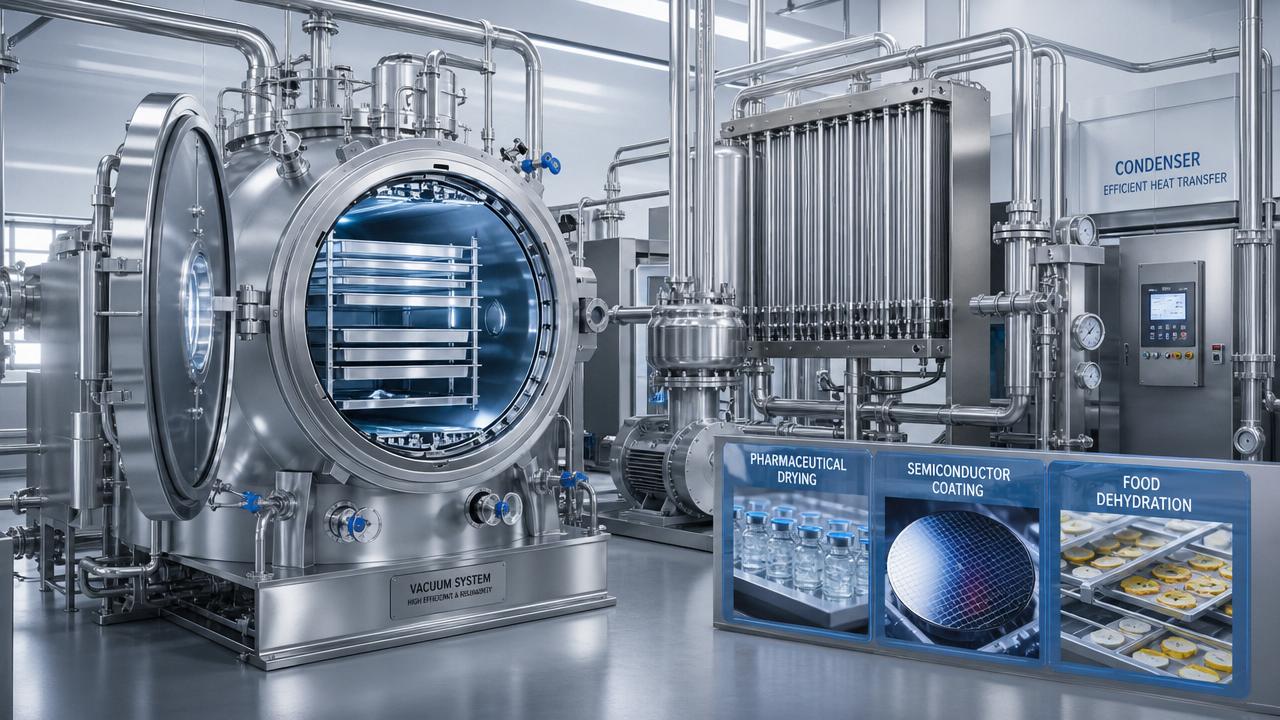
Semiconductor processes are highly sensitive to particles and outgassing because deposited layers and critical dimensions can be affected by trace contamination. Pharmaceutical production may focus more on cleanability, validation, and cross-batch control. Food and advanced packaging lines often balance hygienic expectations with vacuum reliability and maintenance practicality.
Across these sectors, broader industrial trends also matter. GTC-Matrix has closely tracked the rise of oil-free compression, precision temperature control, and cleaner utility architectures. Those trends reinforce a simple point: cleaner support systems increase the need for equally disciplined vacuum equipment.
A practical review framework before approval or retrofit
When reviewing a new chamber or an existing installation, it helps to use a structured lens rather than relying on general cleanliness claims. Documentation should connect design intent with manufacturing evidence and operational controls.
A practical review usually includes these checkpoints:
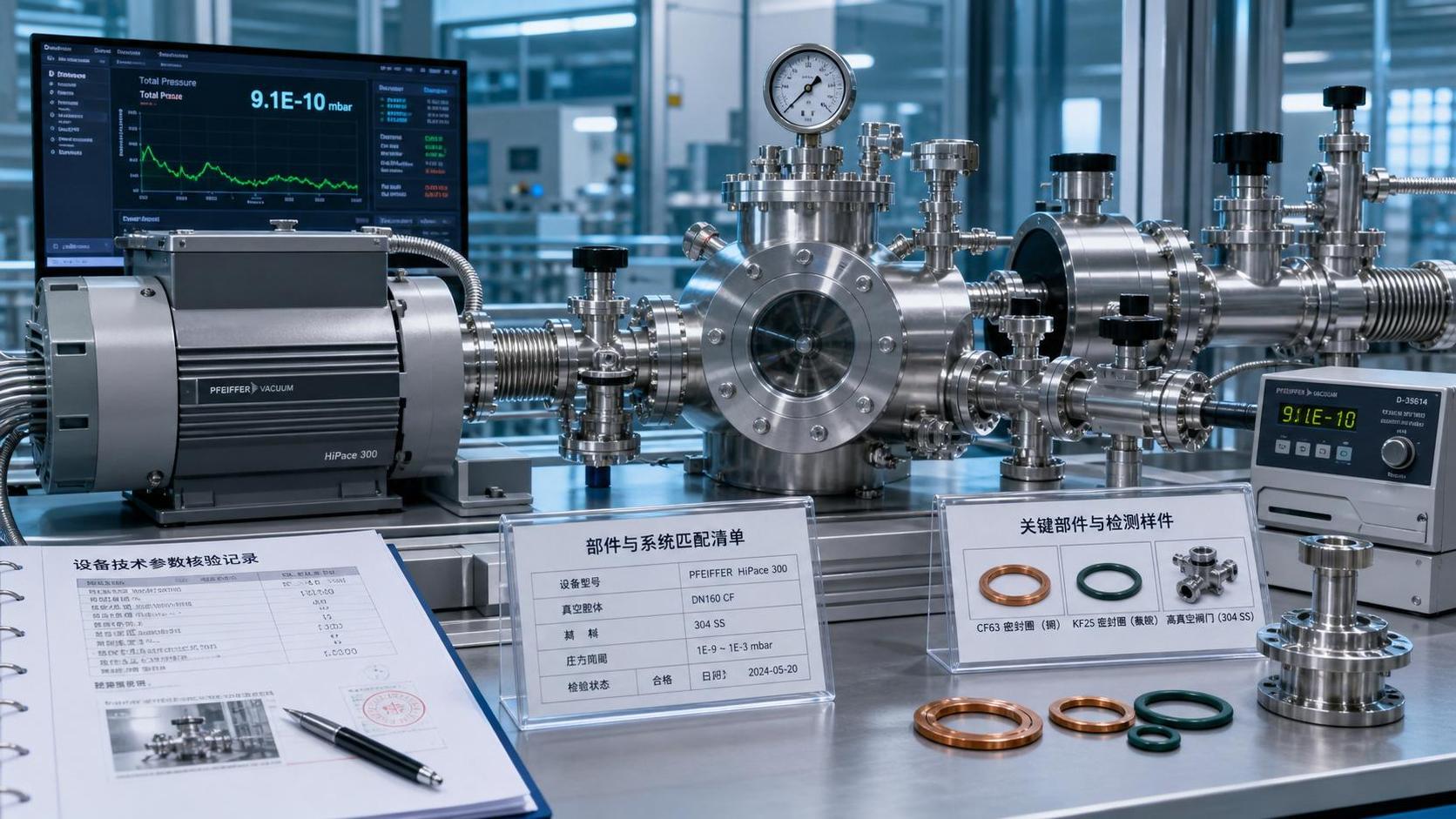
- Material certificates, weld records, passivation status, and finish specifications.
- Seal material compatibility with process gas, temperature, and cleaning method.
- Internal geometry review for dead legs, threads, and inaccessible surfaces.
- Cleaning procedure, packaging method, and installation handling controls.
- Outgassing, leak, and particle performance data where available.
- Maintenance plan covering replacement intervals and contamination requalification.
This approach is especially useful during retrofit decisions. A chamber may not require complete replacement if the main risks come from seals, fittings, internal hardware, or insufficient cleaning validation.
Turning design awareness into better decisions
The most effective contamination control strategy is usually built before procurement is finalized. Once a chamber is installed, recurring particle events or unexplained residues become harder to trace and more expensive to correct.
For that reason, vacuum chambers cleanroom evaluation should combine engineering data with process context. The key question is not whether a chamber looks clean. It is whether the full design supports low contamination under actual operating, cleaning, and maintenance conditions.
A sensible next step is to map chamber design features against the process risks that matter most: particles, outgassing, chemical compatibility, cleanability, and utility purity. That creates a clearer basis for comparing suppliers, planning upgrades, and setting acceptance criteria that hold up in production.
In a market shaped by cleaner thermal systems, oil-free power, and higher purity expectations, that level of review is no longer optional detail. It is part of protecting process confidence from the inside out.
Ready when you are. Send us a message to get started.
Related News
- How does base pressure affect film purity in vacuum deposition?Author :Vacuum Process Fellow

- How to size vacuum process equipment for the required pump-down timeAuthor :Vacuum Process Fellow

- Which vacuum specification best protects semiconductor process yield?Author :Vacuum Process Fellow

- How Can Contamination Be Prevented in a Semiconductor Vacuum Chamber?Author :Vacuum Process Fellow

- Which Vacuum Pump Specifications Matter Most for Semiconductor Processes?Author :Vacuum Process Fellow

- How to find leaks in vacuum pump systems before pump performance dropsAuthor :Vacuum Process Fellow

- How to size a Roots blower for vacuum process equipmentAuthor :Vacuum Process Fellow

- How vacuum level affects vacuum process efficiencyAuthor :Vacuum Process Fellow

- China Imposes Temporary Helium Export BanAuthor :Vacuum Process Fellow

- Semiconductor Vacuum Systems Factory Checklist for Process Stability and Cleanroom UseAuthor :Vacuum Process Fellow

- Vacuum Process Optimization Services: Signs Your Line Needs a Performance ReviewAuthor :Vacuum Process Fellow

- Vacuum Chambers for Cleanroom Use: Key Design Points That Prevent ContaminationAuthor :Vacuum Process Fellow

- Vacuum Distillation Systems: Key Performance Metrics That Affect Product PurityAuthor :Vacuum Process Fellow

- Vietnam Halts High Vacuum Pump Import Licenses for 30 DaysAuthor :Vacuum Process Fellow

- Vacuum Technology Database: What to Check Before Using Technical DataAuthor :Vacuum Process Fellow

- Dry Pump Vacuum System Design Mistakes That Raise DowntimeAuthor :Vacuum Process Fellow

- When Vacuum Systems Lose Performance: Common Causes and FixesAuthor :Vacuum Process Fellow
![]()
- EU Tightens EN 13445-3 Weld Testing for Vacuum VesselsAuthor :Vacuum Process Fellow
![]()
- EPA Cuts R-1234ze(E) Quota 35%, Tightening Vacuum Cooling SupplyAuthor :Vacuum Process Fellow
 Quota 35%, Tightening Vacuum Cooling Supply")
- ICA Warns of Tight Copper Alloy Supply for Vacuum PumpsAuthor :Vacuum Process Fellow

- Vacuum System Leak Detection: Signs, Tests, and FixesAuthor :Vacuum Process Fellow

- How to Compare Vacuum Systems Factory Capabilities for Stable Process UptimeAuthor :Vacuum Process Fellow

- Vacuum Pump Lead Times Extend to 26 WeeksAuthor :Vacuum Process Fellow

- Semiconductor Vacuum Systems Explained for Stable Process YieldAuthor :Vacuum Process Fellow

- Vacuum Process Efficiency: 7 Hidden Causes of Energy LossAuthor :Vacuum Process Fellow

- Vacuum Technology Solutions for Stable Low-Pressure ProductionAuthor :Vacuum Process Fellow

- Vacuum Processes: Common Efficiency Losses and FixesAuthor :Vacuum Process Fellow

- Common Vacuum Processes Problems and How to Prevent DowntimeAuthor :Vacuum Process Fellow

- Tantalum Spike Extends Vacuum Crucible Lead TimesAuthor :Vacuum Process Fellow

- Vacuum Process Efficiency: 5 Hidden Losses to Check FirstAuthor :Vacuum Process Fellow

- How Heat Transfer Design Impacts Vacuum Process EfficiencyAuthor :Vacuum Process Fellow

- EN 13445-4:2026 Takes Effect for High-Vacuum ComponentsAuthor :Vacuum Process Fellow

- EU Vacuum Components Face New EN 13445-4:2026 Leak Test RuleAuthor :Vacuum Process Fellow

- UBS: Fed Cut View May Ease Vacuum Pump Lead TimesAuthor :Vacuum Process Fellow

- Vacuum Processes: Common Causes of Unstable PerformanceAuthor :Vacuum Process Fellow
![]()
- SiC Certification Signals New Entry Path for Vacuum and Compressor DrivesAuthor :Vacuum Process Fellow
![]()