Improving Vacuum Process Efficiency in High-Vacuum Systems




In high-vacuum systems, small operating choices can have a major impact on uptime, energy use, and product quality.
For operators managing pumps, chambers, valves, and leak checks every day, improving vacuum process efficiency means more than faster pump-down.
It means stable pressure control, reduced contamination risk, and lower maintenance demands across demanding industrial vacuum processes.
This article explores practical ways to optimize vacuum performance and identify common efficiency losses in high-vacuum systems.
Improving Vacuum Process Efficiency in High-Vacuum Systems: What Does It Really Mean?
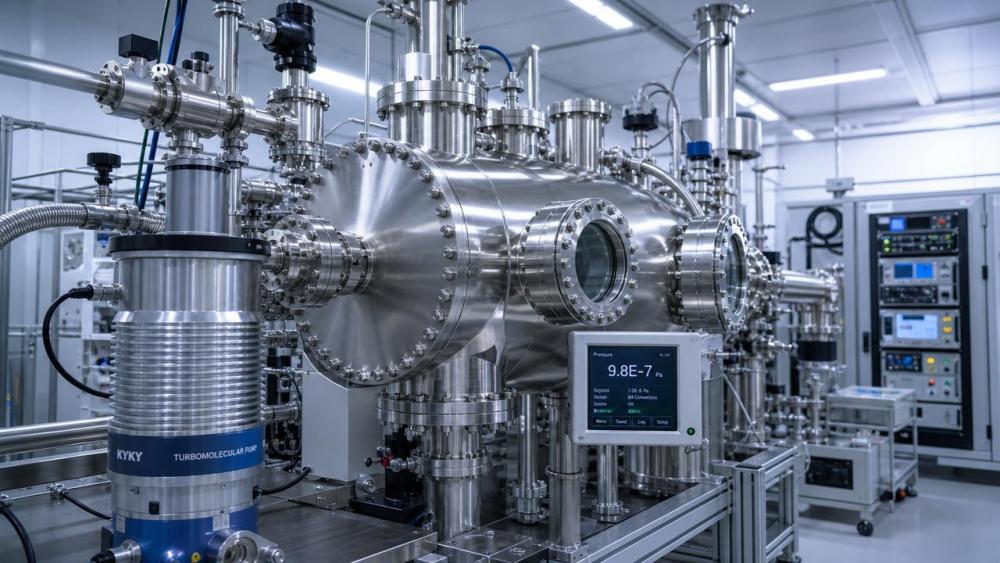
Vacuum process efficiency describes how effectively a system reaches, holds, and recovers target pressure with minimum wasted time and energy.
It connects pump performance, chamber cleanliness, conductance, leak integrity, process loading, and control logic.
A fast pump alone does not guarantee vacuum process efficiency if valves, seals, piping, or operating sequences create losses.
In semiconductor, coating, metallurgy, analytical, and research applications, pressure stability often matters as much as pump-down speed.
Good vacuum process efficiency supports cleaner surfaces, repeatable batches, shorter cycle times, and lower equipment stress.
Poor efficiency appears as long evacuation times, frequent alarms, unstable base pressure, or unexpected contamination events.
The useful question is not only “Which pump is larger?” but “Where is the vacuum system losing performance?”
Which Factors Reduce Vacuum Process Efficiency Most Often?
Several hidden issues can reduce vacuum process efficiency even when major equipment appears healthy.
The first common factor is leakage, especially around door seals, feedthroughs, elastomer joints, and service ports.
A small leak can force pumps to work continuously while preventing stable high-vacuum operation.
The second factor is outgassing from chamber walls, fixtures, oils, polymers, or process residues.
Outgassing is especially important after maintenance, atmospheric exposure, or loading of wet and porous materials.
The third factor is poor conductance caused by narrow lines, sharp bends, undersized valves, or long pumping paths.
Even a capable pump cannot perform well if gas flow between chamber and pump is restricted.
The fourth factor is mismatched sequencing, where roughing, crossover, backing, and isolation steps occur at inefficient pressure points.
- Leaks increase gas load and damage vacuum process efficiency.
- Outgassing extends pump-down and contaminates sensitive surfaces.
- Low conductance wastes installed pumping capacity.
- Incorrect control timing creates energy and cycle-time losses.
A practical improvement program should examine all four areas before assuming the main pump must be replaced.
How Can Pump Selection Improve Vacuum Process Efficiency?
Pump selection strongly affects vacuum process efficiency, but selection must match the process gas load and pressure range.
Roughing pumps remove bulk gas at higher pressure, while turbomolecular, cryogenic, or diffusion pumps support high-vacuum stages.
A high-capacity pump may waste energy if chamber conductance limits actual pumping speed.
A smaller optimized system may deliver better vacuum process efficiency than an oversized system with poor piping design.
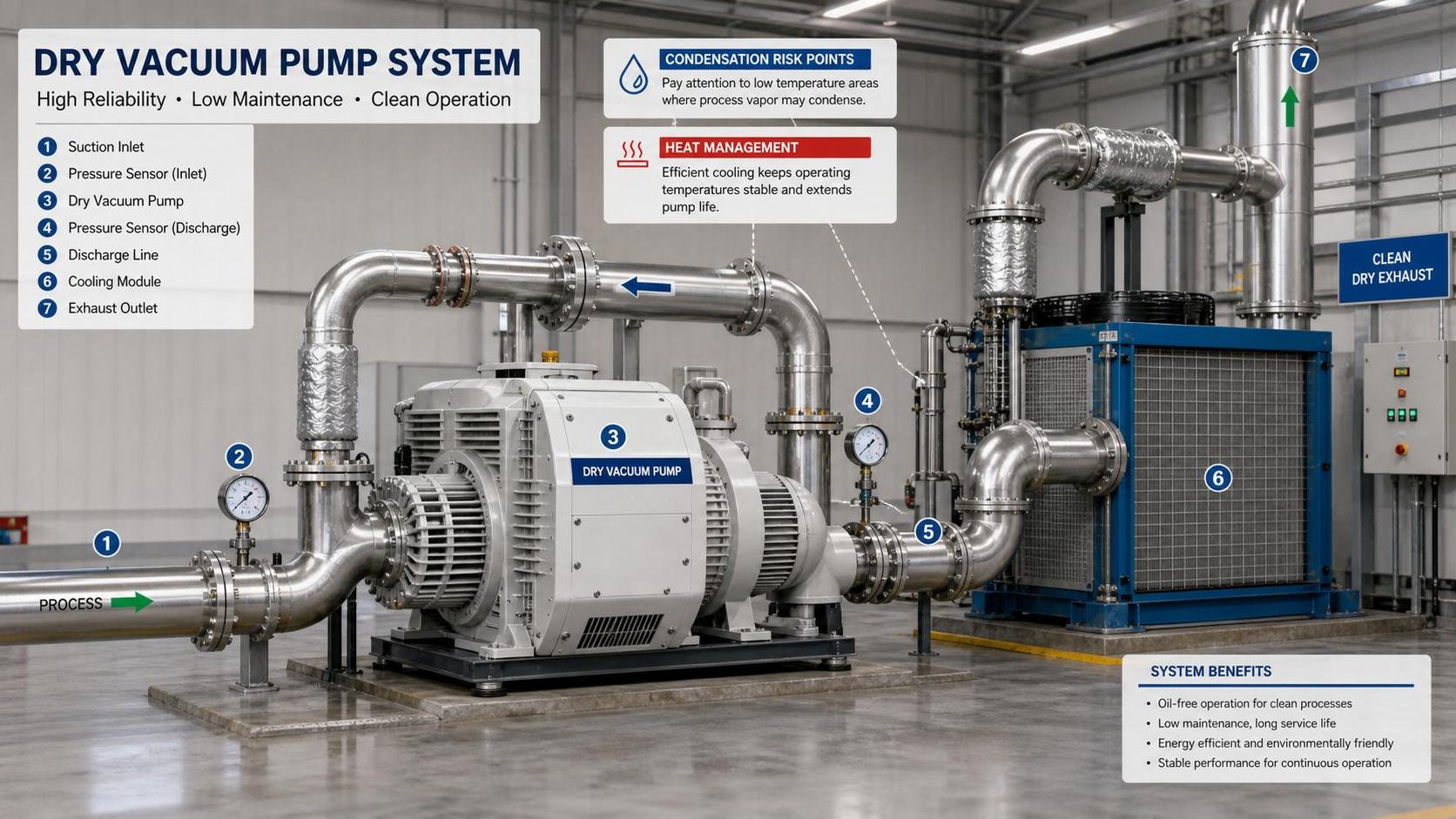
For dry and clean processes, oil-free pumping helps reduce backstreaming, lubricant vapor, and product contamination risk.
For wet, reactive, or particulate gases, pump materials, purge strategy, and exhaust handling become critical.
Backing pump stability also matters because high-vacuum pumps depend on proper foreline pressure.
Unstable backing pressure can reduce compression ratio, increase heat, and undermine vacuum process efficiency.
What should be checked before changing a pump?
- Measure real pump-down curves, not only nameplate values.
- Confirm base pressure after thermal stabilization.
- Check foreline pressure during actual processing.
- Compare chamber gas load with effective pumping speed.
- Review contamination and maintenance records.
These checks prevent expensive upgrades that do not address the true limitation.
How Do Leak Detection and Cleanliness Affect Vacuum Process Efficiency?
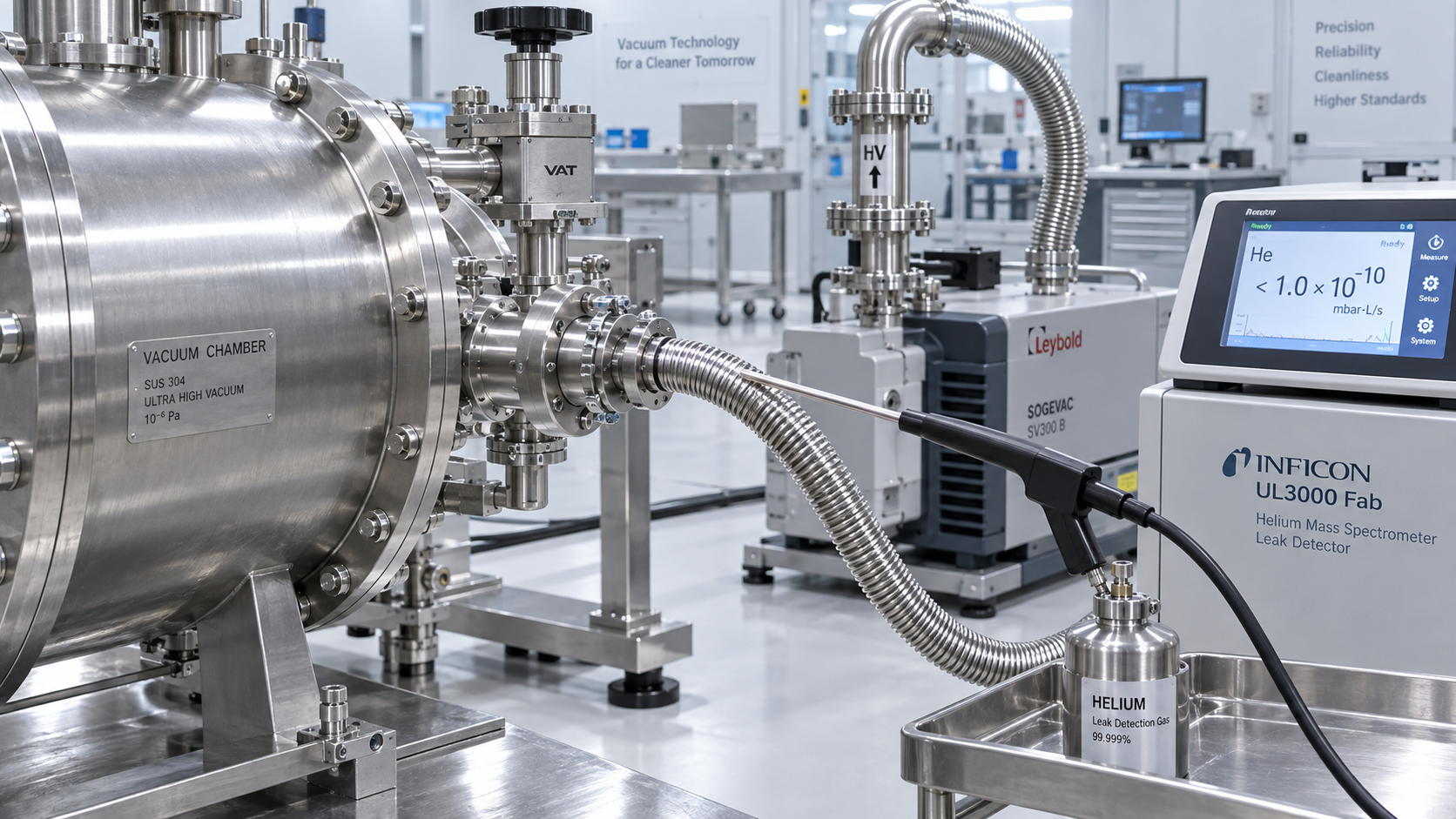
Leak detection is one of the fastest ways to recover lost vacuum process efficiency.
A pressure rise test can separate real leaks from outgassing when performed under controlled conditions.
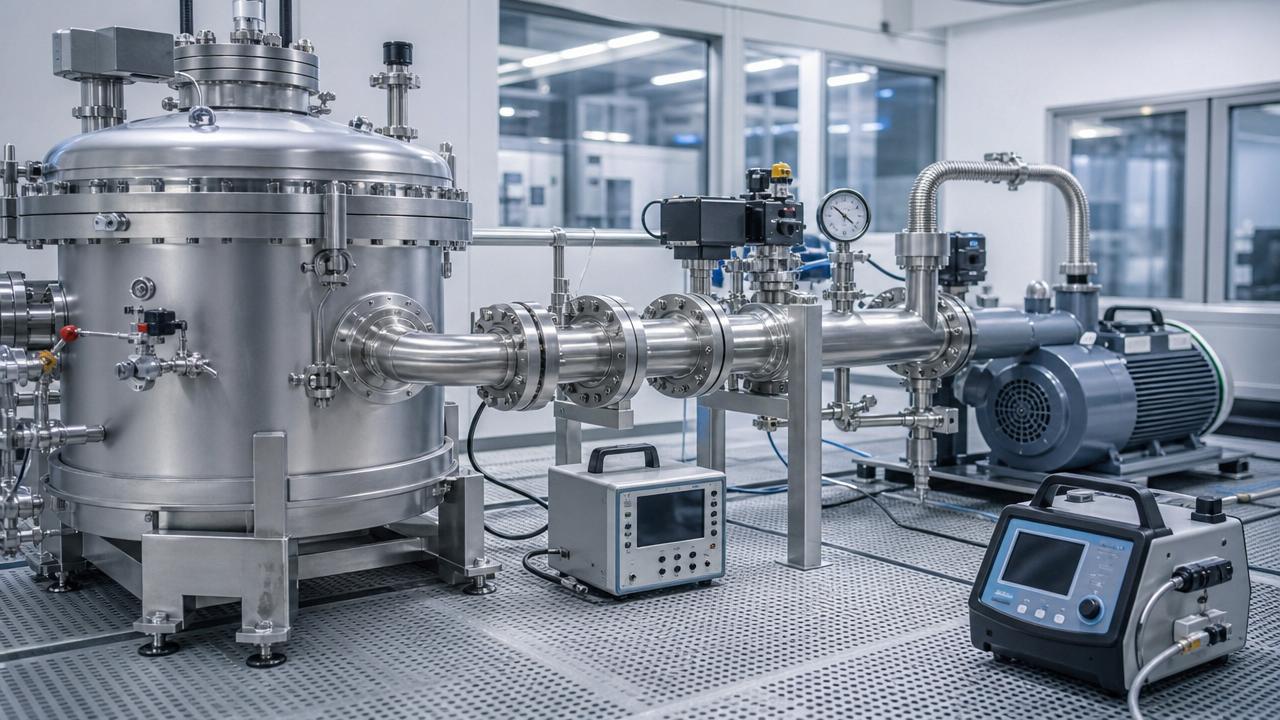
Helium leak testing provides more precise location data for critical high-vacuum assemblies.
However, repeated leak testing without cleanliness control may miss the full picture.
Fingerprints, cutting fluids, solvent residues, dust, and elastomer fragments can increase gas load significantly.
Clean assembly practices help maintain vacuum process efficiency after maintenance or chamber modification.
Use compatible gloves, lint-free wipes, approved solvents, and controlled drying methods.
For sensitive processes, bake-out procedures can accelerate desorption from internal surfaces.
Bake-out temperature should match seal materials, sensors, lubricants, and installed components.
Overheating can damage parts, while underheating may deliver little improvement in vacuum process efficiency.
What Control Strategies Support Stable Vacuum Process Efficiency?
Control strategy is often overlooked, but it can transform vacuum process efficiency without major hardware changes.
The pump-down sequence should match chamber volume, gas load, pump curves, and product sensitivity.
Opening high-vacuum valves too early can overload pumps or disturb particles.
Opening them too late can waste time and reduce throughput.
Pressure setpoints should be based on measured system behavior instead of generic defaults.
Modern controllers can use staged valves, variable-speed drives, soft-start logic, and interlocked safety conditions.
Variable-speed backing pumps can reduce energy consumption during holding periods.
This supports vacuum process efficiency when chambers spend long periods at stable pressure.
Data logging also helps identify gradual degradation before downtime occurs.
Track pump-down time, base pressure, foreline pressure, motor current, valve timing, and cooling temperature.
Which signals reveal declining performance?
- Pump-down time increases under the same recipe.
- Base pressure drifts upward after cleaning.
- Foreline pressure becomes unstable during crossover.
- Power draw rises without higher production load.
- Product defects correlate with chamber venting cycles.
These signals can guide maintenance before vacuum process efficiency collapses into unplanned downtime.
How Should Maintenance Be Planned for Better Vacuum Process Efficiency?
Maintenance planning should balance reliability, cost, and process risk.
A fixed calendar schedule is simple, but it may replace parts too early or too late.
Condition-based maintenance improves vacuum process efficiency by using real operating evidence.
Useful indicators include pump vibration, oil condition, seal wear, cooling flow, and sensor drift.
Critical chambers may require spare seals, calibrated gauges, clean fixtures, and validated recovery procedures.
Maintenance should also include software recipes, alarm thresholds, and historical trend reviews.
A clean pump rebuild can fail to improve vacuum process efficiency if the process recipe remains inefficient.
Training also matters because incorrect venting, rushed loading, or improper seal handling can create repeat problems.
What Mistakes Commonly Limit Vacuum Process Efficiency?
One mistake is focusing only on ultimate pressure.
Ultimate pressure is important, but production often depends on recovery time and pressure stability.
Another mistake is installing larger pumps without improving conductance.
This may increase capital cost while creating little gain in vacuum process efficiency.
A third mistake is ignoring gauge accuracy and placement.
Poor sensor location can hide chamber pressure differences during dynamic operation.
A fourth mistake is treating every pressure rise as a leak.
Outgassing, virtual leaks, trapped volumes, and desorption can produce similar symptoms.
A final mistake is skipping documentation after maintenance.
Without baseline data, teams cannot prove whether vacuum process efficiency improved or declined.
FAQ: How Can Vacuum Process Efficiency Be Improved Step by Step?
A structured approach prevents random adjustments and supports measurable improvement.
Start with data, then inspect leaks, cleanliness, conductance, pump matching, and control logic.
For complex plants, this method connects thermodynamic behavior with compression power and practical operating economics.
That focus reflects the intelligence mission of GTC-Matrix: Thermal Driving Industry, Intelligence Connecting Power.
The next step is simple: document the current baseline before making hardware or recipe changes.
With clear evidence, vacuum process efficiency becomes easier to improve, maintain, and justify across high-vacuum operations.
Ready when you are. Send us a message to get started.
Related News
- How does base pressure affect film purity in vacuum deposition?Author :Vacuum Process Fellow

- How to size vacuum process equipment for the required pump-down timeAuthor :Vacuum Process Fellow

- Which vacuum specification best protects semiconductor process yield?Author :Vacuum Process Fellow

- How Can Contamination Be Prevented in a Semiconductor Vacuum Chamber?Author :Vacuum Process Fellow

- Which Vacuum Pump Specifications Matter Most for Semiconductor Processes?Author :Vacuum Process Fellow

- How to find leaks in vacuum pump systems before pump performance dropsAuthor :Vacuum Process Fellow

- How to size a Roots blower for vacuum process equipmentAuthor :Vacuum Process Fellow

- How vacuum level affects vacuum process efficiencyAuthor :Vacuum Process Fellow

- China Imposes Temporary Helium Export BanAuthor :Vacuum Process Fellow

- Semiconductor Vacuum Systems Factory Checklist for Process Stability and Cleanroom UseAuthor :Vacuum Process Fellow

- Vacuum Process Optimization Services: Signs Your Line Needs a Performance ReviewAuthor :Vacuum Process Fellow

- Vacuum Chambers for Cleanroom Use: Key Design Points That Prevent ContaminationAuthor :Vacuum Process Fellow

- Vacuum Distillation Systems: Key Performance Metrics That Affect Product PurityAuthor :Vacuum Process Fellow

- Vietnam Halts High Vacuum Pump Import Licenses for 30 DaysAuthor :Vacuum Process Fellow

- Vacuum Technology Database: What to Check Before Using Technical DataAuthor :Vacuum Process Fellow

- Dry Pump Vacuum System Design Mistakes That Raise DowntimeAuthor :Vacuum Process Fellow

- When Vacuum Systems Lose Performance: Common Causes and FixesAuthor :Vacuum Process Fellow
![]()
- EU Tightens EN 13445-3 Weld Testing for Vacuum VesselsAuthor :Vacuum Process Fellow
![]()
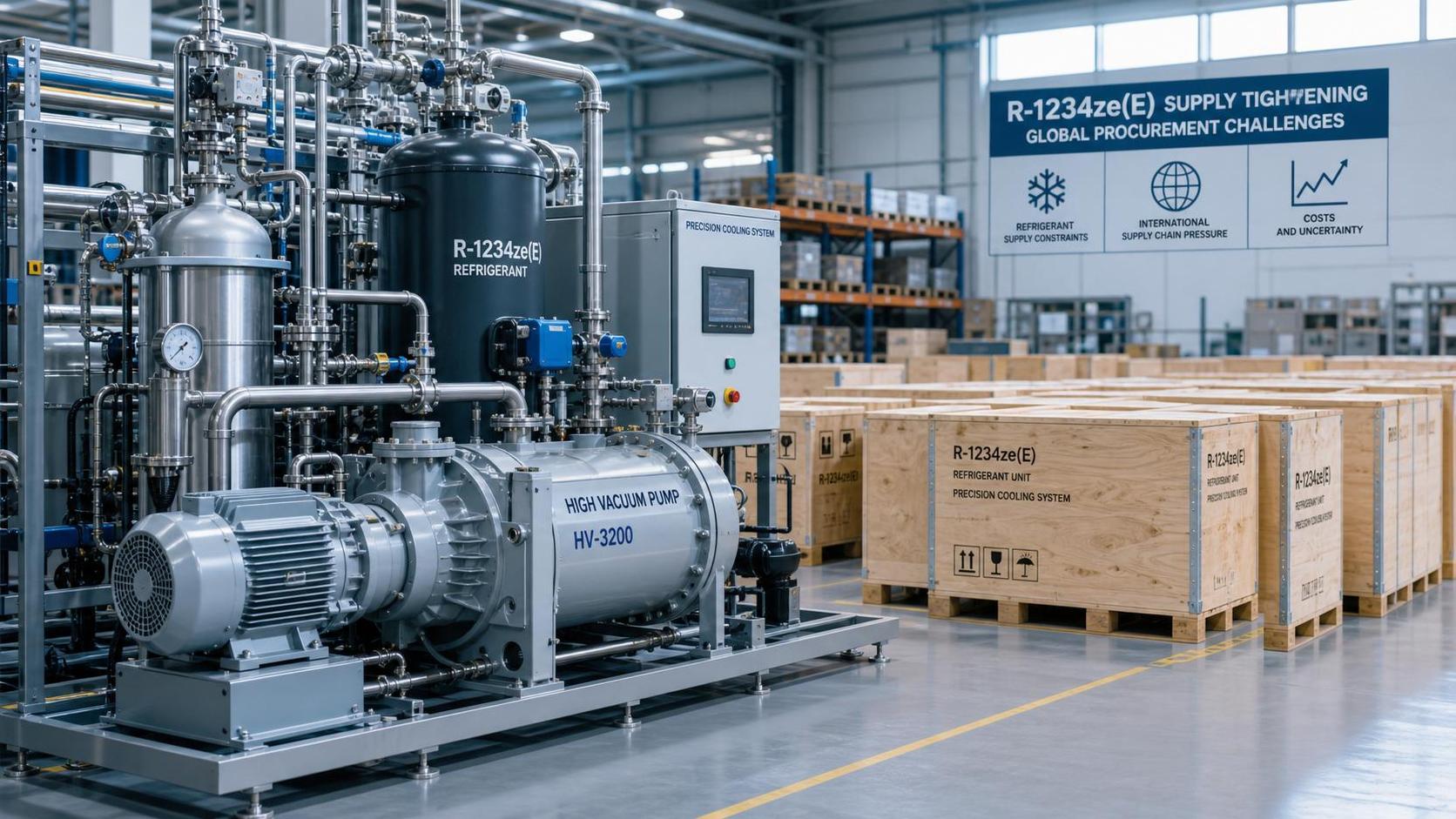
- EPA Cuts R-1234ze(E) Quota 35%, Tightening Vacuum Cooling SupplyAuthor :Vacuum Process Fellow
 Quota 35%, Tightening Vacuum Cooling Supply")
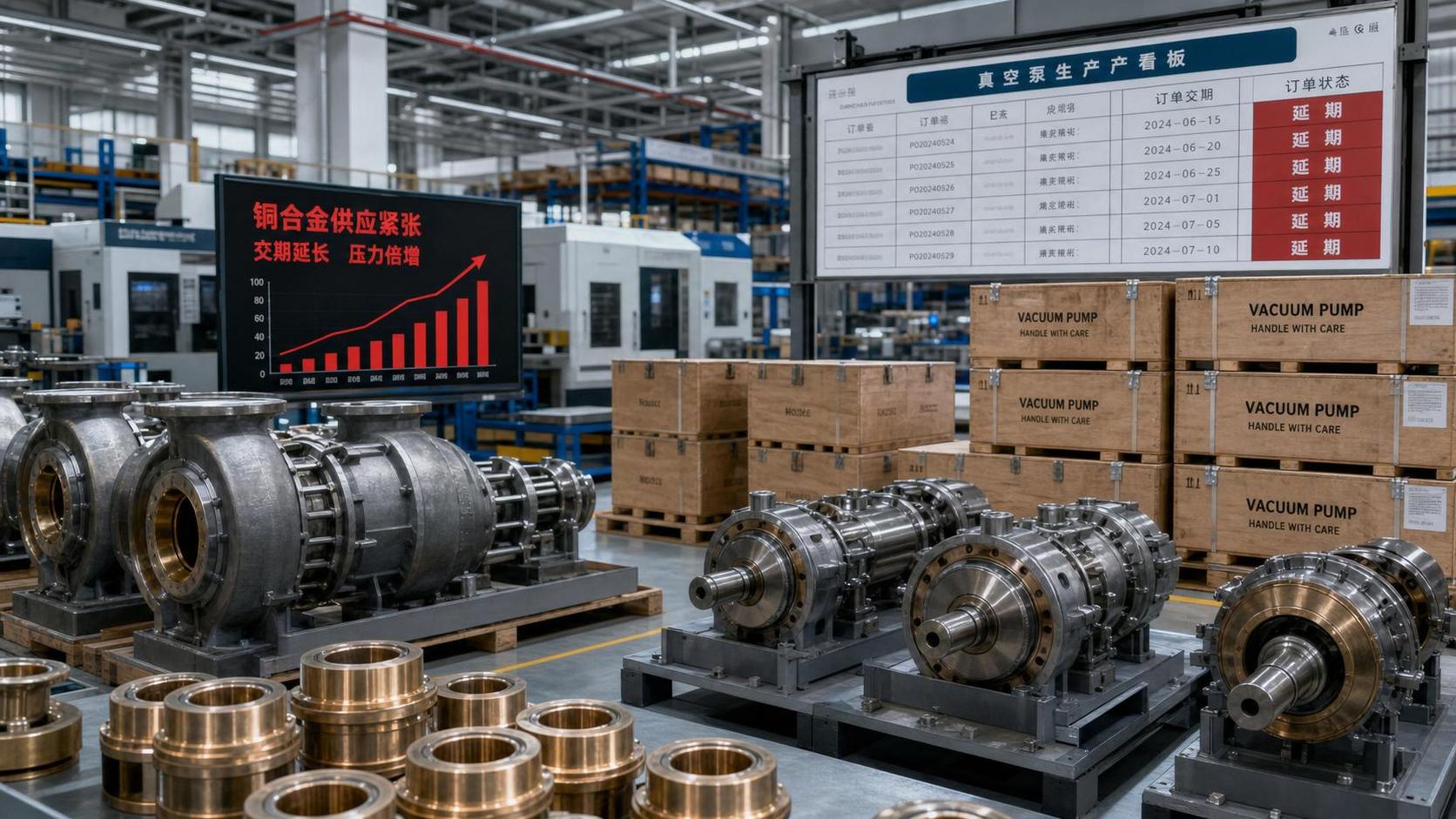
- ICA Warns of Tight Copper Alloy Supply for Vacuum PumpsAuthor :Vacuum Process Fellow

- Vacuum System Leak Detection: Signs, Tests, and FixesAuthor :Vacuum Process Fellow

- How to Compare Vacuum Systems Factory Capabilities for Stable Process UptimeAuthor :Vacuum Process Fellow

- Vacuum Pump Lead Times Extend to 26 WeeksAuthor :Vacuum Process Fellow

- Semiconductor Vacuum Systems Explained for Stable Process YieldAuthor :Vacuum Process Fellow

- Vacuum Process Efficiency: 7 Hidden Causes of Energy LossAuthor :Vacuum Process Fellow

- Vacuum Technology Solutions for Stable Low-Pressure ProductionAuthor :Vacuum Process Fellow

- Vacuum Processes: Common Efficiency Losses and FixesAuthor :Vacuum Process Fellow

- Common Vacuum Processes Problems and How to Prevent DowntimeAuthor :Vacuum Process Fellow

- Tantalum Spike Extends Vacuum Crucible Lead TimesAuthor :Vacuum Process Fellow

- Vacuum Process Efficiency: 5 Hidden Losses to Check FirstAuthor :Vacuum Process Fellow

- How Heat Transfer Design Impacts Vacuum Process EfficiencyAuthor :Vacuum Process Fellow

- EN 13445-4:2026 Takes Effect for High-Vacuum ComponentsAuthor :Vacuum Process Fellow

- EU Vacuum Components Face New EN 13445-4:2026 Leak Test RuleAuthor :Vacuum Process Fellow

- UBS: Fed Cut View May Ease Vacuum Pump Lead TimesAuthor :Vacuum Process Fellow

- Vacuum Processes: Common Causes of Unstable PerformanceAuthor :Vacuum Process Fellow
![]()
- SiC Certification Signals New Entry Path for Vacuum and Compressor DrivesAuthor :Vacuum Process Fellow
![]()