Vacuum Distillation Systems: Key Performance Metrics That Affect Product Purity




Vacuum Distillation Systems: Key Performance Metrics That Affect Product Purity
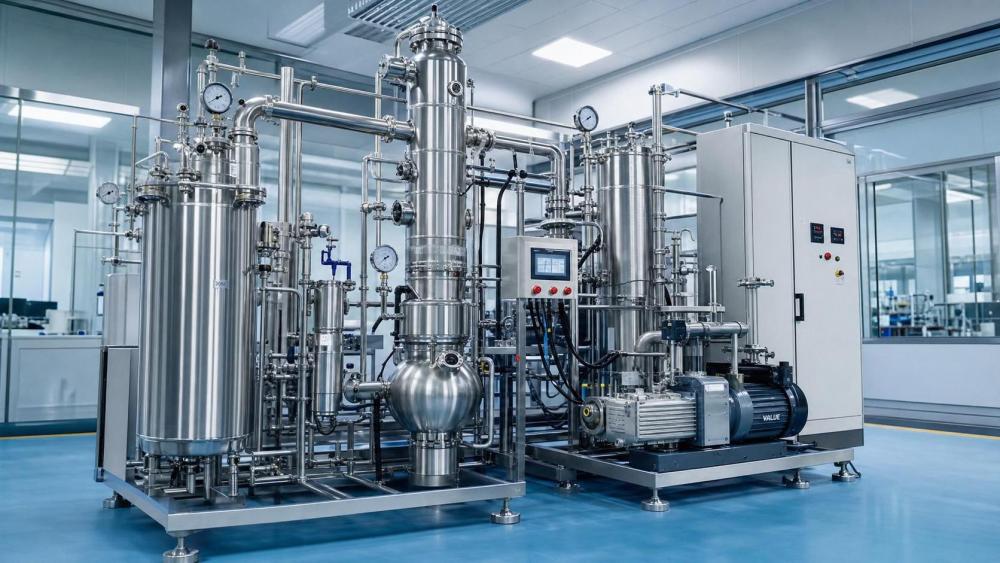
For technical evaluation, vacuum distillation systems are never judged by capacity alone.
The real question is whether the system can hold product purity when feed conditions, load, and utilities begin to move.
That is where performance metrics matter.
A well-designed unit should separate target fractions with tight control, low contamination risk, and repeatable operating behavior.
In practice, vacuum distillation systems succeed or fail on a short list of measurable indicators.
Those indicators connect directly to purity, yield, cleaning frequency, and long-term operating cost.
This matters in pharmaceuticals, specialty chemicals, fine solvents, food ingredients, and high-value thermal process streams.
Across these sectors, vacuum distillation systems are expected to protect sensitive compounds while removing unwanted fractions at lower boiling conditions.
That also means small deviations can create large purity losses.
The sections below focus on the metrics that usually deserve the closest attention during technical review.
1. Absolute Pressure and Vacuum Stability
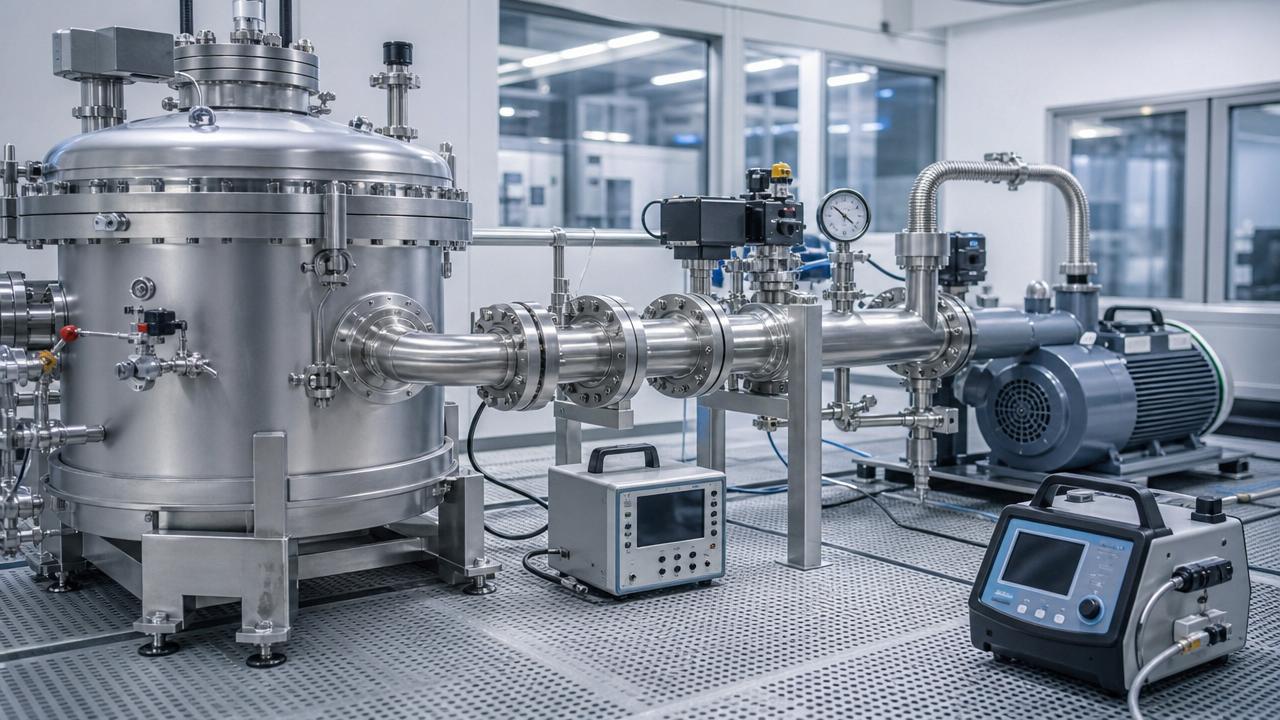
Pressure is the first control variable to verify in vacuum distillation systems.
Lower operating pressure reduces boiling temperature, which protects heat-sensitive materials and limits thermal degradation.
But the absolute value alone is not enough.
Pressure stability is often the stronger signal.
If the vacuum level swings during operation, boiling points shift and separation windows move with them.
This can widen cut ranges, pull impurities into the target fraction, or leave desired components behind.
Key review points include:
- Achievable ultimate pressure under real process gas load
- Pressure fluctuation range during steady production
- Response speed after feed, temperature, or condenser changes
- Leak tightness across seals, flanges, valves, and instrumentation ports
- Effect of non-condensable gases on vacuum pump performance
In higher-purity applications, stable vacuum performance is usually more valuable than chasing the lowest headline pressure figure.
2. Temperature Profile and Heat Transfer Precision
Temperature control is the next major purity driver in vacuum distillation systems.
A unit may hold vacuum well, yet still lose product quality if thermal input is uneven or excessive.
Technical review should look beyond setpoint accuracy.
What matters is the actual temperature profile across the evaporator, column, reboiler, transfer lines, and condenser.
Hot spots can crack sensitive molecules.
Cold zones can cause premature condensation, fouling, or unstable reflux behavior.
More specifically, check whether the system delivers:
- Tight control of heating media temperature
- Low temperature overshoot during startup and recipe changes
- Uniform wall temperature in contact surfaces
- Fast thermal response without oscillation
- Reliable insulation to prevent ambient interference
When vacuum distillation systems process narrow-boiling or heat-sensitive fractions, temperature precision directly protects color, odor, assay, and purity.
3. Residence Time and Holdup Volume
Residence time is often underestimated during equipment screening.
Yet in many vacuum distillation systems, it has a direct relationship with purity retention.
The longer a sensitive material remains exposed to heat, even under vacuum, the higher the risk of degradation or side reactions.
Low holdup design helps reduce this exposure.
That is especially useful for high-value batches, campaign production, and frequent product changeovers.
A good review should ask:
- How much liquid inventory remains inside the system during normal operation?
- Where are the stagnant zones, dead legs, or recirculation pockets?
- How quickly can degraded residue be removed?
- Does throughput increase residence time beyond acceptable purity limits?
Short, controlled residence time usually supports tighter product specifications.
This is one reason wiped film and short path vacuum distillation systems are favored for thermally sensitive streams.
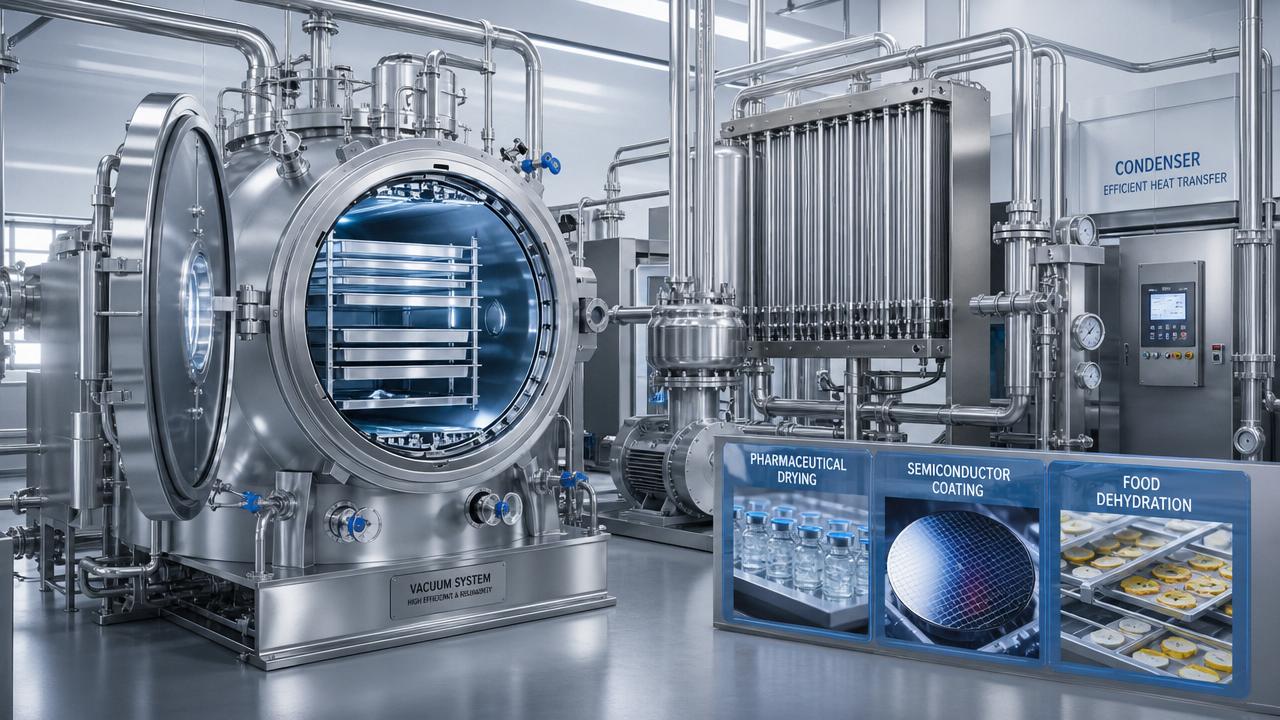
4. Condenser Efficiency and Recovery Balance
Condenser performance shapes both purity and mass balance.
In vacuum distillation systems, weak condensation can overload the vacuum train and blur fraction boundaries.
It can also increase solvent loss and create unstable pressure behavior.
This part of the system should be reviewed as a thermal and separation component, not just a utility surface.
Important metrics include condenser approach temperature, heat transfer coefficient, vapor load margin, and fraction recovery efficiency.
If the process handles mixed vapors, staged condensation may be necessary.
That allows vacuum distillation systems to separate heavier and lighter components with better control.
From a purity standpoint, efficient condensation reduces carryover, stabilizes pressure, and improves repeatability across campaigns.
5. Separation Efficiency, Reflux Behavior, and Cut Accuracy
Product purity is ultimately measured by separation quality.
That means vacuum distillation systems should be evaluated on how accurately they split fractions under realistic feed variation.
For column-based designs, tray or packing efficiency matters.
For molecular or short path configurations, the effective vapor path and internal back-mixing become more important.
Purity-focused assessment should consider:
When vacuum distillation systems claim high purity, these are the metrics that should support that claim.
6. Materials of Construction and Cleanability
Mechanical design also affects purity, even when thermodynamic performance looks strong.
Vacuum distillation systems handling aggressive, reactive, or regulated products need compatible contact materials and predictable cleaning performance.
Surface finish, gasket selection, weld quality, and drainability all matter.
Poor cleanability raises the risk of cross-contamination.
It can also distort analytical results during campaign changes or validation work.
Useful checks include corrosion allowance, CIP or manual cleaning access, residue removal paths, and seal material compatibility with solvents and temperature cycles.
In regulated industries, vacuum distillation systems should demonstrate not only purity capability, but also clean recovery from one batch to the next.
7. Instrumentation, Control Logic, and Data Confidence
A final metric group sits in the control layer.
Even strong vacuum distillation systems can deliver inconsistent purity if sensors are poorly placed or controls react too slowly.
Good evaluation should verify sensor range, calibration logic, response time, and alarm philosophy.
This includes pressure transmitters, temperature elements, flow meters, level instruments, and vacuum pump monitoring.
Historical trending is especially valuable.
It shows whether the unit maintains purity-supporting conditions over time, not just during a short acceptance test.
In actual plant use, the strongest vacuum distillation systems are usually the ones that make instability visible early.
That gives operations teams time to correct drift before product quality moves out of specification.
How to Compare Vacuum Distillation Systems More Effectively
When comparing suppliers, avoid relying on one headline number.
Vacuum distillation systems should be assessed as integrated process platforms.
A practical review sequence often works better:
- Define the required purity window and the most sensitive impurity risks.
- Map those risks to pressure, temperature, residence time, and condenser performance.
- Request performance data under variable feed and utility conditions.
- Verify cleanability, instrumentation quality, and control response.
- Review how the system recovers after disturbance, shutdown, or product changeover.
This approach makes the evaluation more realistic.
It also reduces the risk of selecting vacuum distillation systems that look efficient on paper but struggle in production.
At a market level, that is becoming more important.
Purity requirements are tightening, while energy and utility constraints remain under pressure.
This also means the best vacuum distillation systems are those that balance separation quality with thermal efficiency and operational resilience.
For GTC-Matrix readers tracking industrial thermal performance, these metrics provide a more reliable way to judge system capability.
Instead of asking only how much a unit can process, ask how steadily it can protect the product you actually need to deliver.
That question usually leads to better specifications, better supplier discussions, and better long-term process outcomes.
In the end, the value of vacuum distillation systems is proven by purity held consistently, not by isolated design claims.
Ready when you are. Send us a message to get started.
Related News
- How does base pressure affect film purity in vacuum deposition?Author :Vacuum Process Fellow

- How to size vacuum process equipment for the required pump-down timeAuthor :Vacuum Process Fellow

- Which vacuum specification best protects semiconductor process yield?Author :Vacuum Process Fellow

- How Can Contamination Be Prevented in a Semiconductor Vacuum Chamber?Author :Vacuum Process Fellow

- Which Vacuum Pump Specifications Matter Most for Semiconductor Processes?Author :Vacuum Process Fellow

- How to find leaks in vacuum pump systems before pump performance dropsAuthor :Vacuum Process Fellow

- How to size a Roots blower for vacuum process equipmentAuthor :Vacuum Process Fellow

- How vacuum level affects vacuum process efficiencyAuthor :Vacuum Process Fellow

- China Imposes Temporary Helium Export BanAuthor :Vacuum Process Fellow

- Semiconductor Vacuum Systems Factory Checklist for Process Stability and Cleanroom UseAuthor :Vacuum Process Fellow

- Vacuum Process Optimization Services: Signs Your Line Needs a Performance ReviewAuthor :Vacuum Process Fellow

- Vacuum Chambers for Cleanroom Use: Key Design Points That Prevent ContaminationAuthor :Vacuum Process Fellow

- Vacuum Distillation Systems: Key Performance Metrics That Affect Product PurityAuthor :Vacuum Process Fellow

- Vietnam Halts High Vacuum Pump Import Licenses for 30 DaysAuthor :Vacuum Process Fellow

- Vacuum Technology Database: What to Check Before Using Technical DataAuthor :Vacuum Process Fellow

- Dry Pump Vacuum System Design Mistakes That Raise DowntimeAuthor :Vacuum Process Fellow

- When Vacuum Systems Lose Performance: Common Causes and FixesAuthor :Vacuum Process Fellow
![]()
- EU Tightens EN 13445-3 Weld Testing for Vacuum VesselsAuthor :Vacuum Process Fellow
![]()
- EPA Cuts R-1234ze(E) Quota 35%, Tightening Vacuum Cooling SupplyAuthor :Vacuum Process Fellow
 Quota 35%, Tightening Vacuum Cooling Supply")
- ICA Warns of Tight Copper Alloy Supply for Vacuum PumpsAuthor :Vacuum Process Fellow

- Vacuum System Leak Detection: Signs, Tests, and FixesAuthor :Vacuum Process Fellow

- How to Compare Vacuum Systems Factory Capabilities for Stable Process UptimeAuthor :Vacuum Process Fellow

- Vacuum Pump Lead Times Extend to 26 WeeksAuthor :Vacuum Process Fellow

- Semiconductor Vacuum Systems Explained for Stable Process YieldAuthor :Vacuum Process Fellow

- Vacuum Process Efficiency: 7 Hidden Causes of Energy LossAuthor :Vacuum Process Fellow

- Vacuum Technology Solutions for Stable Low-Pressure ProductionAuthor :Vacuum Process Fellow

- Vacuum Processes: Common Efficiency Losses and FixesAuthor :Vacuum Process Fellow

- Common Vacuum Processes Problems and How to Prevent DowntimeAuthor :Vacuum Process Fellow

- Tantalum Spike Extends Vacuum Crucible Lead TimesAuthor :Vacuum Process Fellow

- Vacuum Process Efficiency: 5 Hidden Losses to Check FirstAuthor :Vacuum Process Fellow

- How Heat Transfer Design Impacts Vacuum Process EfficiencyAuthor :Vacuum Process Fellow

- EN 13445-4:2026 Takes Effect for High-Vacuum ComponentsAuthor :Vacuum Process Fellow

- EU Vacuum Components Face New EN 13445-4:2026 Leak Test RuleAuthor :Vacuum Process Fellow

- UBS: Fed Cut View May Ease Vacuum Pump Lead TimesAuthor :Vacuum Process Fellow

- Vacuum Processes: Common Causes of Unstable PerformanceAuthor :Vacuum Process Fellow
![]()
- SiC Certification Signals New Entry Path for Vacuum and Compressor DrivesAuthor :Vacuum Process Fellow
![]()