ICA Warns of Tight Copper Alloy Supply for Vacuum Pumps




The timing of the underlying market disruption was not explicitly stated in the available information, but the warning itself has become clear: ICA says the global supply gap for high-purity oil-free bearing copper alloys used in high vacuum pump components has widened, while Chinese manufacturers report export lead times for standard Liquid Ring and High Vacuum pumps have stretched from 9 weeks to 14 weeks. For vacuum system manufacturers, procurement teams, exporters, and downstream buyers, the development matters because it links raw material constraints directly to delivery schedules and pricing terms.
What ICA Confirmed in Its Q3 2026 Outlook
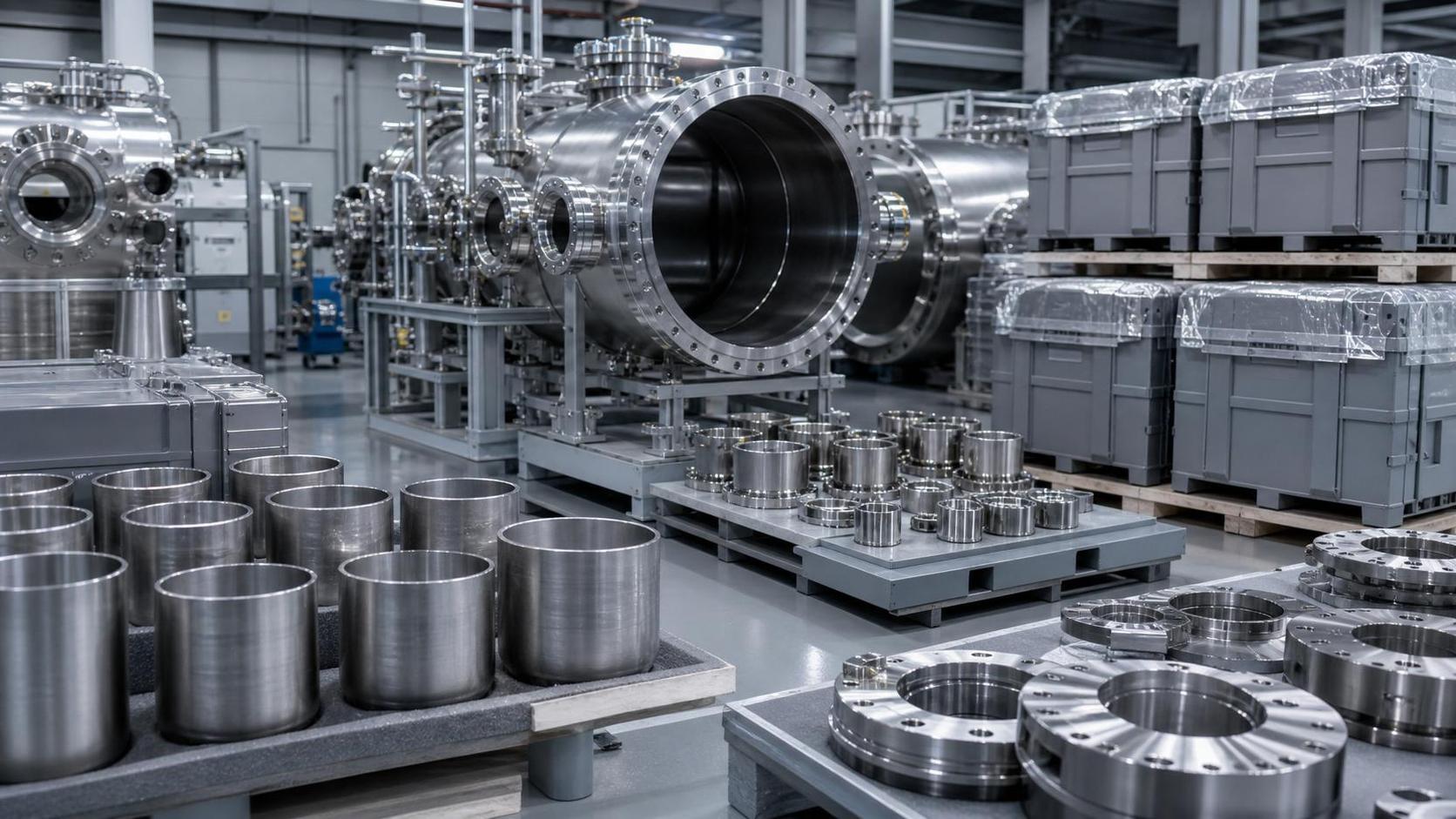
According to the information provided, the International Copper Association (ICA) released Global Copper Supply Outlook Q3 2026 on July 1, 2026. In that outlook, ICA said the implementation of a new mining tax law in the Democratic Republic of the Congo and maintenance at Chile's Escondida copper mine had contributed to a wider global supply shortfall in high-purity oil-free bearing copper alloys, specifically C18150 and C18200.
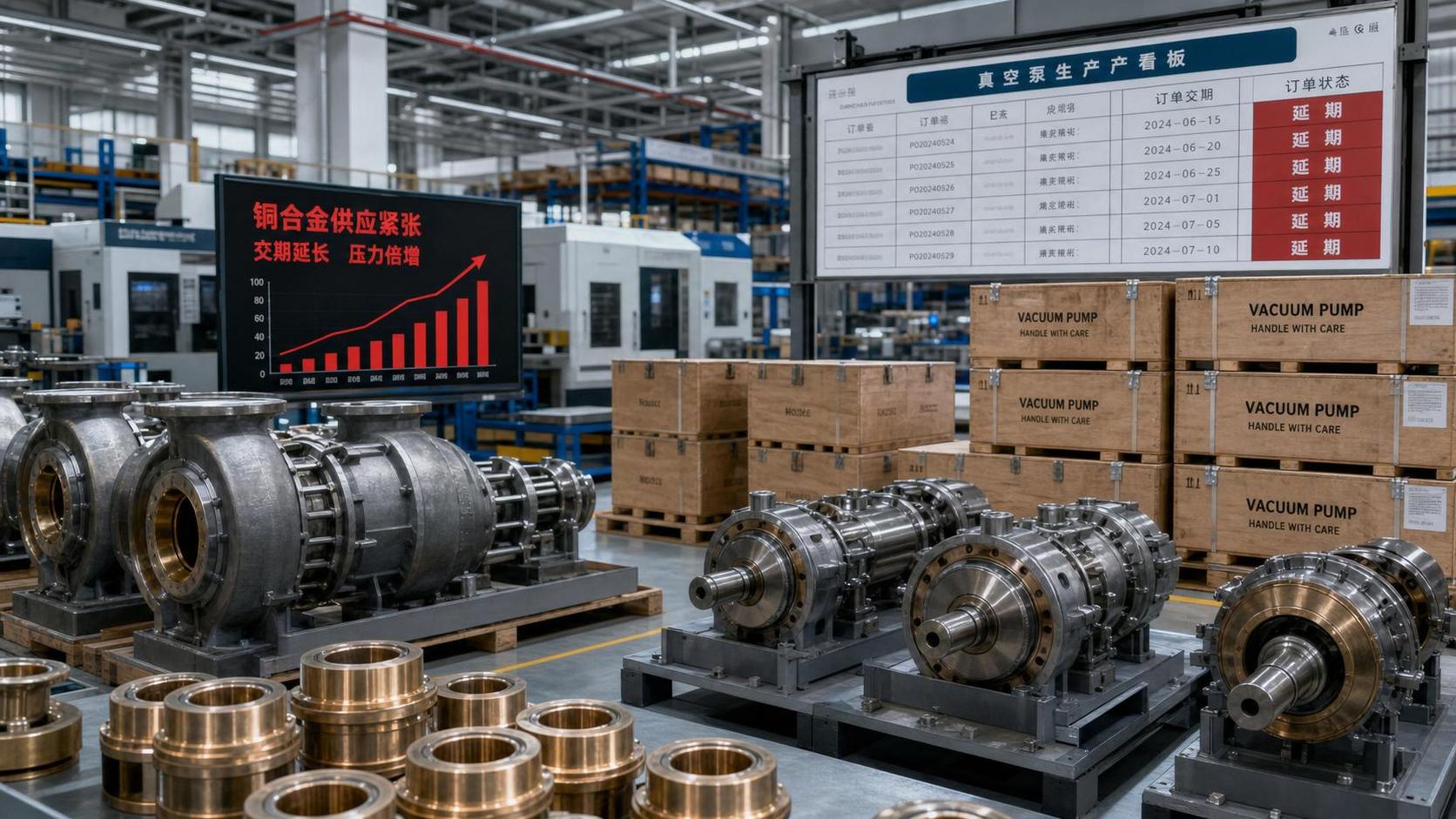
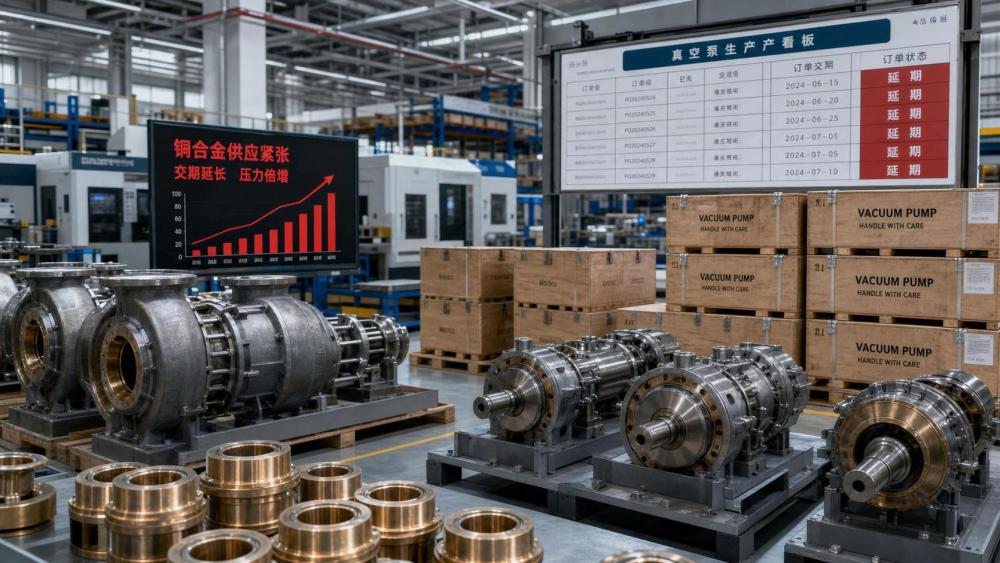
The reported supply gap for these copper alloy grades expanded to 8.2%. The same information states that this shortage has constrained production capacity for core components used in high vacuum pumps.
Chinese major high vacuum system manufacturers further reported that delivery cycles for standard Liquid Ring and High Vacuum pump orders had extended from 9 weeks to 14 weeks. Starting in Q3, accepted orders were also said to be limited to terms of FOB price plus a 3% copper price linkage clause.
Where the Pressure May Be Felt First
Manufacturers facing component bottlenecks
From an industry perspective, pump manufacturers are likely to feel the most direct pressure because the reported shortage concerns copper alloy materials tied to core component production. The immediate business impact is less about broad demand conditions and more about whether component machining and assembly schedules can proceed on time. What deserves closer attention is whether lead-time extensions remain limited to standard models or begin to affect a wider order mix.
Export and trading operations under revised commercial terms
Trading companies and export-facing sales teams may be affected through quote validity, contract terms, and delivery commitment risk. The move to FOB price plus a 3% copper-linked clause suggests that pricing exposure is becoming harder to absorb under fixed terms. Observably, the key issue for these businesses is not only longer lead time, but also how to manage customer expectations when price mechanisms become more conditional.
Procurement teams balancing supply certainty and timing
Raw material and component procurement functions may need to pay closer attention to availability for C18150 and C18200-related supply chains. Analysis shows that when a specific alloy category tightens, the operational risk often appears first in purchase timing, allocation, and order confirmation rather than in a complete market halt. For buyers of vacuum systems, the practical concern is whether current project schedules still align with a 14-week delivery window.
Downstream users exposed to project scheduling risk
End users and project-based buyers may not be directly involved in copper alloy procurement, but they can still be affected through delayed equipment delivery and revised commercial terms. In this case, the important variable is execution timing: a longer pump lead time can shift installation, commissioning, or replacement schedules even when product demand remains unchanged.
What Companies Should Watch Now
Track whether official language changes again
Companies should continue monitoring whether subsequent ICA communications, supplier notices, or manufacturer sales terms change further. The current signal is specific: a documented supply gap, longer lead times, and a copper-linked pricing clause. Any additional tightening in wording or ordering conditions would matter for near-term planning.
Review exposure in standard pump categories
The information provided specifically mentions standard Liquid Ring and High Vacuum pumps. That makes product-category mapping important. Businesses with regular procurement or export exposure in these standard models should check whether current quotations, production slots, and customer commitments were built around the earlier 9-week cycle.
Separate material risk from contract risk
Analysis shows that the copper alloy shortage itself and the revised order terms are related but not identical issues. One concerns upstream material availability; the other concerns commercial risk transfer. Companies should therefore review both supplier capacity assumptions and customer-facing contract language, especially where delivery promises and price validity were previously fixed.
Prepare for more communication around lead times
For sales, procurement, and supply chain teams, a practical priority is customer communication. If 14 weeks is now the reported delivery cycle for standard orders, businesses may need to refresh internal lead-time assumptions, update quotation language, and align order confirmation processes with the new timing and pricing conditions.
Why This Looks More Like a Supply Signal Than a Broad Market Conclusion
Observably, this development is best read as a targeted supply-chain warning rather than a complete market verdict on the vacuum pump sector. The confirmed facts point to a specific material category, identifiable upstream causes, constrained core component output, and measurable lead-time extension in China. That is enough to indicate stress in the chain, but not enough to support wider conclusions beyond the affected alloy and product scope.
Analysis shows that the most useful interpretation at this stage is a watchpoint on execution risk. The industry has a concrete signal that upstream copper alloy conditions are influencing delivery and pricing behavior. What remains open is whether this stays concentrated in the current product and material range or broadens further.
How This Update Should Be Read for Now
At present, this information is more appropriate to understand as a near-term supply and delivery warning with possible wider implications, rather than as a settled long-term industry outcome. The key significance lies in the direct connection now visible between copper alloy tightness, pump component capacity, export lead times, and commercial terms. For companies exposed to high vacuum pump procurement, manufacturing, or export, the issue is not abstract market sentiment but immediate planning discipline around timing, pricing, and fulfillment.
Basis of This Article and What Still Needs Verification
This article is based on the user-provided news title, event timing note, and event summary. The event timing of the underlying disruption was not explicitly stated in the input, while the cited ICA publication date was provided as July 1, 2026. For this type of industry development, commonly relevant source categories include official association releases, company announcements, industry association updates, authoritative media reports, and standards-related documents.
A specific official source link was not provided in the input, so further verification is still required. Areas that merit continued follow-up include whether later official statements adjust the reported supply gap, whether lead times move again beyond 14 weeks, and whether the FOB plus 3% copper-linked ordering condition remains limited to the currently referenced scope.
Ready when you are. Send us a message to get started.
Related News
- How does base pressure affect film purity in vacuum deposition?Author :Vacuum Process Fellow

- How to size vacuum process equipment for the required pump-down timeAuthor :Vacuum Process Fellow

- Which vacuum specification best protects semiconductor process yield?Author :Vacuum Process Fellow

- How Can Contamination Be Prevented in a Semiconductor Vacuum Chamber?Author :Vacuum Process Fellow

- Which Vacuum Pump Specifications Matter Most for Semiconductor Processes?Author :Vacuum Process Fellow

- How to find leaks in vacuum pump systems before pump performance dropsAuthor :Vacuum Process Fellow

- How to size a Roots blower for vacuum process equipmentAuthor :Vacuum Process Fellow

- How vacuum level affects vacuum process efficiencyAuthor :Vacuum Process Fellow

- China Imposes Temporary Helium Export BanAuthor :Vacuum Process Fellow

- Semiconductor Vacuum Systems Factory Checklist for Process Stability and Cleanroom UseAuthor :Vacuum Process Fellow

- Vacuum Process Optimization Services: Signs Your Line Needs a Performance ReviewAuthor :Vacuum Process Fellow

- Vacuum Chambers for Cleanroom Use: Key Design Points That Prevent ContaminationAuthor :Vacuum Process Fellow

- Vacuum Distillation Systems: Key Performance Metrics That Affect Product PurityAuthor :Vacuum Process Fellow

- Vietnam Halts High Vacuum Pump Import Licenses for 30 DaysAuthor :Vacuum Process Fellow

- Vacuum Technology Database: What to Check Before Using Technical DataAuthor :Vacuum Process Fellow

- Dry Pump Vacuum System Design Mistakes That Raise DowntimeAuthor :Vacuum Process Fellow

- When Vacuum Systems Lose Performance: Common Causes and FixesAuthor :Vacuum Process Fellow
![]()
- EU Tightens EN 13445-3 Weld Testing for Vacuum VesselsAuthor :Vacuum Process Fellow
![]()
- EPA Cuts R-1234ze(E) Quota 35%, Tightening Vacuum Cooling SupplyAuthor :Vacuum Process Fellow
 Quota 35%, Tightening Vacuum Cooling Supply")
- ICA Warns of Tight Copper Alloy Supply for Vacuum PumpsAuthor :Vacuum Process Fellow

- Vacuum System Leak Detection: Signs, Tests, and FixesAuthor :Vacuum Process Fellow

- How to Compare Vacuum Systems Factory Capabilities for Stable Process UptimeAuthor :Vacuum Process Fellow

- Vacuum Pump Lead Times Extend to 26 WeeksAuthor :Vacuum Process Fellow

- Semiconductor Vacuum Systems Explained for Stable Process YieldAuthor :Vacuum Process Fellow

- Vacuum Process Efficiency: 7 Hidden Causes of Energy LossAuthor :Vacuum Process Fellow

- Vacuum Technology Solutions for Stable Low-Pressure ProductionAuthor :Vacuum Process Fellow

- Vacuum Processes: Common Efficiency Losses and FixesAuthor :Vacuum Process Fellow

- Common Vacuum Processes Problems and How to Prevent DowntimeAuthor :Vacuum Process Fellow

- Tantalum Spike Extends Vacuum Crucible Lead TimesAuthor :Vacuum Process Fellow

- Vacuum Process Efficiency: 5 Hidden Losses to Check FirstAuthor :Vacuum Process Fellow

- How Heat Transfer Design Impacts Vacuum Process EfficiencyAuthor :Vacuum Process Fellow

- EN 13445-4:2026 Takes Effect for High-Vacuum ComponentsAuthor :Vacuum Process Fellow

- EU Vacuum Components Face New EN 13445-4:2026 Leak Test RuleAuthor :Vacuum Process Fellow

- UBS: Fed Cut View May Ease Vacuum Pump Lead TimesAuthor :Vacuum Process Fellow

- Vacuum Processes: Common Causes of Unstable PerformanceAuthor :Vacuum Process Fellow
![]()
- SiC Certification Signals New Entry Path for Vacuum and Compressor DrivesAuthor :Vacuum Process Fellow
![]()