



Vacuum Processes: Common Efficiency Losses and Fixes




Vacuum Processes: Common Efficiency Losses and Fixes
Vacuum processes sit behind many stable production lines, yet efficiency losses often stay hidden until quality drops or energy bills rise.
Small leaks, poor settings, weak maintenance habits, and aging layouts can quietly reduce pumping performance every day.
That matters in packaging, electronics, food, chemicals, healthcare, and many other industrial environments.
When vacuum processes lose efficiency, cycle times stretch, rejects increase, and operators spend more time reacting than controlling.
The good news is that most losses are fixable with practical checks, better operating discipline, and smarter system decisions.
This guide explains the most common problems in vacuum processes and the fixes that usually bring fast, measurable gains.
1. Air Leaks: The Most Common Hidden Loss
In many vacuum processes, leaks are the first place to look.
A small leak may seem harmless, but several small leaks can force pumps to run longer and harder than necessary.
Typical leak points include worn seals, loose fittings, cracked hoses, valve seats, chamber doors, and poorly aligned connections.
One clear sign is slower pull-down time after startup or between cycles.
Another sign is that the system cannot hold target vacuum during idle periods.
- Inspect hoses, flanges, joints, and access doors during scheduled stops.
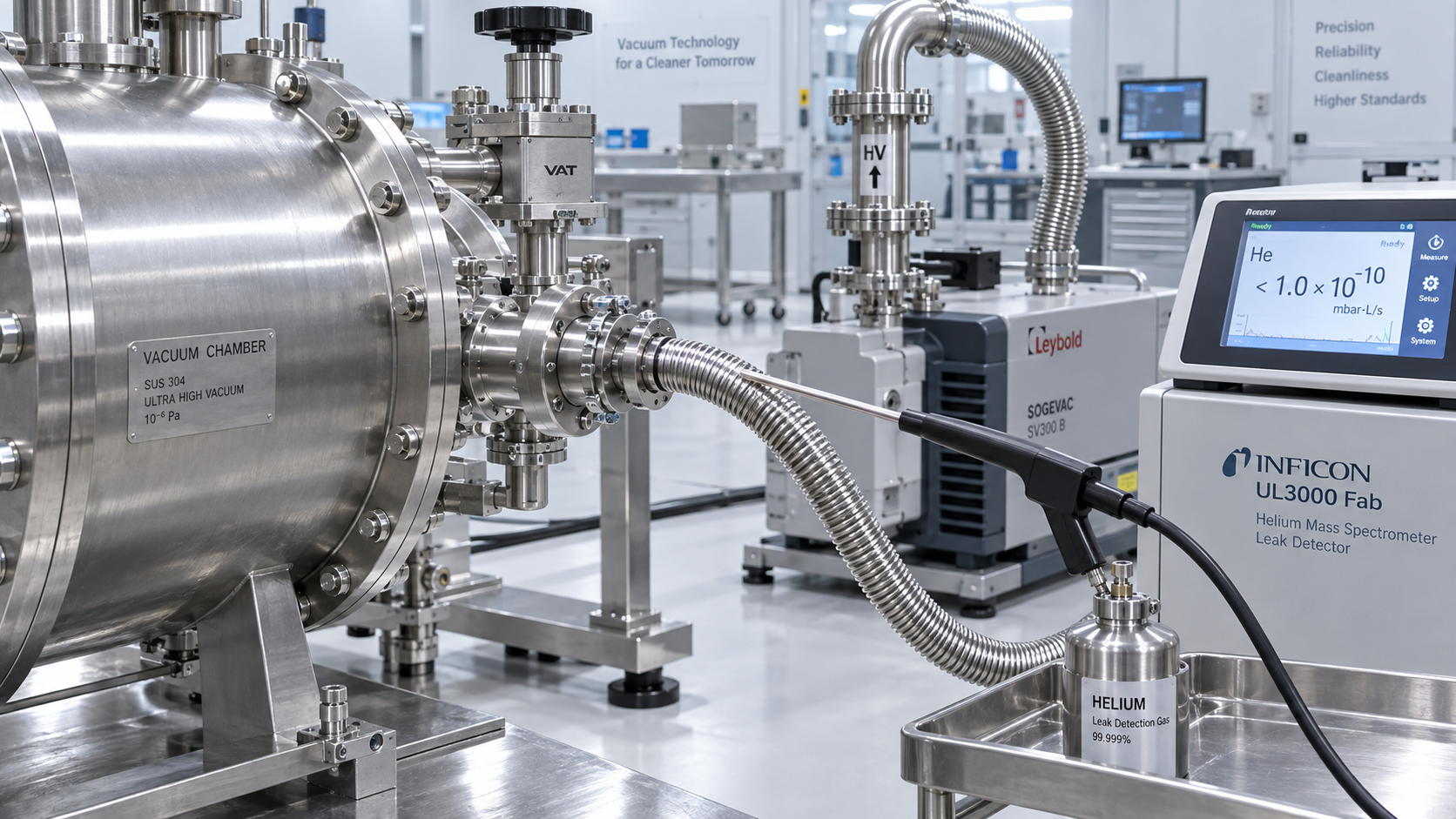
- Use ultrasonic leak detection or pressure decay testing where possible.
- Replace seals before failure, not after emergency downtime begins.
- Tighten fittings to the correct standard instead of overtightening them.
In real operations, leak management often delivers the fastest payback in vacuum processes.
It reduces wasted power and helps restore process stability without major capital spending.
2. Incorrect Pump Sizing and Poor System Matching
Not every vacuum pump problem starts with the pump itself.
Many vacuum processes lose efficiency because the pump does not match the actual load, gas composition, or production rhythm.
An oversized pump may cycle inefficiently and consume more energy than the process needs.
An undersized pump may struggle to reach target pressure within the required time window.
This becomes more obvious when production volume changes but equipment settings stay the same.
Fixes that improve matching
- Review required pressure levels, pump-down time, and actual gas load.
- Check whether peak demand is temporary or constant.
- Consider variable speed control for changing production conditions.
- Separate high-vacuum and rough-vacuum duties if one pump handles both poorly.
A properly matched system improves vacuum processes by balancing speed, energy use, and reliability.
This is where performance data matters more than nameplate assumptions.
3. Poor Maintenance Habits That Drain Efficiency
Maintenance gaps are another major reason vacuum processes underperform.
Filters clog slowly, oil degrades gradually, and cooling surfaces foul over time.
Because the change is gradual, operators often adapt to weaker performance without noticing the root cause.
That silent decline can shorten pump life and raise maintenance cost later.
Watch these maintenance points
- Replace inlet and exhaust filters on a condition-based schedule.
- Monitor oil quality, oil level, and contamination trends.
- Clean heat exchangers and cooling passages before overheating starts.
- Check belts, couplings, and bearings for vibration or misalignment.
- Record pump-down time and ultimate pressure after service work.
The more demanding the process, the more important maintenance discipline becomes.
Clean, consistent service routines keep vacuum processes predictable and easier to troubleshoot.
4. Wrong Operating Setpoints and Control Logic
Some vacuum processes waste energy simply because the target setpoint is lower than necessary.
Running deeper vacuum than the application needs increases load without delivering extra value.
In other cases, control bands are too narrow, causing frequent starts, stops, or unstable modulation.
That creates wear, inconsistent process quality, and avoidable electricity use.
Practical control improvements
- Confirm the minimum vacuum level that still meets quality requirements.
- Adjust control bands to reduce unnecessary cycling.
- Use staged operation when multiple pumps serve one network.
- Review sensor accuracy before changing control parameters.
Better controls make vacuum processes smoother and more energy efficient.
They also help separate true mechanical faults from simple parameter mistakes.
5. Contamination, Moisture, and Process Byproducts
Vacuum processes often handle more than clean, dry air.
Moisture, dust, vapors, solvents, and product residue can all reduce system efficiency.
These contaminants change flow behavior, damage internals, and interfere with stable pressure control.
More importantly, they can turn a healthy pump into a recurring maintenance problem.
How to reduce contamination losses
- Install suitable inlet filtration for particles and aerosols.
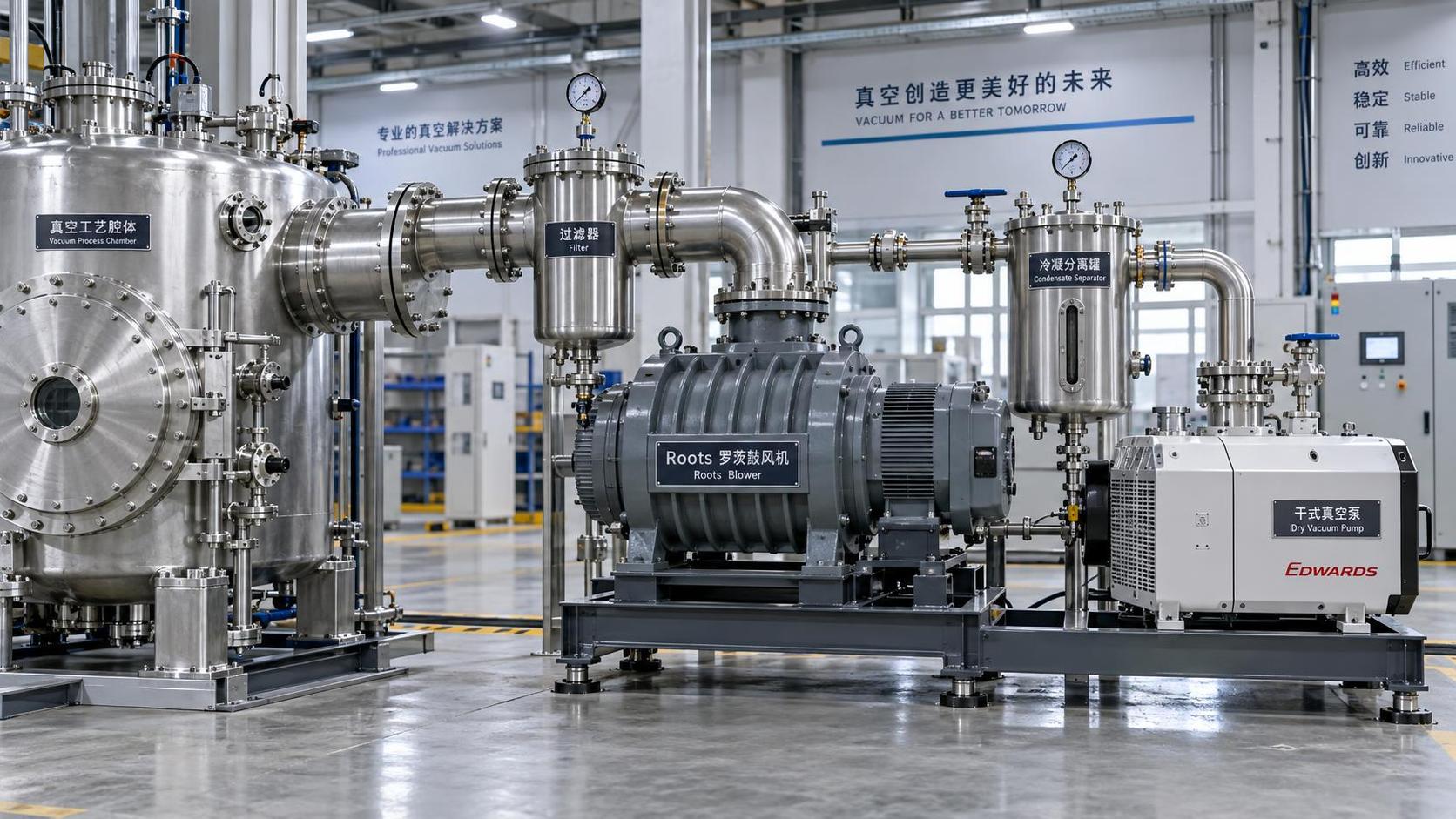
- Use separators, traps, or condensers where moisture load is high.
- Warm up pumps correctly before demanding wet applications.
- Match pump technology to corrosive or vapor-heavy vacuum processes.
This is especially important in food, pharmaceutical, and chemical production.
Clean gas handling protects performance and helps maintain product quality at the same time.
6. Inefficient Piping and Outdated System Layout
Even a good pump can struggle in badly designed vacuum processes.
Long pipe runs, sharp bends, undersized lines, and unnecessary valves all increase resistance.
The result is slower evacuation, uneven performance across equipment, and higher system losses.
This issue is common after years of small production changes and quick retrofits.
Layout fixes worth reviewing
- Shorten the distance between pump and point of use where possible.
- Increase pipe diameter if pressure drop is excessive.
- Remove unused branches and dead legs.
- Review whether a central or decentralized design fits current demand better.
A layout review often reveals easy gains that standard maintenance cannot solve.
For older vacuum processes, piping improvements can be just as valuable as pump replacement.
7. Weak Monitoring and Delayed Response
Many efficiency losses continue because they are not tracked clearly.
Without baseline data, it is hard to tell whether vacuum processes are improving or drifting off target.
A simple daily trend can show problems long before failure occurs.
That may include rising power use, slower pull-down, higher temperature, or unstable pressure readings.
When monitoring improves, vacuum processes become easier to control and cheaper to operate.
A Practical Action Plan for Better Vacuum Processes
If efficiency issues appear, start with the basics before planning a full equipment upgrade.
- Measure current pump-down time and pressure stability.
- Check the system for leaks and sealing problems.
- Review filters, oil, cooling condition, and contamination risk.
- Confirm the process really needs the current vacuum level.
- Compare pump capacity with real production demand.
- Inspect piping layout for avoidable restriction losses.
- Track key performance indicators every week.
This step-by-step approach keeps vacuum processes manageable and prevents random troubleshooting.
It also helps teams prioritize low-cost fixes before moving toward larger system investments.
Conclusion
Efficient vacuum processes do not depend on one single improvement.
They depend on tight systems, correct sizing, clean operation, sound controls, and steady monitoring.
From a practical standpoint, the biggest gains often come from fixing simple losses that have been ignored for too long.
For operations focused on quality, uptime, and energy performance, improving vacuum processes is not just maintenance work.
It is a direct way to strengthen process reliability and reduce operating cost across the plant.
A careful review today can prevent recurring losses tomorrow and keep vacuum processes working closer to their real potential.
Related News
- How to find leaks in vacuum pump systems before pump performance dropsAuthor :Vacuum Process Fellow

- How to size a Roots blower for vacuum process equipmentAuthor :Vacuum Process Fellow

- How vacuum level affects vacuum process efficiencyAuthor :Vacuum Process Fellow

- China Imposes Temporary Helium Export BanAuthor :Vacuum Process Fellow

- Semiconductor Vacuum Systems Factory Checklist for Process Stability and Cleanroom UseAuthor :Vacuum Process Fellow

- Vacuum Process Optimization Services: Signs Your Line Needs a Performance ReviewAuthor :Vacuum Process Fellow

- Vacuum Chambers for Cleanroom Use: Key Design Points That Prevent ContaminationAuthor :Vacuum Process Fellow

- Vacuum Distillation Systems: Key Performance Metrics That Affect Product PurityAuthor :Vacuum Process Fellow

- Vietnam Halts High Vacuum Pump Import Licenses for 30 DaysAuthor :Vacuum Process Fellow

- Vacuum Technology Database: What to Check Before Using Technical DataAuthor :Vacuum Process Fellow

- Dry Pump Vacuum System Design Mistakes That Raise DowntimeAuthor :Vacuum Process Fellow

- When Vacuum Systems Lose Performance: Common Causes and FixesAuthor :Vacuum Process Fellow
![]()
- EU Tightens EN 13445-3 Weld Testing for Vacuum VesselsAuthor :Vacuum Process Fellow
![]()
- EPA Cuts R-1234ze(E) Quota 35%, Tightening Vacuum Cooling SupplyAuthor :Vacuum Process Fellow
 Quota 35%, Tightening Vacuum Cooling Supply")
- ICA Warns of Tight Copper Alloy Supply for Vacuum PumpsAuthor :Vacuum Process Fellow

- Vacuum System Leak Detection: Signs, Tests, and FixesAuthor :Vacuum Process Fellow

- How to Compare Vacuum Systems Factory Capabilities for Stable Process UptimeAuthor :Vacuum Process Fellow

- Vacuum Pump Lead Times Extend to 26 WeeksAuthor :Vacuum Process Fellow

- Semiconductor Vacuum Systems Explained for Stable Process YieldAuthor :Vacuum Process Fellow

- Vacuum Process Efficiency: 7 Hidden Causes of Energy LossAuthor :Vacuum Process Fellow

- Vacuum Technology Solutions for Stable Low-Pressure ProductionAuthor :Vacuum Process Fellow

- Vacuum Processes: Common Efficiency Losses and FixesAuthor :Vacuum Process Fellow

- Common Vacuum Processes Problems and How to Prevent DowntimeAuthor :Vacuum Process Fellow

- Tantalum Spike Extends Vacuum Crucible Lead TimesAuthor :Vacuum Process Fellow

- Vacuum Process Efficiency: 5 Hidden Losses to Check FirstAuthor :Vacuum Process Fellow

- How Heat Transfer Design Impacts Vacuum Process EfficiencyAuthor :Vacuum Process Fellow

- EN 13445-4:2026 Takes Effect for High-Vacuum ComponentsAuthor :Vacuum Process Fellow

- EU Vacuum Components Face New EN 13445-4:2026 Leak Test RuleAuthor :Vacuum Process Fellow

- UBS: Fed Cut View May Ease Vacuum Pump Lead TimesAuthor :Vacuum Process Fellow

- Vacuum Processes: Common Causes of Unstable PerformanceAuthor :Vacuum Process Fellow
![]()
- SiC Certification Signals New Entry Path for Vacuum and Compressor DrivesAuthor :Vacuum Process Fellow
![]()
- How to Choose the Right Vacuum System for Process StabilityAuthor :Vacuum Process Fellow

- Vacuum Technology Selection: What Matters Most for Stable Process PerformanceAuthor :Vacuum Process Fellow

- Vacuum Processes: How to Reduce Contamination and Improve Cycle ConsistencyAuthor :Vacuum Process Fellow

- ITC 337 Probe Puts TOPCon Supply Chain Under ReviewAuthor :Vacuum Process Fellow

- Vacuum Process Efficiency: Where Energy Loss Really StartsAuthor :Vacuum Process Fellow