



Vacuum Technology Solutions for Stable Low-Pressure Production




Why stable low-pressure production depends on context, not only on pump capacity
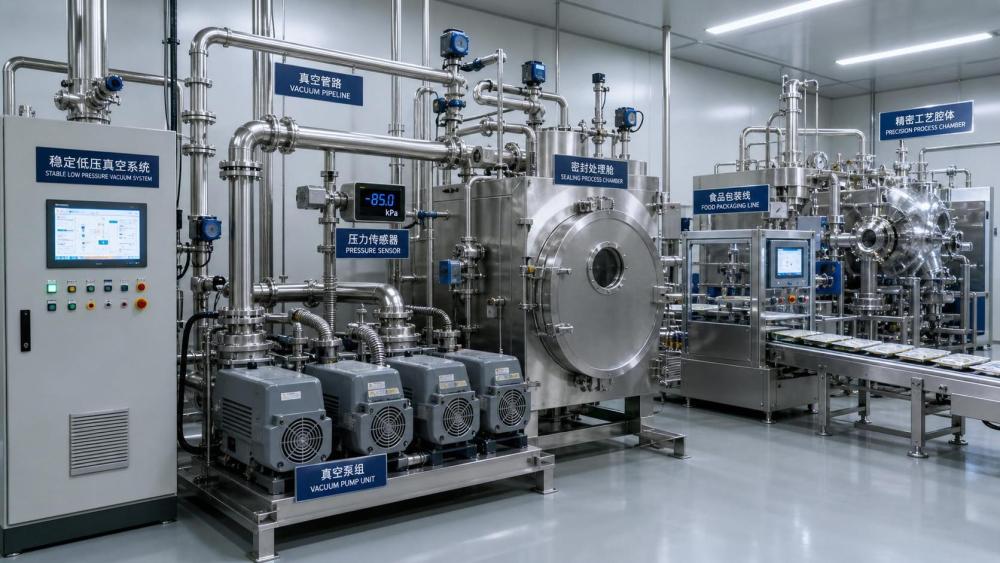
Stable low-pressure production is rarely secured by one specification alone. In actual operations, vacuum technology solutions must balance pressure accuracy, contamination control, cycle stability, and energy use at the same time.
That balance changes across industries. A packaging line, a heat treatment chamber, and a semiconductor support process may all require low pressure, yet their tolerance windows are very different.
This is why vacuum technology solutions should be judged as operating strategies, not isolated equipment choices. The real question is how each solution behaves under variable loads, product sensitivity, and utility constraints.
GTC-Matrix often frames these decisions through linked thermodynamic and compression logic. That perspective matters because vacuum stability is connected to cooling, compressed air quality, heat rejection, and energy pricing.
When low-pressure production becomes unstable, the visible symptom may be poor evacuation speed. The hidden cause is often broader, such as vapor carryover, poor sealing conditions, thermal drift, or mismatched control response.
Different production scenes create different vacuum priorities
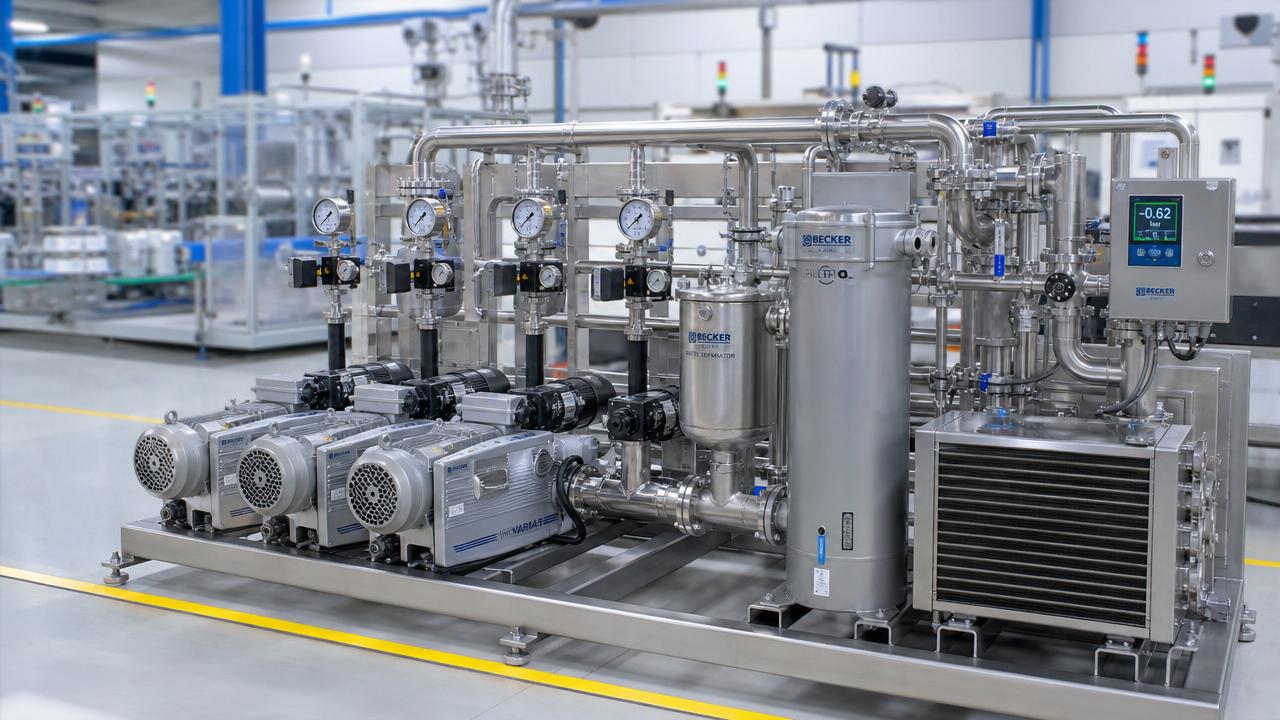
In clean and contamination-sensitive processes, vacuum technology solutions are usually judged by gas purity, backstreaming risk, and particle control. Pressure level matters, but process cleanliness often decides the preferred architecture.
Food and pharmaceutical operations illustrate this clearly. Dry vacuum systems may be favored where oil migration, washdown conditions, and hygienic maintenance carry more weight than absolute ultimate vacuum.
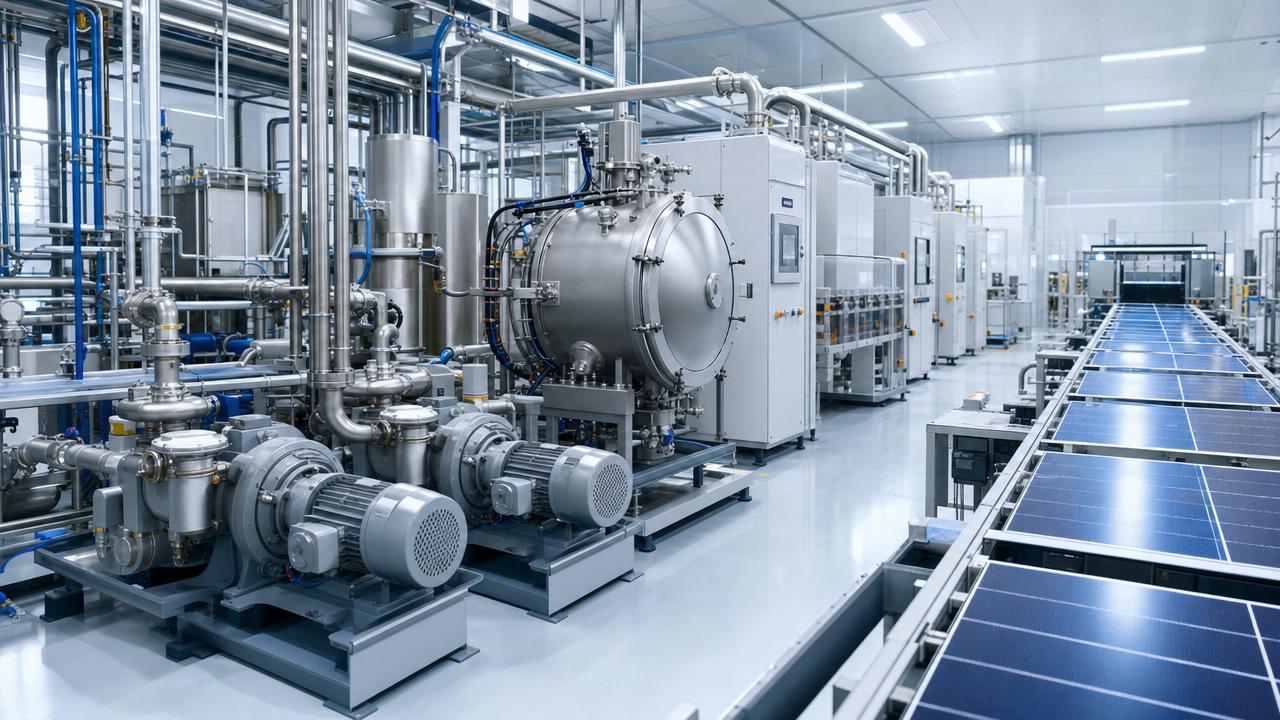
In contrast, heavy-duty industrial processes often face fluctuating loads, dust, condensable vapors, and long operating hours. Here, vacuum technology solutions must protect uptime first, then optimize energy performance without destabilizing the process.
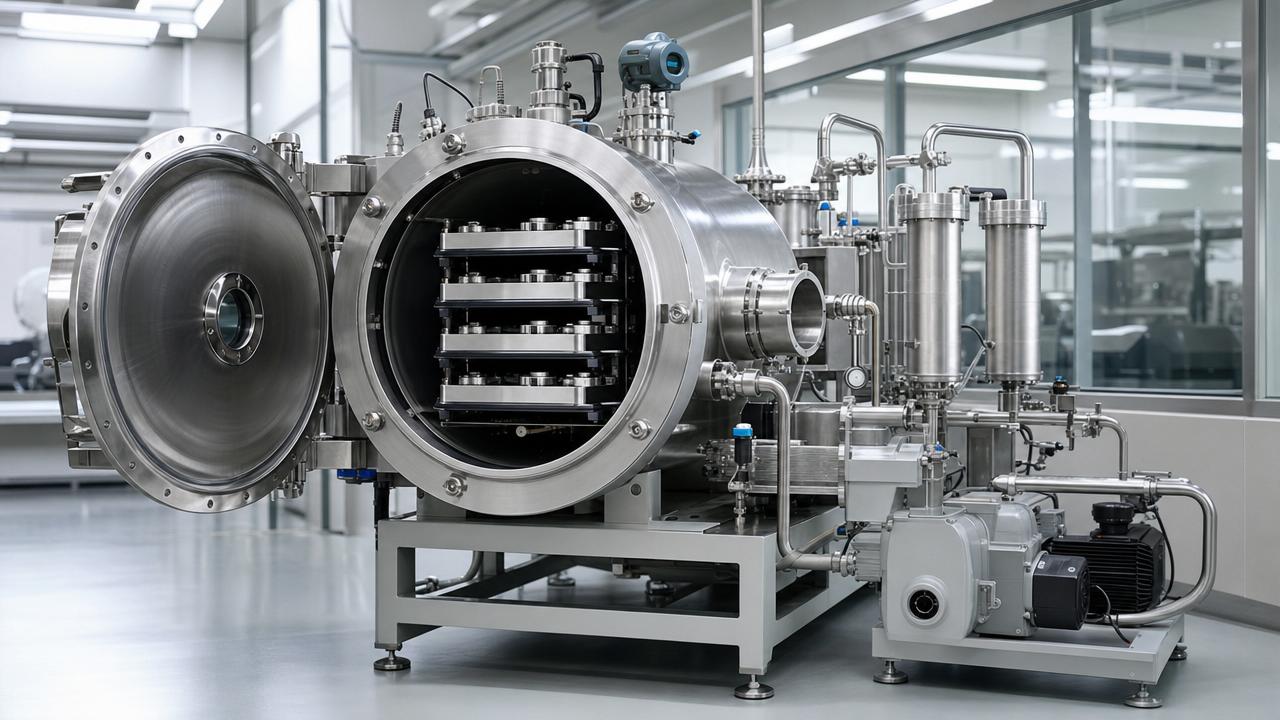
Thermal treatment, degassing, and coating environments add another layer. Pressure behavior interacts with chamber temperature, cooling efficiency, and outgassing rates, so the best solution is rarely chosen from vacuum data alone.
A useful judgment method is to ask three linked questions. What enters the vacuum stream, how fast does the load change, and what happens if pressure recovery is delayed for even a short period?
Where precision processes demand tighter control
Electronics, specialty materials, and advanced assembly lines usually need vacuum technology solutions with steady control bands. Short pressure oscillations can affect coating uniformity, bonding strength, or product repeatability.
These settings often benefit from modular control, staged pumping, and accurate sensing placement. The key is not only deep vacuum performance, but how smoothly the system transitions between standby, ramp-down, and sustained production.
Where utility costs shape the decision
In broader industrial environments, vacuum technology solutions are increasingly reviewed against energy tariffs, cooling water availability, and decarbonization targets. This is where GTC-Matrix intelligence becomes practical rather than theoretical.
A system with acceptable process performance may still become a weak choice if it raises heat loads, increases compressed air dependency, or creates maintenance patterns that interrupt production planning.
Common operating scenes and the judgment points behind them
The table below shows why vacuum technology solutions should not be evaluated with a single checklist. Similar pressure targets can hide very different operating demands.
A repeated mistake is treating all low-pressure processes as equivalent because the nominal pressure range looks similar. In practice, vapor content, cleanliness rules, and cycle timing reshape the solution completely.
How vacuum technology solutions differ between centralized and point-of-use layouts
Layout choice often changes operating results more than expected. Point-of-use vacuum technology solutions can improve local response and isolate process-specific risks, especially where production cells run independently.
That approach can work well in flexible manufacturing. It is easier to match pump sizing to each workstation, and maintenance events do not always affect the whole line.
Centralized vacuum technology solutions become attractive when energy recovery, heat management, and service planning matter more. They can also remove noise and heat from sensitive spaces, improving operating conditions around the process.
The tradeoff is control complexity. Long pipe runs, diverse load profiles, and leakage accumulation can reduce real performance if the distribution network is not carefully designed.
- Use decentralized layouts where cycles are short, process zones differ sharply, or expansion is likely.
- Use centralized layouts where heat removal, service consolidation, and plant-wide efficiency are stronger priorities.
- Check pipe pressure loss and standby demand before comparing lifecycle cost.
What often gets overlooked before implementation
Many projects compare vacuum technology solutions by pump speed and capital cost, then discover instability during commissioning. The gap usually comes from incomplete site assumptions.
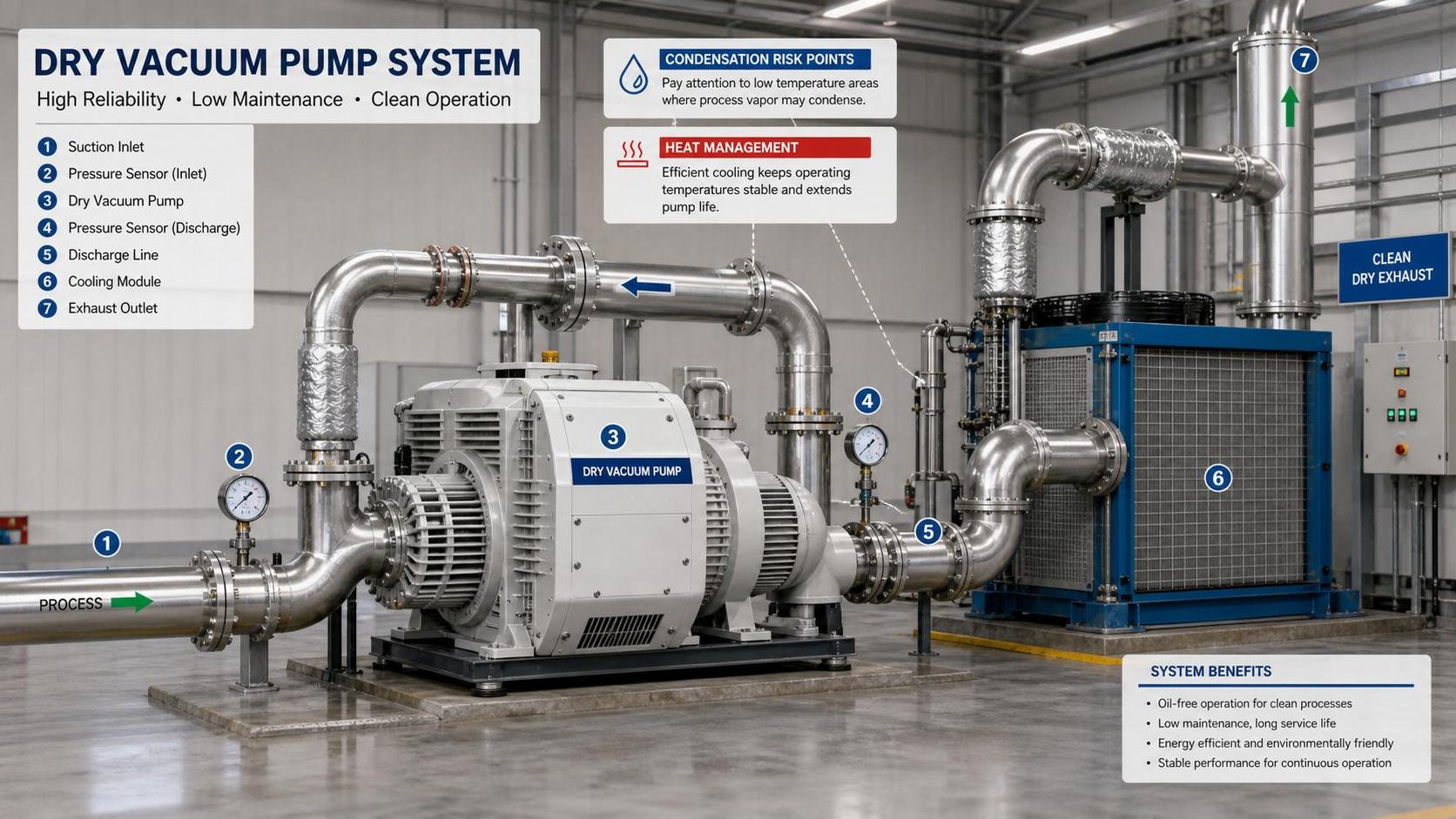
Condensable loads are a common blind spot. If process vapors cool in the wrong section, effective pumping performance drops, maintenance rises, and pressure control becomes inconsistent.
Another weak point is instrumentation placement. Pressure sensors mounted far from the critical zone may show acceptable values while the actual process area experiences unstable conditions.
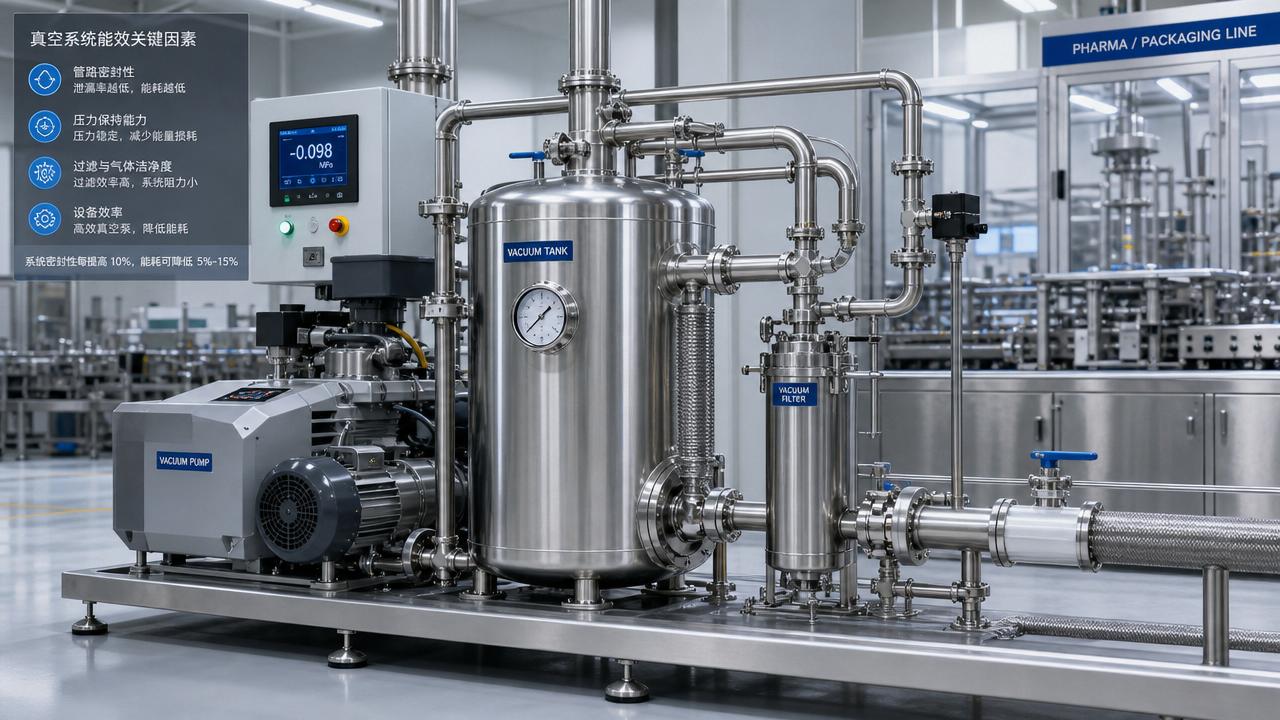
Energy analysis is also often too narrow. Vacuum technology solutions should be reviewed together with cooling demand, compressed air use, exhaust treatment, and maintenance labor, not as separate utility items.
This broader view reflects the GTC-Matrix approach to industrial intelligence. Compression, thermal exchange, and process stability influence one another, so isolated equipment decisions can create avoidable system penalties.
Frequent misjudgments worth correcting early
- Assuming the lowest ultimate pressure automatically brings the best process result.
- Ignoring future product changes that increase vapor, dust, or cycle variation.
- Comparing equipment without checking utility compatibility and thermal side effects.
- Underestimating seal wear, leakage growth, and real maintenance intervals.
- Treating similar production lines as identical despite different cleanliness rules.
A practical path for choosing vacuum technology solutions that stay reliable
A sound selection process begins with the production scene, not with a catalog. Start by mapping pressure targets, gas composition, cycle rhythm, and acceptable recovery time after disturbances.
Then compare vacuum technology solutions against actual operating windows. Include warm-up behavior, seasonal utility changes, cleaning routines, and maintenance access, because each factor affects low-pressure stability.
It also helps to build a simple adaptation matrix. List the process-critical parameters, the environmental constraints, and the failure consequences for each production area.
From there, the decision becomes clearer. Some sites need oil-free purity and tight control bands. Others need rugged vapor handling, lower heat load, or easier service continuity over long duty cycles.
The most effective vacuum technology solutions are the ones that remain stable after conditions change. That means confirming implementation difficulty, maintenance cadence, energy impact, and process tolerance before final selection.
A practical next step is to compare two or three real operating scenes, define the non-negotiable parameters, and test the solution logic against long-term production variability rather than nominal design points alone.
Related News
- How to find leaks in vacuum pump systems before pump performance dropsAuthor :Vacuum Process Fellow

- How to size a Roots blower for vacuum process equipmentAuthor :Vacuum Process Fellow

- How vacuum level affects vacuum process efficiencyAuthor :Vacuum Process Fellow

- China Imposes Temporary Helium Export BanAuthor :Vacuum Process Fellow

- Semiconductor Vacuum Systems Factory Checklist for Process Stability and Cleanroom UseAuthor :Vacuum Process Fellow

- Vacuum Process Optimization Services: Signs Your Line Needs a Performance ReviewAuthor :Vacuum Process Fellow

- Vacuum Chambers for Cleanroom Use: Key Design Points That Prevent ContaminationAuthor :Vacuum Process Fellow

- Vacuum Distillation Systems: Key Performance Metrics That Affect Product PurityAuthor :Vacuum Process Fellow

- Vietnam Halts High Vacuum Pump Import Licenses for 30 DaysAuthor :Vacuum Process Fellow

- Vacuum Technology Database: What to Check Before Using Technical DataAuthor :Vacuum Process Fellow

- Dry Pump Vacuum System Design Mistakes That Raise DowntimeAuthor :Vacuum Process Fellow

- When Vacuum Systems Lose Performance: Common Causes and FixesAuthor :Vacuum Process Fellow
![]()
- EU Tightens EN 13445-3 Weld Testing for Vacuum VesselsAuthor :Vacuum Process Fellow
![]()
- EPA Cuts R-1234ze(E) Quota 35%, Tightening Vacuum Cooling SupplyAuthor :Vacuum Process Fellow
 Quota 35%, Tightening Vacuum Cooling Supply")
- ICA Warns of Tight Copper Alloy Supply for Vacuum PumpsAuthor :Vacuum Process Fellow

- Vacuum System Leak Detection: Signs, Tests, and FixesAuthor :Vacuum Process Fellow

- How to Compare Vacuum Systems Factory Capabilities for Stable Process UptimeAuthor :Vacuum Process Fellow

- Vacuum Pump Lead Times Extend to 26 WeeksAuthor :Vacuum Process Fellow

- Semiconductor Vacuum Systems Explained for Stable Process YieldAuthor :Vacuum Process Fellow

- Vacuum Process Efficiency: 7 Hidden Causes of Energy LossAuthor :Vacuum Process Fellow

- Vacuum Technology Solutions for Stable Low-Pressure ProductionAuthor :Vacuum Process Fellow

- Vacuum Processes: Common Efficiency Losses and FixesAuthor :Vacuum Process Fellow

- Common Vacuum Processes Problems and How to Prevent DowntimeAuthor :Vacuum Process Fellow

- Tantalum Spike Extends Vacuum Crucible Lead TimesAuthor :Vacuum Process Fellow

- Vacuum Process Efficiency: 5 Hidden Losses to Check FirstAuthor :Vacuum Process Fellow

- How Heat Transfer Design Impacts Vacuum Process EfficiencyAuthor :Vacuum Process Fellow

- EN 13445-4:2026 Takes Effect for High-Vacuum ComponentsAuthor :Vacuum Process Fellow

- EU Vacuum Components Face New EN 13445-4:2026 Leak Test RuleAuthor :Vacuum Process Fellow

- UBS: Fed Cut View May Ease Vacuum Pump Lead TimesAuthor :Vacuum Process Fellow

- Vacuum Processes: Common Causes of Unstable PerformanceAuthor :Vacuum Process Fellow
![]()
- SiC Certification Signals New Entry Path for Vacuum and Compressor DrivesAuthor :Vacuum Process Fellow
![]()
- How to Choose the Right Vacuum System for Process StabilityAuthor :Vacuum Process Fellow

- Vacuum Technology Selection: What Matters Most for Stable Process PerformanceAuthor :Vacuum Process Fellow

- Vacuum Processes: How to Reduce Contamination and Improve Cycle ConsistencyAuthor :Vacuum Process Fellow

- ITC 337 Probe Puts TOPCon Supply Chain Under ReviewAuthor :Vacuum Process Fellow

- Vacuum Process Efficiency: Where Energy Loss Really StartsAuthor :Vacuum Process Fellow