Vacuum Process Efficiency: 7 Hidden Causes of Energy Loss




Why does vacuum process efficiency drop even when the system still seems to run normally?
Vacuum process efficiency rarely falls all at once. More often, it slips quietly through small losses that operators do not immediately notice.
A pump may still reach target pressure. A line may still produce acceptable output. Yet energy use climbs, cycle time stretches, and repeatability becomes harder to maintain.
In practical terms, vacuum process efficiency is the balance between required vacuum performance and the energy needed to achieve it.
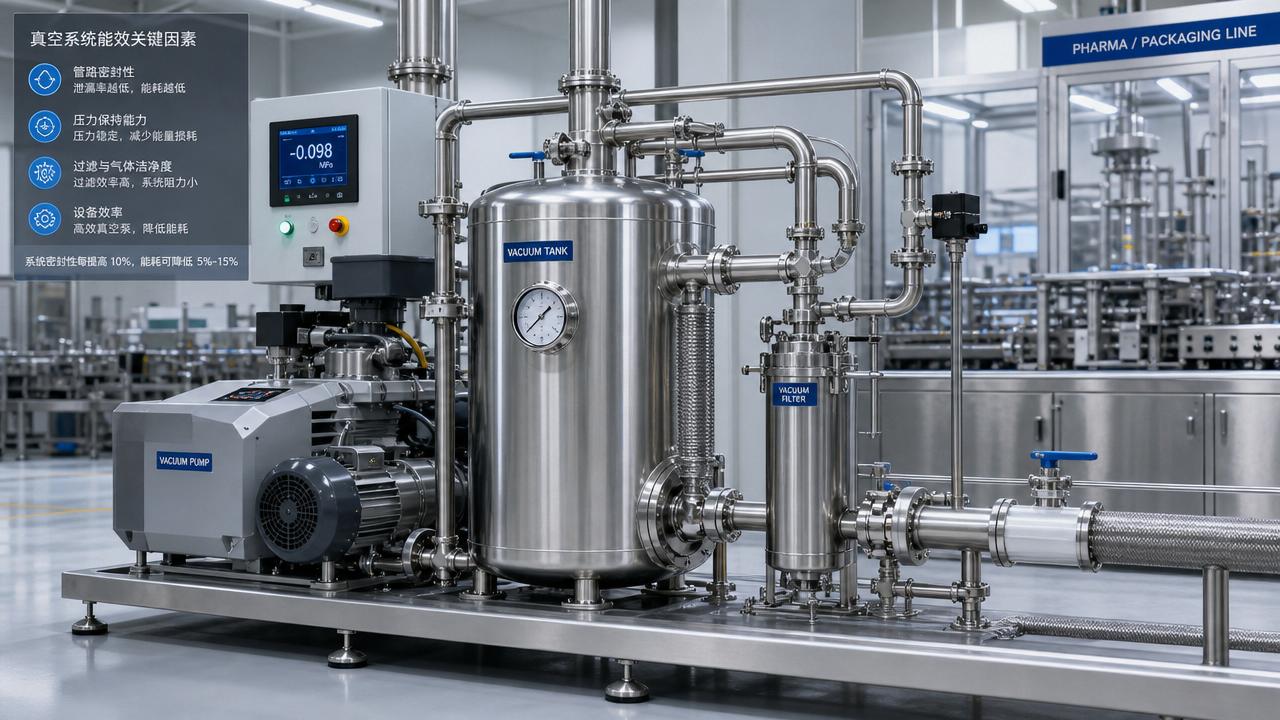
That balance is affected by leaks, oversized equipment, unstable controls, poor maintenance, and process changes that no longer match the original system design.
This matters across general industry, from packaging and plastics to electronics, food handling, thermal treatment, and precision drying.
At GTC-Matrix, vacuum performance is usually viewed as part of a wider energy chain. Pump loading, cooling demand, compressed air interaction, and heat rejection often influence each other.
So when vacuum process efficiency weakens, the true cause is not always inside the pump itself. It may sit elsewhere in the operating ecosystem.
Which hidden losses usually cause the biggest damage first?
The most expensive losses are often the least dramatic. They stay below alarm level, but they run for every shift and every batch.
Seven causes appear again and again when vacuum process efficiency is reviewed in real plants.
- Undetected leaks at joints, valves, seals, and flexible connections.
- Pump oversizing that keeps power draw high during low-load periods.
- Incorrect system matching between pump curve and actual process demand.
- Blocked filters or contaminated lines that add resistance.
- Cooling problems that reduce pump efficiency and increase wear.
- Control settings that cause excessive cycling or unstable vacuum levels.
- Process drift, where new materials or faster throughput change load conditions.
Leaks are the obvious suspect, but not always the largest one. A badly matched pump can waste power every minute even if the pipework is tight.
In many facilities, blocked inlet filtration creates another silent penalty. The pump works harder, yet effective evacuation gets slower.
More subtle still is control instability. If the setpoint band is too narrow, the system may hunt continuously and consume energy without improving process quality.
A quick comparison table helps identify where to look first
This kind of simple screening often reveals whether vacuum process efficiency is being lost through airflow, control logic, or thermal conditions.
How can you tell whether the problem is leakage or poor system matching?
These two issues are frequently confused because both can increase energy use and reduce usable vacuum performance.
A leak usually shows up as longer evacuation time and more continuous pump operation. It often gets worse gradually as seals age.
Poor system matching behaves differently. The system may achieve target vacuum fast enough, but the pump capacity is far beyond what the process really needs.
In that case, vacuum process efficiency drops because the system carries an energy burden that never turns into useful process value.
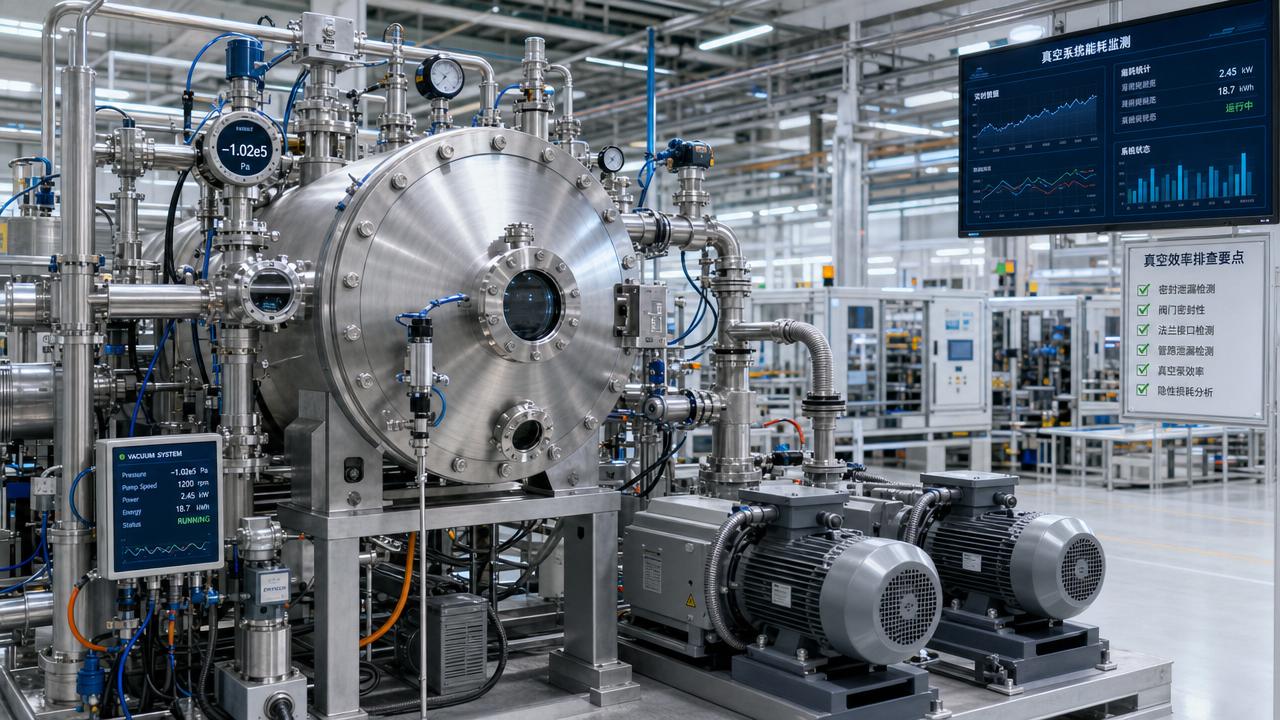
A practical check is to compare three numbers over several cycles: pump-down time, steady-state power draw, and actual vacuum demand during production.
If power remains high even when demand is light, matching is suspect. If pump-down time keeps worsening, leakage or flow restriction is more likely.
In actual applications, system reviews are stronger when they include upstream and downstream conditions. Cooling performance, ambient temperature, and valve timing often shape the result.
That broader perspective is why intelligence platforms such as GTC-Matrix track vacuum processes alongside heat exchange and compression trends rather than in isolation.
Could controls and maintenance routines be hurting vacuum process efficiency more than hardware limits?
Yes, and this is more common than many teams expect. Hardware often gets blamed first because it is visible and easier to replace.
Yet vacuum process efficiency can be undermined by ordinary settings and maintenance habits long before a major component fails.
For example, an aggressive setpoint can force the pump to maintain a deeper vacuum than the process truly requires.
That extra depth may add little product benefit while increasing electricity use, thermal stress, and oil degradation in lubricated systems.
Maintenance routines can create similar penalties. Filters changed too late, cooling surfaces left fouled, and condensate issues left unresolved all reduce effective performance.
Where production loads change by shift or season, fixed control logic becomes especially risky. A setting that worked last quarter may now be inefficient.
- Review the minimum vacuum level that still protects process quality.
- Check whether starts, stops, and unload events are excessive.
- Track filter condition by measured pressure drop, not calendar alone.
- Include cooling water, ambient heat, and fouling in routine checks.
These changes are usually less expensive than replacing major equipment, yet they can produce a noticeable recovery in vacuum process efficiency.
When do process changes start creating hidden energy waste?
Energy waste often appears after a process change that seems minor on paper.
A new packaging film, different moisture content, faster indexing speed, or altered batch size can shift vacuum demand enough to affect performance.
The system may keep operating, so the change goes unnoticed. However, vacuum process efficiency falls because the original balance between flow, pressure, timing, and heat load has moved.
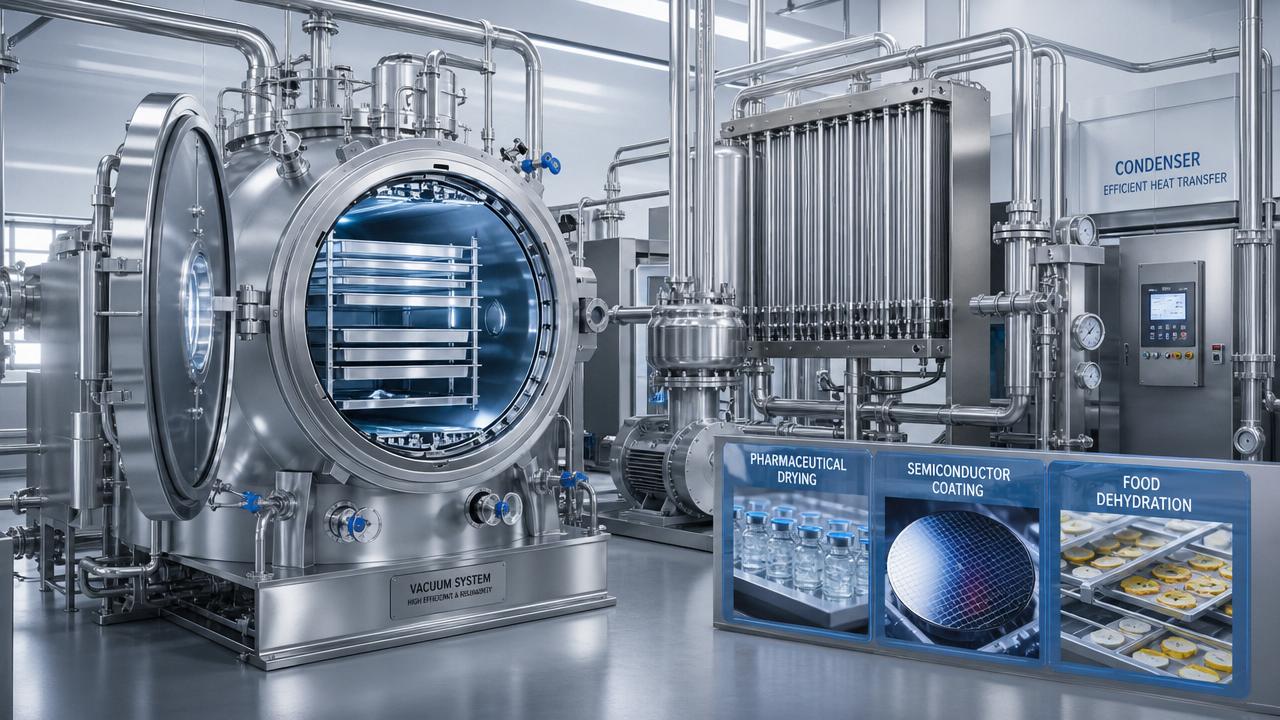
This is especially important in sectors that need stable temperature and clean power conditions, such as pharmaceutical processing, semiconductors, and sensitive food applications.
In those environments, vacuum behavior is rarely independent. Thermal management, cleanliness, and utility quality all influence cycle stability.
A useful rule is simple: whenever throughput, material, or cycle design changes, recheck vacuum demand instead of assuming the old settings are still efficient.
More advanced sites also compare energy per batch, not only total daily consumption. That reveals hidden drift much earlier.
What is the most practical way to improve vacuum process efficiency without disrupting production?
The best approach is staged, not dramatic. Start with low-disruption checks that produce usable evidence.
First, document current pump-down time, steady operating pressure, power draw, and cycle frequency. Without a baseline, efficiency work becomes guesswork.
Next, inspect leak points, inlet restrictions, and cooling conditions. These are common causes and usually fast to verify.
Then review whether the vacuum target is truly necessary. Many systems are operated deeper than process quality requires.
If the issue continues, compare actual load patterns with pump selection and control logic. That is where chronic energy waste often becomes visible.
For ongoing improvement, a short checklist can help:
- Measure before adjusting settings.
- Separate leak symptoms from oversizing symptoms.
- Link vacuum data with cooling and power data.
- Revalidate performance after process or material changes.
- Use trend-based maintenance instead of fixed assumptions.
Vacuum process efficiency improves fastest when decisions are tied to measured conditions, not habit.
That is also where a broader industrial intelligence view becomes useful. Energy cost shifts, cleaner technology trends, and process reliability standards all influence what “efficient” really means over time.
If the goal is better reliability with lower waste, the next step is not a blanket upgrade. It is a focused review of leaks, matching, controls, maintenance, and recent process changes.
Once those five areas are clear, vacuum process efficiency becomes much easier to improve with confidence and far less trial and error.
Related News
- How to find leaks in vacuum pump systems before pump performance dropsAuthor :Vacuum Process Fellow

- How to size a Roots blower for vacuum process equipmentAuthor :Vacuum Process Fellow

- How vacuum level affects vacuum process efficiencyAuthor :Vacuum Process Fellow

- China Imposes Temporary Helium Export BanAuthor :Vacuum Process Fellow

- Semiconductor Vacuum Systems Factory Checklist for Process Stability and Cleanroom UseAuthor :Vacuum Process Fellow

- Vacuum Process Optimization Services: Signs Your Line Needs a Performance ReviewAuthor :Vacuum Process Fellow

- Vacuum Chambers for Cleanroom Use: Key Design Points That Prevent ContaminationAuthor :Vacuum Process Fellow

- Vacuum Distillation Systems: Key Performance Metrics That Affect Product PurityAuthor :Vacuum Process Fellow

- Vietnam Halts High Vacuum Pump Import Licenses for 30 DaysAuthor :Vacuum Process Fellow

- Vacuum Technology Database: What to Check Before Using Technical DataAuthor :Vacuum Process Fellow

- Dry Pump Vacuum System Design Mistakes That Raise DowntimeAuthor :Vacuum Process Fellow

- When Vacuum Systems Lose Performance: Common Causes and FixesAuthor :Vacuum Process Fellow
![]()
- EU Tightens EN 13445-3 Weld Testing for Vacuum VesselsAuthor :Vacuum Process Fellow
![]()
- EPA Cuts R-1234ze(E) Quota 35%, Tightening Vacuum Cooling SupplyAuthor :Vacuum Process Fellow
 Quota 35%, Tightening Vacuum Cooling Supply")
- ICA Warns of Tight Copper Alloy Supply for Vacuum PumpsAuthor :Vacuum Process Fellow

- Vacuum System Leak Detection: Signs, Tests, and FixesAuthor :Vacuum Process Fellow

- How to Compare Vacuum Systems Factory Capabilities for Stable Process UptimeAuthor :Vacuum Process Fellow

- Vacuum Pump Lead Times Extend to 26 WeeksAuthor :Vacuum Process Fellow

- Semiconductor Vacuum Systems Explained for Stable Process YieldAuthor :Vacuum Process Fellow

- Vacuum Process Efficiency: 7 Hidden Causes of Energy LossAuthor :Vacuum Process Fellow

- Vacuum Technology Solutions for Stable Low-Pressure ProductionAuthor :Vacuum Process Fellow

- Vacuum Processes: Common Efficiency Losses and FixesAuthor :Vacuum Process Fellow

- Common Vacuum Processes Problems and How to Prevent DowntimeAuthor :Vacuum Process Fellow

- Tantalum Spike Extends Vacuum Crucible Lead TimesAuthor :Vacuum Process Fellow

- Vacuum Process Efficiency: 5 Hidden Losses to Check FirstAuthor :Vacuum Process Fellow

- How Heat Transfer Design Impacts Vacuum Process EfficiencyAuthor :Vacuum Process Fellow

- EN 13445-4:2026 Takes Effect for High-Vacuum ComponentsAuthor :Vacuum Process Fellow

- EU Vacuum Components Face New EN 13445-4:2026 Leak Test RuleAuthor :Vacuum Process Fellow

- UBS: Fed Cut View May Ease Vacuum Pump Lead TimesAuthor :Vacuum Process Fellow

- Vacuum Processes: Common Causes of Unstable PerformanceAuthor :Vacuum Process Fellow
![]()
- SiC Certification Signals New Entry Path for Vacuum and Compressor DrivesAuthor :Vacuum Process Fellow
![]()
- How to Choose the Right Vacuum System for Process StabilityAuthor :Vacuum Process Fellow

- Vacuum Technology Selection: What Matters Most for Stable Process PerformanceAuthor :Vacuum Process Fellow

- Vacuum Processes: How to Reduce Contamination and Improve Cycle ConsistencyAuthor :Vacuum Process Fellow

- ITC 337 Probe Puts TOPCon Supply Chain Under ReviewAuthor :Vacuum Process Fellow

- Vacuum Process Efficiency: Where Energy Loss Really StartsAuthor :Vacuum Process Fellow