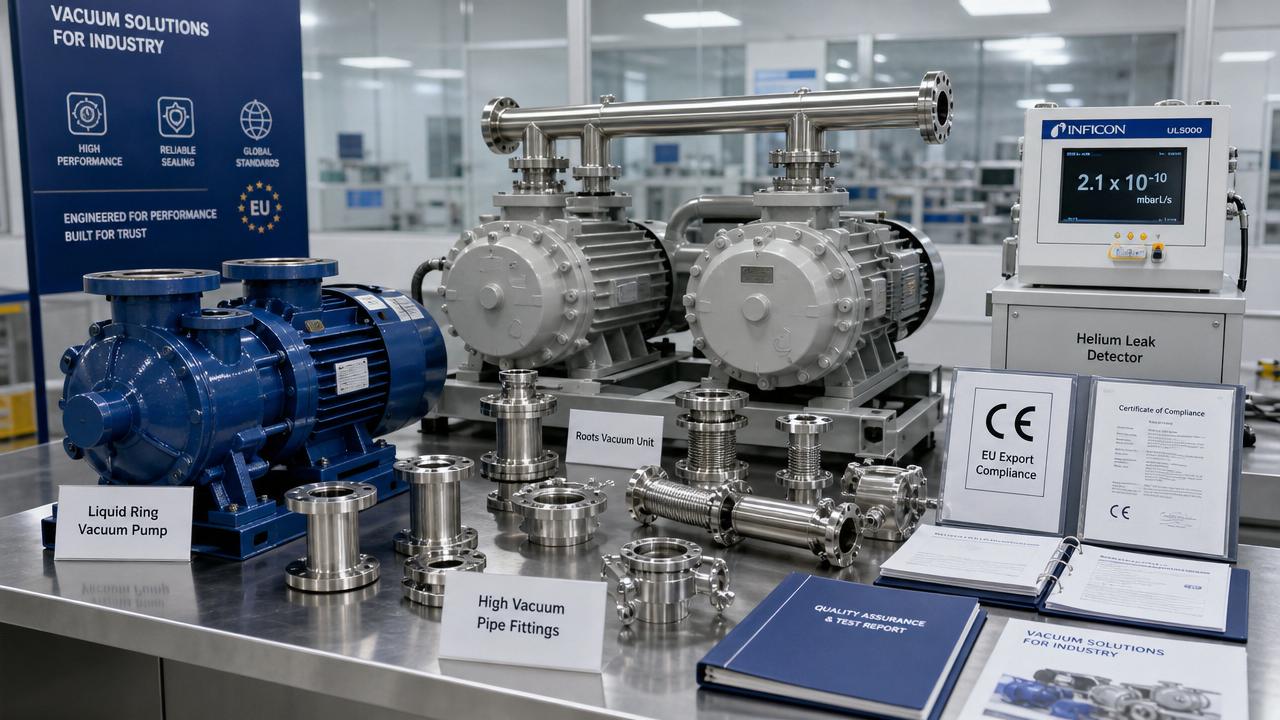
EU Tightens EN 13445-3 Weld Testing for Vacuum Vessels




On July 10, 2026, a revised compliance requirement tied to EN 13445-3:2026 moved into focus for vacuum equipment entering the EU market. According to the user-provided event summary, the change shifts weld inspection for pressure vessels used in high-vacuum, liquid ring, and rotary vane vacuum systems away from RT/X-ray methods and toward PAUT or FMC-UT. This matters because it reaches beyond testing practice alone and may affect export readiness, CE-related compliance work, type inspection timing, and delivery planning for companies involved in manufacturing, certification, and cross-border supply.

What the published revision changes
The confirmed information provided for this article is limited to the following points. The Official Journal of the European Union (OJEU) published a revised version of EN 13445-3:2026 on July 6, 2026. From July 10, 2026, welds on pressure vessels used in high-vacuum, liquid ring, and rotary vane vacuum systems entering the EU market must be examined using phased array ultrasonic testing (PAUT) or full matrix capture ultrasonic testing (FMC-UT). The summary also states that this requirement replaces the earlier RT/X-ray approach for the affected weld inspections. In addition, the stated impact is that the new rule will affect the type inspection cycle and CE certification cost of Chinese vacuum equipment exporters.
Where the pressure is likely to appear first
Export projects facing immediate compliance review
From an industry perspective, exporters of affected vacuum systems are likely to feel the change first because market access depends on whether inspection methods align with the revised requirement. The practical pressure point is not only manufacturing itself, but also whether project files, inspection records, and conformity-related documentation remain consistent with the new testing route. What deserves closer attention is whether orders already in process can still move forward without additional review of weld inspection arrangements.
Manufacturers managing production and release schedules
Analysis shows that manufacturers of pressure-bearing vacuum equipment may need to recheck how weld examination is specified in production and release workflows. The likely impact sits at the intersection of fabrication, inspection coordination, and shipment timing. If technical files or internal quality documents still reference RT/X-ray for the affected scope, companies may need to assess whether those references remain usable for EU-bound deliveries after the stated date.
Certification and inspection service providers under a new method expectation
Observably, certification-related firms and testing service providers may face a more immediate workload shift because the revised standard language points to PAUT or FMC-UT as the required methods for the affected welds. The business issue here is not only test execution, but also the consistency of reports, supporting records, and review materials used in conformity assessment. For companies relying on external inspection resources, provider capability and document acceptance are likely to become a more visible checkpoint.
Buyers and supply chain coordinators checking delivery risk
Procurement teams, distributors, and supply chain service providers may also need to pay attention because a change in mandatory inspection method can influence release timing and documentation completeness. Analysis shows that this is relevant where delivery commitments depend on type inspection progress, certification review, or final acceptance packages. In practice, buyers may need to verify whether suppliers for EU-bound equipment have already aligned their testing arrangements with the revised requirement.
What companies should monitor now
Review whether technical and certification files still match the new inspection route
What deserves closer attention is whether current drawings, specifications, inspection plans, and compliance files for affected pressure vessels still cite RT/X-ray methods. The event summary confirms a method replacement for the relevant weld inspections, so any mismatch between current documentation and the revised requirement may become a practical compliance issue. This should be treated as a document and process review point rather than assumed as an automatic failure outcome.
Reassess type inspection timing and CE-related cost exposure
Analysis shows that the user-provided summary directly links the revision to type inspection cycle changes and CE certification cost pressure for Chinese exporters. Companies handling active EU orders may therefore need to revisit internal schedules, inspection booking assumptions, and quotation buffers. Because no detailed enforcement pathway is provided in the input, it is more appropriate to treat this as a clear warning signal for timeline and cost review, not as a basis for estimating exact delays or fee increases.
Check supplier and service-provider readiness
For firms that outsource testing, vessel fabrication, or part of the certification workflow, the immediate question is whether relevant partners are prepared to support PAUT or FMC-UT within project timelines. Observably, this is as much a supply chain qualification issue as a technical one. Companies may need to confirm the readiness of inspection partners, the compatibility of report formats with compliance review, and the consistency of supporting records used for export files.
Watch for changes in tender language and customer-side technical requirements
It is more appropriate to understand this revision as something that may also flow into bid documents, purchase specifications, and acceptance conditions for EU-facing projects. Even where the input does not provide detailed downstream instructions, companies should pay attention to whether customer requirements, tender wording, or contract appendices begin to reflect the PAUT or FMC-UT expectation for the affected vessel welds.
Why this reads as an execution signal, not just a technical update
Analysis shows that this item is better understood as a compliance and market-entry signal than as a narrow testing preference. The confirmed facts point to a published revision and a stated effective date, which means the issue is already tied to execution timing rather than distant policy discussion. At the same time, the input does not provide detailed implementation guidance, certification interpretations, or market feedback, so the industry still needs to observe how review bodies, buyers, and inspection chains apply the requirement in practice.
How to interpret the change at this stage
The most balanced reading is that the revised EN 13445-3:2026 requirement should be treated as an already relevant compliance change for affected vacuum pressure vessels entering the EU market. It does not justify broad claims about final market outcomes, but it clearly signals that inspection method alignment, certification preparation, and delivery planning deserve immediate attention. For companies exposed to EU vacuum equipment business, this is more appropriate to understand as a rule now entering execution, with some downstream application details still requiring continued observation.
Basis of this article and what still needs verification
This article is generated from the user-provided news title, event date, and event summary. For events of this kind, commonly relevant source types may include official notices, regulator publications, trade or customs authority information, industry association releases, standards organization documents, and reporting by established industry media. No specific official source link was provided in the input, so the exact official link still needs to be verified on an ongoing basis. Observably, the market should continue watching for later wording clarifications, certification application practices, tender document updates, industry feedback, and evidence of how companies are implementing the revised testing requirement.
Ready when you are. Send us a message to get started.
Related News
- How does base pressure affect film purity in vacuum deposition?Author :Vacuum Process Fellow

- How to size vacuum process equipment for the required pump-down timeAuthor :Vacuum Process Fellow

- Which vacuum specification best protects semiconductor process yield?Author :Vacuum Process Fellow

- How Can Contamination Be Prevented in a Semiconductor Vacuum Chamber?Author :Vacuum Process Fellow

- Which Vacuum Pump Specifications Matter Most for Semiconductor Processes?Author :Vacuum Process Fellow

- How to find leaks in vacuum pump systems before pump performance dropsAuthor :Vacuum Process Fellow

- How to size a Roots blower for vacuum process equipmentAuthor :Vacuum Process Fellow

- How vacuum level affects vacuum process efficiencyAuthor :Vacuum Process Fellow

- China Imposes Temporary Helium Export BanAuthor :Vacuum Process Fellow

- Semiconductor Vacuum Systems Factory Checklist for Process Stability and Cleanroom UseAuthor :Vacuum Process Fellow

- Vacuum Process Optimization Services: Signs Your Line Needs a Performance ReviewAuthor :Vacuum Process Fellow

- Vacuum Chambers for Cleanroom Use: Key Design Points That Prevent ContaminationAuthor :Vacuum Process Fellow

- Vacuum Distillation Systems: Key Performance Metrics That Affect Product PurityAuthor :Vacuum Process Fellow

- Vietnam Halts High Vacuum Pump Import Licenses for 30 DaysAuthor :Vacuum Process Fellow

- Vacuum Technology Database: What to Check Before Using Technical DataAuthor :Vacuum Process Fellow

- Dry Pump Vacuum System Design Mistakes That Raise DowntimeAuthor :Vacuum Process Fellow

- When Vacuum Systems Lose Performance: Common Causes and FixesAuthor :Vacuum Process Fellow
![]()
- EU Tightens EN 13445-3 Weld Testing for Vacuum VesselsAuthor :Vacuum Process Fellow
![]()
- EPA Cuts R-1234ze(E) Quota 35%, Tightening Vacuum Cooling SupplyAuthor :Vacuum Process Fellow
 Quota 35%, Tightening Vacuum Cooling Supply")
- ICA Warns of Tight Copper Alloy Supply for Vacuum PumpsAuthor :Vacuum Process Fellow

- Vacuum System Leak Detection: Signs, Tests, and FixesAuthor :Vacuum Process Fellow

- How to Compare Vacuum Systems Factory Capabilities for Stable Process UptimeAuthor :Vacuum Process Fellow

- Vacuum Pump Lead Times Extend to 26 WeeksAuthor :Vacuum Process Fellow

- Semiconductor Vacuum Systems Explained for Stable Process YieldAuthor :Vacuum Process Fellow

- Vacuum Process Efficiency: 7 Hidden Causes of Energy LossAuthor :Vacuum Process Fellow

- Vacuum Technology Solutions for Stable Low-Pressure ProductionAuthor :Vacuum Process Fellow

- Vacuum Processes: Common Efficiency Losses and FixesAuthor :Vacuum Process Fellow

- Common Vacuum Processes Problems and How to Prevent DowntimeAuthor :Vacuum Process Fellow

- Tantalum Spike Extends Vacuum Crucible Lead TimesAuthor :Vacuum Process Fellow

- Vacuum Process Efficiency: 5 Hidden Losses to Check FirstAuthor :Vacuum Process Fellow

- How Heat Transfer Design Impacts Vacuum Process EfficiencyAuthor :Vacuum Process Fellow

- EN 13445-4:2026 Takes Effect for High-Vacuum ComponentsAuthor :Vacuum Process Fellow

- EU Vacuum Components Face New EN 13445-4:2026 Leak Test RuleAuthor :Vacuum Process Fellow

- UBS: Fed Cut View May Ease Vacuum Pump Lead TimesAuthor :Vacuum Process Fellow

- Vacuum Processes: Common Causes of Unstable PerformanceAuthor :Vacuum Process Fellow
![]()
- SiC Certification Signals New Entry Path for Vacuum and Compressor DrivesAuthor :Vacuum Process Fellow
![]()