How to Choose the Right Vacuum System for Process Stability




Choosing the right vacuum system is rarely a simple matter of reaching a target pressure.
Process stability depends on how consistently that pressure is held while gas loads, temperatures, contamination levels, and production rhythms keep changing.
Across coating, drying, packaging, chemical handling, electronics, and thermal processing, a poor match can create unstable cycles, quality drift, and hidden energy loss.
That is why vacuum selection now sits closer to broader decisions about efficiency, clean operation, and production resilience.
Within this context, insight platforms such as GTC-Matrix help connect vacuum process choices with thermodynamic performance, lifecycle cost, and changing industrial demand.
Why process stability starts with system fit
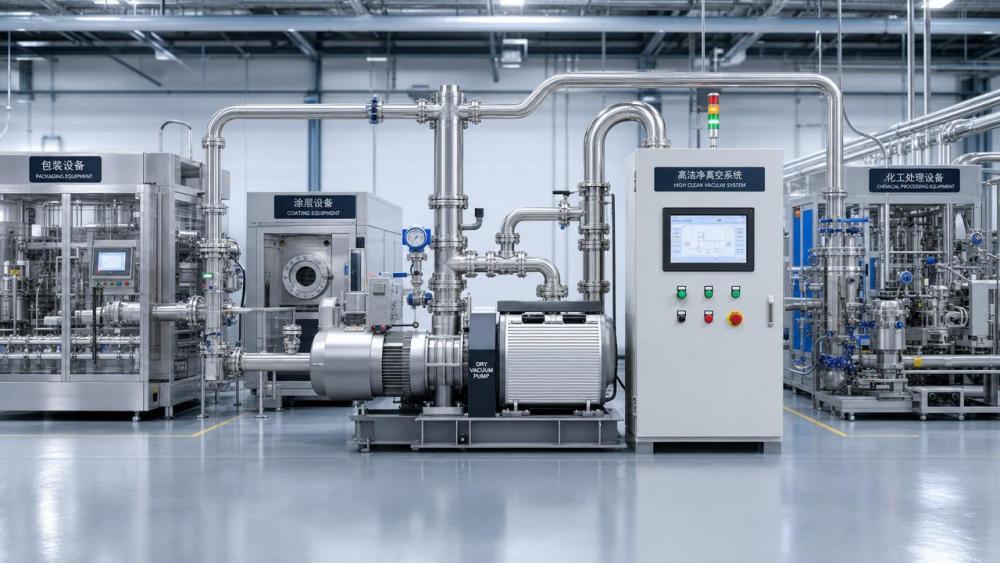
A vacuum system supports stability when it matches the real behavior of the process, not only the design specification.
In practical terms, that means stable evacuation time, predictable operating pressure, controlled moisture handling, and repeatable response during start-stop cycles.
If the system is oversized, energy use may rise while control becomes less precise.
If it is undersized, the process can drift, batch time can extend, and product consistency can suffer.
This is especially relevant in mixed industrial environments where thermal loads, upstream compression, and downstream handling all affect vacuum behavior.
Pressure alone is not the full requirement
Two processes may both require the same nominal pressure, yet need very different vacuum system designs.
One may release large volumes of water vapor.
Another may contain solvents, fine particles, or oxygen-sensitive gases.
The correct decision depends on pump principle, materials, sealing strategy, controls, and service conditions working together.
The core factors that shape vacuum system choice
A reliable evaluation usually starts by looking at the process in motion.
Static nameplate data rarely captures the operating reality.
Gas load and pump-down behavior
Gas load should include normal flow, leakage, outgassing, vapor release, and occasional peaks.
A vacuum system that looks adequate at steady state may still fail during pump-down or transient surges.
Cycle-sensitive applications often need a system sized around the most demanding moment, not the average condition.
Contamination risk and media compatibility
Oil backstreaming, condensate buildup, corrosive gases, and particulate ingestion can all destabilize performance.
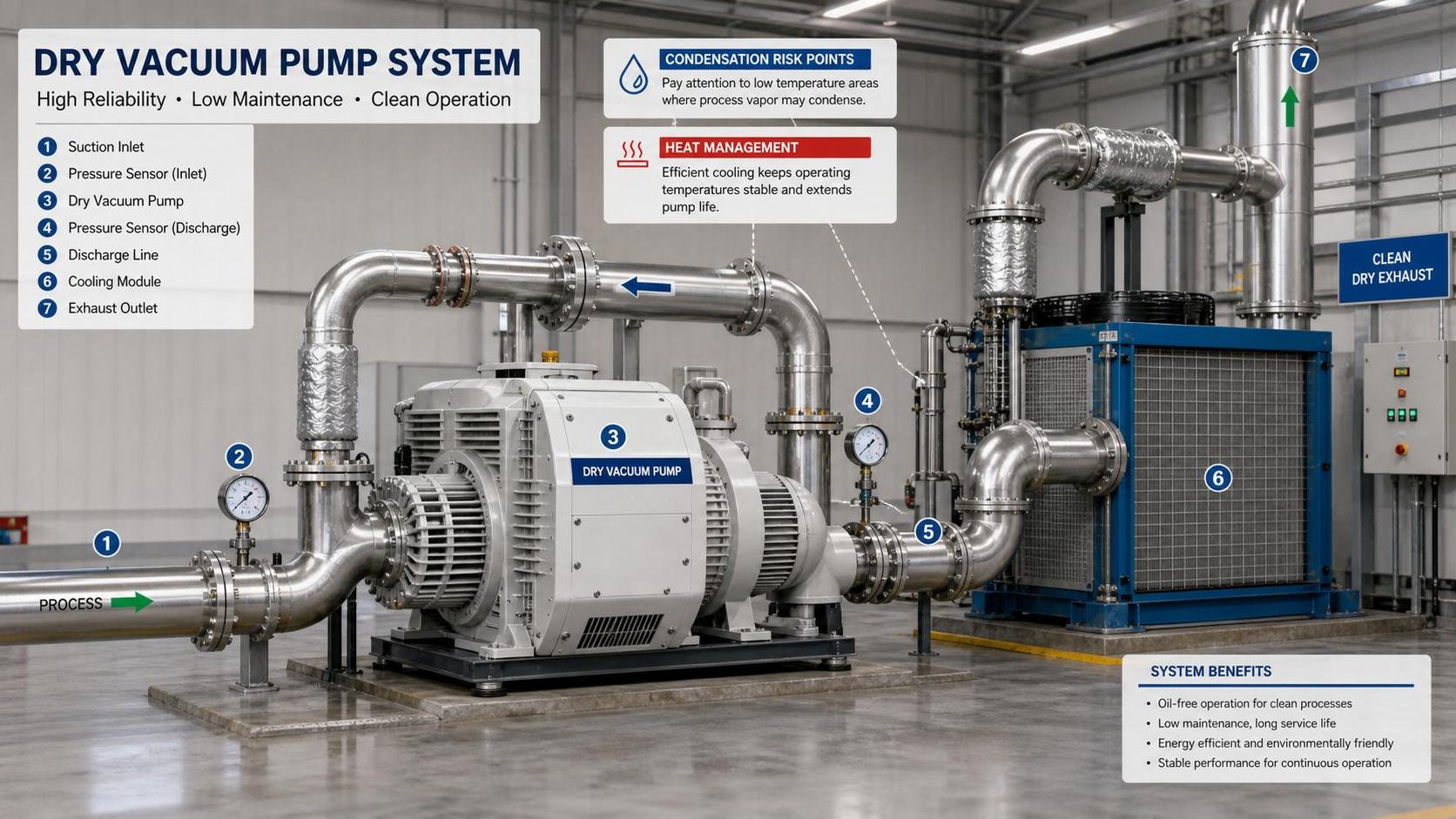
That is why dry screw, oil-sealed rotary vane, liquid ring, roots booster combinations, and claw technologies each serve different conditions.
The choice should reflect media chemistry and cleanliness requirements, not equipment familiarity alone.
Control precision and integration
Stable production often depends on how the vacuum system responds to load variation.
Variable speed drives, staged pumping, sensors, and control logic can reduce oscillation and improve repeatability.
In advanced lines, vacuum performance also needs to coordinate with cooling, compressed air, and thermal exchange systems.
Lifecycle cost rather than purchase price
A lower upfront cost can become expensive if maintenance intervals are short or energy demand is high.
Evaluation should include power consumption, utilities, spare parts, service access, downtime impact, and expected operating life.
Where industry attention is shifting
Vacuum decisions are increasingly shaped by energy economics and cleaner production targets.
That shift is visible across pharmaceuticals, semiconductors, food processing, specialty chemicals, and advanced manufacturing.
Oil-free operation receives more attention where product purity or downstream contamination risk matters.
Digital monitoring is also moving from optional to expected.
A vacuum system is now judged by its data visibility as much as by its nameplate performance.
GTC-Matrix reflects this wider trend by linking vacuum process evaluation with developments in energy cost, decarbonization, and integrated thermal systems.
That broader view matters because the best technical choice today may look different under tomorrow’s utility pricing or environmental rules.
Matching technologies to operating scenarios
No single vacuum system fits every process.
Selection becomes clearer when scenarios are separated by media type, pressure range, and cleanliness demand.
Dry processes with purity requirements
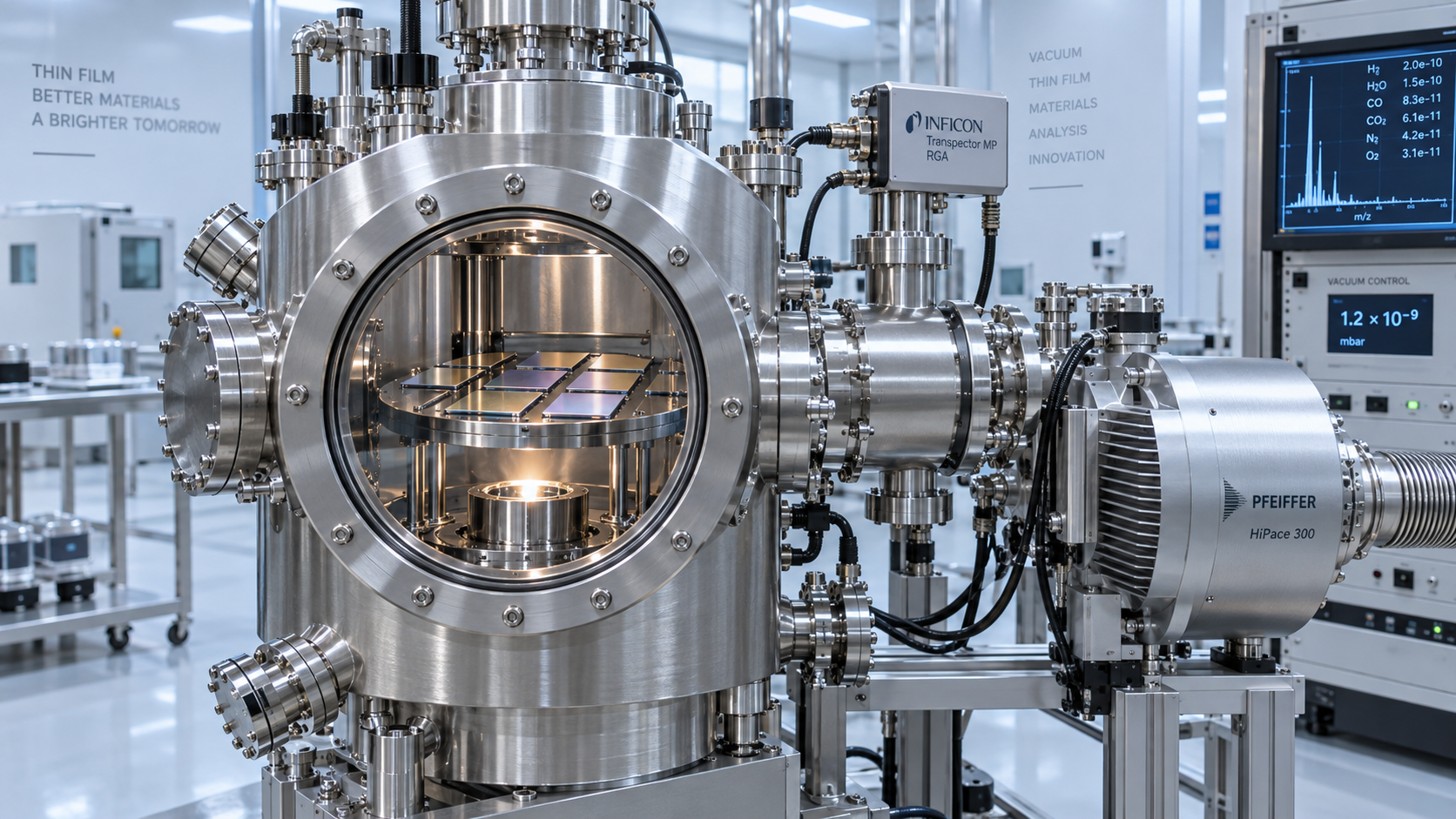
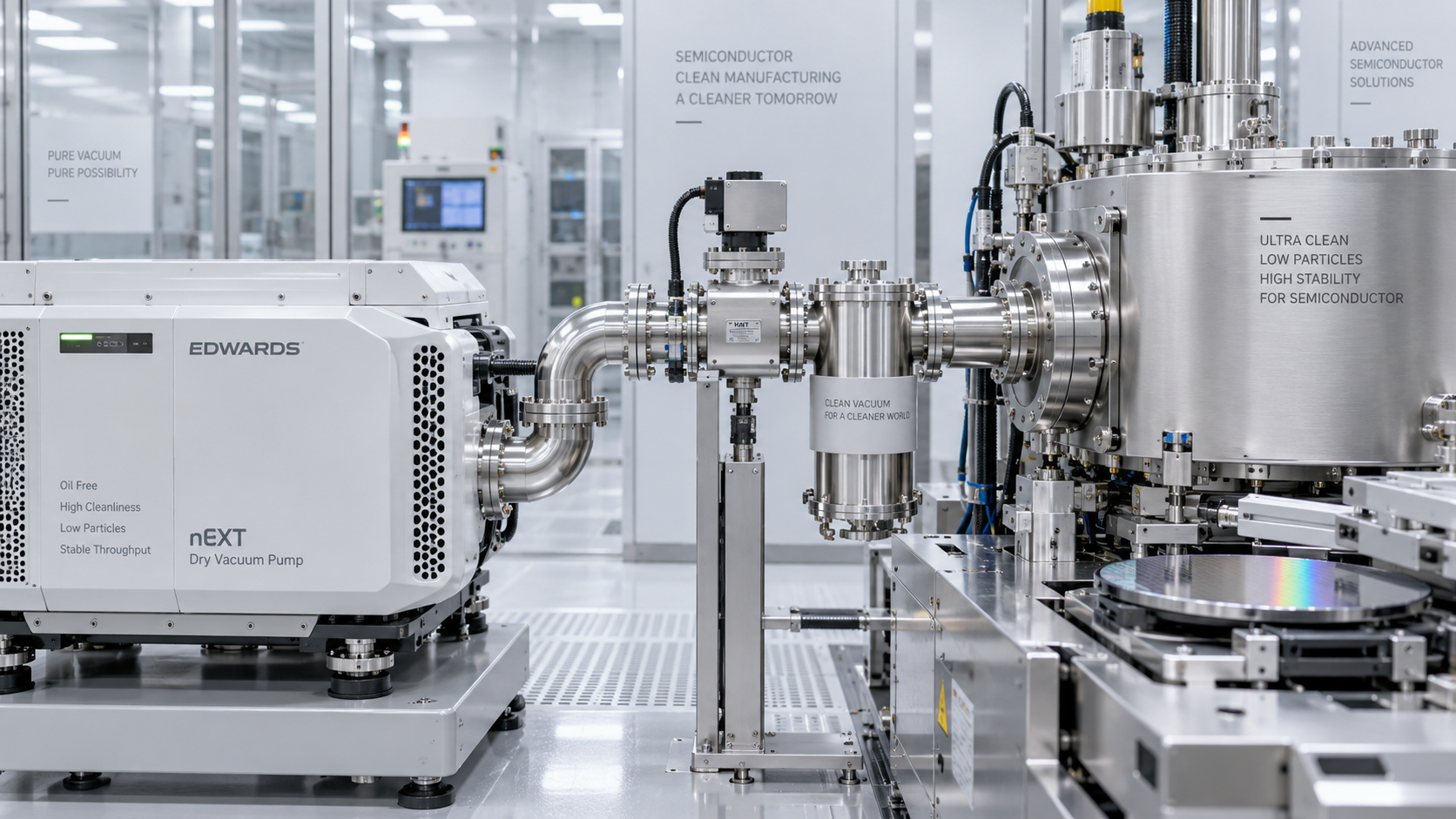
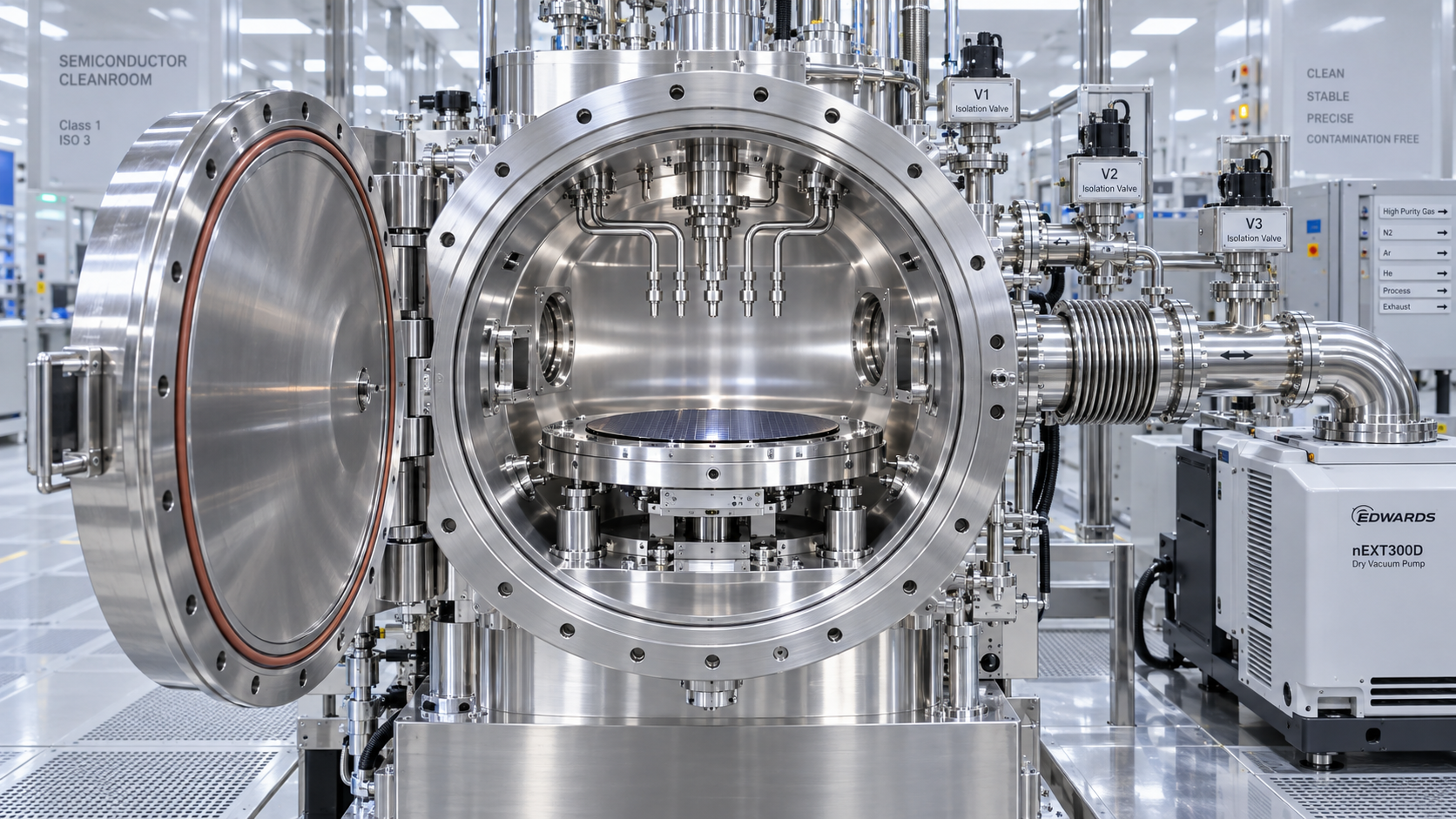
Electronics, thin film, and sensitive packaging often favor dry vacuum technologies.
These reduce oil-related contamination risk and simplify compliance where clean conditions are critical.
Wet or vapor-heavy duties
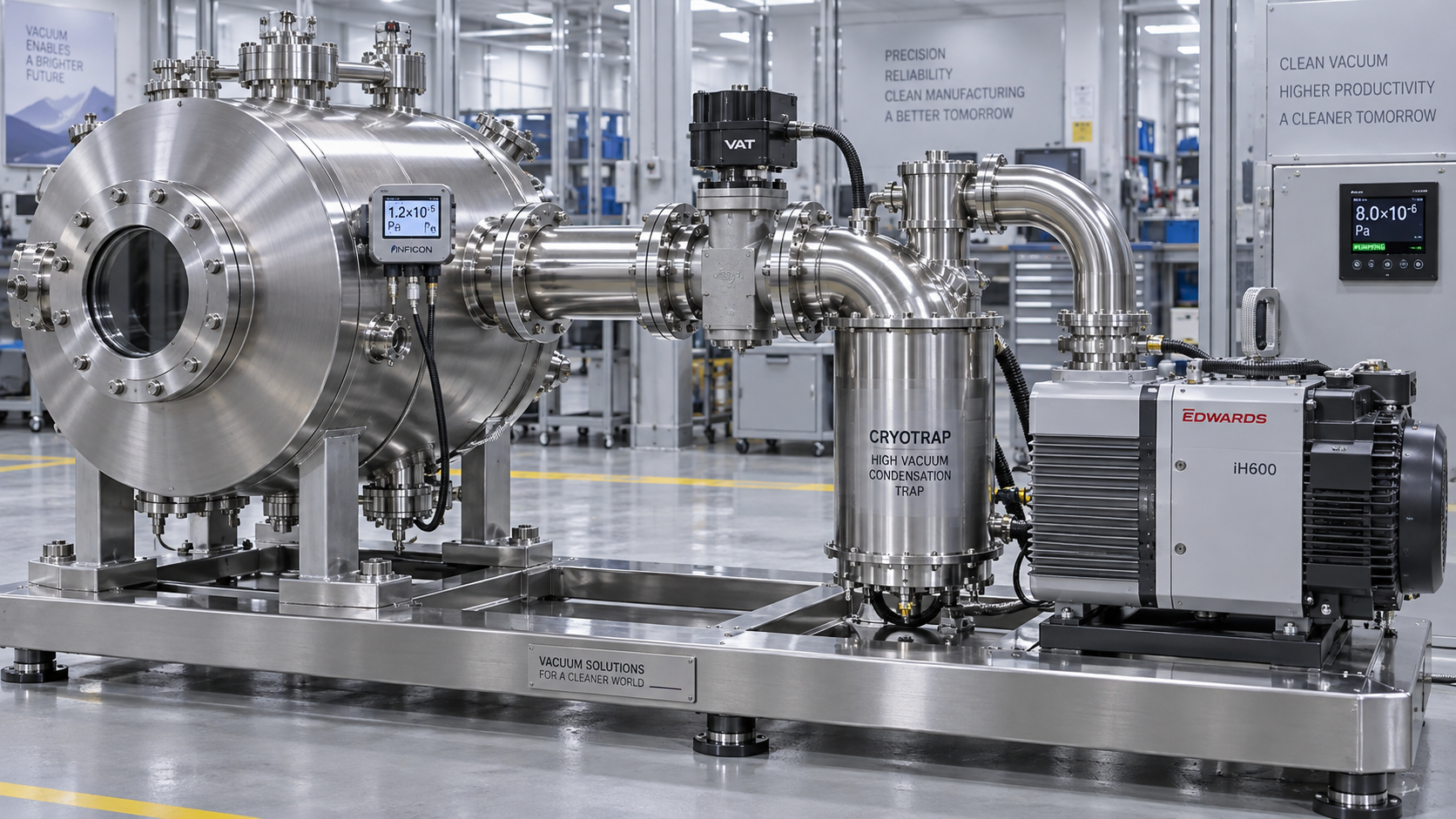
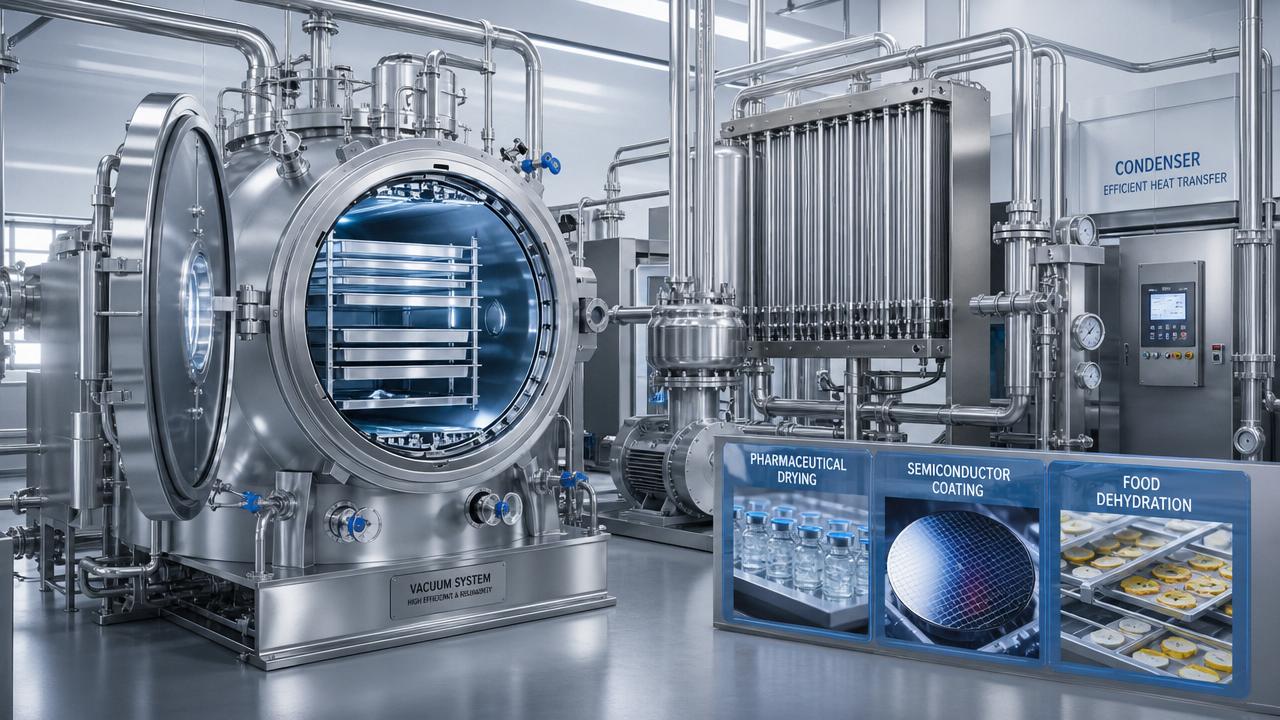
Drying, evaporation, and chemical applications may face heavy condensable loads.
Here, the vacuum system must tolerate vapor without frequent degradation.
Condensation management often matters as much as pumping speed.
High-throughput central systems
Facilities with many vacuum points may benefit from centralized architecture.
That can improve maintenance planning and load sharing.
Still, centralization only works if distribution losses and redundancy are carefully designed.
A practical evaluation framework
A useful comparison process should test how each vacuum system behaves under real operating conditions.
The following checkpoints usually reveal more than brochure data.
- Map the full pressure profile, including pump-down, steady operation, upset events, and restart conditions.
- Define the gas stream clearly, including moisture, corrosives, carryover, and potential cleaning chemicals.
- Review utilities around the vacuum system, especially cooling water, compressed air, and heat rejection capacity.
- Check control compatibility with plant automation, alarms, data logging, and predictive maintenance tools.
- Compare service intervals against production calendars, not only against theoretical running hours.
- Assess failure consequences, including scrap risk, lost batches, and recovery time after pressure excursions.
This approach keeps the focus on process stability instead of isolated equipment features.
It also makes it easier to compare technologies on equal terms.
What a better decision looks like
The right vacuum system should create a stable operating window, not just a compliant specification sheet.
A strong choice usually shows four signs.
- Pressure remains consistent through normal variation.
- Contamination risk is controlled at the source.
- Energy use stays aligned with actual load.
- Maintenance can be planned without disturbing output.
In many cases, the next step is not requesting more generic specifications.
It is building a sharper requirement set around gas load, control stability, media compatibility, and lifecycle economics.
From there, comparing each vacuum system against actual process behavior becomes far more reliable.
For organizations tracking broader efficiency and thermal trends, resources such as GTC-Matrix can add useful context before final selection.
A stable process usually starts with a clearer question, then a better-matched vacuum system.
Ready when you are. Send us a message to get started.
Related News
- How does base pressure affect film purity in vacuum deposition?Author :Vacuum Process Fellow

- How to size vacuum process equipment for the required pump-down timeAuthor :Vacuum Process Fellow

- Which vacuum specification best protects semiconductor process yield?Author :Vacuum Process Fellow

- How Can Contamination Be Prevented in a Semiconductor Vacuum Chamber?Author :Vacuum Process Fellow

- Which Vacuum Pump Specifications Matter Most for Semiconductor Processes?Author :Vacuum Process Fellow

- How to find leaks in vacuum pump systems before pump performance dropsAuthor :Vacuum Process Fellow

- How to size a Roots blower for vacuum process equipmentAuthor :Vacuum Process Fellow

- How vacuum level affects vacuum process efficiencyAuthor :Vacuum Process Fellow

- China Imposes Temporary Helium Export BanAuthor :Vacuum Process Fellow

- Semiconductor Vacuum Systems Factory Checklist for Process Stability and Cleanroom UseAuthor :Vacuum Process Fellow

- Vacuum Process Optimization Services: Signs Your Line Needs a Performance ReviewAuthor :Vacuum Process Fellow

- Vacuum Chambers for Cleanroom Use: Key Design Points That Prevent ContaminationAuthor :Vacuum Process Fellow

- Vacuum Distillation Systems: Key Performance Metrics That Affect Product PurityAuthor :Vacuum Process Fellow

- Vietnam Halts High Vacuum Pump Import Licenses for 30 DaysAuthor :Vacuum Process Fellow

- Vacuum Technology Database: What to Check Before Using Technical DataAuthor :Vacuum Process Fellow

- Dry Pump Vacuum System Design Mistakes That Raise DowntimeAuthor :Vacuum Process Fellow

- When Vacuum Systems Lose Performance: Common Causes and FixesAuthor :Vacuum Process Fellow
![]()
- EU Tightens EN 13445-3 Weld Testing for Vacuum VesselsAuthor :Vacuum Process Fellow
![]()
- EPA Cuts R-1234ze(E) Quota 35%, Tightening Vacuum Cooling SupplyAuthor :Vacuum Process Fellow
 Quota 35%, Tightening Vacuum Cooling Supply")
- ICA Warns of Tight Copper Alloy Supply for Vacuum PumpsAuthor :Vacuum Process Fellow

- Vacuum System Leak Detection: Signs, Tests, and FixesAuthor :Vacuum Process Fellow

- How to Compare Vacuum Systems Factory Capabilities for Stable Process UptimeAuthor :Vacuum Process Fellow

- Vacuum Pump Lead Times Extend to 26 WeeksAuthor :Vacuum Process Fellow

- Semiconductor Vacuum Systems Explained for Stable Process YieldAuthor :Vacuum Process Fellow

- Vacuum Process Efficiency: 7 Hidden Causes of Energy LossAuthor :Vacuum Process Fellow

- Vacuum Technology Solutions for Stable Low-Pressure ProductionAuthor :Vacuum Process Fellow

- Vacuum Processes: Common Efficiency Losses and FixesAuthor :Vacuum Process Fellow

- Common Vacuum Processes Problems and How to Prevent DowntimeAuthor :Vacuum Process Fellow

- Tantalum Spike Extends Vacuum Crucible Lead TimesAuthor :Vacuum Process Fellow

- Vacuum Process Efficiency: 5 Hidden Losses to Check FirstAuthor :Vacuum Process Fellow

- How Heat Transfer Design Impacts Vacuum Process EfficiencyAuthor :Vacuum Process Fellow

- EN 13445-4:2026 Takes Effect for High-Vacuum ComponentsAuthor :Vacuum Process Fellow

- EU Vacuum Components Face New EN 13445-4:2026 Leak Test RuleAuthor :Vacuum Process Fellow

- UBS: Fed Cut View May Ease Vacuum Pump Lead TimesAuthor :Vacuum Process Fellow

- Vacuum Processes: Common Causes of Unstable PerformanceAuthor :Vacuum Process Fellow
![]()
- SiC Certification Signals New Entry Path for Vacuum and Compressor DrivesAuthor :Vacuum Process Fellow
![]()