



Intellectualization in Chillers: Smarter Control or Hype?




As chillers become more connected, intellectualization is no longer just a branding term. In industrial cooling, it now shapes how systems respond to load shifts, protect uptime, and reduce energy waste.
For GTC-Matrix, the issue is practical. Does intellectualization improve control quality, maintenance timing, and lifecycle economics, or does it only layer software onto already stable hardware?
The answer depends on application context. In some scenarios, intellectualization creates measurable value. In others, the promised gains are small, costly, or difficult to verify.
Why intellectualization in chillers must be judged by scenario
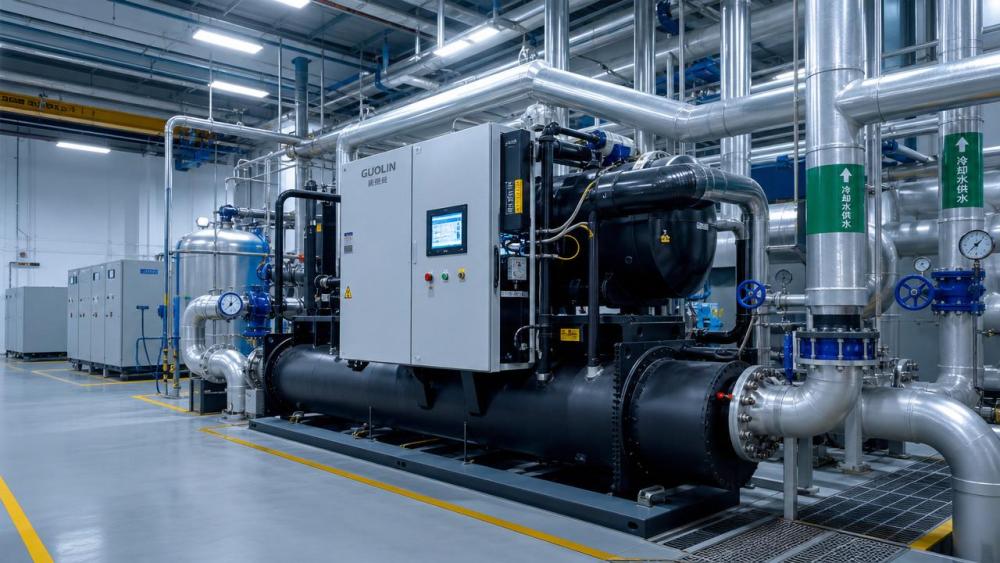
A chiller serving a cleanroom behaves differently from one cooling a plastics line. The first needs tight stability. The second may need flexibility under frequent production swings.
That is why intellectualization should be tested against actual operating demands. Smart control is valuable only when it improves decisions under changing thermal conditions.
Useful intellectualization usually appears in five areas: adaptive sequencing, fault prediction, remote visibility, energy optimization, and integration with plant-level control platforms.
Hype appears when systems add dashboards without action logic, alarms without root-cause ranking, or data streams without calibration discipline. More signals do not automatically mean more intelligence.
Where intellectualization delivers clear results in stable high-value processes
Semiconductor, pharmaceutical, and precision manufacturing environments
In precision environments, thermal drift can affect yield, consistency, and compliance. Here, intellectualization often has real value because small deviations carry high financial consequences.
Advanced controls can adjust compressor staging, pump speed, and valve response faster than manual settings. This helps maintain narrow temperature bands during partial load or abrupt process changes.
Predictive analytics also matter in these scenarios. A rising approach temperature or unstable suction pattern may indicate fouling, sensor drift, or refrigerant-side imbalance before failure occurs.
In these settings, intellectualization is not hype when three conditions are present:
- Process temperature tolerance is tight.
- Downtime cost is significantly higher than control-system cost.
- Historical data is available for model tuning and alarm validation.
Where intellectualization helps most under variable load conditions
Commercial complexes, mixed-use plants, and seasonal operations
Many facilities do not run at steady state. Loads change by season, shift pattern, occupancy, or product mix. These are strong use cases for intellectualization in chillers.
Smarter control can reset chilled water temperature, optimize condenser conditions, and coordinate multiple chillers according to real-time efficiency curves. This is where energy savings become measurable.
Without intellectualization, plants often use conservative settings. Equipment then runs safely, but inefficiently. Smart sequencing reduces unnecessary starts, short cycling, and low-load performance losses.
However, success depends on commissioning quality. Poor sensor placement or incorrect logic can make an optimized system perform worse than a simpler one.
District cooling and multi-equipment energy systems
In larger thermal networks, intellectualization supports system orchestration rather than single-unit control. The value comes from balancing load, storage, pumping, and heat rejection resources together.
Here, intellectualization becomes strategic. It links weather forecasts, tariff signals, and equipment efficiency maps. When done well, it improves both energy cost and asset utilization.
Where hype around intellectualization is more likely than measurable benefit
Simple duty cycles and low-complexity cooling loops
Not every chiller needs advanced intelligence. In fixed-load applications with broad temperature tolerance, robust conventional control may already meet technical and economic requirements.
If a system runs with limited variation, the extra layer of intellectualization may offer only marginal savings. Software subscriptions, cybersecurity work, and retraining can offset the benefit.
The same risk appears where maintenance teams lack diagnostic support. A smart alarm is not useful if no one trusts it, understands it, or can act on it quickly.
In these cases, intellectualization becomes hype when vendors emphasize connectivity more than verified operating outcomes such as kW/RT improvement, fault reduction, or mean time between shutdowns.
How different cooling scenarios change the value of intellectualization
How to judge whether intellectualization is worth adopting
A useful decision framework starts with measurable plant conditions, not software promises. The key question is whether intellectualization solves a proven operating limitation.
- Check load variability across hours, shifts, and seasons.
- Measure current control stability and temperature deviation frequency.
- Estimate downtime cost, product risk, and maintenance exposure.
- Review sensor quality, data history, and control integration readiness.
- Ask for verified case data, not only interface demonstrations.
The strongest business cases usually combine three benefits: lower energy intensity, reduced unplanned stoppage, and better asset visibility. If only one appears weakly, returns may disappoint.
Common misjudgments when evaluating intellectualization in chillers
One common mistake is confusing digitization with intellectualization. Data logging alone is not intelligent control. Real intellectualization turns data into timely operational decisions.
Another mistake is ignoring lifecycle discipline. Algorithms need recalibration, sensors need verification, and cybersecurity must be maintained. Intelligence decays without governance.
A third issue is evaluating chillers in isolation. Intellectualization often succeeds only when pumps, cooling towers, valves, and BAS layers share reliable information.
Finally, some projects expect immediate savings without commissioning depth. The more advanced the control logic, the more important field validation becomes.
A practical next step for assessing intellectualization value
The best next step is a scenario-based audit. Map operating patterns, identify unstable thermal points, and compare them with available control functions and maintenance records.
Then define success metrics before adoption. Examples include seasonal efficiency improvement, alarm accuracy, response time reduction, and avoided shutdown events.
For GTC-Matrix readers tracking industrial cooling, intellectualization should be treated as a performance question, not a branding trend. In the right scenario, it is a serious efficiency tool.
In the wrong scenario, intellectualization may only add cost and complexity. The difference lies in fit, data quality, and execution discipline.
Use scenario evidence, not marketing language, to decide where intellectualization truly belongs in the future of chillers.
Related News
- How Smart Thermal Systems Improve Industrial Cooling EfficiencyAuthor :Cryogenic Systems Expert

- How to Choose Process Cooling Equipment for Stable Temperature ControlAuthor :Cryogenic Systems Expert

- EU Finalizes 2026 HFC Quota Cut for R-134a ChillersAuthor :Cryogenic Systems Expert

- EU Tightens HFC-134a Quotas for Industrial ChillersAuthor :Cryogenic Systems Expert

- REACH SVHC Update Pressures HFC-134a Chiller Supply ChainsAuthor :Cryogenic Systems Expert

- EU PFAS Coolant Ban Reshapes Chiller ExportsAuthor :Cryogenic Systems Expert

- EU REACH Restricts PFAS Cooling Media ImportsAuthor :Cryogenic Systems Expert

- EU Ecodesign Rule Takes Effect for Industrial ChillersAuthor :Cryogenic Systems Expert

- EU REACH Rule Takes Effect for PFAS in Industrial Cooling ExportsAuthor :Cryogenic Systems Expert

- Industrial Cooling for Plastic Processing: How to Size for Stable Cycle TimesAuthor :Cryogenic Systems Expert

- EU F-Gas Update Bars R404A/R507 in Commercial CoolingAuthor :Cryogenic Systems Expert

- DOE Raises Chiller Efficiency Standard From October 2026Author :Cryogenic Systems Expert

- India Mandates BIS Energy Certification for Industrial ChillersAuthor :Cryogenic Systems Expert

- Energy-Efficient Heat Exchange for Process Cooling: Cost vs PaybackAuthor :Cryogenic Systems Expert

- EPA R-134a Import Ban Takes Effect on July 13, 2026Author :Cryogenic Systems Expert

- India BIS Rule Takes Effect for Industrial ChillersAuthor :Cryogenic Systems Expert

- EPA Cuts R134a Import Quotas 20% From July 10Author :Cryogenic Systems Expert

- How to Compare Energy-Efficient Cooling Systems for Factory Expansion ProjectsAuthor :Cryogenic Systems Expert

- Chiller Price Index Rises 11.3% in Q2Author :Cryogenic Systems Expert

- Saudi SASO Tightens Chiller Import Compliance From July 10Author :Cryogenic Systems Expert

- Dubai Opens Fast-Track Chiller TendersAuthor :Cryogenic Systems Expert

- Japan Raises Chiller COP Floor to 6.2 From Sept. 1Author :Cryogenic Systems Expert
![]()
- Compact Thermal Management in Smart Devices: Common Failure RisksAuthor :Cryogenic Systems Expert

- Thermal Management for Batteries: Cooling Methods ComparedAuthor :Cryogenic Systems Expert

- How Compact Thermal Design Extends Smart Device UptimeAuthor :Cryogenic Systems Expert

- Shanghai-Rotterdam Reefer Rates Jump 37% in a WeekAuthor :Cryogenic Systems Expert

- Process Cooling Equipment Low Maintenance: What Cuts Downtime Over 5 Years?Author :Cryogenic Systems Expert

- Semiconductor Cooling Solutions: Which Design Works Best for High-Density Tools?Author :Cryogenic Systems Expert

- Semiconductor Thermal Management Systems: Preventing Yield Loss from Heat DriftAuthor :Cryogenic Systems Expert

- EPA Clears R-1234ze(E) for Industrial ChillersAuthor :Cryogenic Systems Expert
 for Industrial Chillers")
- DOE Raises Chiller IEER Floor to 12.8 From Oct. 2026Author :Cryogenic Systems Expert

- Singapore Refrigeration Show Adds Green Compliance HubAuthor :Cryogenic Systems Expert

- How Food Industry Temperature Control Systems Reduce Product LossAuthor :Cryogenic Systems Expert

- EU REACH Adds 12 SVHCs, Raising Chiller Compliance RiskAuthor :Cryogenic Systems Expert

- Precision Temperature Control Air Cooling: Key Setup Mistakes That Reduce StabilityAuthor :Cryogenic Systems Expert

- India BEE Eyes APF Labels for Imported ChillersAuthor :Cryogenic Systems Expert