



Red Sea Disruption Pushes Shanghai Port Reefer FEU Rates to $13,200




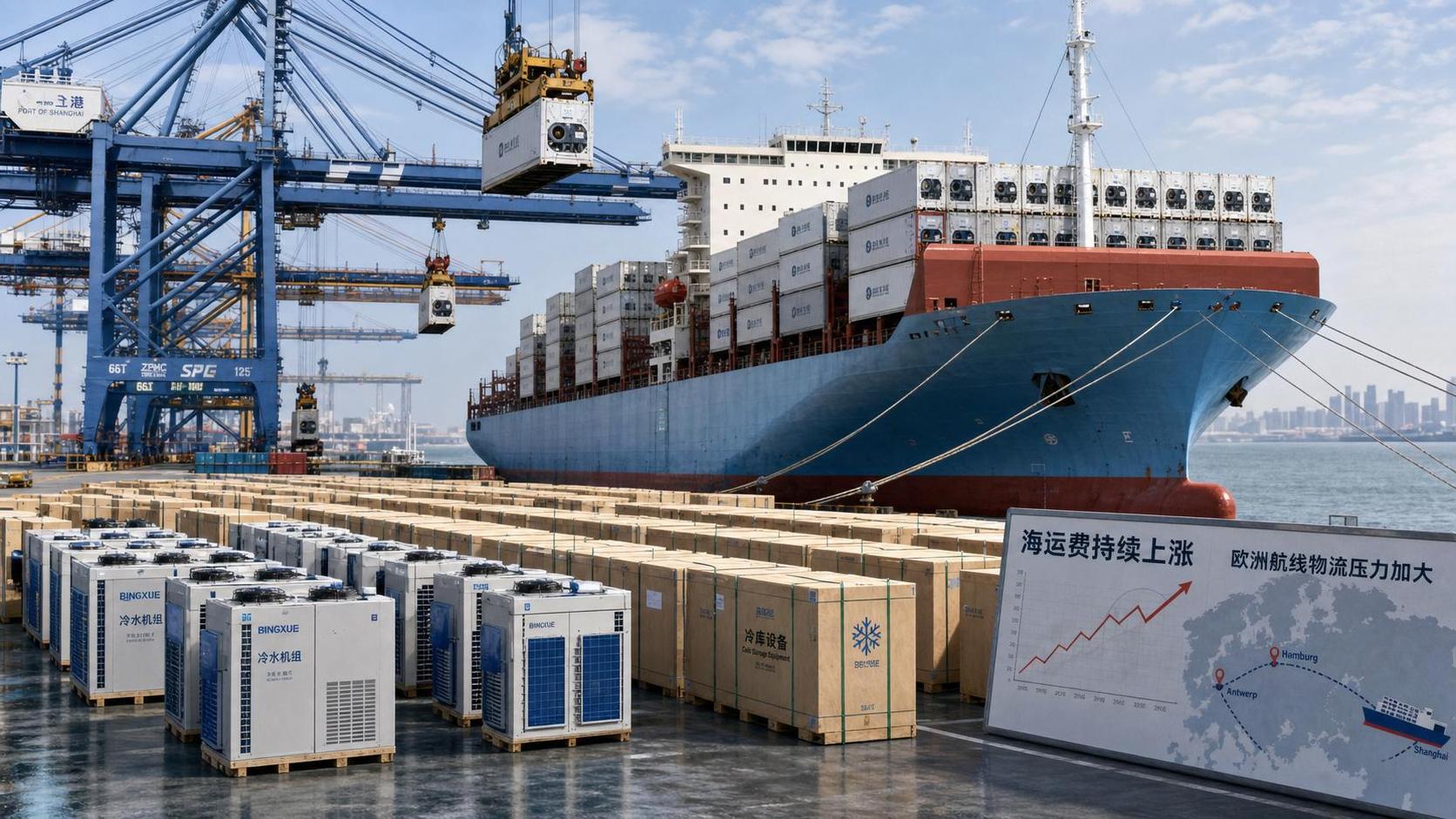
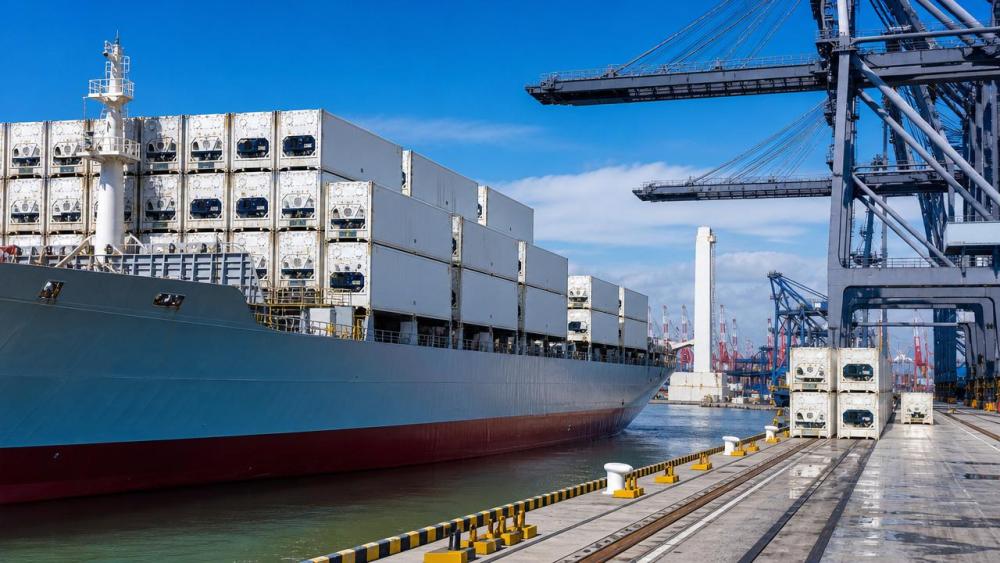
Red Sea shipping disruptions — driven by sustained Houthi attacks — have intensified supply chain pressures on refrigerated container logistics. According to the Shanghai Shipping Exchange’s data released on May 14, 2026, the spot rate for Industrial Chillers-dedicated reefer FEUs from Shanghai to Rotterdam/Hamburg has surged to $13,200, while average booking-to-departure lead time has extended to 28 days. These developments are now prompting urgent contingency actions among European and U.S. importers — particularly those reliant on temperature-sensitive goods — making cold-chain logistics, pharmaceuticals, perishable food, and high-value industrial components key sectors to monitor closely.
Event Overview
On May 14, 2026, the Shanghai Shipping Exchange reported that the proportion of Asia–Europe container vessels rerouting via the Cape of Good Hope had risen to 89%, due to persistent Houthi militant activity in the Red Sea. As a result, the spot freight rate for reefer FEUs (specifically designated for Industrial Chillers equipment) from Shanghai Port to Rotterdam or Hamburg reached $13,200 — a 41% increase over the April 2026 monthly average. Concurrently, enhanced port inspections have lengthened the average time from booking confirmation to vessel departure by an additional 12 days, bringing the total cycle to 28 days.
Which Sub-Sectors Are Affected
Direct Trading Enterprises
Importers and exporters handling temperature-controlled cargo — especially those moving Industrial Chillers units or related HVACR systems — face immediate cost inflation and delivery uncertainty. The $13,200/FEU rate directly raises landed costs, compressing margins unless pricing adjustments are negotiated with end buyers.
Raw Material Procurement Entities
Firms sourcing critical components (e.g., compressors, control boards, refrigerant valves) from China for assembly in Europe or North America encounter extended lead times and higher inbound logistics costs. Delays compound inventory planning risks, especially where just-in-time procurement models remain in place.
Manufacturing Enterprises
Original Equipment Manufacturers (OEMs) integrating Industrial Chillers into larger systems — such as data center cooling infrastructure or medical imaging equipment — may experience production line slowdowns if component shipments miss scheduled windows. Extended 28-day cycles challenge master scheduling accuracy and increase working capital requirements.
Distribution & Channel Operators
Wholesalers and regional distributors serving commercial refrigeration markets face stockout risks and pressure to maintain service levels amid unpredictable replenishment. With lead times now exceeding four weeks, safety stock thresholds require recalibration — particularly for high-turnover spare parts or seasonal demand items.
Supply Chain Service Providers
Third-party logistics (3PL) providers, customs brokers, and cold-chain monitoring vendors are seeing increased demand for real-time shipment visibility, documentation support, and contingency routing advice. However, capacity constraints on alternative routes and limited reefer unit availability constrain service scalability.
What Relevant Enterprises or Practitioners Should Monitor and Do Now
Track official advisories and carrier announcements on route stability
Monitor updates from the International Maritime Organization (IMO), European Union Maritime Safety Agency (EMSA), and major carriers (e.g., Maersk, MSC, CMA CGM) regarding Red Sea transit risk assessments and potential resumption timelines — not just media reports.
Reassess priority SKUs and destination markets for dual-sourcing feasibility
Identify which Industrial Chillers-related products or components are most exposed to Shanghai-origin reefer FEU delays — then evaluate whether parallel sourcing from Southeast Asia or regional manufacturing hubs can reduce dependency on this single lane.
Validate actual port clearance timelines at origin and destination
Confirm whether the 28-day booking-to-departure window reflects Shanghai Port processing alone, or includes inland transport and EU destination customs clearance — as discrepancies here affect inventory deployment strategy and customer communication timing.
Update internal logistics costing models with current reefer FEU benchmarks
Replace legacy $9,300–$10,500/FEU assumptions with the $13,200 benchmark in short-term financial forecasting and quotation templates — particularly for contracts with fixed freight terms or Incoterms® requiring seller-arranged transport (e.g., CIF, DAP).
Editorial Perspective / Industry Observation
Observably, this surge is less a temporary spike and more a structural stress test of global reefer capacity under geopolitical strain. Analysis shows that the 89% rerouting rate — combined with limited reefer FEU availability and heightened inspection protocols — indicates constrained elasticity in cold-chain infrastructure. From an industry perspective, the $13,200 rate is better understood as a signal of tightening supply rather than isolated price volatility: it reflects scarcity of both vessel space and specialized equipment, not merely fuel or bunker surcharges. Current conditions warrant ongoing tracking not only for freight cost impact, but also for cascading effects on cold-chain reliability metrics — including temperature excursions, dwell-time variability, and documentation error rates.
Red Sea disruption is no longer a peripheral risk for temperature-sensitive supply chains — it has become a primary determinant of cost, timing, and resilience planning for firms operating across HVACR, life sciences, and precision industrial equipment sectors. This development does not indicate a short-term anomaly, but rather highlights a recalibration point: cold-chain logistics must now be treated as a strategic capability, not a transactional service. Stakeholders should prioritize operational transparency over cost minimization and treat extended lead times not as exceptions, but as new baseline parameters for planning.
Source: Shanghai Shipping Exchange (data published May 14, 2026). Note: Ongoing observation is required for updates on Houthi activity intensity, carrier rerouting percentages, and official guidance from EU/US maritime authorities.
Related News
- EPA Rule Takes Effect for R-410A Equipment ImportsAuthor :Cryogenic Systems Expert

- EN 378-1:2026 Tightens EU Export ChecksAuthor :Cryogenic Systems Expert

- How to Compare Semiconductor Cooling Solutions by Heat Load and Uptime RiskAuthor :Cryogenic Systems Expert

- EU Label Deadline Hits China Chiller ExportsAuthor :Cryogenic Systems Expert

- How Smart Thermal Systems Improve Industrial Cooling EfficiencyAuthor :Cryogenic Systems Expert

- How to Choose Process Cooling Equipment for Stable Temperature ControlAuthor :Cryogenic Systems Expert

- EU Finalizes 2026 HFC Quota Cut for R-134a ChillersAuthor :Cryogenic Systems Expert

- EU Tightens HFC-134a Quotas for Industrial ChillersAuthor :Cryogenic Systems Expert

- REACH SVHC Update Pressures HFC-134a Chiller Supply ChainsAuthor :Cryogenic Systems Expert

- EU PFAS Coolant Ban Reshapes Chiller ExportsAuthor :Cryogenic Systems Expert

- EU REACH Restricts PFAS Cooling Media ImportsAuthor :Cryogenic Systems Expert

- EU Ecodesign Rule Takes Effect for Industrial ChillersAuthor :Cryogenic Systems Expert

- EU REACH Rule Takes Effect for PFAS in Industrial Cooling ExportsAuthor :Cryogenic Systems Expert

- Industrial Cooling for Plastic Processing: How to Size for Stable Cycle TimesAuthor :Cryogenic Systems Expert

- EU F-Gas Update Bars R404A/R507 in Commercial CoolingAuthor :Cryogenic Systems Expert

- DOE Raises Chiller Efficiency Standard From October 2026Author :Cryogenic Systems Expert

- India Mandates BIS Energy Certification for Industrial ChillersAuthor :Cryogenic Systems Expert

- Energy-Efficient Heat Exchange for Process Cooling: Cost vs PaybackAuthor :Cryogenic Systems Expert

- EPA R-134a Import Ban Takes Effect on July 13, 2026Author :Cryogenic Systems Expert

- India BIS Rule Takes Effect for Industrial ChillersAuthor :Cryogenic Systems Expert

- EPA Cuts R134a Import Quotas 20% From July 10Author :Cryogenic Systems Expert

- How to Compare Energy-Efficient Cooling Systems for Factory Expansion ProjectsAuthor :Cryogenic Systems Expert

- Chiller Price Index Rises 11.3% in Q2Author :Cryogenic Systems Expert

- Saudi SASO Tightens Chiller Import Compliance From July 10Author :Cryogenic Systems Expert

- Dubai Opens Fast-Track Chiller TendersAuthor :Cryogenic Systems Expert

- Japan Raises Chiller COP Floor to 6.2 From Sept. 1Author :Cryogenic Systems Expert
![]()
- Compact Thermal Management in Smart Devices: Common Failure RisksAuthor :Cryogenic Systems Expert

- Thermal Management for Batteries: Cooling Methods ComparedAuthor :Cryogenic Systems Expert

- How Compact Thermal Design Extends Smart Device UptimeAuthor :Cryogenic Systems Expert

- Shanghai-Rotterdam Reefer Rates Jump 37% in a WeekAuthor :Cryogenic Systems Expert

- Process Cooling Equipment Low Maintenance: What Cuts Downtime Over 5 Years?Author :Cryogenic Systems Expert

- Semiconductor Cooling Solutions: Which Design Works Best for High-Density Tools?Author :Cryogenic Systems Expert

- Semiconductor Thermal Management Systems: Preventing Yield Loss from Heat DriftAuthor :Cryogenic Systems Expert

- EPA Clears R-1234ze(E) for Industrial ChillersAuthor :Cryogenic Systems Expert
 for Industrial Chillers")
- DOE Raises Chiller IEER Floor to 12.8 From Oct. 2026Author :Cryogenic Systems Expert

- Singapore Refrigeration Show Adds Green Compliance HubAuthor :Cryogenic Systems Expert