Thermodynamics Analysis for More Stable Chiller Performance




For technical evaluators, thermodynamics analysis is essential to achieving more stable chiller performance under changing loads, ambient conditions, and energy constraints. By examining heat transfer, compression efficiency, refrigerant behavior, and system balance, this article highlights how data-driven assessment can reduce instability, improve operating reliability, and support smarter decisions in industrial cooling environments.
Why does thermodynamics analysis matter when chiller stability becomes a procurement risk?
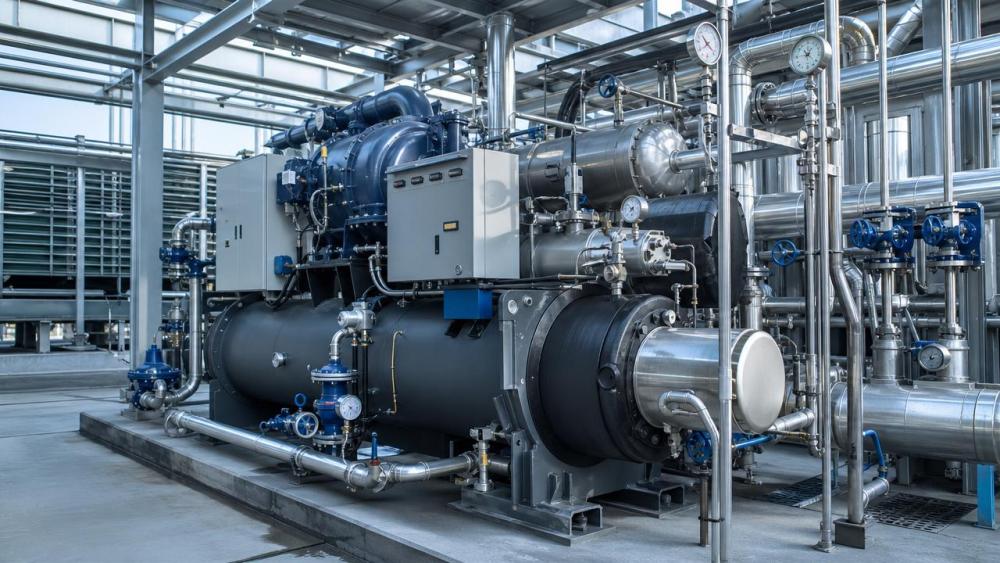
In industrial cooling, unstable chiller performance rarely starts as a single mechanical problem. It usually appears as a thermodynamic imbalance between load demand, refrigerant circulation, compressor response, heat exchanger effectiveness, and control logic.
For technical evaluators, this creates a difficult situation. A system may pass a nominal capacity check, yet still suffer from short cycling, poor leaving water temperature control, elevated power draw, or reduced reliability during seasonal transitions.
That is why thermodynamics analysis should be treated as a decision tool rather than a purely academic exercise. It reveals whether a chiller can remain stable when real operating conditions move away from rated test points.
Within the broader industrial landscape, GTC-Matrix brings value by connecting technical performance, energy market signals, refrigerant policy trends, and equipment evolution. This makes thermodynamics analysis more actionable for evaluators who must balance engineering rigor with budget, compliance, and delivery pressure.
- It helps identify whether instability is caused by undersized heat transfer surfaces, poor compressor part-load behavior, refrigerant control issues, or system-side flow mismatch.
- It supports cross-functional evaluation between procurement, plant engineering, utilities management, and sustainability teams.
- It reduces the risk of selecting equipment that looks efficient on paper but performs inconsistently under plant-specific duty cycles.
What should technical evaluators measure in a thermodynamics analysis?
A useful thermodynamics analysis starts with measurable variables. Technical evaluators should focus on the parameters that explain energy conversion, heat rejection, compression work, and system balance under both design and off-design conditions.
The goal is not to collect every data point available. The goal is to identify the variables that most strongly affect stability, especially during load variation, ambient swings, startup events, and partial-capacity operation.
The following table summarizes the core variables that should be reviewed during thermodynamics analysis for chiller stability.
A disciplined review of these variables gives evaluators a better basis for comparing suppliers, reviewing factory test claims, and anticipating operational risk across different production environments.
Key data sources to request before approval
- Performance maps at multiple ambient conditions, not only a single rating point.
- Part-load efficiency curves and unloading logic for compressors or variable-speed drives.
- Heat exchanger design assumptions, including fouling factors and approach temperatures.
- Control sequence narratives showing how the unit reacts to low load, high lift, and sudden return water temperature changes.
Which operating scenarios most often destabilize chillers?
Thermodynamics analysis is most valuable when applied to real scenarios rather than ideal design conditions. Many chillers are stable at full load but become unpredictable when the plant operates far below nameplate capacity or when environmental conditions shift quickly.
Partial load and cycling conditions
Low load operation can produce unstable suction conditions, insufficient evaporator loading, and frequent compressor starts and stops. In many facilities, this matters more than full-load performance because the annual operating profile is heavily weighted toward part-load hours.
High ambient and weak heat rejection
When condenser-side conditions deteriorate, condensing temperature rises and compressor lift increases. The result can be reduced capacity, higher motor stress, and unstable control response, especially in air-cooled systems exposed to hot climates or recirculating air.
Process load swings in precision industries
Pharmaceutical, semiconductor, food, and specialty manufacturing sites often need tight temperature control despite rapid process variation. In these settings, thermodynamics analysis helps determine whether a chiller can maintain stable leaving water temperature without hunting or overshoot.
The scenario matrix below helps technical evaluators connect operating conditions with the thermodynamic risks that matter most.
This scenario-based thermodynamics analysis is especially helpful for evaluators working across diverse industrial sites, where utility quality, climate exposure, and process discipline vary significantly from one plant to another.
How to compare chiller solutions beyond nameplate efficiency
A common procurement mistake is to compare chillers only by nominal COP, kW per ton, or rated cooling capacity. Those numbers matter, but they do not explain how stable the system will be across the full operating envelope.
Thermodynamics analysis adds depth to comparison. It asks how each configuration behaves when condenser temperatures rise, evaporator loads drop, or refrigerant control becomes more demanding.
Comparison points that often change the decision
- Part-load stability may be more valuable than peak-load efficiency if the plant seldom runs near full capacity.
- Heat exchanger design margin can justify a higher initial price when fouling risk or high ambient exposure is expected.
- Control sophistication is not a marketing feature alone. It directly affects refrigerant stability, compressor protection, and water temperature consistency.
- Refrigerant pathway and future compliance considerations can influence lifecycle risk more than first-year energy savings.
For evaluation teams using GTC-Matrix intelligence, these comparisons become more useful when tied to market context. Refrigerant transitions, energy cost volatility, and equipment technology shifts all influence the long-term meaning of thermodynamic performance data.
What should a procurement-focused thermodynamics analysis checklist include?
Technical evaluators often need a practical method to turn engineering findings into an approval decision. The best approach is a checklist that links thermodynamic risk with cost, installation constraints, and expected service conditions.
Recommended review checklist
- Confirm the real annual load profile, including lowest stable load and frequency of sudden step changes.
- Request thermodynamics analysis at multiple entering condenser and evaporator conditions, not only standard rating points.
- Check whether compressor selection matches the plant’s need for low-load stability, rapid turndown, or redundancy.
- Review the impact of refrigerant choice on efficiency, control sensitivity, service familiarity, and future environmental compliance.
- Examine fouling assumptions, water-side quality risks, and the expected maintenance interval for heat exchangers.
- Assess integration with plant controls, alarms, trend logging, and remote diagnostics for early instability detection.
Why this checklist reduces hidden cost
Instability creates costs that are often missed during bidding. These include process scrap, utility spikes, nuisance shutdowns, maintenance labor, and premature compressor wear. A procurement-oriented thermodynamics analysis brings those hidden costs into the decision before installation begins.
How do standards, refrigerant changes, and energy policy affect evaluation?
Technical evaluators are increasingly asked to look beyond immediate cooling duty. Regulatory shifts, refrigerant management requirements, and energy efficiency expectations are now part of the same decision framework.
A sound thermodynamics analysis should therefore include compliance-related questions. Even when exact local requirements differ, the evaluator should test whether the proposed system is aligned with commonly referenced frameworks and evolving refrigerant policy conditions.
Common compliance review points
- Whether the refrigerant pathway supports long-term availability and acceptable environmental positioning.
- Whether performance claims are based on recognized test conditions or transparent manufacturer data.
- Whether pressure components, electrical systems, and safety controls can align with the target market’s standard compliance process.
This is where GTC-Matrix offers strategic value. By tracking energy costs, environmentally friendly refrigerant quota changes, and technology evolution in compression and heat exchange, the platform helps evaluators interpret thermodynamics analysis in a broader business context instead of treating it as an isolated engineering report.
What are the most common mistakes in thermodynamics analysis for chiller projects?
Many unstable installations can be traced back to evaluation-stage mistakes rather than manufacturing defects. Technical evaluators can avoid these issues by challenging assumptions early and systematically.
Frequent misconceptions
- Assuming rated efficiency guarantees stable operation under real seasonal conditions.
- Ignoring condenser-side limitations while focusing only on evaporator performance.
- Treating refrigerant choice as a compliance issue only, without considering control behavior and service implications.
- Overlooking the interaction between chiller controls and plant distribution systems such as pumps, valves, and buffer tanks.
- Approving a design without reviewing minimum stable load, startup transients, and expected maintenance degradation.
When evaluators use thermodynamics analysis to test these assumptions, they improve both selection accuracy and post-installation confidence. That matters even more in multi-site industrial portfolios, where a single specification mistake can be repeated across several facilities.
FAQ: practical questions technical evaluators often ask
How do I know if thermodynamics analysis is necessary for a relatively standard chiller purchase?
If the application has variable load, seasonal ambient swings, strict temperature control, uncertain water quality, or energy cost sensitivity, thermodynamics analysis is necessary. Even standard purchases become high-risk when operating conditions are not standard.
Which matters more: full-load efficiency or part-load behavior?
For many industrial plants, part-load behavior matters more because annual runtime is often dominated by non-peak conditions. Thermodynamics analysis should quantify where the system spends most of its operating hours and how stable it remains in that range.
Can thermodynamics analysis help when comparing oil-free and conventional compression approaches?
Yes. It helps compare compression efficiency, temperature rise, part-load stability, maintenance implications, and process cleanliness requirements. This is particularly relevant in pharmaceutical, electronics, and food environments that demand precise thermal control and high utility quality.
What documents should I ask suppliers to provide?
Ask for performance maps, compressor turndown details, refrigerant control strategy, heat exchanger assumptions, control narratives, alarm logic, and any available data showing behavior under off-design conditions. These inputs make thermodynamics analysis much more reliable.
Why work with GTC-Matrix when evaluating stable chiller performance?
Stable chiller selection is no longer only about equipment capacity. It now depends on thermodynamic reasoning, refrigerant pathway awareness, compression technology trends, and the ability to interpret energy and policy signals together.
GTC-Matrix supports this need by linking industrial cooling intelligence, compressed air and vacuum insight, heat exchange evolution, and commercial demand analysis across global manufacturing sectors. For technical evaluators, that means decisions can be based on system behavior, not just brochure data.
What you can discuss with us
- Thermodynamics analysis support for unstable or difficult chiller applications.
- Parameter confirmation for load range, ambient design point, condenser conditions, and temperature control targets.
- Product selection guidance for compression type, heat exchanger direction, and refrigerant pathway.
- Discussion of delivery timing, customization boundaries, and site-specific evaluation priorities.
- Alignment on certification expectations, documentation depth, and quotation communication for industrial procurement workflows.
If your team is comparing suppliers, reviewing a retrofit, or trying to reduce instability under changing process conditions, a focused thermodynamics analysis can sharpen the decision quickly. Contact GTC-Matrix to discuss operating data, selection criteria, compliance questions, and the practical trade-offs that affect stable chiller performance in real industrial service.
Related News
- EPA Rule Takes Effect for R-410A Equipment ImportsAuthor :Cryogenic Systems Expert

- EN 378-1:2026 Tightens EU Export ChecksAuthor :Cryogenic Systems Expert

- How to Compare Semiconductor Cooling Solutions by Heat Load and Uptime RiskAuthor :Cryogenic Systems Expert

- EU Label Deadline Hits China Chiller ExportsAuthor :Cryogenic Systems Expert

- How Smart Thermal Systems Improve Industrial Cooling EfficiencyAuthor :Cryogenic Systems Expert

- How to Choose Process Cooling Equipment for Stable Temperature ControlAuthor :Cryogenic Systems Expert

- EU Finalizes 2026 HFC Quota Cut for R-134a ChillersAuthor :Cryogenic Systems Expert

- EU Tightens HFC-134a Quotas for Industrial ChillersAuthor :Cryogenic Systems Expert

- REACH SVHC Update Pressures HFC-134a Chiller Supply ChainsAuthor :Cryogenic Systems Expert

- EU PFAS Coolant Ban Reshapes Chiller ExportsAuthor :Cryogenic Systems Expert

- EU REACH Restricts PFAS Cooling Media ImportsAuthor :Cryogenic Systems Expert

- EU Ecodesign Rule Takes Effect for Industrial ChillersAuthor :Cryogenic Systems Expert

- EU REACH Rule Takes Effect for PFAS in Industrial Cooling ExportsAuthor :Cryogenic Systems Expert

- Industrial Cooling for Plastic Processing: How to Size for Stable Cycle TimesAuthor :Cryogenic Systems Expert

- EU F-Gas Update Bars R404A/R507 in Commercial CoolingAuthor :Cryogenic Systems Expert

- DOE Raises Chiller Efficiency Standard From October 2026Author :Cryogenic Systems Expert

- India Mandates BIS Energy Certification for Industrial ChillersAuthor :Cryogenic Systems Expert

- Energy-Efficient Heat Exchange for Process Cooling: Cost vs PaybackAuthor :Cryogenic Systems Expert

- EPA R-134a Import Ban Takes Effect on July 13, 2026Author :Cryogenic Systems Expert

- India BIS Rule Takes Effect for Industrial ChillersAuthor :Cryogenic Systems Expert

- EPA Cuts R134a Import Quotas 20% From July 10Author :Cryogenic Systems Expert

- How to Compare Energy-Efficient Cooling Systems for Factory Expansion ProjectsAuthor :Cryogenic Systems Expert

- Chiller Price Index Rises 11.3% in Q2Author :Cryogenic Systems Expert

- Saudi SASO Tightens Chiller Import Compliance From July 10Author :Cryogenic Systems Expert

- Dubai Opens Fast-Track Chiller TendersAuthor :Cryogenic Systems Expert

- Japan Raises Chiller COP Floor to 6.2 From Sept. 1Author :Cryogenic Systems Expert
![]()
- Compact Thermal Management in Smart Devices: Common Failure RisksAuthor :Cryogenic Systems Expert

- Thermal Management for Batteries: Cooling Methods ComparedAuthor :Cryogenic Systems Expert

- How Compact Thermal Design Extends Smart Device UptimeAuthor :Cryogenic Systems Expert

- Shanghai-Rotterdam Reefer Rates Jump 37% in a WeekAuthor :Cryogenic Systems Expert

- Process Cooling Equipment Low Maintenance: What Cuts Downtime Over 5 Years?Author :Cryogenic Systems Expert

- Semiconductor Cooling Solutions: Which Design Works Best for High-Density Tools?Author :Cryogenic Systems Expert

- Semiconductor Thermal Management Systems: Preventing Yield Loss from Heat DriftAuthor :Cryogenic Systems Expert

- EPA Clears R-1234ze(E) for Industrial ChillersAuthor :Cryogenic Systems Expert
 for Industrial Chillers")
- DOE Raises Chiller IEER Floor to 12.8 From Oct. 2026Author :Cryogenic Systems Expert

- Singapore Refrigeration Show Adds Green Compliance HubAuthor :Cryogenic Systems Expert