Industrial Cooling Solutions: Common Sizing Mistakes to Avoid




Choosing the right capacity is one of the most critical steps in industrial cooling solutions, yet sizing errors remain common and costly. From oversized equipment that wastes energy to undersized systems that risk downtime, even small miscalculations can affect performance, product quality, and operating budgets. This article highlights the most common sizing mistakes operators should avoid to improve reliability, efficiency, and long-term system value.
Why do sizing mistakes happen so often in industrial cooling solutions?
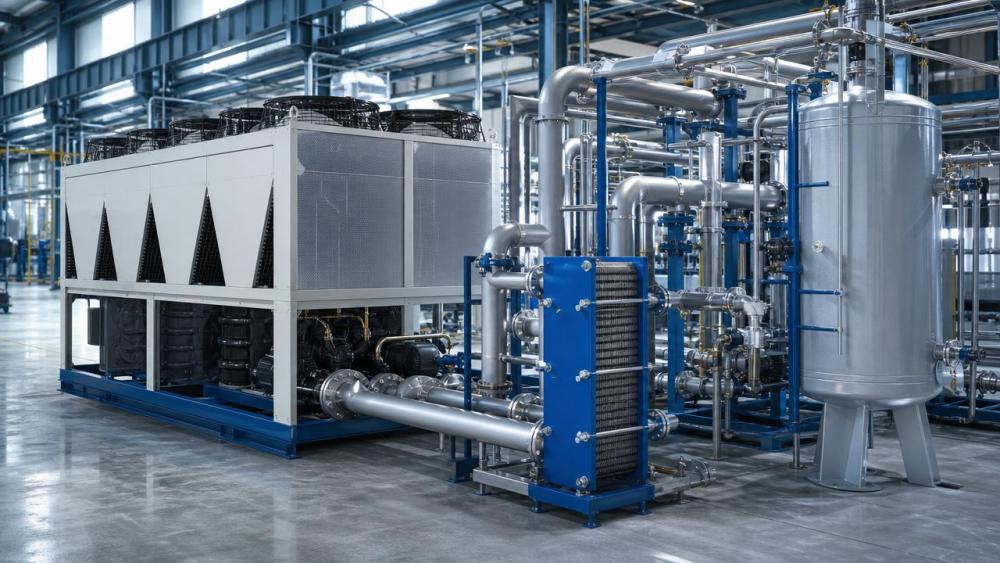
Many operators inherit legacy systems, mixed production loads, and incomplete operating data. In that environment, industrial cooling solutions are often sized by rule of thumb instead of by verified heat load, ambient conditions, process stability, and future operating range.
The problem becomes more serious in multi-process facilities. A line that runs pharmaceuticals in one shift, food ingredients in another, and packaging support equipment all day will not produce a single, stable cooling demand. Sizing based on nameplate assumptions alone can easily miss real plant behavior.
GTC-Matrix tracks how energy prices, refrigerant policy changes, oil-free compression trends, and heat exchanger design evolution are changing system selection logic. That matters because correct sizing today is not only about peak tons or kW. It is also about efficiency under part load, compliance risk, maintenance burden, and long-term operating economics.
- Historical data may be missing or unreliable, especially after line expansions or equipment retrofits.
- Operators may size for the hottest day only, ignoring how often the plant actually runs at that condition.
- Process heat gains, pump losses, and control strategy effects are frequently underestimated.
- Safety margin is often confused with oversizing, leading to poor part-load performance.
The most common sizing mistakes operators should avoid
1. Using nameplate ratings instead of real heat load
A common mistake in industrial cooling solutions is adding up motor ratings or equipment labels and treating that total as the required cooling capacity. Actual heat rejection depends on process duty cycle, simultaneous operation, insulation, fluid properties, and heat transfer losses.
For example, two machines with the same electrical rating may create very different cooling demand if one cycles intermittently and the other maintains constant thermal load. Without measured load profiles, oversizing becomes likely.
2. Ignoring peak versus average demand
Some plants size only for average load to reduce capital cost. Others size only for worst-case peak. Both approaches can be flawed. A better method balances peak protection with turndown capability, buffer volume, and control response.
If the process sees short spikes, thermal storage or variable-speed equipment may be more cost-effective than a permanently oversized chiller or cooling loop.
3. Forgetting ambient and seasonal conditions
Air-cooled systems react strongly to outdoor temperature. Water-cooled systems depend on condenser water quality, cooling tower approach, and summer wet-bulb conditions. When these factors are ignored, industrial cooling solutions may fail exactly when the plant needs them most.
Operators should verify local design conditions, not just annual averages. High altitude, dusty air, restricted ventilation, and fouling tendency also change effective capacity.
4. Overlooking fluid temperature range and delta-T
Sizing is not just about total cooling power. Entering temperature, leaving temperature, fluid flow, and allowable temperature swing all shape the result. A narrow delta-T can force higher flow rates, larger pumps, and different heat exchanger selection.
If the process actually tolerates a wider temperature band, the system may be optimized differently. If the process needs tight control, then capacity alone is not enough; response time and control stability become sizing factors too.
5. Adding too much safety margin
Reasonable design margin is good practice. Excess margin is expensive. Oversized industrial cooling solutions tend to short-cycle, run inefficiently at part load, and create unstable temperature control. They may also raise maintenance frequency because components start and stop more often than necessary.
In many facilities, a disciplined margin combined with verified future expansion assumptions delivers better long-term value than simply choosing the next larger frame size.
6. Ignoring system integration losses
Cooling equipment does not operate alone. Pipe length, pump head, valve pressure drop, fouling factors, heat gain from distribution lines, and control valve behavior all influence actual delivered performance. A well-sized unit can still look undersized after poor integration.
The table below shows how frequent sizing mistakes affect performance, cost, and operator workload in industrial cooling solutions.
These mistakes rarely stay isolated. One wrong assumption often creates another. That is why experienced operators review load data, operating window, and system integration together rather than treating equipment sizing as a one-line calculation.
How should operators size industrial cooling solutions more accurately?
Start with a practical load audit
A reliable sizing exercise begins with measured temperatures, flow rates, production schedules, and simultaneous equipment usage. If direct metering is unavailable, operators should at least build a structured estimate based on process steps, cycle times, and heat sources.
- Identify each thermal source, including process equipment, ambient heat gain, pumps, and recirculation losses.
- Separate base load from short-duration peak load.
- Confirm required supply temperature, return temperature, and allowable stability range.
- Check whether future expansion is probable, planned, or only hypothetical.
- Match equipment turndown and control logic to the real operating profile.
Evaluate process criticality, not just load size
Some applications can tolerate minor temperature drift. Others cannot. Semiconductor support systems, pharmaceutical steps, and food safety-sensitive processes often need tighter control and stronger redundancy planning than general utility cooling.
GTC-Matrix follows these sector differences closely through its commercial insights and thermodynamic analysis. That cross-industry perspective helps operators avoid treating all loads as equal when selecting industrial cooling solutions.
The following table gives a practical sizing checklist for operators comparing industrial cooling solutions across different plant conditions.
This checklist is especially useful when several departments influence the decision. Operations, maintenance, utilities, and procurement often focus on different risks. A common framework keeps capacity decisions grounded in plant reality.
Which application scenarios need extra caution?
Batch production with irregular peaks
In batch processes, average demand can look modest while short peaks are severe. If industrial cooling solutions are sized only from daily averages, operators may face unstable product temperature, longer cycle time, or failed batches during concentrated load periods.
High-purity and high-precision environments
Processes linked to clean utilities, oil-free compression support, or precise thermal stability often require tighter control and cleaner heat transfer circuits. Small sizing mistakes here may affect more than utility performance. They may compromise product consistency or downstream equipment reliability.
Facilities with future expansion plans
Expansion risk is real, but it should be quantified. Operators should distinguish between committed new lines and possible future demand. Modular design, staged capacity, or space reservation often works better than large oversizing from day one.
- If load spikes last minutes, consider buffer tanks or smarter control before buying a much larger unit.
- If a process is temperature-sensitive, prioritize stable control range over nominal peak capacity alone.
- If expansion is staged, review modular industrial cooling solutions that allow capacity additions without major shutdowns.
Cost, efficiency, and risk: what is the real price of wrong sizing?
Operators often notice the purchase price first, but total cost is driven by energy use, maintenance frequency, process disruption, and retrofit complexity. An oversized system may seem safe at purchase, yet it can silently increase annual operating cost for years.
An undersized system can be even more expensive when downtime, spoilage, thermal alarms, and emergency rentals are considered. In many industrial cooling solutions, the cheapest sizing decision on paper becomes the most expensive decision in operation.
GTC-Matrix emphasizes this broader decision view through its strategic intelligence center. Market shifts in electricity pricing, refrigerant regulations, heat exchanger technology, and decarbonization pressure all influence the true lifecycle cost of sizing choices.
What standards and technical checks should operators keep in mind?
While exact compliance requirements vary by region and industry, operators should verify that industrial cooling solutions are reviewed against applicable electrical safety rules, pressure equipment obligations, refrigerant handling practices, and plant environmental targets.
From a technical standpoint, several checks matter before approval:
- Confirm performance at the specified ambient design condition, not just at nominal rating points.
- Review expected fouling, water quality, and maintenance access for heat exchangers.
- Check control sequence for part-load operation, standby logic, and alarm response.
- Assess refrigerant strategy and future serviceability in light of policy and quota changes.
These checks reduce the risk of selecting a system that looks acceptable in quotation form but performs poorly in real service conditions.
FAQ about industrial cooling solutions and sizing
How much safety margin is reasonable?
There is no single percentage that fits every facility. The right margin depends on measurement confidence, process criticality, ambient variability, and expansion certainty. Operators should justify margin with actual risk, not habit. If uncertainty is high, staged capacity may be better than one large oversize purchase.
Are variable-speed systems always better for industrial cooling solutions?
Not always. They are often valuable where load changes significantly across shifts or seasons. However, their benefit depends on control quality, minimum stable load, and maintenance capability. In stable high-load operations, a simpler configuration may still be appropriate.
What should operators prepare before asking for a sizing review?
Prepare process temperatures, required flow rate, ambient design data, production schedule, equipment list, operating hours, and any known future expansion plan. Also include current pain points such as temperature drift, high power use, nuisance alarms, or frequent compressor cycling.
When is modular capacity better than one large unit?
Modular industrial cooling solutions are often preferable when load grows in stages, redundancy is important, or part-load efficiency matters. They can also simplify maintenance planning because one module may be serviced while others continue operating, depending on system design.
Why choose us for cooling intelligence and next-step evaluation?
GTC-Matrix helps operators and technical buyers move beyond generic sizing assumptions. Our strength is connecting thermodynamic analysis, compression system understanding, heat exchange technology trends, and industrial economics into a more practical decision basis for industrial cooling solutions.
You can consult us for support on specific topics that affect real project outcomes:
- Parameter confirmation, including load range, temperature band, flow assumptions, and ambient design conditions.
- Selection guidance for cooling architecture, modular options, redundancy logic, and part-load efficiency priorities.
- Delivery planning, especially where expansion timing, retrofit shutdown windows, or phased implementation matter.
- Discussion of refrigerant strategy, maintenance considerations, and general compliance checkpoints relevant to your market.
- Quotation communication and solution comparison based on operating risk, not just equipment price.
If your current industrial cooling solutions suffer from unstable temperature, rising energy costs, uncertain capacity planning, or conflicting vendor recommendations, a structured review can prevent expensive mistakes before purchase or retrofit. Share your operating conditions, process priorities, and project timeline to start a more accurate sizing discussion.
Related News
- US DOE Raises Chiller IEER Floor to 12.8 From 2027Author :Cryogenic Systems Expert

- EPA Clears R-1234ze(E) for Industrial ChillersAuthor :Cryogenic Systems Expert
 for Industrial Chillers")
- Precision Temperature Control Systems: How to Evaluate Stability and Response TimeAuthor :Cryogenic Systems Expert

- Vietnam Requires GB/T 18430.1-2026 Declaration for Chiller ImportsAuthor :Cryogenic Systems Expert

- How to Compare Industrial Cooling Solutions for Multi-Line PlantsAuthor :Cryogenic Systems Expert

- India BIS Tightens QR Label Rule for Industrial ChillersAuthor :Cryogenic Systems Expert

- EU Rule Takes Effect on Modular CFP Disclosure for Industrial ChillersAuthor :Cryogenic Systems Expert

- Industrial Cooling Systems: Common Failure Causes and FixesAuthor :Cryogenic Systems Expert

- EU Sets CFP Label Rules for Industrial ChillersAuthor :Cryogenic Systems Expert

- Industrial Cooling vs Chillers: Which Fit Is Better for Your Process?Author :Cryogenic Systems Expert

- Industrial Cooling Solutions: How to Cut Energy Use Without Losing CapacityAuthor :Cryogenic Systems Expert

- R32 Surge Adds 12% to Chiller Export CostsAuthor :Cryogenic Systems Expert

- Industrial Refrigeration Costs: What Impacts ROI Most in 2026Author :Cryogenic Systems Expert

- Thermodynamics Analysis for Choosing the Right Refrigeration SystemAuthor :Cryogenic Systems Expert

- How Microchannel Heat Exchangers Improve Industrial Refrigeration EfficiencyAuthor :Cryogenic Systems Expert

- R32 Price Tops RMB 65,000/Ton as Chiller Export Costs RiseAuthor :Cryogenic Systems Expert

- R32 Holds at RMB 63,000/Ton, Chiller Export Costs Rise 8%Author :Cryogenic Systems Expert

- How to Evaluate Energy Efficiency in Industrial Cooling SystemsAuthor :Cryogenic Systems Expert

- R32 at RMB 63,200/t Pushes Chiller Export Costs HigherAuthor :Cryogenic Systems Expert

- EPA Extends R410A Import Relief Into Q2 2027Author :Cryogenic Systems Expert

- Industrial Refrigeration Costs: What Drives Energy Use in 2026Author :Cryogenic Systems Expert

- R32 at CNY 62,500/Tightens Chiller Export CostsAuthor :Cryogenic Systems Expert

- HFC-32 Hits RMB 62,500/Ton, Raising Export PressureAuthor :Cryogenic Systems Expert

- Industrial Refrigeration vs Chillers: Which Fits Your Load Profile?Author :Cryogenic Systems Expert

- R32 Price Spike Pressures Air-Cooled Chiller ExportsAuthor :Cryogenic Systems Expert

- DOE Extends R454B Chiller Transition to Q2 2027Author :Cryogenic Systems Expert

- Vietnam Mandates VEE Labels for Imported ChillersAuthor :Cryogenic Systems Expert

- EU REACH Adds 3 Refrigerant Curbs, Tightening the R134a Import WindowAuthor :Cryogenic Systems Expert

- How to Compare Industrial Cooling Solutions by Load, Space, and Energy UseAuthor :Cryogenic Systems Expert

- Horgos Rail Exports Hit Record as Refrigerant Checks TightenAuthor :Cryogenic Systems Expert

- How to Choose Industrial Cooling Solutions for High-Load FacilitiesAuthor :Cryogenic Systems Expert

- Industrial Intelligence in Cooling Systems: Key Use Cases and RisksAuthor :Cryogenic Systems Expert

- Vietnam Aligns Import Energy Labels With GB 18613-2025Author :Cryogenic Systems Expert

- DOE Finalizes 2026 Chiller Efficiency RuleAuthor :Cryogenic Systems Expert

- When High-Precision Temperature Control Is Worth the CostAuthor :Cryogenic Systems Expert

- SABIC Outage Extends Pressure on Chiller RefrigerantsAuthor :Cryogenic Systems Expert