Thermodynamics Analysis for Chiller Performance Troubleshooting




For after-sales maintenance teams, thermodynamics analysis is one of the fastest ways to move from symptoms to root cause in chiller troubleshooting.
Instead of replacing parts by guesswork, technicians can read pressure, temperature, superheat, subcooling, and approach values as a connected story.
That story reveals whether the problem is refrigerant charge, fouling, airflow, water flow, compressor efficiency, expansion valve control, or sensor error.
In practice, this means fewer repeat visits, shorter downtime, and more confident service decisions when cooling becomes unstable or energy use starts climbing.
What after-sales teams really need from thermodynamics analysis
When users search for thermodynamics analysis in chiller troubleshooting, they usually do not want theory alone. They want a usable diagnostic method.
The real question is simple: how can measured operating data explain poor cooling performance without wasting hours on unnecessary disassembly or random component replacement?
For after-sales maintenance staff, the biggest concerns are accuracy, speed, and proof. They need to know what to measure, how to compare it, and what conclusions are safe.
They also need a framework that works in the field, where operating conditions vary, historical data may be incomplete, and customer pressure is often immediate.
That is why thermodynamics analysis matters. It converts scattered readings into a fault pattern and helps separate causes from effects inside a working chiller.
Why thermodynamics analysis works better than symptom-based troubleshooting
Many chiller faults create similar symptoms. High power consumption, low cooling capacity, unstable leaving water temperature, and frequent compressor cycling can come from very different causes.
If troubleshooting starts from symptoms alone, teams may replace expansion valves, sensors, contactors, or compressors without solving the actual performance problem.
Thermodynamics analysis improves this process because every chiller follows energy balance, mass flow relationships, and heat transfer limits, even when the controls seem confusing.
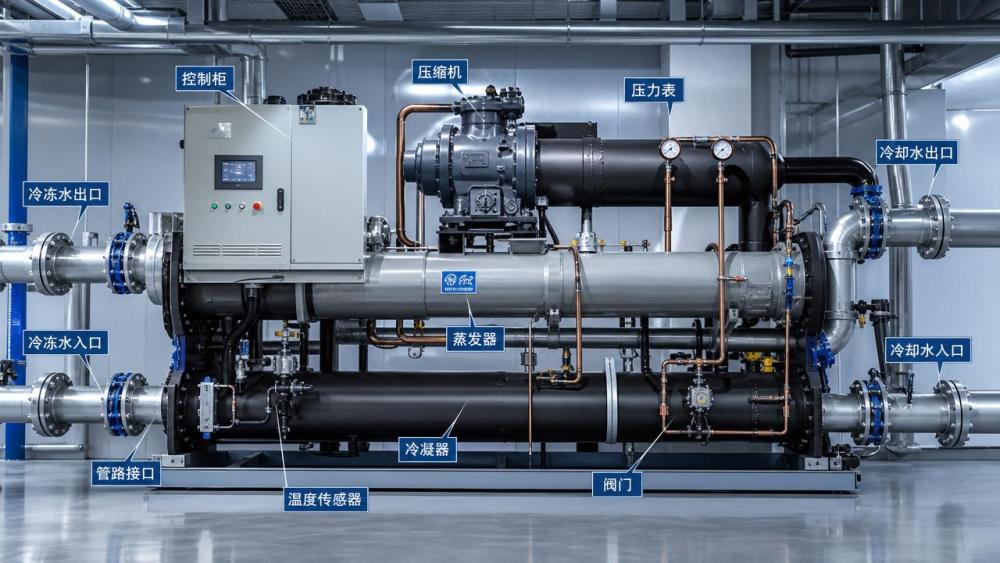
By checking evaporating conditions, condensing conditions, compressor behavior, and fluid-side heat exchange together, technicians can see where performance is being lost.
This approach is especially useful in systems where electrical components are working normally, yet the machine still cannot deliver design cooling or expected efficiency.
Start with the field question that matters most: capacity loss or efficiency loss
Before diving into detailed calculations, separate the problem into two categories: the chiller is not producing enough cooling, or it is producing cooling inefficiently.
Sometimes both issues happen together, but the distinction helps prioritize measurements and prevents confusion when service data appears contradictory.
If the customer reports inadequate cooling, examine evaporator performance first. If the complaint is high energy cost, focus first on condensing conditions and compressor work.
This simple distinction guides the entire troubleshooting path. It also makes communication with the customer easier because the diagnosis follows the actual business impact.
Which operating data should be collected before making any judgment
Good thermodynamics analysis depends on complete and reliable data. Incomplete readings often lead to false conclusions, especially in variable-load chiller operation.
At minimum, record suction pressure, discharge pressure, suction temperature, discharge temperature, liquid line temperature, chilled water inlet and outlet temperatures, and condenser water or air temperatures.
Also record compressor current, voltage, control setpoints, valve positions if available, pump or fan status, and ambient conditions during the test period.
Whenever possible, compare actual values with design values, commissioning reports, or previous stable operating records from the same unit.
One of the most common field mistakes is taking a few readings after a short run period. Systems need enough time to stabilize before the data is meaningful.
How to read the evaporator side when cooling is weak
If cooling capacity is falling, the evaporator is often the first place where thermodynamics analysis reveals the real constraint.
Look at evaporating temperature relative to the chilled water leaving temperature. If the approach becomes too large, heat transfer may be restricted.
Possible causes include tube fouling, low water flow, poor air distribution in air-cooled evaporators, ice formation, or a starved evaporator due to refrigerant feed problems.
Superheat is a key clue here. Excessively high superheat often suggests underfeeding, which can result from low charge, a restricted liquid line, or expansion valve malfunction.
Very low superheat can point toward overfeeding, unstable valve control, or sensor and bulb placement issues, depending on the chiller design.
If suction pressure is low and superheat is high, the evaporator is usually not receiving enough refrigerant to absorb heat effectively.
If suction pressure is normal but water temperature reduction is poor, check water flow, fouling, bypass conditions, or load-side control logic before blaming the refrigerant circuit.
How to read the condenser side when power use rises
When customers complain that the chiller still cools but uses much more electricity, the condenser side often tells the story faster than the evaporator side.
High condensing pressure increases compressor lift and raises power demand. The compressor works harder even if the cooling output appears acceptable for a while.
Common reasons include dirty condenser tubes, scaled plates, failed condenser fans, poor airflow recirculation, inadequate cooling tower performance, or high entering condenser water temperature.
Subcooling helps refine the diagnosis. High head pressure with normal or high subcooling may indicate heat rejection problems rather than a simple undercharge condition.
If head pressure is high and subcooling is low, investigate whether flashing in the liquid line, poor refrigerant distribution, or charge issues are reducing liquid quality.
A rising condenser approach over time is a strong sign of fouling or degraded external heat rejection, especially when refrigerant-side conditions remain otherwise stable.
What compressor thermodynamics can reveal beyond electrical checks
Many maintenance teams confirm that a compressor starts, draws current, and responds to controls, then assume it is performing correctly. That assumption can be costly.
Thermodynamics analysis can show whether the compressor is actually moving mass flow and creating pressure ratio efficiently.
Discharge temperature is one of the most useful indicators. Abnormally high discharge temperature may point to high compression ratio, insufficient suction gas cooling, underfeeding, or internal wear.
Low capacity with poor pressure differential may suggest valve leakage, worn internal components, slide valve issues, or other efficiency losses inside the compressor.
On screw chillers, part-load control behavior should be matched against expected thermodynamic response. If load decreases but power does not drop proportionally, internal inefficiency may be present.
Electrical data alone cannot tell this full story. Thermodynamic patterns provide the missing context needed to decide whether repair or replacement is justified.
How to distinguish refrigerant charge problems from heat transfer problems
This is one of the most valuable uses of thermodynamics analysis because charge problems and heat transfer problems are frequently confused in the field.
Low refrigerant charge often appears as low suction pressure, high superheat, and low subcooling, along with reduced evaporator utilization.
By contrast, condenser fouling usually drives high head pressure and poor efficiency, often with normal or elevated subcooling depending on the system condition.
Evaporator fouling may produce poor chilled water performance and a widened approach, while refrigerant-side readings can appear less dramatic than expected.
Restricted liquid lines, clogged filters, or malfunctioning expansion devices can imitate undercharge, so the full pressure-temperature relationship must be checked before adding refrigerant.
Adding charge without confirming the diagnosis is a common after-sales error. It may temporarily mask symptoms while creating a worse condition at higher load.
A practical troubleshooting sequence for after-sales technicians
First, confirm the customer complaint and operating mode. A unit in pull-down, standby transition, or low-load protection mode may not reflect steady-state behavior.
Second, verify sensors and gauges. Thermodynamics analysis is only as good as the data, and sensor drift causes many false diagnoses.
Third, collect full system readings after stabilization. Record both refrigerant-side and water-side or air-side values, not just compressor pressures.
Fourth, calculate or estimate superheat, subcooling, evaporator approach, condenser approach, and temperature differentials across the load and heat rejection circuits.
Fifth, compare the pattern against likely fault groups: undercharge, overcharge, airflow restriction, low water flow, fouling, expansion valve issues, compressor inefficiency, or control instability.
Finally, confirm the suspected root cause with one targeted inspection or corrective action, then remeasure performance to verify that the thermodynamic signature has improved.
Common mistakes that reduce the value of thermodynamics analysis
The first mistake is treating one abnormal reading as a complete diagnosis. Chillers must be judged by relationships, not isolated numbers.
The second mistake is ignoring load conditions. A chiller at 35 percent load will not behave like the same machine near design load.
The third mistake is trusting inaccurate sensors. If pressure transducers or temperature probes are drifting, every later conclusion becomes questionable.
The fourth mistake is overlooking the fluid side. Water flow problems and airside heat rejection failures often look like refrigerant problems at first glance.
The fifth mistake is skipping trend analysis. A machine that slowly loses efficiency over months usually points to fouling, leakage, or control drift rather than sudden component failure.
Why this method matters for service quality and customer trust
For after-sales organizations, better troubleshooting is not only technical. It directly affects callback rates, spare parts cost, response time, and customer confidence.
When technicians can explain a fault using thermodynamic evidence, customers are more likely to approve the right repair instead of the cheapest guess.
This matters especially in pharmaceutical, food, electronics, and process industries, where unstable temperature control can affect product quality and production continuity.
A structured thermodynamics analysis process also improves internal training because junior technicians learn to reason from system behavior, not only from fault codes.
Over time, this creates a more consistent service standard across teams, sites, and equipment brands.
Conclusion: turn chiller data into decisions, not assumptions
Thermodynamics analysis is valuable because it translates chiller behavior into a practical maintenance language: where is energy being lost, and why?
For after-sales maintenance teams, that means faster diagnosis, fewer unnecessary parts changes, and stronger confidence in root-cause troubleshooting.
The most effective approach is not complicated. Gather stable operating data, read the pressure-temperature relationships, evaluate heat transfer on both sides, and confirm the pattern logically.
When used consistently, thermodynamics analysis becomes more than a technical concept. It becomes a dependable service tool for restoring chiller performance with accuracy and speed.
Related News
- How Smart Thermal Systems Improve Industrial Cooling EfficiencyAuthor :Cryogenic Systems Expert

- How to Choose Process Cooling Equipment for Stable Temperature ControlAuthor :Cryogenic Systems Expert

- EU Finalizes 2026 HFC Quota Cut for R-134a ChillersAuthor :Cryogenic Systems Expert

- EU Tightens HFC-134a Quotas for Industrial ChillersAuthor :Cryogenic Systems Expert

- REACH SVHC Update Pressures HFC-134a Chiller Supply ChainsAuthor :Cryogenic Systems Expert

- EU PFAS Coolant Ban Reshapes Chiller ExportsAuthor :Cryogenic Systems Expert

- EU REACH Restricts PFAS Cooling Media ImportsAuthor :Cryogenic Systems Expert

- EU Ecodesign Rule Takes Effect for Industrial ChillersAuthor :Cryogenic Systems Expert

- EU REACH Rule Takes Effect for PFAS in Industrial Cooling ExportsAuthor :Cryogenic Systems Expert

- Industrial Cooling for Plastic Processing: How to Size for Stable Cycle TimesAuthor :Cryogenic Systems Expert

- EU F-Gas Update Bars R404A/R507 in Commercial CoolingAuthor :Cryogenic Systems Expert

- DOE Raises Chiller Efficiency Standard From October 2026Author :Cryogenic Systems Expert

- India Mandates BIS Energy Certification for Industrial ChillersAuthor :Cryogenic Systems Expert

- Energy-Efficient Heat Exchange for Process Cooling: Cost vs PaybackAuthor :Cryogenic Systems Expert

- EPA R-134a Import Ban Takes Effect on July 13, 2026Author :Cryogenic Systems Expert

- India BIS Rule Takes Effect for Industrial ChillersAuthor :Cryogenic Systems Expert

- EPA Cuts R134a Import Quotas 20% From July 10Author :Cryogenic Systems Expert

- How to Compare Energy-Efficient Cooling Systems for Factory Expansion ProjectsAuthor :Cryogenic Systems Expert

- Chiller Price Index Rises 11.3% in Q2Author :Cryogenic Systems Expert

- Saudi SASO Tightens Chiller Import Compliance From July 10Author :Cryogenic Systems Expert

- Dubai Opens Fast-Track Chiller TendersAuthor :Cryogenic Systems Expert

- Japan Raises Chiller COP Floor to 6.2 From Sept. 1Author :Cryogenic Systems Expert
![]()
- Compact Thermal Management in Smart Devices: Common Failure RisksAuthor :Cryogenic Systems Expert

- Thermal Management for Batteries: Cooling Methods ComparedAuthor :Cryogenic Systems Expert

- How Compact Thermal Design Extends Smart Device UptimeAuthor :Cryogenic Systems Expert

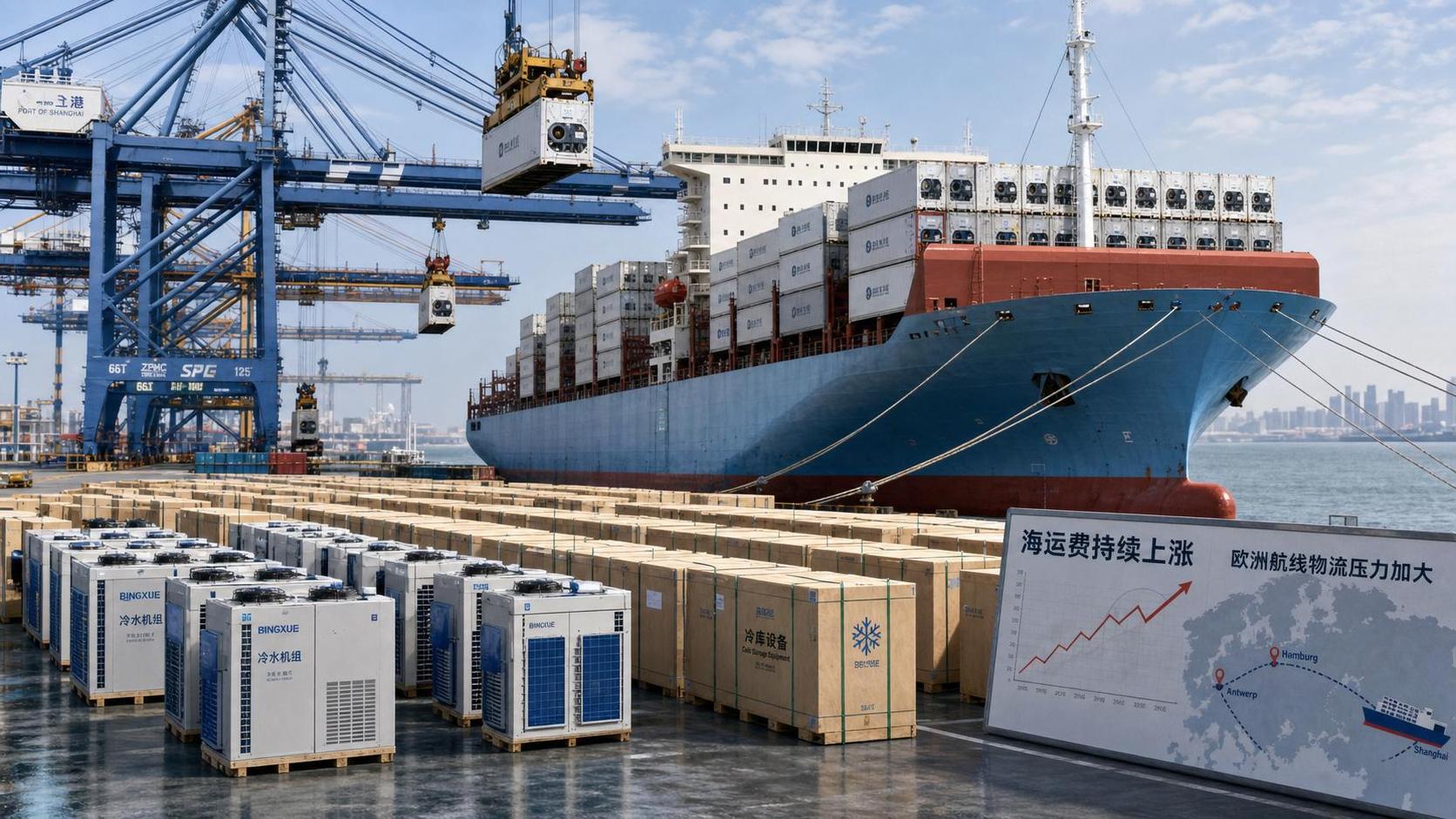
- Shanghai-Rotterdam Reefer Rates Jump 37% in a WeekAuthor :Cryogenic Systems Expert

- Process Cooling Equipment Low Maintenance: What Cuts Downtime Over 5 Years?Author :Cryogenic Systems Expert

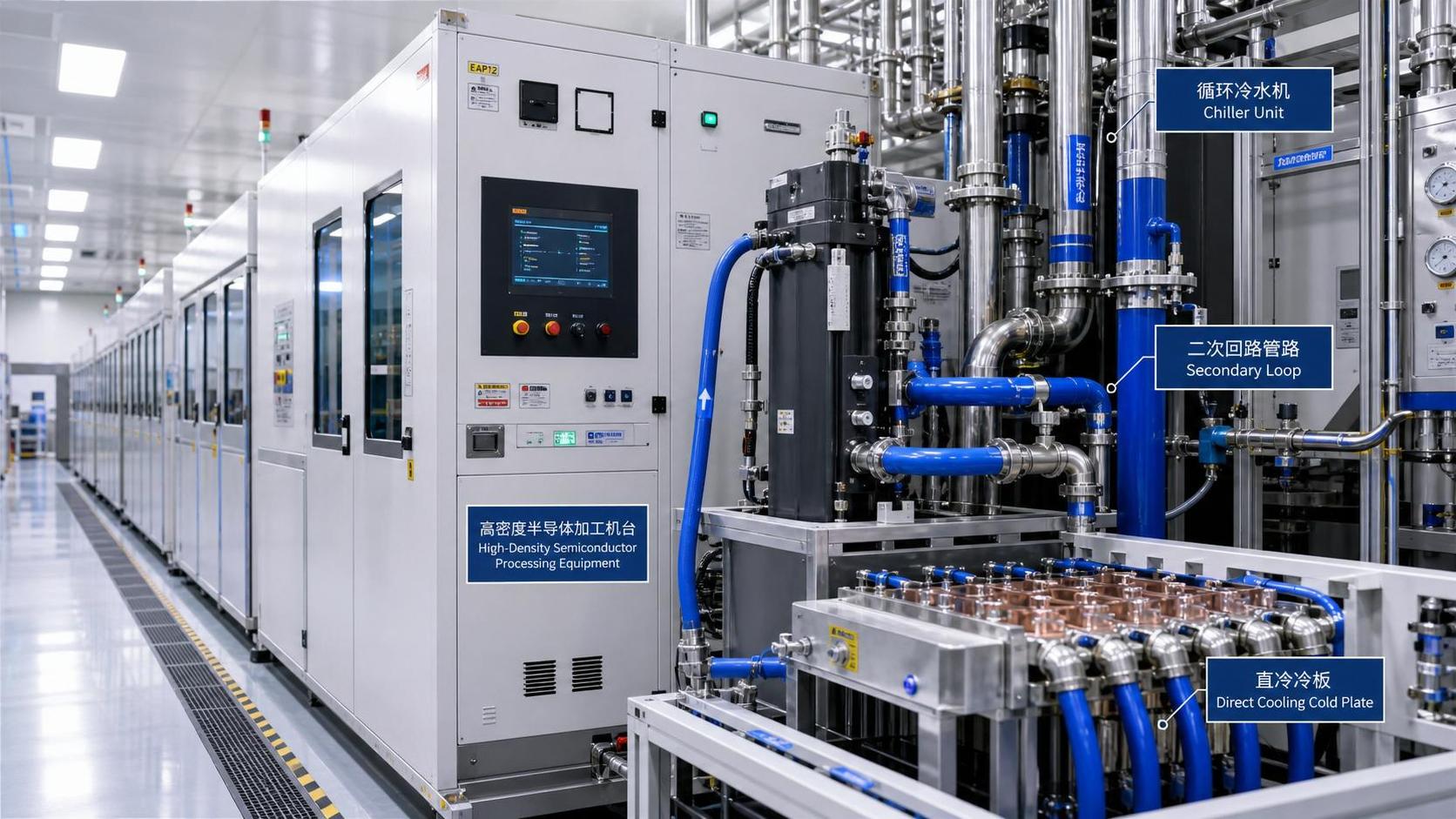
- Semiconductor Cooling Solutions: Which Design Works Best for High-Density Tools?Author :Cryogenic Systems Expert

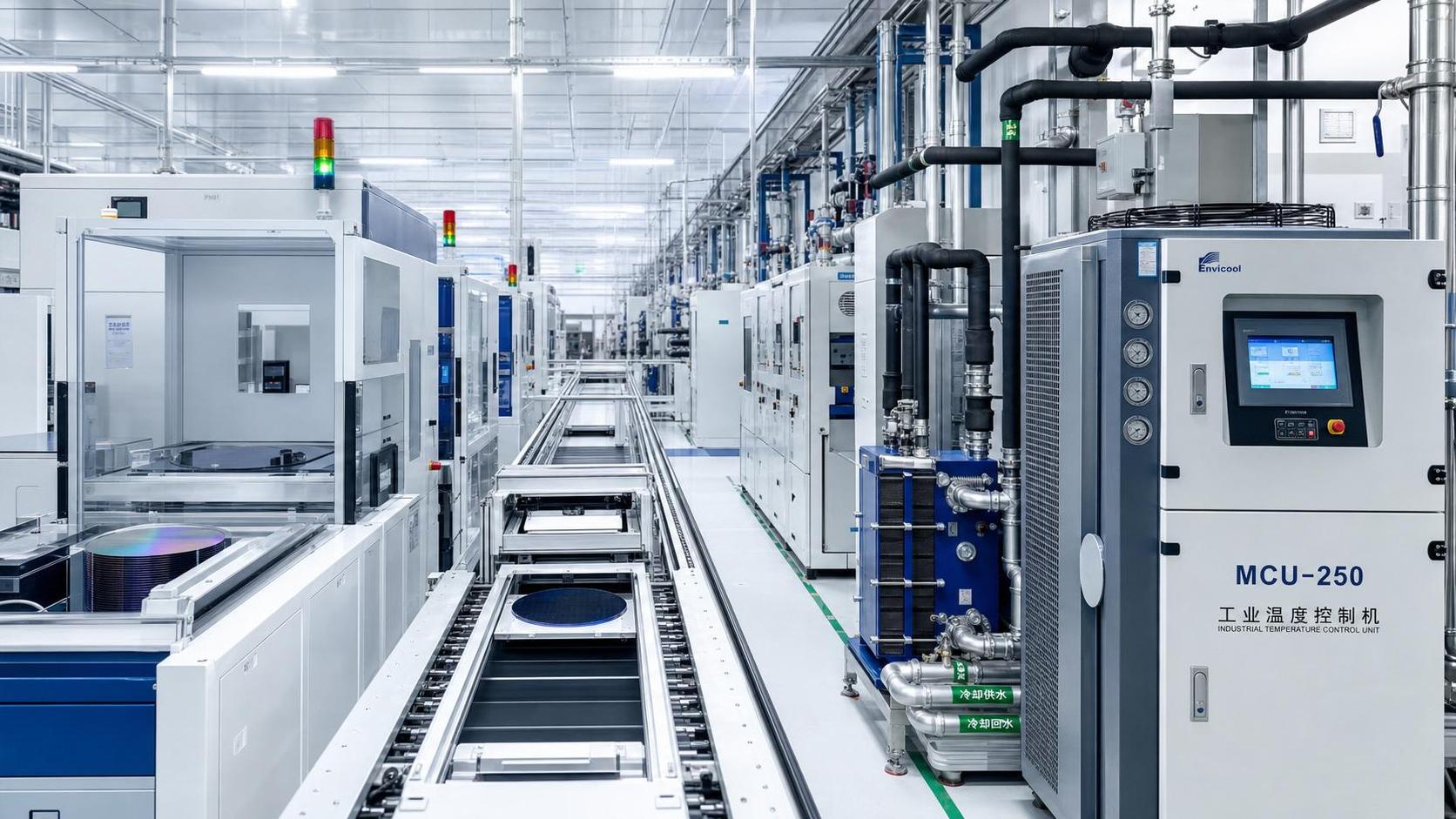
- Semiconductor Thermal Management Systems: Preventing Yield Loss from Heat DriftAuthor :Cryogenic Systems Expert

- EPA Clears R-1234ze(E) for Industrial ChillersAuthor :Cryogenic Systems Expert
 for Industrial Chillers")
- DOE Raises Chiller IEER Floor to 12.8 From Oct. 2026Author :Cryogenic Systems Expert

- Singapore Refrigeration Show Adds Green Compliance HubAuthor :Cryogenic Systems Expert

- How Food Industry Temperature Control Systems Reduce Product LossAuthor :Cryogenic Systems Expert

- EU REACH Adds 12 SVHCs, Raising Chiller Compliance RiskAuthor :Cryogenic Systems Expert

- Precision Temperature Control Air Cooling: Key Setup Mistakes That Reduce StabilityAuthor :Cryogenic Systems Expert

- India BEE Eyes APF Labels for Imported ChillersAuthor :Cryogenic Systems Expert