



Industrial Cooling Solutions for High-Load Summer Operations




As summer pushes industrial systems to their limits, choosing the right industrial cooling solutions becomes critical for uptime, energy efficiency, and project control. For project managers and engineering leaders, understanding how cooling strategies affect load stability, operating costs, and equipment reliability is essential to keeping high-load operations safe, compliant, and competitive.
In high-load seasons, cooling is no longer a background utility. It directly affects production continuity, compressed air quality, heat exchanger efficiency, product consistency, and maintenance budgets. For facilities running 16–24 hours per day, even a 2°C to 4°C rise in process temperature can trigger reduced output, nuisance shutdowns, or accelerated wear on compressors, pumps, drives, and electronic controls.
For project leaders in manufacturing, processing, logistics, pharmaceuticals, food operations, and precision industries, the best industrial cooling solutions are those that balance thermal performance with installation speed, future expansion, energy cost discipline, and operational risk control. This is also where intelligence platforms such as GTC-Matrix add value by connecting thermodynamic analysis, equipment selection logic, and real-world operating trends across global industrial environments.
Why Summer Cooling Becomes a Project-Level Risk in High-Load Operations
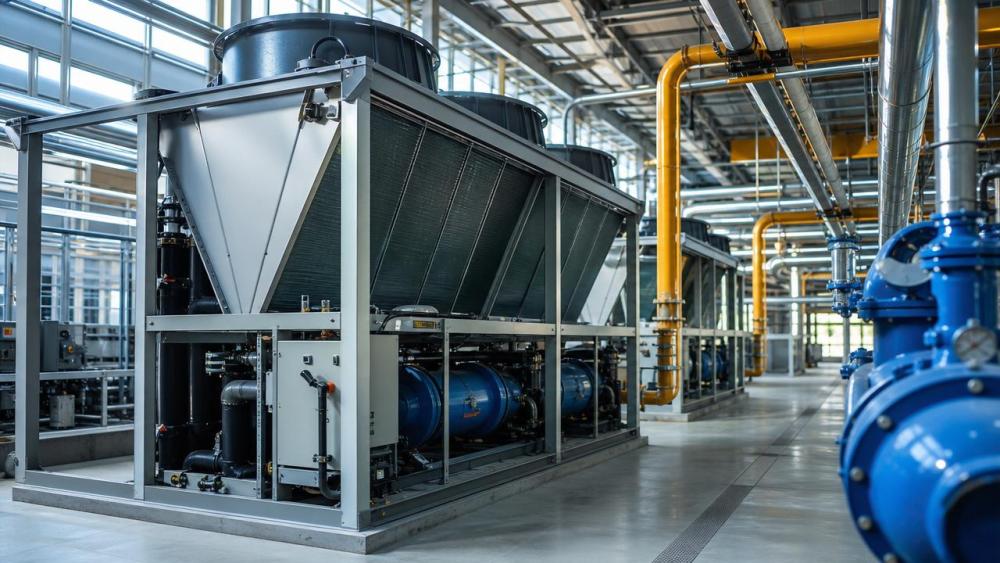
When ambient temperature climbs above 30°C, many industrial systems lose thermal margin quickly. Air-cooled condensers reject heat less efficiently, cooling towers face higher wet-bulb constraints, and enclosed production zones accumulate heat from motors, compressors, ovens, and process lines. What appears to be a seasonal issue often becomes a project delivery issue within 7–14 days of sustained heat.
Key operational impacts project managers should quantify
The first impact is uptime risk. A chiller, compressor room, or process cooling loop operating close to design capacity in spring may exceed 85%–95% load in midsummer. At that point, small fouling issues, insufficient airflow, or delayed maintenance can lead to trips and cascading process interruptions.
The second impact is energy drift. Systems that were performing well at 22°C ambient often consume noticeably more power at 35°C. Fans ramp up, pumps run longer, compressors work harder, and control systems may overcompensate. Over a 90-day summer cycle, this drift can materially change operating expenditure.
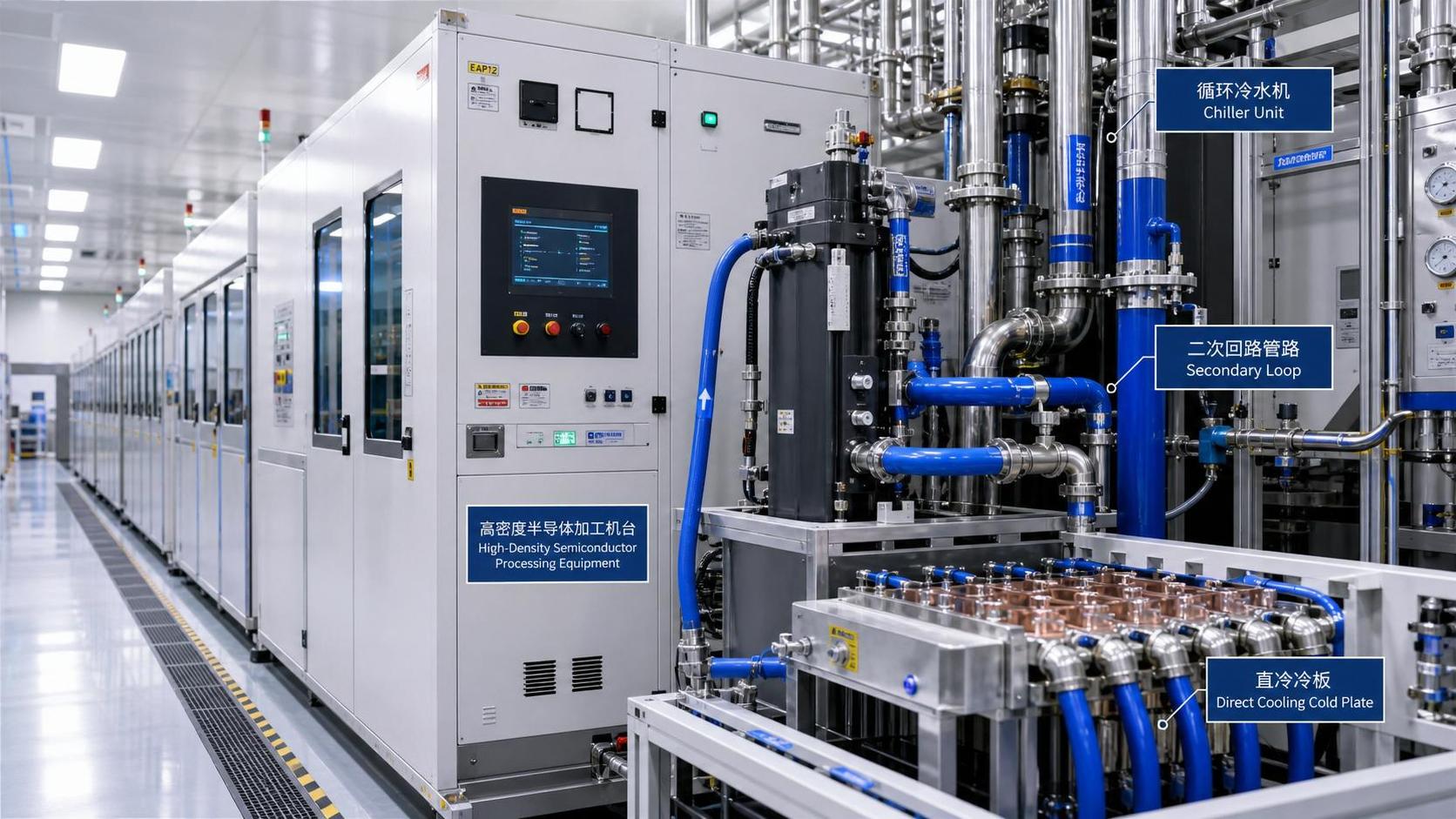
The third impact is quality and compliance. In sectors requiring tight thermal windows, such as pharmaceuticals, semiconductors, or food processing, a process deviation of 1°C to 3°C may affect yield, storage stability, cleanroom balance, or audit readiness. Industrial cooling solutions therefore need to be assessed as part of process assurance, not only utilities management.
Typical warning signs before thermal instability
- Repeated high-temperature alarms during afternoon peaks
- Compressor discharge temperatures rising beyond normal seasonal range
- Cooling water return temperature increasing by 3°C or more
- Unstable pressure in compressed air or vacuum support systems
- Production rate reductions to protect sensitive equipment
The table below helps frame summer thermal risk by system area. It is useful in early-stage planning meetings when project teams need to prioritize where industrial cooling solutions will deliver the fastest operational protection.
A useful takeaway is that cooling problems rarely stay isolated. Once one thermal bottleneck appears, the effects spread across air compression, heat rejection, power consumption, and production scheduling. Strong project planning should therefore map cooling loads by area, by time of day, and by criticality level.
How to Evaluate Industrial Cooling Solutions for Summer Load Peaks
Not every plant needs the same response. Some require temporary peak-shaving support, while others need a full redesign of process cooling architecture. The right industrial cooling solutions depend on load profile, space limitations, water availability, heat density, and how sensitive the process is to temperature fluctuation.
Four decision criteria that matter most
- Cooling capacity under real summer ambient conditions, not only nameplate conditions.
- Control accuracy required by the process, such as ±0.5°C, ±1°C, or wider tolerance.
- Energy performance at part load and peak load over 12–18 operating hours.
- Installation impact, including shutdown window, piping changes, electrical work, and commissioning time.
Common solution types
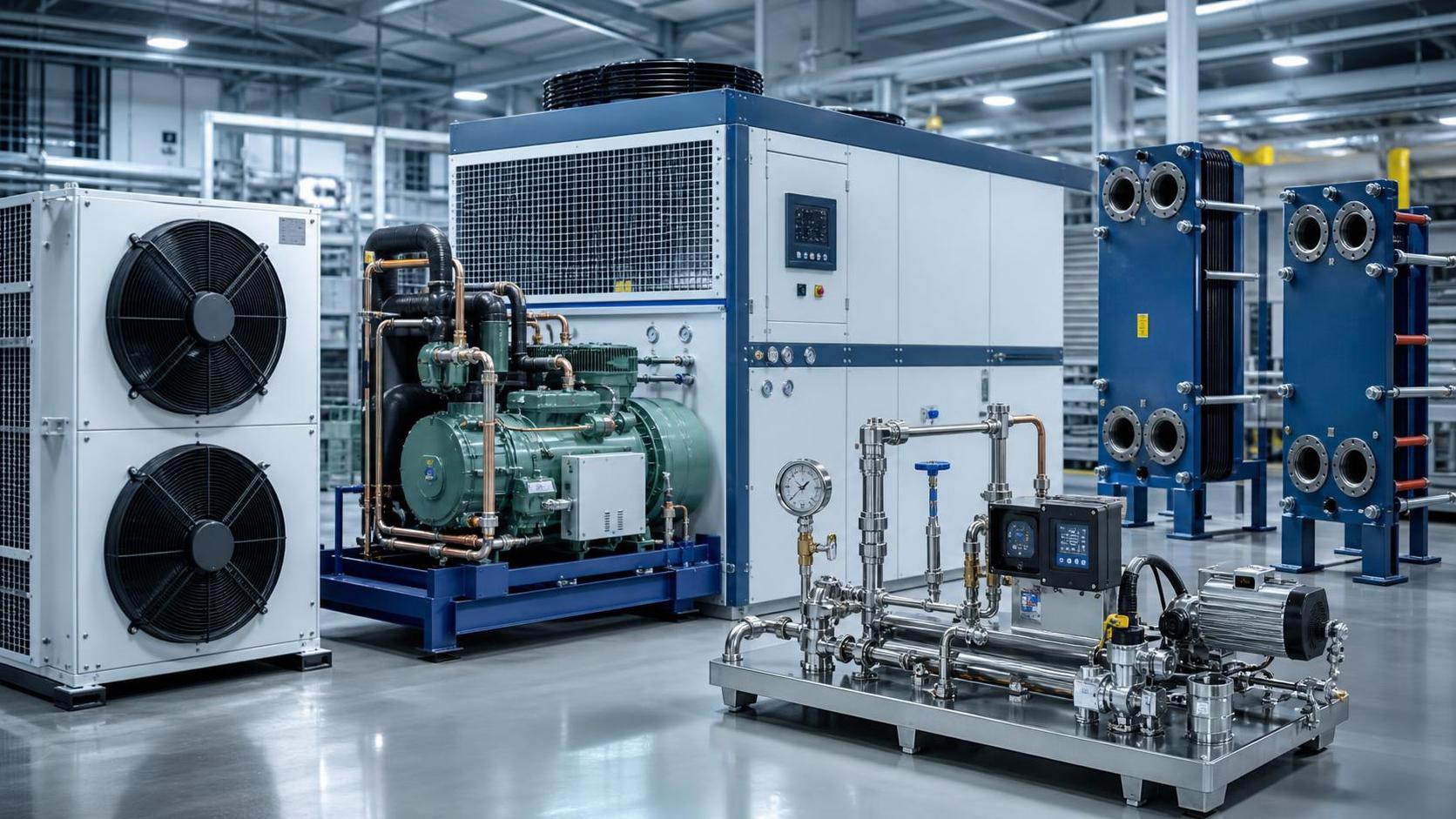
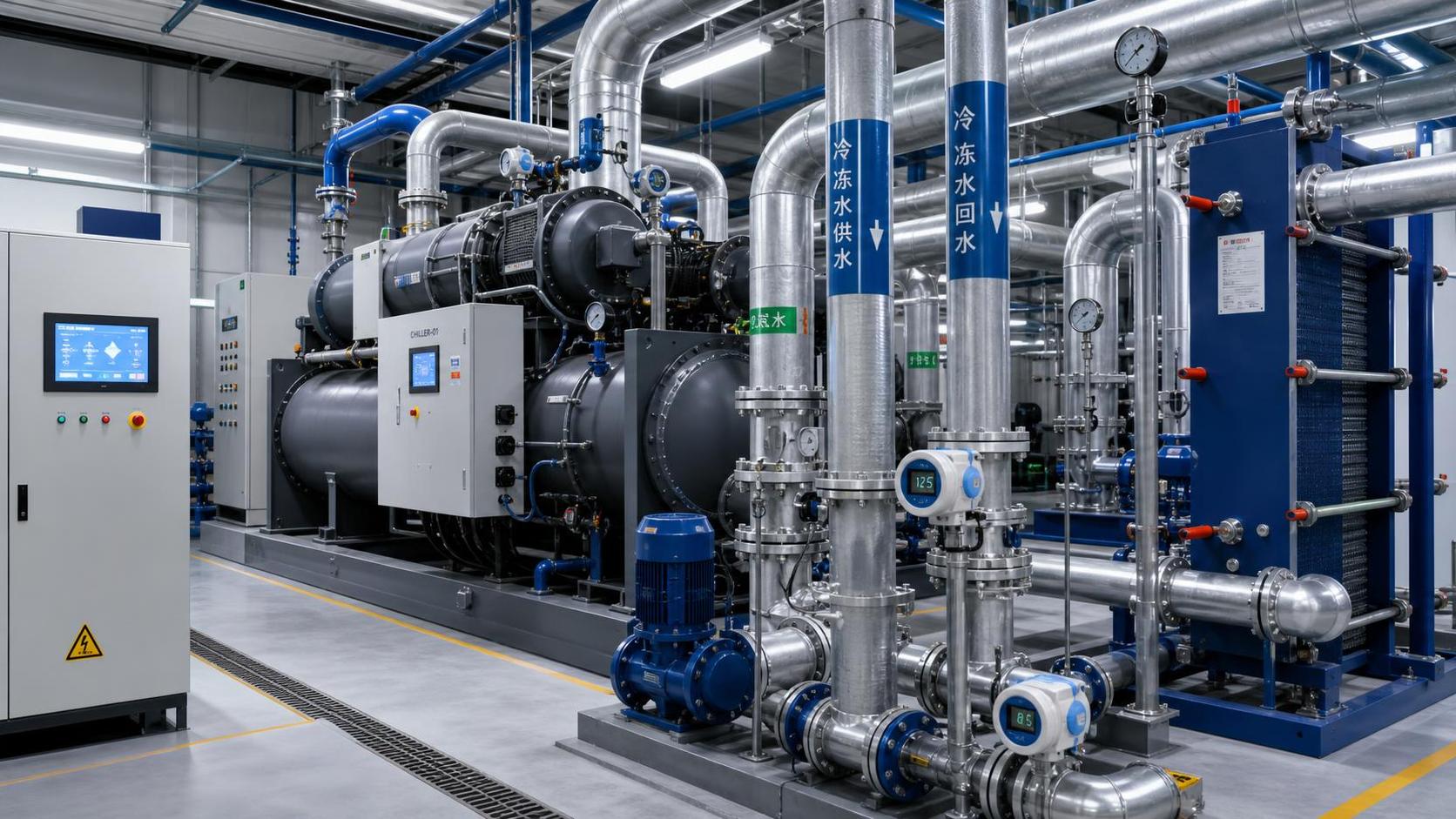
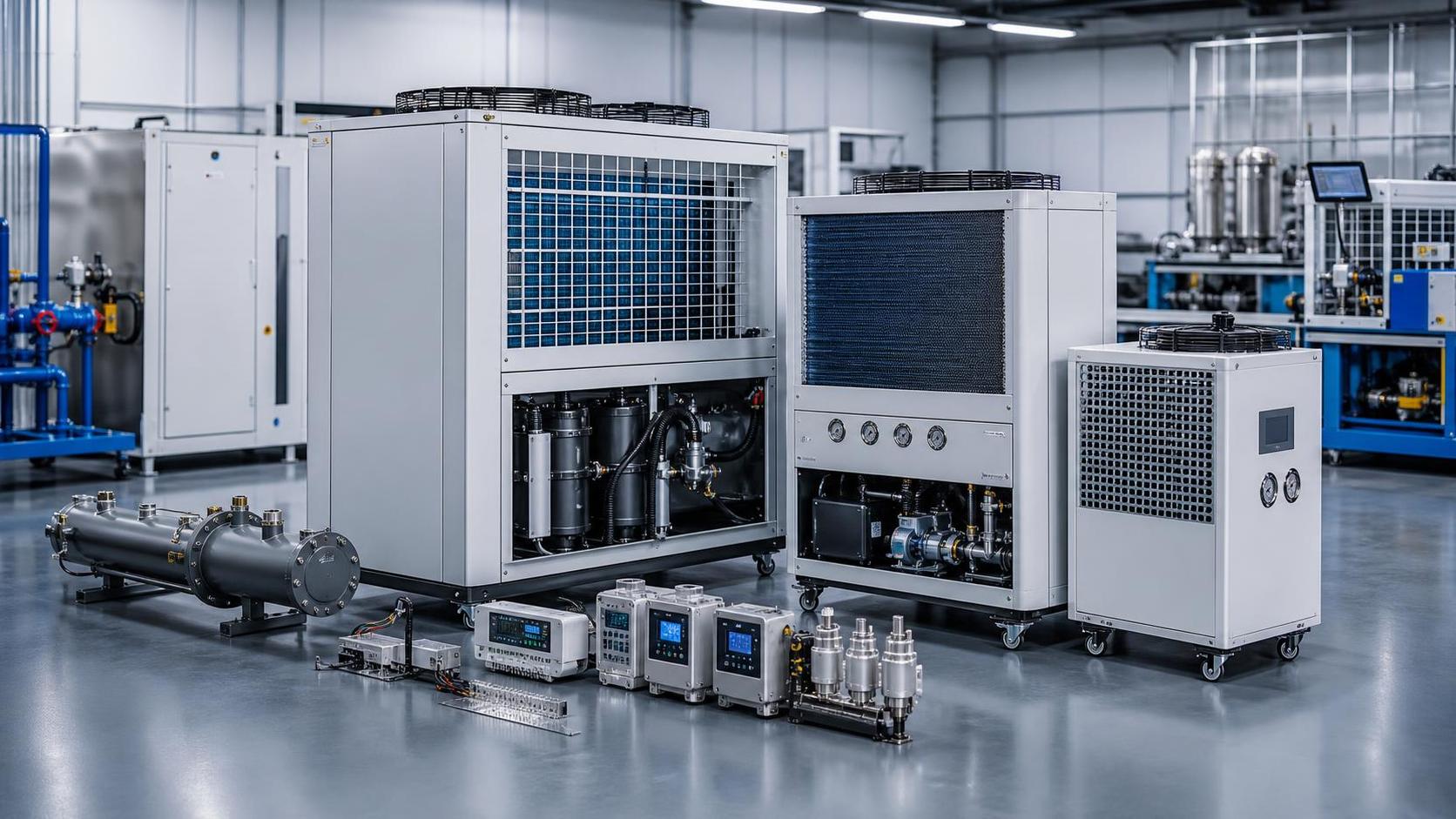
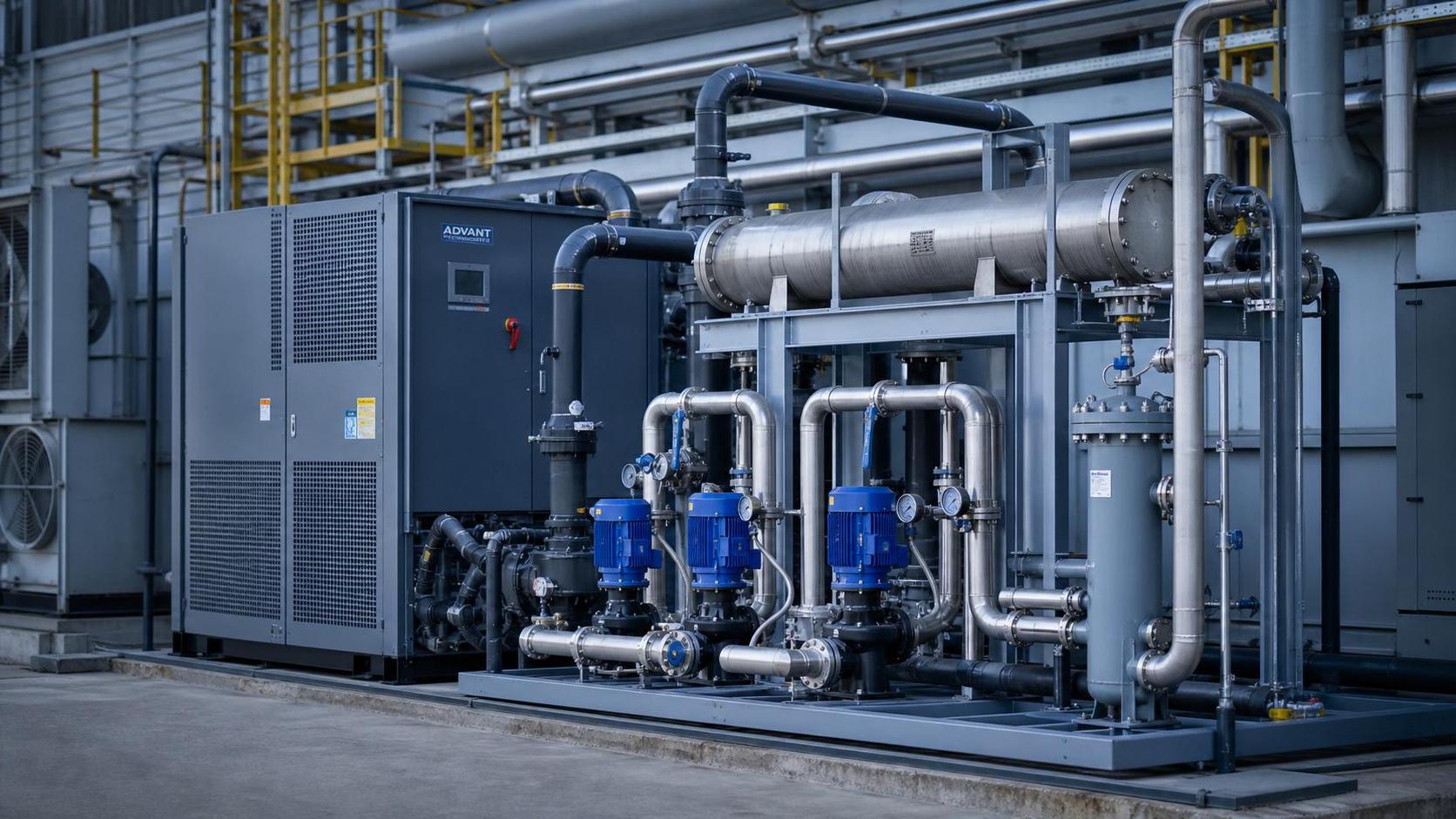
Air-cooled chillers are often chosen where water management is limited or deployment speed matters. Water-cooled chillers usually offer stronger efficiency in larger systems, especially when integrated with well-maintained cooling towers. Adiabatic systems can help reduce summer peak stress, while closed-loop fluid coolers suit operations that require cleaner thermal circuits and lower contamination risk.
For compressor stations and thermal utility rooms, ventilation upgrades, ducted hot-air removal, variable-speed fans, and localized heat recovery can all be part of practical industrial cooling solutions. In many plants, the fastest gains come from improving heat rejection and airflow before purchasing new core equipment.
The following comparison table outlines where different cooling strategies fit best. It can support budget discussions, concept design reviews, and pre-procurement alignment between operations, engineering, and finance teams.
For project managers, the most important conclusion is that capacity alone is not enough. A system that appears sufficient on paper may underperform if the design ignores fouling allowance, afternoon ambient peaks, process expansion, or condenser approach limits. A practical sizing margin of 10%–20% is often discussed in concept evaluations, but the correct level depends on process criticality and redundancy philosophy.
Implementation Priorities: From Load Audit to Reliable Operation
Successful industrial cooling solutions are delivered through disciplined implementation, not equipment selection alone. The best projects move from load definition to commissioning with clear assumptions, measurable acceptance criteria, and realistic summer operating scenarios.
A five-step project workflow
1. Establish the actual load profile
Measure or validate hourly thermal demand over at least 7 days during representative production. Include compressors, process machines, electrical rooms, and any hidden loads from lighting or enclosed utility spaces. A plant that shows a nominal 400 kW cooling load may still experience 480 kW to 520 kW short peaks that drive summer instability.
2. Define operating limits and quality thresholds
Identify the acceptable supply temperature range, return temperature range, and maximum drift duration. For instance, a process may tolerate 12°C to 15°C chilled fluid, but only for 30 minutes outside the ideal setpoint. Without this definition, design choices become too generic and budget decisions too weak.
3. Review site constraints before final selection
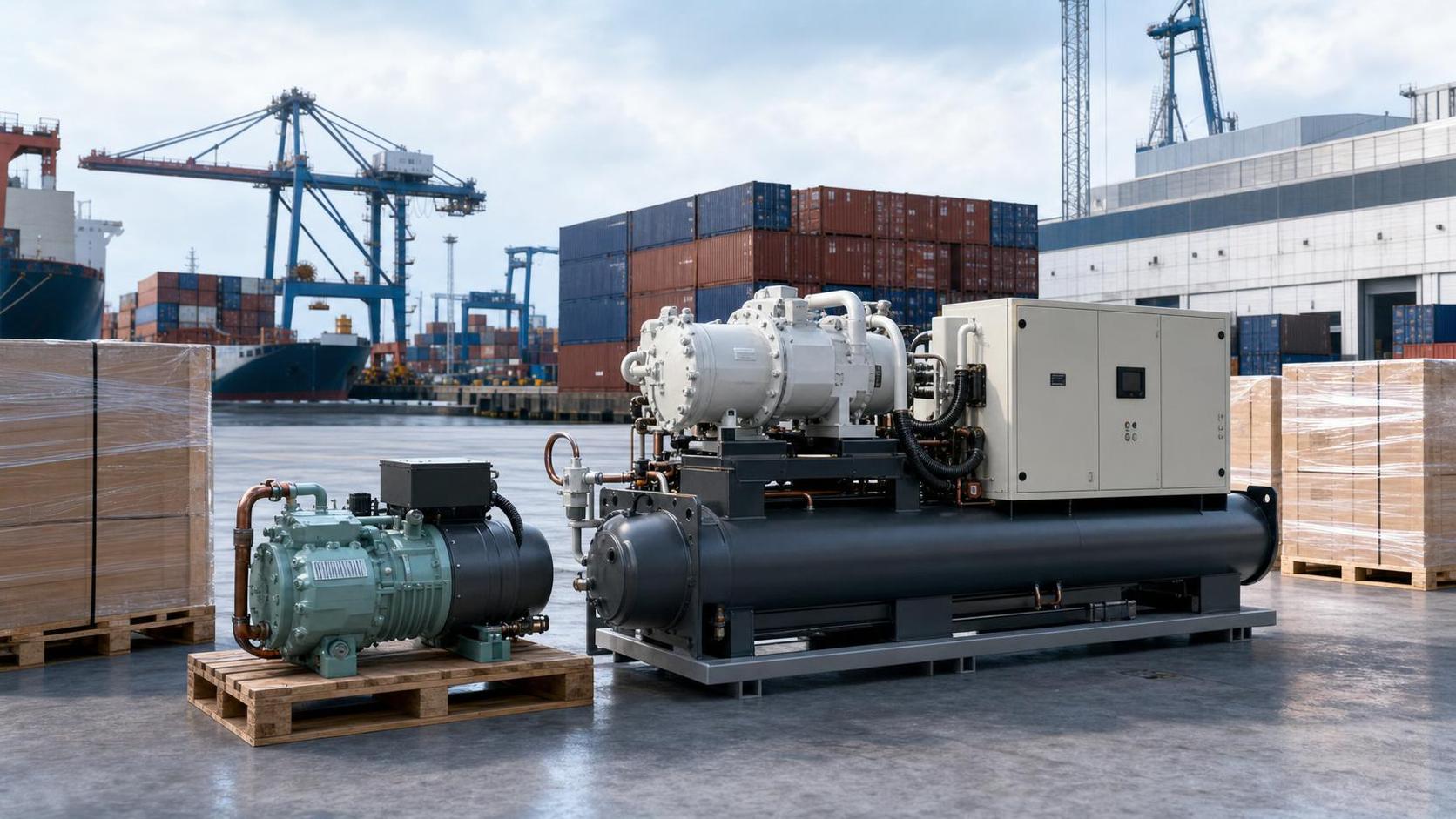
Check electrical capacity, noise restrictions, maintenance access, drainage, water treatment capability, and lifting logistics. These items often determine whether installation takes 5–7 days or 3–4 weeks. In retrofit environments, structural support and pipe rerouting can become the critical path.
4. Build controls and redundancy into the plan
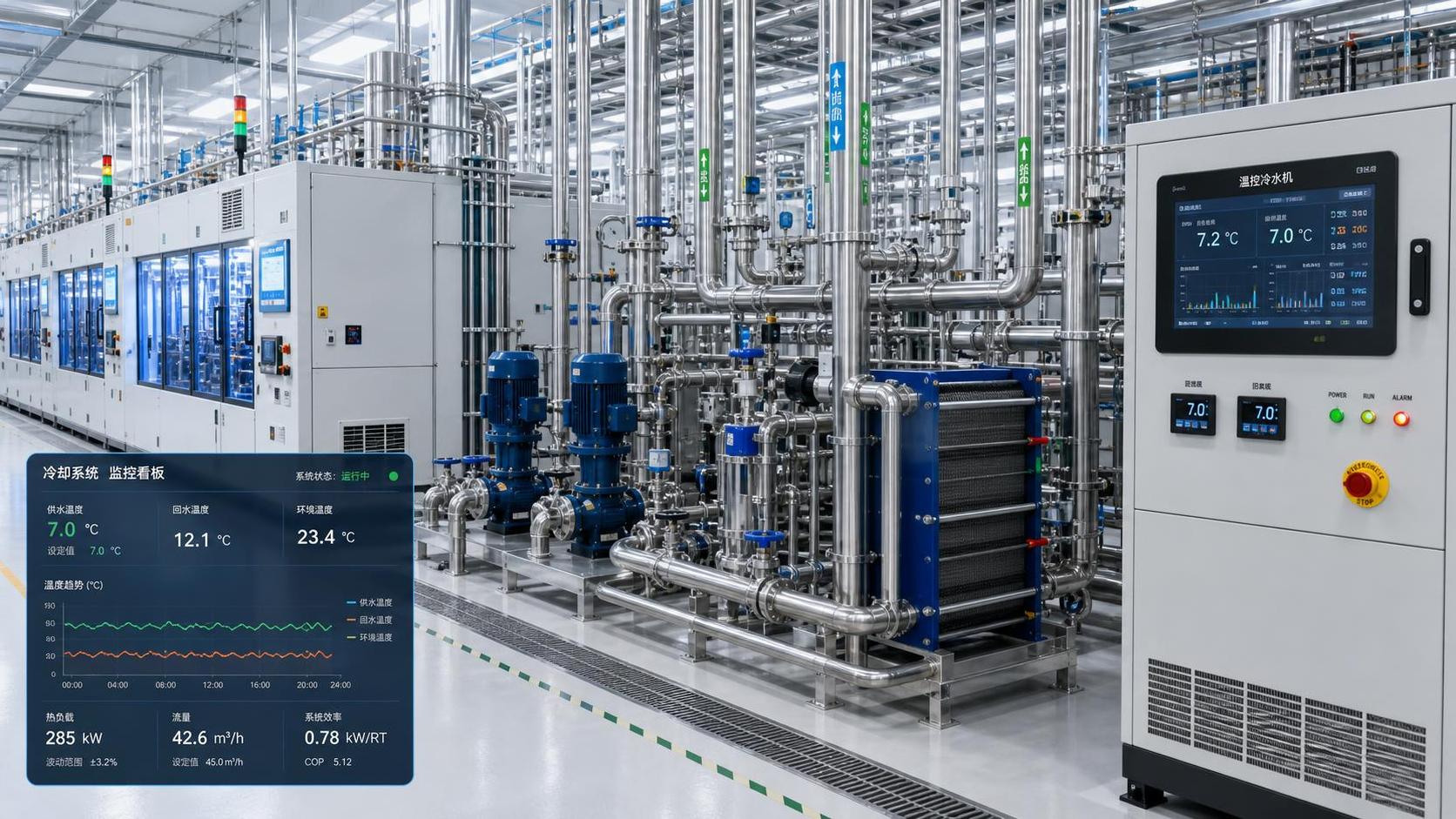
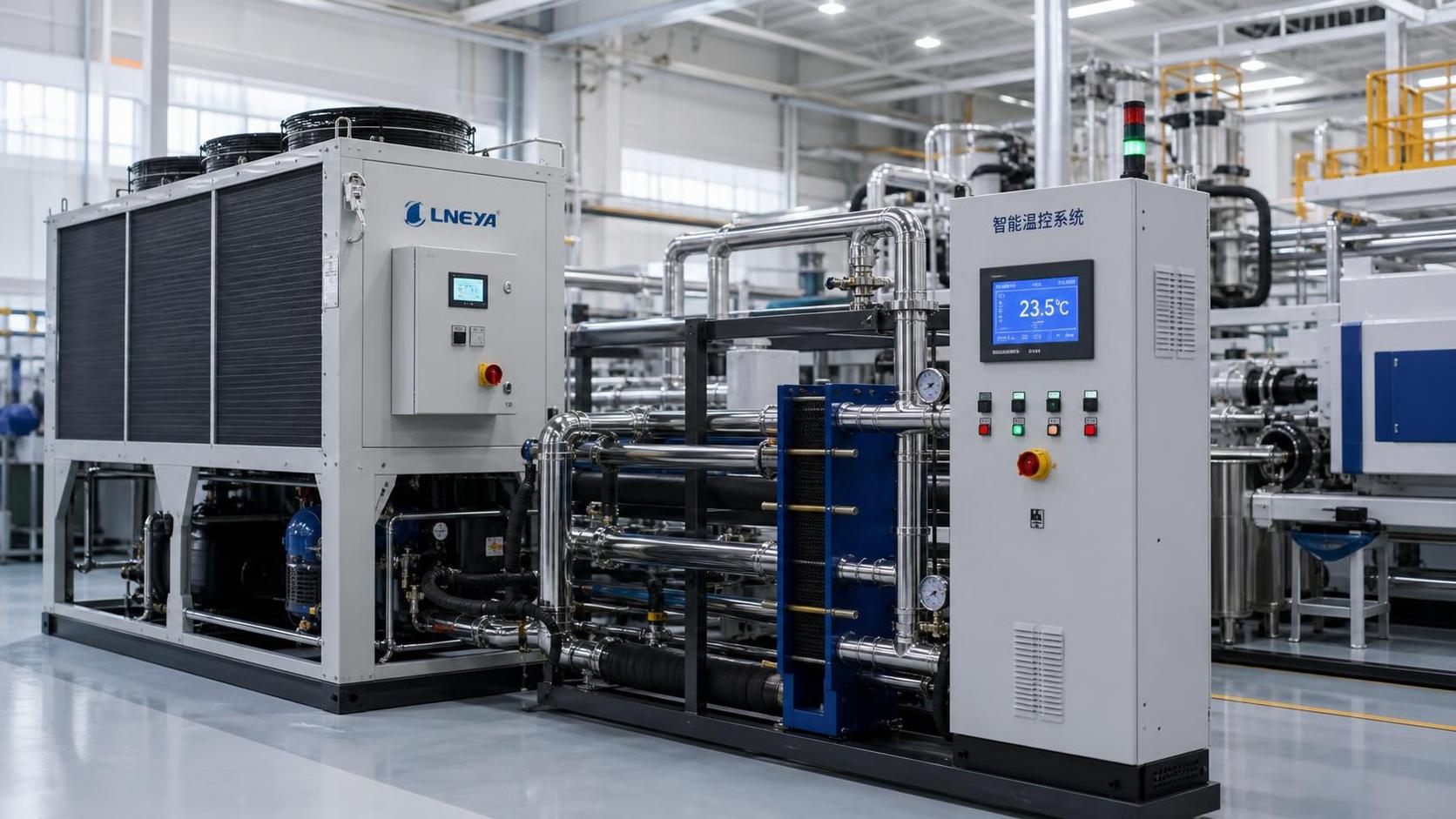
A cooling system is only as stable as its controls. Variable-speed drives, staged compressor logic, differential pressure control, alarm escalation, and remote monitoring all reduce response lag during hot-weather events. Critical operations may require N+1 redundancy or at least a temporary bypass strategy.
5. Commission against summer conditions, not ideal conditions
Commissioning should test thermal performance under elevated ambient assumptions whenever possible. Even if the system is installed outside peak summer, teams can still verify control logic, alarm points, delta-T behavior, pump performance, and partial-load transitions. A 3-stage acceptance method—mechanical, functional, and performance—usually provides better risk control than a single startup checklist.
The checklist below is particularly useful for project managers who need a procurement-to-commissioning view of industrial cooling solutions without losing technical detail.
This workflow shows that cooling performance is strongly linked to project discipline. Many summer failures are not caused by one dramatic equipment fault, but by a series of smaller omissions in load definition, controls, airflow design, and commissioning detail.
Maintenance, Monitoring, and Decision Support for Long-Term Performance
Once industrial cooling solutions are installed, their summer reliability depends on operating visibility. A system that looked robust at handover can gradually lose efficiency if coils foul, water chemistry drifts, sensors misread, or airflow paths become blocked. For high-load sites, preventive review intervals of 30 days during summer are often more effective than waiting for quarterly service cycles.
Maintenance areas with the highest payoff
- Condenser and heat exchanger cleaning to preserve approach temperature
- Fan, pump, and drive inspection for part-load and peak-load response
- Water treatment verification in open or semi-open cooling circuits
- Calibration checks for temperature, pressure, and flow sensors
- Alarm trend review to identify recurring afternoon or batch-related stress points
Why intelligence matters in cooling decisions
Project leaders increasingly need more than equipment brochures. They need market intelligence on refrigerant transitions, compressor technology trends, microchannel heat exchanger development, and changing efficiency expectations across regions. This is where GTC-Matrix is strategically relevant. By linking industrial cooling, compressed air, vacuum processes, and heat exchange intelligence, it helps decision-makers compare technical pathways with stronger context.
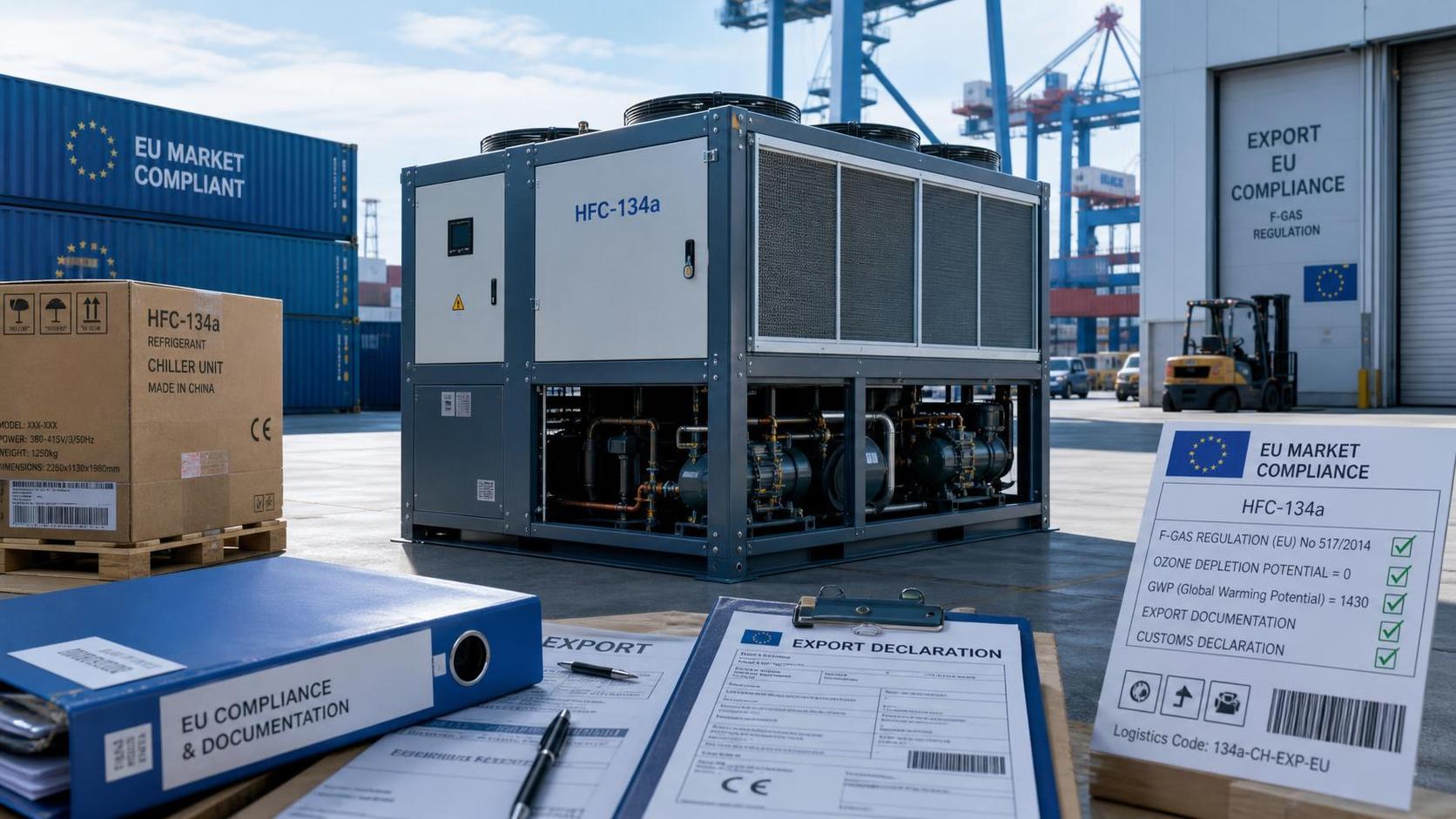
For example, if a facility is evaluating summer upgrades over a 12–24 month horizon, it may need to consider not just immediate cooling demand but also future refrigerant compliance, possible expansion in thermal load, and the availability of high-purity or oil-free utility systems for adjacent process growth. Better intelligence reduces the chance of solving a short-term heat problem with a system that becomes commercially or operationally constrained too soon.
Frequent planning mistakes to avoid
Sizing only for average load
Average values hide the short-duration peaks that often trigger shutdowns. Design should account for worst-case summer hours, not just monthly averages.
Ignoring compressor room heat
Compressed air systems can become major internal heat sources. If room ventilation is overlooked, the cooling burden grows and compressor efficiency drops at the same time.
Separating cooling from production planning
If batch scheduling, cleaning cycles, and peak utility loads are not reviewed together, even a technically sound cooling design may underperform in real operation.
High-load summer operations demand industrial cooling solutions that are technically sound, commercially realistic, and easy to maintain under pressure. Project managers and engineering leaders should focus on real load profiles, ambient design conditions, controllability, maintainability, and phased implementation risk. With informed planning and better thermal intelligence, cooling moves from reactive troubleshooting to a controllable asset that protects uptime, energy efficiency, and process reliability.
If you are reviewing plant upgrades, compressor room thermal issues, chiller strategy, or broader heat exchange performance, GTC-Matrix can support your decision process with cross-sector intelligence and solution-oriented insight. Contact us to discuss your operating scenario, get a tailored evaluation framework, and explore more industrial cooling solutions for summer-critical operations.
Related News
- EPA Rule Takes Effect for R-410A Equipment ImportsAuthor :Cryogenic Systems Expert

- EN 378-1:2026 Tightens EU Export ChecksAuthor :Cryogenic Systems Expert

- How to Compare Semiconductor Cooling Solutions by Heat Load and Uptime RiskAuthor :Cryogenic Systems Expert

- EU Label Deadline Hits China Chiller ExportsAuthor :Cryogenic Systems Expert

- How Smart Thermal Systems Improve Industrial Cooling EfficiencyAuthor :Cryogenic Systems Expert

- How to Choose Process Cooling Equipment for Stable Temperature ControlAuthor :Cryogenic Systems Expert

- EU Finalizes 2026 HFC Quota Cut for R-134a ChillersAuthor :Cryogenic Systems Expert

- EU Tightens HFC-134a Quotas for Industrial ChillersAuthor :Cryogenic Systems Expert

- REACH SVHC Update Pressures HFC-134a Chiller Supply ChainsAuthor :Cryogenic Systems Expert

- EU PFAS Coolant Ban Reshapes Chiller ExportsAuthor :Cryogenic Systems Expert

- EU REACH Restricts PFAS Cooling Media ImportsAuthor :Cryogenic Systems Expert

- EU Ecodesign Rule Takes Effect for Industrial ChillersAuthor :Cryogenic Systems Expert

- EU REACH Rule Takes Effect for PFAS in Industrial Cooling ExportsAuthor :Cryogenic Systems Expert

- Industrial Cooling for Plastic Processing: How to Size for Stable Cycle TimesAuthor :Cryogenic Systems Expert

- EU F-Gas Update Bars R404A/R507 in Commercial CoolingAuthor :Cryogenic Systems Expert

- DOE Raises Chiller Efficiency Standard From October 2026Author :Cryogenic Systems Expert

- India Mandates BIS Energy Certification for Industrial ChillersAuthor :Cryogenic Systems Expert

- Energy-Efficient Heat Exchange for Process Cooling: Cost vs PaybackAuthor :Cryogenic Systems Expert

- EPA R-134a Import Ban Takes Effect on July 13, 2026Author :Cryogenic Systems Expert

- India BIS Rule Takes Effect for Industrial ChillersAuthor :Cryogenic Systems Expert

- EPA Cuts R134a Import Quotas 20% From July 10Author :Cryogenic Systems Expert

- How to Compare Energy-Efficient Cooling Systems for Factory Expansion ProjectsAuthor :Cryogenic Systems Expert

- Chiller Price Index Rises 11.3% in Q2Author :Cryogenic Systems Expert

- Saudi SASO Tightens Chiller Import Compliance From July 10Author :Cryogenic Systems Expert

- Dubai Opens Fast-Track Chiller TendersAuthor :Cryogenic Systems Expert

- Japan Raises Chiller COP Floor to 6.2 From Sept. 1Author :Cryogenic Systems Expert
![]()
- Compact Thermal Management in Smart Devices: Common Failure RisksAuthor :Cryogenic Systems Expert

- Thermal Management for Batteries: Cooling Methods ComparedAuthor :Cryogenic Systems Expert

- How Compact Thermal Design Extends Smart Device UptimeAuthor :Cryogenic Systems Expert

- Shanghai-Rotterdam Reefer Rates Jump 37% in a WeekAuthor :Cryogenic Systems Expert

- Process Cooling Equipment Low Maintenance: What Cuts Downtime Over 5 Years?Author :Cryogenic Systems Expert

- Semiconductor Cooling Solutions: Which Design Works Best for High-Density Tools?Author :Cryogenic Systems Expert

- Semiconductor Thermal Management Systems: Preventing Yield Loss from Heat DriftAuthor :Cryogenic Systems Expert

- EPA Clears R-1234ze(E) for Industrial ChillersAuthor :Cryogenic Systems Expert
 for Industrial Chillers")
- DOE Raises Chiller IEER Floor to 12.8 From Oct. 2026Author :Cryogenic Systems Expert

- Singapore Refrigeration Show Adds Green Compliance HubAuthor :Cryogenic Systems Expert