Guangzhou Port Launches Tender for 3500kW Green Locomotives, Boosting Industrial Chillers Demand




On May 13, 2026, Guangzhou Port Co., Ltd. issued a tender for two 3500kW green diesel-electric locomotives under a turnkey contract model — requiring integrated low-temperature power systems and intelligent temperature-control scheduling interfaces. This initiative directly targets enhanced short-haul efficiency and uninterrupted thermal management for refrigerated containers at the port, signaling tangible implications for industrial chillers manufacturers, cold-chain logistics service providers, and related equipment integrators in South China.
Event Overview
Guangzhou Port Co., Ltd. published an official tender notice on May 13, 2026, seeking suppliers for two 3500kW green internal combustion locomotives. The procurement follows a turnkey engineering approach and explicitly mandates compatibility with low-temperature power systems and intelligent temperature-control dispatch interfaces. The project aims to improve short-distance transport efficiency and thermal continuity for refrigerated containers handled at the port.
Impact on Specific Industry Segments
Industrial Chillers Equipment Manufacturers
These firms are directly affected due to the tender’s requirement for low-temperature power systems and integration-ready thermal control interfaces. The project is expected to stimulate demand for dedicated industrial chillers units and vehicle-mounted cold-source modules, with projected order growth of over 20% in South China.
Cold-Chain Logistics Service Providers
Operators managing refrigerated container drayage within port perimeters face operational upgrades: seamless temperature monitoring across locomotive–chassis–container handoffs becomes critical. The mandated intelligent temperature-control scheduling interface implies future interoperability requirements between port infrastructure and fleet management platforms.
Port Infrastructure & Terminal Automation Integrators
Integrators supporting Guangzhou Port’s digital twin or terminal operating systems (TOS) must now account for real-time thermal data ingestion from locomotive-mounted systems. The tender’s emphasis on ‘intelligent temperature-control scheduling’ signals a shift toward synchronized thermal-aware dispatch logic — beyond conventional movement scheduling.
Refrigerated Container Lessors & Fleet Managers
Lessors and operators maintaining reefer fleets serving Guangzhou Port may need to evaluate retrofitting or specification alignment for future lease agreements. Compatibility with new locomotive-based thermal coordination protocols could influence maintenance cycles, telematics integration scope, and contractual SLAs related to temperature deviation thresholds.
What Relevant Enterprises or Practitioners Should Monitor and Act On
Track official technical specifications and interface protocol documentation
The tender specifies intelligent temperature-control scheduling interfaces but does not yet publish communication standards (e.g., Modbus TCP, CAN bus profiles, or API schema). Interested vendors should monitor subsequent clarification notices for mandatory protocol compliance details before proposal submission.
Assess regional cold-chain equipment procurement timelines
Given the stated objective of improving short-haul refrigerated container handling, follow-up procurement for industrial chillers units and vehicle-mounted cold-source modules is likely to be initiated by Guangzhou Port or its contracted logistics partners within Q3–Q4 2026. Suppliers should align production capacity and certification readiness accordingly.
Distinguish between pilot implementation and system-wide rollout
This tender covers only two locomotives. Analysis shows that while it sets a technical benchmark, broader deployment across Guangzhou Port’s rail fleet remains unconfirmed. Stakeholders should treat this as a signal of direction — not evidence of imminent full-scale replacement.
Prepare interoperability test environments early
Vendors offering chillers, cold-source modules, or thermal telemetry systems should begin developing sandbox environments capable of simulating data exchange with locomotive-mounted scheduling interfaces. Early validation reduces integration risk if selected for downstream配套 (supporting) contracts.
Editorial Perspective / Industry Observation
Observably, this tender is less about immediate volume impact and more about institutional signaling: Guangzhou Port is formalizing thermal continuity as a non-negotiable layer of port rail operations — alongside safety, energy efficiency, and scheduling precision. From an industry perspective, it reflects a growing convergence between heavy-duty traction systems and mission-critical thermal logistics. It is better understood as an early-stage infrastructure alignment move rather than a mature market trigger. Continued attention is warranted because successful implementation may catalyze similar tenders at other major Chinese ports handling high-value perishables or pharmaceuticals.
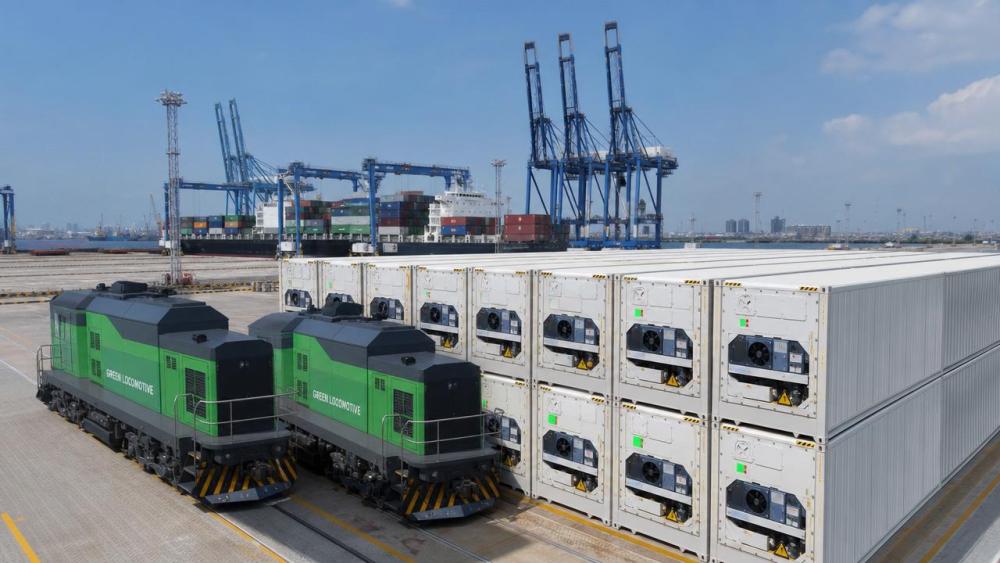
Guangzhou Port Co., Ltd. official tender notice (May 13, 2026). No further public documentation on technical interface standards or follow-on procurement plans has been released as of publication. Monitoring of subsequent clarifications and contract award announcements is recommended.
Related News
- US DOE Raises Chiller IEER Floor to 12.8 From 2027Author :Cryogenic Systems Expert

- EPA Clears R-1234ze(E) for Industrial ChillersAuthor :Cryogenic Systems Expert
 for Industrial Chillers")
- Precision Temperature Control Systems: How to Evaluate Stability and Response TimeAuthor :Cryogenic Systems Expert

- Vietnam Requires GB/T 18430.1-2026 Declaration for Chiller ImportsAuthor :Cryogenic Systems Expert

- How to Compare Industrial Cooling Solutions for Multi-Line PlantsAuthor :Cryogenic Systems Expert

- India BIS Tightens QR Label Rule for Industrial ChillersAuthor :Cryogenic Systems Expert

- EU Rule Takes Effect on Modular CFP Disclosure for Industrial ChillersAuthor :Cryogenic Systems Expert

- Industrial Cooling Systems: Common Failure Causes and FixesAuthor :Cryogenic Systems Expert

- EU Sets CFP Label Rules for Industrial ChillersAuthor :Cryogenic Systems Expert

- Industrial Cooling vs Chillers: Which Fit Is Better for Your Process?Author :Cryogenic Systems Expert

- Industrial Cooling Solutions: How to Cut Energy Use Without Losing CapacityAuthor :Cryogenic Systems Expert

- R32 Surge Adds 12% to Chiller Export CostsAuthor :Cryogenic Systems Expert

- Industrial Refrigeration Costs: What Impacts ROI Most in 2026Author :Cryogenic Systems Expert

- Thermodynamics Analysis for Choosing the Right Refrigeration SystemAuthor :Cryogenic Systems Expert

- How Microchannel Heat Exchangers Improve Industrial Refrigeration EfficiencyAuthor :Cryogenic Systems Expert

- R32 Price Tops RMB 65,000/Ton as Chiller Export Costs RiseAuthor :Cryogenic Systems Expert

- R32 Holds at RMB 63,000/Ton, Chiller Export Costs Rise 8%Author :Cryogenic Systems Expert

- How to Evaluate Energy Efficiency in Industrial Cooling SystemsAuthor :Cryogenic Systems Expert

- R32 at RMB 63,200/t Pushes Chiller Export Costs HigherAuthor :Cryogenic Systems Expert

- EPA Extends R410A Import Relief Into Q2 2027Author :Cryogenic Systems Expert

- Industrial Refrigeration Costs: What Drives Energy Use in 2026Author :Cryogenic Systems Expert

- R32 at CNY 62,500/Tightens Chiller Export CostsAuthor :Cryogenic Systems Expert

- HFC-32 Hits RMB 62,500/Ton, Raising Export PressureAuthor :Cryogenic Systems Expert

- Industrial Refrigeration vs Chillers: Which Fits Your Load Profile?Author :Cryogenic Systems Expert

- R32 Price Spike Pressures Air-Cooled Chiller ExportsAuthor :Cryogenic Systems Expert

- DOE Extends R454B Chiller Transition to Q2 2027Author :Cryogenic Systems Expert

- Vietnam Mandates VEE Labels for Imported ChillersAuthor :Cryogenic Systems Expert

- EU REACH Adds 3 Refrigerant Curbs, Tightening the R134a Import WindowAuthor :Cryogenic Systems Expert

- How to Compare Industrial Cooling Solutions by Load, Space, and Energy UseAuthor :Cryogenic Systems Expert

- Horgos Rail Exports Hit Record as Refrigerant Checks TightenAuthor :Cryogenic Systems Expert

- How to Choose Industrial Cooling Solutions for High-Load FacilitiesAuthor :Cryogenic Systems Expert

- Industrial Intelligence in Cooling Systems: Key Use Cases and RisksAuthor :Cryogenic Systems Expert

- Vietnam Aligns Import Energy Labels With GB 18613-2025Author :Cryogenic Systems Expert

- DOE Finalizes 2026 Chiller Efficiency RuleAuthor :Cryogenic Systems Expert

- When High-Precision Temperature Control Is Worth the CostAuthor :Cryogenic Systems Expert

- SABIC Outage Extends Pressure on Chiller RefrigerantsAuthor :Cryogenic Systems Expert