



Shanghai-Rotterdam Reefer Freight Rates Hit $12,850/FEU




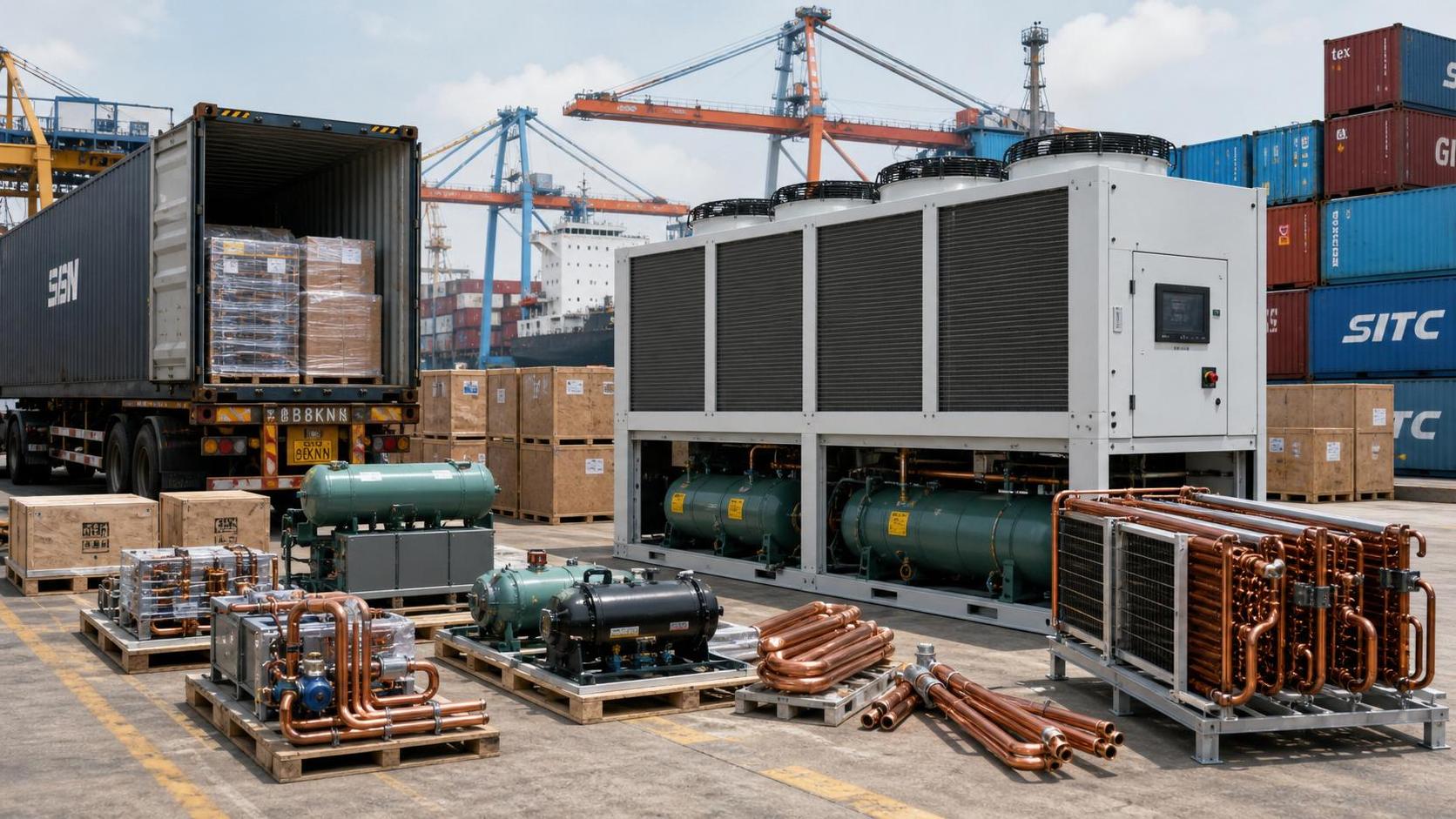
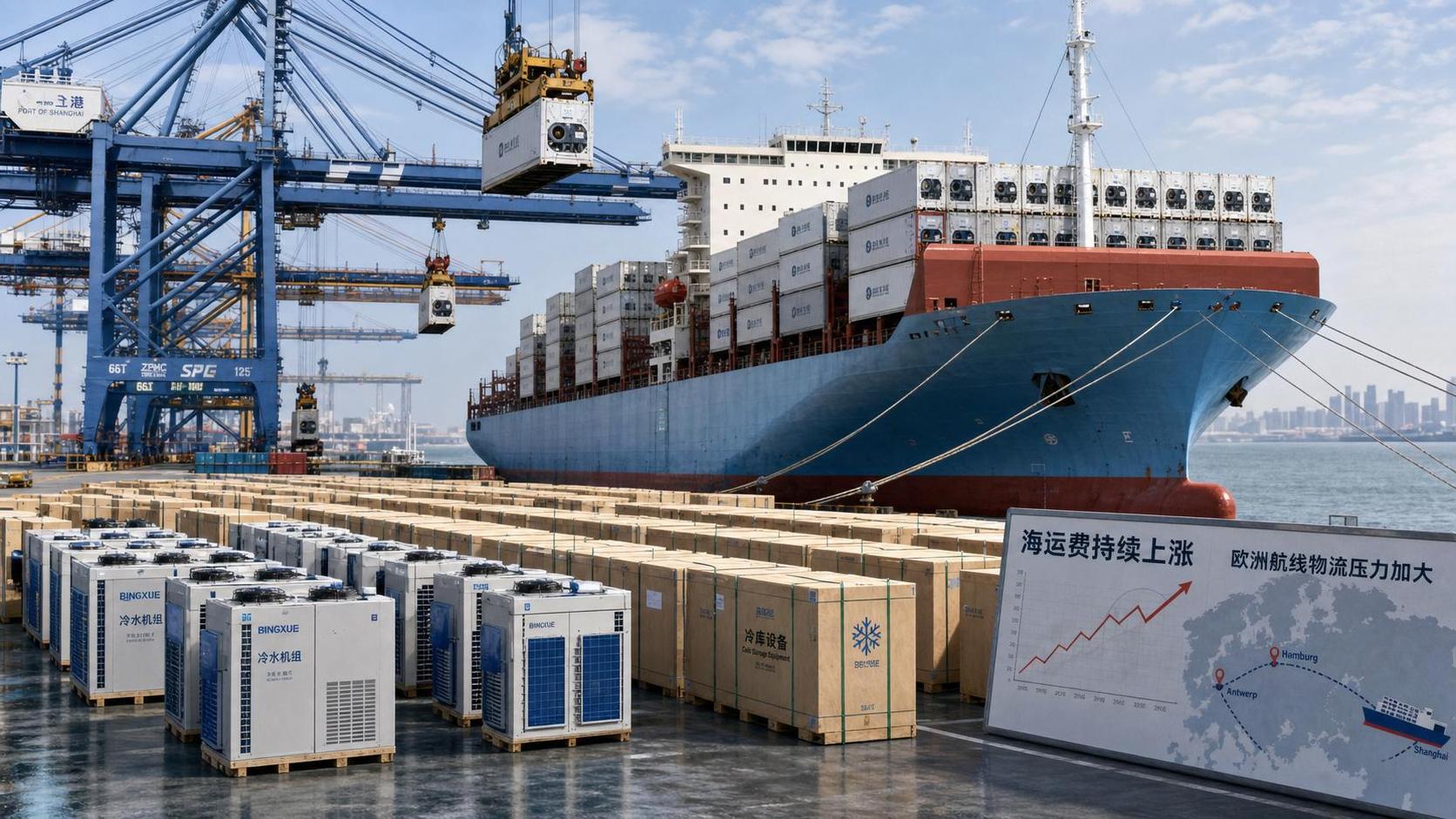
Shanghai port’s spot freight rate for refrigerated 40-foot equivalent units (FEU) on the Shanghai–Rotterdam reefer lane reached $12,850/FEU as of May 11, 2026 — the highest level recorded this year — driven by prolonged Red Sea disruptions and cascading delays in cold-chain equipment delivery. Exporters of temperature-sensitive industrial equipment, including modular cold storage systems and industrial chillers, are now facing extended lead times and logistical bottlenecks. This development warrants close attention from manufacturers, exporters, cold-chain logistics providers, and procurement teams operating across global chilled and frozen supply chains.
Event Overview
According to Drewry’s latest shipping index released on May 11, 2026, the Shanghai–Rotterdam reefer lane spot rate stood at $12,850/FEU. The surge is attributed to sustained Red Sea insecurity, compelling vessels to reroute via the Cape of Good Hope — adding an average of 18 days to voyage duration. Concurrently, limited refrigerated plug-in capacity at key European ports has intensified congestion for reefer container handling. As a result, delivery of industrial chillers and modular cold storage units has been delayed by more than 21 days. Several exporters have activated contingency plans involving transshipment through Southeast Asian hubs.
Impact on Specific Industry Segments
Direct Exporters of Temperature-Sensitive Equipment
Exporters shipping industrial chillers or prefabricated cold storage modules face direct schedule compression: vessel space is scarce, transit time is extended, and port dwell time for reefer units is increasing. Delays compound with European terminal plug-in shortages, limiting discharge windows and triggering demurrage risks.
Procurement & Sourcing Teams for Cold-Chain Infrastructure
Buyers procuring chillers or modular cold rooms for new facilities or upgrades encounter longer planning horizons. Lead time extensions beyond 21 days affect project commissioning schedules, especially where installation is time-bound (e.g., food processing plant expansions or pharmaceutical warehouse rollouts).
Manufacturers Relying on Just-in-Time Component Imports
Manufacturers integrating imported reefer components — such as compressors, control panels, or insulated panel systems — may experience production line slowdowns if inbound shipments miss planned dockings due to routing-induced variability and European port congestion.
Cold-Chain Logistics & Transshipment Service Providers
Logistics firms managing end-to-end reefer movements must adapt to tighter slot allocation windows, higher surcharges, and increased demand for alternative routing options. Southeast Asia-based transshipment hubs (e.g., Singapore, Tanjung Pelepas) are seeing elevated inquiry volumes for interim storage and re-stuffing services.
What Enterprises and Practitioners Should Monitor and Do Now
Track Red Sea security developments and carrier rerouting announcements
Monitor official advisories from the UK Maritime Trade Operations (UKMTO), International Chamber of Shipping (ICS), and major carriers’ weekly service updates. Rerouting decisions remain fluid; any shift toward escorted transits or resumed Suez operations would materially compress transit timelines.
Review contractual terms for demurrage, detention, and force majeure clauses
Assess current contracts governing equipment shipments — particularly those covering reefer-specific liabilities (e.g., temperature deviation penalties, plug-in failure compensation). Confirm whether extended Cape routing qualifies under agreed force majeure definitions.
Evaluate Southeast Asian transshipment feasibility for priority shipments
For high-priority orders with fixed delivery windows, validate capacity, customs clearance efficiency, and cold-chain integrity at shortlisted transshipment hubs. Note that not all regional terminals offer certified reefer maintenance or 24/7 plug-in support.
Reassess safety stock levels for critical reefer components
Procurement teams should quantify current buffer inventory against revised inbound lead times. A 21+ day delay suggests recalibrating minimum order quantities and reorder triggers — especially for components with long manufacturing cycles or single-source suppliers.
Editorial Perspective / Industry Observation
Observably, this rate spike is less a transient market fluctuation and more a structural stress indicator — reflecting how geopolitical risk now directly constrains cold-chain infrastructure deployment. Analysis shows the $12,850/FEU level is not merely a pricing anomaly but signals tightening capacity at the intersection of maritime routing constraints and fixed terminal infrastructure (i.e., plug-in availability). From an industry perspective, it is better understood as a leading indicator of broader cold-chain execution risk — one that affects capital project timing, working capital planning, and cross-border service-level agreements. Continued monitoring is warranted, as further escalation could trigger substitution behavior (e.g., air freight for high-value controllers) or accelerate regional cold-storage localization efforts.
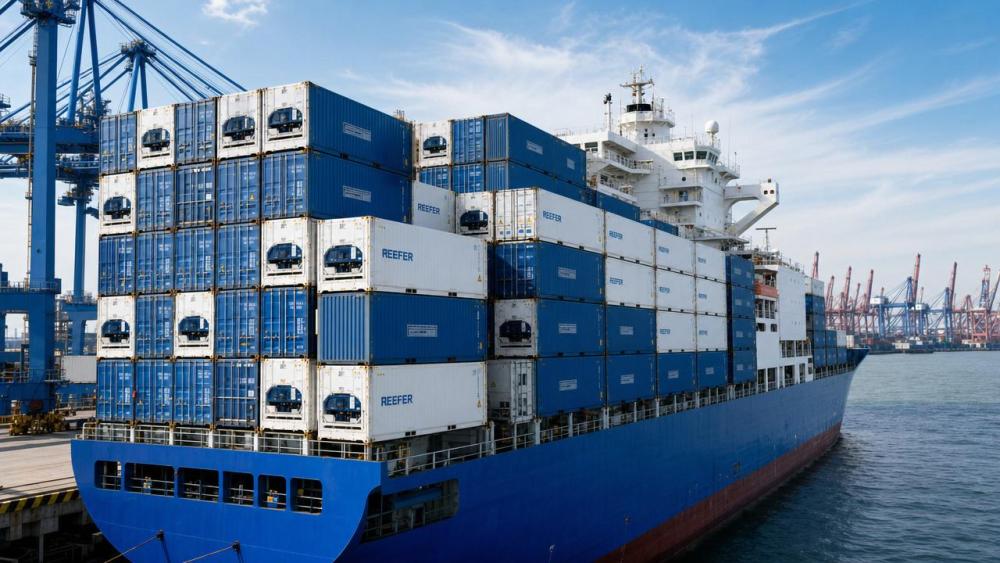
In summary, the Shanghai–Rotterdam reefer rate surge reflects compounding pressures across maritime routing, port infrastructure, and equipment delivery logistics — not just a short-term freight cost increase. It underscores how geopolitical disruption now propagates into physical cold-chain capability, affecting capital-intensive projects and time-sensitive deployments alike. Current evidence supports interpreting this as an operational risk signal requiring proactive mitigation — not yet a systemic breakdown, but one demanding structured response across procurement, logistics, and project management functions.
Source: Drewry Shipping Index (released May 11, 2026). Note: Ongoing observation is recommended for updates on European port reefer plug-in availability and carrier service adjustments related to Red Sea routing.
Related News
- EN 378-1:2026 Tightens EU Export ChecksAuthor :Cryogenic Systems Expert

- How to Compare Semiconductor Cooling Solutions by Heat Load and Uptime RiskAuthor :Cryogenic Systems Expert

- EU Label Deadline Hits China Chiller ExportsAuthor :Cryogenic Systems Expert

- How Smart Thermal Systems Improve Industrial Cooling EfficiencyAuthor :Cryogenic Systems Expert

- How to Choose Process Cooling Equipment for Stable Temperature ControlAuthor :Cryogenic Systems Expert

- EU Finalizes 2026 HFC Quota Cut for R-134a ChillersAuthor :Cryogenic Systems Expert

- EU Tightens HFC-134a Quotas for Industrial ChillersAuthor :Cryogenic Systems Expert

- REACH SVHC Update Pressures HFC-134a Chiller Supply ChainsAuthor :Cryogenic Systems Expert

- EU PFAS Coolant Ban Reshapes Chiller ExportsAuthor :Cryogenic Systems Expert

- EU REACH Restricts PFAS Cooling Media ImportsAuthor :Cryogenic Systems Expert

- EU Ecodesign Rule Takes Effect for Industrial ChillersAuthor :Cryogenic Systems Expert

- EU REACH Rule Takes Effect for PFAS in Industrial Cooling ExportsAuthor :Cryogenic Systems Expert

- Industrial Cooling for Plastic Processing: How to Size for Stable Cycle TimesAuthor :Cryogenic Systems Expert

- EU F-Gas Update Bars R404A/R507 in Commercial CoolingAuthor :Cryogenic Systems Expert

- DOE Raises Chiller Efficiency Standard From October 2026Author :Cryogenic Systems Expert

- India Mandates BIS Energy Certification for Industrial ChillersAuthor :Cryogenic Systems Expert

- Energy-Efficient Heat Exchange for Process Cooling: Cost vs PaybackAuthor :Cryogenic Systems Expert

- EPA R-134a Import Ban Takes Effect on July 13, 2026Author :Cryogenic Systems Expert

- India BIS Rule Takes Effect for Industrial ChillersAuthor :Cryogenic Systems Expert

- EPA Cuts R134a Import Quotas 20% From July 10Author :Cryogenic Systems Expert

- How to Compare Energy-Efficient Cooling Systems for Factory Expansion ProjectsAuthor :Cryogenic Systems Expert

- Chiller Price Index Rises 11.3% in Q2Author :Cryogenic Systems Expert

- Saudi SASO Tightens Chiller Import Compliance From July 10Author :Cryogenic Systems Expert

- Dubai Opens Fast-Track Chiller TendersAuthor :Cryogenic Systems Expert

- Japan Raises Chiller COP Floor to 6.2 From Sept. 1Author :Cryogenic Systems Expert
![]()
- Compact Thermal Management in Smart Devices: Common Failure RisksAuthor :Cryogenic Systems Expert

- Thermal Management for Batteries: Cooling Methods ComparedAuthor :Cryogenic Systems Expert

- How Compact Thermal Design Extends Smart Device UptimeAuthor :Cryogenic Systems Expert

- Shanghai-Rotterdam Reefer Rates Jump 37% in a WeekAuthor :Cryogenic Systems Expert

- Process Cooling Equipment Low Maintenance: What Cuts Downtime Over 5 Years?Author :Cryogenic Systems Expert

- Semiconductor Cooling Solutions: Which Design Works Best for High-Density Tools?Author :Cryogenic Systems Expert

- Semiconductor Thermal Management Systems: Preventing Yield Loss from Heat DriftAuthor :Cryogenic Systems Expert

- EPA Clears R-1234ze(E) for Industrial ChillersAuthor :Cryogenic Systems Expert
 for Industrial Chillers")
- DOE Raises Chiller IEER Floor to 12.8 From Oct. 2026Author :Cryogenic Systems Expert

- Singapore Refrigeration Show Adds Green Compliance HubAuthor :Cryogenic Systems Expert

- How Food Industry Temperature Control Systems Reduce Product LossAuthor :Cryogenic Systems Expert