US DOE Raises Industrial Chiller Efficiency Limits by 12%




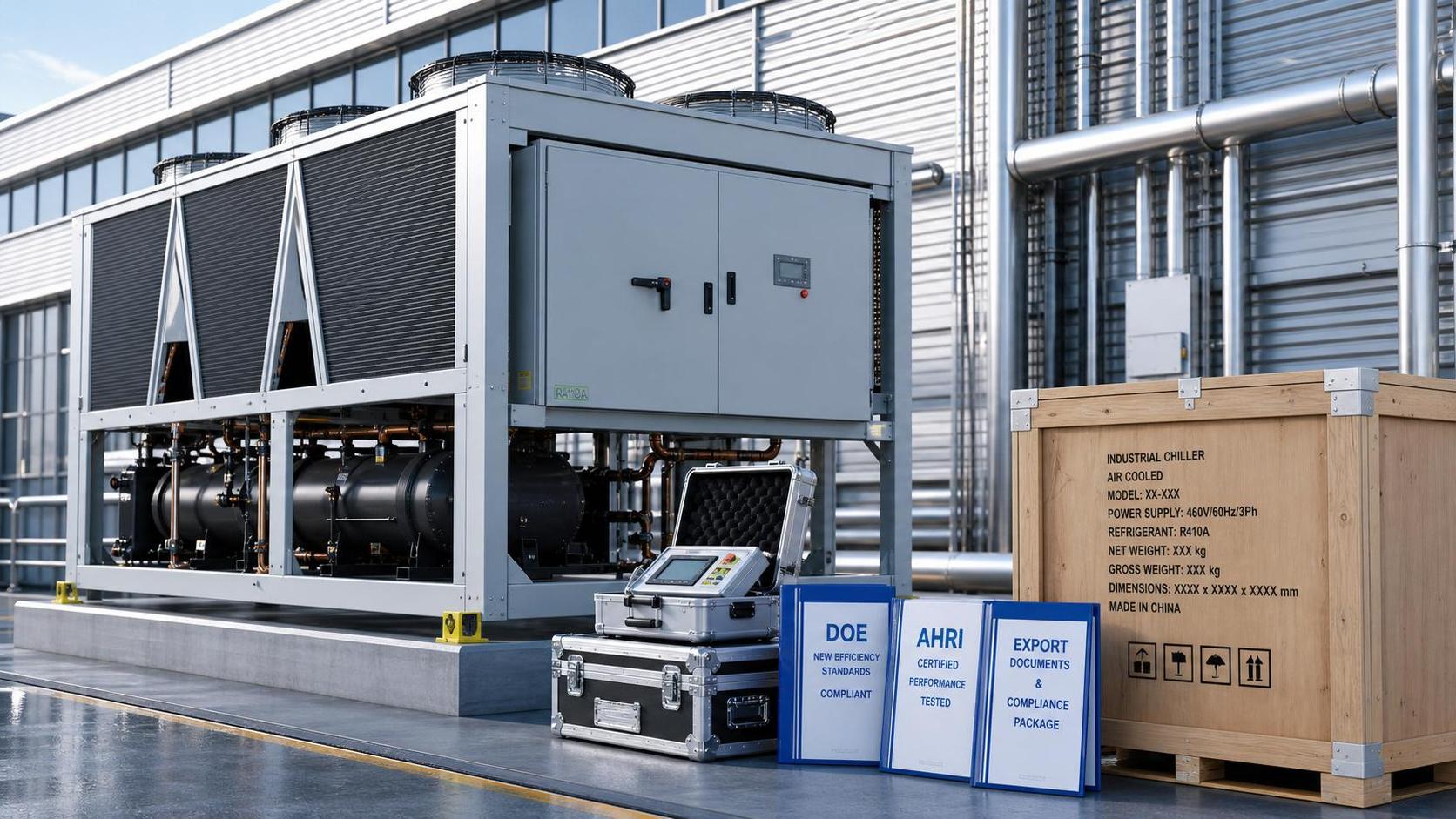
A new U.S. Department of Energy (DOE) regulation on industrial chillers took effect on May 16, 2026, raising minimum efficiency requirements by 12% and introducing the IEER2 metric. Exporters of industrial chillers from China—and other non-U.S. manufacturers targeting the U.S. commercial and industrial refrigeration market—must now comply with updated testing and certification standards. This development directly affects equipment manufacturers, exporters, certification service providers, and HVAC system integrators serving North American infrastructure projects.
Event Overview
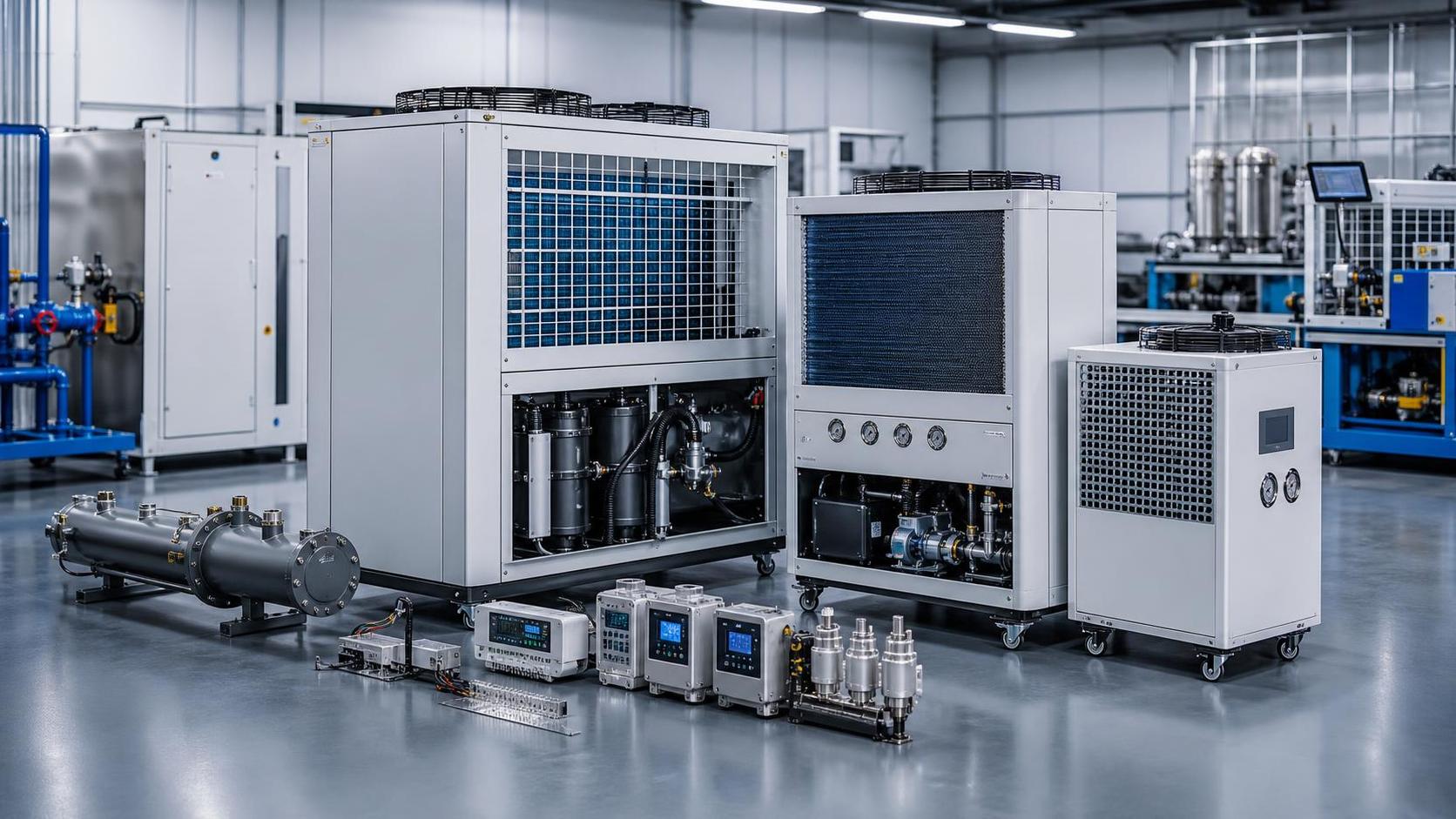
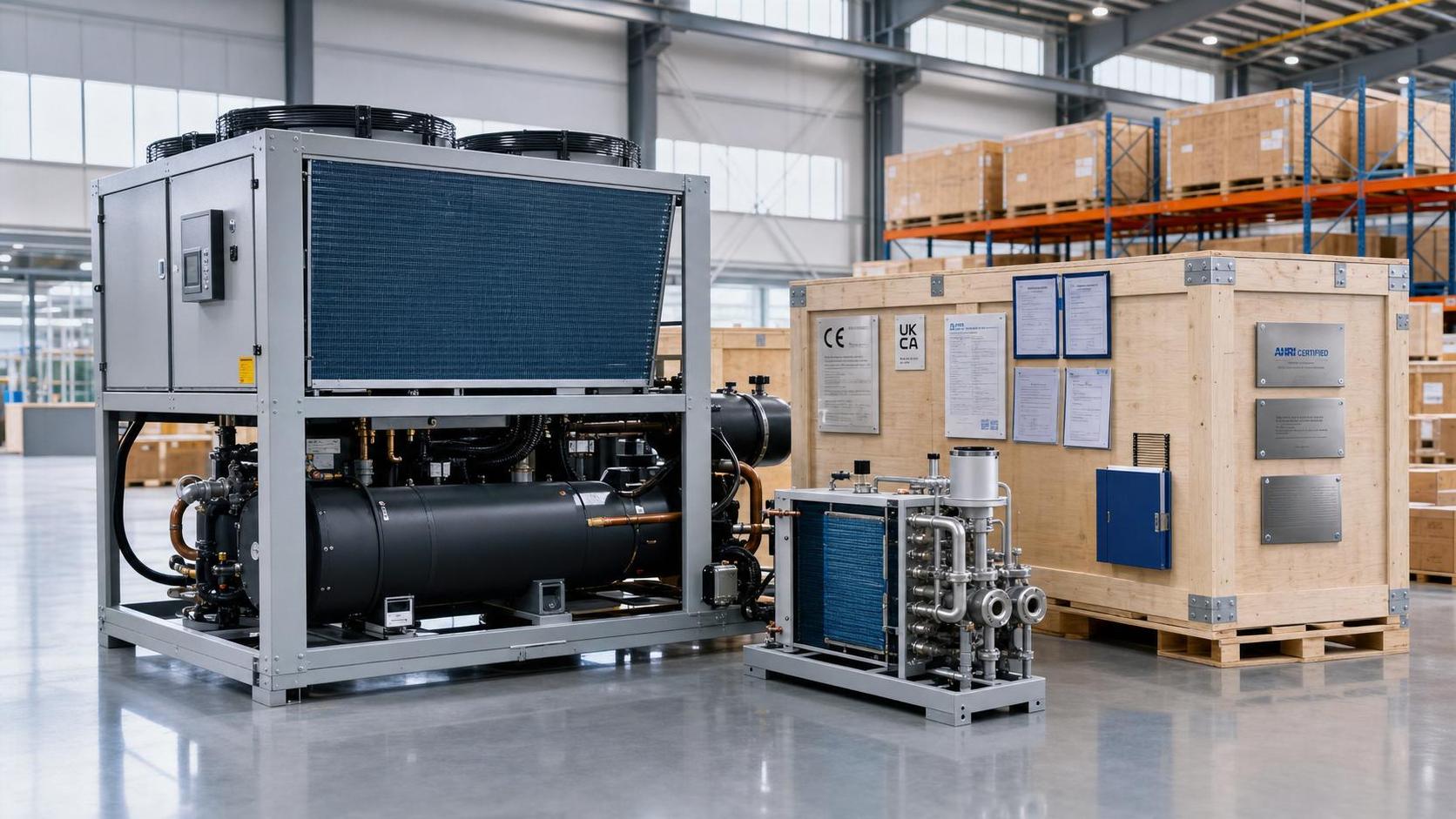
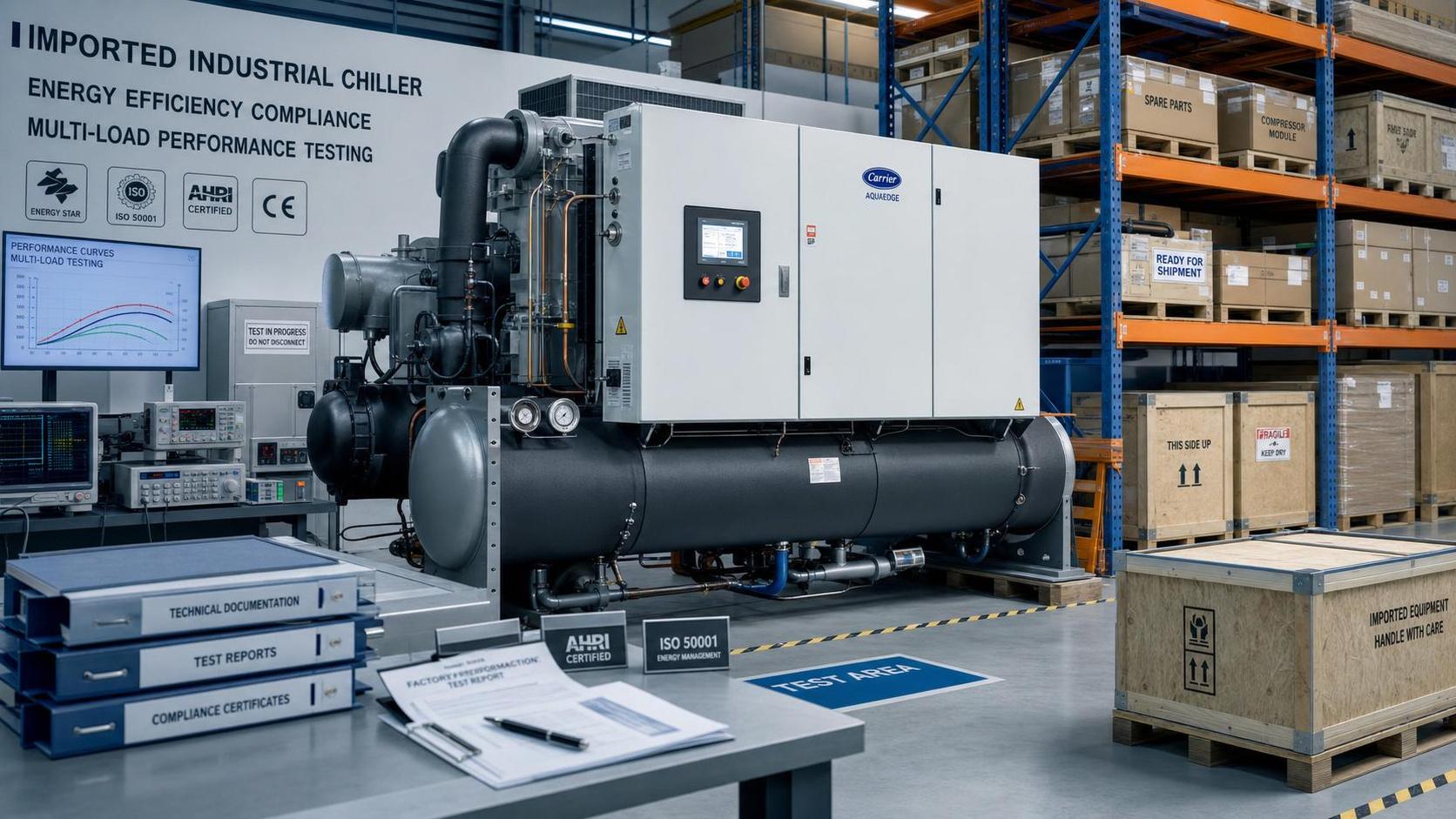
The U.S. Department of Energy implemented the revised Commercial and Industrial Refrigeration Equipment Rule (10 CFR Part 431) on May 16, 2026. The update introduces a new integrated energy efficiency ratio metric—IEER2—and raises the minimum efficiency thresholds for industrial chillers by 12%. The rule applies to air-cooled and water-cooled screw and centrifugal chillers. All units sold in the United States must be certified to the latest AHRI Standard 550/590–2025. According to initial feedback from major Chinese OEMs, less than 65% of first-batch test units passed certification; average certification lead times have extended by 6–8 weeks.
Industries Affected by Segment
Direct Exporters and Trade Enterprises
These entities face immediate compliance risk: units shipped to the U.S. after May 16, 2026 must bear valid AHRI 550/590–2025 certification. Non-compliant inventory cannot be legally sold or installed. Affected companies include those managing U.S.-bound shipments under FOB, CIF, or DAP terms where regulatory conformity is contractually required.
Manufacturing and OEM Enterprises
OEMs producing industrial chillers—including screw and centrifugal models—must revise product designs, component specifications (e.g., compressors, heat exchangers), and control logic to meet IEER2 thresholds. Internal R&D and production validation timelines are now tightly coupled to third-party lab capacity and AHRI’s updated test procedures.
Testing, Certification, and Compliance Service Providers
Third-party labs accredited for AHRI 550/590 testing are experiencing increased demand and extended queue times. Certification bodies must verify alignment with the new IEER2 calculation methodology—not just higher numerical targets—which requires updated software tools and trained personnel.
HVAC System Integrators and Project Contractors
Integrators specifying chillers for U.S.-based data centers, pharmaceutical facilities, or manufacturing plants must now validate model-level AHRI certificates prior to procurement. Substitution of non-certified units post-submittal may trigger rejection during commissioning or violate local energy code enforcement (e.g., ASHRAE 90.1–2022 adoption).
What Relevant Enterprises or Practitioners Should Monitor and Do Now
Verify current and pending AHRI certifications against the 2025 standard
Confirm whether existing model numbers have been retested and recertified per AHRI 550/590–2025—not just earlier versions. Retesting is mandatory even for previously certified models if they were evaluated under older protocols.
Adjust production and shipping schedules to accommodate 6–8 week certification delays
Factor extended lab turnaround into Q3–Q4 2026 order planning. Prioritize high-volume or long-lead-time models for early submission; avoid batch submissions that could compound queue delays.
Review technical documentation for IEER2-specific parameters
IEER2 includes revised weighting factors and operating conditions versus prior IEER. Manufacturers should audit control firmware, variable-speed drive configurations, and part-load performance curves to ensure alignment with the new metric’s calculation framework.
Monitor DOE and AHRI for official guidance on transitional provisions or enforcement timing
Although the rule is effective as of May 16, 2026, enforcement discretion (e.g., for units in transit or under signed contracts pre-dating the rule) has not been publicly clarified. Stakeholders should track updates via DOE’s Building Technologies Office notices and AHRI’s regulatory bulletins.
Editorial Perspective / Industry Observation
Observably, this revision signals a tightening phase in U.S. federal energy policy—not merely a technical update. The introduction of IEER2, rather than a simple adjustment to IEER, reflects an intentional shift toward evaluating real-world part-load behavior across broader ambient and load conditions. Analysis shows that the 12% increase in minimum efficiency is not uniformly achievable across all capacity ranges and cooling types; early test failures suggest design trade-offs in reliability, noise, or footprint may emerge. From an industry perspective, this rule functions less as a one-time compliance checkpoint and more as a structural inflection point: it accelerates consolidation among manufacturers unable to absorb R&D and certification costs, while reinforcing the strategic importance of U.S.-aligned product development pathways for global OEMs.
Conclusion
This regulation marks a material escalation in U.S. market access requirements for industrial chiller suppliers. It does not represent a temporary adjustment but a calibrated step in the DOE’s multi-year effort to align commercial refrigeration standards with climate goals under the Inflation Reduction Act framework. For affected stakeholders, it is better understood not as a discrete deadline—but as the onset of sustained regulatory scrutiny requiring embedded compliance capability, not episodic certification.
Source Attribution
Main source: U.S. Department of Energy, Final Rule – Energy Conservation Standards for Commercial and Industrial Refrigeration Equipment, published in the Federal Register and effective May 16, 2026.
Note: Ongoing observation is warranted regarding potential DOE clarifications on enforcement scope, including treatment of units manufactured before May 16 but imported afterward.
Related News
- How Smart Thermal Systems Improve Industrial Cooling EfficiencyAuthor :Cryogenic Systems Expert

- How to Choose Process Cooling Equipment for Stable Temperature ControlAuthor :Cryogenic Systems Expert

- EU Finalizes 2026 HFC Quota Cut for R-134a ChillersAuthor :Cryogenic Systems Expert

- EU Tightens HFC-134a Quotas for Industrial ChillersAuthor :Cryogenic Systems Expert

- REACH SVHC Update Pressures HFC-134a Chiller Supply ChainsAuthor :Cryogenic Systems Expert

- EU PFAS Coolant Ban Reshapes Chiller ExportsAuthor :Cryogenic Systems Expert

- EU REACH Restricts PFAS Cooling Media ImportsAuthor :Cryogenic Systems Expert

- EU Ecodesign Rule Takes Effect for Industrial ChillersAuthor :Cryogenic Systems Expert

- EU REACH Rule Takes Effect for PFAS in Industrial Cooling ExportsAuthor :Cryogenic Systems Expert

- Industrial Cooling for Plastic Processing: How to Size for Stable Cycle TimesAuthor :Cryogenic Systems Expert

- EU F-Gas Update Bars R404A/R507 in Commercial CoolingAuthor :Cryogenic Systems Expert

- DOE Raises Chiller Efficiency Standard From October 2026Author :Cryogenic Systems Expert

- India Mandates BIS Energy Certification for Industrial ChillersAuthor :Cryogenic Systems Expert

- Energy-Efficient Heat Exchange for Process Cooling: Cost vs PaybackAuthor :Cryogenic Systems Expert

- EPA R-134a Import Ban Takes Effect on July 13, 2026Author :Cryogenic Systems Expert

- India BIS Rule Takes Effect for Industrial ChillersAuthor :Cryogenic Systems Expert

- EPA Cuts R134a Import Quotas 20% From July 10Author :Cryogenic Systems Expert

- How to Compare Energy-Efficient Cooling Systems for Factory Expansion ProjectsAuthor :Cryogenic Systems Expert

- Chiller Price Index Rises 11.3% in Q2Author :Cryogenic Systems Expert

- Saudi SASO Tightens Chiller Import Compliance From July 10Author :Cryogenic Systems Expert

- Dubai Opens Fast-Track Chiller TendersAuthor :Cryogenic Systems Expert

- Japan Raises Chiller COP Floor to 6.2 From Sept. 1Author :Cryogenic Systems Expert
![]()
- Compact Thermal Management in Smart Devices: Common Failure RisksAuthor :Cryogenic Systems Expert

- Thermal Management for Batteries: Cooling Methods ComparedAuthor :Cryogenic Systems Expert

- How Compact Thermal Design Extends Smart Device UptimeAuthor :Cryogenic Systems Expert

- Shanghai-Rotterdam Reefer Rates Jump 37% in a WeekAuthor :Cryogenic Systems Expert

- Process Cooling Equipment Low Maintenance: What Cuts Downtime Over 5 Years?Author :Cryogenic Systems Expert

- Semiconductor Cooling Solutions: Which Design Works Best for High-Density Tools?Author :Cryogenic Systems Expert

- Semiconductor Thermal Management Systems: Preventing Yield Loss from Heat DriftAuthor :Cryogenic Systems Expert

- EPA Clears R-1234ze(E) for Industrial ChillersAuthor :Cryogenic Systems Expert
 for Industrial Chillers")
- DOE Raises Chiller IEER Floor to 12.8 From Oct. 2026Author :Cryogenic Systems Expert

- Singapore Refrigeration Show Adds Green Compliance HubAuthor :Cryogenic Systems Expert

- How Food Industry Temperature Control Systems Reduce Product LossAuthor :Cryogenic Systems Expert

- EU REACH Adds 12 SVHCs, Raising Chiller Compliance RiskAuthor :Cryogenic Systems Expert

- Precision Temperature Control Air Cooling: Key Setup Mistakes That Reduce StabilityAuthor :Cryogenic Systems Expert

- India BEE Eyes APF Labels for Imported ChillersAuthor :Cryogenic Systems Expert