High-Precision Temperature Control in Chillers: What Matters Most




In modern cooling systems, high-precision temperature control is more than a performance feature—it directly affects process stability, product quality, and energy efficiency. For operators and end users, understanding what truly matters in chiller temperature control helps reduce downtime, avoid costly fluctuations, and maintain reliable production across demanding industrial environments.
What Operators Really Need to Know About High-Precision Temperature Control
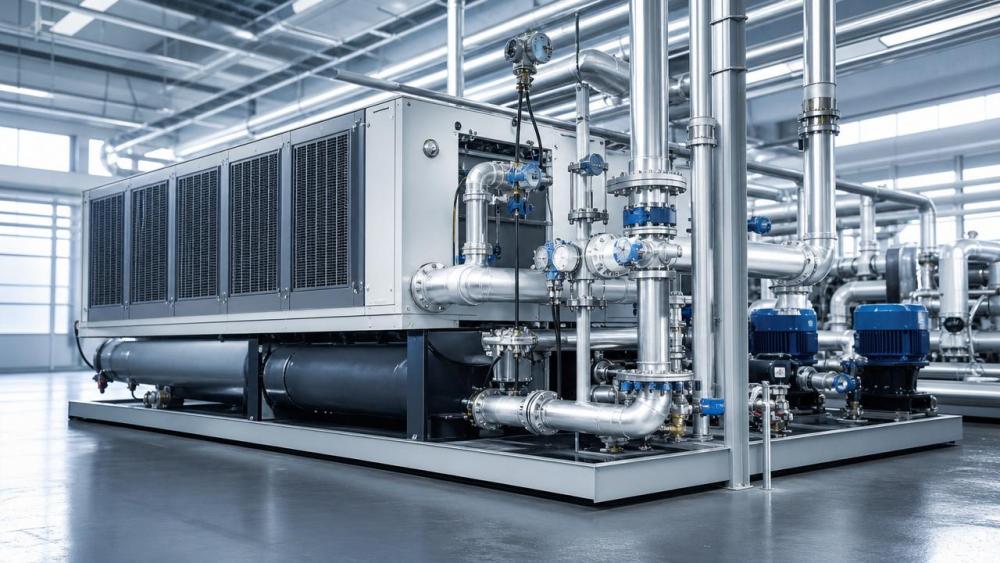
When users search for high-precision temperature control, they usually are not looking for theory alone. They want to know why a chiller cannot hold a stable setpoint, what components matter most, and how to avoid production losses.
The short answer is simple: precision depends on the full control loop, not only on the chiller’s advertised temperature accuracy. Sensors, controller logic, compressor response, expansion valve stability, flow design, load variation, and maintenance conditions all affect actual performance.
For operators, the most important question is not whether a unit claims ±0.1°C or ±0.5°C in marketing materials. The real question is whether that level of control can be maintained under changing process loads, ambient conditions, and daily operating routines.
In many industrial applications, unstable temperature control leads to more than discomfort. It can cause batch inconsistency, dimensional errors, longer cycle times, rejected product, alarms, unnecessary manual intervention, and avoidable energy waste.
That is why high-precision temperature control should be evaluated as a practical operating capability. A chiller must respond quickly, recover smoothly, and hold temperature without hunting, overshoot, or repeated fluctuations during real production.
Why Temperature Precision Matters More in Some Processes Than Others
Not every cooling task needs the same level of precision. However, where process windows are narrow, even small temperature drift can affect product quality and equipment performance in ways that operators notice immediately.
In plastics processing, mold temperature changes can alter cycle time, part finish, shrinkage, and dimensional stability. In laser systems, inaccurate cooling can affect beam performance and raise the risk of thermal stress on sensitive components.
In pharmaceuticals and laboratory environments, temperature variation may influence reaction consistency, storage conditions, and compliance requirements. In food processing, unstable chilling can affect product texture, hygiene control, and production repeatability.
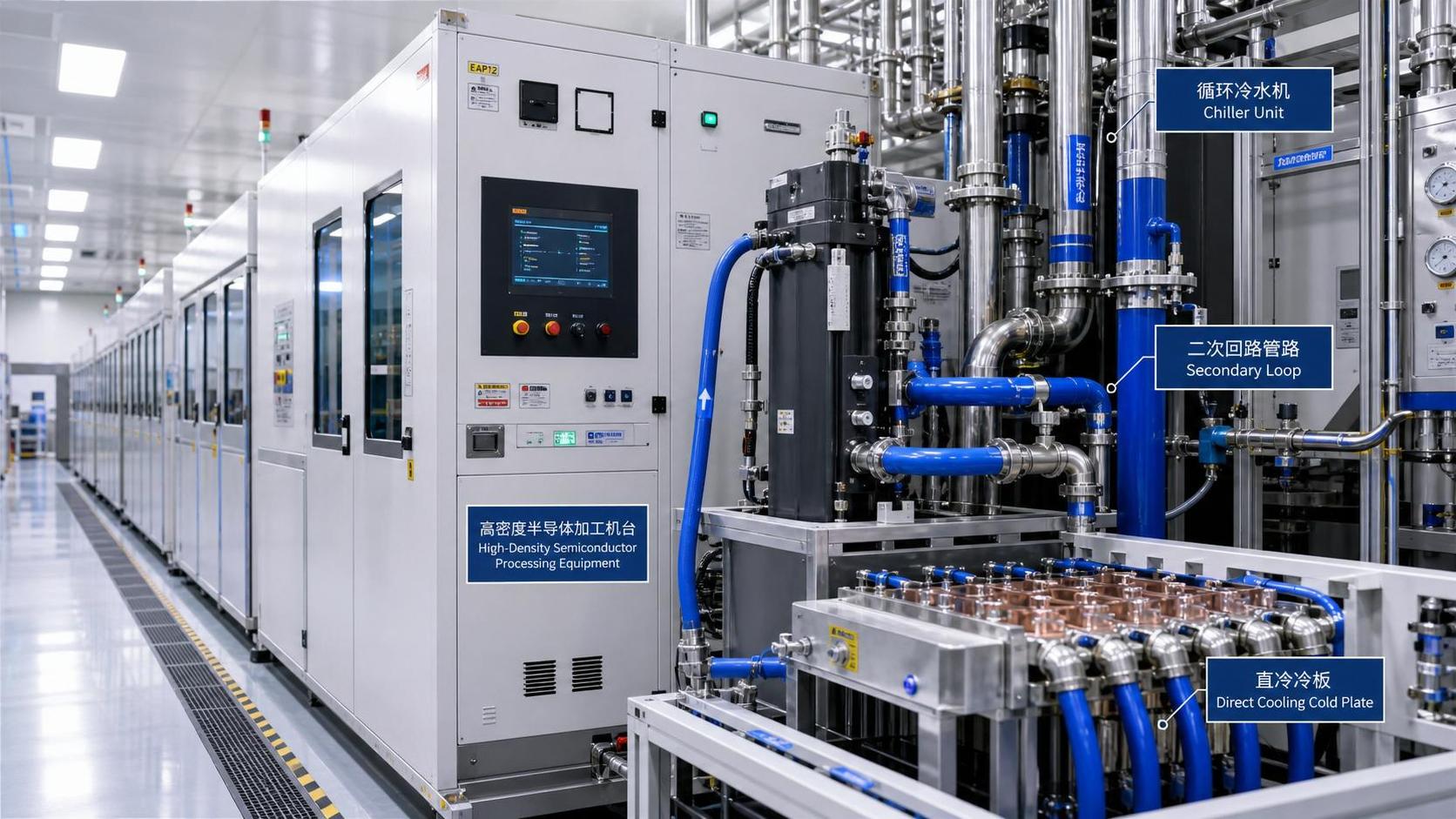
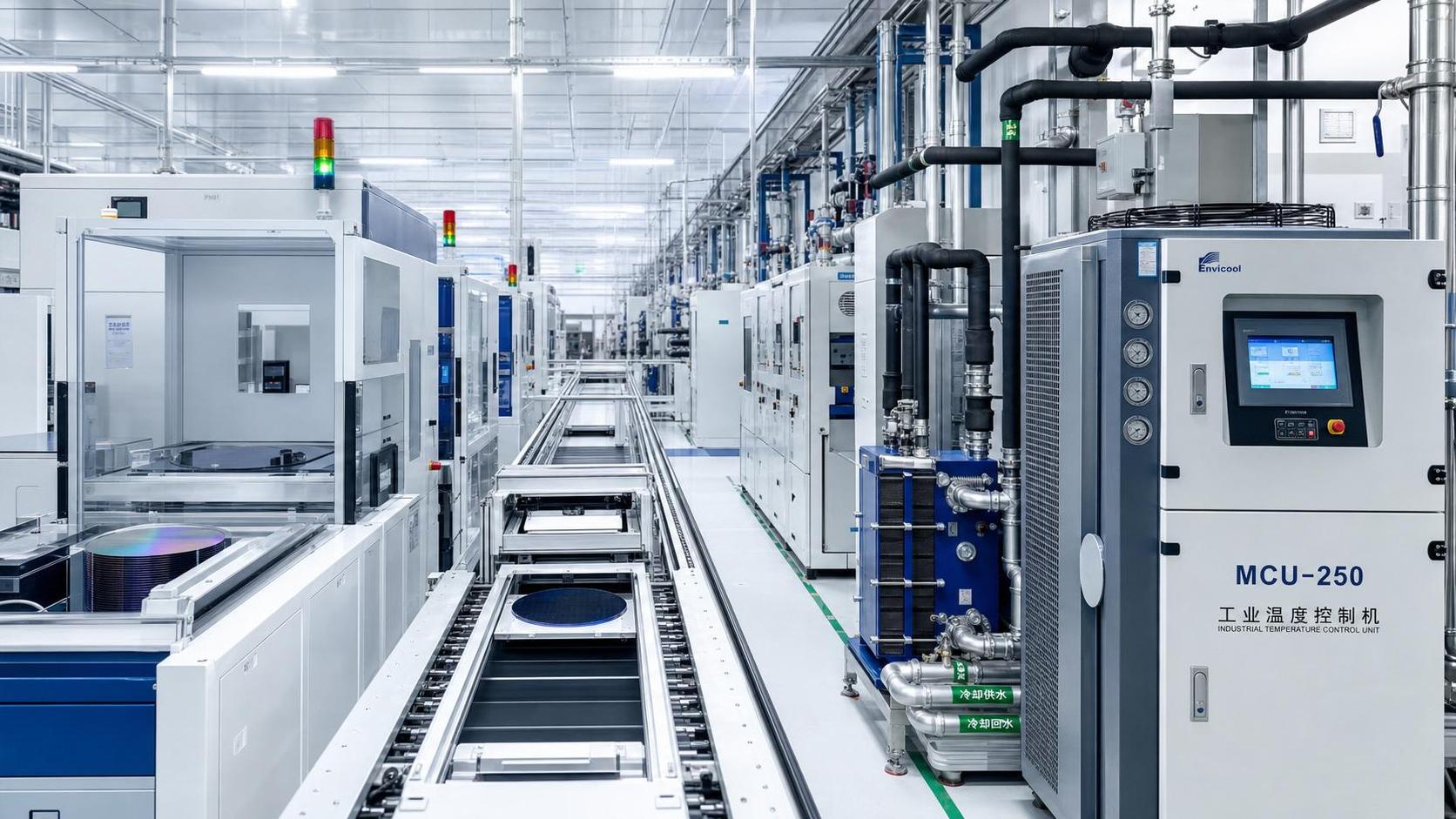
Semiconductor and electronics manufacturing often require especially stable thermal conditions. Minor variations can change process behavior, yield rates, and equipment reliability. In such environments, a small control deviation can become a large operational cost.
Even in less sensitive sectors, tighter control often improves overall consistency. Operators may see fewer stoppages, more predictable machine behavior, and reduced need for constant setpoint adjustment, especially during periods of variable production demand.
What Actually Determines High-Precision Temperature Control in a Chiller
Many users assume precision comes mainly from the controller. In reality, a controller can only work as well as the hardware and system design allow. High-precision temperature control is the result of several coordinated factors.
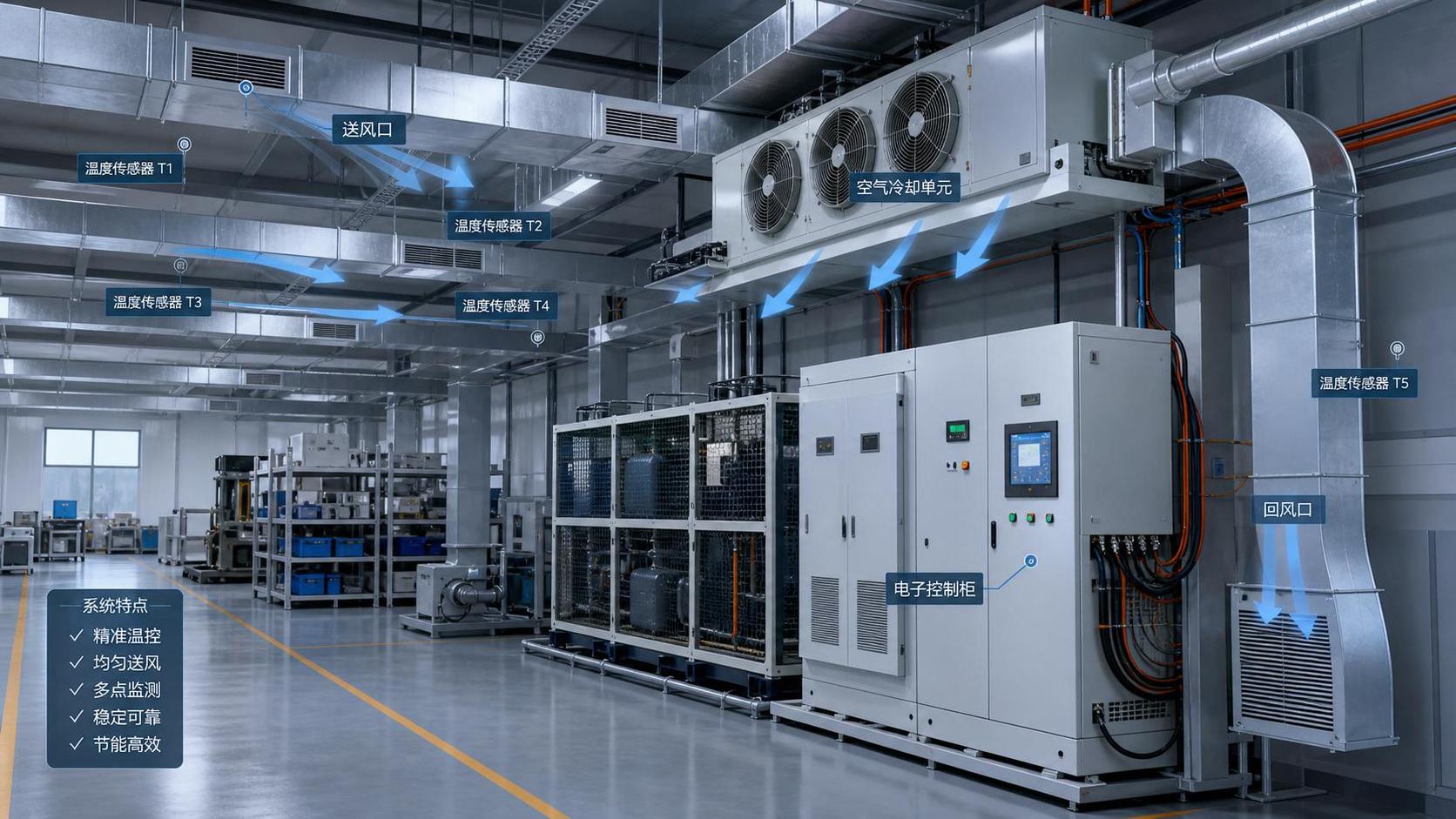
First, sensor quality is critical. If the temperature sensor has poor accuracy, slow response, or bad installation position, the controller receives misleading information. That makes stable control impossible, no matter how advanced the software may be.
Second, control algorithms matter. PID tuning, adaptive logic, inverter control, and load-following functions determine how quickly the chiller reacts and whether it can avoid overshoot. Poor tuning often causes oscillation, short cycling, or delayed recovery.
Third, compressor modulation plays a major role. Variable-speed compressors or well-staged capacity control usually perform better than simple on-off systems when the thermal load changes frequently. Smoother capacity adjustment supports tighter temperature stability.
Fourth, the expansion valve and refrigerant circuit must respond accurately. Electronic expansion valves generally offer finer control than basic mechanical alternatives, especially where load swings are common and precise evaporator performance is required.
Fifth, hydraulic design affects thermal stability more than many users expect. Flow rate, buffer tank sizing, pump control, piping layout, and bypass arrangements all influence how quickly the process temperature moves and how effectively disturbances are absorbed.
Finally, insulation and heat loss control cannot be ignored. Inadequate insulation on piping, tanks, or process connections introduces external thermal gain. That creates hidden instability and forces the chiller to compensate for avoidable environmental effects.
Why Nameplate Accuracy and Real-World Stability Are Not the Same
One of the most common misunderstandings is treating laboratory-rated accuracy as guaranteed plant performance. A specification such as ±0.1°C may be valid under steady test conditions, but real facilities rarely operate in such a controlled environment.
Actual performance depends on ambient temperature shifts, process load changes, fluid quality, pump condition, fouling, refrigerant charge health, and installation quality. If any of these are weak, the system may never achieve its advertised control range.
Operators should also distinguish between supply temperature stability and process temperature stability. A chiller may hold outlet water temperature well while the end-use equipment still experiences fluctuations due to poor heat transfer or unstable flow.
Another issue is response time. A system may eventually return to setpoint, but if the recovery is too slow, process quality can still suffer. Precision is not only about final temperature; it is also about how the system behaves during disturbances.
That is why field evaluation should focus on trend behavior over time. Look for repeated spikes, cycling patterns, hunting around setpoint, and differences between low-load and high-load operation. These patterns reveal more than a single accuracy number.
How Operators Can Judge Whether a Chiller Is Truly Precise Enough
For users and operators, a practical assessment starts with the process requirement. Before evaluating a chiller, define the acceptable temperature band at the point of use, not only at the chiller outlet.
Next, review operating trends during actual production. Check whether the system maintains stability during startup, product changeover, peak load, partial load, and ambient changes. Precision that only exists during stable daytime conditions is not enough.
Observe the frequency of manual intervention. If operators often adjust setpoints, restart the unit, or compensate elsewhere in the process, the control system may not be performing as precisely as expected, even if alarms are rare.
Check compressor cycling behavior as well. Frequent start-stop operation usually indicates poor capacity matching or weak control tuning. This reduces both temperature stability and equipment life while increasing power consumption.
Trend logs are especially useful. Recording outlet temperature, return temperature, flow, pressure, ambient conditions, and load changes helps identify whether the chiller is stable, slow to react, or overly aggressive in correcting disturbances.
It is also valuable to compare process outcomes. If scrap rates, cycle consistency, or product quality improve when temperature variation is reduced, that is strong evidence that high-precision temperature control is delivering measurable operating value.
Common Causes of Poor Temperature Precision in Daily Operation
In many plants, temperature instability is not caused by one major failure. It often comes from several smaller issues that reduce control quality over time. Operators who understand these causes can troubleshoot faster and more effectively.
Sensor placement is a common problem. If the sensor is installed where mixing is poor or too far from the critical load, the reading may not represent the actual process temperature. The controller then reacts to incomplete information.
Insufficient flow is another frequent cause. Blocked filters, pump wear, valve restrictions, or poor piping design reduce heat transfer consistency. As flow becomes unstable, temperature control becomes less predictable, especially under changing loads.
Fouling in heat exchangers also degrades precision. Scale, oil contamination, and dirt reduce thermal transfer efficiency, forcing the system to work harder and react more slowly. This often shows up as drift, lag, and rising energy use.
Improper PID settings can create repeated overshoot or oscillation. After maintenance or process changes, control parameters may no longer match real operating conditions. Without retuning, the chiller may remain technically functional but operationally unstable.
Short cycling and oversized equipment can also hurt precision. When capacity is too large for the actual load, the unit reaches setpoint too quickly and shuts down repeatedly. This creates uneven control instead of smooth thermal regulation.
Poor water quality is another hidden issue. Corrosion, biological growth, and suspended solids gradually affect sensors, valves, and heat exchangers. The result is slower response and less reliable temperature stability over the long term.
Best Practices to Improve High-Precision Temperature Control
Operators do not always need major equipment replacement to improve performance. In many cases, precision can be improved through better setup, monitoring, and maintenance discipline across the full thermal system.
Start by verifying sensor accuracy and placement. Confirm calibration status and compare readings against a trusted reference. If the sensor location does not reflect the real process condition, consider relocating or adding additional measurement points.
Maintain stable flow conditions. Clean strainers, inspect pumps, verify valve positions, and confirm that the required flow reaches the process continuously. Consistent flow is essential for consistent heat removal and better control response.
Review control settings after any load change, process expansion, or maintenance intervention. A PID loop tuned for one production pattern may not perform well after operating conditions change. Retuning can significantly reduce hunting and overshoot.
Keep heat exchangers clean and monitor approach temperatures. If fouling builds up, the system loses responsiveness before a major alarm appears. Preventive cleaning protects both precision and energy efficiency.
Use buffering where needed. A properly sized buffer tank can help absorb sudden thermal load swings, reduce compressor cycling, and improve outlet temperature stability. This is especially useful in systems with highly intermittent process demand.
Improve insulation on chilled water lines and critical components. Reducing unwanted heat gain lowers the control burden and allows the chiller to respond more accurately to process demand rather than to external thermal interference.
Finally, rely on data instead of assumptions. Trend analysis, alarm history, and performance benchmarking help operators distinguish between normal variation and developing control problems before they become production issues.
Energy Efficiency and Precision Should Be Considered Together
Some users think tighter temperature control always increases energy consumption. In reality, poorly controlled systems often waste more energy because they overshoot, short cycle, and run inefficiently in response to unstable thermal demand.
High-precision temperature control can support efficiency when the system is correctly designed. Better modulation reduces unnecessary compressor loading, while stable flow and clean heat transfer surfaces lower the energy needed to maintain target temperatures.
There is still a balance to consider. Demanding a tighter control band than the process actually needs may increase capital cost and system complexity without creating meaningful production value. Precision should match real operating requirements.
For operators and facility teams, the best approach is to link temperature control performance with product quality, uptime, and power use. This makes it easier to justify adjustments, upgrades, or maintenance actions based on measurable outcomes.
What to Ask Before Selecting or Upgrading a Chiller
If a facility is considering a new chiller or a control upgrade, users should ask practical questions rather than focusing only on brochure claims. The first question is whether the quoted precision applies under real load variation.
Ask how the unit handles part-load operation, startup recovery, and rapid thermal swings. Request data on control stability during changing conditions, not only at steady-state laboratory points. That reveals whether the system suits actual production use.
Check the type of compressor control, valve technology, sensor arrangement, and data logging capability. These details strongly affect high-precision temperature control and determine how visible the system’s real performance will be in daily operation.
It is also important to ask how easily the system can be maintained. Even a high-performance design loses value if sensors are hard to verify, filters are neglected, or trend data is difficult for operators to access and interpret.
Where process criticality is high, users should evaluate the entire application loop. The best chiller cannot deliver stable process results if piping, flow control, heat exchangers, or load-side integration are poorly designed.
Conclusion: Precision Comes From the Whole System, Not One Feature
For operators and end users, the key lesson is clear: high-precision temperature control is not defined by a single specification. It depends on how the complete chiller system senses, reacts, modulates, and maintains stability under real operating conditions.
What matters most is reliable performance at the point of use. If the process stays within its required thermal window, quality remains stable, and manual intervention is reduced, the chiller is delivering true value.
When evaluating or improving a system, focus on sensor quality, control logic, flow stability, heat transfer condition, load behavior, and maintenance practices. These are the factors that most directly determine whether precision is theoretical or practical.
In the end, better temperature control means more than tighter numbers. It supports uptime, product consistency, energy performance, and operator confidence. That is why understanding what truly matters in chiller control is essential for modern industrial operations.
Related News
- How Smart Thermal Systems Improve Industrial Cooling EfficiencyAuthor :Cryogenic Systems Expert

- How to Choose Process Cooling Equipment for Stable Temperature ControlAuthor :Cryogenic Systems Expert

- EU Finalizes 2026 HFC Quota Cut for R-134a ChillersAuthor :Cryogenic Systems Expert

- EU Tightens HFC-134a Quotas for Industrial ChillersAuthor :Cryogenic Systems Expert

- REACH SVHC Update Pressures HFC-134a Chiller Supply ChainsAuthor :Cryogenic Systems Expert

- EU PFAS Coolant Ban Reshapes Chiller ExportsAuthor :Cryogenic Systems Expert

- EU REACH Restricts PFAS Cooling Media ImportsAuthor :Cryogenic Systems Expert

- EU Ecodesign Rule Takes Effect for Industrial ChillersAuthor :Cryogenic Systems Expert

- EU REACH Rule Takes Effect for PFAS in Industrial Cooling ExportsAuthor :Cryogenic Systems Expert

- Industrial Cooling for Plastic Processing: How to Size for Stable Cycle TimesAuthor :Cryogenic Systems Expert

- EU F-Gas Update Bars R404A/R507 in Commercial CoolingAuthor :Cryogenic Systems Expert

- DOE Raises Chiller Efficiency Standard From October 2026Author :Cryogenic Systems Expert

- India Mandates BIS Energy Certification for Industrial ChillersAuthor :Cryogenic Systems Expert

- Energy-Efficient Heat Exchange for Process Cooling: Cost vs PaybackAuthor :Cryogenic Systems Expert

- EPA R-134a Import Ban Takes Effect on July 13, 2026Author :Cryogenic Systems Expert

- India BIS Rule Takes Effect for Industrial ChillersAuthor :Cryogenic Systems Expert

- EPA Cuts R134a Import Quotas 20% From July 10Author :Cryogenic Systems Expert

- How to Compare Energy-Efficient Cooling Systems for Factory Expansion ProjectsAuthor :Cryogenic Systems Expert

- Chiller Price Index Rises 11.3% in Q2Author :Cryogenic Systems Expert

- Saudi SASO Tightens Chiller Import Compliance From July 10Author :Cryogenic Systems Expert

- Dubai Opens Fast-Track Chiller TendersAuthor :Cryogenic Systems Expert

- Japan Raises Chiller COP Floor to 6.2 From Sept. 1Author :Cryogenic Systems Expert
![]()
- Compact Thermal Management in Smart Devices: Common Failure RisksAuthor :Cryogenic Systems Expert

- Thermal Management for Batteries: Cooling Methods ComparedAuthor :Cryogenic Systems Expert

- How Compact Thermal Design Extends Smart Device UptimeAuthor :Cryogenic Systems Expert

- Shanghai-Rotterdam Reefer Rates Jump 37% in a WeekAuthor :Cryogenic Systems Expert

- Process Cooling Equipment Low Maintenance: What Cuts Downtime Over 5 Years?Author :Cryogenic Systems Expert

- Semiconductor Cooling Solutions: Which Design Works Best for High-Density Tools?Author :Cryogenic Systems Expert

- Semiconductor Thermal Management Systems: Preventing Yield Loss from Heat DriftAuthor :Cryogenic Systems Expert

- EPA Clears R-1234ze(E) for Industrial ChillersAuthor :Cryogenic Systems Expert
 for Industrial Chillers")
- DOE Raises Chiller IEER Floor to 12.8 From Oct. 2026Author :Cryogenic Systems Expert

- Singapore Refrigeration Show Adds Green Compliance HubAuthor :Cryogenic Systems Expert

- How Food Industry Temperature Control Systems Reduce Product LossAuthor :Cryogenic Systems Expert

- EU REACH Adds 12 SVHCs, Raising Chiller Compliance RiskAuthor :Cryogenic Systems Expert

- Precision Temperature Control Air Cooling: Key Setup Mistakes That Reduce StabilityAuthor :Cryogenic Systems Expert

- India BEE Eyes APF Labels for Imported ChillersAuthor :Cryogenic Systems Expert